Women’s Earnings More Than Doubled Since 2000, While the Estimated Gender Earnings Gap Reached $671B


Our customers have been hired at: *Foot Note


Table of Contents
Get started with MyPerfectResume today!
- Build a resume on any device
- Pick an ATS-friendly template
- Tailor with AI copy suggestions
Women have made remarkable strides in the workforce over the last 25 years. Earnings are up, workforce participation has grown, and more women than ever are building full-time careers. But one persistent challenge has followed that progress: The overall earnings gap between men and women has continued to grow.
A MyPerfectResume analysis of U.S. Bureau of Labor Statistics (BLS) data estimates that the annual earnings gap between men and women exceeded $671 billion in 2025, even as women’s pay and workforce participation reached historic highs.
Women’s median weekly earnings more than doubled over the period, rising from $493 in 2000 to approximately $1,089 in 2025. For every dollar men earned, women earned about 77 cents in 2000, a figure that improved to roughly 82 cents by 2025.
But that closing gap tells only part of the story. In actual dollars, the difference between what men and women earn grew by more than 60% over the same period, from an estimated $7,696 per year in 2000 to $12,324 in 2025. As more women joined the full-time workforce, the per-worker difference compounded into a much larger estimated overall gap.
Key Takeaways
- Women’s median weekly earnings have more than doubled since 2000. Earnings rose from $493 in 2000 to approximately $1,089 in 2025.
- The estimated aggregate annual gender earnings gap exceeded $671 billion in 2025. This is up from approximately $327 billion in 2000.
- The estimated annual earnings gap grew by more than 60% in dollar terms. The estimated difference between men’s and women’s earnings increased from $7,696 in 2000 to $12,324 in 2025.
- The gender earnings ratio improved modestly over time. Women earned approximately 77% of men’s weekly earnings in 2000, compared to approximately 82% in 2025.
- The number of women working full-time has increased substantially since 2000. The number of women employed full-time rose by more than 9.5 million over the period analyzed.
- Real earnings rose for women, too. Women’s inflation-adjusted weekly earnings increased approximately 17.9% since 2000, while men’s real earnings also increased during the period analyzed.
Women’s Earnings Have Come a Long Way Since 2000
The progress women have made is significant and worth recognizing. Over the last 25 years, women have made substantial gains in both workforce participation—nearly 10 million more women are working full-time in 2025 than in 2000—and pay.
In terms of pay, in 2000:
- Women working full-time earned a median of $493 per week.
- Men working full-time earned a median of $641 per week.
- Women earned about 77 cents for every dollar men earned.
By 2025:
- Women’s median weekly earnings climbed to approximately $1,089.
- Men’s median weekly earnings rose to approximately $1,326.
- Women earned roughly 82 cents for every dollar men earned.
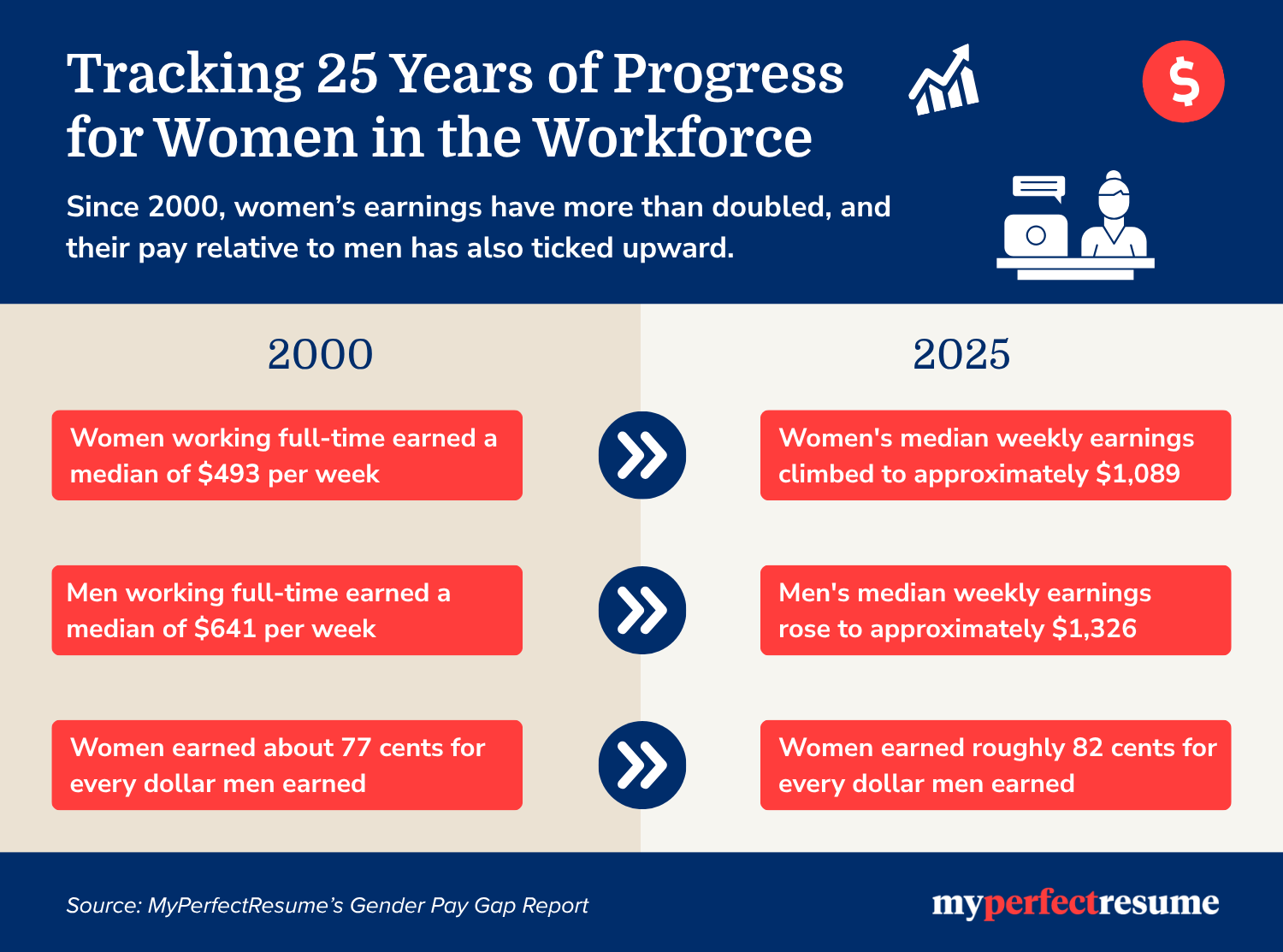
That improvement in the earnings ratio is meaningful. But the dollar gap between men’s and women’s annual pay tells a different story:
- In 2000, the estimated annual earnings difference was approximately $7,696.
- By 2025, that figure reached approximately $12,324.
- That represents an increase of more than 60% over the period analyzed.
Why Did the Overall Gap Get Bigger?
Even as individual earnings improved, the estimated aggregate gap widened considerably. Here’s how the numbers grew over time:
- 2000: Approximately $326.9 billion
- 2020: Approximately $446.7 billion
- 2025: Approximately $671.5 billion
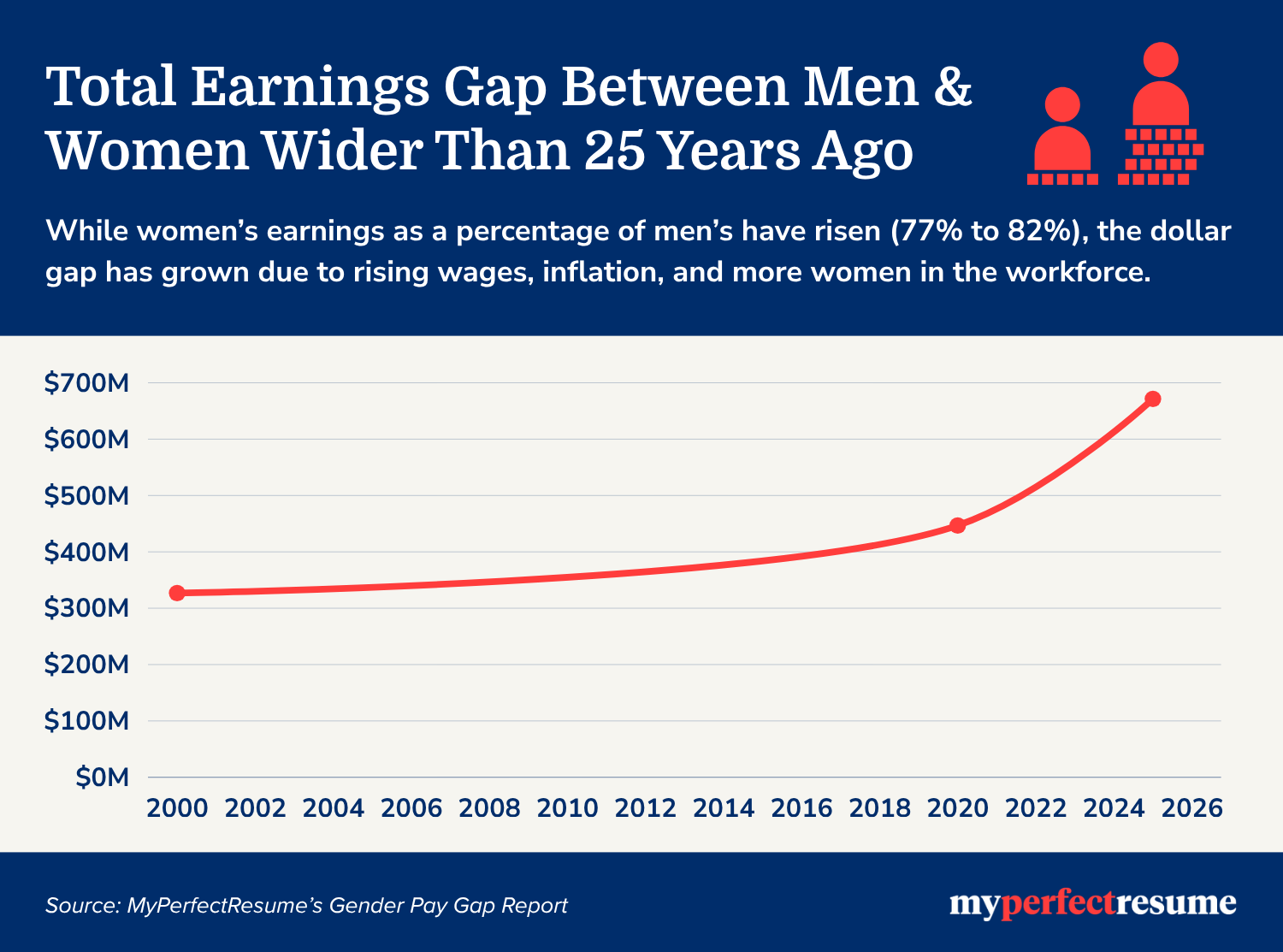
Two things happened at the same time:
- The earnings difference between men and women persisted year over year.
- The number of women in the full-time workforce grew significantly.
When a persistent per-worker gap is applied across a larger workforce, the total estimated difference grows even if the gap between women’s earnings as a percentage of men’s narrows slightly.
It’s worth noting that this figure is an estimate based on median earnings, not a measure of actual wages lost. It’s best understood as a directional illustration of the scale of persistent earnings differences across the workforce.
What Does $12,324 Actually Mean for Women?
Most conversations about gender wage gap statistics focus on percentages, like the 82-cent figure. But women don’t experience the gap as a percentage. They experience it in their bank accounts, their budgets, and their financial futures.
The estimated annual earnings difference of $12,324 in 2025 is roughly equivalent to:
- Several months of rent in many U.S. housing markets
- A significant portion of annual childcare costs, which women disproportionately shoulder
- Meaningful retirement contributions or emergency savings
- Healthcare premiums and household bills
- A significant chunk of debt repayment or a down-payment fund
This analysis didn’t directly measure affordability or household financial outcomes. But with housing, healthcare, childcare, and insurance costs all rising substantially over the same period, the practical impact of a persistent earnings difference is very real for many women.
Progress Is Real, but the Gap Hasn’t Closed
Women have worked hard to close the earnings gap, and the data reflect that effort. But despite those gains, measurable earnings differences between men and women persisted throughout the entire period analyzed.
What that looks like in practice:
- Women’s real weekly earnings rose approximately 17.9% since 2000.
- The earnings ratio improved from 77 cents to 82 cents on the dollar.
- Yet the estimated aggregate gap more than doubled, from $327 billion to $671 billion.
The gap is both smaller in percentage terms and larger in dollar terms than it was a generation ago. Behind every data point are women navigating real financial decisions with less earning power than their male peers. Both the progress and the persistent gap deserve to be taken seriously.
For press inquiries, please contact Nathan Barber at nathan.barber@bold.com.
Methodology
MyPerfectResume analyzed publicly available data from the U.S. Bureau of Labor Statistics Current Population Survey (CPS) and Consumer Price Index for All Urban Consumers (CPI-U) from 2000 through 2025. The analysis examined median usual weekly earnings for full-time wage and salary workers by sex, along with annual estimates for women working full-time and estimates for men working full-time. Inflation-adjusted earnings estimates were calculated using annual average CPI-U values to create a real weekly earnings index.
Workforce estimates were aligned as closely as possible with the full-time worker definitions available within the underlying BLS datasets used in the analysis.
Estimated annual earnings were calculated by multiplying median weekly earnings by 52. The annual earnings gap reflects the difference between men’s and women’s estimated annual earnings.
The estimated aggregate annual earnings gap was calculated by multiplying the estimated annual difference between men’s and women’s median earnings by the estimated number of women employed full-time. This estimate is intended as a directional illustration of the scale of persistent earnings differences when applied across the modern workforce. Because it is derived from median earnings rather than observed payroll or total income data, it should not be interpreted as a measure of actual wages lost, total payroll differences, or causal economic impact.
According to the BLS, the 2025 annual estimates are based on 11 months of available CPS data and exclude October 2025 because data collection did not occur during the federal government shutdown. As a result, year-over-year comparisons involving 2025 should be interpreted cautiously.
About MyPerfectResume
MyPerfectResume Resume Builder with professional templates is designed to help job seekers elevate their careers. The easy-to-use platform was created to eliminate the hassle of resume writing, offering professionally written examples, free expert tips, step-by-step guidance to make a resume, and valuable interview advice to create an outstanding job application effortlessly. Since 2012, MyPerfectResume’s Resume Builder has helped more than 11 million job seekers create their perfect resumes online. Its comprehensive employment surveys have been featured in Forbes, Yahoo! Finance, CNBC, Newsweek, USA Today, BBC, Workable, and more. Stay connected with MyPerfectResume’s latest LinkedIn, Instagram, and Facebook updates.
Rate this article
Gender Earnings Gap

Jasmine is a certified career coach and recognized expert in job search strategy. She is committed to helping job seekers navigate the job market and succeed in their careers.
More Articles by Jasmine EscaleraShare this page
 Add MyPerfectResume as a preferred source on Google
Add
Our customers have been hired at:*Foot Note