Our customers have been hired at: *Foot Note


Table of Contents
Get started with MyPerfectResume today!
- Build a resume on any device
- Pick an ATS-friendly template
- Tailor with AI copy suggestions
An internship cover letter serves as a personalized introduction to your resume and provides an opportunity to showcase your relevant skills, experience, and enthusiasm for the position.
Unlike a resume, which provides a concise overview of your qualifications, a cover letter allows you to discuss your motivations and explain why you’re the ideal candidate.
In this guide, we’ll provide step-by-step guidance on how to write a cover letter for an internship, including expert tips and examples to help you stand out from the competition.
What to Include in an Internship Cover Letter
An internship cover letter should include a strong introduction, relevant skills and coursework, measurable achievements, knowledge of the company, and a clear closing.
Tailoring these elements to a specific internship shows the hiring manager that you understand the role and can add value to the team.
When paired with a well-written resume, a strong internship cover letter allows you to showcase relevant qualifications that may not be obvious from your resume alone. It should highlight relevant experiences or coursework while expressing a genuine interest in the company.
Here’s a detailed breakdown of what to include in a cover letter for an internship:
- Header: Your cover letter header should include your name, address, phone number, and email. Match your resume header for a polished application.
- Date and recipient’s information: Below your header, add the date, then the recipient’s name, title, company name, and company address.
- Salutation: Use the hiring manager’s name if possible (e.g., “Dear [Hiring Manager’s Name]”). If unknown, use “Dear Hiring Manager.”
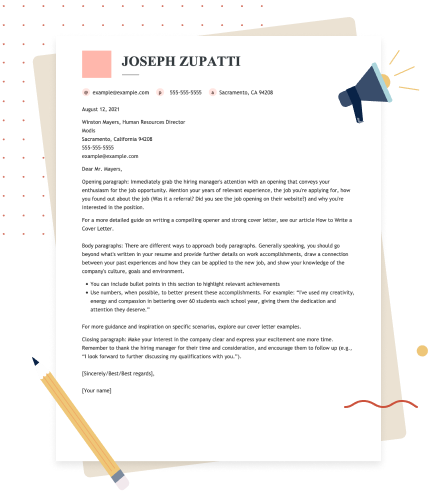
- Opening paragraph: Introduce yourself (e.g., your name, school, and field of study). State the position you’re applying for and briefly express your enthusiasm for the role.
- Body paragraphs: Highlight your skills, experiences, and coursework that align with the requirements of the internship position.
- Closing paragraph: Reiterate your interest in the position and mention your availability for an interview and any necessary follow-up details.
- Sign off: Use a professional closing (e.g., “Sincerely,” “Best regards”) and include your name or signature.
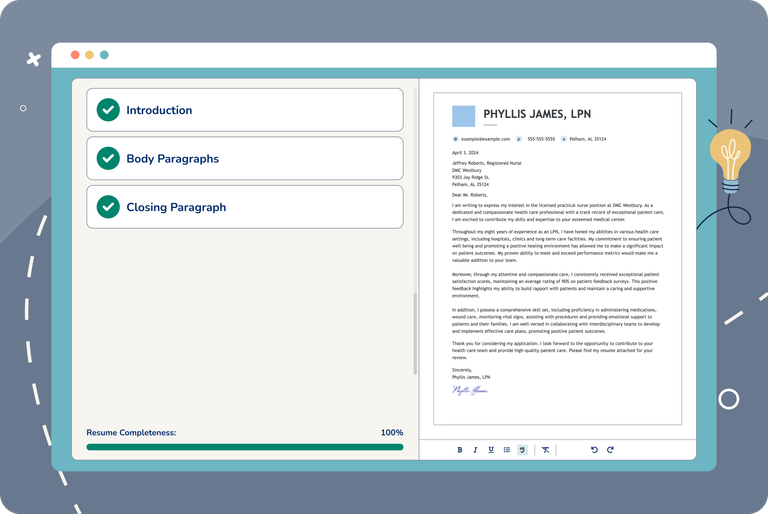
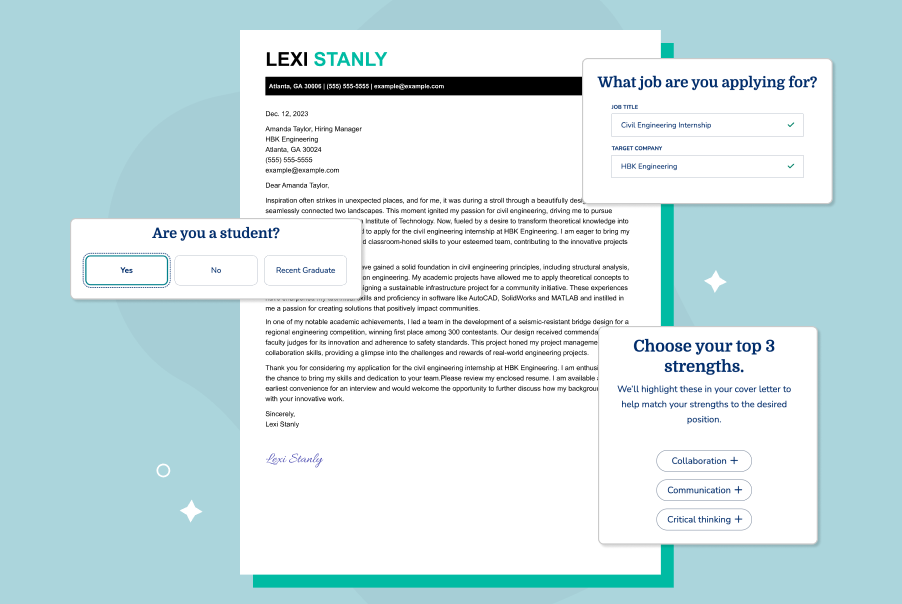
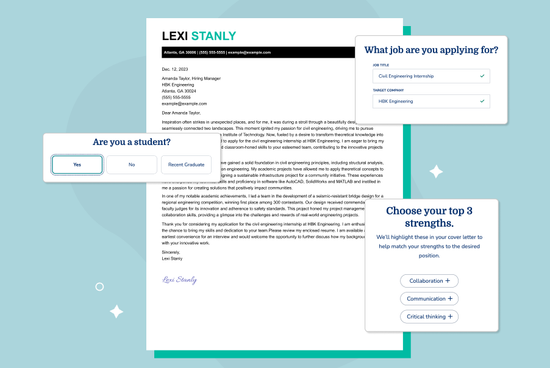
You can use our Cover Letter Generator to instantly generate an internship cover letter using your resume, or start fresh with step-by-step guidance and content suggestions.
How to Write a Cover Letter for an Internship
To write a cover letter for an internship, tailor the content to the specific role, highlight relevant coursework and transferable skills, and connect your goals to the organization’s needs.
Customization matters—employers are more likely to respond to applications that clearly align skills with job requirements. Follow the steps below to get started.
STEP 1
Research the Company or Organization
Before writing a cover letter for an internship, research the company or organization to understand its mission, values, and projects. Highlighting this knowledge shows genuine interest and helps you tailor your skills and experiences to the company���s needs.
Demonstrating that you’ve done your research makes your internship resume and cover letter more compelling and positions you as a thoughtful, proactive candidate.
Start by thoroughly exploring the company’s website and social media profiles, focusing on its “About Us” pages and recent news or press releases.
This research will provide valuable insights into the company’s goals and initiatives, which you can match to your career aspirations and emphasize in your internship cover letter.
Identify experiences from your academic, extracurricular, or professional life that align with the requirements of the internship. Incorporate these experiences throughout your cover letter.
STEP 2
Choose a Professional Template
Using a professional cover letter template ensures your letter is clean, organized, and easy to read. A well-formatted template highlights your key qualifications without distractions, making a strong first impression and demonstrating your attention to detail.
Consistent fonts, spacing, and margins create a polished appearance, which helps convey professionalism. Using a cover letter template also helps you avoid errors and ensure that your cover letter is professional and polished.
STEP 3
Use the Correct Internship Cover Letter Format
Follow a standard cover letter format that includes your contact information, the date, the recipient’s details, a formal greeting, and organized body paragraphs. Proper formatting ensures your letter is easy to read and professional.
Here’s a closer look at the main components of a cover letter:
- An introduction: This should include your contact information, a salutation, the purpose of your letter, and a brief overview of why you are the ideal candidate.
- Body paragraph(s): The body of your letter should consist of one or two paragraphs, providing more detail on why your qualifications make you the best fit for the role.
- A conclusion: Your internship cover letter should conclude with a show of gratitude for the person’s time and attention and a reminder of your enthusiasm for the position.
STEP 4
Add Your Contact Information
Include your contact information at the top of your cover letter to make it easy for recruiters to reach you. Include your:
- Full name
- City and state
- Professional email address
- Phone number
- Professional website or portfolio, if applicable
Providing multiple ways to connect increases your chances of being contacted for interviews. Include information that you’ll be able to access throughout the duration of your internship.
STEP 5
Include the Recipient’s Information
Like any business letter, a professional cover letter for an internship must include the recipient’s contact information, even if you intend to send it by email or an online job application system.
First, add the date just below your contact information. Below that, add the potential employer’s name, title, company name, and mailing address.
If you have their phone number and email address, include them here. Make sure to double-check the contact information you include to ensure it is up-to-date and accurate.
STEP 6
Use a Professional Salutation
Begin your cover letter with a professional salutation, such as “Dear [Hiring Manager’s Name].” Using the correct name shows attention to detail and personalization. A professional greeting also sets a positive tone and makes your application stand out.
If you know their title, use that, like “Dear Professor Stone.” It’s also appropriate to address a department, like “Dear Marketing Director.” If the recipient’s name isn’t available, you can address your cover letter to “Dear Hiring Manager” or “Dear [Department Name] Team.”
STEP 7
Write a Compelling Introduction
Start your cover letter by introducing yourself and explaining why you’re passionate about the internship and the organization you’re applying to.
Here’s a sample cover letter introduction for an internship to help you get started:
“As a junior nursing student at the University of Michigan, I am excited to apply for the Summer Clinical Internship at Mercy Hospital. With hands-on experience in patient care through my clinical rotations in pediatrics and adult medicine, combined with my strong academic foundation in pharmacology and health assessment, I am eager to contribute my skills and compassion to your patient-centered care team.”
STEP 8
Showcase Your Skills in the Body Paragraphs
In the body of your cover letter, show the hiring manager exactly why you’re a great fit for the position with specific examples of your skills and experience.
Without regurgitating your resume, highlight the qualifications that make you an ideal fit for the internship, emphasizing measurable accomplishments relevant to the position.
Here’s an example of a strong body for an internship cover letter:
“During my clinical rotations at the University of Michigan Medical Center, I provided direct patient care to diverse populations, including administering medications, monitoring vitals, and assisting with wound care for patients in a 20-bed unit. During my pediatric rotation, I developed patient education materials to help families manage chronic conditions like asthma, which improved caregivers’ understanding, as reflected in post-education surveys.
Additionally, my experience volunteering at the local health clinic allowed me to refine my communication skills by coordinating care for underserved populations and ensuring they received the resources needed for follow-up treatment. These experiences have strengthened my ability to deliver empathetic, evidence-based care in fast-paced environments—skills I am eager to bring to Mercy Hospital.”
STEP 9
Wrap Up With a Call to Action
End your internship cover letter with a clear call to action and reiterate your enthusiasm for the role. Mention your interest in an interview or your willingness to provide additional materials.
A strong closing reinforces your initiative, leaves a positive impression, and encourages the recruiter to take action on your application. Here’s an example:
“I am eager to bring my clinical experience, patient-centered approach, and passion for nursing to the Summer Clinical Internship at Mercy Hospital. This opportunity aligns perfectly with my goal of advancing my skills in delivering compassionate care to diverse patient populations. I would welcome the chance to contribute to your team and learn from Mercy Hospital’s exceptional healthcare professionals. Thank you for considering my application; I am happy to provide additional information or schedule an interview at your convenience.”
STEP 10
Sign Off Professionally
When writing a cover letter for an internship, sign off with a polite, professional, and formal word or phrase, such as “Sincerely” or “Best regards.”
Don’t sign off with personal or informal words or phrases like “Yours,” “Cheers,” or “Thanks!” as these can come across as unprofessional and overly casual.
Unlock the Door to Your Next Internship
Internship Cover Letter Examples
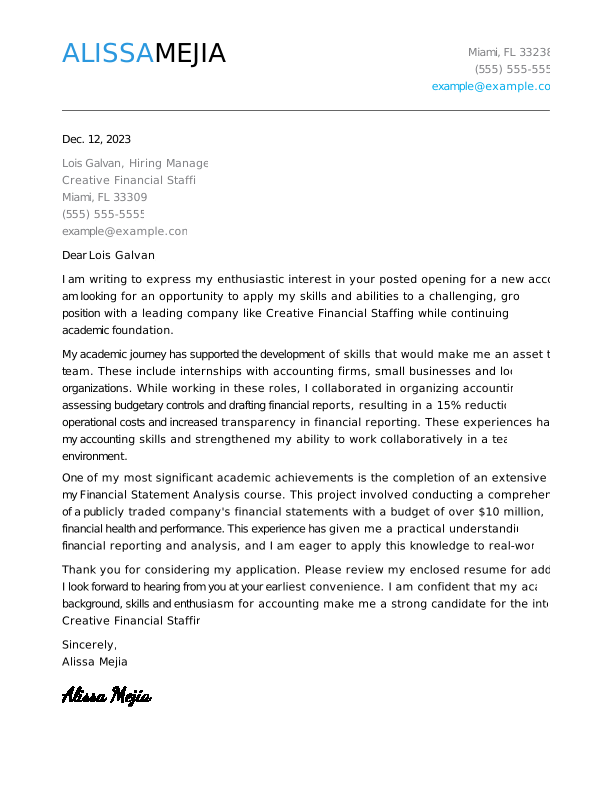
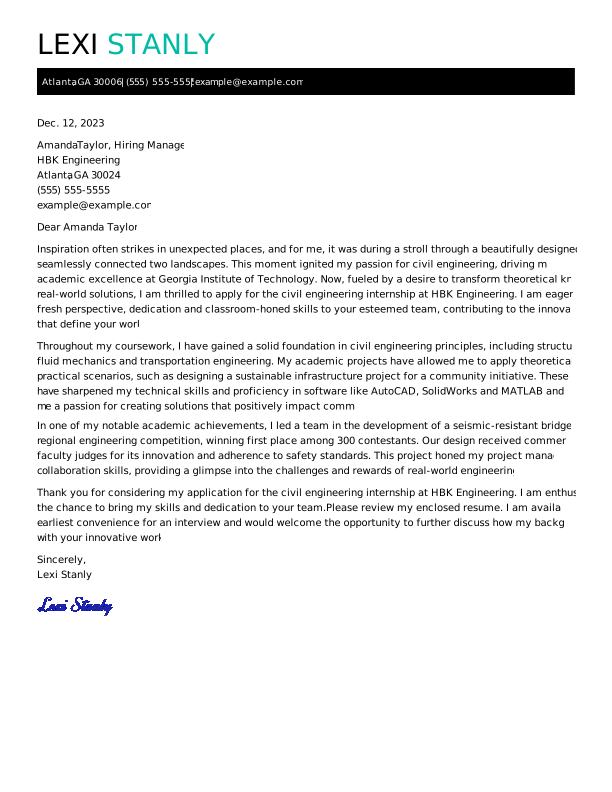
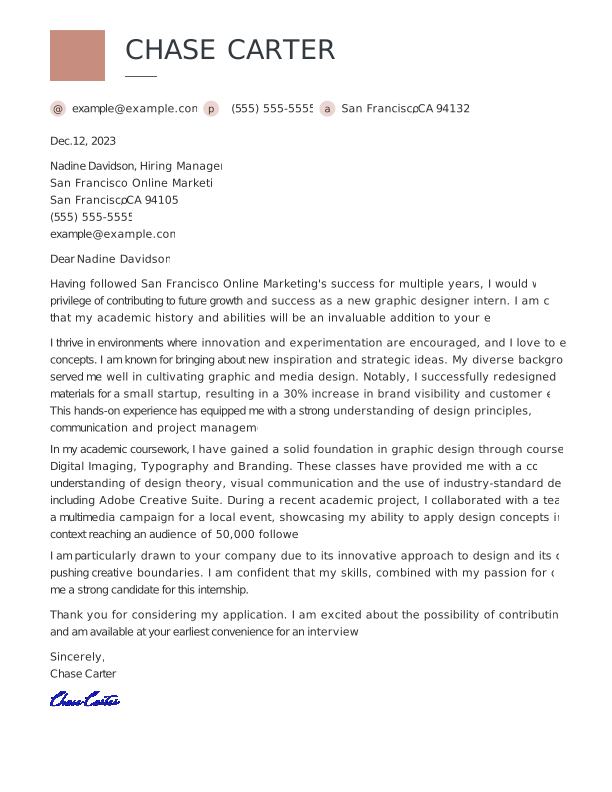
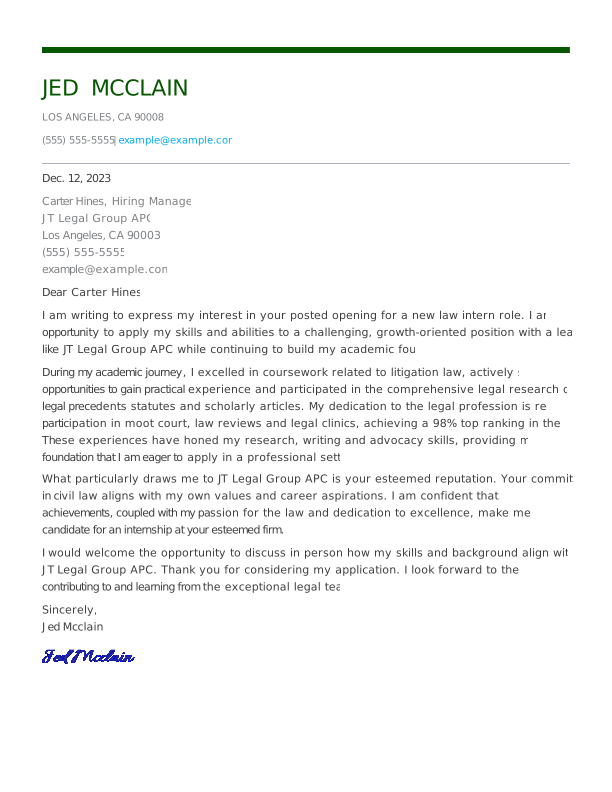
The cover letter examples below showcase the ideal cover letter format for an internship and effective content tailored to various industries.
Accounting Internship Cover Letter
Engineering Internship Cover Letter
Graphic Design Internship Cover Letter
Legal Internship Cover Letter
Nursing Internship Cover Letter
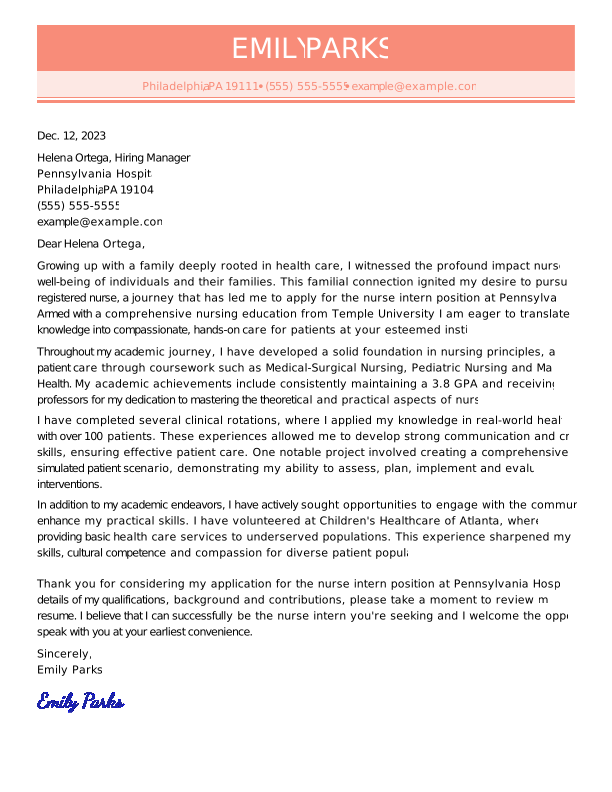
We also recommend exploring our library of resume examples to help you craft a strong internship resume that stands out to hiring managers.
Internship Cover Letter Tips
- Personalize your cover letter. Whenever possible, address the hiring manager by name and tailor the content to the specific internship and company.
- Showcase relevant skills. Highlight key hard skills and soft skills, coursework, or experiences directly related to the internship description.
- Provide specific examples. Demonstrate your capabilities using concrete examples from previous experiences (e.g., projects, volunteering, or part-time jobs).
- Optimize with keywords. Add relevant keywords from the job description so the potential employer can easily identify your matching qualifications.
- Research the company. Mention what excites you about the organization and how your goals align with its mission or values.
- Focus on growth potential. Emphasize your eagerness to learn and grow through the internship, highlighting how it aligns with your career goals.
- Keep it concise. Write three to four short paragraphs, avoiding unnecessary repetition or lengthy sentences. Use action verbs to reduce wordiness and add impact.
- Proofread thoroughly. Check for grammar, spelling, and formatting errors to ensure professionalism. This shows hiring managers that you pay attention to the details.
Key Takeaways
- Begin with a compelling opening that captures the reader’s attention and clearly states your interest in the internship position.
- Convey genuine interest in the organization and the internship opportunity. Employers appreciate candidates who are passionate about their work.
- Maintain a formal tone throughout the letter, ensuring proper grammar, punctuation, and spelling to reflect professionalism.
- Conclude with a strong closing statement that invites further discussion, expressing your desire for an interview or to provide additional information.
- Always review your cover letter for errors or typos before submission. A polished letter demonstrates attention to detail and professionalism.
FAQ
Do all internships require a cover letter?
Not all internships require a cover letter, but submitting one is highly recommended. Even when optional, a cover letter showcases your communication skills, enthusiasm, and fit for the role.
It allows you to highlight relevant coursework, projects, and technical skills that a resume alone may not fully convey, helping you stand out from other applicants.
How do I stand out in an internship application?
To stand out in an internship application, tailor your resume and cover letter to the specific role, highlight relevant technical skills, and quantify achievements when possible. Mention tools, software, or platforms you’ve used in coursework or projects to show job readiness.
Demonstrating measurable results and technical proficiency helps employers quickly see your potential value and visualize the positive impact you’d have on the team.
How do I write an internship cover letter with no experience?
To write an internship cover letter with no experience, focus on relevant coursework, academic projects, volunteer work, extracurricular activities, and transferable skills. Highlight specific examples that demonstrate initiative, teamwork, or problem-solving.
Employers know many internship applicants are students, so showing enthusiasm, willingness to learn, and a clear connection to the role can make a strong impression.
Who should I address my cover letter to for an internship?
Address your internship cover letter to the hiring manager or recruiter responsible for the role whenever possible. Using a specific name shows initiative and attention to detail.
If no name is listed, “Dear Hiring Manager” is a professional alternative. Avoid generic greetings like “To Whom It May Concern,” which can feel impersonal and outdated.
What is a powerful opening sentence for a cover letter?
A powerful opening sentence for a cover letter clearly states the role you’re applying for and highlights a key qualification or achievement that shows you’re a great fit.
For example: “I am applying for the marketing intern position at XYZ Company, where I can contribute my data analysis experience and strong communication skills.” A direct, confident opening immediately shows relevance and captures the reader’s attention.
How long should my internship cover letter be?
Your internship cover letter should be between half a page and one page long—typically 250 to 400 words. This cover letter length gives you enough space to highlight relevant skills, coursework, and motivation without overwhelming the reader.
Hiring managers often review applications quickly, so a concise, focused letter improves readability and keeps attention on your strongest qualifications.
Do recruiters read cover letters for internships?
Yes, recruiters do read cover letters for internships—especially when they are deciding between candidates with similar academic backgrounds.
A well-written cover letter helps recruiters assess communication skills, motivation, and cultural fit, which may not be clear from a resume alone. Even when optional, submitting one can strengthen your application and demonstrate professionalism.
What does a good cover letter look like for an internship?
A good cover letter for an internship is one page long, professionally formatted, and tailored to the specific role.
It includes a clear introduction, highlights relevant skills and coursework, provides brief examples of achievements, and connects your goals to the organization’s needs. Strong internship cover letters are concise, error-free, and focused on how you can contribute.
How many paragraphs should a cover letter be for an internship?
A cover letter for an internship should be about three to four paragraphs long. This structure allows you to introduce yourself, highlight relevant skills and experiences, explain why you’re interested in the organization, and close professionally.
Keeping it concise—under one page—helps maintain a recruiter’s attention while clearly presenting your qualifications.
How we reviewed this article
Since 2012, we have helped more than 11 million job seekers. We want to make your career journey accessible and manageable through our services and Career Center’s how-to guides and tips. In our commitment to bring you a transparent process, we present our Editorial Process.
Rate this article
Cover Letter for an Internship


Elizabeth is a Certified Professional Resume Writer (CPRW) and a member of the Professional Association of Resume Writers & Career Coaches. She is committed to helping job seekers navigate the job market and succeed in their careers.
More Articles by Elizabeth Muenzen, CPRWShare this page
 Add MyPerfectResume as a preferred source on Google
Add
Our customers have been hired at:*Foot Note