Our customers have been hired at: *Foot Note


Table of Contents
Get started with MyPerfectResume today!
- Build a resume on any device
- Pick an ATS-friendly template
- Tailor with AI copy suggestions
When interviewers ask, “What is your educational background?” it’s your opportunity to discuss how your schooling, degrees, and relevant training make you the perfect fit for the role.
A strong answer highlights not only your formal education but also any additional skills, certifications, or experience that support your qualifications.
In this guide, we’ll cover why employers ask educational background interview questions and provide sample answers and tips to help you craft clear, confident responses that stand out.
Why Employers Ask About Your Education
Employers ask about your education to understand your formal training, qualifications, and foundation for the role. This information helps them verify that you meet the minimum requirements and provides insight into your skill level and ability to learn new, industry-relevant concepts.
Whether asked directly about your degrees or more broadly about your schooling, the key is to focus on how your education has equipped you with relevant, marketable skills.
Being clear and concise when answering an educational background interview question shows that you can effectively communicate your qualifications and connect them to the role.
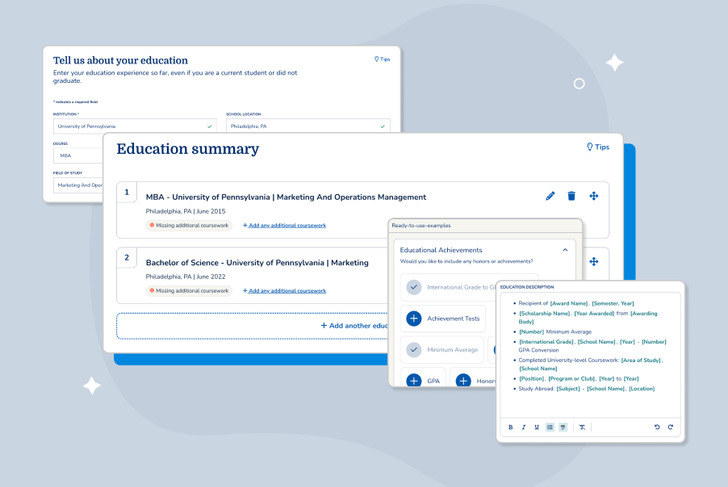
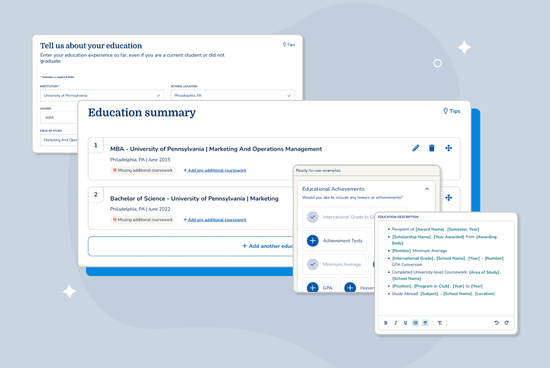
If you’re preparing additional applications, consider using tools like MyPerfectResume’s Resume Builder to tailor your resume’s education section to meet the specific job needs.
Prepare to Impress
How to Answer: “What Is Your Educational Background” (Step-by-Step)
To answer educational background interview questions effectively, briefly summarize your schooling, degrees, and relevant training, then connect them to the job you’re applying for. Follow the steps below to prepare interview answers that highlight your credentials and skills.
Step 1: Lead With Your Highest Level of Achievement
Start your answer by referencing the highest degree listed on your resume, as this immediately showcases your qualifications. Leading with your top achievement keeps your response clear and professional, making it easier for interviewers to understand your background right away.
If you have incomplete schooling or didn’t attend college, you may be self-conscious about sharing these details with an employer. Telling the whole story is important, though, and leaving out details can lead to awkward questions.
Instead of shying away from or misrepresenting these facts, briefly tell the interviewer the history of your education and offer any explanation you feel is appropriate. They will likely care more about how you discuss your education than how much of it you have.
Use a professional resume template that highlights your education, especially if your degrees or certifications are a key strength. This ensures your most relevant qualifications stand out to employers at first glance and improves your chances of landing the interview.
Step 2: Highlight Relevant Coursework & Projects
Mention specific courses, projects, or academic experiences that directly relate to the job you’re applying for. This is an excellent opportunity to add context to the education section of your resume, keeping your abilities at the forefront of the conversation.
Employers ask about your education to see how your training translates into practical skills. Highlighting relevant coursework or projects demonstrates your hands-on experience, shows initiative, and helps bridge the gap between your formal education and the role’s requirements.
Even if you didn’t study anything directly related to the field, you can tell the interviewer how you gained transferable skills that may be necessary for the position.
Step 3: Mention Awards, Honors, & Extracurriculars
Include any academic awards, honors, or extracurricular activities that demonstrate your professional skills, dedication, or leadership. Employers ask about your education to understand not just what you studied, but how you excelled and applied your knowledge.
Highlighting these achievements shows initiative, well-roundedness, and qualities that can set you apart from other candidates at the interview stage.
Check out professional resume examples to see how top candidates highlight degrees, academic honors, and extracurricular activities to secure more interviews.
Step 4: Explain How Your Education Prepared You for the Role
Connect your education directly to the job by explaining how your relevant coursework, training, or projects equipped you with the skills required for the role.
Employers ask about your education to see how your academic experience translates into practical, real-world abilities. Be specific—mention tools, techniques, or concepts you mastered—and show how they enable you to solve problems and handle responsibilities.
For example, if you studied marketing, you could say: “My coursework in digital marketing and analytics taught me how to design campaigns and interpret performance data, which I applied in class projects to improve engagement metrics.”
“Preparation is key to a successful interview. Research the company, understand the role, and be ready to showcase how your skills and experience align with what they’re looking for.”
—Jasmine Escalera, Career Professional
Educational Background Example Answers for Every Career Stage
Tailoring your answer to your career stage helps highlight relevant degrees, coursework, and skills while showing employers how your background supports the role you’re applying for. Explore “what is your educational background” sample answers below to get started.
Student
Discuss your current studies, academic projects listed on your resume, and relevant coursework. Highlight internships, volunteer work, or extracurriculars that demonstrate skills related to the job to show employers your potential and readiness to learn.
Here’s an example answer for a student applying for a marketing internship:
“I’m currently pursuing a bachelor’s degree in marketing, where I’ve completed coursework in digital marketing and consumer behavior. I’ve applied these concepts in a class project that developed a social media campaign for a local nonprofit. Additionally, I volunteered as a social media assistant for a student organization, which helped me build practical skills in content creation and audience engagement.”
Entry-Level
Focus your response on your recently completed degree, internships, relevant certifications, and any hands-on experience that prepared you for the role.
Highlight skills and projects that directly relate to the job to show employers you’re ready to contribute, even with limited professional experience.
Here’s an education background example answer for an entry-level software developer:
“I recently earned my bachelor’s degree in computer science, where I completed a software development internship building a web application for a local business. I also completed a capstone project designing a mobile app for task management, which strengthened my coding and project management skills. These experiences have prepared me to take on software development responsibilities immediately.”
Mid-Career
When discussing your education at this stage, highlight degrees, certifications, and training that directly enhance your professional experience. Emphasize how your academic background has supported your career growth and prepared you to take on more complex responsibilities.
Here’s an example answer for a mid-career financial analyst:
“I earned a bachelor’s degree in finance and later completed a CFA Level I certification to deepen my knowledge of investment analysis. Over the past seven years, I’ve applied this education to create financial models, evaluate investment opportunities, and provide strategic recommendations to clients. My coursework in corporate finance and risk management gave me a strong foundation, while hands-on experience and ongoing training allow me to make data-driven decisions and support long-term business goals.”
Experienced Professional
At this stage, emphasize advanced degrees, professional certifications, and specialized training that complement your extensive work experience.
Highlight how your education has enhanced your expertise and prepared you to lead complex projects or take on higher-level responsibilities. Be sure to connect your academic foundation to measurable accomplishments and professional impact.
Here’s an example answer for an experienced project manager:
“I hold a bachelor’s degree in civil engineering and a Project Management Professional (PMP) certification. Over the past 12 years, I’ve managed multiple large-scale infrastructure projects, coordinating teams across engineering, design, and construction disciplines while overseeing budgets exceeding $10 million. My engineering coursework provided a solid technical foundation, and my PMP training has strengthened my skills in risk management, process optimization, and stakeholder communication. This combination of education and experience allows me to deliver projects efficiently, mentor junior team members, and implement strategic solutions that drive long-term success for my clients and organization.”
Executive Level
For executive candidates, emphasize advanced degrees, executive programs, and industry-specific certifications that demonstrate strategic expertise and leadership.
Explain how your education complements decades of experience and enables you to drive organizational growth, focusing on the connection between your academic background and your ability to deliver measurable business impact.
Here’s a sample answer for a chief technology officer (CTO):
“I hold a master’s degree in computer science and completed an executive leadership program focused on technology strategy. Over the past 20 years, I’ve led global engineering teams, implemented enterprise-scale software solutions, and guided digital transformation initiatives. My advanced technical education provided a strong foundation in systems architecture and emerging technologies, while executive training helped me refine strategic planning, financial oversight, and leadership skills. This combination allows me to align technology initiatives with business goals, drive innovation, and ensure scalable growth across the organization.”
5 Golden Rules for a Winning Answer
Following these golden rules ensures your response is honest, concise, and compelling, highlighting how your education supports your skills and potential contributions.
Be Honest & Accurate
Always give truthful information about your degrees, certifications, and coursework. Employers ask this question to confirm qualifications and evaluate credibility.
Beyond honesty, clearly state your credentials, including the institution, degree, and field of study. Avoid exaggerating titles or skills. If there are gaps or unfinished degrees in your education, acknowledge them briefly and focus on how you used that time productively.
For example, you might explain taking additional training, completing a certification, or gaining practical experience that complements your formal education.
Focus on the “So What?”
Connect your academic achievements to skills and experiences relevant to the role by highlighting specific coursework or projects that demonstrate real-world applications.
For instance, mention a class project where you solved a problem similar to challenges in the job, or describe a certification that allowed you to acquire technical skills the position requires.
Framing your education in terms of its impact shows why your background is valuable.
Use the STAR Method
Use the STAR method (Situation, Task, Action, Result) to structure your response and show how your education led to measurable outcomes.
For example, describe a class project or internship using the STAR framework:
“In my final-year engineering project (Situation), I was tasked with designing a prototype for sustainable energy (Task). I collaborated with a team to develop and test the model (Action), which reduced energy consumption by 15% in simulations (Result).”
Connect Past, Present, & Future
Frame your education as part of your professional journey to show relevance. Employers ask this to understand how your background supports current and future responsibilities.
Explain how past studies gave you a foundation, how current skills or certifications are applied in your work, and how your education prepares you for the role you’re seeking.
For instance, you might say, “My accounting degree gave me foundational skills, recent tax workshops keep me updated, and this combination prepares me to handle complex financial reporting in your company.” This approach demonstrates growth and readiness.
Be Clear & Memorable
Employers want an answer they can quickly understand and remember. Focus on delivering a response that is concise, but also highlights the aspects of your education most relevant to the role. Clarity ensures your key qualifications stand out and sets the stage for further discussion.
Use brief, targeted statements that summarize your highest degree, relevant certifications, and key coursework or projects, avoiding long lists or unnecessary detail. For example:
“I hold a bachelor’s in computer science, completed a cybersecurity certification, and applied these skills in a senior capstone project, developing a secure web application. This combination prepared me to contribute immediately to IT security initiatives.”
FAQ
What if my degree was earned a long time ago?
If your degree was earned a long time ago, you can still present it confidently by focusing on how your education laid the foundation for your current skills and experience. Employers typically care more about how you’ve applied what you learned over time.
Emphasize relevant work experience, certifications, training, or updated skills that show you’ve continued to grow since earning your degree.
What is the best answer for an education gap?
The best answer for an education gap is to briefly explain the reason for the gap and highlight how you used that time productively.
You might mention working, gaining practical experience, managing family responsibilities, or pursuing training or certifications.
Keep your explanation honest and concise, and emphasize any skills or knowledge you gained during that period to show employers you stayed motivated and continued to grow.
How can I improve my educational background?
You can improve your educational background by continuing to build relevant knowledge and skills through additional learning opportunities. Consider earning certifications, taking online courses, completing workshops, or pursuing a degree related to your field.
Discussing recent training or specialized coursework in job interviews demonstrates that you’re committed to professional growth and staying current in your industry.
What does an educational background check include?
An educational background check includes verifying the schools you attended, the degrees or diplomas you earned, and the dates you attended or graduated.
Employers may confirm the institution’s name, your major or field of study, and whether the credential you listed is accurate. This process helps them ensure that the education information provided on your resume or job application is truthful and complete.


Elizabeth is a Certified Professional Resume Writer (CPRW) and a member of the Professional Association of Resume Writers & Career Coaches. She is committed to helping job seekers navigate the job market and succeed in their careers.
More Articles by Elizabeth Muenzen, CPRWShare this page
 Add MyPerfectResume as a preferred source on Google
Add
Our customers have been hired at:*Foot Note