
Our customers have been hired at: *Foot Note


Table of Contents
Get started with MyPerfectResume today!
- Build a resume on any device
- Pick an ATS-friendly template
- Tailor with AI copy suggestions
Transferable skills help you succeed across different jobs and industries. Whether you’re a student, recent graduate, seasoned professional, or career changer, developing transferable skills is essential in today’s evolving job market.
In this guide, you’ll learn what transferable skills are, why employers value them, and how to list transferable skills on a resume effectively. You’ll also find transferable skills resume examples for different industries and tips for tailoring your resume to specific job descriptions.
What Are Transferable Skills?

Transferable skills are abilities and strengths you can apply across different jobs, industries, and career paths. They include both hard skills, such as writing and Microsoft Office, and soft skills, such as teamwork and problem-solving.
Unlike technical skills tied to a specific role, transferable skills remain valuable across many workplaces because they support communication, collaboration, leadership, and problem-solving.
Transferable skills can come from professional experience, education, internships, volunteer work, freelance projects, or extracurricular activities.
For example, customer service experience demonstrates communication and conflict resolution skills, while managing a school project highlights leadership and organization.
Why Are Transferable Skills Valuable?
Transferable skills are valuable because they show employers you can succeed in different roles and adapt to new challenges, even when your background doesn’t perfectly match the job description.
Key reasons they matter include:
- They demonstrate adaptability. Employers value candidates who can quickly learn new systems, tools, and workflows.
- They support career changes. Transferable skills help bridge gaps when moving into a new industry or role.
- They improve employability. When technical skills are similar across candidates, soft skills can help you stand out.
- They strengthen your resume beyond job titles. Skills like communication and leadership apply across nearly every profession.
- They signal long-term potential. Employers use transferable skills to assess how you solve problems and handle responsibility.
Top Transferable Skills for Resumes
Transferable skills include a wide range of abilities that are useful across nearly every job and industry. Below are some of the most valuable transferable skills examples to include on your resume:
- Communication: Effectively conveying information, ideas, and feedback
- Adaptability: Being flexible and open to change in dynamic environments
- Conflict resolution: Resolving disagreements or disputes in a fair and constructive manner
- Time management: Prioritizing tasks and meeting deadlines efficiently
- Teamwork: Collaborating with others to achieve shared objectives
- Emotional intelligence: Understanding and managing your emotions and those of others
- Leadership: Inspiring and guiding others toward a common goal
- Negotiation: Reaching mutually beneficial agreements through discussion and compromise
- Presentation: Delivering information effectively through verbal or visual means
- Project management: Planning, executing, and overseeing projects from start to finish
- Research: Gathering information from various sources for informed decision-making
- Data analysis: Interpreting data to draw meaningful insights for decision-making
- Networking: Building relationships with colleagues, clients, or industry contacts for mutual benefit
Add Transferable Skills to Your Resume With Our Builder
Use our Resume Builder to find and highlight your top skills. Start now and stand out to recruiters!
Resume Transferable Skills by Job Title
Understanding which transferable skills employers value in your industry is key to aligning your strengths with the role you’re applying for. Below are examples of transferable skills organized by job title to help you tailor your application.
Accountant
- Attention to detail: Ensuring accuracy in financial records and reports
- Analytical skills: Interpreting financial data and identifying trends or discrepancies
- Problem-solving: Resolving financial issues and optimizing financial processes
- Ethics: Reporting financial data accurately and honestly
- Math: Interpreting data, balancing accounts, and preparing accurate financial reports
Administrative Assistant
- Organizational skills: Managing schedules, appointments, and office tasks efficiently
- Communication: Interacting with clients, colleagues, and vendors professionally
- Time management: Prioritizing tasks and meeting deadlines in a fast-paced environment
- Attention to detail: Ensuring accuracy in data entry, document preparation, and correspondence
- Multitasking: Handling multiple projects or tasks at the same time
Carpenter
- Problem-solving: Identifying issues with construction projects and finding practical solutions
- Attention to detail: Ensuring precision and accuracy in measurements and craftsmanship
- Collaboration: Working well with a variety of people on a team
- Time management: Efficiently organizing tasks to meet project deadlines
- Desire to learn: Keeping current on new technology and trends in the construction industry
Cashier
- Conflict resolution: De-escalating various situations with customers and colleagues while remaining calm
- Efficiency: Handling transactions quickly and accurately during peak hours
- Attention to detail: Ensuring accuracy in processing payments and maintaining inventory
- Customer service: Addressing customer inquiries and resolving issues in a friendly manner
- Cash handling: Ensuring accurate calculations of varying sums of money
Cook
- Creativity: Developing new recipes and innovative dishes to enhance menus
- Time management: Coordinating food preparation to ensure timely service
- Attention to detail: Maintaining quality standards in food presentation and taste
- Teamwork: Collaborating with kitchen staff to ensure smooth operations
- Adaptability: Adjusting to changing ingredients or menu requirements based on customer feedback
- Stress management: Ability to remain calm and focused in high-stress environments
Customer Service Representative
- Communication: Interacting with customers through various channels to address inquiries and concerns
- Problem-solving: Resolving customer issues and finding solutions to meet their needs
- Emotional intelligence: Understanding and empathizing with customer emotions to provide effective support
- Adaptability: Handling diverse customer personalities and situations with professionalism
- Time management: Managing multiple customer interactions efficiently while maintaining service quality
Nanny
- Communication: Building rapport with children and parents to ensure effective care and communication
- Creativity: Engaging children in educational and fun activities to promote development
- Patience: Handling challenging behaviors and situations with calmness and understanding
- Organizational skills: Planning and managing daily routines and activities for children
- Flexibility: Adjusting caregiving approaches based on children's needs and preferences
Pharmacist
- Attention to detail: Dispensing medications accurately and ensuring patient safety
- Customer service: Providing personalized care and addressing patient concerns
- Analytical skills: Interpreting prescriptions and monitoring drug interactions
- Verbal communication: Explaining medication instructions and counseling patients on proper usage
- Financial literacy: Processing insurance claims and taking payments from customers
Project Manager
- Leadership: Guiding and motivating team members to achieve project goals
- Communication: Clearly articulating project objectives and expectations to stakeholders
- Time management: Planning and scheduling project tasks to ensure timely completion
- Problem-solving: Addressing challenges and obstacles that arise during project execution
- Adaptability: Flexibility in adjusting project plans based on changing circumstances
Registered Nurse
- Interpersonal skills: Effectively communicating with patients, families, and healthcare team members
- Critical thinking: Evaluating patient needs and making quick decisions in emergencies
- Emotional intelligence: Providing compassionate care and supporting patients through difficult times
- Adaptability: Flexibility in responding to changing patient conditions and healthcare protocols
- Teamwork: Collaborating with other healthcare professionals to deliver comprehensive patient care
Retail Manager
- Leadership: Managing and motivating a team to achieve sales targets and provide excellent customer service
- Problem-solving: Addressing operational challenges and finding solutions to improve store performance
- Communication: Effectively conveying expectations and feedback to staff and stakeholders
- Patience: Being able to handle varying customer demands and staff needs
- Composure: Remaining calm under pressure
Software Engineer
- Problem-solving: Analyzing complex technical issues and developing innovative solutions
- Critical thinking: Evaluating software design and architecture to optimize performance
- Autonomy: Operating and making decisions independently
- Continuous learning: Keeping up to date with new technologies and programming languages
- Troubleshooting: Trying different approaches to solve a variety of issues as they arise
Teacher
- Communication: Effectively conveying information to students, parents, and colleagues
- Cultural competence: Adjusting teaching methods to meet the needs of diverse learners
- Leadership: Inspiring and guiding students toward academic success
- Problem-solving: Addressing challenges in the classroom and finding solutions to enhance learning
- Decision-making: Making decisions that affect other people and being able to alter decisions as needed
Web Developer
- Creativity: Designing visually appealing and user-friendly websites
- Attention to detail: Ensuring accuracy in coding and testing website functionality
- Computer skills: Keeping up with evolving web development trends and technologies
- Relationship-building: Establishing and maintaining relationships with colleagues and clients
- Problem-solving: Troubleshooting and debugging issues in website development
Writer
- Creativity: Generating engaging and original content for various mediums
- Written communication: Expressing ideas and concepts clearly and effectively through writing
- Research: Conducting thorough research to gather information for writing projects
- Curiosity: Being interested in many different topics
- Persuasion: Being able to convince people to do or believe something
How to Identify Your Transferable Skills
Identifying your transferable skills starts with looking beyond job titles and focusing on the abilities you use to complete tasks, solve problems, and collaborate with others.
Many transferable skills develop naturally through professional experience, education, volunteer work, internships, freelance projects, and everyday responsibilities. Recognizing these strengths can help you better connect your background to new career opportunities.
Use the following strategies to identify your transferable skills:
- Review your previous responsibilities. Think about the tasks you performed regularly and the skills required to complete them successfully.
- Look at past achievements. Identify accomplishments that involved leadership, communication, organization, or problem-solving.
- Consider non-work experience. Volunteer positions, school projects, clubs, and extracurricular activities can build valuable transferable skills.
- Ask for feedback. Managers, coworkers, mentors, or professors may recognize transferable strengths you overlook.
- Identify patterns across roles. Skills that appear repeatedly throughout your experience are often your strongest transferable abilities.
Once you identify your transferable skills, tailor them to each job by using language that matches the employer’s needs and priorities.
How to Describe Transferable Skills on a Resume
When writing your resume, describe your transferable skills in each section and show how you used them in real situations rather than simply listing them. We’ll break down how to emphasize transferable skills throughout your resume.
Add Skills to Your Professional Summary
Your professional summary is one of the first places employers look, making it an effective space to highlight your most relevant transferable skills.
Including a few key abilities here helps immediately frame your experience and shows how your strengths align with the role. Focus on the skills most relevant to the job and support them with a brief context about your experience or strengths.
For example, if you’re a seasoned home health aide applying for a job as a nursing assistant, you might write a summary that highlights your related work experience and relationship-building, teamwork, empathy, and conscientiousness, like so:
"Compassionate home health aide with extensive experience in personalized patient care. Skilled in daily living assistance, medication management, and vital sign monitoring. Proven ability to establish rapport with patients, collaborate with healthcare teams, and ensure the highest level of comfort and well-being for those under my care."
Include a Dedicated Skills Section
Create a dedicated skills section on your resume where you list out your transferable skills in bullet points. Include both hard skills (e.g., software proficiency, language fluency) and soft skills (e.g., negotiation, resilience) that apply to the job requirements.
Here's an example of skills to list as a sales manager, including hard, soft, and transferable skills:
Skills
- Leadership
- Communication
- Data analysis
- Adaptability
- Negotiation skills
- CRM proficiency
- Strategic planning
Contextualize Skills With Your Work Experience
When describing your work experience, use specific examples to demonstrate how you’ve applied your transferable skills in previous roles. This gives employers clear evidence of how you’ve applied these skills in real situations.
Highlight measurable achievements that illustrate how you’ve transferred skills from one role to another, such as leading cross-functional teams or improving processes.
For example, a personal trainer applying for a job as a wellness director might add the following to their work experience section:
Work Experience
Personal Trainer | FitLife Fitness Center | San Jose, CA
June 2022–May 2026
- Led a team of trainers to achieve a 15% increase in overall gym membership sales by implementing targeted outreach strategies and delivering exceptional customer service.
- Developed and implemented a corporate wellness program that resulted in a 10% decrease in employee absenteeism and a 15% increase in employee morale, demonstrating strong program development and employee engagement skills.
- Increased client retention rate by 20% through personalized training programs and effective communication, improving client satisfaction and loyalty to the fitness center.
Feature Skills in Your Education Section
In the education section of your resume, mention any coursework, projects, or extracurricular activities that have helped you develop transferable skills relevant to your target job.
Emphasize relevant certifications or training programs that have enhanced your skill set and prepared you for diverse roles. Here’s an example:
Education
Bachelor of Science in Business Administration
University of Vermont, Brattleboro, VT
Expected Graduation: June 2026
Relevant Coursework:
- Business Communication: Developed strong written and verbal communication skills through presentations, reports, and group projects.
- Marketing Principles: Acquired skills in market research, strategic planning, and customer relationship management.
- Organizational Behavior: Enhanced teamwork, leadership, and conflict resolution skills through group discussions and case studies.
Incorporate Skills Throughout Optional Sections
Include additional sections on your resume, such as volunteer experience or professional development, to further showcase your transferable skills. Describe how these experiences helped you develop valuable skills in various contexts and emphasize achievements whenever possible.
For example, a former security guard applying for their first role as a police officer might include a volunteer section like the following:
Volunteer Experience
Community Patrol Volunteer
Local Neighborhood Watch Program | Sioux Falls, SD
September 2023–April 2026
- Patrolled designated areas to ensure the safety and security of residents.
- Assisted in reporting suspicious activities and potential security threats to local law enforcement.
- Participated in community outreach events to promote crime prevention and safety awareness.
- Collaborated with fellow volunteers to coordinate neighborhood watch meetings and training sessions.
You can use our AI Resume Builder to create a resume with professional templates and ready-made content suggestions to help you showcase key transferable skills.
Highlighting Transferable Skills: Resume Examples
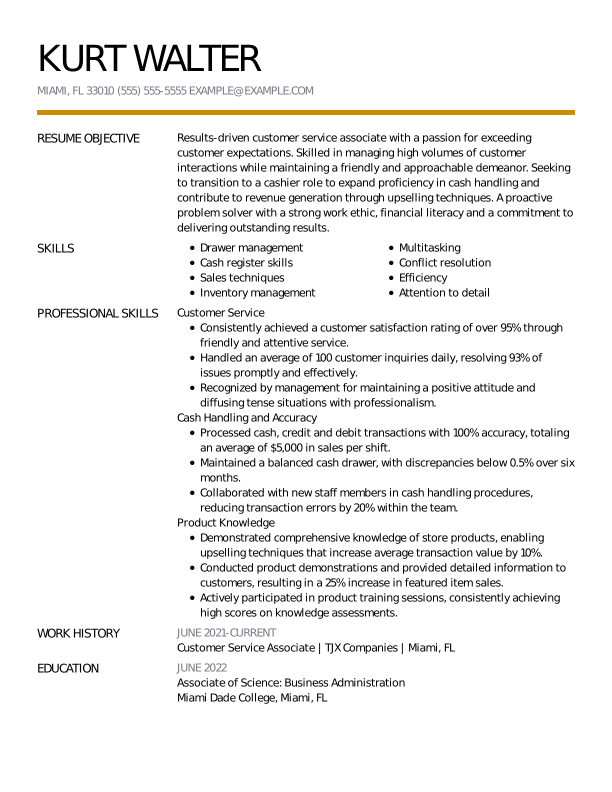
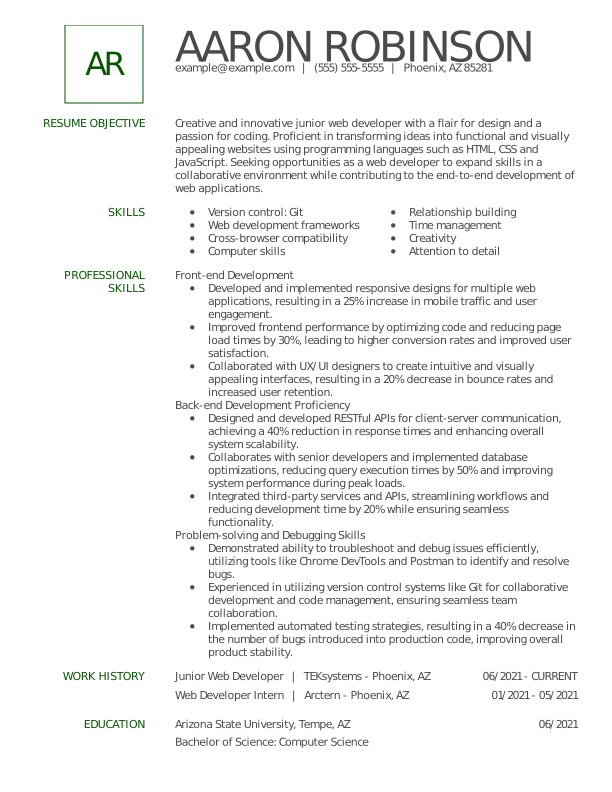
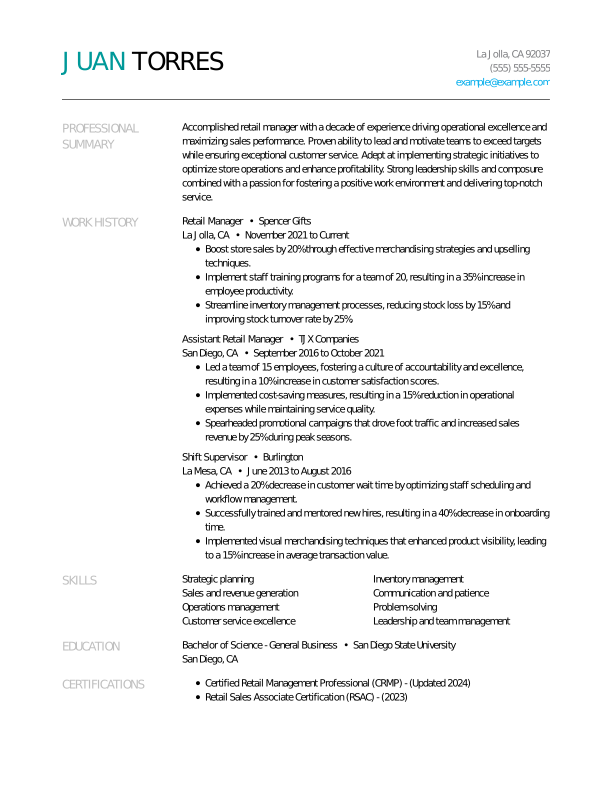
The resume examples below show how to feature transferable skills throughout a resume for different industries and roles.
Customer Service Associate
Junior Web Developer
Retail Manager
Explore our library of professional resume templates to find one that matches your industry.
How to Showcase Transferable Skills in Your Cover Letter
You can showcase transferable skills in your cover letter by connecting your experience directly to the role you’re applying for. Your cover letter complements your resume by expanding on key transferable skills and providing examples of how you’ve used them in past roles.
Spotlighting transferable skills in your cover letter is essential to showcase your suitability for a new position, especially if you’re transitioning between industries or roles.
Here’s how you can effectively highlight these skills:
- Identify transferable skills in the job description that align with your experience.
- Use specific examples that show how you applied these skills in real situations.
- Quantify achievements with data, such as percentages, dollar amounts, or efficiency gains.
- Focus on the most relevant skills for the role you’re applying for.
- Explain how your transferable skills can help you achieve results in the new role.
Here's an example of how to showcase transferable skills in a cover letter:

Browse our library of cover letter examples for more ideas on how to use transferable skills effectively.
How to Discuss Transferable Skills During a Job Interview
When you’re discussing transferable skills during a job interview, clearly explain how your experiences prepared you for the role you want.
Instead of simply naming skills, use the STAR method (situation, task, action, result) to provide specific examples of how you applied them to solve problems, work with others, or achieve results. This helps interviewers understand how your background translates to job performance, even if your experience comes from a different industry.
Here are additional tips for discussing transferable skills in an interview:
- Research the company and role beforehand to identify which transferable skills are required or useful for the position.
- Quantify your impact when possible by using numbers or outcomes to show results (e.g., “Improved efficiency by 15%”).
- Keep answers concise and focused, and stay on point while still showing clear evidence of your skills in action.
Preparing for a job interview in advance can help you clearly explain your transferable skills. Review specific examples of your achievements ahead of time so you can confidently connect your experience to the role during the interview.
How to Develop Transferable Skills
Developing transferable skills involves intentionally building abilities that can be applied across different jobs, industries, and roles over time.
These skills often grow through everyday work experience, education, and personal projects, but they can also be strengthened with focused practice and learning. Consistently developing these skills can improve your adaptability and create more long-term career opportunities.
Here are some tips for developing transferable skills:
- Take courses, workshops, and seminars to learn new skills and knowledge that can be applied across various roles and industries. By staying curious and open to learning, you can expand your skill set and stay ahead in your career.
- Get practical experience through internships, volunteer work, community service, or personal projects. Hands-on experience allows you to apply your transferable skills in real-world scenarios, strengthening your problem-solving, communication, and teamwork abilities.
- Network and build relationships with professionals in your field. By connecting with others in your industry, you can learn from their experiences, gain valuable insights, and further develop transferable skills for long-term career success.
The more transferable skills you develop, the easier it becomes to adapt to new roles and demonstrate your value to employers.
Key Takeaways
- Transferable skills are abilities like communication, leadership, and problem-solving that can be applied across multiple jobs and industries.
- Employers value transferable skills because they demonstrate adaptability and long-term potential beyond specific job experience.
- Transferable skills are especially important for career changers, entry-level candidates, and professionals reentering the workforce.
- Strong transferable skills should be demonstrated through examples in your resume, cover letter, and interviews—not just listed.
- Identifying transferable skills starts with reviewing past responsibilities, achievements, and experiences, such as volunteering or school projects.
- Transferable skills can be developed over time through continued learning, feedback, and hands-on experience.
Frequently Asked Questions
How do I say my skills are transferable?
To say your skills are transferable, explain how they apply across different roles rather than simply calling them “transferable skills.”
The best approach is to connect your skills to real examples that demonstrate adaptability, communication, leadership, or problem-solving in different settings. This helps employers understand how your experience applies to new opportunities.
What are five examples of transferable skills?
Five examples of transferable skills are communication, teamwork, problem-solving, time management, and adaptability. These skills are valuable across nearly every job and industry because they support collaboration, productivity, and workplace success.
Employers prioritize transferable skills because they demonstrate your ability to learn, adapt, and succeed in different roles, even when your technical experience differs from the job requirements.
Do employers care about transferable skills?
Employers do care about transferable skills because they show how a candidate will perform in a role beyond technical qualifications. Skills like communication, teamwork, problem-solving, and time management help employers assess how well you can integrate into a team and handle workplace challenges.
Transferable skills are especially important for career changers and entry-level candidates, where evidence of direct experience may be limited.
Are transferable skills more important than technical skills?
Transferable skills aren’t necessarily more important than technical skills, but they’re often just as critical depending on the role. Technical skills demonstrate your ability to perform specific tasks, while transferable skills show how effectively you work, communicate, and solve problems.
Employers typically look for a combination of both, though transferable skills often become especially important in entry-level roles and career transitions.
Can transferable skills help me switch careers?
Transferable skills can help you switch careers by showing employers that your experience is relevant in a new field. Skills like communication, leadership, and organization apply across many industries and help bridge gaps when you lack direct experience.
Highlighting these skills on your resume, cover letter, and during interviews can demonstrate your potential to succeed in a different role.
How We Reviewed This Article
Since 2012, we have helped more than 11 million job seekers. We want to make your career journey accessible and manageable through our services and Career Center’s how-to guides and tips. In our commitment to bring you a transparent process, we present our Editorial Process.
Rate this article
Transferable Skills on Resumes: Examples & Writing Guide


Elizabeth is a Certified Professional Resume Writer (CPRW) and a member of the Professional Association of Resume Writers & Career Coaches. She is committed to helping job seekers navigate the job market and succeed in their careers.
More Articles by Elizabeth Muenzen, CPRWShare this page
Our customers have been hired at:*Foot Note