Burnout Nation: 63% of Workers Feel Burned Out Multiple Times a Week, But Most Stay Silent


Our customers have been hired at: *Foot Note


Table of Contents
Get started with MyPerfectResume today!
- Build a resume on any device
- Pick an ATS-friendly template
- Tailor with AI copy suggestions
Burnout at work is no longer an occasional inconvenience; it’s a chronic crisis. A new MyPerfectResume survey of 1,000 U.S. workers reveals that nearly two-thirds (63%) of employees feel burned out multiple times per week.
Many are emotionally checking out, canceling personal plans, and quietly looking for the exit. But despite the severity of their stress, very few are speaking up or seeking help.
The Burned Out and On Their Own Report explores how burnout is reshaping worker behavior, well-being, and trust in leadership. The findings paint a clear picture: workers are exhausted, unsupported, and coping the only way they know how, by disengaging.
Key Findings
Burnout is widespread and persistent. Here are a few key employee burnout statistics that exemplify the severity of this issue:
- 63% of workers feel burned out at least several times a week.
- 55% rate their burnout as moderate to severe.
- 48% think about quitting due to burnout at least once a month, and around a third say they consider it weekly.
- 45% have canceled personal plans, such as birthdays or vacations, due to work stress.
- 10% say burnout affects their health and daily life.
Why it matters: Chronic burnout doesn’t just hurt individuals; it drains energy, creativity, and productivity across entire teams. Left unchecked, it drives attrition and deteriorates culture.
Emotional Withdrawal Is Widespread
Many workers are mentally checked out of work, causing them to pull back emotionally, mentally, and physically.
- 19% feel emotionally detached from their work.
- 15% say they’re procrastinating more than usual.
- 11% have called in sick due to stress.
- 23% report frequent anxiety or stress.
- 17% struggle with sleep.
- 15% experience headaches or irritability.
- 11% say they have difficulty focusing.
Why it matters: These behaviors often fly under the radar but signal a workforce that is checked out and just getting by. Similarly to career stagnation, that’s a recipe for disengagement and turnover.
Quiet Quitting and Exit Plans Are Common
With few trusted support systems in place, many workers are reducing their effort or actively preparing to leave.
- 13% are currently quiet quitting.
- 27% have quiet quit in the past.
- 33% have considered dialing back their effort to manage burnout.
- 15% are actively job hunting because of burnout.
- 10% are considering changing industries altogether.
Why it matters: Burnout doesn’t always show up in complaints. Sometimes, it shows up in silence, updated resumes, and indifference.
Workers Don’t Trust the Systems Meant to Help
Support systems are either absent, ineffective, or distrusted, and workers are keeping their burnout to themselves.
- Only 2% have spoken to HR or a manager about their burnout.
- 44% don’t feel comfortable discussing burnout or mental health with leadership.
- 41% don’t trust HR to handle burnout concerns effectively.
- Just 8% are seeing a mental health professional.
- Only 3% are using company-provided stress management resources.
- Just 4% have taken a leave of absence.
Why it matters: A support system that employees don’t trust isn’t a support system. Without open communication and safe outlets, burnout festers in silence.
What Workers Say They Need—But Aren’t Getting
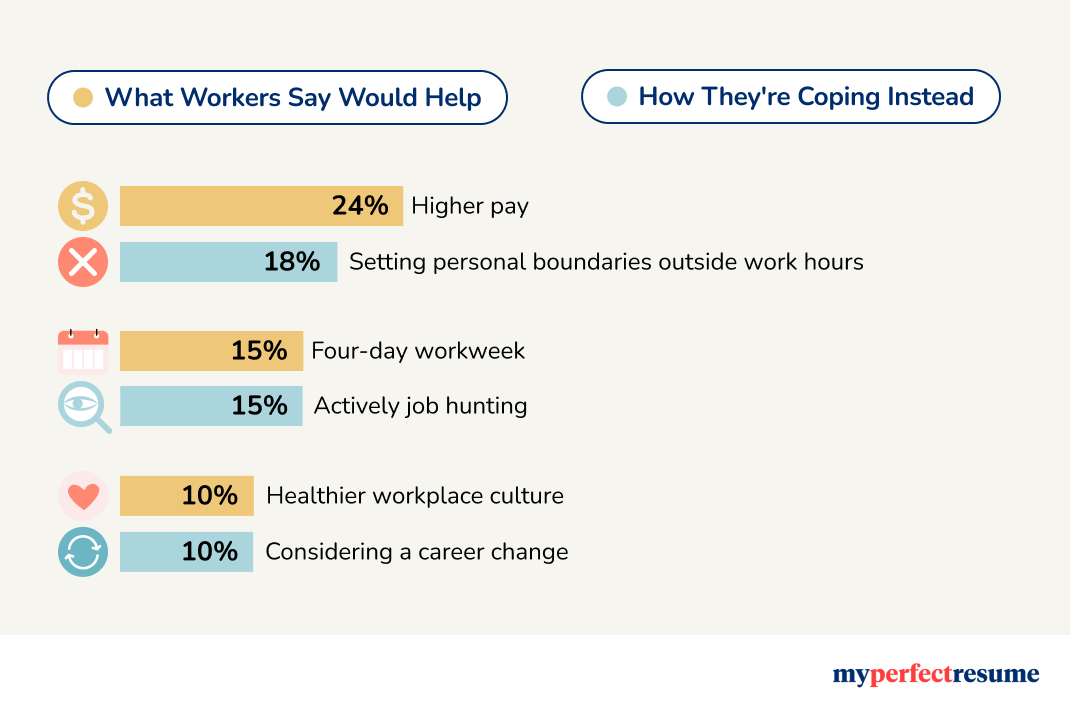
Many workers know what would help. They just aren’t seeing it offered. Here are a few key employee burnout statistics:
- 24% say higher pay would help alleviate burnout.
- 15% want a four-day workweek.
- 10% want a healthier workplace culture.
So, instead, many are making their own decisions to improve their situation.
- 18% have set boundaries outside work hours.
- 15% are job hunting as a way to take back control.
- 10% are considering switching careers entirely.
Here is a visualization of the data from above:
Why it matters: Burnout solutions exist, but without structural changes, company policies often feel like band-aids. Workers want tangible, systemic shifts that respect their time, well-being, and contributions.
Burnout doesn’t just affect individuals; it affects how companies and organizations function. For example, many nurses who are burned out at work deal with conditions that compromise patient care. When nearly two-thirds of employees are running on empty, the ripple effects touch everything: engagement, performance, innovation, and retention.
If employers want to keep top talent, they need to build a culture that encourages rest, trust, and honesty about mental health. Explore key findings from our resume rhythm indicator to see how resume-writing habits are changing, and what these changes tell us about the rhythms of American work.
Ignoring burnout and feelings of detachment in the workplace doesn’t make these issues go away. It just makes workers disappear quietly, and then completely.
For press inquiries, contact Nathan Barber at nathan.barber@bold.com.
Survey Methodology
The findings presented in this report are based on a nationally representative survey conducted by MyPerfectResume using Pollfish on July 8, 2025. The survey collected responses from 1,000 U.S. adults who are currently employed. It explored their experiences with workplace burnout, emotional disengagement, coping strategies, and perceptions of organizational support.
Respondents answered a mix of yes/no, single-selection, and multiple-choice questions covering topics such as burnout frequency and severity, mental and physical health effects, workplace behavior changes, and trust in HR or leadership.
Participants represented a broad cross-section of the working population, encompassing a diverse range of genders, ages, and educational backgrounds.
All participants were screened to ensure they were currently residing in the U.S. and actively employed at the time of the survey. The data collection adhered to Pollfish’s quality control standards to ensure accuracy and reliability.
Rate this article
Workplace Burnout

Jasmine is a certified career coach and recognized expert in job search strategy. She is committed to helping job seekers navigate the job market and succeed in their careers.
More Articles by Jasmine EscaleraShare this page
 Add MyPerfectResume as a preferred source on Google
Add
Our customers have been hired at:*Foot Note