Table of Contents
Get started with MyPerfectResume today!
- Build a resume on any device
- Pick an ATS-friendly template
- Tailor with AI copy suggestions
Why this cover letter works
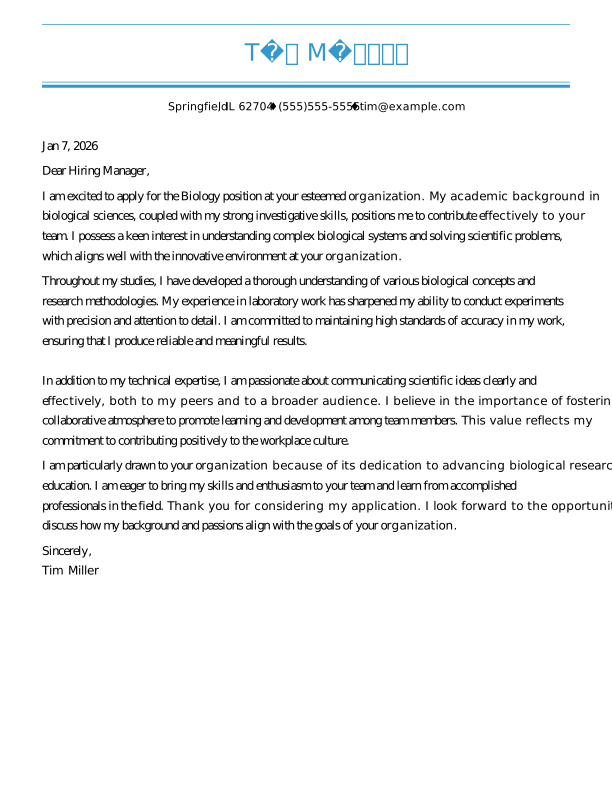
- The cover letter above highlights research accomplishments, relevant lab skills, and a passion for scientific inquiry. Review what to include in a cover letter, such as specific examples of projects, studies you’ve conducted, and any relevant certifications.
More Biology Cover Letter Examples
Explore a range of cover letter examples tailored for biology professionals. From recent graduates detailing their lab experiences to seasoned biologists emphasizing their research contributions, our collection offers valuable insights for your job application journey.
Laboratory Manager Cover Letter

Why this cover letter works
- The cover letter header above plays an important role in making the applicant’s name the most visible element, which helps hiring managers quickly recognize who they are considering. In competitive job markets, this visibility ensures that applications stand out and do not get overlooked among numerous submissions.
Research Assistant Cover Letter
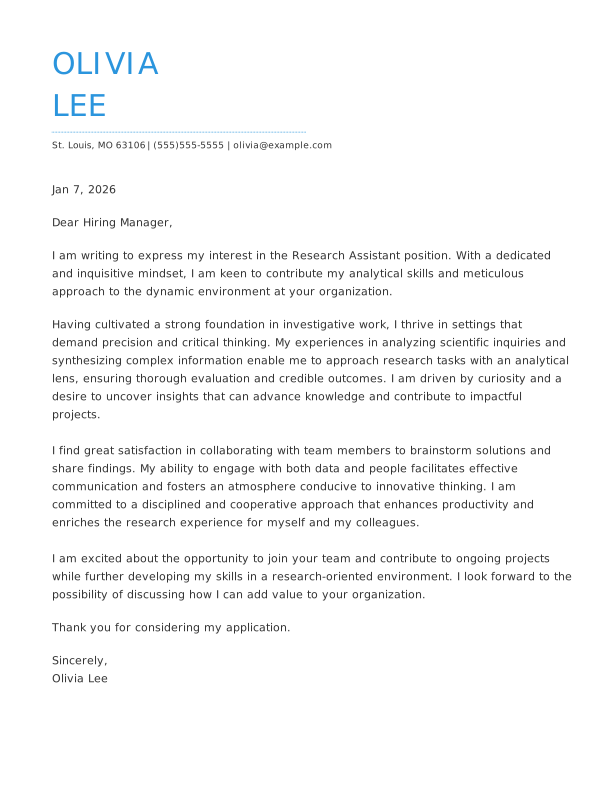
Why this cover letter works
- This cover letter showcases the applicant’s journey from a laboratory technician to a senior research associate, illustrating their growing expertise and leadership skills, which signal to employers their readiness for advanced challenges in the field of biology.
Biotechnologist Cover Letter
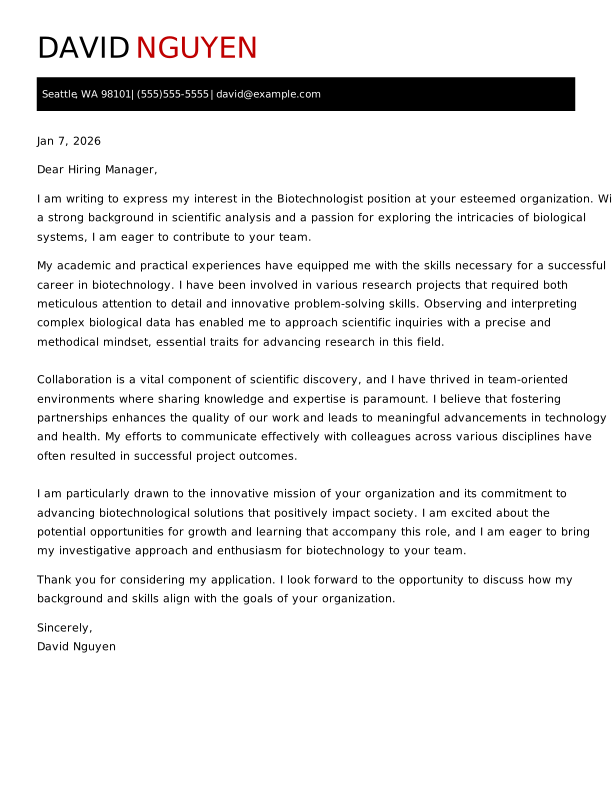
Why this cover letter works
- The applicant used a cover letter outline to highlight research achievements, hands-on laboratory experience, and relevant certifications, providing a clear and engaging structure that emphasizes their qualifications for a biology position.
Explore Even More Biology Cover Letters
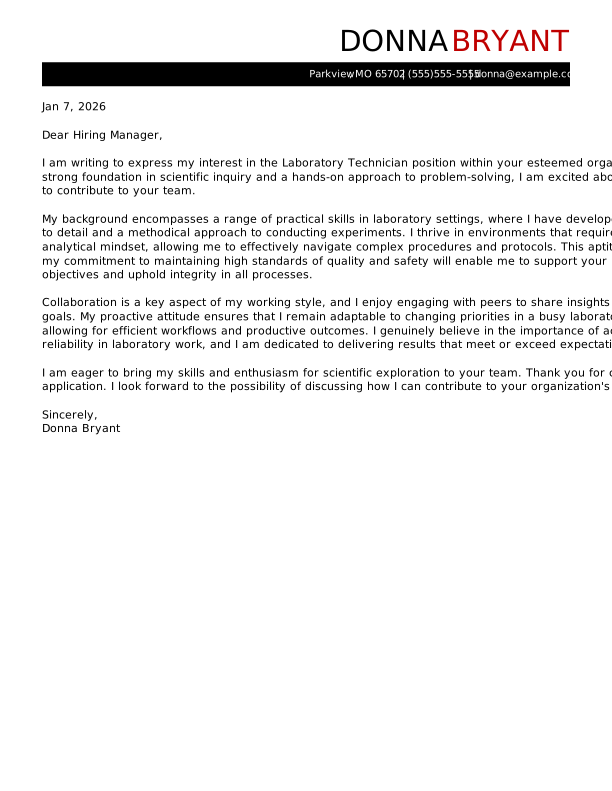
Biology Cover Letter Template (Text Version)
Looking to tailor your biology cover letter? You can easily adapt the provided text version for your own needs, or explore our extensive collection of cover letter templates to find the ideal format that highlights your unique qualifications in the field.
Tim Miller
Springfield, IL 62704
(555)555-5555
tim@example.com
Jan 7, 2026
Dear Hiring Manager,
I am excited to apply for the Biology position at your esteemed organization. My academic background in biological sciences, coupled with my strong investigative skills, positions me to contribute effectively to your team. I possess a keen interest in understanding complex biological systems and solving scientific problems, which aligns well with the innovative environment at your organization.
Throughout my studies, I have developed a thorough understanding of various biological concepts and research methodologies. My experience in laboratory work has sharpened my ability to conduct experiments with precision and attention to detail. I am committed to maintaining high standards of accuracy in my work, ensuring that I produce reliable and meaningful results.
In addition to my technical expertise, I am passionate about communicating scientific ideas clearly and effectively, both to my peers and to a broader audience. I believe in the importance of fostering a collaborative atmosphere to promote learning and development among team members. This value reflects my commitment to contributing positively to the workplace culture.
I am particularly drawn to your organization because of its dedication to advancing biological research and education. I am eager to bring my skills and enthusiasm to your team and learn from accomplished professionals in the field. Thank you for considering my application. I look forward to the opportunity to discuss how my background and passions align with the goals of your organization.
Sincerely,
Tim Miller
Related Cover Letter Examples
- Business Executive
- Business Operations
- Child Care
- Computer Software
- Construction
- Copywriting
- Cosmetology
- Culinary
- Customer Service
- Dance
- Data Systems Administration
- Dentist
- Driving
- Education
- Electrical
- Electrical Engineering
- Engineering
- Entertainment
- Event Planning
- Film
- Finance
- Fitness Nutrition
- Food Service
- General Laborer
- Healthcare Support
- Hospitality
- Human Resources
- Hvac
- Information Technology
- Insurance
- Inventory Management
- Janitorial
- Law
- Law Enforcement
- Library
- Logistics
- Marketing
- Mechanic
- Mechanical Engineering
- Medical
- Museum
- Nursing
- Pest Control
- Pharmaceutical
- Physical Therapy
- Production
- Project Manager
- Quality Control
- Real Estate
- Retail
- Safety Security
- Sales
- Social Services
- Special-education
- Sports
- Statistics
- Student
- Supervisor
- Teaching
- Team Lead
- Training Development
- Transportation
- Veterinary
How to Write a Biology Cover Letter
Our detailed advice on how to write a cover letter will help you highlight your analytical skills and passion for research, ensuring you grab the attention of potential employers.
Address your cover letter properly
Address your cover letter to a specific person whenever possible. Investigate the job posting, visit the company website, or check LinkedIn to identify the hiring manager’s name. This personal touch sets your application apart from others and shows that you have taken the time to research the organization.
If you cannot find a specific name, understanding how to address a cover letter becomes important. Avoid using “To Whom It May Concern,” as it feels impersonal. Instead, consider alternatives such as “Dear Hiring Manager” or use department-specific greetings like “Dear Biology Department Team” to demonstrate your familiarity with the role.
Personalized greetings are significant because they reflect qualities such as attention to detail and genuine interest in the position you are pursuing. A thoughtful opening can leave a positive impression on hiring managers looking for applicants who are not only qualified but also invested in their work.
Grab attention with your opening paragraph
It’s important to make an impression right away. If you’re wondering how to start your cover letter effectively, lead with your strongest accomplishments or highlight what excites you about the role you’re applying for. This approach captures attention without repeating what’s already in your resume.
Reflect on what sets you apart in the field of biology. It could be your expertise in molecular techniques, a successful research project, or your experience with environmental impact assessments. Emphasize these strengths and show how they align with the employer’s needs, demonstrating that you have the skills and passion they’re looking for to drive their projects forward.
Example of a strong opener
With over six years of hands-on experience in molecular biology research, I have successfully contributed to projects that advanced our understanding of genetic expression by 20%. I am eager to bring my passion for innovative research and my skill in data analysis to the dynamic team at BioTech Innovations. My strong analytical skills and collaborative mindset make me an ideal fit for your upcoming projects focused on genetic therapies.
If you’re having trouble crafting the ideal opening for your biology cover letter, our Cover Letter Generator can swiftly develop personalized introductions. It highlights your relevant experience so you can stand out in just minutes.
Include skills from the job ad
When applying for biology positions, avoid using a generic cover letter that could fit any job. Take the time to thoroughly read the job posting and identify the specific skills and qualifications the employer is seeking. This shows attention to detail and can help your application get past automated screening systems that look for tailored responses.
In your cover letter, make sure to highlight two to three key skills from the job description. Support each skill with concrete examples from your educational or professional experience in biology. This targeted approach will demonstrate that you are not only qualified but also a great match for the specific role and environment they are offering.
Top skills to list on your cover letter
- Cell structure and function
- Genetic analysis techniques
- Ecological field studies
- Laboratory safety protocols
- Microscopy and imaging skills
- Data collection and interpretation
- Research methodology design
- Biostatistics application
- Scientific writing and communication
- Team collaboration in research projects
- Analytical thinking and problem-solving
- Time management in experiments
- Public speaking for presentations
- Ethical considerations in biology research
- Species identification and classification
- Environmental impact assessment
Boost your productivity by using a cover letter template from Google Docs or a Microsoft Word cover letter. These templates ensure neat formatting, allowing you to focus on personalizing your application for each biology position.
Show your impact with numbers
In biology, showcasing quantifiable achievements can set your cover letter apart from the competition. Rather than stating you are a “passionate researcher,” highlight specific metrics such as “increased lab efficiency by 25% through streamlined processes” or “contributed to a study that led to a 15% improvement in species recovery rates.”
These concrete examples illustrate your impact and demonstrate that you bring measurable value to potential employers, unlike applicants who merely list responsibilities without context.
Numbers speak louder than words, especially in biology, where results matter greatly. By presenting measurable accomplishments, you not only validate your skills but also convey that you excel in delivering outcomes rather than just fulfilling job requirements.
Employers are eager to see evidence of success, and well-defined metrics show that you consistently achieve beyond expectations, making you an attractive applicant for their team.
Bullet points to include in your cover letter
- Increased lab efficiency by 20% through streamlining sample processing protocols over six months
- Achieved 95% accuracy in research data analysis by implementing new statistical software
- Trained 15 undergraduate students in laboratory techniques, resulting in a 90% pass rate for introductory biology courses
- Published three peer-reviewed articles within two years, improving the department’s academic reputation
- Secured $50,000 in grant funding for innovative research projects focused on environmental genetics
When selecting a cover letter format, consider how different layouts can better highlight your quantifiable achievements, as the best option will depend on your level of experience in biology.
Leave a lasting impression
Closing your cover letter presents an important opportunity to express your enthusiasm and motivate the hiring manager to take action.
If you’re learning how to end a cover letter, be direct about your interest in the biology position while maintaining a professional tone. Thank the hiring manager for their consideration, reiterate your excitement about the role, and express your eagerness to discuss how your skills can benefit their team. This clear communication can leave a lasting impression and improve your chances of securing an interview.
Example of cover letter closing
Thank you for considering my application for the biology position at Greenfield Research Institute. I am truly enthusiastic about the opportunity to contribute my analytical skills and a strong foundation in biological sciences to your innovative team. I would love to discuss how my background in research and teamwork can support your projects and further improve your organization’s success. I look forward to the possibility of connecting with you soon.
Tailor your cover letter for specific situations
Navigating a career in biology with a non-traditional background can be daunting, but addressing your unique journey head-on is key. Acknowledge your path and then focus on how your experiences make you an excellent applicant. Here are a few example scenarios:
- If you’re changing careers or industries, highlight transferable skills from past roles. For instance, your analytical skills from marketing can improve your research capabilities in biology. Or, if you worked in sales, showcase how that experience has honed your ability to communicate complex concepts effectively.
- For those returning to the field of biology after a break, emphasize any ongoing education or relevant projects you’ve engaged in during your absence. Discussing volunteer work or part-time positions can illustrate your dedication and updated knowledge in the field.
- New graduates should draw attention to internships, lab work, and relevant coursework they completed during their studies. Additionally, mentioning related experiences like tutoring peers or working as a lab assistant can demonstrate practical application of their academic knowledge.
FAQ
How long should a biology cover letter be?
A biology cover letter should be one page long, typically consisting of three to four paragraphs. This format allows you to showcase your relevant experience, skills, and enthusiasm for the field without overwhelming hiring managers with too much information.
Understanding how long a cover letter should be is essential for making an impact in your application. Being concise and focused is key since recruiters often spend limited time reviewing each submission.
What’s the difference between a cover letter and a resume?
When applying for biology positions, your biology resume will present your academic qualifications, research experiences, and relevant skills in a structured manner.
It serves as the “what” of your application—detailing what you have accomplished, the techniques you are proficient in, and the projects you have undertaken. This organized approach allows hiring managers to quickly assess your suitability based on objective credentials.
In contrast, your cover letter communicates the “why” and “how.” It articulates why you’re passionate about biology, how your experiences align with the specific role you’re seeking, and why you want to contribute to that particular institution.
By understanding the cover letter vs resume distinction, you can leverage both documents effectively—using the resume to showcase factual accomplishments while letting the cover letter convey your enthusiasm and fit for the position.
Should I include a cover letter even if it’s not required?
Absolutely! Including a cover letter, even when optional, demonstrates your commitment and enthusiasm for biology. Hiring managers often seek job seekers who can communicate effectively and show a genuine interest in their field.
A resume alone may not capture your passion for research or conservation efforts, which are essential in biology, where detail-oriented work can lead to significant discoveries.
Consider this scenario: two equally qualified biologists apply for the same position, but only one submits a cover letter detailing their excitement for ecological research.
When you’re considering whether cover letters are necessary, remember the potential benefits outweigh the risks—it’s an opportunity to showcase your unique qualifications and make a lasting impression.
What does a professional cover letter look like?
A biology cover letter should be polished and straightforward, making it easy for hiring managers to review at a glance. Use a conventional business letter format that starts with your contact information, followed by the date and the recipient’s details.
Opt for professional fonts like Arial or Times New Roman in sizes ranging from 11 to 12 points, ensuring that margins are standard and lines are single-spaced for optimal clarity.
The layout should feature a clear header and a personalized greeting—avoid generic salutations like “To Whom It May Concern.” Your content should be organized into three to four succinct paragraphs in the body, ending with a formal closing and your signature.
Prioritize white space to improve readability, as hiring managers often prefer documents that convey information quickly. For visual examples of what a cover letter should look like, refer to our comprehensive guide on effective formatting techniques.
Can ChatGPT write a cover letter?
While you can use ChatGPT to write a cover letter, it’s not the perfect solution you might think it is. AI tools can assist with generating ideas and easing writer’s block, but they often yield bland, formulaic content that feels robotic and detached. This approach may overlook the unique nuances that make your background special.
In biology, hiring managers are quick to identify AI-generated letters because they tend to lack personal insights and genuine enthusiasm for the field. These letters miss out on showcasing specific experiences or research interests that truly set job seekers apart.
Instead of depending solely on AI, consider using it as a foundation for organizing your ideas. Then, enrich your letter with authentic stories and relevant details about why you’re passionate about biology. Your true voice will always resonate more than any automated response.
Rate this article
Biology


Toni is a Certified Professional Resume Writer (CPRW) and member of the Professional Association of Resume Writers & Career Coaches. She is committed to helping job seekers navigate the job market and succeed in their careers.
More Articles by Toni Frana, CPRWShare this page
 Add MyPerfectResume as a preferred source on Google
Add