Table of Contents
Get started with MyPerfectResume today!
- Build a resume on any device
- Pick an ATS-friendly template
- Tailor with AI copy suggestions
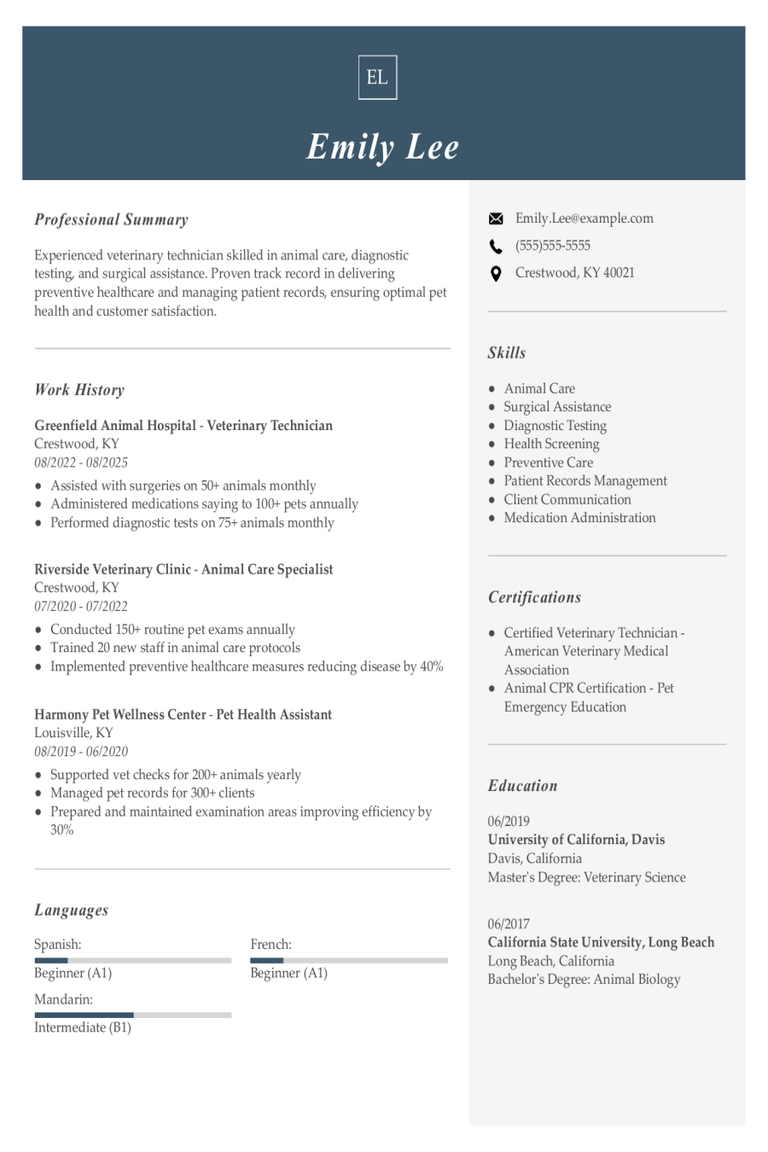
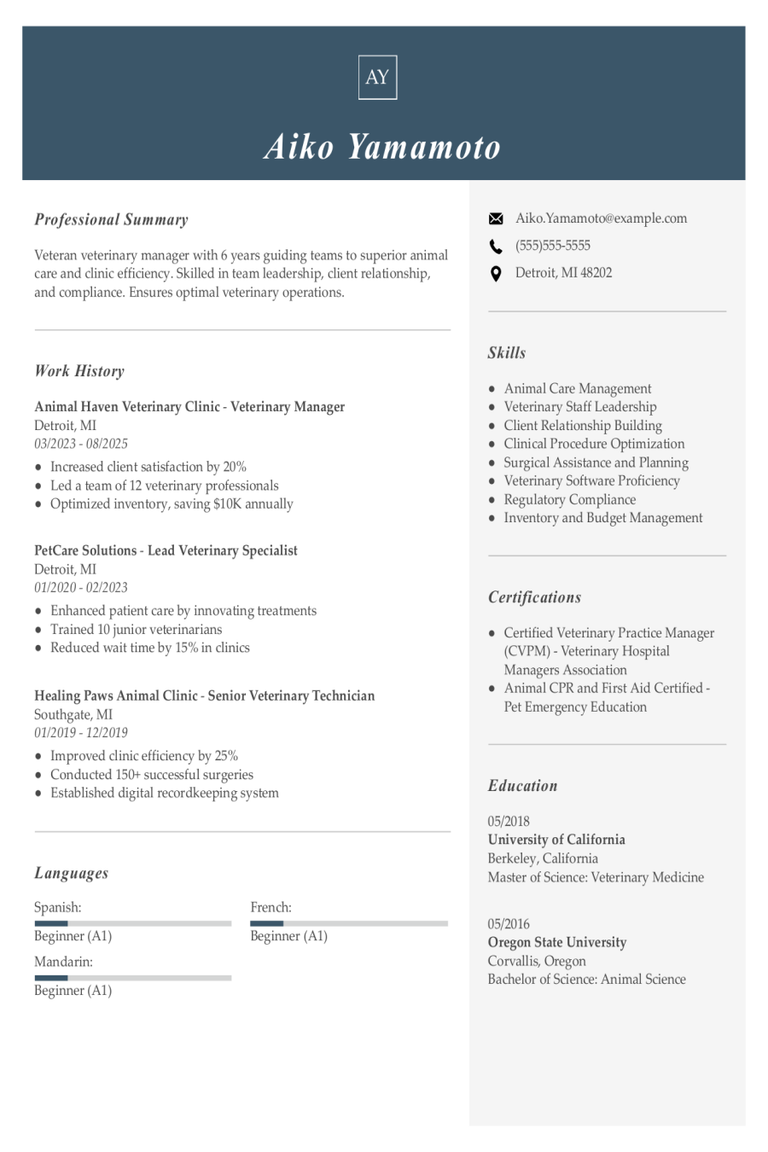
Why this cover letter works
- This cover letter highlights hands-on experience with animal care, successful treatment outcomes, and relevant certifications like CPR for pets. When considering what to include in a cover letter, focus on these aspects to stand out to hiring managers.
More Veterinary Cover Letter Examples
Explore a variety of cover letter examples tailored specifically for veterinary professionals. Whether you’re a recent graduate eager to start your career or an experienced vet looking to make a change, these resources offer valuable insights and inspiration for crafting your own compelling cover letter.
Entry-Level Veterinary Cover Letter

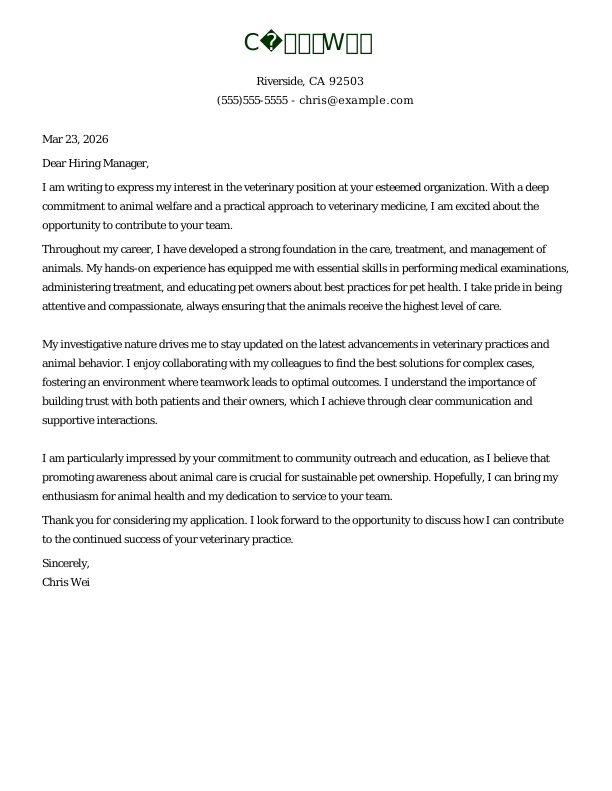
Why this cover letter works
- The prominence of the cover letter header above helps the applicant stand out to hiring managers. By making the applicant’s name highly visible, it fosters immediate recognition and ensures applications remain top-of-mind in competitive hiring situations.
Experienced Veterinary Cover Letter

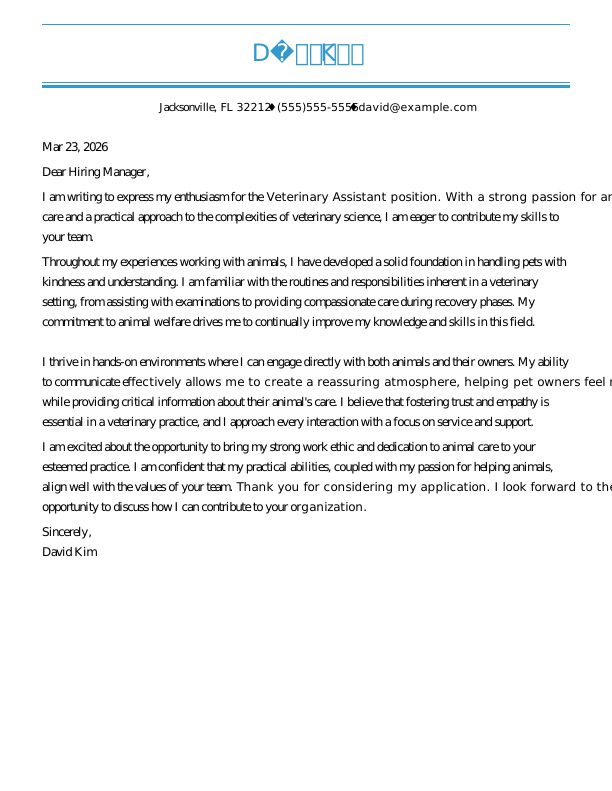
Why this cover letter works
- A cover letter outline organized the applicant’s hands-on experience, communication skills, and commitment to animal care. This structure highlights their practical approach and ability to connect with clients, showcasing their qualifications for the position.
Explore Even More Veterinary Cover Letters
Veterinary Cover Letter Template (Text Version)
Eager to personalize your veterinary cover letter? You can easily copy the text version provided below, and while you’re exploring our resources, take a moment to check out our range of cover letter templates that cater specifically to veterinary professionals.
Chris Wei
Riverside, CA 92503
(555)555-5555
chris@example.com
Mar 23, 2026
Dear Hiring Manager,
I am writing to express my interest in the veterinary position at your esteemed organization. With a deep commitment to animal welfare and a practical approach to veterinary medicine, I am excited about the opportunity to contribute to your team.
Throughout my career, I have developed a strong foundation in the care, treatment, and management of animals. My hands-on experience has equipped me with essential skills in performing medical examinations, administering treatment, and educating pet owners about best practices for pet health. I take pride in being attentive and compassionate, always ensuring that the animals receive the highest level of care.
My investigative nature drives me to stay updated on the latest advancements in veterinary practices and animal behavior. I enjoy collaborating with my colleagues to find the best solutions for complex cases, fostering an environment where teamwork leads to optimal outcomes. I understand the importance of building trust with both patients and their owners, which I achieve through clear communication and supportive interactions.
I am particularly impressed by your commitment to community outreach and education, as I believe that promoting awareness about animal care is crucial for sustainable pet ownership. Hopefully, I can bring my enthusiasm for animal health and my dedication to service to your team.
Thank you for considering my application. I look forward to the opportunity to discuss how I can contribute to the continued success of your veterinary practice.
Sincerely,
Chris Wei
Related Cover Letter Examples
- Biology
- Business Executive
- Business Operations
- Child Care
- Computer Software
- Construction
- Copywriting
- Cosmetology
- Culinary
- Customer Service
- Dance
- Data Systems Administration
- Dentist
- Driving
- Education
- Electrical
- Electrical Engineering
- Engineering
- Entertainment
- Event Planning
- Film
- Finance
- Fitness Nutrition
- Food Service
- General Laborer
- Healthcare Support
- Hospitality
- Human Resources
- Hvac
- Information Technology
- Insurance
- Inventory Management
- Janitorial
- Law
- Law Enforcement
- Library
- Logistics
- Marketing
- Mechanic
- Mechanical Engineering
- Medical
- Museum
- Nursing
- Pest Control
- Pharmaceutical
- Physical Therapy
- Production
- Project Manager
- Quality Control
- Real Estate
- Retail
- Safety Security
- Sales
- Social Services
- Special-education
- Sports
- Statistics
- Student
- Supervisor
- Teaching
- Team Lead
- Training Development
- Transportation
How to Write a Veterinary Cover Letter
Are you ready to create a standout cover letter for your veterinary career? Our helpful tips on how to write a cover letter will guide you in highlighting your compassion, attention to detail, and commitment to animal welfare. This is your chance to make a memorable impression on potential employers.
Address your cover letter properly
When applying for veterinary positions, it’s best to address your cover letter to a specific person if possible. Look for the hiring manager’s name in the job posting, clinic website, or LinkedIn profile. This approach adds a personal touch and shows that you have put in the effort to research the organization.
If you’re unsure how to address a cover letter due to missing names, avoid using “To Whom It May Concern.” Instead, consider alternatives like “Dear Hiring Manager” or specify by role with greetings such as “Dear Veterinary Team” or “Dear [Clinic Name] Staff.” This demonstrates your understanding of their work environment and commitment to the position.
Personalized greetings are significant because they reflect your attention to detail and enthusiasm for the role. A thoughtful salutation not only sets a professional tone but also highlights qualities valued in veterinary medicine, such as compassion and dedication to animal care.
Grab attention with your opening paragraph
To grab the hiring manager’s attention quickly, review how to start your cover letter. Since they are sifting through numerous applications, you only have a few seconds to make an impression. Begin with your strongest qualification or an exciting reason why you’re drawn to this veterinary position. Avoid repeating what’s already on your resume and instead highlight what makes you a strong applicant.
Consider what sets you apart as a veterinary professional. It could be your hands-on experience in emergency care, your dedication to animal welfare, or perhaps your ability to communicate well with pet owners. Identify these strengths and link them directly to what the employer values most. This connection will show them why you’re the right fit for their team.
Example of a strong opener
As a dedicated veterinarian with over six years of experience in small animal practice, I have successfully increased client satisfaction scores by 20% through compassionate care and effective communication. I’m eager to join the team at Happy Paws Animal Clinic, where I can leverage my skills in diagnostic procedures and preventive medicine to contribute to your commitment to pet health and wellness.
Struggling to find the perfect way to start your veterinary cover letter? Our Cover Letter Generator crafts personalized openings by highlighting your specific animal care experience, helping you create standout intros in minutes.
Include skills from the job ad
Do not submit a generic cover letter when applying for veterinary positions. Instead, take time to read the job posting closely and highlight the specific skills and qualifications they are looking for. This careful approach shows your attention to detail and increases your chances of getting past automated screening systems that filter applications based on keywords.
In your cover letter, pinpoint two to three key skills mentioned in the job description. Use concrete examples from your veterinary experience to illustrate each skill in action. This targeted strategy not only highlights your qualifications but also demonstrates that you’re a great fit for this particular role and the veterinary practice involved.
Top skills to list on your cover letter
- Animal behavior observation
- Veterinary pharmacology knowledge
- Surgical assistance techniques
- Diagnostic imaging skill
- Anesthesia monitoring
- Sample collection and lab testing
- Client communication skills
- Zoonotic disease awareness
- Nutrition and diet planning for animals
- Emergency triage procedures
- Sterilization and sanitation practices
- Record-keeping accuracy
- Compassionate animal handling
- Multispecies medical knowledge
- Pain assessment in animals
- Regulatory compliance understanding
Save time by using a cover letter template from Google Docs or a Microsoft Word cover letter. These templates provide neat formatting, allowing you to focus on customizing your content for each veterinary position.
Show your impact with numbers
In veterinary medicine, numbers speak louder than words. Instead of saying you’re a “compassionate veterinarian,” provide concrete examples of your achievements, such as successfully reducing surgery recovery times by 30% or increasing client retention rates by 25%.
These specific metrics distinguish you from job seekers who only describe their responsibilities, showcasing that you not only care for animals but also make great improvements in practice.
Measurable accomplishments demonstrate your ability to deliver results, which is essential for veterinary employers. They confirm that you excel in providing high-quality care rather than just fulfilling basic duties.
By highlighting quantifiable successes, you illustrate your commitment to animal health and client satisfaction, proving that you can contribute positively to their team and improve overall practice performance.
Bullet points to include in your cover letter
- Achieved a 95% success rate in surgeries performed over two years
- Increased client retention by 30% through the development of a personalized pet care program
- Trained and supervised 15 veterinary technicians, resulting in improved team productivity by 20%
- Implemented an inventory management system that reduced supply costs by 15% annually
- Conducted over 500 wellness visits with a satisfaction rating of 98% from pet owners
When applying for veterinary positions, carefully choose a cover letter format that highlights your quantifiable achievements. Certain layouts can showcase metrics more clearly depending on your level of experience in the field.
Leave a lasting impression
Your closing paragraph should convey your enthusiasm and encourage the hiring manager to take action. Learning how to end a cover letter involves being straightforward about your interest while maintaining a professional tone. Be sure to thank them for their time, emphasize your excitement about the opportunity, and express your eagerness to discuss how your veterinary skills can positively impact their team.
Example of cover letter closing
Thank you for considering my application for the veterinary position at Green Paws Animal Clinic. I am truly enthusiastic about the chance to apply my experience in animal care and my commitment to improving pet health within your team. I would love the opportunity to discuss how my skills can help improve the quality of care provided at your clinic. I look forward to the possibility of contributing to your mission and hope to hear from you soon.
Tailor your cover letter for specific situations
Navigating a career in veterinary medicine with a non-traditional background can be challenging, but addressing your unique circumstances is important. A brief acknowledgment of your journey can set the tone, followed by showcasing how your experiences make you an excellent job seeker.
- If you’re changing careers, highlight transferable skills that apply to veterinary work. For example, if you’ve worked in customer service, explain how those communication skills will help in interacting with pet owners and understanding their concerns.
- Returning to the field? Share what you’ve done to stay involved. Perhaps you’ve volunteered at animal shelters or completed online courses. Emphasize your commitment and passion for animal care after time away.
- New graduates should focus on relevant experiences during training, such as internships or special projects. Additionally, any part-time roles or volunteer work in animal care settings can illustrate your dedication and readiness for a veterinary role.
Salary Insights for Veterinary Roles
Veterinary roles earn varying salaries across the United States. The table below highlights the states where veterinary jobs command the highest compensation.
Our salary information comes from the U.S. Bureau of Labor Statistics’ Occupational Employment and Wage Statistics survey. This official government data provides the most comprehensive and reliable salary information for veterinary roles across all 50 states and the District of Columbia. The figures presented here reflect the May 2025 dataset, which is the most recent available as of this publication.
| State | Average Salary |
|---|---|
| New York | $59,540 |
| Washington | $58,920 |
| California | $56,980 |
| Virginia | $55,050 |
| District of Columbia | $55,580 |
| Connecticut | $52,250 |
| Minnesota | $51,940 |
| Oregon | $50,320 |
| New Hampshire | $49,020 |
| Maine | $49,750 |
FAQ
How long should a veterinary cover letter be?
Cover letters for veterinary applications should be one page long and consist of three to four paragraphs. This format allows you to showcase your most relevant experience and skills, making a strong impression without overwhelming the hiring manager.
Understanding how long a cover letter should be is important. Being concise and focused is key since recruiters spend limited time reviewing each application. Highlight your qualifications clearly to capture their attention quickly, ensuring that your passion for animal care shines through right from the start.
What’s the difference between a cover letter and a resume?
When applying for veterinary positions, your veterinary resume provides a structured overview of your qualifications, including your clinical experience, certifications, and education. Think of your resume as the “what”—what skills you possess, what accomplishments you’ve achieved, and what roles you have held in the field.
On the other hand, your cover letter is the “why” and “how.” It expresses your passion for veterinary care, explains why you’re an excellent fit for the specific position, and highlights your interest in that particular clinic or hospital.
The distinction between a cover letter vs resume allows you to present each document with a unique focus. Understanding this difference helps you maximize both documents to create a well-rounded application that tells your professional story compellingly.
Should I include a cover letter even if it’s not required?
Absolutely! Submitting a cover letter, even when it’s optional, reflects your dedication and passion for veterinary care.
In this field, hiring managers are looking for job seekers who not only have the right qualifications but also demonstrate compassion and strong communication skills with both clients and animals. A resume can highlight your experience, but it often fails to convey your genuine love for animal welfare.
Imagine two equally qualified veterinarians applying for the same position. Only one includes a compelling cover letter detailing their commitment to animal health and client education. When discussing whether cover letters are necessary, it’s clear that the job seeker with the additional document stands out more in the eyes of employers.
So when in doubt, always include that cover letter—you have everything to gain by showcasing your unique perspective and dedication to veterinary medicine.
What does a professional cover letter look like?
A professional veterinary cover letter should appear clean, organized, and easy to scan quickly. Use a standard business letter format that includes your contact information at the top, followed by the date and employer’s details.
Choose a professional font like Arial or Times New Roman in 11-12 point size with standard margins and single spacing, which will make your application look polished.
The structure should consist of a clear header, a personalized greeting (avoid generic salutations), three to four concise paragraphs in the body, and a formal closing with your signature. It’s best to maintain ample white space for readability since hiring managers often review numerous applications rapidly.
For further guidance on what a cover letter should look like, explore our resource that provides visual examples and formatting tips to improve your application’s presentation.
Can ChatGPT write a cover letter?
While you can use ChatGPT to write a cover letter, it might not be the best approach. AI tools can offer support in brainstorming and overcoming writer’s block, but they often create content that feels generic and lacks personal connection. Relying too heavily on these tools could lead to a robotic letter that does not convey your true passion for veterinary medicine.
Hiring managers in veterinary medicine are skilled at recognizing AI-generated letters because they usually lack specific insights and the genuine enthusiasm veterinarians bring to their work. These letters do not reflect individual experiences or personal motivations that resonate with animal care.
Rather than depending solely on AI, use it as a foundation to outline your thoughts before infusing every part with your unique voice and relevant experiences. Your authentic passion for animal health will always make a stronger impression than any automated text can provide.
Rate this article
Veterinary


Toni is a Certified Professional Resume Writer (CPRW) and member of the Professional Association of Resume Writers & Career Coaches. She is committed to helping job seekers navigate the job market and succeed in their careers.
More Articles by Toni Frana, CPRWShare this page
 Add MyPerfectResume as a preferred source on Google
Add