Table of Contents
Get started with MyPerfectResume today!
- Build a resume on any device
- Pick an ATS-friendly template
- Tailor with AI copy suggestions
Why this resume works
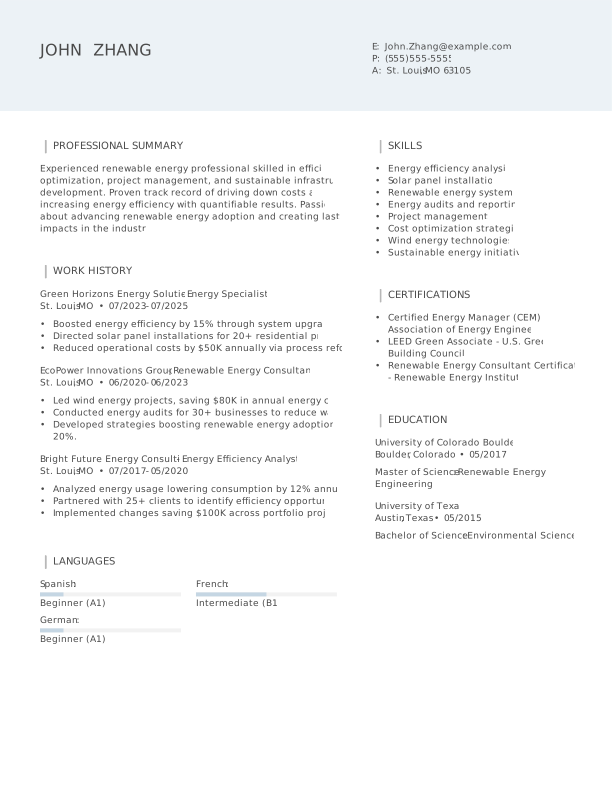
- Quantifies accomplishments: Measurable accomplishments like reducing operational costs by $50K annually showcase the applicant’s tangible impact and efficiency.
- Showcases career progression: Starting as an energy analyst and progressing to an energy specialist, the applicant illustrates a steady career progression marked by expanded responsibilities in improving energy efficiency and managing renewable projects.
- Uses action-oriented language: Using dynamic action verbs like “boosted” and “directed,” the applicant conveys initiative and effectiveness in driving energy solutions.
More Energy Resume Examples
Take a look at our energy resume examples to learn how to highlight your technical skills, industry experience, and sustainability initiatives. These samples will help you create a resume that impresses employers in the energy sector.
Entry-Level Energy Resume
Why this resume works
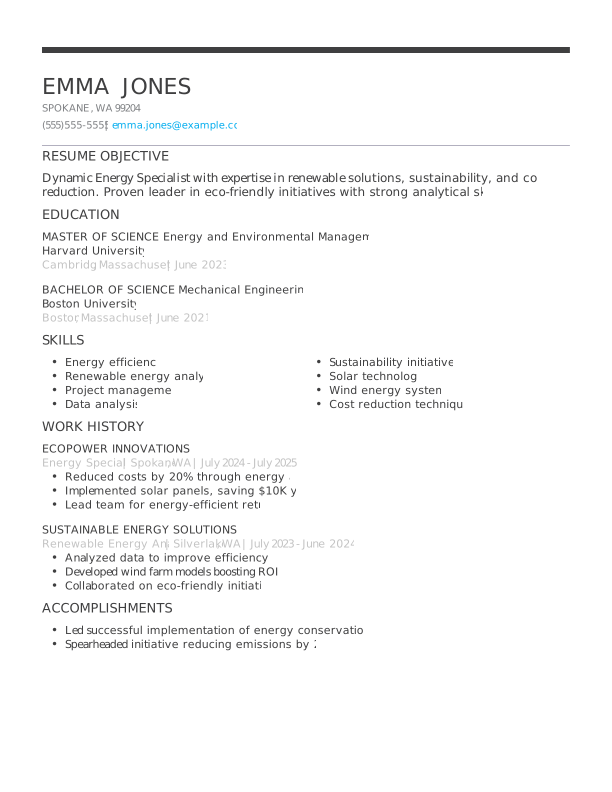
- Effective use of keywords: Integrating role-specific keywords like energy efficiency and cost reduction techniques ensures the resume aligns with ATS requirements.
- Shows digital literacy: By showcasing tools like data analysis for renewable projects, the applicant reflects strong computer skills essential for tackling modern energy challenges.
- Centers on academic background: Highlighting a master’s degree in energy and environmental management emphasizes an academic foundation critical for excelling early in specialized sustainability roles.
Mid-Level Energy Resume
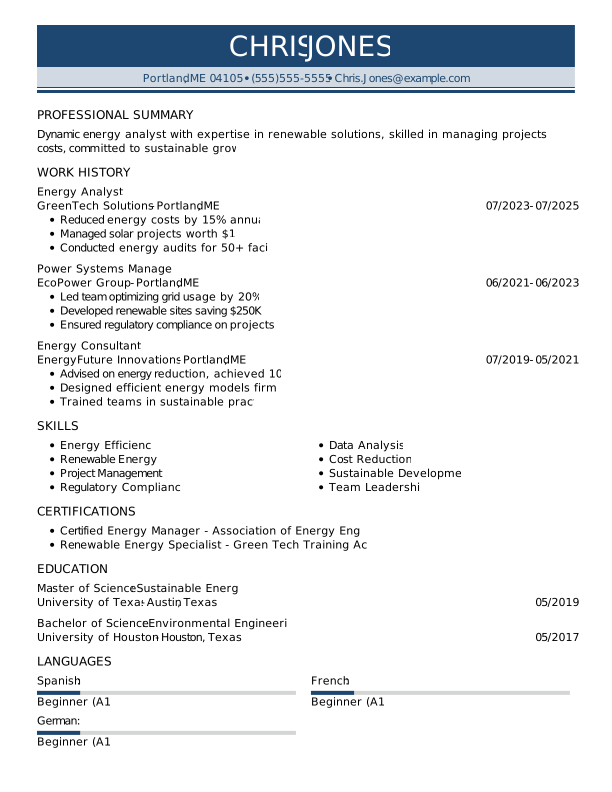
Why this resume works
- Points to measurable outcomes: Achieving results like a 15% annual energy cost reduction and $250K savings showcases the applicant’s ability to deliver measurable financial and operational impacts in diverse roles.
- Demonstrates language abilities: Language skills in Spanish, French, and German improve global collaboration potential and cross-cultural communication.
- Displays technical expertise: Certifications like Certified Energy Manager and Renewable Energy Specialist reflect deep technical knowledge, reinforcing their expertise in energy efficiency and sustainable project management.
Experienced Energy Resume
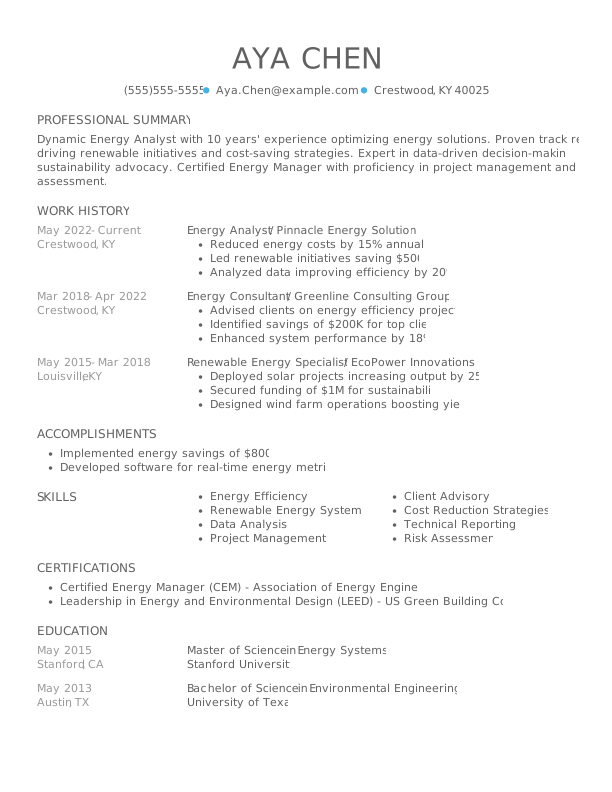
Why this resume works
- Lists relevant certifications: By listing certifications like Certified Energy Manager, the applicant shows expertise and dedication to continued learning in energy management.
- Showcases impressive accomplishments: Implementing $800K in energy savings showcases a high level of achievement and reflects significant business impact, aligning with senior-level performance expectations.
- Emphasizes leadership skills: Leading renewable initiatives that saved $500K indicates strong leadership skills, as the applicant spearheaded projects with substantial results.
Explore Even More Energy Resumes
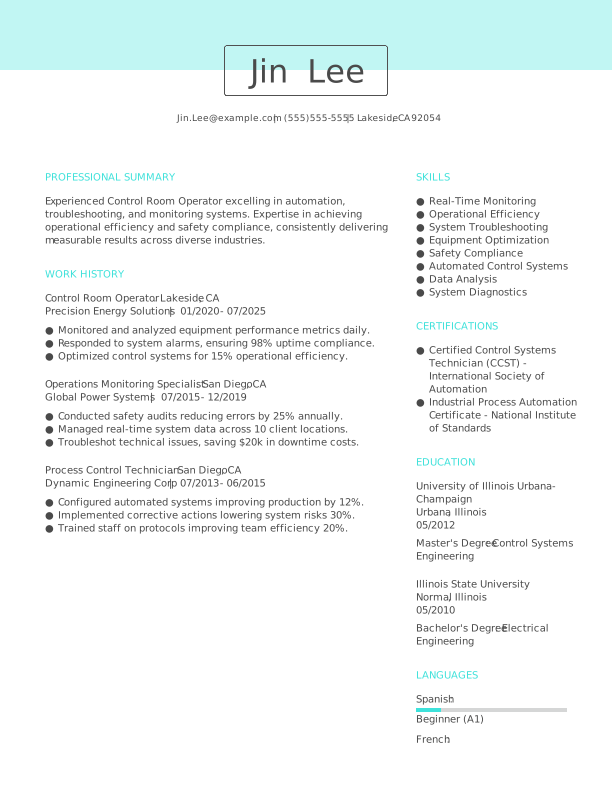

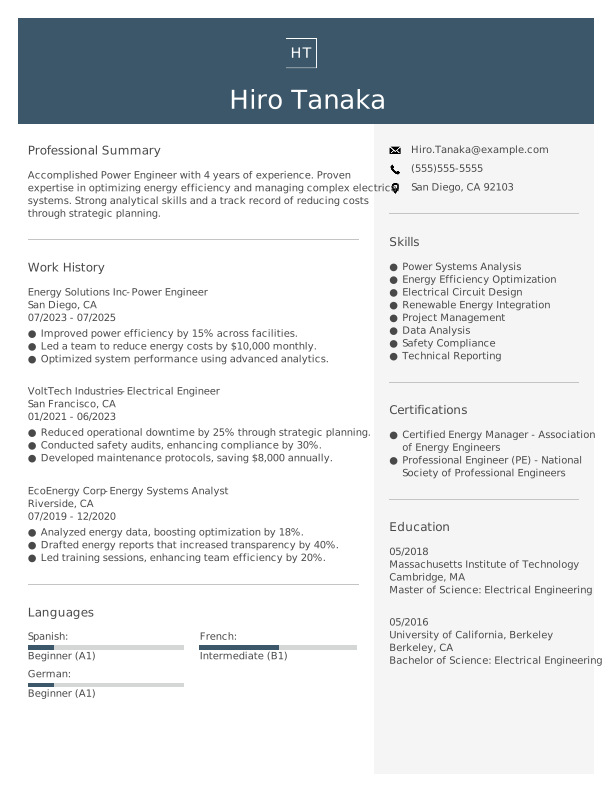
Energy Resume Template (Text Version)
In a hurry? Copy the text template below and get writing. If you’re looking for more choices, visit our resume templates.
John Zhang
St. Louis, MO 63105
(555)555-5555
John.Zhang@example.com
Professional Summary
Experienced renewable energy professional skilled in efficiency optimization, project management, and sustainable infrastructure development. Proven track record of driving down costs and increasing energy efficiency with quantifiable results. Passionate about advancing renewable energy adoption and creating lasting impacts in the industry.
Work History
Energy Specialist
Green Horizons Energy Solutions – St. Louis, MO
July 2023 – July 2025
- Boosted energy efficiency by 15% through system upgrades.
- Directed solar panel installations for 20+ residential projects.
- Reduced operational costs by K annually via process reforms.
Renewable Energy Consultant
EcoPower Innovations Group – St. Louis, MO
June 2020 – June 2023
- Led wind energy projects, saving K in annual energy costs.
- Conducted energy audits for 30+ businesses to reduce waste.
- Developed strategies boosting renewable energy adoption by 20%.
Energy Efficiency Analyst
Bright Future Energy Consulting – St. Louis, MO
July 2017 – May 2020
- Analyzed energy usage lowering consumption by 12% annually.
- Partnered with 25+ clients to identify efficiency opportunities.
- Implemented changes saving 0K across portfolio projects.
Languages
- Spanish – Beginner (A1)
- French – Intermediate (B1)
- German – Beginner (A1)
Skills
- Energy efficiency analysis
- Solar panel installation
- Renewable energy systems
- Energy audits and reporting
- Project management
- Cost optimization strategies
- Wind energy technologies
- Sustainable energy initiatives
Certifications
- Certified Energy Manager (CEM) – Association of Energy Engineers
- LEED Green Associate – U.S. Green Building Council
- Renewable Energy Consultant Certificate – Renewable Energy Institute
Education
Master of Science Renewable Energy Engineering
University of Colorado Boulder Boulder, Colorado
May 2017
Bachelor of Science Environmental Science
University of Texas Austin, Texas
May 2015
Browse Resume Examples by Industry
- Aviation
- Banking
- Billing And Collections
- Biology
- Boating
- Business Operations
- Casino
- Chemistry
- Child Care
- Civil Engineering
- Compliance
- Computer Hardware
- Computer Software
- Construction
- Copywriting
- Cosmetology
- Costco
- Culinary
- Customer Service
- Dance
- Data Systems Administration
- Deloitte
- Dentistry
- Driving
- Education
- Electrical
- Electrical Engineering
- Engineering
- Entertainment
- Entrepreneur
- Entry Level
- Environmental
- Environmental Science
- Event Planning
- Executive
- Fashion
- Film
- Finance
- Fitness & Nutrition
- Food Service
- Freelancing
- General Laborer
- Goldman Sachs
- Government
- Graphic Design
- Healthcare Support
- Hospitality
- Human Resources
- HVAC
- Industrial Engineering
- Information Technology
- Insurance
- Interior Design
- Inventory Management
- Janitorial
- Landscaping
- Language Services
- Law
- Law Enforcement
- Library
- Logistics
- Maintenance
- Marketing
- McKinsey
- Mechanical Engineering
- Mechanics
- Media And Communication
- Medical
- Mental Health
- Meta
- Metal Work
- Military
- Mining
- Museum
- Music
- Netflix
- Non Profit
- Nursing
- Pharmaceutical
- Photography
- Physical Therapy
- Plumbing
- Politics
- Production
- Program Manager
- Project Manager
- Psychology
- Purchasing
- Quality Control
- Real Estate
- Religion
- Retail
- Safety And Security
- Sales
- Sciences
- Shipping
- Social Services
- Special Education
- Sports
- Statistics
- Student
- Teaching
- Team Lead
- Tesla
- Training And Development
- Transportation
- Travel
- Veterinary
- Walgreens
- Walmart
- Web Development
Advice for Writing Your Energy Resume
Discover how to write a resume for an energy position. Whether you’re diving into renewable energy, oil and gas, or utilities, tailoring your skills and experience can make all the difference.
Highlight relevant technical skills
Technical skills play an important role in the energy field, as they showcase your ability to work with advanced systems, tools, and processes required for the job.
You can create a dedicated skills section on your resume to highlight these abilities or weave them into your work experience by detailing how you applied them in previous roles. Whichever method you choose, ensure the skills match the specific requirements of energy-related positions.
Some commonly valued technical skills in energy jobs include knowledge of renewable energy systems, power grid analysis, and energy modeling software like HOMER or RETScreen. Familiarity with AutoCAD or GIS mapping tools can be useful for design and planning tasks.
Additionally, hands-on expertise in data analysis using programs like MATLAB or Python often proves beneficial for improving energy efficiency and system performance. If relevant, mention experience with electrical circuit design or maintaining industrial equipment.
When listing technical skills on your resume, prioritize those directly connected to the job description. Aim for precise language that highlights specialized technologies or techniques you’ve worked with rather than vague terms. This strategy helps employers quickly recognize how well-equipped you are for specific responsibilities within the energy sector.
Example of a technical skills section
- Renewable energy systems
- Energy management software (EMS)
- Solar photovoltaic system design
- Wind turbine technology
- Power grid optimization
- Energy efficiency analysis
- Battery storage solutions
- Smart grid technologies
- Energy auditing techniques
You can use our Resume Builder to craft a resume that highlights technical skills in addition to key soft skills like teamwork, communication, and adaptability.
Quantify your accomplishments
Quantifying accomplishments in your resume is key to standing out, especially in the energy field. Just listing job responsibilities doesn’t give hiring managers a clear picture of what you achieved.
Instead, turning duties into achievements with numbers and metrics makes your resume more impactful. In the work experience section, each entry should include your job title, employer name, location, and employment dates. Then, focus on how you improved processes or contributed to the team by using measurable results like percentages or cost savings.
Using action verbs combined with metrics can transform your resume into a results-driven document that catches the eye of hiring managers quickly. For example, instead of saying “managed energy projects,” say “led energy projects resulting in a 20% cost reduction.”
This approach helps employers see your real impact and skills immediately. Quantified accomplishments make it easier for them to assess how you could benefit their company.
By focusing on quantifiable achievements rather than generic duties, you showcase concrete evidence of your capabilities in the energy sector. This method not only emphasizes what you’ve done but also demonstrates how effectively you’ve done it, making your resume compelling and memorable to those reviewing it.
5 energy work history bullet points
- Managed energy audits across 50+ facilities, identifying cost-saving opportunities that reduced annual energy expenses by 15%.
- Implemented renewable energy systems in urban projects, increasing clean energy usage by 25% within two years.
- Oversaw a $10M energy efficiency upgrade program, achieving a 20% reduction in carbon emissions.
- Analyzed utility data to optimize power distribution, improving grid reliability by 18%.
- Developed and executed training programs for 100+ employees on sustainable energy practices, boosting compliance rates by 40%.
Need some ideas for your resume? Check out our professional resume examples to see how others highlight their skills and experiences.
Write a powerful professional summary
A professional summary on a resume serves as an introduction for hiring managers, providing a snapshot of your skills and accomplishments. You can decide whether to use a summary or a resume objective based on your experience level and career goals.
A professional summary is a brief paragraph showing your experience, skills, and key accomplishments. It is best for those with significant work history who want to show their professional identity and value quickly. This section allows you to summarize what you’ve accomplished in your career so far.
In contrast, resume objectives state career goals and are ideal for entry-level applicants, career changers, or those with employment gaps. While summaries focus on past achievements (“what I’ve accomplished”), objectives emphasize future contributions (“what I aim to contribute”).
Next, we will provide examples of both professional summaries and resume objectives tailored to various industries and experience levels.
Energy resume summary examples
Entry-level
Recent graduate with a Bachelor of Science in renewable energy engineering, possessing foundational knowledge in solar and wind energy systems. Completed internships focused on energy efficiency audits and sustainable design projects. Holds certifications in AutoCAD and Energy Modeling, eager to contribute to innovative energy solutions.
Mid-career
Energy engineer with over seven years of experience in designing and implementing large-scale renewable energy projects. Proven track record of optimizing energy consumption for commercial clients, leading to significant cost reductions. Certified Energy Manager (CEM) with expertise in photovoltaic system design and LEED-accredited professional known for driving sustainability initiatives.
Experienced
Senior energy consultant with over 15 years of leadership experience in the renewable sector, specializing in strategic planning and project management for utility-scale solar farms. Expert in regulatory compliance and policy advocacy, instrumental in securing multi-million dollar contracts through innovative clean technology solutions. Committed to advancing global sustainability goals through impactful collaborations.
Energy resume objective examples
Recent graduate
Driven recent graduate with a Bachelor of Science in energy engineering seeking an entry-level position in the renewable energy sector. Eager to apply academic knowledge and technical skills in sustainable energy solutions to contribute to innovative projects that promote environmental sustainability.
Career changer
Dedicated professional transitioning from hospitality management into the energy industry, with strong analytical skills and a passion for renewable resources. Seeking opportunities to contribute to energy conservation initiatives and support the development of sustainable practices within a forward-thinking organization.
Specialized training
Aspiring energy analyst with specialized training in solar power systems and grid integration, aiming to join a dynamic team focused on advancing clean energy technologies. Committed to using acquired expertise to improve project efficiency and drive impactful changes in the transition towards greener energy solutions.
Use a polished and professional resume format that aligns with your experience level to ensure your skills and qualifications stand out to hiring managers.
Showcase your credentials
Certifications, licenses, and specialized training are especially important in the energy sector because they demonstrate your knowledge of industry standards, safety protocols, and emerging technologies.
Employers rely on these credentials to gauge your ability to manage complex systems, ensure compliance, and adapt to evolving energy solutions. A dedicated certifications section on your resume makes it easy for hiring managers to quickly identify your qualifications, helping you stand out in a competitive field.
Examples of valuable certifications in the energy industry include:
- Certified Energy Manager (CEM)
- Professional Engineer (PE) License – Energy or Electrical focus
- Fundamentals of Engineering (FE) Certification
- OSHA Safety Certification (Construction/Electrical)
- Renewable Energy Professional (REP)
- LEED Accredited Professional (LEED AP)
- NABCEP PV Installation Professional Certification (for solar energy)
Including these credentials alongside your education details highlights both your academic foundation and your specialized training. Certifications in energy demonstrate your readiness to work safely, efficiently, and in alignment with industry best practices—qualities that employers highly value.
Example of a certifications section
Certified Energy Manager (CEM)
Issued by: Association of Energy Engineers (AEE)
Issued 2022
LEED Green Associate
Issued by: U.S. Green Building Council
Expires 2025
Energy Risk Professional (ERP)
Issued by: Global Association of Risk Professionals (GARP)
Issued 2021
Renewable Energy Professional Certification
Issued by: Renewable Energy Institute
Expires 2024
Building Energy Modeling Professional Certification
Issued by: ASHRAE
Issued 2023
Opt for a straightforward, tidy resume template with readable fonts and clear section headers. Steer clear of flashy designs to let your skills and work history stand out.
FAQ
Do I need to include a cover letter with my energy resume?
Yes, including a cover letter with your energy resume is highly recommended. A cover letter lets you highlight your specific interest in the role and company while detailing your related experience and achievements in the energy sector.
For instance, if the company is involved in renewable energy projects or innovative technologies, you can elaborate on your passion or previous work in that area.
You might find it helpful to use tools like our Cover Letter Generator to create a personalized cover letter based on your resume or get expert content suggestions for crafting one from scratch. Additionally, reviewing cover letter examples tailored for energy roles can inspire and ensure that yours effectively complements your resume.
How long should an energy resume be?
For a role in energy, aim for a one-page resume to succinctly show your core skills and achievements. Highlight relevant expertise like renewable energy projects, technical skills, and any experience with energy regulations or sustainability initiatives.
If you have extensive experience or specialized certifications that add value, a two-page resume is perfectly acceptable. Ensure every detail ties directly to the energy sector, focusing on recent roles and accomplishments for impact.
Check out our guide on how long a resume should be for more insights on tailoring length to your career stage.
How do you write an energy resume with no experience?
When creating a resume with no experience for an energy role, it’s important to focus on relevant skills, education, and projects or coursework that showcase your potential in the industry. Here are a few tips to help you get started:
- Emphasize your education: Start by listing any degrees or courses related to energy, such as environmental science, engineering, or sustainability. Include notable projects or research you’ve undertaken during your studies.
- Showcase transferable skills: Highlight skills that are valuable in the energy sector, like analytical abilities, problem-solving, data analysis, and project management. These can come from internships, volunteer work, or other jobs.
- Include relevant certifications: Even if you lack direct experience, certifications like LEED Green Associate or energy auditing can show initiative and knowledge of industry standards.
- Highlight extracurricular involvement: Mention any clubs or organizations focused on renewable energy or sustainability you’ve been part of. Leadership roles in these groups can further demonstrate commitment and capability.
Consider tailoring your resume to highlight your passion for the field through personalized statements about why you’re drawn to the industry and how you’re preparing yourself for this career path.
Rate this article
Energy


Elizabeth is a Certified Professional Resume Writer (CPRW) and a member of the Professional Association of Resume Writers & Career Coaches. She is committed to helping job seekers navigate the job market and succeed in their careers.
More Articles by Elizabeth Muenzen, CPRWShare this page
 Add MyPerfectResume as a preferred source on Google
Add