Table of Contents
Get started with MyPerfectResume today!
- Build a resume on any device
- Pick an ATS-friendly template
- Tailor with AI copy suggestions
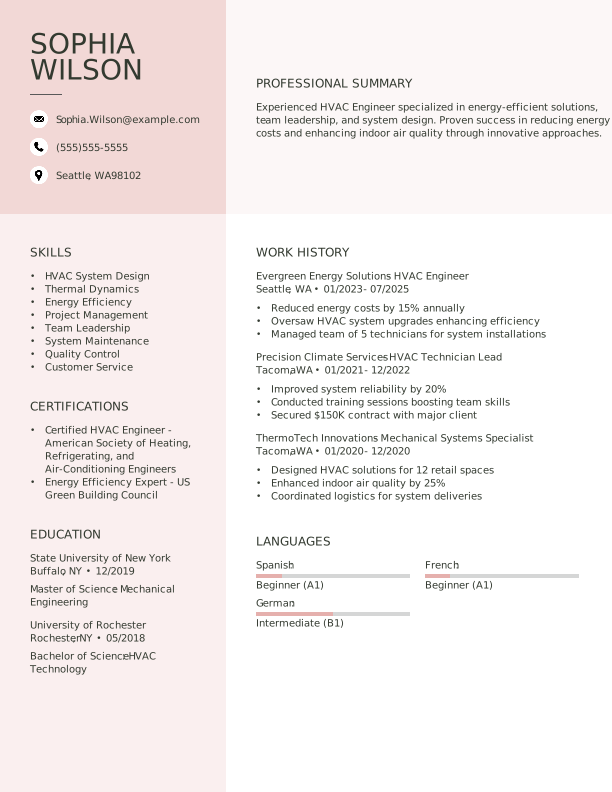
Why this resume works
- Quantifies accomplishments: Measurable accomplishments like reducing energy costs by 15% annually as an HVAC engineer highlight the applicant’s impactful contributions.
- Highlights industry-specific skills: Mastery in HVAC system design and energy efficiency showcases tailored expertise for industry roles, highlighting skills essential for success in specialized sectors.
- Showcases career progression: Progressing from mechanical systems specialist to HVAC engineer reveals a clear trajectory of growing responsibility and leadership in the field.
More HVAC Engineer Resume Examples
Take a look at our HVAC engineer resume examples to see the best ways to highlight your technical expertise, problem-solving skills, and industry experience. These HVAC resume examples will help you craft a resume that stands out.
Entry-Level HVAC Engineer
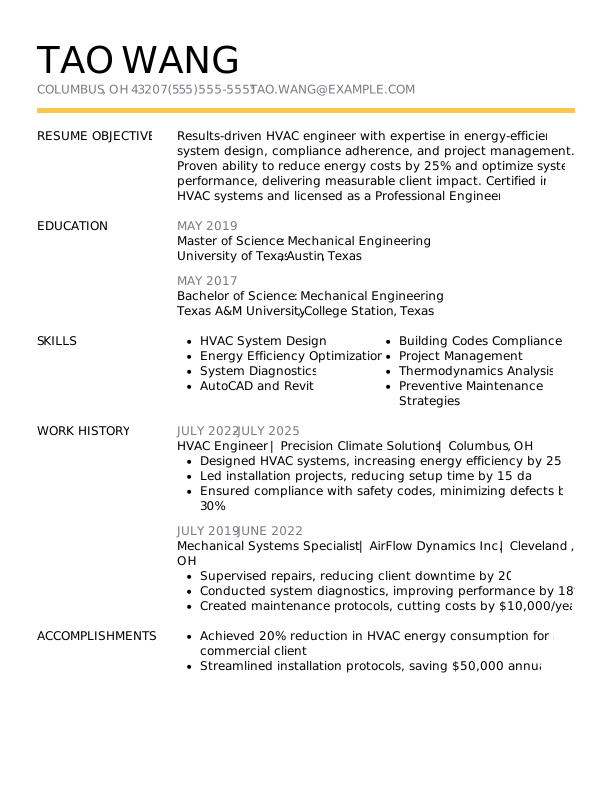
Why this resume works
- Effective use of keywords: Strategically inserting keywords like “HVAC system design” and “energy efficiency optimization” improves the resume’s visibility for applicant tracking systems (ATS).
- Shows digital literacy: Using tools such as AutoCAD and Revit showcases the applicant’s computer skills and digital literacy, aligning with modern workplace needs.
- Centers on academic background: Featuring academic achievements like a Master of Science in mechanical engineering in the education section underlines a strong academic foundation early in the applicant’s career.
Mid-Level HVAC Engineer
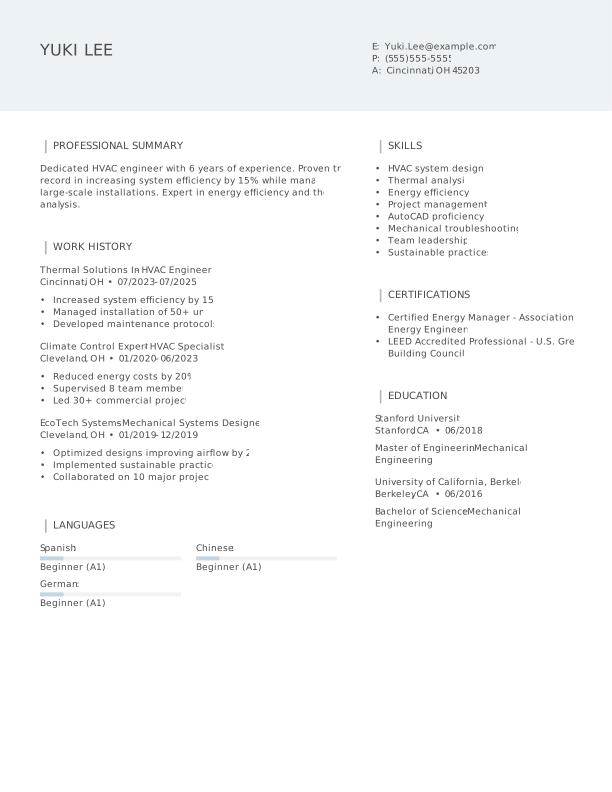
Why this resume works
- Points to measurable outcomes: Quantifying achievements like boosting system efficiency by 15% and slashing energy costs by 20% showcases the applicant’s effectiveness in delivering measurable results.
- Includes a mix of soft and hard skills: Combining technical expertise with interpersonal skills, the applicant excels in team leadership and project management, ensuring smooth collaboration throughout complex projects.
- Demonstrates language abilities: Ability in multiple languages improves language skills for cross-cultural communication, supporting international collaborations and diverse client interactions.
Experienced HVAC Engineer
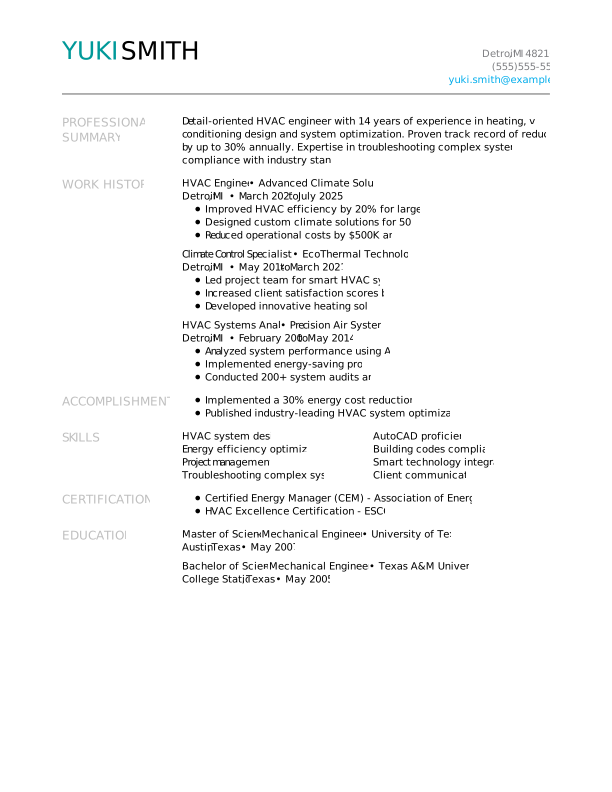
Why this resume works
- Lists relevant certifications: Listing certifications like Certified Energy Manager and HVAC Excellence Certification, the applicant showcases their expertise and dedication to continuous learning.
- Focuses on work history: The chronological resume format highlights extensive roles across three companies, improving clarity and demonstrating career progression.
- Emphasizes leadership skills: By leading smart HVAC projects, the applicant illustrates strong leadership skills through team management and initiative execution.
HVAC Engineer Resume Template (Text Version)
Simplify everything with the text template below. For downloadable layouts, browse our resume templates.
Sophia Wilson
Seattle, WA 98102
(555)555-5555
Sophia.Wilson@example.com
Professional Summary
Experienced HVAC Engineer specialized in energy-efficient solutions, team leadership, and system design. Proven success in reducing energy costs and enhancing indoor air quality through innovative approaches.
Skills
- HVAC System Design
- Thermal Dynamics
- Energy Efficiency
- Project Management
- Team Leadership
- System Maintenance
- Quality Control
- Customer Service
Certifications
- Certified HVAC Engineer – American Society of Heating, Refrigerating, and Air-Conditioning Engineers
- Energy Efficiency Expert – US Green Building Council
Education
Master of Science Mechanical Engineering
State University of New York Buffalo, NY
December 2019
Bachelor of Science HVAC Technology
University of Rochester Rochester, NY
May 2018
Work History
HVAC Engineer
Evergreen Energy Solutions – Seattle, WA
January 2023 – July 2025
- Reduced energy costs by 15% annually
- Oversaw HVAC system upgrades enhancing efficiency
- Managed team of 5 technicians for system installations
HVAC Technician Lead
Precision Climate Services – Tacoma, WA
January 2021 – December 2022
- Improved system reliability by 20%
- Conducted training sessions boosting team skills
- Secured 0K contract with major client
Mechanical Systems Specialist
ThermoTech Innovations – Tacoma, WA
January 2020 – December 2020
- Designed HVAC solutions for 12 retail spaces
- Enhanced indoor air quality by 25%
- Coordinated logistics for system deliveries
Languages
- Spanish – Beginner (A1)
- French – Beginner (A1)
- German – Intermediate (B1)
Related Resume Guides
Advice for Writing Your HVAC Engineer Resume
Explore our expert tips on how to write a resume for an HVAC engineer position. Learn how to highlight your technical skills and hands-on experience.
Highlight relevant technical skills
As an HVAC engineer, showcasing your technical skills is key to standing out. These abilities help you design, install, and maintain heating, ventilation, and air conditioning systems effectively. Start by creating a skills section in your resume and weave these skills into your work experience descriptions. This approach ensures that potential employers can quickly see what you offer.
Common technical skills for an HVAC engineer include understanding thermodynamics, fluid mechanics, and heat transfer. You should also know CAD software like AutoCAD for designing systems and tools like load calculation programs. Knowledge of building codes and safety standards is important, too.
Additionally, being skilled in troubleshooting and problem-solving is necessary for diagnosing system issues. By clearly listing your technical skills or integrating them into your job descriptions, you make it easier for hiring managers to spot your abilities.
Tailor this section to each job application by highlighting the most relevant skills for the role you’re applying for as an HVAC engineer. This targeted approach shows that you have the right expertise to handle the job’s demands effectively.
Example of a technical skills section
- HVAC system design & installation
- AutoCAD & Revit for HVAC schematics
- Load calculation software (HAP, Trace 700)
- Energy management systems
- Airflow and ductwork design
- Thermodynamics & heat transfer principles
- Building automation systems (BAS)
- Troubleshooting and diagnostics of HVAC equipment
Build a standout resume in minutes with our easy-to-use Resume Builder. Choose a professional template, add your details, and make a strong impression on employers.
Quantify your accomplishments
Quantifying accomplishments in a resume makes it stand out by showing what you have achieved, not just what you did. For an HVAC engineer, this means highlighting measurable results like how much energy costs were cut or how efficiency improved on projects.
In the work experience section, each entry should start with your job title, employer name, location, and employment dates. Then turn duties into achievements using numbers like percentages or time saved. This approach tells hiring managers exactly how you made a difference.
Using action verbs and metrics creates a results-driven resume that catches attention. Instead of saying “responsible for maintaining systems,” say “reduced system downtime by 30% through proactive maintenance.” This shows impact and skills clearly and quickly. Quantified accomplishments help hiring managers see your value at a glance without having to guess about your contributions.
For HVAC engineers, showcasing these achievements helps paint a picture of your expertise and problem-solving ability. Whether it’s cutting costs or improving safety standards, numbers make your successes real and convincing. By focusing on what you’ve done effectively with clear data points, you increase your chances of making a strong impression in the job market.
5 HVAC engineer work history bullet points
- Developed energy-efficient HVAC systems, reducing building energy consumption by 20% and saving $50,000 annually.
- Conducted comprehensive system diagnostics, resulting in a 30% increase in operational efficiency and decreased maintenance costs by 15%.
- Led a team of technicians to complete a large-scale commercial installation project three weeks ahead of schedule.
- Implemented advanced control algorithms in HVAC systems, improving indoor air quality and achieving compliance with ASHRAE standards.
- Streamlined the design and commissioning process for new installations, cutting project timelines by 25% while maintaining budgetary constraints.
Using professional resume examples can offer ideas and help you create a resume that stands out and boosts your job prospects.
Write a powerful professional summary
A professional summary on a resume serves as an introduction for hiring managers, providing a snapshot of your skills and accomplishments. You can decide whether to use a summary or a resume objective based on your experience level and career goals.
A professional summary is ideal for those with some work experience. It’s typically three to four sentences highlighting what you’ve done, your skills, and any major wins in your career. It’s perfect for showcasing your professional identity and the value you bring to the table.
On the other hand, resume objectives focus on stating career goals. They’re ideal for entry-level applicants, those shifting careers, or professionals who’ve been out of work for some time. While summaries emphasize “what I’ve accomplished,” objectives express “what I aim to contribute.”
Now that we’ve covered what summaries and objectives are, let’s dive into examples tailored to different industries and experience levels to help you choose what’s best for your HVAC engineer resume.
HVAC engineer resume summary examples
Entry-level
Recent graduate with a Bachelor of Science in mechanical engineering, specializing in HVAC systems. Completed internships focusing on HVAC design and installation, with foundational skills in AutoCAD and Revit. Certified EPA Section 608 Technician eager to apply technical knowledge and support sustainable building projects.
Mid-career
Experienced HVAC engineer with over seven years working in commercial and industrial environments. Proficient in designing, installing, and maintaining HVAC systems while ensuring compliance with industry standards. Successfully led a team in reducing energy consumption by 20% through innovative system upgrades. Strong collaborator known for optimizing operational efficiency and improving client satisfaction.
Experienced
Seasoned HVAC engineer specializing in large-scale project management and energy-efficient system innovations. Over 15 years of experience leading teams to develop cost-effective solutions that improve building performance. Key contributor to LEED-certified projects, achieving significant reductions in carbon footprint across multiple facilities. Committed to mentoring junior engineers and driving advancements in sustainable HVAC technology.
Hvac engineer resume objective examples
Recent graduate
Highly motivated and detail-oriented recent HVAC engineering graduate seeking an entry-level HVAC engineer position to apply technical skills and theoretical knowledge in a professional setting. Eager to contribute to designing, installing, and maintaining efficient heating, ventilation, and air conditioning systems.
Career changer
Driven mechanical technician transitioning into the HVAC engineering field, with strong problem-solving abilities and hands-on experience in system maintenance. Looking for an opportunity to leverage technical expertise and passion for sustainable building solutions in an entry-level HVAC engineer role.
Specialized training
Entry-level HVAC engineer with specialized training in energy-efficient system design and green building technologies. Seeking to join a forward-thinking company where innovative approaches are valued, aiming to contribute to high-performance projects that prioritize environmental sustainability.
Use a polished and professional resume format that aligns with your experience level to ensure your skills and qualifications stand out to hiring managers.
Showcase your credentials
For an HVAC engineer, listing credentials like certifications and licenses is key to showing you have the right skills. These are important in technical fields because they prove you’ve learned specific skills or passed tests. Creating a certifications section on your resume helps employers see these quickly.
This section can go along with your education details, giving a full picture of your background. Here are a few examples of certifications to list on your resume:
- Certified Energy Manager (CEM)
- EPA 608 Certification
- HVAC Excellence Certification
- NATE Certification
- LEED Accredited Professional
Having certifications can make you stand out as an HVAC engineer because they show you’re knowledgeable and committed to your field.
They give confidence to employers that you can handle complex tasks and industry standards. Listing these clearly can be a big step towards getting noticed for jobs.
Example of a certifications section
EPA Section 608 Technician Certification
Issued by: Environmental Protection Agency (EPA)
Issued 2022
North American Technician Excellence (NATE) Certification
Issued by: North American Technician Excellence (NATE)
Expires 2025
HVAC Excellence Professional Level Certification
Issued by: HVAC Excellence
Issued 2021
Certified Energy Manager (CEM)
Issued by: Association of Energy Engineers (AEE)
Expires 2024
Building Automation Systems Integration Specialist
Issued by: Electronics Technicians Association International (ETA-I)
Issued 2023
Opt for a clean resume template with clear headings and simple fonts. Avoid fancy designs that can obscure your skills and experience at first glance.
FAQ
Do I need to include a cover letter with my HVAC engineer resume?
Yes, including a cover letter with your HVAC engineer resume can often be beneficial and set you apart from others. A cover letter lets you show your enthusiasm for the role and highlight projects or experiences that match the company’s needs.
For instance, if the company specializes in sustainable HVAC solutions, discuss any relevant experience or projects you’ve worked on that showcase your expertise in this area.
Consider using tools like our Cover Letter Generator to draft a strong cover letter that complements your resume by providing tailored content emphasizing your technical skills and problem-solving abilities.
Checking out cover letter examples can also offer insights into how to effectively structure yours, ensuring it resonates well with potential employers.
How long should an HVAC engineer’s resume be?
For an HVAC engineer, a one-page resume is often enough to highlight essential skills like system design, troubleshooting, and experience with HVAC software.
If you have significant expertise or certifications like LEED accreditation or advanced energy management qualifications, a two-page resume could work better. Include only details that showcase your industry knowledge.
Highlight recent roles that show your ability to manage complex HVAC projects successfully. Tailor the content to emphasize achievements that fit the job’s needs.
Check out our guide on how long a resume should be for examples and tips specific to your career path.
How do you write an HVAC engineer resume with no experience?
If you’re an aspiring HVAC engineer without direct experience, emphasize your education, skills, and related experiences to showcase your abilities. Here are a few tips to help you get started:
- Emphasize relevant coursework: Begin with your degree in mechanical engineering or a related field. Include specific courses or projects focused on HVAC systems, thermodynamics, or fluid mechanics.
- Include hands-on projects: If you’ve worked on university projects or personal projects involving HVAC principles, describe what you did and the outcomes. This shows practical understanding, even if it wasn’t in a formal job setting.
- Develop core skills section: Highlight technical skills such as AutoCAD, Revit, load calculation software, and problem-solving abilities. Soft skills like communication and teamwork are also valuable.
- Use internships or part-time work: If you’ve had internships or jobs in fields related to HVAC systems, even if indirectly, detail those experiences, focusing on transferable skills like system analysis or customer interaction.
Check out our guide on crafting a resume with no experience for additional tips and examples from career advice experts.
Rate this article
HVAC Engineer


Toni is a Certified Professional Resume Writer (CPRW) and member of the Professional Association of Resume Writers & Career Coaches. She is committed to helping job seekers navigate the job market and succeed in their careers.
More Articles by Toni Frana, CPRWShare this page
 Add MyPerfectResume as a preferred source on Google
Add