Table of Contents
Get started with MyPerfectResume today!
- Build a resume on any device
- Pick an ATS-friendly template
- Tailor with AI copy suggestions
Why this resume works
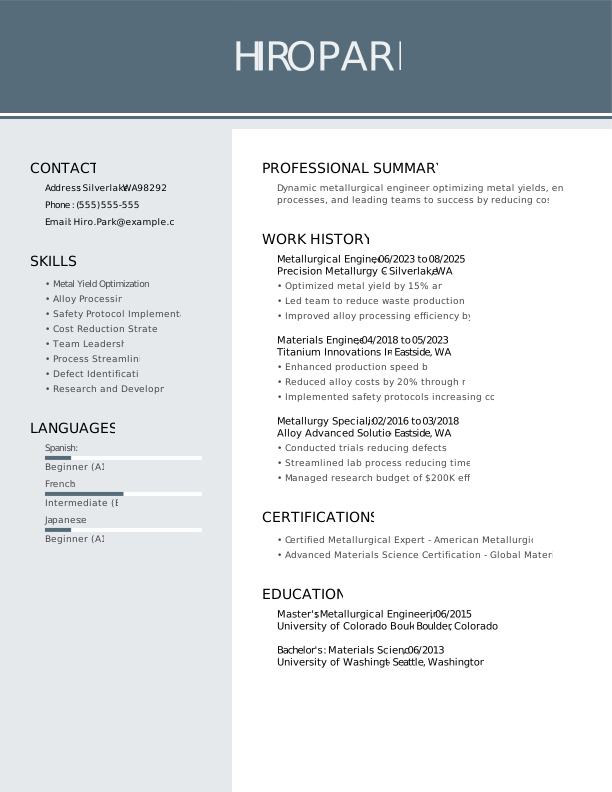
- Quantifies accomplishments: Highlighting measurable accomplishments, such as a 30% waste reduction and $200,000 efficiency boost, the applicant reflects their significant industry impact.
- Uses action-oriented language: Using action verbs like led, improved, and implemented conveys initiative and effectiveness in tackling complex projects.
- Showcases career progression: Starting as a metallurgy specialist, advancing to a metallurgical engineer, the applicant showcases career progression by taking on greater responsibilities over time.
More Metallurgical Engineer Resume Examples
Check out our metallurgical engineer resume examples to understand how to highlight your technical skills, material science expertise, and project experience. These metal work resume samples will help you craft a resume that appeals to engineering employers and fits various metallurgical roles.
Entry-Level Metallurgical Engineer
Why this resume works
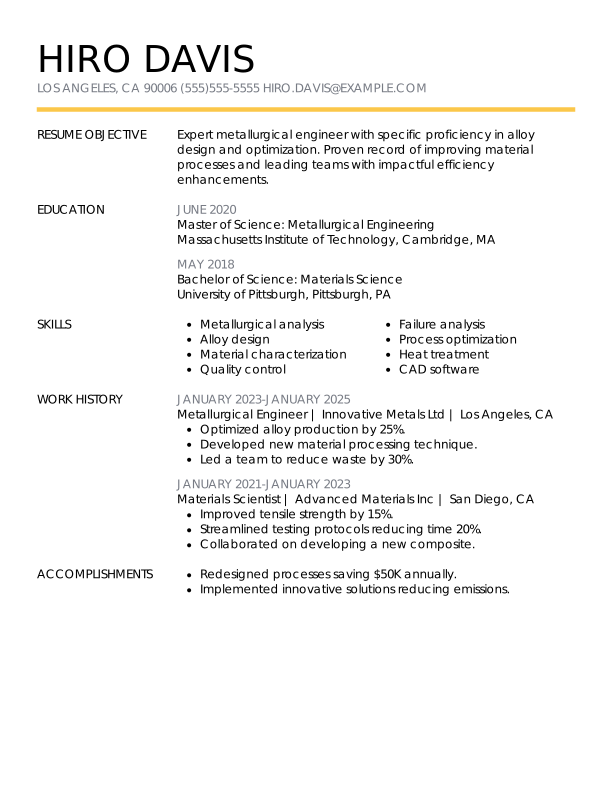
- Effective use of keywords: Strategically embedding industry-specific keywords like “alloy design” and “process optimization,” the applicant optimizes their resume for applicant tracking systems (ATS) that scan for key skills and qualifications.
- Puts skills at the forefront: Prioritizing skills such as alloy design and metallurgical analysis at the top reflects a skills-based resume format, ideal for showcasing technical expertise effectively.
- Shows digital literacy: Employing CAD software prominently points to strong computer skills, highlighting readiness to tackle modern digital challenges in engineering roles.
Mid-Level Metallurgical Engineer
Why this resume works
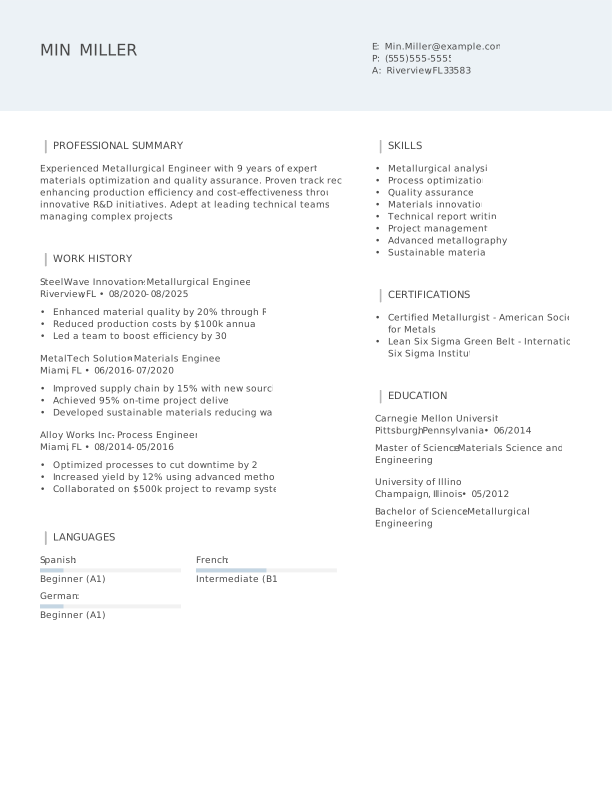
- Points to measurable outcomes: By showcasing substantial cost reductions and efficiency improvements, the applicant emphasizes their impact on production processes and commitment to achieving measurable results.
- Includes a mix of soft and hard skills: Combining interpersonal skills with technical prowess, the applicant illustrates a balanced approach in leading teams and optimizing materials operations.
- Displays technical expertise: Certifications like Lean Six Sigma Green Belt and expertise in advanced metallography highlight the applicant’s skill in specialized techniques relevant to engineering projects.
Experienced Metallurgical Engineer
Why this resume works
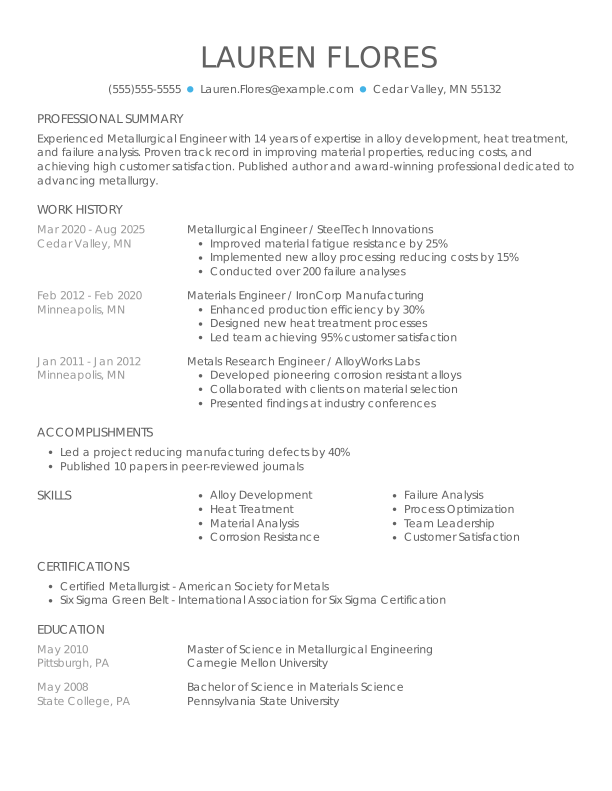
- Lists relevant certifications: Listing certifications like Certified Metallurgist and Six Sigma Green Belt shows a commitment to professional growth and expertise.
- Emphasizes leadership skills: Experiences such as managing a team to reach 95% customer satisfaction illustrate strong leadership skills and project success.
- Sections are well-organized: Efficient use of bullet points and clear headers makes the resume easy to scan, improving readability with well-organized sections that guide the reader seamlessly.
Metallurgical Engineer Resume Template (Text Version)
This template is ready to use. For more options to explore, browse our resume templates.
Hiro Park
Silverlake, WA 98292
(555)555-5555
Hiro.Park@example.com
Skills
- Metal Yield Optimization
- Alloy Processing
- Safety Protocol Implementation
- Cost Reduction Strategies
- Team Leadership
- Process Streamlining
- Defect Identification
- Research and Development
Languages
- Spanish – Beginner (A1)
- French – Intermediate (B1)
- Japanese – Beginner (A1)
Professional Summary
Dynamic metallurgical engineer optimizing metal yields, enhancing alloy processes, and leading teams to success by reducing costs and waste.
Work History
Metallurgical Engineer
Precision Metallurgy Co. – Silverlake, WA
June 2023 – August 2025
- Optimized metal yield by 15% annually
- Led team to reduce waste production by 30%
- Improved alloy processing efficiency by $200K
Materials Engineer
Titanium Innovations Inc. – Eastside, WA
April 2018 – May 2023
- Enhanced production speed by 25%
- Reduced alloy costs by 20% through research
- Implemented safety protocols increasing compliance
Metallurgy Specialist
Alloy Advanced Solutions – Eastside, WA
February 2016 – March 2018
- Conducted trials reducing defects by 32%
- Streamlined lab process reducing time by 40%
- Managed research budget of $200K efficiently
Certifications
- Certified Metallurgical Expert – American Metallurgical Society
- Advanced Materials Science Certification – Global Materials Institute
Education
Master’s Metallurgical Engineering
University of Colorado Boulder Boulder, Colorado
June 2015
Bachelor’s Materials Science
University of Washington Seattle, Washington
June 2013
Related Resume Guides
Advice for Writing Your Metallurgical Engineer Resume
Ready to dive into crafting the perfect resume for your metallurgical engineer position? Discover our tailored tips on how to write a resume that highlights your engineering skills and passion for materials science. Uncover insights specific to metallurgy and make your application stand out in the industry.
Highlight relevant technical skills
Metallurgical engineers must possess strong technical skills to excel in their roles. Highlighting these abilities by creating a dedicated skills section in your resume can be beneficial. Consider listing skills such as process design, material testing, and failure analysis.
These demonstrate your skill in working with metals and understanding their properties. Including knowledge of software like CAD programs or simulation tools also illustrates your capability to use technology effectively in engineering tasks.
If you prefer weaving technical skills into the work experience section, describe how you applied them in past projects or jobs. For instance, mention specific techniques used to refine processes or optimize metal treatments. Discussing real-world applications of your skills provides context and demonstrates to employers how you’ve effectively used them before.
For metallurgical engineers, commonly sought-after technical skills include an understanding of thermodynamics, corrosion prevention methods, and metallography techniques. Familiarity with industry standards and safety guidelines is important, too.
By highlighting these competencies, you not only showcase your expertise but also reassure potential employers that you’re well-prepared for the responsibilities ahead. Carefully tailor this section to align with job requirements and show how your skills match what they’re seeking.
Example of a technical skills section
- Material characterization techniques (SEM, TEM, XRD)
- Metallurgical process simulation software (Thermo-Calc, JMatPro)
- Finite element analysis (ANSYS, Abaqus)
- Corrosion testing and prevention
- Heat treatment processes
- Failure analysis and root cause investigation
- Non-destructive testing methods (ultrasonic, radiography)
- Metal forming and casting technologies
- Welding and joining techniques
- Microstructural analysis
- Alloy design and development
You can use our AI Resume Builder to craft a resume that highlights technical skills in addition to key soft skills like teamwork, communication, and adaptability.
Quantify your accomplishments
Quantifying your accomplishments on a resume makes it much more engaging than just listing job duties. When you add numbers and results, like percentages or time savings, it shows exactly how you made a difference in your role as a metallurgical engineer.
For each job entry, make sure to include the job title, employer name, location, and employment dates. Instead of saying you were responsible for something, turn that into an achievement by showing how you improved processes or saved costs.
Using action verbs and metrics in the work experience section creates a results-driven resume that stands out. For instance, instead of writing “managed testing procedures,” say “improved testing efficiency by 30%.” This approach allows hiring managers to quickly see your impact and skills without having to dig through vague descriptions.
By focusing on achievements rather than responsibilities, you paint a clear picture of what you can bring to their team. Quantified accomplishments help them easily gauge your contributions and potential value as part of their organization.
5 metallurgical engineer work history bullet points
- Developed and implemented new alloy compositions, improving product durability by 25% and customer satisfaction rates.
- Led a team of 4 engineers in executing process optimization projects, resulting in a 20% reduction in production costs.
- Conducted failure analyses on metal components, identifying root causes and reducing occurrence by 30%.
- Streamlined heat treatment processes to increase throughput by 15%, improving overall production efficiency.
- Collaborated with cross-functional teams to design corrosion-resistant materials, extending service life of products by 10%.
Exploring professional resume examples can help you visualize what works well for different jobs and experience levels, offering ideas to make your resume stand out.
Write a powerful professional summary
A professional summary is an introduction at the top of a resume that helps hiring managers quickly understand who you are and what you bring to the table. It’s an alternative to a resume objective, which highlights your career goals instead. Choosing between them depends on your experience and what you want to convey.
A professional summary is usually best for experienced applicants like metallurgical engineers. It consists of three to four sentences that showcase your experience, skills, and key achievements. Its purpose is to highlight your professional identity and the value you offer, giving hiring managers a reason to continue reading your resume.
On the other hand, a resume objective states your career goals, making it ideal for entry-level job seekers, career changers, or those with employment gaps. The main difference is that summaries focus on “what I’ve accomplished,” while objectives emphasize “what I aim to contribute.” We’ll provide examples of both summaries and objectives tailored for different industries and levels of experience.
Metallurgical engineer resume summary examples
Entry-level
Recent Bachelor of Science in Metallurgical Engineering graduate with internship experience in materials testing and analysis. Familiar with metallographic techniques, mechanical testing, and corrosion studies. Certified in Fundamentals of Engineering (FE) and eager to apply academic knowledge to support industrial projects and quality control processes.
Mid-career
Metallurgical engineer with 5+ years of experience in the steel manufacturing industry. Proven track record in process optimization, failure analysis, and implementation of heat treatment protocols. Skilled in using advanced analytical tools such as SEM and XRD. Known for improving material performance and contributing to cost reduction initiatives.
Experienced
Senior metallurgical engineer with expertise in alloy development, high-temperature materials, and project leadership. Over 15 years of experience managing teams in research and development settings. Extensive background in leading cross-functional projects that drive innovation and improve product durability. Recognized for strategic thinking and effective contributions to the field.
Metallurgical engineer resume objective examples
Recent graduate
Energetic and detail-oriented recent metallurgical engineering graduate seeking an entry-level position to apply academic knowledge in materials science and metallurgy. Looking forward to contributing innovative solutions to improve material performance in a challenging industrial environment.
Career changer
Dedicated professional transitioning into metallurgical engineering with a background in chemical engineering. Eager to leverage analytical skills and process optimization experience gained through previous roles to support material development projects and contribute to cross-disciplinary team efforts.
Specialized training
Entry-level metallurgical engineer equipped with specialized training in corrosion analysis and heat treatment techniques, aiming to join a forward-thinking manufacturing firm. Passionate about using technical expertise to improve product reliability and foster sustainable solutions for industry advancements.
Use a polished and professional resume format that aligns with your experience level to ensure your skills and qualifications stand out to hiring managers.
Showcase your credentials
Certifications, licenses, and specialized training show employers that you have the knowledge and skills for a metallurgical engineer role. These credentials are especially important in technical fields where precision and expertise are expected.
Creating a dedicated certifications section makes it easy for hiring managers to see your qualifications at a glance, improving your resume’s impact. Listing these alongside your education highlights both foundational learning and advanced expertise. Here are a few examples:
- Certified Welding Inspector (CWI)
- NACE Corrosion Technician Certification
- AWS Certified Solutions Architect
- Lean Six Sigma Green Belt Certification
- Professional Engineer (PE) License
A well-structured certifications section can set you apart from other applicants by showing your commitment to professional growth in metallurgy. It conveys that you’re prepared to handle specialized tasks confidently.
Example of a certifications section
Certified Metallurgical Engineer
Issued by: Association of Metallurgical Engineers
Issued 2023
NACE Certified Corrosion Specialist
Issued by: National Association of Corrosion Engineers (NACE)
Expires 2025
Level II Non-Destructive Testing Certification
Issued by: American Society for Nondestructive Testing (ASNT)
Issued 2021
SolidWorks Professional Certification
Issued by: Dassault Systèmes
Expires 2024
Lean Manufacturing Certification
Issued by: Society of Manufacturing Engineers (SME)
Issued 2022
Choose a resume template that is simple and professional, with clear sections. Opt for easy-to-read fonts and minimal design elements to highlight your experience and skills effectively.
FAQ
Do I need to include a cover letter with my metallurgical engineer resume?
Including a cover letter with your metallurgical engineer resume can give you an edge over other job seekers.
A cover letter lets you highlight why you’re specifically interested in the role and the company, providing insights into your skills and experience that may not be as detailed on your resume.
For instance, if the company specializes in particular materials or processes, you can discuss your expertise or interest in those areas.
You might consider using our Cover Letter Generator to help craft a personalized cover letter quickly and efficiently, ensuring it aligns well with your resume.
Additionally, reviewing cover letter examples tailored for engineering roles can offer useful templates and ideas to make your application stand out.
How long should a metallurgical engineer’s resume be?
For a metallurgical engineer, a one-page resume is effective if you’re early in your career or have less experience. Focus on critical skills like material analysis, quality control, and process optimization.
However, if you’ve accumulated extensive experience or possess specialized certifications in metallurgy, a two-page resume could be more appropriate to detail your projects and achievements.
Every piece of information you include must be relevant to the role you’re applying for. This ensures you maintain the employer’s interest while showcasing your strengths effectively.
Consider exploring resources about how long a resume should be to determine the best length based on your career stage and personal accomplishments.
How do you write a metallurgical engineer resume with no experience?
Writing a resume with no experience as a metallurgical engineer can seem challenging. However, by focusing on your education and skills, you can effectively showcase your potential.
- Emphasize your education: Highlight your degree in metallurgical engineering. Include the university name, graduation date, courses that are relevant to metallurgy, and any honors or awards you received.
- Showcase relevant projects: If you’ve worked on projects during school or internships related to materials science or metallurgy, list them with details about your role, objectives achieved, and techniques used, like SEM analysis or alloy testing.
- Highlight technical skills: Metallurgical engineers need strong analytical skills. Mention skills in software tools like MATLAB or AutoCAD and include any lab techniques you’re adept with, such as crystallography or corrosion studies.
- Include extracurricular activities: Involvement in engineering clubs, societies like ASM International, or volunteer work can display leadership qualities and teamwork abilities.
Check out our guide on writing a resume with no experience for more examples and tips from industry professionals.
Rate this article
Metallurgical Engineer


Jasmine is a certified career coach and recognized expert in job search strategy. She is committed to helping job seekers navigate the job market and succeed in their careers.
More Articles by Jasmine EscaleraShare this page
 Add MyPerfectResume as a preferred source on Google
Add