Table of Contents
Get started with MyPerfectResume today!
- Build a resume on any device
- Pick an ATS-friendly template
- Tailor with AI copy suggestions
Why this resume works
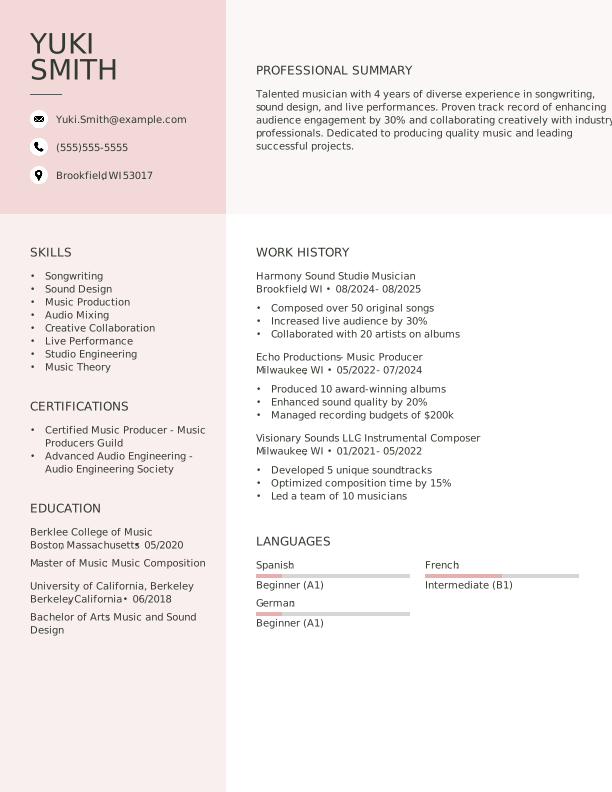
- Quantifies accomplishments: Measurable accomplishments, such as composing over 50 original songs and boosting audience engagement by 30%, highlight the applicant’s achievements and tangible impact.
- Highlights industry-specific skills: Showcasing skills like songwriting and studio engineering, the applicant emphasizes a deep industry expertise important for roles in music production and sound design.
- Showcases career progression: Progressing from instrumental composer to music producer highlights a natural career evolution marked by increased responsibilities, such as managing $200k recording budgets.
More Musician Resume Examples
Take a look at our musician resume examples to learn how to showcase your musical talents, performance experience, and creative skills. These music resume samples will help you craft a resume that resonates with potential employers in the music industry.
Entry-Level Musician
Why this resume works
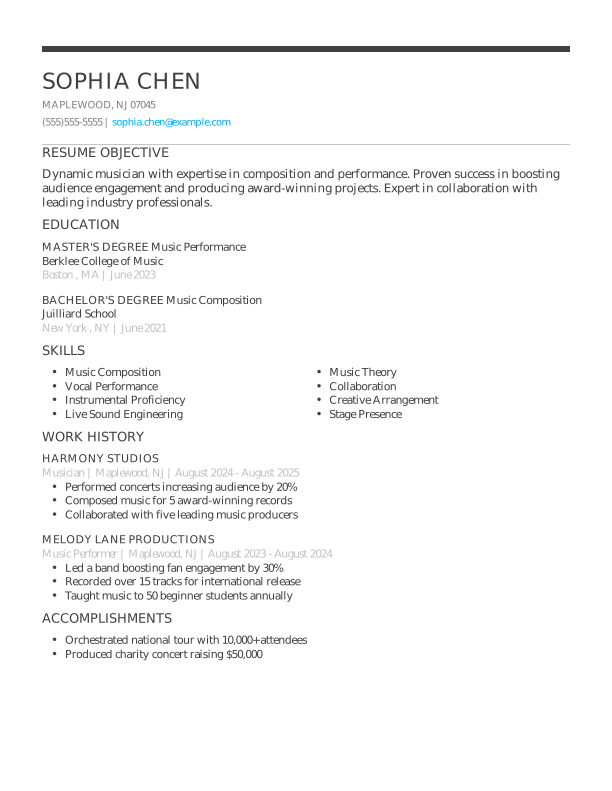
- Centers on academic background: With a master’s degree in music performance, the education section reflects a solid foundation in music, important for a budding professional career.
- Shows digital literacy: Advanced audio engineer certification and live sound engineering skills highlight computer skills essential for modern music production environments.
- Puts skills at the forefront: Adopting a skills-based resume format, the resume focuses on core competencies like composition and performance, ideal for those new to the field.
Mid-Level Musician
Why this resume works
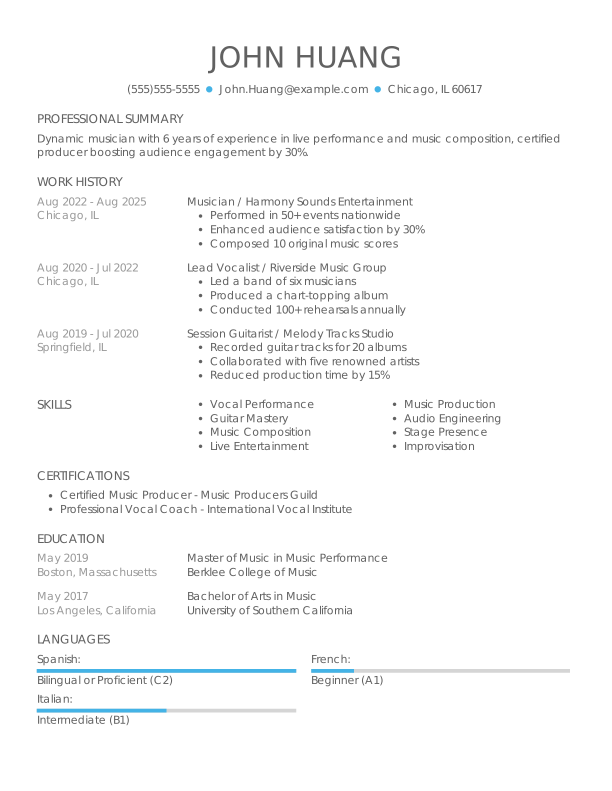
- Points to measurable outcomes: By boosting audience satisfaction by 30% and composing original scores, the applicant clearly showcases strong contributions to musical projects.
- Demonstrates language abilities: The applicant’s language skills in Spanish, French, and Italian improve their ability for cross-cultural musical collaborations.
- Includes a mix of soft and hard skills: Combining technical prowess like music production with strong interpersonal skills, the applicant presents a holistic skill set.
Experienced Musician
Why this resume works
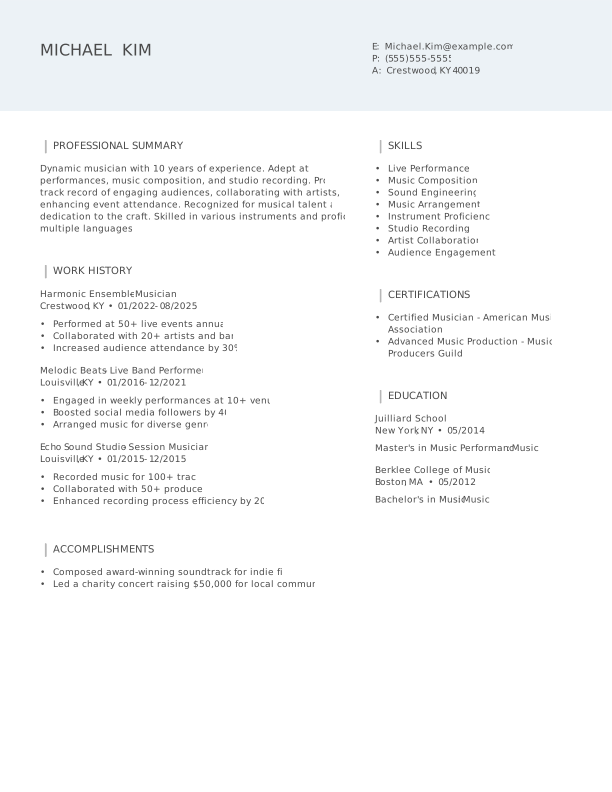
- Showcases impressive accomplishments: By boosting audience numbers by 30% and winning an award for a film soundtrack, the applicant reflects impressive impact in their musical career.
- Lists relevant certifications: Listing certifications from both the American Music Association and the Music Producers Guild reveals dedication to mastering industry standards and continuous learning.
- Focuses on work history: Using a chronological resume format, the musician effectively maps out diverse roles across major cities, showcasing extensive experience in live performance and studio recording.
Musician Resume Template (Text Version)
Want to browse more? Grab the copy-and-paste template below, or check out our resume templates for the complete collection.
Yuki Smith
Brookfield, WI 53017
(555)555-5555
Yuki.Smith@example.com
Professional Summary
Talented musician with 4 years of diverse experience in songwriting, sound design, and live performances. Proven track record of enhancing audience engagement by 30% and collaborating creatively with industry professionals. Dedicated to producing quality music and leading successful projects.
Skills
- Songwriting
- Sound Design
- Music Production
- Audio Mixing
- Creative Collaboration
- Live Performance
- Studio Engineering
- Music Theory
Certifications
- Certified Music Producer – Music Producers Guild
- Advanced Audio Engineering – Audio Engineering Society
Education
Master of Music Music Composition
Berklee College of Music Boston, Massachusetts
May 2020
Bachelor of Arts Music and Sound Design
University of California, Berkeley Berkeley, California
June 2018
Work History
Musician
Harmony Sound Studio – Brookfield, WI
August 2024 – August 2025
- Composed over 50 original songs
- Increased live audience by 30%
- Collaborated with 20 artists on albums
Music Producer
Echo Productions – Milwaukee, WI
May 2022 – July 2024
- Produced 10 award-winning albums
- Enhanced sound quality by 20%
- Managed recording budgets of $200k
Instrumental Composer
Visionary Sounds LLC – Milwaukee, WI
January 2021 – May 2022
- Developed 5 unique soundtracks
- Optimized composition time by 15%
- Led a team of 10 musicians
Languages
- Spanish – Beginner (A1)
- French – Intermediate (B1)
- German – Beginner (A1)
Related Resume Guides
Advice for Writing Your Musician Resume
Dive into our expert advice on how to write a resume for a musician position and discover how to highlight your musical talents, experiences, and unique style. Whether you’re an aspiring artist or seasoned performer, crafting the perfect resume can set the stage for your career success.
Showcase your portfolio or projects
For musicians, having a portfolio or projects on your resume is essential for demonstrating your talent and creativity. It allows others to experience your work firsthand and sets you apart from other candidates or artists. Linking to an online portfolio—whether on SoundCloud, YouTube, Behance, or a personal website—professionally presents your music and makes it easy for employers or clients to explore your style.
Including select projects directly in your resume is equally valuable, especially for readers who may not click external links. When listing projects, structure them as you would job entries. Begin with the project name, and if applicable, mention any collaborators, clients, or organizations involved.
Provide a short description of the project’s purpose and significance, then highlight your specific contributions and the impact of your work.
Don’t hesitate to include freelance gigs, academic projects, or passion-driven side work—they all demonstrate skill, dedication, and versatility. This approach gives anyone reviewing your resume a clear, complete picture of your abilities as a musician and the results you can deliver.
Example of a projects section
Live Album Recording
Indigo Jazz Quartet
August 2023
- Coordinated the recording of a live performance at the Blue Note Jazz Club, capturing high-quality audio and ambiance.
- Collaborated with sound engineers to mix and master tracks for digital release.
- Managed the album release on streaming platforms, achieving over 10,000 streams in the first month.
Film Score Composition
Silver Screen Productions
March 2022 – November 2022
- Composed an original score for an independent film featured at the Sundance Film Festival.
- Worked closely with directors to align musical themes with narrative arcs.
- Conducted a live orchestra recording session, integrating traditional and electronic instruments.
Need help with your resume? Check out these professional resume examples to get ideas and make your own resume shine.
Emphasize your most relevant skills
Being a musician requires a balance of technical expertise and creative talent. Technical skills, such as proficiency with music software or the ability to play multiple instruments, form the foundation of music creation and performance.
Equally important are soft skills like communication, adaptability, and teamwork, which enable effective collaboration with other artists and success in diverse musical environments. Highlighting both types of skills on your resume shows that you’re a well-rounded musician.
A dedicated skills section on your resume is an excellent way to present your strengths at a glance. Include software tools you’re experienced with, such as Pro Tools, Logic Pro X, or Ableton Live, alongside artistic abilities like songwriting, arranging, or live performance. This approach not only highlights what you can do but also demonstrates the value you bring in real-world settings.
To make your skills even more impactful, integrate them into your work experience. Instead of simply listing responsibilities, explain how you applied your abilities to achieve meaningful results. For example, describe how your expertise with mixing software contributed to a polished, professional album release, or how your collaboration with other musicians produced a standout live performance.
Choose a resume format that highlights your performances, skills, and achievements in an organized and easy-to-read layout.
Choose a professional resume template
When selecting a resume template as a musician, it’s key to find one that balances creativity with professionalism. Opt for templates that are clean and structured, which allow your skills and experiences to stand out without being overshadowed by overly decorative elements.
A strong template will feature a clear visual hierarchy, enabling potential employers to easily find essential details about you. This involves using clear headings, bullet points, and sufficient white space to maintain organization.
It’s also smart to choose a format compatible with applicant tracking systems (ATS). Many companies use these systems to review resumes before they reach human eyes. To ensure your resume passes this initial screening, stick with simple fonts like Arial or Times New Roman and steer clear of complex graphics or unusual layouts that might confuse the system.
This approach will help you highlight your musical talents while ensuring your resume captures the attention of the right people.
Try our Resume Builder to make a standout resume quickly and easily. It offers musician-specific templates to help show off your skills and experience.
Format your resume properly
Proper resume formatting helps your musician application stand out and is easy to read. If you’re an experienced musician, use a chronological format to show your career path clearly. If you’re less experienced or want to highlight skills like instrument skill or songwriting, choose a functional format. This lets you focus on talents rather than job history.
5 resume formatting tips
- Structure with clear headings: Use headings like “Work Experience,” “Skills,” and “Portfolio” for clarity.
- Choose consistent fonts: Select readable fonts such as Arial or Calibri for a cohesive look.
- Incorporate bullet points: Highlight achievements and responsibilities using concise bullet points.
- Limit to one page: Keep your resume to one page unless you have extensive experience.
- Ensure proper spacing and alignment: Maintain clean lines with uniform spacing and alignment throughout.
Want your resume to get noticed by hiring tools? Our ATS Score Checker checks important parts and helps you boost your score right away.
FAQ
Do I need to include a cover letter with my musician resume?
Yes, including a cover letter with your musician resume can improve your application and capture the attention of hiring managers.
A cover letter gives you the chance to express your passion for music, highlight specific achievements, and explain why you’re a great fit for the band or organization.
For instance, if the group specializes in jazz or classical music and you have relevant experience, mention it to show your suitability and enthusiasm.
Consider using our Cover Letter Generator to craft a tailored cover letter that reflects your musical style and experience, ensuring it’s professionally structured.
Additionally, reviewing cover letter examples can provide inspiration and help you understand how to effectively communicate your unique skills as a musician.
How long should a musician’s resume be?
For a musician, the length of your resume depends on your experience and achievements. If you’re just starting or have limited professional engagements, a one-page resume should suffice, focusing on key performances, skills, and education.
However, if you’ve accumulated extensive experience with notable performances, collaborations, or awards, a two-page resume is appropriate to effectively showcase your accomplishments.
When considering how long a resume should be, ensure that every detail included is relevant and adds value to your career narrative.
Tailor your resume to highlight recent gigs, unique skills like musical versatility or instrument mastery, and strong contributions in the music industry.
How do you write a musician resume with no experience?
When writing a resume with no experience for a musician, concentrate on your skills, education, and relevant activities that showcase your musical abilities. Here are some tips to build a strong profile:
- Showcase your musical training: Include details about formal education, like music school or private lessons. Mention instruments you play, vocal training, or specific genres you’re skilled in.
- Highlight performances or projects: Even if unpaid or informal, list gigs at community events, school concerts, open mics, or collaborations with other musicians to demonstrate practical experience.
- Focus on transferable skills: Emphasize creativity, teamwork from group performances, discipline developed through practice routines, and technical expertise such as recording software skills.
- Include extracurriculars: Participation in choirs, bands, orchestras, theater productions or volunteer work related to music can speak volumes about your dedication.
A musician’s resume with no experience should emphasize potential and passion for the craft while showing readiness to grow within the industry.
Rate this article
Musician


Jasmine is a certified career coach and recognized expert in job search strategy. She is committed to helping job seekers navigate the job market and succeed in their careers.
More Articles by Jasmine EscaleraShare this page
 Add MyPerfectResume as a preferred source on Google
Add