
Our customers have been hired at: *Foot Note


Table of Contents
Get started with MyPerfectResume today!
- Build a resume on any device
- Pick an ATS-friendly template
- Tailor with AI copy suggestions
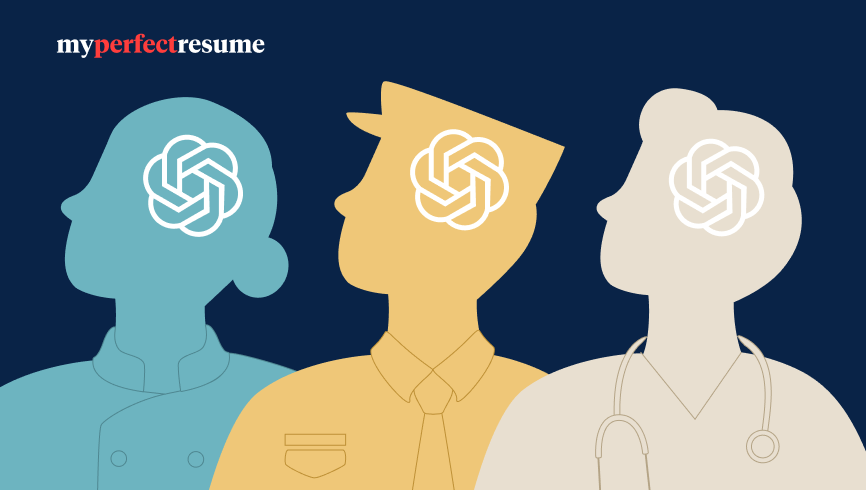
Artificial intelligence is reshaping the way we work, but what kind of human worker does it actually think like?
A new analysis from Herrmann International, in collaboration with MyPerfectResume, compared ChatGPT’s cognitive profile to that of 2.5 million professionals across nearly 800 job titles.
The findings were surprising: Military officers, cardiologists, and engineers think more like AI than data scientists or software developers.
Using the Herrmann Brain Dominance Instrument (HBDI), a widely used assessment of thinking styles, researchers revealed that ChatGPT’s thinking profile is overwhelmingly analytical, logical, and fact-based, with limited overlap in creativity and emotional nuance.
Key Findings
- Military and medical roles dominate. Colonels, cardiologists, and IT managers showed over 93% similarity to ChatGPT’s thinking style.
- Creative and empathetic jobs diverge. Drama teachers, musicians, psychotherapists, and painters all scored 57% or lower similarity.
- Operational jobs also align closely. Fire chiefs, air traffic controllers, plumbers, and farmers scored above 90%.
- Not all tech roles align equally. Web designers (79%) showed far less similarity to AI than IT managers (94%).
- Logic beats interpersonal reasoning. Tax attorneys (93%) aligned more closely than judges (90%).
Our global research highlights a surprising misconception: for years, repetitive and structured thinking was seen as closest to how AI ‘thinks.’ But with the rise of LLMs like ChatGPT, we’re seeing AI demonstrate high analytical, as well as medium-to-high visionary and pragmatic thinking styles. This shift makes it more critical than ever for teams to understand their own thinking preferences, so they can truly unlock the potential of AI as a partner in innovation and problem-solving.
– Karim Morgan Nehdi, CEO of Herrmann
The Jobs That Think Most Like AI
The professions that align most with ChatGPT rely heavily on rule-bound decision-making, structured problem-solving, and analysis.
Professions most like AI (93%+ similarity)
- Colonel
- Cardiologist
- IT manager
- Commander
- Radiologist
Surprisingly, manual and operational roles also scored highly. Fire chiefs, plumbers, and farmers showed strong alignment with jobs that ChatGPT can do due to their reliance on fast, structured, and protocol-driven decision-making under pressure.
The Jobs That Think Least Like AI
On the opposite end are professions that reveal AI versus human thinking differences, such as music, psychotherapy, and painting. These roles are rooted in creativity, empathy, and emotional intelligence, areas where AI currently struggles.
Professions least like AI (≤ 57% similarity)
- Drama teacher
- Musician
- Psychotherapist
- Painter
These are generally not jobs AI can do, as they demand high levels of improvisation, artistry, and interpersonal connection, all of which remain distinctly human strengths.
This begs the question: What jobs can AI do? See the Los Angeles jobs most exposed to AI to see how AI is impacting the workforce in major cities.
Why It Matters for the Future of Work
As AI continues to expand into workplaces, these findings highlight the importance of balancing human strengths with machine efficiency. Explore the use of AI in HR and the impact on college graduate employment rates for additional insights on the role of AI in the workplace.
Professions that overlap with AI may find automation easier to integrate, while roles rooted in creativity, empathy, and vision remain uniquely human.
Understanding these differences can help companies redesign roles, build balanced teams, and upskill talent for a more collaborative future of work.
For press inquiries, contact nathan.barber@bold.com.
Survey Methodology
The analysis used the Herrmann Brain Dominance Instrument® (HBDI®), a psychometric tool that maps thinking preferences. ChatGPT’s cognitive profile was compared against a database of 2.5 million professionals across nearly 800 job titles.
The research revealed both overlaps in cognitive style (analytical, rule-based thinking) and areas where humans remain unique (creative, interpersonal, and visionary thinking).
About Herrmann
Herrmann International is the creator of the Whole Brain® Thinking framework and the Herrmann Brain Dominance Instrument® (HBDI®)—the world’s most trusted thinking‑style assessment.
Backed by over 40 years of brain‑based global research, the HBDI® helps individuals, teams, and organizations unlock cognitive diversity through science‑validated thinking profiles. With usage in over 100 countries and over four million participants, the HBDI® enables clearer communication, stronger collaboration, and improved decision‑making across industries.
Herrmann’s platform delivers learning journeys, diagnostic insights, and practical tools to build Whole Brain® teams and enhance leadership, innovation, and workforce effectiveness in the flow of work. For more information, visit thinkherrmann.com.
Rate this article
AI vs. Human Thinking

Jasmine is a certified career coach and recognized expert in job search strategy. She is committed to helping job seekers navigate the job market and succeed in their careers.
More Articles by Jasmine EscaleraShare this page
 Add MyPerfectResume as a preferred source on Google
Add
Our customers have been hired at:*Foot Note