Table of Contents
Get started with MyPerfectResume today!
- Build a resume on any device
- Pick an ATS-friendly template
- Tailor with AI copy suggestions
Why this cover letter works
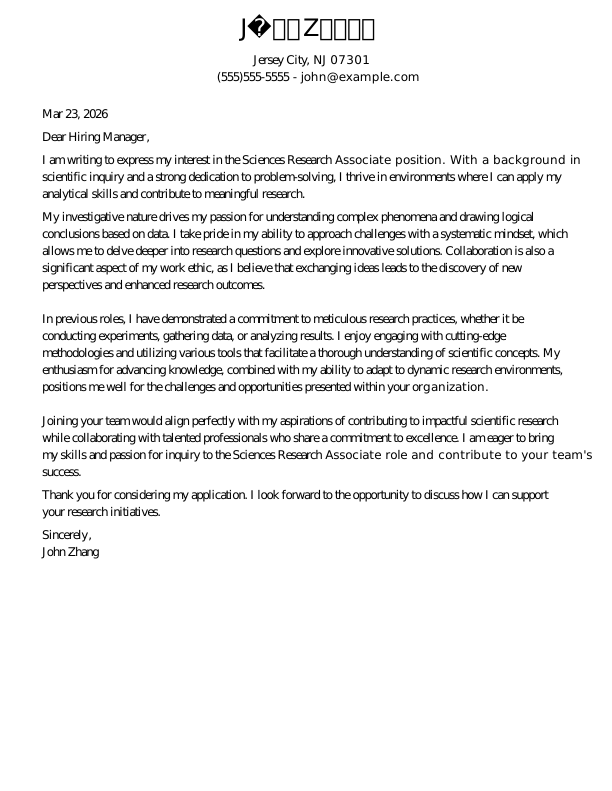
- This cover letter showcases the applicant’s analytical skills, relevant project experience, and any publications or presentations you’ve contributed to. Understanding what to include in a cover letter can set you apart by emphasizing your commitment to advancing knowledge in the field.
More Sciences Research Associate Cover Letter Examples
Looking to craft the perfect cover letter for your role as a science research associate? Check out our collection of cover letter examples that cater to both entry-level job seekers and experienced researchers.
Entry-Level Sciences Research Associate Cover Letter

Why this cover letter works
- The cover letter header above makes the applicant’s name the most visible element, significantly improving their chances of standing out to hiring managers. In competitive hiring situations, this visibility fosters recognition and helps ensure that applications are not overlooked among numerous submissions.
Experienced Sciences Research Associate Cover Letter

Why this cover letter works
- A cover letter outline organized the job seeker’s research skills, collaborative experiences, and adaptability to highlight their fit for the sciences research associate role. This structure showcases their analytical abilities and commitment to teamwork, making a compelling case for their qualifications.
Sciences Research Associate Cover Letter Template (Text Version)
Eager to personalize your sciences research associate cover letter? You can easily copy the text version provided below, and don’t forget to check out our diverse collection of cover letter templates to find options that align with your research expertise.
John Zhang
Jersey City, NJ 07301
(555)555-5555
john@example.com
Mar 23, 2026
Dear Hiring Manager,
I am writing to express my interest in the Sciences Research Associate position. With a background in scientific inquiry and a strong dedication to problem-solving, I thrive in environments where I can apply my analytical skills and contribute to meaningful research.
My investigative nature drives my passion for understanding complex phenomena and drawing logical conclusions based on data. I take pride in my ability to approach challenges with a systematic mindset, which allows me to delve deeper into research questions and explore innovative solutions. Collaboration is also a significant aspect of my work ethic, as I believe that exchanging ideas leads to the discovery of new perspectives and enhanced research outcomes.
In previous roles, I have demonstrated a commitment to meticulous research practices, whether it be conducting experiments, gathering data, or analyzing results. I enjoy engaging with cutting-edge methodologies and utilizing various tools that facilitate a thorough understanding of scientific concepts. My enthusiasm for advancing knowledge, combined with my ability to adapt to dynamic research environments, positions me well for the challenges and opportunities presented within your organization.
Joining your team would align perfectly with my aspirations of contributing to impactful scientific research while collaborating with talented professionals who share a commitment to excellence. I am eager to bring my skills and passion for inquiry to the Sciences Research Associate role and contribute to your team’s success.
Thank you for considering my application. I look forward to the opportunity to discuss how I can support your research initiatives.
Sincerely,
John Zhang
Related Cover Letter Examples
How to Write a Sciences Research Associate Cover Letter
Are you ready to write a standout cover letter for your science research associate position? Our detailed tips on how to write a cover letter will help you highlight your analytical skills and research experience, making sure you stand out in the competitive job market.
Address your cover letter properly
Always try to address your cover letter to a specific individual. Use resources like the job posting, company website, or LinkedIn to find the hiring manager’s name. This shows you’ve put in the effort and adds a personal touch that generic salutations simply cannot match.
If you’re unsure how to address a cover letter due to missing names, avoid using “To Whom It May Concern.” Instead, consider greetings like “Dear Hiring Manager” or use department-specific alternatives such as “Dear Research Team.” Being specific about the role you’re applying for can make your greeting more effective.
Personalized greetings are essential because they highlight your attention to detail and genuine interest in the position. A well-thought-out salutation is your chance to convey professionalism and commitment—qualities that are highly valued in scientific research environments. Taking this small step can significantly impact how your application is perceived.
Grab attention with your opening paragraph
Capturing the attention of the hiring manager immediately is key, as they sift through countless applications daily. If you’re wondering how to start your cover letter, focus on leading with your strongest qualifications rather than repeating what’s already on your resume. A powerful opening can set you apart and make the reviewer eager to learn more about you.
To identify what makes you special as a research associate, consider your unique skills or experiences. Maybe you have a strong background in data analysis, experience with laboratory techniques, or excel in collaborative projects. Highlight these strengths and connect them to the employer’s needs, demonstrating how you can contribute meaningfully to their team.
Example of a strong opener
As a dedicated sciences research associate with over four years of experience in laboratory settings, I have successfully contributed to multiple research projects that improved data accuracy by 20%. I am eager to leverage my analytical skills and attention to detail as part of the innovative team at Bright Research Institute. My passion for scientific inquiry aligns perfectly with your mission to advance knowledge and make compelling discoveries.
Struggling to make your cover letter stand out? Our Cover Letter Generator quickly produces personalized openings that highlight your relevant research experience, helping you create a professional introduction in minutes.
Include skills from the job ad
Avoid submitting a generic cover letter when applying for sciences research associate positions. Take the time to carefully read the job posting and tailor your letter to reflect the specific skills and qualifications they are looking for. This attention to detail shows you’re a serious applicant who understands their needs and helps your application make it through automated screening systems.
In your cover letter, focus on two to three key skills from the job description and support each one with concrete examples from your research experience.
This targeted approach not only highlights your qualifications but also demonstrates that you’re an ideal fit for this particular role within their research team.
Top skills to list on your cover letter
- Experimental design and methodology
- Data collection and analysis techniques
- Statistical software skill
- Literature review and synthesis
- Research ethics compliance
- Grant writing and funding acquisition
- Project management skills
- Collaboration with interdisciplinary teams
- Technical report writing
- Presentation of research findings
- Critical thinking in problem-solving
- Attention to detail in data accuracy
- Effective communication with stakeholders
- Time management in project timelines
- Innovation in research approaches
- Mentorship and training for junior staff
Boost your productivity with a cover letter template from Google Docs or a Microsoft Word cover letter, both offering neat formatting so you can focus on customizing your content for each sciences research associate position.
Show your impact with numbers
In sciences research, numbers speak louder than words. Instead of saying you’re a “passionate researcher,” illustrate your impact with tangible results. For example, mention how you increased data accuracy by 30% through improved methodologies or contributed to projects that led to three published papers in reputable journals. These specific metrics distinguish you from job seekers who only outline their responsibilities, proving that you not only conduct research but also drive meaningful outcomes.
Quantifiable accomplishments are important as they demonstrate your ability to deliver results, which is what employers seek. They indicate that you excel at your work and can bring significant contributions to their team. By highlighting specific achievements, you show prospective employers that you can effectively translate research into compelling advancements rather than just fulfilling basic job functions.
Bullet points to include in your cover letter
- Published 5 peer-reviewed articles in high-impact journals within 2 years
- Increased research funding by 40% through successful grant applications totaling $500,000
- Collaborated with a team of 10 researchers on a project that resulted in a 30% improvement in data accuracy
- Presented findings at 3 national conferences, improving the institution’s visibility and collaboration opportunities
- Trained and supervised 15 undergraduate interns, achieving an overall project completion rate of 95% within deadlines
Selecting the right cover letter format is important for science research associate applicants. Different layouts can emphasize your quantifiable achievements and metrics more clearly, depending on your experience level in the field.
Leave a lasting impression
Your closing paragraph should reinforce your enthusiasm and prompt the hiring manager to take action. Knowing how to end a cover letter involves being direct about your interest while maintaining professionalism. Thank them for their consideration, express your excitement about the opportunity, and clearly state that you look forward to discussing how your research skills can positively impact their team.
Example of cover letter closing
Thank you for reviewing my application for the sciences research associate position at Innovate Labs. I am thrilled about the possibility of contributing my analytical skills and research experience to your esteemed team. I believe my background in data analysis and experimental design can help drive meaningful advancements in your projects. I look forward to discussing how my expertise aligns with your goals and can support the ongoing success of Innovate Labs. I hope to hear from you soon.
Tailor your cover letter for specific situations
If you’re entering the field of science research as an applicant with a non-traditional background, it’s best to address your unique journey directly in your cover letter. Acknowledge any shifts in your career path and focus on how your experiences have shaped you into a valuable asset for research roles.
- For those transitioning into research from different industries, highlight transferable skills such as analytical thinking or project management. For instance, if you’ve worked in marketing, discuss how your data analysis experience can improve research outcomes.
- If you’re returning to the sciences after a break, share how you’ve maintained your knowledge through online courses or volunteer opportunities. Emphasize your renewed passion for contributing to scientific advancements.
- As a new graduate, make sure to mention relevant internships, lab work during studies, or any part-time positions that provided practical experience. Highlighting these connections will showcase your readiness for a role in research.
FAQ
How long should a sciences research associate’s cover letter be?
A sciences research associate’s cover letter should be one page long, typically structured into three to four paragraphs. This format lets you showcase your relevant research experience, skills, and enthusiasm for scientific inquiry without overwhelming the hiring manager.
Understanding how long a cover letter should be is key to making a great impression. Being concise and focused is essential since recruiters spend only a short time reviewing applications. Highlight your strengths clearly to capture their attention while demonstrating your qualifications for the role.
What’s the difference between a cover letter and a resume?
When applying for a sciences research associate position, your sciences research associate resume lays out your qualifications in a clear and structured format. This document details your accomplishments, skills, and past roles, serving as the “what” of your professional journey.
In contrast, your cover letter provides the narrative that connects these elements by telling the story behind your career choices and highlighting how your experiences have shaped your expertise.
The cover letter is where you express the “why” and “how.” It showcases your passion for scientific inquiry, emphasizes why you’re an ideal fit for this specific role, and explains what attracts you to this particular research institution.
Understanding the cover letter vs resume distinction allows you to leverage both documents, presenting a well-rounded picture of yourself as a job seeker and improving your application package.
Should I include a cover letter even if it’s not required?
Absolutely! Including a cover letter, even when it’s not required, shows that you’re dedicated and willing to put in extra effort—qualities highly valued in the field of science research.
Hiring managers are looking for job seekers who can communicate complex ideas clearly and demonstrate a genuine enthusiasm for their research area. A resume might highlight your qualifications, but it often lacks the personal touch that a cover letter can provide.
Imagine this: two equally qualified science research associates apply for the same position, but only one submits a detailed cover letter outlining their specific interest in the project and past relevant experiences. In discussions about whether cover letters are necessary, this could be what sets one job seeker apart from another.
When you’re unsure, always consider including a cover letter—you have nothing to lose and everything to gain by showcasing your passion and fit for the role.
What does a professional cover letter look like?
A professional sciences research associate cover letter should appear clean, organized, and easy to scan at a glance. Use a standard business letter format that includes your contact information at the top, followed by the date and the employer’s details.
To maintain clarity, choose a professional font like Arial or Times New Roman in 11-12 point size with standard margins and single spacing.
The layout should include a clear header, a personalized greeting (avoid generic salutations), three to four concise paragraphs in the body, and a formal closing with your signature.
Ample white space is important for readability since hiring managers often review many applications quickly. You can consult our guide on what a cover letter should look like for additional resources that provide visual examples and formatting tips to ensure your application appears polished and professional.
Can ChatGPT write a cover letter?
While you can use ChatGPT to write a cover letter for a sciences research associate position, it’s not a complete solution. AI tools help spark ideas and overcome writer’s block, but the output often feels generic and lacks the detailed knowledge needed in research roles.
The content may come across as robotic and fail to demonstrate your understanding of specific scientific methods or projects.
Hiring managers in research fields recognize letters generated by AI because they commonly lack enthusiasm and precise insights tied to real lab work or scientific inquiry. These letters tend not to reflect your unique contributions or drive for advancing knowledge.
Rather than relying entirely on AI, use it as a framework to organize your thoughts, then incorporate your personal experiences, technical skills, and motivations related to the specific research team or institution. By presenting your authentic voice, you’ll leave a stronger impression than automated text ever could.
Rate this article
Sciences Research Associate


Marla is a professional resume writer. She is committed to helping job seekers navigate the job market and succeed in their careers.
More Articles by Marla FigueroaShare this page
 Add MyPerfectResume as a preferred source on Google
Add