Table of Contents
Get started with MyPerfectResume today!
- Build a resume on any device
- Pick an ATS-friendly template
- Tailor with AI copy suggestions
Why this resume works
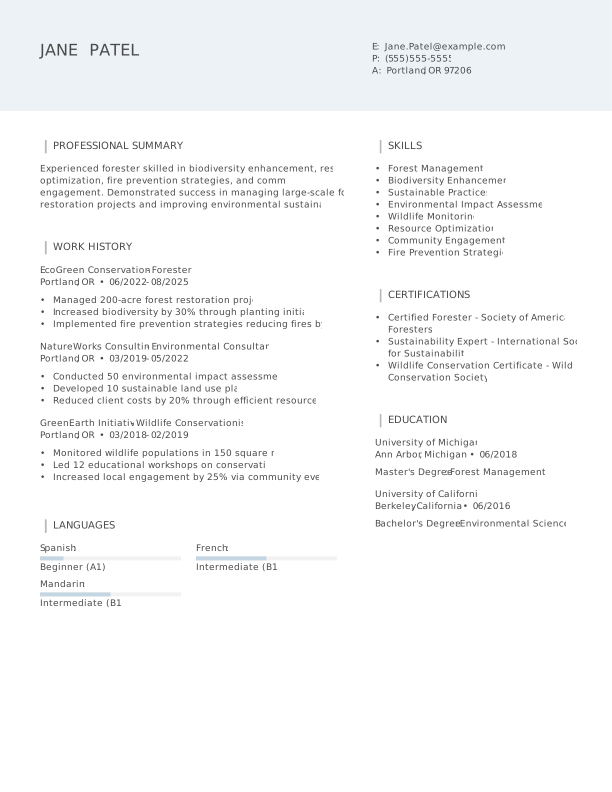
- Highlights industry-specific skills: By spotlighting skills like forest management and sustainable practices, the applicant showcases a solid grasp of industry-specific skills essential for compelling conservation projects.
- Uses action-oriented language: Action verbs like “managed,” “implemented,” and “conducted” illustrate initiative and effectiveness.
- Showcases career progression: Transitioning from wildlife conservationist to forester reflects significant career growth, emphasizing increased responsibility through managing larger-scale projects.
More Forester Resume Examples
Our forester resume examples demonstrate how to highlight your environmental expertise, land management skills, and passion for conservation. Use these science resume samples to craft a resume that reflects your strengths and positions you as a strong applicant in forestry roles.
Entry-Level Forester
Why this resume works
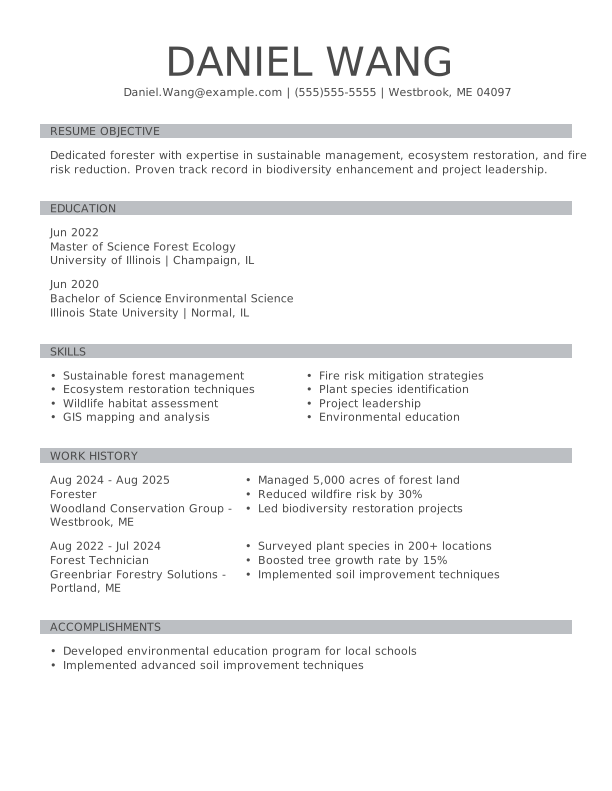
- Effective use of keywords: Skillfully weaving relevant keywords like “sustainable forest management” and “wildfire habitat assessment” ensures the resume navigates through applicant tracking systems (ATS) filters.
- Shows digital literacy: GIS mapping and analysis skills reveal a solid grasp of computer skills, essential for modern environmental projects.
- Centers on academic background: The education section including a master’s in forest ecology emphasizes foundational expertise important for early-career professionals in environmental science.
Mid-Level Forester
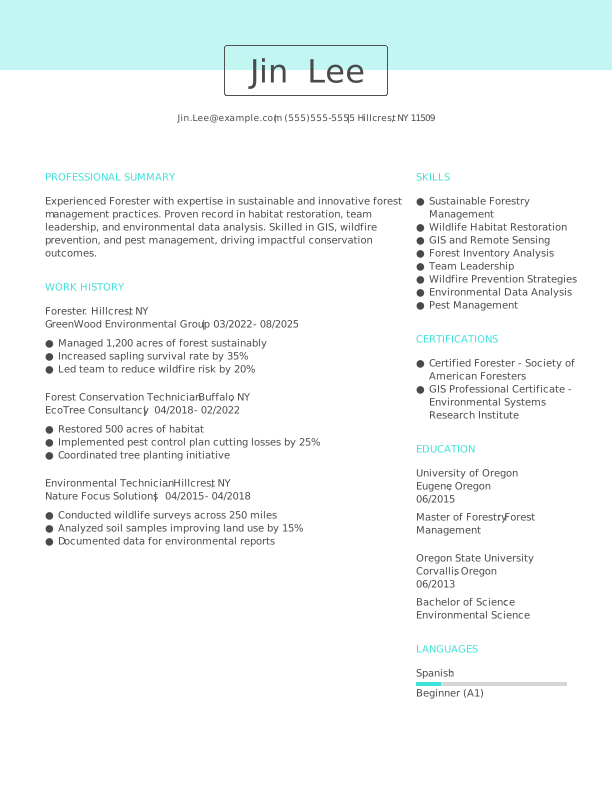
Why this resume works
- Points to measurable outcomes: Increasing sapling survival by 35% and reducing wildfire risk by 20% showcases a strong ability to achieve measurable conservation goals in forest management.
- Demonstrates language abilities: Language skills in Spanish facilitates effective cross-cultural collaboration in forestry projects.
- Displays technical expertise: Holding certifications like the GIS Professional Certificate highlights technical skill essential for analyzing environmental data and advancing sustainable forestry practices.
Experienced Forester
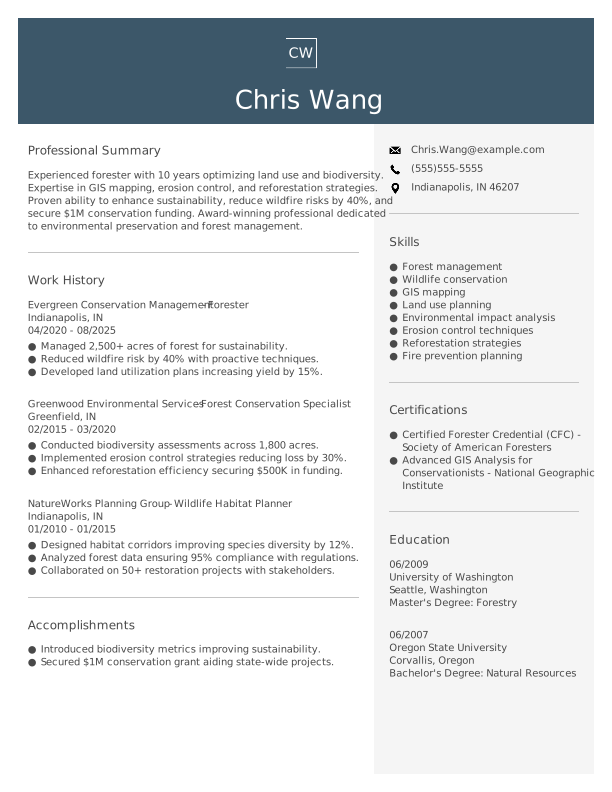
Why this resume works
- Showcases impressive accomplishments: Incorporating achievements like reducing wildfire risk by 40% and securing $1M grants, the applicant’s accomplishments reflect a profound impact on forestry conservation.
- Emphasizes leadership skills: The applicant’s leadership shines through managing vast forest areas sustainably and spearheading erosion control projects, showcasing leadership skills that drive positive environmental change.
- Sections are well-organized: Organized sections with clear headers and bullet points make the resume reader-friendly, emphasizing key information without overwhelming details for easy scanning.
Forester Resume Template (Text Version)
Make your resume your own. Copy the text below, then browse our resume templates for designs that match your field.
Jane Patel
Portland, OR 97206
(555)555-5555
Jane.Patel@example.com
Professional Summary
Experienced forester skilled in biodiversity enhancement, resource optimization, fire prevention strategies, and community engagement. Demonstrated success in managing large-scale forest restoration projects and improving environmental sustainability.
Work History
Forester
EcoGreen Conservation – Portland, OR
June 2022 – August 2025
- Managed 200-acre forest restoration project
- Increased biodiversity by 30% through planting initiatives
- Implemented fire prevention strategies reducing fires by 15%
Environmental Consultant
NatureWorks Consulting – Portland, OR
March 2019 – May 2022
- Conducted 50 environmental impact assessments
- Developed 10 sustainable land use plans
- Reduced client costs by 20% through efficient resource use
Wildlife Conservationist
GreenEarth Initiative – Portland, OR
March 2018 – February 2019
- Monitored wildlife populations in 150 square miles
- Led 12 educational workshops on conservation
- Increased local engagement by 25% via community events
Languages
- Spanish – Beginner (A1)
- French – Intermediate (B1)
- Mandarin – Intermediate (B1)
Skills
- Forest Management
- Biodiversity Enhancement
- Sustainable Practices
- Environmental Impact Assessment
- Wildlife Monitoring
- Resource Optimization
- Community Engagement
- Fire Prevention Strategies
Certifications
- Certified Forester – Society of American Foresters
- Sustainability Expert – International Society for Sustainability
- Wildlife Conservation Certificate – Wildlife Conservation Society
Education
Master’s Degree Forest Management
University of Michigan Ann Arbor, Michigan
June 2018
Bachelor’s Degree Environmental Science
University of California Berkeley, California
June 2016
Related Resume Guides
Advice for Writing Your Forester Resume
If you’re aiming for a forester position, you know how important it is to highlight your unique skills and experiences in conservation and land management. Dive into our advice on how to write a resume tailored specifically for foresters and discover tips that will help you stand out in the field of forestry.
Highlight relevant technical skills
To succeed as a forester, it’s important to focus on technical skills that directly relate to managing and caring for forests. A dedicated section labeled technical skills on your resume can clearly showcase your abilities.
Alternatively, mention these skills while describing your work experience, linking them to specific tasks or accomplishments. Highlighting expertise in GIS mapping, forest inventory methods, and silviculture practices will demonstrate your readiness for the role.
Some commonly sought-after technical skills for foresters include tree identification, land surveying, soil analysis, and data collection using tools like GPS devices or forestry software. Employers often look for expertise in wildfire prevention techniques, reforestation planning, and habitat restoration. Including these skills in your resume indicates you’re prepared to tackle the practical challenges of forest management.
When writing about these skills, keep it straightforward and connect them to real-world applications. For example, if you’ve used remote sensing tools to monitor forest health or conducted timber harvest assessments with precision equipment, ensure you describe those experiences briefly but clearly. This makes it easier for hiring managers to see how you’re ready to contribute effectively as a forester.
Example of a technical skills section
- Geographic information systems (GIS) software (ArcGIS, QGIS)
- Forest inventory and analysis techniques
- Remote sensing for forest management
- Dendrology and tree identification
- Wildlife habitat assessment
- Forest ecosystem modeling
- Chainsaw operation and safety certification
- Fire management and controlled burning practices
- Soil sampling and analysis
- Data collection with GPS technology
Soft skills like teamwork, communication, and leadership make you stand out. Use our Resume Builder to ensure your resume shows a balanced skill set.
Quantify your accomplishments
Quantifying accomplishments makes your resume stand out because it shows the direct impact of your work rather than simply listing tasks.
For a forester, this means turning general responsibilities like “managed forest conservation projects” into measurable achievements such as “reduced soil erosion by 30% through sustainable planting techniques.” Including numbers or metrics gives hiring managers concrete evidence of your skills and success, making it easier for them to assess your value.
In the work experience section, each entry should include your job title, employer name, location, and employment dates. Focus on transforming duties into results-driven statements by adding specifics like cost savings or efficiency improvements.
For example, instead of saying “monitored wildlife populations,” say “increased habitat health scores by 20% through targeted wildlife management strategies over two years.” Using action verbs like “implemented,” “optimized,” or “expanded” alongside measurable outcomes creates a dynamic narrative that highlights what you accomplished.
Quantified accomplishments allow hiring managers to quickly grasp the scope of your work and the results you delivered. This approach is especially effective in roles like forester because it demonstrates how your efforts contributed to environmental preservation or operational goals. Numbers make abstract concepts tangible and show why you’re an asset for future employers.
5 forester work history bullet points
- Conducted comprehensive forest inventories and ecological assessments, increasing data accuracy by 25% over previous methods.
- Developed and implemented a sustainable forest management plan, resulting in a 30% increase in timber yield while maintaining biodiversity.
- Led a team of 10 field technicians in reforestation projects, planting over 50,000 trees annually and improving local habitat quality.
- Collaborated with government agencies to secure $500,000 in funding for conservation initiatives, improving community engagement and project scope.
- Monitored forest health through remote sensing technology, reducing the time needed for pest detection by 40%.
Find great ideas for your resume by checking out our professional resume examples. You’ll see how to organize your skills and experience quickly.
Write a powerful professional summary
A professional summary is an introduction at the top of your resume designed to grab the attention of hiring managers. It helps them quickly understand who you are and why you’re a great fit for the position.
Typically consisting of three to four sentences, a professional summary highlights your experience, skills, and achievements. It’s best suited for experienced applicants as it showcases your professional identity and value to potential employers.
On the other hand, resume objectives focus on career goals and are ideal for entry-level applicants, career changers, or those with employment gaps. While summaries highlight “what I’ve accomplished,” objectives stress “what I aim to contribute.” For example, someone new to forestry might express their passion for environmental sustainability and their plans to impact forest conservation.
Next, we’ll provide examples of both summaries and objectives tailored to different industries and experience levels.
Forester resume summary examples
Entry-level
Recent graduate with a Bachelor of Science in forestry from a recognized university, equipped with foundational knowledge in forest ecology and management. Completed internships focusing on wildlife conservation and sustainable forestry practices. Certified in Geographic Information Systems (GIS) mapping and eager to contribute to environmental health through responsible forest management.
Mid-career
Forester with over seven years of experience in managing public and private forest lands. Expertise in timber sales planning, habitat restoration, and invasive species control. Successfully led teams in conducting field surveys and implementing conservation projects that improved biodiversity. Known for strong collaboration skills with governmental agencies and local communities.
Experienced
Seasoned forester with more than 15 years dedicated to advancing sustainable forest management and policy development. Proven track record in leading large-scale reforestation projects resulting in increased carbon sequestration. Skilled at mentoring junior foresters and collaborating with legislative bodies to promote environmentally sound practices. Committed to driving innovation in resource conservation.
Forester resume objective examples
Recent graduate
Recent forestry graduate with a Bachelor of Science in forestry seeking an entry-level forester position to apply knowledge of forest management and conservation techniques. Passionate about contributing to sustainable forest practices and eager to support environmental preservation efforts.
Career changer
Dedicated environmental science professional transitioning into the field of forestry, bringing a solid background in ecosystem analysis and land management. Eager to leverage skills in data collection and resource planning to contribute effectively to forest conservation projects.
Specialized training
Aspiring forester with specialized training in GIS mapping and wildlife habitat assessment seeking a role within a dynamic forestry team. Aiming to use technical skills and field experience to support sustainable forest practices and biodiversity protection.
When selecting a resume template, choose one that’s clear and professional. Use bold headings and simple fonts, and avoid any fancy designs that might make your skills and experience difficult to read.
Showcase your credentials
Listing your credentials, like certifications and specialized training, is really important for a forester. These show that you have the right skills and knowledge to handle the technical parts of the job. A dedicated certifications section on your resume makes it easy for employers to see your qualifications at a glance. This can be a great addition next to your education section, giving a full picture of your abilities.
- Society of American Foresters Certified Forester
- ISA Certified Arborist
- Forest Stewardship Council Chain of Custody Certification
- USFS Timber Sale Administrator Certification
- Sustainable Forestry Initiative (SFI) Certification
Adding these certifications to your resume can boost your chances of being noticed by potential employers. They show you are committed to keeping up with industry standards and best practices. This can help set you apart in the field and lead to success as a forester.
Example of a certifications section
Certified Forester
Issued by: Society of American Foresters (SAF)
Issued 2021
Forest Pest Management Certification
Issued by: USDA Forest Service
Expires 2025
Wildland Firefighter Certification
Issued by: National Wildfire Coordinating Group (NWCG)
Issued 2020
Urban Forestry Certification
Issued by: International Society of Arboriculture (ISA)
Expires 2026
GIS Specialist Certificate
Issued by: Esri
Issued 2023
Make your resume stand out! Our resume grader spots common formatting errors and offers improvement suggestions.
Salary Insights for Foresters
Knowing salary data can give you an edge when planning your career or thinking about moving. More details are provided below.
Top 10 highest-paying states for foresters
Foresters earn varying salaries across the United States, with a national average of $72,216. The table below highlights the states where foresters command the highest compensation.
Our salary information comes from the U.S. Bureau of Labor Statistics’ Occupational Employment and Wage Statistics survey. This official government data provides the most comprehensive and reliable salary information for foresters across all 50 states and the District of Columbia. The figures presented here reflect the May 2025 dataset, which is the most recent available as of this publication.
| State | Average Salary |
|---|---|
| California | $101,700 |
| District of Columbia | $85,780 |
| Alaska | $83,480 |
| New Hampshire | $82,470 |
| Louisiana | $82,400 |
| Washington | $81,680 |
| New York | $80,550 |
| Connecticut | $80,560 |
| Pennsylvania | $79,970 |
| Michigan | $77,490 |
FAQ
Do I need to include a cover letter with my forester resume?
Yes, including a cover letter with your forester resume can set you apart from other applicants and increase your chances of landing an interview.
A cover letter provides the opportunity to express your unique interest in the forestry role, emphasize relevant skills such as land management or conservation efforts, and highlight any specialized experience.
For instance, if the organization is focused on sustainable forestry practices or has specific land management projects, you can detail your expertise or enthusiasm for these areas.
Consider using a Cover Letter Generator to craft a personalized document that complements your resume or explore creating one from scratch with expert guidance and tips.
Additionally, browsing through cover letter examples tailored to environmental careers can offer inspiration and help ensure your application matches industry expectations.
How long should a forester’s resume be?
For a forester, the length of your resume depends largely on your experience and expertise.
If you’re early in your career or transitioning into forestry, a one-page resume can effectively showcase key skills like knowledge of ecosystems, basic fieldwork experience, and any relevant educational background.
However, if you’ve accumulated extensive field experience or have specialized qualifications—such as advanced certifications in environmental science—a two-page resume may be appropriate.
Remember, the focus should always be on how relevant and recent your information is. Explore more about how long a resume should be to find examples and tips that best fit your career stage.
How do you write a forester resume with no experience?
Writing a forester resume with no experience can feel challenging, but highlighting your education, skills, and relevant coursework or activities will help show your potential for the job. Follow these tips:
- Highlight your education: Begin with your degree in forestry or environmental science. Include your school name, graduation date, and any honors or relevant coursework related to forest management or ecology.
- Showcase transferable skills: Emphasize skills useful in forestry like data analysis, GIS mapping, teamwork, and problem-solving. If you’ve developed these through projects or volunteer work, feature them prominently.
- Include relevant activities: Mention any involvement in clubs or organizations such as student forestry societies, environmental groups, or volunteer conservation work. Describe leadership roles or specific contributions that showcase commitment to the field.
Rate this article
Forester


Elizabeth is a Certified Professional Resume Writer (CPRW) and a member of the Professional Association of Resume Writers & Career Coaches. She is committed to helping job seekers navigate the job market and succeed in their careers.
More Articles by Elizabeth Muenzen, CPRWShare this page
 Add MyPerfectResume as a preferred source on Google
Add