Table of Contents
Get started with MyPerfectResume today!
- Build a resume on any device
- Pick an ATS-friendly template
- Tailor with AI copy suggestions
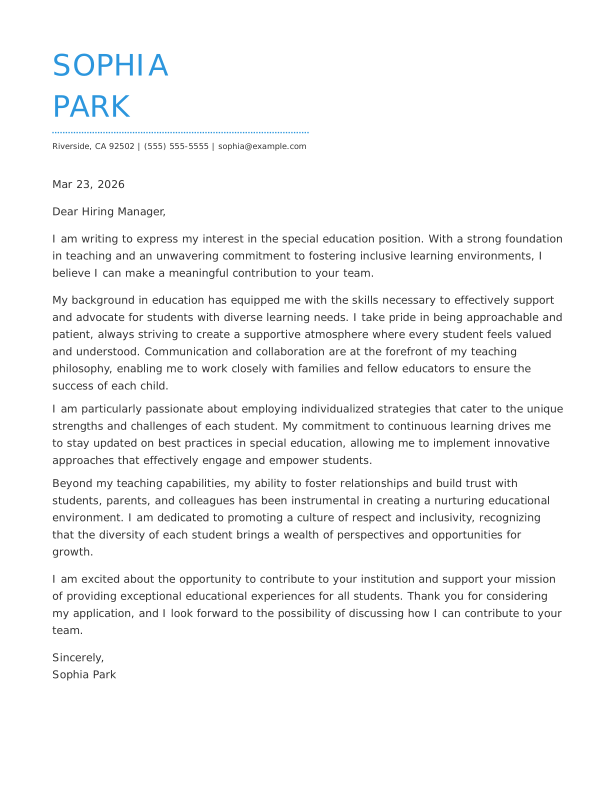
Why this cover letter works
- This cover letter highlights the applicant’s experience with individualized education plans and successful strategies in fostering inclusive environments. This shows what to include in a cover letter to impress hiring managers looking for dedicated professionals.
More Special Education Cover Letter Examples
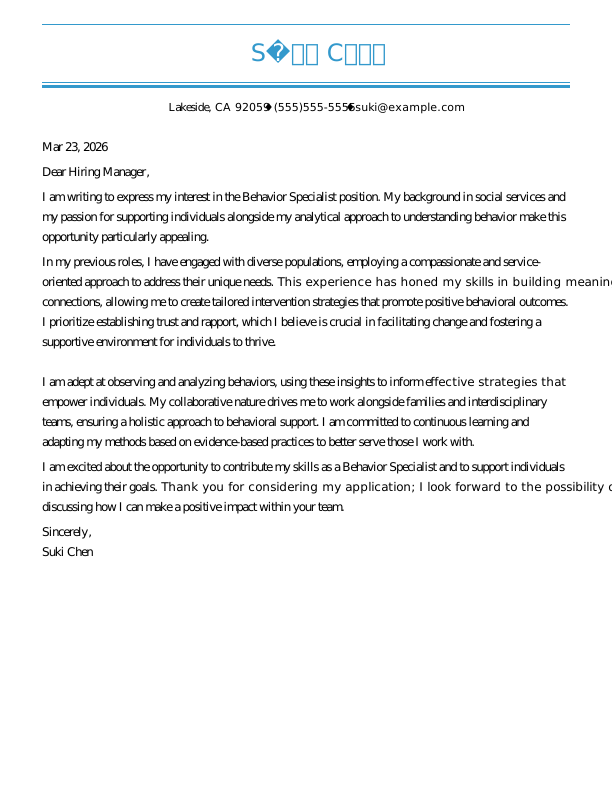
Explore the world of special education cover letters with our curated collection designed for every level of experience. Whether you’re a passionate newcomer or an experienced educator, our diverse cover letter examples will inspire you to craft a compelling narrative that highlights your unique skills and dedication.
Entry-Level Special Education Cover Letter

Why this cover letter works
- The cover letter header above makes the applicant’s name the most prominent feature, which helps them stand out to hiring managers. This also helps their application gain visibility in competitive hiring contexts.
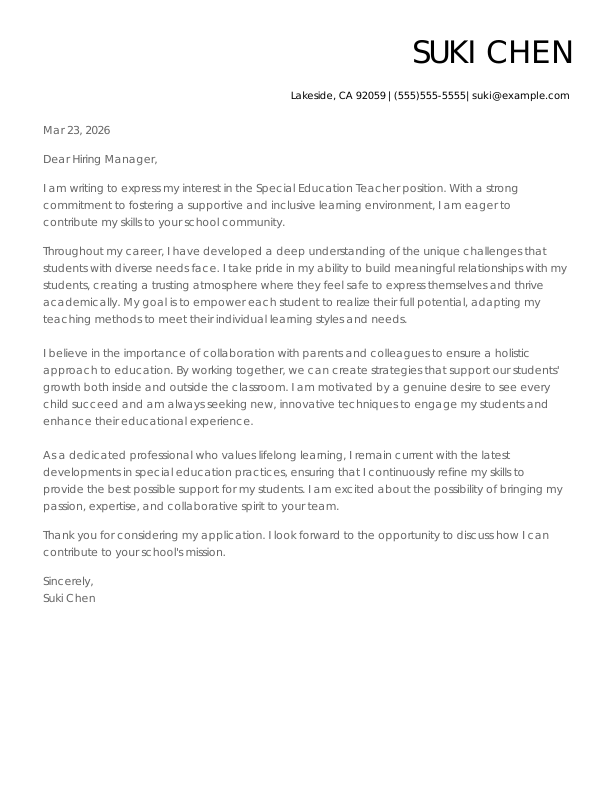
Experienced Special Education Cover Letter

Why this cover letter works
- Using a cover letter outline, this special education professional connected their diverse experiences in supporting students with varied learning needs to their commitment to fostering an inclusive environment, showcasing both past successes and future contributions to educational excellence.
Explore Even More Special Education Cover Letters
Special Education Cover Letter Template (Text Version)
You can easily copy the text version provided below, and while you’re here, make sure to check out our selection of cover letter templates to find the ideal style that showcases your unique qualifications in special education.
Sophia Park
Riverside, CA 92502
(555)555-5555
sophia@example.com
Mar 23, 2026
Dear Hiring Manager,
I am writing to express my interest in the special education position. With a strong foundation in teaching and an unwavering commitment to fostering inclusive learning environments, I believe I can make a meaningful contribution to your team.
My background in education has equipped me with the skills necessary to effectively support and advocate for students with diverse learning needs. I take pride in being approachable and patient, always striving to create a supportive atmosphere where every student feels valued and understood. Communication and collaboration are at the forefront of my teaching philosophy, enabling me to work closely with families and fellow educators to ensure the success of each child.
I am particularly passionate about employing individualized strategies that cater to the unique strengths and challenges of each student. My commitment to continuous learning drives me to stay updated on best practices in special education, allowing me to implement innovative approaches that effectively engage and empower students.
Beyond my teaching capabilities, my ability to foster relationships and build trust with students, parents, and colleagues has been instrumental in creating a nurturing educational environment. I am dedicated to promoting a culture of respect and inclusivity, recognizing that the diversity of each student brings a wealth of perspectives and opportunities for growth.
I am excited about the opportunity to contribute to your institution and support your mission of providing exceptional educational experiences for all students. Thank you for considering my application, and I look forward to the possibility of discussing how I can contribute to your team.
Sincerely,
Sophia Park
Related Cover Letter Examples
- Biology
- Business Executive
- Business Operations
- Child Care
- Computer Software
- Construction
- Copywriting
- Cosmetology
- Culinary
- Customer Service
- Dance
- Data Systems Administration
- Dentist
- Driving
- Education
- Electrical
- Electrical Engineering
- Engineering
- Entertainment
- Event Planning
- Film
- Finance
- Fitness Nutrition
- Food Service
- General Laborer
- Healthcare Support
- Hospitality
- Human Resources
- Hvac
- Information Technology
- Insurance
- Inventory Management
- Janitorial
- Law
- Law Enforcement
- Library
- Logistics
- Marketing
- Mechanic
- Mechanical Engineering
- Medical
- Museum
- Nursing
- Pest Control
- Pharmaceutical
- Physical Therapy
- Production
- Project Manager
- Quality Control
- Real Estate
- Retail
- Safety Security
- Sales
- Social Services
- Sports
- Statistics
- Student
- Supervisor
- Teaching
- Team Lead
- Training Development
- Transportation
- Veterinary
How to Write a Special Education Cover Letter
Are you ready to create a standout cover letter for special education? Our expert guidance on how to write a cover letter will help you highlight your dedication to student development and communication skills, ensuring you make a lasting impression on potential employers.
Address your cover letter properly
When applying for special education positions, always aim to address your cover letter to a specific person if possible. Research the job posting, school website, or LinkedIn to find the hiring manager’s name. This effort adds a personal touch that can make your application stand out from others.
If you’re unsure how to address a cover letter due to missing names, skip using “To Whom It May Concern.” Instead, consider alternatives like “Dear Hiring Manager” or more specific greetings such as “Dear Special Education Team.” Using department-specific titles shows you understand the context of your application and makes it more engaging.
Personalized greetings are essential because they reflect your attention to detail and genuine interest in the role. A thoughtful salutation is often your first opportunity to convey professionalism and commitment—qualities that are highly valued in special education settings.
Grab attention with your opening paragraph
When you write your cover letter, remember that hiring managers are sifting through many applications. You need to know how to start your cover letter with something compelling. Instead of repeating what’s on your resume, lead with your strongest qualifications or express why you’re truly excited about the special education role. This is your chance to stand out and make a memorable first impression.
Think about what sets you apart in the field of special education. Maybe it’s your experience working with children who have autism, your ability to create individualized lesson plans, or perhaps your commitment to fostering an inclusive classroom environment.
Identify these strengths and show how they align with what the school needs. This connection will help demonstrate that you’re not just another applicant but a perfect fit for their team.
Example of a strong opener
With over six years of experience as a special education teacher, I have successfully implemented individualized education plans that improved student engagement by 30%. I am eager to join the dedicated team at Horizon Academy, where my strong communication skills and passion for fostering inclusive learning environments can contribute to improving student success. Together, I believe we can make a significant impact on each child’s educational journey.
Looking to make a strong impression with your cover letter? Our Cover Letter Generator quickly creates personalized openings that highlight your experience in special education, helping you stand out in minutes.
Include skills from the job ad
Do not use a generic cover letter when applying for special education positions. Instead, take the time to carefully review the job posting and tailor your application to highlight the specific skills and qualifications they are looking for. This shows that you pay attention to detail and understand what the employer needs, which can help your application get through automated screening systems.
In your cover letter, focus on two to three key skills from the job description. Support each skill with concrete examples from your experience in special education. This targeted approach demonstrates that you’re not just qualified but are also an ideal fit for this particular role and educational environment.
Top skills to list on your cover letter
- Individualized education program (IEP) development
- Behavior management strategies
- Data collection and analysis
- Collaboration with families and specialists
- Adaptation of learning materials
- Communication skills for diverse learners
- Classroom management techniques
- Assessment of student progress
- Crisis intervention strategies
- Assistive technology utilization
- Social skills training
- Cultural competency in teaching
- Patience and empathy in instruction
- Conflict resolution strategies
- Teamwork with educational staff
- Flexibility in instructional methods
Save time by using a cover letter template from Google Docs or a Microsoft Word cover letter. These resources offer neat formatting that lets you concentrate on tailoring your content for each special-education role.
Show your impact with numbers
In special education, numbers speak louder than words. Instead of saying you’re a “passionate teacher,” illustrate your impact with concrete examples.
For instance, highlight how you improved individualized education plan (IEP) goal attainment by 30% for your students or reduced behavioral incidents by 25% over a semester. These measurable achievements distinguish you from job seekers who simply list their responsibilities, showcasing that you create meaningful change in students’ lives.
Measurable accomplishments validate your ability to deliver results, which is what hiring managers seek. They demonstrate that you’re not just fulfilling basic functions but truly excelling in your role. By emphasizing specific metrics, you show that you have a proven track record of fostering student growth and success in special education settings, making you an invaluable asset to their team.
Bullet points to include in your cover letter
- Increased student engagement by 40% through the development of interactive learning modules over one academic year
- Implemented individualized education plans for 15 students, resulting in a 20% improvement in their standardized test scores
- Facilitated weekly workshops that raised parental involvement by 50% during the school term
- Collaborated with a team to design and launch a sensory room that improved focus for 30 students with special needs
- Achieved a 95% success rate in transitioning students to mainstream classrooms within two years
When applying for a special education position, choosing the right cover letter format can highlight your quantifiable achievements. Different layouts showcase metrics more clearly based on your experience level in the field.
Leave a lasting impression
Your closing paragraph should reinforce your enthusiasm and prompt the hiring manager to take action. Learning how to end a cover letter involves being direct about your interest while maintaining professionalism. Thank them for their consideration, reiterate your excitement about the opportunity, and express your eagerness to discuss how your skills can positively impact their team.
Example of cover letter closing
Thank you for reviewing my application for the special education position at Bright Futures Academy. I am eager about the opportunity to leverage my skills in individualized instruction and collaboration with families to support your students’ growth. I would love to discuss how my background in adaptive learning strategies can improve your program’s success. I look forward to the possibility of contributing to your team and hope to hear from you soon.
Tailor your cover letter for specific situations
Navigating a career in special education can be challenging, especially for those with non-traditional backgrounds. It’s essential to address your unique experiences clearly and positively.
- If you’re transitioning from another field, highlight how your prior experience equips you for success in special education. For example, if you worked in social services, discuss how your advocacy skills can support students’ needs.
- For returning professionals, emphasize the ways you’ve kept up with developments in the field. Mention any workshops or volunteer opportunities you’ve engaged in that demonstrate your dedication and renewed passion for supporting students.
- New graduates should focus on their academic achievements and relevant internships. Discuss classroom observations or volunteer work that showcases your commitment to fostering an inclusive learning environment.
FAQ
How long should a special education cover letter be?
Cover letters for special education applications should be one page long, typically consisting of three to four paragraphs. This structure provides ample space to showcase your relevant experience and skills without overwhelming hiring managers with too much information.
Understanding how long a cover letter should be is important for making an impact. Being concise and focused is key since recruiters spend limited time reviewing each application. Highlight your strengths clearly to ensure they stand out in the brief moments you have their attention.
What’s the difference between a cover letter and a resume?
When applying for special education positions, your special-education resume showcases your qualifications in a clear and organized manner.
It highlights your achievements, skills, and relevant work history. In contrast, the cover letter provides a narrative that connects these details. Think of your resume as the “what”—what you’ve done in your career and what makes you qualified.
Your cover letter serves as the “why” and “how.” It explains your passion for special education, how your background aligns with the job requirements, and why you’re drawn to this particular school or organization.
Understanding the difference between a cover letter vs resume allows you to use each document to highlight different aspects of your candidacy. This distinction is key to creating a strong application that tells a complete story about who you are as an applicant.
Should I include a cover letter even if it’s not required?
Absolutely! Including a cover letter, even when it’s optional, shows your dedication and passion for special education.
Hiring managers in this field look for applicants who not only possess the necessary qualifications but also demonstrate empathy and commitment to supporting diverse learning needs. A resume may not fully convey your approach to fostering inclusive environments and building strong relationships with students.
Now imagine two equally qualified special-education teachers applying for the same role, but only one submits a personalized cover letter sharing their unique teaching strategies and commitment to student success.
In discussions about whether cover letters are necessary, it becomes evident that extra effort could set you apart from the competition. When in doubt, include a cover letter—you have everything to gain by illustrating your individual strengths and vision.
What does a professional cover letter look like?
A professional special-education cover letter should be clean, organized, and easy to scan. Incorporate a standard business letter format starting with your contact information at the top, followed by the date and employer’s details.
Use a professional font like Arial or Times New Roman in 11-12 point size, making sure to have standard margins and single spacing between lines for an appealing appearance.
The layout must feature a clear header, a personalized greeting (avoid generic salutations), along with three to four concise paragraphs in the body, and a formal closing with your signature. Maintaining ample white space is important for readability since hiring managers often review numerous applications quickly.
For further guidance on what a cover letter should look like, refer to our resources that provide visual examples and formatting tips to ensure your application stands out as polished and professional.
Can ChatGPT write a cover letter?
While you can use ChatGPT to write a cover letter, it might not be the ideal approach for conveying your passion and dedication to special education. AI tools are helpful in overcoming writer’s block and organizing ideas, yet they often produce content that feels generic and lacks the personal touch needed to stand out in this field.
Hiring managers in special education can easily identify AI-generated letters because they often miss heartfelt commitment and specific strategies important for working with diverse learners. These letters typically lack insights into individualized teaching methods or genuine enthusiasm for supporting students with unique needs. Rather than relying entirely on AI, use it as an initial step to arrange your thoughts, then infuse every sentence with your authentic experiences and motivations for joining that particular program. Your real-life stories and sincere dedication will always resonate more powerfully than automated text.
Rate this article
Special-education


Toni is a Certified Professional Resume Writer (CPRW) and member of the Professional Association of Resume Writers & Career Coaches. She is committed to helping job seekers navigate the job market and succeed in their careers.
More Articles by Toni Frana, CPRWShare this page
 Add MyPerfectResume as a preferred source on Google
Add