Table of Contents
Get started with MyPerfectResume today!
- Build a resume on any device
- Pick an ATS-friendly template
- Tailor with AI copy suggestions
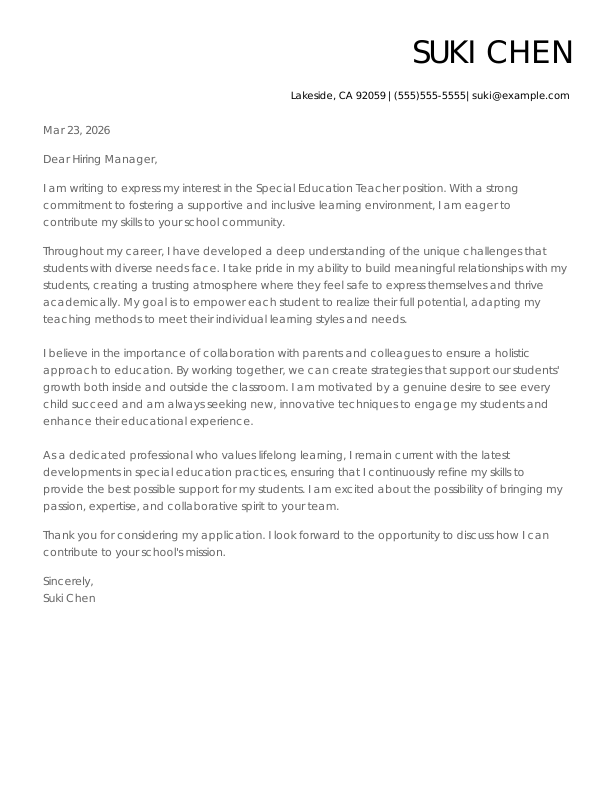
Why this cover letter works
- This cover letter showcases the applicant’s tailored teaching strategies, successful classroom management experiences, and commitment to fostering inclusive learning environments. This demonstrates what to include in a cover letter that resonates with hiring managers looking for passionate educators dedicated to student success.
More Special Education Teacher Cover Letter Examples
Curious about how to craft the perfect cover letter for a special education teacher position? Check out our diverse collection of cover letter examples, showcasing unique styles and approaches from both new educators and experienced professionals in the field.
Entry-Level Special Education Teacher Cover Letter

Why this cover letter works
- A prominent cover letter header helped this applicant stand out by making their name the most visible element. This visibility creates immediate recognition, ensuring that applications are easily remembered in competitive hiring situations.
Experienced Special Education Teacher Cover Letter

Why this cover letter works
- By using a cover letter outline, this special education teacher connected their diverse teaching experiences to craft an engaging narrative. This approach highlights their commitment to inclusive education and shows how past successes can drive powerful contributions in future roles.
Special Education Teacher Cover Letter Template (Text Version)
Excited to personalize your special education teacher cover letter? You’ll find a text version available for easy copying, and be sure to explore our selection of cover letter templates that can help you showcase your unique qualifications in this rewarding field.
Suki Chen
Lakeside, CA 92059
(555)555-5555
suki@example.com
Mar 23, 2026
Dear Hiring Manager,
I am writing to express my interest in the Special Education Teacher position. With a strong commitment to fostering a supportive and inclusive learning environment, I am eager to contribute my skills to your school community.
Throughout my career, I have developed a deep understanding of the unique challenges that students with diverse needs face. I take pride in my ability to build meaningful relationships with my students, creating a trusting atmosphere where they feel safe to express themselves and thrive academically. My goal is to empower each student to realize their full potential, adapting my teaching methods to meet their individual learning styles and needs.
I believe in the importance of collaboration with parents and colleagues to ensure a holistic approach to education. By working together, we can create strategies that support our students’ growth both inside and outside the classroom. I am motivated by a genuine desire to see every child succeed and am always seeking new, innovative techniques to engage my students and enhance their educational experience.
As a dedicated professional who values lifelong learning, I remain current with the latest developments in special education practices, ensuring that I continuously refine my skills to provide the best possible support for my students. I am excited about the possibility of bringing my passion, expertise, and collaborative spirit to your team.
Thank you for considering my application. I look forward to the opportunity to discuss how I can contribute to your school’s mission.
Sincerely,
Suki Chen
Related Cover Letter Examples
How to Write a Special Education Teacher Cover Letter
Are you ready to write a standout cover letter for your special education teacher application? Our detailed guidance on how to write a cover letter will help you highlight your patience, creativity, and dedication to supporting students with diverse needs. Let’s make sure your passion shines through!
Address your cover letter properly
When applying for a special education teacher position, address your cover letter to a specific person whenever possible. Look for the hiring manager’s name in the job posting, school website, or LinkedIn profile. If you can’t find a specific name, it’s helpful to know how to address a cover letter using alternatives like “Dear Hiring Manager” or “Dear [Department Name] Team.”
Avoid outdated phrases like “To Whom It May Concern” and opt for something more relevant, such as “Dear Special Education Team,” to align with the role you’re pursuing.
Personalized greetings matter because they showcase your attention to detail and genuine interest in the position. This first impression can greatly influence how your application is perceived.
Grab attention with your opening paragraph
When writing your cover letter, you want to grab the hiring manager’s attention right away. Remember that they are looking through many applications and only have a few seconds for each one. If you’re wondering how to start your cover letter, focus on showcasing your strongest qualities instead of repeating what’s on your resume. This is your chance to stand out from the crowd.
Think about what sets you apart as a special education teacher. Do you have experience with specific learning disabilities, or perhaps you’ve developed engaging lesson plans that cater to diverse learning styles? Highlight these strengths and explain how they align with the needs of the school or district you’re applying to. This connection shows you understand their goals and can contribute positively to their team.
Example of a strong opener
As a dedicated special education teacher with over six years of experience in creating inclusive learning environments, I’m eager to contribute my skills in individualized instruction and behavior management to the exceptional team at Sunshine Academy. My commitment to fostering student growth has led to a 20% increase in student engagement levels. I look forward to supporting your mission of providing quality education for all learners.
If you’re searching for the perfect opening line for your cover letter, try our Cover Letter Generator. It creates personalized introductions based on your unique experience, helping you stand out in seconds.
Include skills from the job ad
Avoid submitting a generic cover letter when applying for special education teacher positions. Carefully review the job posting to identify the specific skills and qualifications the school is seeking.
Tailoring your cover letter in this way shows that you’re a detail-oriented applicant who truly understands their requirements, improving your chances of passing through automated screening systems aimed at filtering applications.
In your cover letter, focus on highlighting two to three key skills mentioned in the job description. Support each skill with concrete examples from your experience in special education, demonstrating how you’ve successfully applied these skills in past roles.
This targeted approach not only showcases your qualifications but also establishes you as an ideal fit for the specific teaching environment and student needs at that school.
Top skills to list on your cover letter
- Individualized education plan (IEP) development
- Behavioral intervention strategies
- Adaptive technology integration
- Classroom management techniques
- Collaboration with special services staff
- Family engagement and support
- Progress monitoring and assessment
- Differentiated instruction methods
- Crisis intervention strategies
- Social skills training facilitation
- Cultural competency in education
- Positive reinforcement techniques
- Conflict resolution skills
- Communication with diverse learners
- Data-driven decision making
- Professional development in special education law
Save time by using a cover letter template from Google Docs or a Microsoft Word cover letter. These templates offer neat formatting, allowing you to concentrate on tailoring your content for each special education teacher position.
Show your impact with numbers
In special education, numbers speak louder than words. Instead of saying you’re a “passionate teacher,” demonstrate your impact with concrete examples like increasing student progress in individualized learning plans by 30% or successfully integrating technology that improved engagement levels by 25%.
Measurable accomplishments validate your ability to deliver results, which is important for hiring managers. They highlight that you excel in creating supportive environments tailored to diverse needs rather than just performing basic functions.
By showcasing specific metrics, you convey your effectiveness and commitment to improving the educational experience for all students, making you a standout applicant for any special education role.
Bullet points to include in your cover letter
- Increased student engagement by 40% through the implementation of interactive learning strategies over one academic year
- Developed an individualized education plan (IEP) that improved student progress by 35% in math skills within six months
- Collaborated with a team of 5 educators to create a sensory-friendly classroom environment, leading to a 50% reduction in behavioral incidents
- Facilitated workshops for parents of students with special needs, achieving a participation rate of 80% across three sessions
- Secured $10,000 in grants for assistive technology resources, improving learning opportunities for all students in my class
Choosing the appropriate cover letter format is important for special education teacher job seekers, as different layouts can better highlight your quantifiable achievements and metrics based on your experience level in the field.
Leave a lasting impression
Your closing paragraph should reinforce your enthusiasm and prompt the hiring manager to take action. Learning how to end a cover letter involves being direct about your interest in the position while maintaining professionalism.
Thank them for their consideration, reiterate your excitement about the opportunity, and express your desire to discuss how your skills can contribute positively to their special education team.
Example of cover letter closing
Thank you for considering my application for the special education teacher position at Bright Futures Academy. I am eager about the opportunity to bring my skills in individualized instruction and advocacy for students with diverse needs to your dedicated team. I look forward to discussing how my experience can support the growth and success of your school community. I appreciate your time and consideration, and I hope to hear from you soon.
Tailor your cover letter for specific situations
As a special education teacher, you may have a non-traditional background that sets you apart. It’s essential to directly acknowledge your unique circumstances while showcasing how your experiences contribute to your effectiveness in this role. Here are some examples:
- For career changers, focus on transferable skills. For example, if you previously worked in customer service, highlight how those communication skills help you engage with students and their families effectively.
- If you’re returning to teaching after time away, mention ways you’ve stayed informed about educational practices, such as attending workshops or volunteering in schools. Emphasize your renewed passion for fostering student growth and learning.
- New graduates should spotlight relevant internships or fieldwork experiences, along with any volunteer roles that demonstrate your commitment to supporting diverse learners. Include specific examples of how these experiences have prepared you for the classroom.
Salary Insights for Special Education Teachers
Special education teachers earn varying salaries across the United States. The table below highlights the states where special education teachers command the highest compensation.
Our salary information comes from the U.S. Bureau of Labor Statistics’ Occupational Employment and Wage Statistics survey. This official government data provides the most comprehensive and reliable salary information for special educations teachers across all 50 states and the District of Columbia. The figures presented here reflect the May 2025 dataset, which is the most recent available as of this publication.
| State | Average Salary |
|---|---|
| New York | $114,720 |
| New Jersey | $94,410 |
| District of Columbia | $88,960 |
| Washington | $86,250 |
| Massachusetts | $80,820 |
| Maryland | $78,380 |
| Georgia | $77,480 |
| Connecticut | $72,840 |
| Virginia | $70,990 |
| Vermont | $70,490 |
FAQ
How long should a special education teacher’s cover letter be?
Cover letters should be one page long, typically structured in three to four paragraphs. This format gives you the chance to showcase your relevant experience and skills clearly without overwhelming hiring managers with excessive information.
Understanding how long a cover letter should be is essential for making a solid impression. Keep it concise and focused because recruiters spend only a brief time reviewing applications. Highlight your strengths while ensuring the content stays engaging and easy to read.
What’s the difference between a cover letter and a resume?
When applying for a special education teacher position, your special education teacher resume should clearly outline your qualifications in an organized way. It highlights what you have achieved, the skills you possess, and the roles you’ve undertaken.
In contrast, your cover letter vs resume comparison serves to narrate the story behind those qualifications. Think of it as sharing your journey in teaching rather than listing facts.
The cover letter addresses the “why” and “how” of your application. It reveals your passion for working with students who have diverse needs, explains how your experiences align with the specific role, and expresses why you’re interested in that particular school or program.
Understanding this distinction helps you leverage both documents to showcase different facets of your background while strengthening your overall application.
Should I include a cover letter even if it’s not required?
Absolutely! Including a cover letter, even when it’s optional, showcases your dedication and willingness to go above and beyond—qualities that are especially important in special education.
Hiring managers want to see applicants who not only possess the necessary qualifications but also demonstrate empathy, communication skills, and a true commitment to supporting diverse learners. A resume alone cannot convey your unique approach to teaching or your passion for making a difference.
Imagine this scenario: two equally qualified special education teachers apply for the same position, but only one includes a heartfelt cover letter detailing their experiences and strategies for fostering an inclusive classroom.
In conversations about whether cover letters are necessary, it becomes apparent that that extra touch could be the key differentiator in securing an interview. When you’re uncertain, include the cover letter—there’s nothing to lose and so much potential to gain by showcasing your individual strengths and teaching philosophy.
What does a professional cover letter look like?
A professional special education teacher’s cover letter should appear clean, organized, and easy to scan. Use a standard business letter format that begins with your contact information at the top, followed by the date and employer’s details.
Choose a professional font like Arial or Times New Roman in 11-12 point size, ensuring you maintain standard margins and single spacing for clarity.
The layout must include a clear header, a personalized greeting (avoiding “To Whom It May Concern”), with three to four concise paragraphs in the body, and a formal closing with your signature. Including ample white space is essential to improve readability since hiring managers often review numerous applications quickly.
For further guidance on what a cover letter should look like, refer to our resource for visual examples and formatting tips that will help ensure your application stands out professionally.
Can ChatGPT write a cover letter?
While many are tempted to use ChatGPT to write a cover letter, it might not be the best choice for your application. AI tools help brainstorm ideas and overcome writer’s block, but they often produce content that feels generic and robotic.
Relying solely on these tools can lead to a letter that doesn’t truly reflect your passion for special education or your commitment to fostering an inclusive learning environment.
Hiring managers in the field of special education can quickly spot AI-generated letters because they usually miss heartfelt insights and specific examples that showcase a teacher’s dedication. These letters typically lack the deep understanding of individual student needs and personal experiences that set applicants apart.
Instead of relying entirely on AI, consider using it as a starting point to outline your thoughts, then personalize each section with authentic anecdotes and your unique teaching philosophy. Your genuine voice will always resonate more than any automated content.
Rate this article
Special Education Teacher


Elizabeth is a Certified Professional Resume Writer (CPRW) and a member of the Professional Association of Resume Writers & Career Coaches. She is committed to helping job seekers navigate the job market and succeed in their careers.
More Articles by Elizabeth Muenzen, CPRWShare this page
 Add MyPerfectResume as a preferred source on Google
Add