Table of Contents
Get started with MyPerfectResume today!
- Build a resume on any device
- Pick an ATS-friendly template
- Tailor with AI copy suggestions
Why this resume works
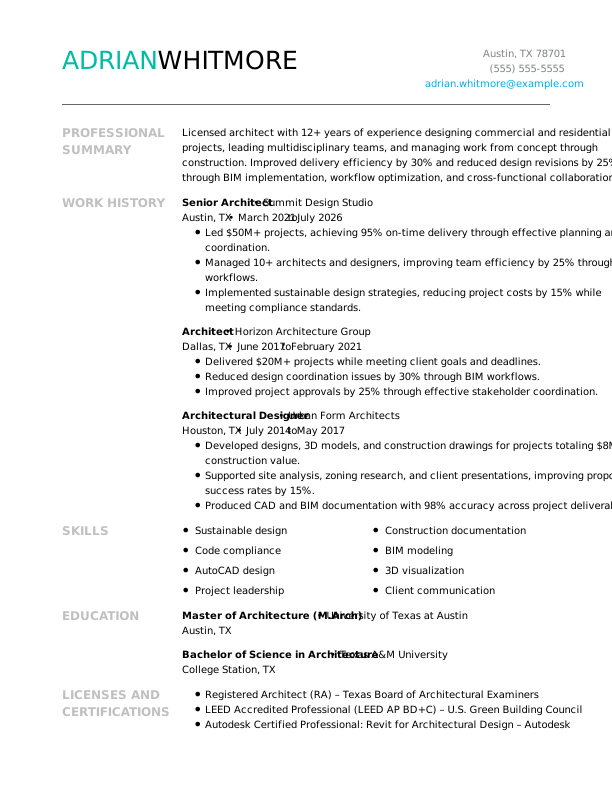
- Quantifies accomplishments: By referencing measurable accomplishments like leading $50M+ projects and achieving 95% on-time delivery through effective planning and coordination, the applicant emphasizes their tangible results and impact.
- Showcases career progression: The progression from architectural designer to senior architect showcases increasing responsibility and growth, reflecting a clear trajectory of professional development and expanded expertise.
- Uses action-oriented language: Strong action verbs like “implemented,” “led,” and “improved” convey initiative and effectiveness in project execution.
More Architecture Resume Examples
Check out more resume examples for architecture roles to understand how to highlight your design skills, project experience, and creative vision. These samples will help you craft a resume that attracts employers in the architecture field.
Entry-Level Architecture Resume

Why this resume works
- Centers on academic background: Listing an associate degree in architectural drafting and design in the education section emphasizes the applicant’s strong academic foundation early in their career.
- Effective use of keywords: By including keywords like “blueprint review,” “Excel coordination,” and “project completion” throughout the resume, the applicant optimizes their resume for applicant tracking systems (ATS).
- Puts skills at the forefront: The skills-based resume format positions the skills section prominently, showcasing abilities such as construction docs and Navisworks coordination.
Mid-Level Architecture Resume

Why this resume works
- Points to measurable outcomes: The applicant’s accomplishments, like leading 20+ commercial and residential projects and reducing design revisions by 30%, showcase their knack for producing impactful, measurable results in architecture.
- Demonstrates job-relevant abilities: Skills like architectural design, building code compliance, and construction documentation indicate the applicant’s ability to perform on the job from day one.
- Displays technical expertise: By mastering Revit and BIM modeling and 3D visualization, the applicant displays technical prowess essential for mid-career architecture roles.
Experienced Architecture Resume
Why this resume works
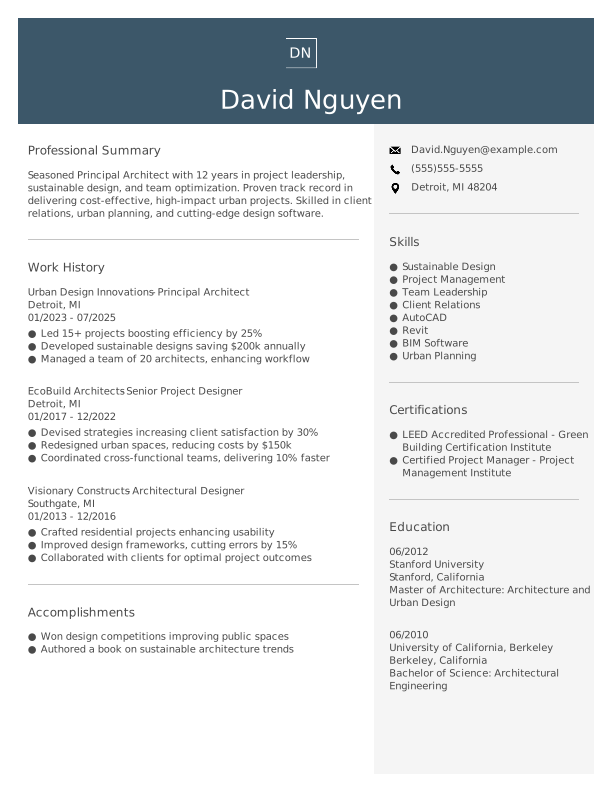
- Showcases impressive accomplishments: By highlighting quantifiable results like saving $200k annually and winning awards, the applicant showcases accomplishments that reflect impactful contributions to architectural design and sustainability.
- Emphasizes leadership skills: Managing teams of up to 20 professionals while leading efficiency-boosting projects demonstrates leadership skills rooted in collaboration and innovative problem-solving.
- Focuses on work history: The applicant uses a chronological resume format to emphasize progression through increasingly senior roles, illustrating extensive expertise across urban design and sustainable architecture.
Explore Even More Architecture Resumes
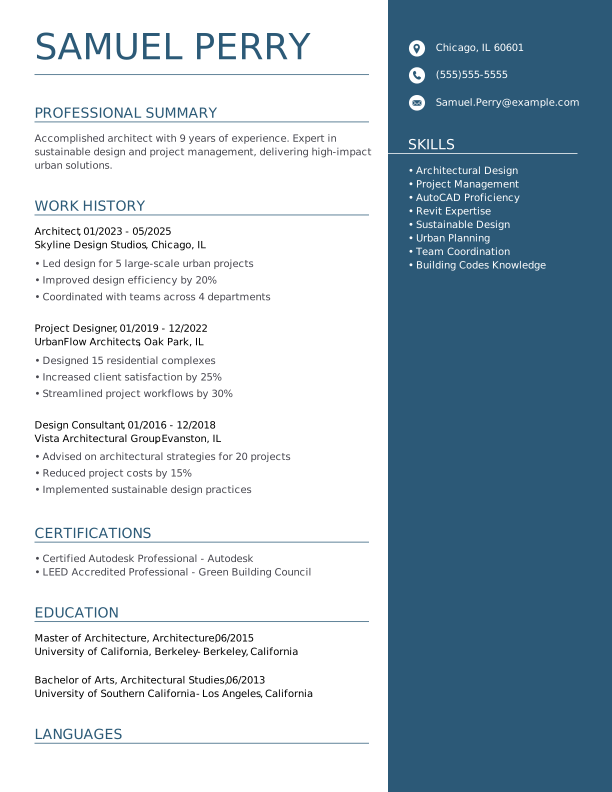
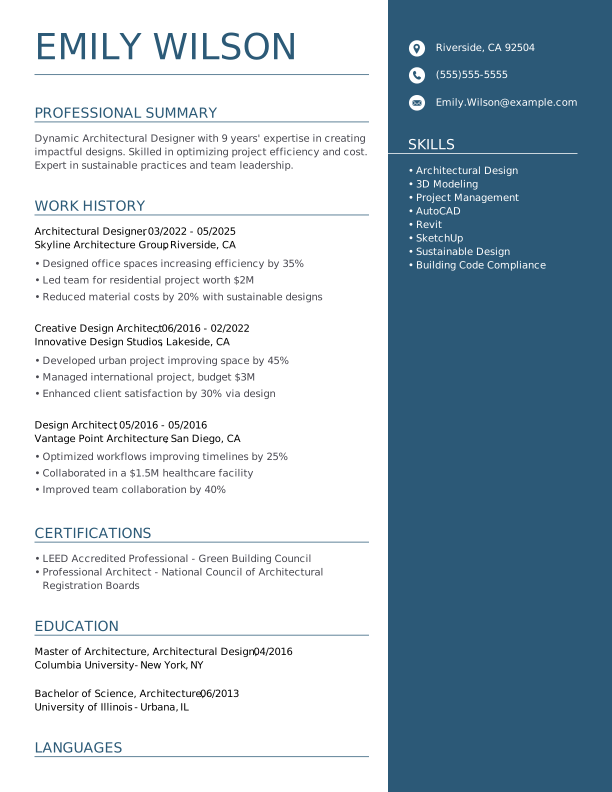
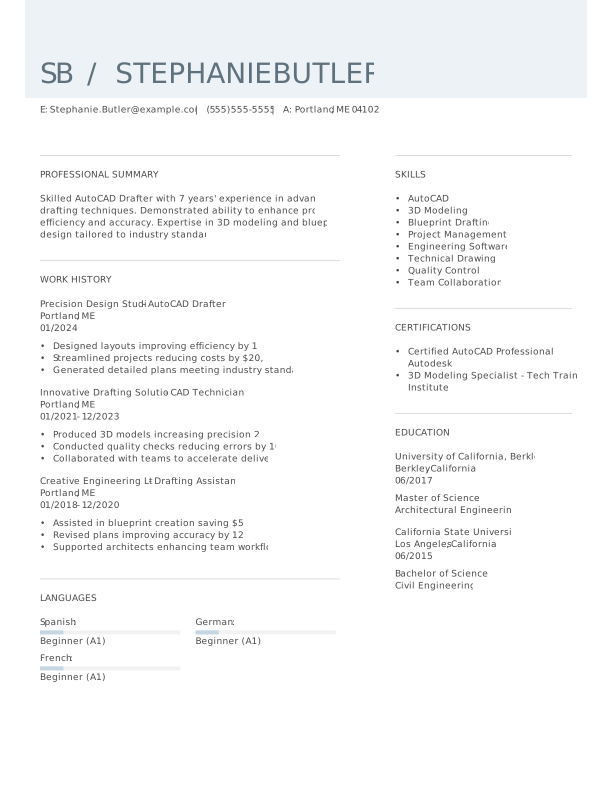
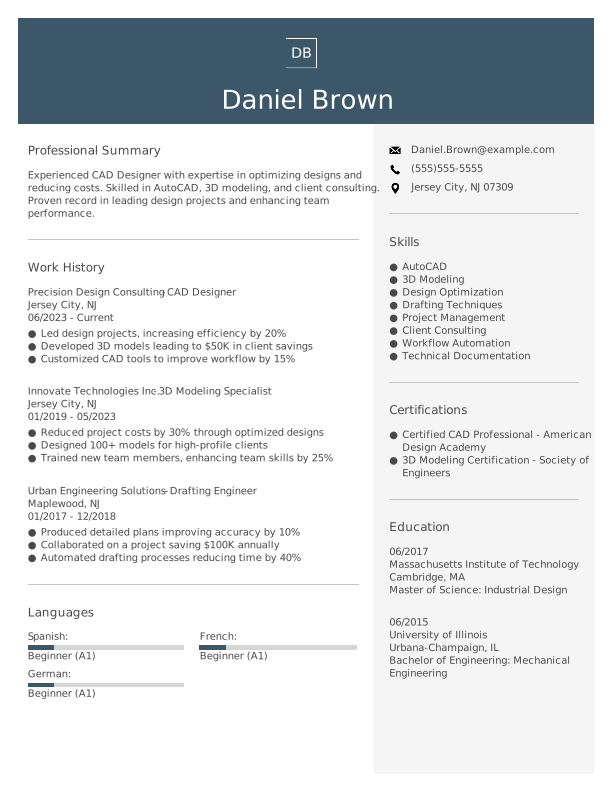
Architecture Resume Template (Text Version)
Learning to write a resume? Start with this format, then graduate to our resume templates.
Adrian Whitmore
Austin, TX 78701
(555) 555-5555
Adrian.Whitmore@example.com
Professional Summary
Licensed architect with 12+ years of experience designing commercial and residential projects, leading multidisciplinary teams, and managing work from concept through construction. Improved delivery efficiency by 30% and reduced design revisions by 25% through BIM implementation, workflow optimization, and cross-functional collaboration.
Work History
March 2021 – July 2026
Summit Design Studio – Austin, TX
Senior Architect
- Led $50M+ projects, achieving 95% on-time delivery through effective planning and coordination.
- Managed 10+ architects and designers, improving team efficiency by 25% through BIM workflows.
- Implemented sustainable design strategies, reducing project costs by 15% while meeting compliance standards.
June 2017 – February 2021
Horizon Architecture Group – Dallas, TX
Architect
- Delivered $20M+ projects while meeting client goals and deadlines.
- Reduced design coordination issues by 30% through BIM workflows.
- Improved project approvals by 25% through effective stakeholder coordination.
July 2014 – May 2017
Urban Form Architects – Houston, TX
Architectural Designer
- Developed designs, 3D models, and construction drawings for projects totaling $8M+ in construction value.
- Supported site analysis, zoning research, and client presentations, improving proposal success rates by 15%.
- Produced CAD and BIM documentation with 98% accuracy across project deliverables.
Skills
- Sustainable design
- Construction documentation
- Code compliance
- BIM modeling
- AutoCAD design
- 3D visualization
- Project leadership
- Client communication
Education
University of Texas at Austin, Austin, TX
Master of Architecture (M.Arch)
Texas A&M University, College Station, TX
Bachelor of Science in Architecture
Licenses and Certifications
- Registered Architect (RA) – Texas Board of Architectural Examiners
- LEED Accredited Professional (LEED AP BD+C) – U.S. Green Building Council
- Autodesk Certified Professional: Revit for Architectural Design – Autodesk
Browse Resume Examples by Industry
- Banking
- Billing And Collections
- Biology
- Boating
- Business Operations
- Casino
- Chemistry
- Child Care
- Civil Engineering
- Compliance
- Computer Hardware
- Computer Software
- Construction
- Copywriting
- Cosmetology
- Costco
- Culinary
- Customer Service
- Dance
- Data Systems Administration
- Deloitte
- Dentistry
- Driving
- Education
- Electrical
- Electrical Engineering
- Energy
- Engineering
- Entertainment
- Entrepreneur
- Entry Level
- Environmental
- Environmental Science
- Event Planning
- Executive
- Fashion
- Film
- Finance
- Fitness & Nutrition
- Food Service
- Freelancing
- General Laborer
- Goldman Sachs
- Government
- Graphic Design
- Healthcare Support
- Hospitality
- Human Resources
- HVAC
- Industrial Engineering
- Information Technology
- Insurance
- Interior Design
- Inventory Management
- Janitorial
- Landscaping
- Language Services
- Law
- Law Enforcement
- Library
- Logistics
- Maintenance
- Marketing
- McKinsey
- Mechanical Engineering
- Mechanics
- Media And Communication
- Medical
- Mental Health
- Meta
- Metal Work
- Military
- Mining
- Museum
- Music
- Netflix
- Non Profit
- Nursing
- Pharmaceutical
- Photography
- Physical Therapy
- Plumbing
- Politics
- Production
- Program Manager
- Project Manager
- Psychology
- Purchasing
- Quality Control
- Real Estate
- Religion
- Retail
- Safety And Security
- Sales
- Sciences
- Shipping
- Social Services
- Special Education
- Sports
- Statistics
- Student
- Teaching
- Team Lead
- Tesla
- Training And Development
- Transportation
- Travel
- Veterinary
- Walgreens
- Walmart
- Web Development
Advice for Writing Your Architecture Resume
Explore our advice on how to write a resume for an architecture position and discover ways to highlight your design skills, creativity, and project experience. Tailor your resume to reflect your unique style and expertise in the field of architecture.
Highlight relevant technical skills
When applying for an architecture role, it’s important to highlight your technical skills because they are key in designing and planning structures. Whether you create a separate skills section or weave these skills into your work experience, make sure they’re easy to spot.
Employers often look for skills that show you can handle various aspects of architectural design and project management. By focusing on the right skills, you show you’re ready to tackle challenges and meet the demands of the job.
Some common technical skills needed in architecture include skills in computer-aided design (CAD) software like AutoCAD, Revit, or SketchUp. These tools help architects create detailed plans and visualizations of projects. Knowledge of building information modeling (BIM) is also valuable as it allows for efficient coordination with other team members during construction processes.
Additionally, understanding materials science and structural engineering principles can be beneficial when selecting materials and ensuring buildings are safe and functional.
To make your resume stand out, use clear language when describing your technical abilities and provide examples of how you’ve used them in past projects. This approach helps employers quickly see what you bring to the table and why you’d be a great fit for their team in an architecture role.
Example of a technical skills section
- Architectural design software (Revit, AutoCAD, SketchUp)
- Building information modeling (BIM)
- Construction project management tools (Primavera P6, Microsoft Project)
- 3d rendering and visualization (Lumion, Vray, Enscape)
- Sustainable design principles and energy modeling
- Structural analysis software (ETABS, STAAD Pro)
- Urban planning and site analysis
- Parametric design tools (Grasshopper, Rhino)
Build a standout resume in minutes with our easy-to-use AI Resume Builder. Choose a professional template, add your details, and make a strong impression on employers.
Quantify your accomplishments
Quantifying your accomplishments in an architecture resume makes it more compelling than simply listing job responsibilities. When you include measurable results like percentages, time savings, cost reductions, or efficiency improvements, it shows the real impact of your work.
This helps hiring managers quickly see what you can achieve and how your skills can benefit their company. For example, instead of saying you “designed buildings,” you could say you “led the design of a 50,000 square foot office building that increased client satisfaction by 30%.”
In the work experience section, each entry should include your job title, employer name, location, and employment dates. Turn your duties into achievements by using action verbs and metrics. For instance, rather than noting you “worked on construction projects,” highlight that you “managed a team to complete a $2 million project two months ahead of schedule.”
This approach creates a results-driven resume that stands out to employers looking for proven success in architecture. Quantified accomplishments help hiring managers quickly assess your impact and skills. Instead of guessing what you’ve done in past roles, they see concrete evidence of your abilities.
By focusing on measurable achievements, you make it easier for potential employers to envision how you’ll contribute to their team in an architect role.
5 architecture work history bullet points
- Led the design and development of a high-rise residential complex, completed 15% under budget and ahead of schedule by 3 months.
- Collaborated with cross-functional teams to implement sustainable building practices, reducing energy consumption by 25%.
- Managed a portfolio of 12 architectural projects simultaneously, consistently delivering on time and within client specifications.
- Developed detailed construction documents for commercial spaces, improving project approval rates by 40%.
- Conducted site inspections and assessments for urban planning projects, increasing compliance with zoning regulations by 30%.
Use your resume to complement your architecture portfolio. Highlight the projects, design methods, and technical skills that appear in your portfolio, and include details such as project type, your role, software used, and design outcomes to give employers more context.
Write a powerful professional summary
A professional summary on a resume serves as an introduction for hiring managers, providing a snapshot of your skills and accomplishments. You can decide whether to use a summary or a resume objective based on your experience level and career goals.
A professional summary suits people with lots of work experience. It’s three to four sentences about your past jobs, skills, and achievements, aiming to show who you are as a worker and why you’re valuable.
Conversely, a resume objective focuses more on what you want for the future. It’s great for those starting, changing careers, or with gaps in their work history. We’ll provide examples of both summaries and objectives tailored for different industries and levels of experience to help guide you further.
Architecture resume summary examples
Entry-level
Recent architecture graduate with a Bachelor of Architecture degree from an NAAB-accredited program. Proficient in AutoCAD, Revit, and SketchUp with foundational skills in sustainable design and urban planning. Completed internships focusing on residential and commercial projects, bringing fresh insights and creative problem-solving abilities to the field.
Mid-career
Architect with over seven years of experience in designing commercial and public buildings. Adept at project management from concept to completion, including coordinating with cross-functional teams and ensuring adherence to building codes. Known for innovative design solutions that meet client needs while maintaining aesthetic appeal. LEED Accredited Professional dedicated to sustainable architecture.
Experienced
Senior architect with 15+ years of experience leading large-scale architectural projects across various sectors, including healthcare, education, and mixed-use developments. Expert in advanced architectural modeling software and BIM integration. Proven track record of managing multi-million dollar budgets, mentoring junior architects, and delivering award-winning designs that improve community living spaces.
Architecture resume objective examples
Recent graduate
Detail-oriented and creative recent architecture graduate seeking an entry-level position to apply design skills and knowledge of sustainable practices in a collaborative architectural firm. Committed to contributing to innovative projects that improve community living spaces.
Career changer
Passionate professional transitioning into architecture with a background in graphic design, eager to leverage visual communication skills and an eye for detail in crafting compelling architectural designs. Aspiring to collaborate on projects that integrate aesthetics with functionality.
Entry-level applicant
Ambitious entry-level architect keen on joining a forward-thinking firm where technical drafting skills and knowledge of building codes can be used in the development of environmentally conscious structures. Aiming to contribute innovative ideas and learn from experienced architects.
Show that you can bring ideas from concept to completion. Strong architecture resumes highlight both creative skills and practical abilities, including design development, building codes, construction documentation, project coordination, and collaboration with engineers and clients.
Showcase your credentials
In the field of architecture, listing your credentials is important because it shows you have the necessary skills and knowledge. Certifications, licenses, and specialized training prove that you know what you’re doing and can handle technical tasks well.
They help employers see that you’re up-to-date with industry standards. Creating a dedicated certifications section on your resume shows these qualifications clearly and helps them stand out. This can be a good addition to your education section. Here are a few examples:
- LEED Accredited Professional (LEED AP)
- National Council of Architectural Registration Boards (NCARB) Certification
- Architect Registration Examination (ARE) Completion
- Certified Passive House Designer/Consultant (CPHD/C)
- Autodesk Certified Professional – Revit for Architectural Design
- WELL Accredited Professional (WELL AP)
- OSHA 30-Hour Construction Safety Certification
These certifications show you have specific skills needed for success in architecture roles. They make you more appealing to employers by showing you’re committed to learning. Adding these credentials can give you an edge over others who don’t have them.
Example of a certifications section
Certified Architect
Issued by: American Institute of Architects (AIA)
Issued 2021
LEED Accredited Professional (AP)
Issued by: Green Building Certification Institute (GBCI)
Expires 2024
Project Management Professional (PMP)
Issued by: Project Management Institute (PMI)
Expires 2025
AutoCAD Professional Certification
Issued by: Autodesk
Issued 2020
Revit Architecture Certified User
Issued by: Autodesk
Expires 2023
Include architecture credentials that demonstrate your qualifications. Certifications and credentials such as NCARB certification, LEED accreditation, or Autodesk certifications can help showcase your technical knowledge and commitment to the field.
FAQ
Do I need to include a cover letter with my architecture resume?
Yes, including a cover letter with your architecture resume can significantly improve your application. A cover letter gives you the chance to highlight your passion for design and explain why you are drawn to the specific architectural firm or project.
You can also use it to discuss particular skills or experiences, such as skills in CAD software or sustainable design practices, that align with the job requirements.
Additionally, if there’s a notable project the firm has completed that excites you, mention how your background or interests relate to it.
Consider using resources like our Cover Letter Generator for tailored content suggestions, or review helpful cover letter examples focused on architecture to guide your writing process.
How long should an architecture resume be?
For an architect, a one-page resume is often best if you’re early in your career. Focus on key projects and skills like design skills, software knowledge (such as AutoCAD or Revit), and any notable achievements or collaborations.
If you have extensive experience or numerous significant projects, a two-page resume might be appropriate. Just make sure every detail is relevant to the architecture field. Highlight your project management skills, technical expertise, and contributions to successful designs.
Consider checking out our guide on how long a resume should be for more examples and tips tailored to different stages of your architectural career.
How do you write an architecture resume with no experience?
If you’re just starting in architecture, concentrate your resume on education, skills, and any projects or coursework that show your potential as an architect. Here are a few tips on writing a compelling resume with no experience:
- Emphasize your education: Start with your architecture degree details—include the school name, graduation date, and any honors or relevant courses like CAD or sustainable design. Highlight if you have a master’s degree or are pursuing one.
- Showcase project work: Include any academic projects where you designed buildings or spaces. Describe the project’s scope and what tools you used, such as Revit or SketchUp. Mention teamwork experiences and any presentations made at conferences.
- Highlight relevant skills: List software skills in programs like AutoCAD, Adobe Creative Suite, or Rhino. Include skills like problem-solving and creativity that are important for architecture roles.
- Include internships or volunteer work: Even unpaid positions can demonstrate valuable experience in architectural firms or related fields. Detail what you learned from these experiences and how they relate to architecture.
Remember to tailor each section of your resume to the role you are applying for to stand out to recruiters and hiring managers.
What should an architecture student include on a resume?
Architecture students should include their degree program, relevant coursework, design projects, software skills, internships, and portfolio highlights. A strong architecture student resume should showcase both creative abilities and technical knowledge, including experience with tools like AutoCAD, Revit, SketchUp, Rhino, or Adobe Creative Suite.
Include details about studio projects, such as your role, design approach, project scope, and any presentations or collaborations. Reviewing architecture student resume examples can help you see how to organize project experience, technical skills, and academic achievements in a way that appeals to architecture firms.
Rate this article
Architecture


Elizabeth is a Certified Professional Resume Writer (CPRW) and a member of the Professional Association of Resume Writers & Career Coaches. She is committed to helping job seekers navigate the job market and succeed in their careers.
More Articles by Elizabeth Muenzen, CPRWShare this page
 Add MyPerfectResume as a preferred source on Google
Add