Table of Contents
Get started with MyPerfectResume today!
- Build a resume on any device
- Pick an ATS-friendly template
- Tailor with AI copy suggestions
Why this resume works
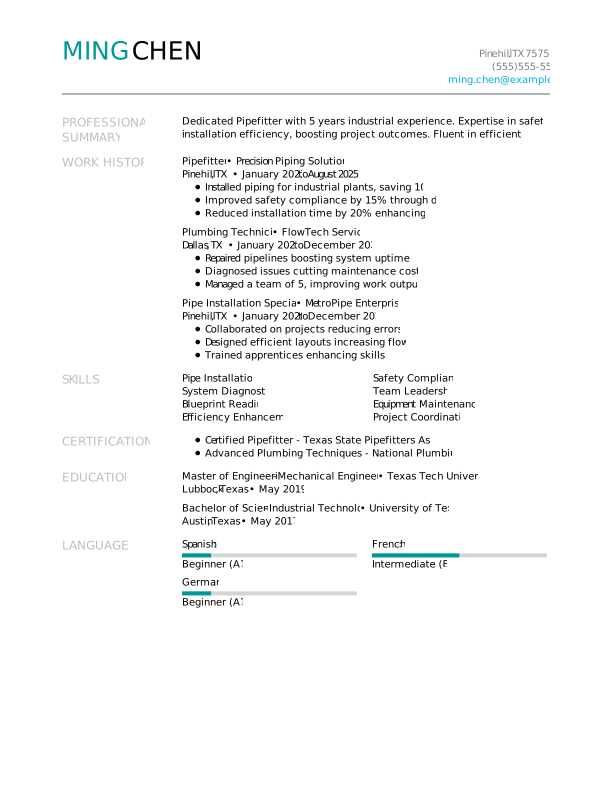
- Highlights industry-specific skills: By expertly reducing installation time and improving safety protocols, the applicant showcases their specialized skills in pipe systems, aligning with industry demands for efficiency and precision.
- Uses action-oriented language: Action verbs like “installed,” “led,” and “managed” effectively communicate the applicant’s initiative and impact.
- Illustrates problem-solving ability: Implementing new techniques to cut installation time by 20% exemplifies the applicant’s strong problem-solving skills and innovative approach to challenges.
More Pipefitter Resume Examples
Check out our pipefitter resume examples to understand how to highlight your technical skills, hands-on experience, and safety expertise. These plumbing resume samples will help you craft a resume that appeals to construction employers and fits various pipefitting roles.
Entry-Level Pipefitter
Why this resume works
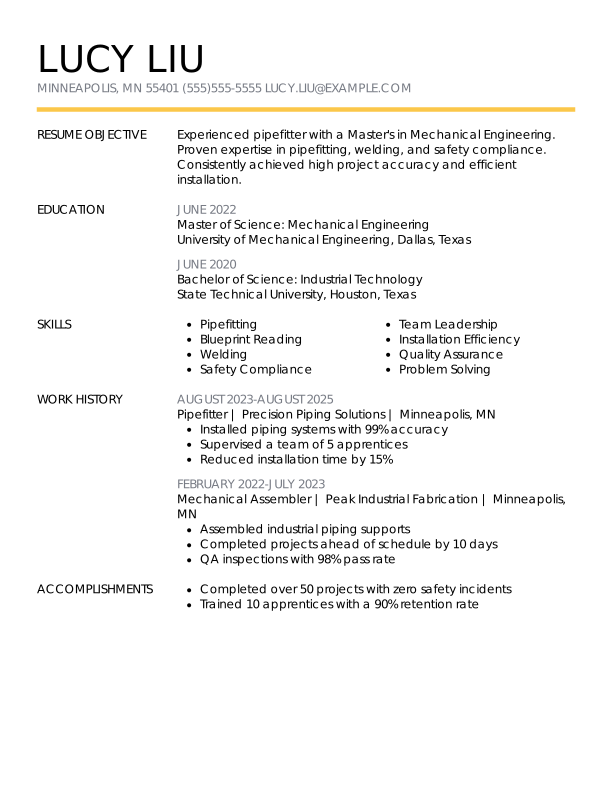
- Centers on academic background: The applicant’s education section emphasizes a masters in mechanical engineering, signaling strong academic foundations early in their career journey.
- Shows digital literacy: Expertise in blueprint reading and QA inspections suggests a robust computer skills set important for modern industrial tasks.
- Effective use of keywords: Integrating terms such as “safety compliance” and “installation efficiency” strategically aids in passing applicant tracking systems (ATS) by embedding relevant keywords.
Mid-Level Pipefitter
Why this resume works
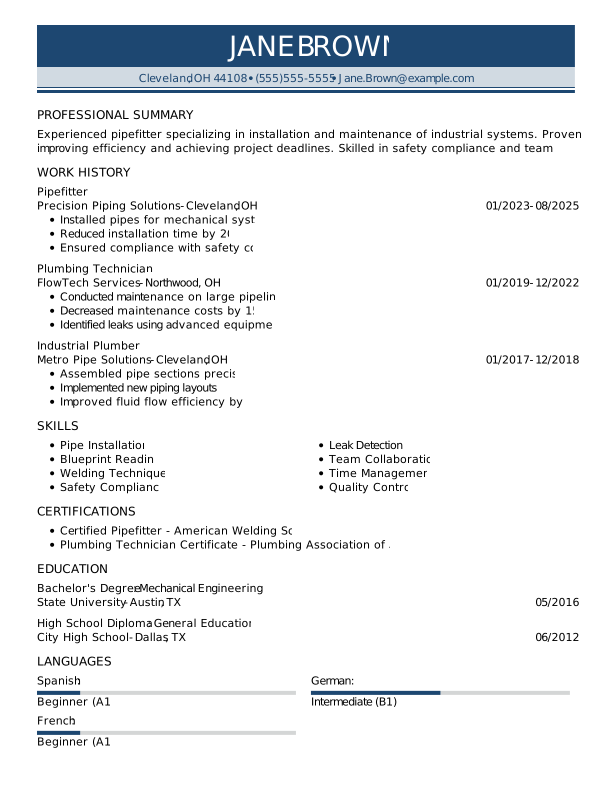
- Points to measurable outcomes: Reducing installation time by 20% and cutting maintenance costs by 15% showcases a knack for delivering measurable improvements, reflecting the applicant’s effective contributions to their teams.
- Includes a mix of soft and hard skills: Combining technical skills like welding with interpersonal skills such as team collaboration highlights a balanced skill set perfect for dynamic work environments.
- Demonstrates language abilities: Listing language skills in Spanish, German, and French underlines an ability to engage across cultures, improving communication in diverse settings.
Experienced Pipefitter
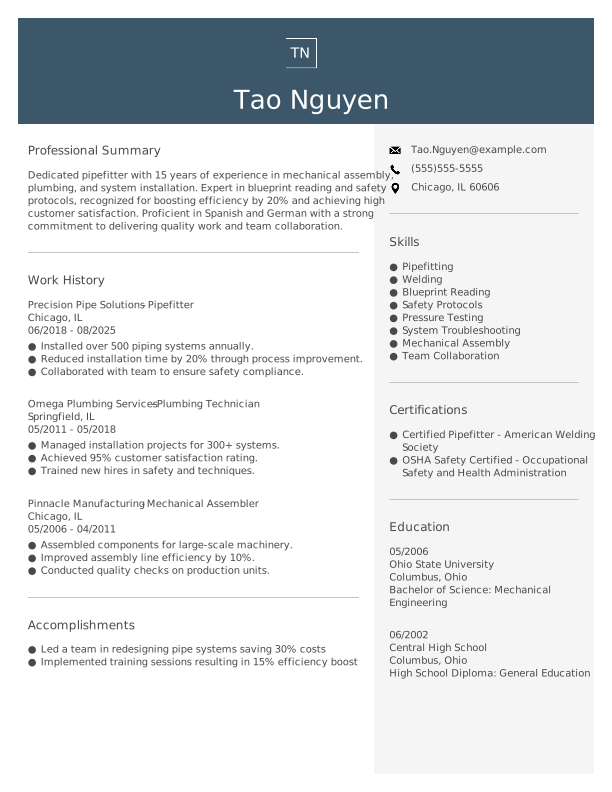
Why this resume works
- Focuses on work history: Using a chronological resume format effectively highlights extensive career experience, detailing evolving roles from mechanical assembler to pipefitter, illustrating professional growth over time.
- Showcases impressive accomplishments: Showcasing achievements like saving 30% in costs through innovative pipe system redesign reflects senior-level impact.
- Sections are well-organized: Strategic use of bullet points and clear headers makes this resume easy to scan, ensuring key details are accessible and improving its reader-friendly layout.
Related Resume Guides
Advice for Writing Your Pipefitter Resume
Dive into our advice on how to write a resume tailored for a pipefitter role, where you’ll discover ways to highlight your hands-on experience and technical skills in crafting and maintaining piping systems.
Highlight relevant technical skills
For a pipefitter, having strong technical skills is essential for performing the job effectively. It’s beneficial to include a technical skills section on your resume so employers can quickly assess your expertise.
Alternatively, you might integrate these skills into your work experience to demonstrate how you’ve applied them in real-world situations. Whether you’re listing or describing them, ensure they are prominently featured.
Pipefitters require a variety of technical abilities. The ability to read and interpret blueprints and schematics is important as it guides you on pipe placements. Skills in cutting, threading, and bending pipes are necessary for customizing materials to fit specific spaces and tasks accurately. Skill in welding and soldering is also key since these techniques securely join pipes together.
Additional valuable skills involve installing and maintaining piping systems while safely using tools such as wrenches, grinders, and saws. Familiarity with various pipe types like PVC, copper, or steel is often required too. By emphasizing these capabilities on your resume, you’ll convey that you are well-equipped for the challenges faced by a pipefitter.
Example of a technical skills section
- Pipe layout and installation
- Welding and brazing techniques
- Reading blueprints and schematics
- Hydraulic and pneumatic systems
- Threading, bending, and cutting pipes
- Safety protocols in hazardous environments
- Pressure testing and leak detection
Don’t forget soft skills! Teamwork, adaptability, and leadership can be just as important as technical skills in many jobs. Use our Resume Builder to ensure you showcase a balanced skill set.
Quantify your accomplishments
Quantifying accomplishments on a resume makes it more compelling because it shows the real impact of your work rather than just listing what you did. For example, as a pipefitter, instead of saying “installed pipes,” you could say “installed over 200 feet of piping, reducing project time by 20%.” This gives hiring managers clear evidence of your skills and contributions.
In the work experience section, make sure each entry includes your job title, employer name, location, and employment dates. Turn job duties into achievements by incorporating measurable results like percentages or cost savings. For example, if you improved efficiency in installing systems, mention how much faster the installations were completed compared to previous methods.
Using action verbs and metrics creates a results-driven resume that helps hiring managers quickly see your impact and skills. Quantified accomplishments show that you can deliver results and add value to their team. This makes your resume stand out and increases your chances of getting noticed for the pipefitter role you’re applying for.
5 pipefitter work history bullet points
- Installed and maintained over 100 miles of piping systems in commercial and industrial facilities, improving operational efficiency by 25%.
- Led a team of 4 pipefitters in a high-pressure environment, completing projects 15% under budget and ahead of schedule.
- Implemented safety protocols that reduced workplace accidents by 40%, significantly improving team productivity.
- Collaborated with engineering teams to design custom piping solutions, resulting in a 20% increase in system performance.
- Executed emergency repair procedures on complex piping networks, minimizing downtime to less than 2 hours per incident.
Need help with your resume? Check out these professional resume examples to get ideas and make yours shine!
Write a powerful professional summary
A professional summary on a resume serves as an introduction to hiring managers, offering them a quick glimpse into your career highlights.
A professional summary is a brief overview of your experience, skills, and achievements, usually in three to four sentences. It’s best suited for experienced applicants like pipefitters who have a strong work history to showcase. The purpose of the professional summary is to clearly present your professional identity and the unique value you bring to potential employers.
In contrast, resume objectives are statements about your career goals, ideal for entry-level job seekers or those changing careers. They are also beneficial for individuals with employment gaps. While summaries focus on “what I’ve accomplished,” objectives emphasize “what I aim to contribute.”
Next, we will provide examples of both summaries and objectives tailored for different industries and levels of experience, helping you decide which approach works best for your situation as a pipefitter.
Pipefitter resume summary examples
Entry-level
Recent graduate with a certificate in pipefitting from an accredited trade school, equipped with foundational knowledge in blueprint reading, pipe system assembly, and welding techniques. OSHA 10 certified and experienced in using hand tools during training projects. Eager to contribute strong problem-solving skills and a commitment to safety in industrial or residential settings.
Mid-career
Skilled pipefitter with over seven years of experience installing, maintaining, and repairing piping systems across commercial and industrial facilities. Experienced in interpreting complex schematics, working with various materials like steel and PVC, and adhering to ASME standards. Known for meeting project deadlines while maintaining high safety standards on job sites.
Experienced
Seasoned pipefitter with 15+ years of expertise in managing large-scale construction projects and supervising teams of apprentices and journeymen. Specialized in high-pressure piping systems, steam fitting, and advanced welding techniques. Proven track record of reducing downtime through efficient troubleshooting strategies while ensuring compliance with all regulatory requirements.
Pipefitter resume objective examples
Entry-level
Detail-oriented individual with a certificate in pipefitting, eager to start a career as a pipefitter. Aims to use hands-on training and understanding of blueprints and piping systems to support construction projects and contribute to efficient team operations.
Career changer
Dedicated professional transitioning from general maintenance to pipefitting, bringing strong problem-solving skills and mechanical aptitude. Committed to learning and applying new techniques in the installation and repair of piping systems within industrial settings.
Recent graduate
Recent vocational school graduate specializing in pipefitting, seeking an opportunity to apply acquired skills in welding, cutting, and assembling pipes. Passionate about contributing to a collaborative work environment while gaining practical experience in the field.
Choose a resume template that is neat and simple. Opt for clear sections, easy-to-read fonts, and avoid excessive fancy design elements to let your skills and experience shine.
Showcase your credentials
Listing credentials like certifications and licenses is very important for a pipefitter. These show that you have the right skills and knowledge for the job. In technical fields, having the right training keeps everyone safe and ensures quality work. Making a special certifications section on your resume helps employers see these qualifications quickly, which can be as important as your education.
- NCCER Pipefitting Certification
- ASME Boiler and Pressure Vessel Certification
- EPA Refrigerant Handling License
- OSHA Safety Training
- Certified Welding Inspector (CWI)
These certifications help prove you are ready to handle complex tasks safely and efficiently. They make you stand out in the field of pipefitting, showing you’re committed to learning and improving your skills. Having these listed clearly shows potential employers that you are prepared for the demands of the role.
Example of a certifications section
Journeyman Pipefitter Certification
Issued by: United Association of Journeymen and Apprentices of the Plumbing and Pipe Fitting Industry (UA)
Issued 2021
OSHA 30-Hour Construction Safety and Health
Issued by: Occupational Safety and Health Administration (OSHA)
Expires 2027
Certified Welder
Issued by: American Welding Society (AWS)
Issued 2022
NCCER Pipefitting Level 4 Certification
Issued by: National Center for Construction Education and Research (NCCER)
Issued 2023
Confined Space Entry Training
Issued by: Safety Compliance Services, Inc.
Expires 2025
Ensure your resume passes ATS using our ATS Resume Checker. It scans for over 30 common resume errors and offers improvement suggestions.
Salary Insights for Pipefitters
Looking at salary data can help you make smart choices about your job path or moving to a new place. More information is provided below.
Top 10 highest-paying states for pipefitters
Pipefitters earn varying salaries across the United States, with a national average of $54,842. The table below highlights the states where pipefitters command the highest compensation.
Our salary information comes from the U.S. Bureau of Labor Statistics’ Occupational Employment and Wage Statistics survey. This official government data provides the most comprehensive and reliable salary information for pipefitters across all 50 states and the District of Columbia.
The figures presented here reflect the May 2025 dataset, which is the most recent available as of this publication.
| State | Average Salary |
|---|---|
| Minnesota | $83,470 |
| Rhode Island | $72,760 |
| Vermont | $63,230 |
| Washington | $59,700 |
| Virgin Islands | $56,420 |
| Alaska | $53,760 |
| California | $51,790 |
| North Dakota | $50,250 |
| Hawaii | $49,990 |
| Massachusetts | $48,160 |
FAQ
Do I need to include a cover letter with my pipefitter resume?
Yes, including a cover letter with your pipefitter resume can make you stand out among other applicants and increase your chances of landing an interview.
A cover letter provides the opportunity to express your enthusiasm for the specific job and company while highlighting experiences that demonstrate your technical skills and problem-solving abilities in pipefitting.
For instance, if the company is known for working on complex industrial projects or using advanced technology, you can discuss any relevant experience you have in those areas.
Consider using a Cover Letter Generator to craft a professional-looking cover letter effortlessly or start from scratch with guided steps and tailored content suggestions.
It’s also helpful to review cover letter examples related to trade professions to understand effective ways to communicate your qualifications and align them with what employers are seeking.
How long should a pipefitter’s resume be?
For a pipefitter, a one-page resume is typically sufficient to capture the essential skills and experience needed for most positions. Focus on key competencies such as knowledge of piping systems, welding expertise, and safety protocols. Highlight any certifications or specialized training that make you stand out in your field.
If you possess extensive experience or have worked on large-scale projects, a two-page resume might be more appropriate. This allows you to provide detailed information about complex projects you’ve managed or unique skills you’ve acquired over time.
It’s important to consider how long a resume should be based on your career stage; while brevity is key, ensure that all included information effectively showcases your abilities as a pipefitter.
How do you write a pipefitter resume with no experience?
When preparing a pipefitter resume with no experience, emphasize your education, training, and any relevant skills that can demonstrate your potential in the role. These elements are important to help you stand out. Follow these tips:
- Emphasize your education: Include any courses or certifications related to pipefitting, plumbing, or construction. Mention the institution, dates attended, and any notable accomplishments.
- Highlight relevant skills: List transferable skills such as problem-solving, attention to detail, manual dexterity, and physical stamina. These are important for a pipefitter role and can show your readiness.
- Include hands-on training or apprenticeships: If you’ve completed any practical training or apprenticeships related to pipefitting, detail what you learned and the tasks you performed.
- Add volunteer work or projects: If you’ve volunteered for community projects involving plumbing or construction work, describe these experiences to showcase your enthusiasm and ability.
Rate this article
Pipefitter


Elizabeth is a Certified Professional Resume Writer (CPRW) and a member of the Professional Association of Resume Writers & Career Coaches. She is committed to helping job seekers navigate the job market and succeed in their careers.
More Articles by Elizabeth Muenzen, CPRWShare this page