Table of Contents
Get started with MyPerfectResume today!
- Build a resume on any device
- Pick an ATS-friendly template
- Tailor with AI copy suggestions
Why this resume works
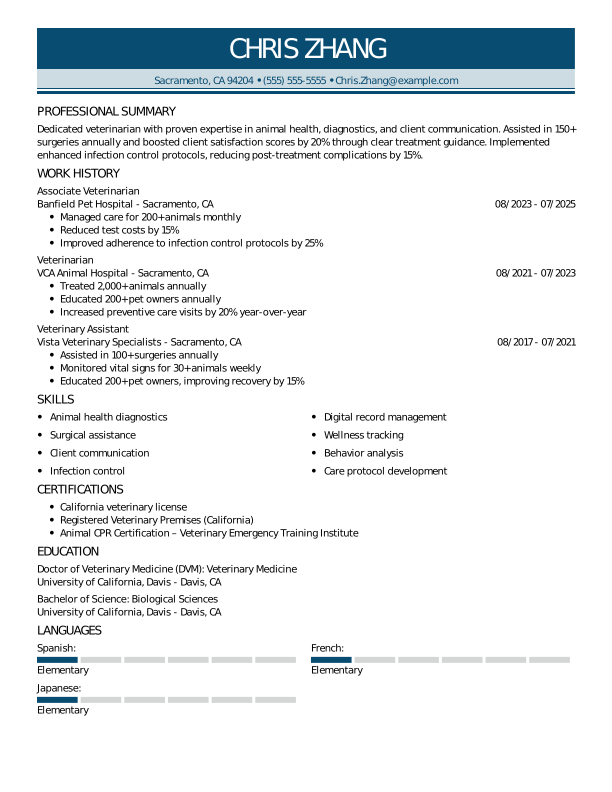
- Highlights industry-specific skills: The applicant’s mastery in infection control and diagnostics aligns them well with essential healthcare skills for the veterinary sector.
- Quantifies accomplishments: Reducing test costs by 15% at Happy Hounds Veterinary Clinic reflects impactful financial management.
- Illustrates problem-solving ability: Improving infection control protocols exemplifies robust problem-solving skills in healthcare settings.
More Veterinary Resume Examples
These veterinary resume examples offer great insights into how to showcase your animal care, medical expertise, and client communication skills. Use these samples to craft a compelling resume that aligns with various veterinary roles and demonstrates your passion for animal health.
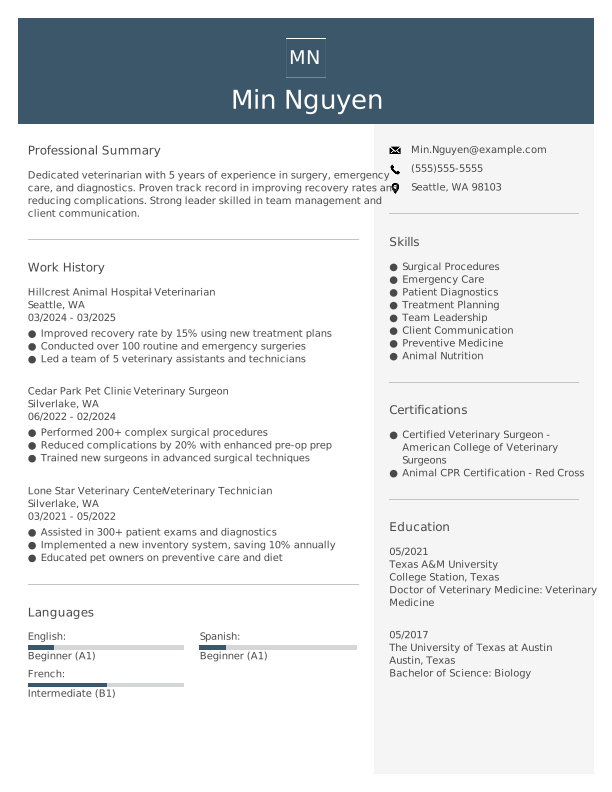
Entry-level veterinary resume
Why this resume works
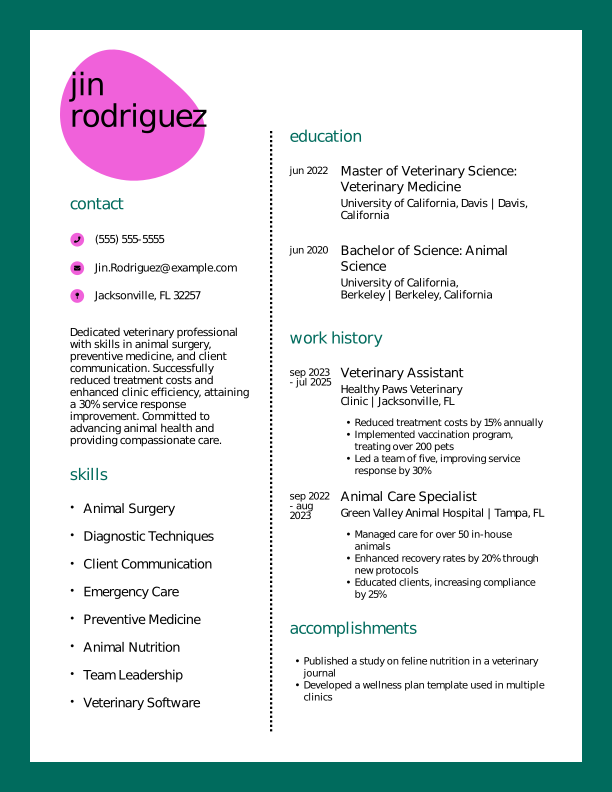
- Centers on academic background: The applicant’s academic background shines through with a Master of Veterinary Science, showing a strong foundation early in their veterinary career.
- Puts skills at the forefront: Skills like animal surgery and client communication take center stage, turning it into a skills-based resume that effectively captures entry-level expertise.
- Shows digital literacy: Veterinary software skill highlights the applicant’s computer skills and digital readiness, equipping them for modern veterinary practices.
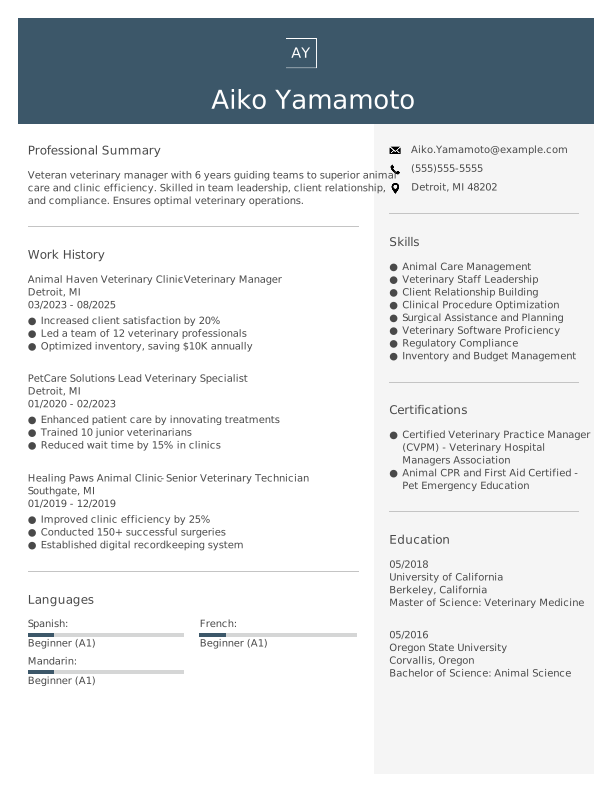
Mid-level veterinary resume
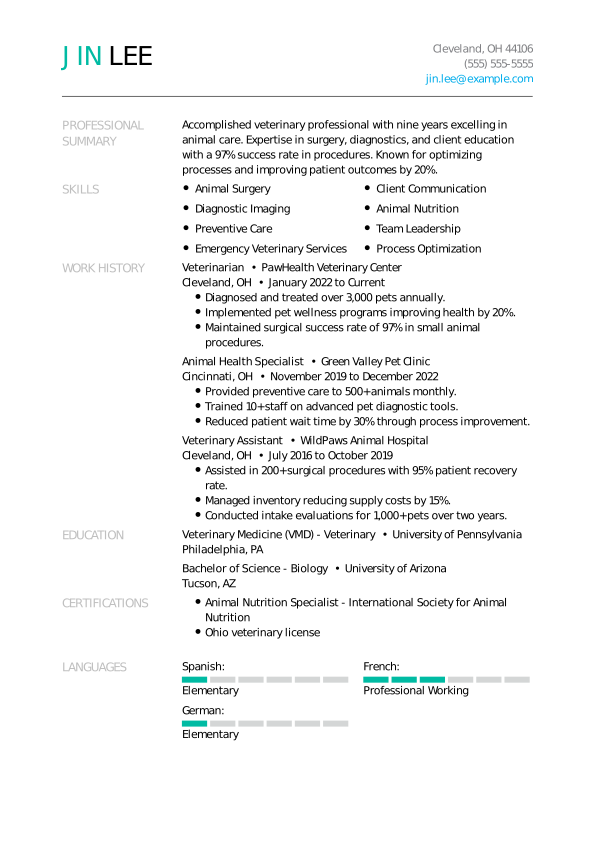
Why this resume works
- Points to measurable outcomes: With achievements like reducing patient wait time by 30%, the applicant’s effectiveness in process optimization is clear.
- Includes a mix of soft and hard skills: Combining interpersonal skills with technical expertise, the applicant excels in both client communication and advanced diagnostic imaging.
- Demonstrates language abilities: The applicant’s language skills in Spanish, French, and German improve communication with diverse communities, important for managing diverse client needs.
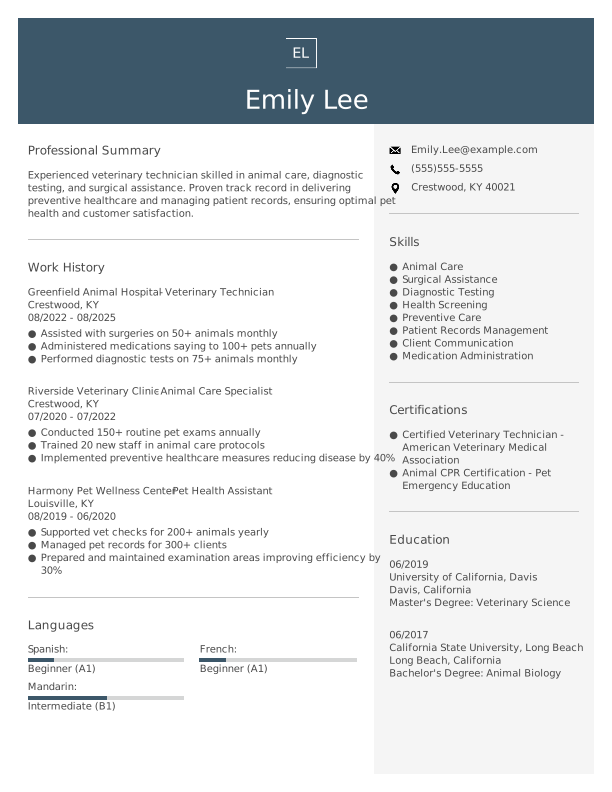
Experienced veterinary resume
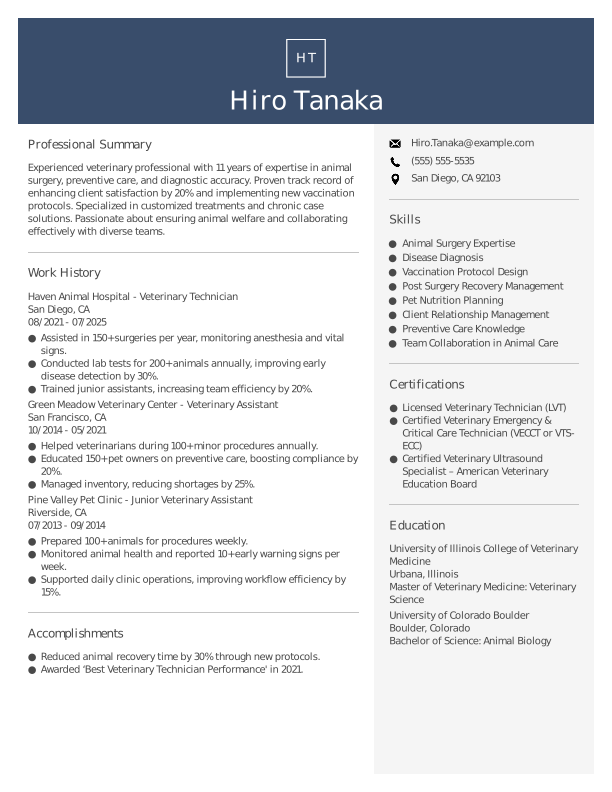
Why this resume works
- Showcases impressive accomplishments: The applicant’s standout accomplishments, like performing over 250 pet surgeries annually, reflect senior-level performance and significant business impact.
- Emphasizes leadership skills: Elevating client satisfaction by 20% showcases the applicant’s leadership skills through strategic initiatives and team collaboration.
- Lists relevant certifications: Listing certifications such as Certified Veterinary Ultrasound Specialist highlight the applicant’s expertise and dedication to continuous learning, supporting their career growth.
Explore Even More Veterinary Resumes
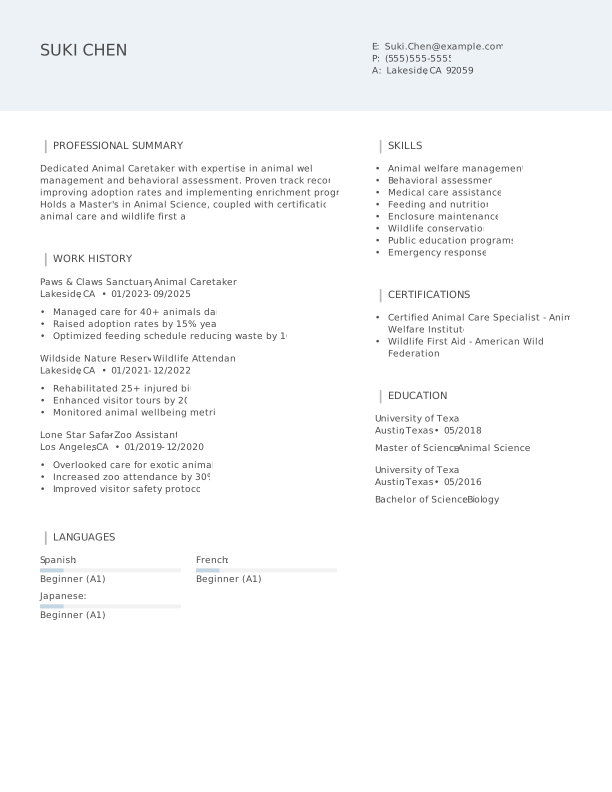
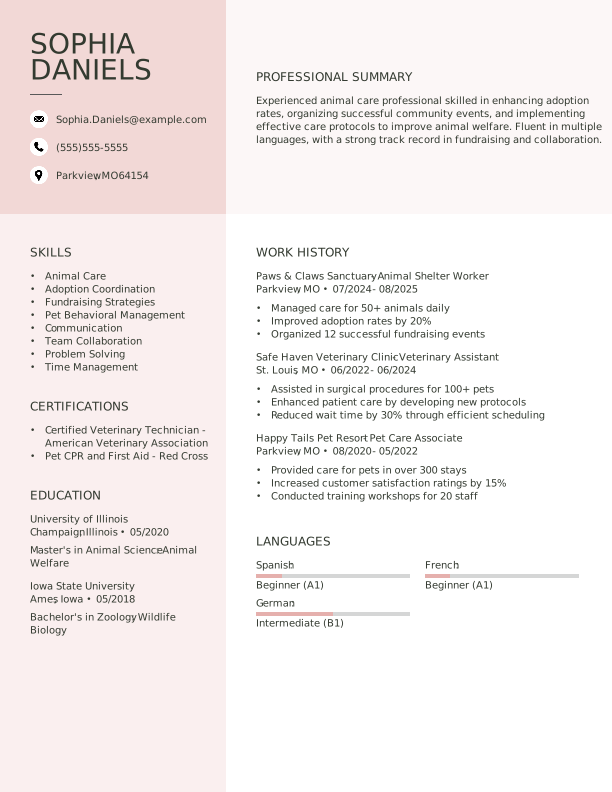
Veterinary Resume Template (Text Version)
Chris Zhang
Jacksonville, FL 32208
(555)555-5555
Chris.Zhang@example.com
Professional Summary
Veterinary expert with proven animal health skills. Excel at diagnostics, surgical assistance, and client engagement. Led care improvements with strong infection control emphasis.
Work History
Veterinary
Happy Hounds Veterinary Clinic – Jacksonville, FL
August 2023 – July 2025
- Managed care for 200+ animals monthly
- Reduced test costs by 15%
- Improved infection control protocols
Animal Health Specialist
PetWell Animal Hospital – Miami, FL
August 2021 – July 2023
- Ensured wellness of 300 pets monthly
- Developed risk assessment strategies
- Implemented digital record systems
Veterinary Assistant
Greenfield Animal Care Center – Tampa, FL
August 2020 – July 2021
- Supported vets in surgeries
- Monitored vital signs routinely
- Educated pet owners on care
Skills
- Animal health diagnostics
- Surgical assistance
- Client communication
- Infection control
- Digital record management
- Wellness tracking
- Behavior analysis
- Care protocol development
Education
Master’s in Veterinary Science Veterinary Medicine
University of Illinois, Urbana-Champaign Urbana, Illinois
May 2020
Bachelor’s in Animal Science Animal Science
Purdue University West Lafayette, Indiana
May 2018
Certifications
- Certified Veterinary Technician – American Veterinary Certification Board
- Animal CPR Certification – Veterinary Emergency Training Institute
Languages
- Spanish – Beginner (A1)
- French – Beginner (A1)
- Japanese – Beginner (A1)
Browse Resume Examples by Industry
- Aviation
- Banking
- Billing And Collections
- Biology
- Boating
- Business Operations
- Casino
- Chemistry
- Child Care
- Civil Engineering
- Compliance
- Computer Hardware
- Computer Software
- Construction
- Copywriting
- Cosmetology
- Costco
- Culinary
- Customer Service
- Dance
- Data Systems Administration
- Deloitte
- Dentistry
- Driving
- Education
- Electrical
- Electrical Engineering
- Energy
- Engineering
- Entertainment
- Entrepreneur
- Entry Level
- Environmental
- Environmental Science
- Event Planning
- Executive
- Fashion
- Film
- Finance
- Fitness & Nutrition
- Food Service
- Freelancing
- General Laborer
- Goldman Sachs
- Government
- Graphic Design
- Healthcare Support
- Hospitality
- Human Resources
- HVAC
- Industrial Engineering
- Information Technology
- Insurance
- Interior Design
- Inventory Management
- Janitorial
- Landscaping
- Language Services
- Law
- Law Enforcement
- Library
- Logistics
- Maintenance
- Marketing
- McKinsey
- Mechanical Engineering
- Mechanics
- Media And Communication
- Medical
- Mental Health
- Meta
- Metal Work
- Military
- Mining
- Museum
- Music
- Netflix
- Non Profit
- Nursing
- Pharmaceutical
- Photography
- Physical Therapy
- Plumbing
- Politics
- Production
- Program Manager
- Project Manager
- Psychology
- Purchasing
- Quality Control
- Real Estate
- Religion
- Retail
- Safety And Security
- Sales
- Sciences
- Shipping
- Social Services
- Special Education
- Sports
- Statistics
- Student
- Teaching
- Team Lead
- Tesla
- Training And Development
- Transportation
- Travel
- Walgreens
- Walmart
- Web Development
Advice for Writing Your Veterinary Resume
Learn how to write a resume for a veterinary role and discover how to highlight your passion for animal care, technical skills, and dedication to improving animal health.
Whether you’re just starting out or are an experienced vet, these tips will help you create a standout resume that truly reflects your love for the profession.
Write a strong professional summary
A professional summary on a resume serves as an introduction for hiring managers, providing a quick snapshot of who you are and what you bring to the table. When crafting your resume, you can choose between a professional summary or a resume objective. Both have distinct purposes and should be chosen based on your experience level.
A professional summary typically consists of three to four sentences highlighting your experience, skills, and achievements. It is best suited for experienced applicants who want to showcase their professional identity and the value they offer. By focusing on “what I’ve accomplished,” it helps highlight past successes and expertise.
In contrast, resume objectives are statements about career goals. They are ideal for entry-level individuals, career changers, or those with employment gaps. A resume objective emphasizes “what I aim to contribute,” helping readers understand future aspirations rather than past accomplishments.
Next, let’s go through examples of both summaries and objectives tailored to various levels of experience to help guide you in creating an effective introduction for your veterinary role.
Veterinary resume summary examples
Entry-level
Recent Doctor of Veterinary Medicine graduate with comprehensive knowledge of animal health, nutrition, and preventive care. Certified in veterinary CPR and skilled in conducting physical examinations and diagnostic procedures. Eager to contribute to a veterinary team by providing compassionate care and building strong relationships with pet owners.
Mid-career
Veterinarian with over five years of experience in small animal practice, specializing in surgery and internal medicine. Proficient in managing complex medical cases, performing diagnostics, and developing treatment plans tailored to individual patient needs. Licensed in Texas, known for excellent client communication skills and a commitment to advancing animal welfare through community education initiatives.
Experienced
Veterinary professional with over 15 years of leadership experience in multi-specialty veterinary hospitals. Expertise in advanced surgical techniques and critical care management. Board-certified with specialization in oncology, dedicated to mentoring junior veterinarians and leading research projects that improve patient outcomes. Recognized for driving strategic initiatives that improve clinic efficiency and elevate standards of care.
Veterinary resume objective examples
Recent graduate
Recent veterinary medicine graduate with hands-on experience from internships and clinical rotations, eager to join a veterinary clinic to provide compassionate care for animals. Dedicated to using diagnostic skills and up-to-date medical knowledge to support the health and well-being of pets.
Career changer
Passionate animal lover transitioning from a career in biology research to veterinary medicine. Equipped with strong analytical skills, laboratory techniques, and a commitment to animal welfare. Seeking an entry-level position in a veterinary practice to apply scientific background and dedication to improving animal health.
Specialized training
Veterinary technician with specialized training in anesthesia and surgical assistance, looking to advance into a veterinarian role. Eager to contribute advanced technical skills and thorough understanding of animal care procedures in a supportive clinic environment dedicated to high-quality veterinary services.
Highlight your skills and experience with ease using our Resume Builder, which helps you create a standout resume quickly and efficiently.
Include relevant certifications and training
In the veterinary field, certifications and specialized training show you have the skills needed to care for animals. Listing your credentials is important because it shows employers you’re ready for the job. It also helps you stand out from others who might not have the same training.
A certifications section on your resume makes it easy for employers to see what you’ve accomplished. Some commonly sought-after certifications for veterinary roles include:
- Veterinary Technician National Examination (VTNE)
- Certified Veterinary Technician (CVT)
- Fear Free Certified Professional
- Animal Emergency Rescue Specialist
- Pet Nutrition Coach
Adding certifications to your resume can help you get noticed in the veterinary field. They show you are serious about your work and know how to handle different situations. With these credentials, you’re better prepared to succeed and provide excellent care for animals.
Example of a certifications section
Certified Veterinary Technician (CVT)
Issued by: National Association of Veterinary Technicians in America (NAVTA)
Fear Free Certified Professional
Issued by: Fear Free, LLC
Veterinary Anesthesia and Analgesia Technician Certification
Issued by: Academy of Veterinary Technicians in Anesthesia and Analgesia (AVTAA)
Certified Canine Rehabilitation Practitioner (CCRP)
Issued by: University of Tennessee College of Veterinary Medicine
Choose a chronological resume format if you have steady work history in veterinary roles, but opt for a functional or combination format if you’re changing careers, have employment gaps, or want to emphasize skills over job titles.
Showcase your work experience
Showcasing relevant work experience on your resume is key, especially for a veterinary role. It helps potential employers see how your past roles have prepared you for the job you’re applying to.
Format your work experience in reverse-chronological order, starting with your most recent job. For each position, list your job title, employer’s name, location, and dates of employment. This makes it easy for employers to follow your career path and understand the context of each role.
Use clear, action-oriented language to describe your responsibilities and achievements. Instead of simply listing tasks, focus on what you accomplished using measurable results. For example, rather than saying “handled animals,” you might say “managed care for over 50 animals daily,” which shows scale and impact.
Highlight core responsibilities that are central to veterinary work such as diagnosing illnesses, performing surgeries, or developing treatment plans. Detailing these duties demonstrates your hands-on experience in animal care.
Remember that specific numbers or outcomes can make a big difference. If you’ve worked in a clinic where you increased recovery rates by implementing new treatment protocols or if you’ve trained junior staff members successfully, be sure to include these details. These examples show not only what you did but also how well you did it and the positive effects of your efforts in previous jobs.
5 veterinary work history bullet point examples
- Provided comprehensive care to over 300 animals annually, improving recovery rates by 15%.
- Implemented a new inventory management system, reducing medication wastage by 25%.
- Trained and mentored four veterinary assistants, improving team efficiency by 20%.
- Conducted health assessments and vaccinations for approximately 500 pets per year, resulting in a lower incidence of preventable diseases.
- Developed and executed community outreach programs, increasing client base by 30%.
For veterinarians and vet techs, select a resume format that highlights your clinical skills, certifications, and ability to work in various animal care settings.
Match your resume with the job description
Tailoring your resume to the job descriptions is essential because it helps you stand out to employers and pass through applicant tracking systems (ATS). ATS scans resumes for specific keywords and phrases from job postings, so matching your resume content with the job description increases your chances of being noticed. You can customize your resume to make sure it aligns perfectly with the criteria.
An ATS-friendly resume incorporates keywords and phrases that align with one’s skills. Including these terms can significantly increase the likelihood of getting seen by hiring managers, as ATS often filter resumes based on keyword matches.
To identify keywords from job postings, look for skills, qualifications, and duties mentioned repeatedly. For example, in veterinary roles, you might find terms like “pet care,” “pet parent communication,” or “veterinary team collaboration.” Using exact phrases from the job listing is key.
To naturally incorporate these terms into your resume content, rewrite your experiences to match the language used in the job description. For instance, transform “Provide high-quality pet care” into “Delivered high-quality pet care to improve overall health outcomes.”
Targeted resumes improve ATS compatibility and ensure that your application gets seen by potential employers.
Make sure your resume gets noticed! Our resume grader helps you format it right and use important keywords so it passes ATS software.
FAQ
Do I need to include a cover letter with my veterinary resume?
Yes, including a cover letter with your veterinary resume can improve your application and increase your chances of securing interviews.
A cover letter lets you express your passion for animal care and convey why you’re particularly interested in the specific clinic or hospital to which you’re applying.
For instance, if the facility has a focus on exotic animals or offers community outreach programs, you can highlight any relevant experience or enthusiasm for these areas.
Consider using online tools that guide you through crafting a personalized cover letter, such as our Cover Letter Generator, which aligns with your resume and highlights your unique strengths as a veterinary professional.
You might also find it helpful to browse cover letter examples tailored to veterinary positions to get ideas on how best to present your skills and experiences.
How long should a veterinary resume be?
For a veterinarian, sticking to a one-page resume is usually effective, especially if you’re early in your career. Focus on showcasing essential skills like animal care expertise, surgical experience, and client communication abilities.
If you have significant experience or specialized qualifications such as board certifications or advanced degrees, a two-page resume can be a better fit. Make sure every detail you add highlights your contributions to veterinary medicine and keeps the reader engaged with recent roles and achievements.
Check out our guide on how long a resume should be for tips and examples tailored to different career stages.
How do you write a veterinary resume with no experience?
If you lack professional veterinary experience, highlight your education, skills, and related training or volunteer work that demonstrate your passion for the field. Follow these tips to craft a strong resume with no experience.
- Highlight your education: Start with your degree in veterinary science or related fields. Include the name of the institution, graduation date, and any honors or relevant coursework like animal behavior or pathology.
- Include internships and volunteer work: Even unpaid positions are valuable. Detail any experience at animal shelters, farms, or clinics where you gained hands-on skills like handling animals or assisting with procedures.
- Showcase transferable skills: Emphasize skills such as attention to detail, communication abilities from customer service roles, teamwork from group projects, or leadership in student organizations.
- List certifications and workshops: If you’ve attended seminars on animal care, completed online courses related to veterinary medicine, or hold certifications like pet first aid, add these to demonstrate your commitment.
Check out additional resources on building a strong entry-level resume for more insights tailored to aspiring veterinarians and vet techs.
Rate this article
Veterinary


Toni is a Certified Professional Resume Writer (CPRW) and member of the Professional Association of Resume Writers & Career Coaches. She is committed to helping job seekers navigate the job market and succeed in their careers.
More Articles by Toni Frana, CPRWShare this page
 Add MyPerfectResume as a preferred source on Google
Add