How to Write a High School Resume for College Applications


Our customers have been hired at: *Foot Note


Table of Contents
Get started with MyPerfectResume today!
- Build a resume on any device
- Pick an ATS-friendly template
- Tailor with AI copy suggestions
A strong high school resume for college applications provides admissions officers with a clear snapshot of your academic achievements, extracurricular activities, and potential as a student.
This guide will help you create a polished and compelling resume that sets you apart from other applicants and showcases your unique strengths, experiences, and contributions.
Do You Need a Resume for College Applications?

While most colleges don’t require a resume, having one can strengthen your application by highlighting achievements, extracurricular activities, and skills not fully captured elsewhere.
A resume is especially useful for competitive programs, scholarships, internships, or when submitting supplemental materials to showcase your accomplishments beyond grades and test scores. Here’s a closer look at scenarios when you might need a student resume:
- Teacher recommendations: A comprehensive resume can help your teachers write detailed and personalized recommendation letters that highlight your strengths.
- College admission interviews: Some colleges may request a resume for admission interviews. Having one on hand showcases your organizational skills and preparedness.
- Scholarship applications: Many scholarship applications require a resume as part of the submission process. You can use our high school resume templates to get started.
- Work-study programs: If you're interested in participating in a work-study program, a resume is essential for highlighting your relevant skills and work experience.
- Networking: A resume can be a valuable networking tool. It allows you to quickly and effectively share your qualifications with potential mentors, advisors, or employers.
- Supplementing the Common Application: A resume can serve as a supplementary document, providing additional details about your experiences and qualifications.
What to Include in a High School Resume for College Applications
A high school resume for college applications should include your academic achievements, extracurricular involvement, and personal strengths in a clear, concise format.
The goal is to highlight your potential as a student and to provide admissions officers with a well-rounded view of your relevant experiences. Here’s what to include in your resume:
- Contact information: Your full name, address, phone number, and professional email address (See our resume examples for ideas on how to display your contact details.)
- Education: High school name, location, and expected graduation date, as well as any academic honors or awards you've received
- Extracurricular activities: Clubs, sports teams, volunteer work, internships, or other organizations you've participated in
- Leadership positions: Any roles you've held in clubs or organizations, such as president, captain, or editor
- Work experience: Any work experience, such as part-time or summer jobs you've had, including job title, company name, and dates of employment
- Volunteer experience or community service: Volunteer or community service experience, including the organization, your role, and the hours you contributed
- Skills: Any technical skills or soft skills you've developed, such as proficiency in a foreign language, computer programming, or public speaking
- Awards and honors: Any academic or leadership awards you've received, such as National Honor Society, AP Scholar, or Eagle Scout
See our guide on what to put on a resume for additional tips about what to include in each section of your resume to stand out.
College Application Resume Template
Using a college application resume template ensures you include all essential sections while keeping your information easy to scan for admissions officers reviewing multiple applications.
Here’s a well-crafted high school resume for college that highlights leadership and technical skills that may not be immediately apparent from the student’s academic transcript or test scores:
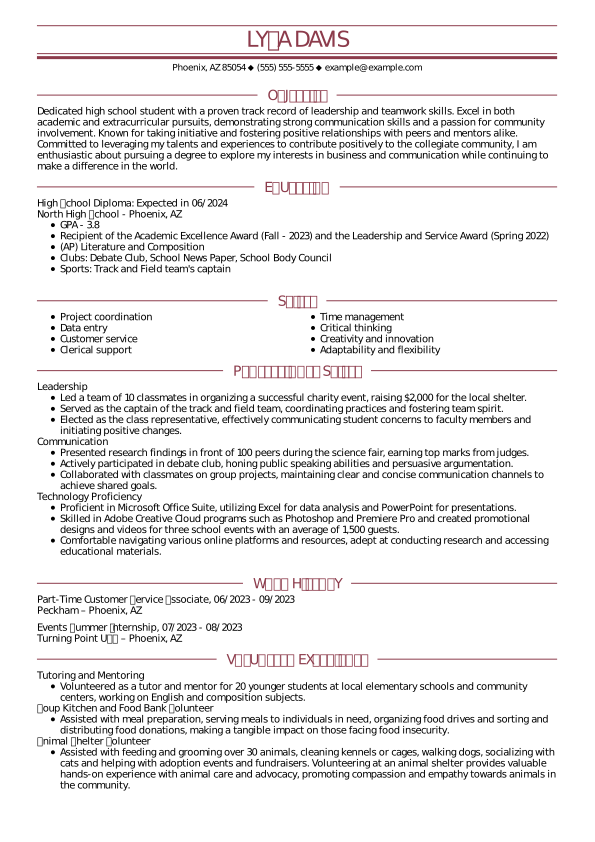
You can edit this sample resume template for college applications using our Resume Builder to easily adjust the formatting and add content written by professional resume analysts.
How Do You Write a High School Resume for College?
Writing a high school resume for college involves organizing your academic achievements, activities, and experiences into a clear, one-page document that highlights your strengths. Follow the guidelines below to create a resume that effectively highlights your strengths as a student.
1. Use a Professional Format
Use a clean, professional format to ensure your resume is easy to read and visually organized. Admissions officers often scan documents, so a simple layout with consistent spacing, clear headings, and readable fonts helps them find key information without distraction or confusion.
Consider using a functional resume format, which focuses on transferable skills over traditional work experience. Here are additional formatting tips to keep in mind:
- Consistency is key. Use a consistent format throughout your resume. This includes using the same style for headings and applying consistent spacing between sections.
- Use clear headings. Separate sections with clear headings, such as “Education,” “Skills,” “Volunteer Work,” and “Extracurricular Activities.”
- Choose a readable font. Use a professional resume font, such as Times New Roman or Arial, and keep the font size between 10 and 12 points.
- Use white space effectively. Avoid overcrowding your resume with too much text. Ensure ample spacing between sections, headings, and bullet points.
You can use one of our professional resume templates to easily create a resume that aligns with formatting best practices and effectively presents your skills and background.
2. Keep It Concise
A resume for a college application should generally be one page long. Admissions officers review many applications and resumes, so it’s crucial that your one-page resume is concise and highlights your most important details.
Focus on including significant academic achievements, extracurricular activities, work experiences, and other accomplishments that are relevant to your college application.
If you have a lot of information to include, consider prioritizing the most important details and leaving out less significant ones.
3. Tailor It to the College
Creating a targeted resume that is tailored to the college or program shows that you’re a strong fit for the school and increases your chances of being accepted.
Admissions officers want to see applicants who have done their research and are genuinely interested in their school or program.
Here are some tips on how to tailor your college application resume:
- Research the school. Look up the specific requirements for the program or major you’re interested in and identify how your skills, experiences, and achievements align.
- Include relevant coursework. You can list coursework relevant to the program or major in the education section of your resume to demonstrate your fit.
- Highlight relevant experience. For example, if you are applying to a business program, highlight any relevant coursework, internships, or work experience in the business field.
- Use relevant language. Use relevant keywords and language that are specific to the school or major you’re applying to.
4. Include Extracurricular Activities
Include extracurricular activities on your high school resume to show colleges how you spend your time outside the classroom and highlight your leadership skills, commitment, and interests.
Admissions officers value students who demonstrate initiative and consistent involvement in meaningful activities. Choose the extracurricular activities that are most relevant to the school.
To stand out, focus on activities that you’ve been committed to over time and that demonstrate your leadership or involvement in the community.
Provide specific information about your involvement in each activity, such as the number of hours per week, the length of time you were involved, and any specific accomplishments.
5. Use Strong Action Verbs
Use action verbs in your college application resume to stand out and make a strong impression on admissions officers looking for motivated, driven applicants capable of making a positive impact on their college community. Here are a few specific college application resume examples:
- "Organized fundraising events for the volleyball team, raising over $5,000 for charity."
- "Led school debate team to win the regional championship for three consecutive years."
- "Created and managed the school newspaper, increasing readership by 30% in one semester."
Notice that these examples use numbers and percentages in addition to action verbs to convey accomplishments in a meaningful and impactful way.
Action verbs and measurable achievements show that you’re a dynamic and proactive student who has achieved significant results in your academic, extracurricular, or work experiences.
6. Highlight Unique Skills
Highlight unique skills on your high school resume to help colleges see what sets you apart and demonstrate abilities that may support your academic or extracurricular interests.
This skills section of your resume gives admissions officers insight into your talents, technical expertise, and personal strengths beyond grades and activities.
Include skills such as foreign languages, computer programming, artistic abilities, public speaking, or research experience. Be specific and, when possible, indicate your level of proficiency—for example, “Fluent in Spanish” or “Proficient in Python and Java.”
Focus on skills that are relevant to your intended major, career interests, or extracurricular pursuits. Showcasing unique abilities not only strengthens your application but also highlights your initiative, adaptability, and readiness to contribute meaningfully to the college community.
7. Be Honest & Accurate
Admissions officers expect applicants to provide truthful and reliable information about their academic achievements, extracurricular activities, and other experiences.
Falsifying information or exaggerating your accomplishments can have serious consequences, including rejection from a college or revocation of an offer of admission.
By providing truthful information, you can increase your chances of being accepted to your dream school and set yourself up for success in college and beyond.
8. Proofread Carefully & Get Feedback
After writing your resume, make sure to proofread it carefully and get feedback from others, such as friends, family members, teachers, or guidance counselors.
Spelling and grammar errors, typos, and formatting inconsistencies can make your resume appear unprofessional and may lead admissions officers to question your attention to detail.
Trusted friends, teachers, and mentors can also help identify areas where you may be underselling yourself or provide constructive criticism on areas that need improvement.
You can use our ATS Resume Checker to scan for 30+ common errors. You’ll get a personalized resume grade and actionable tips on how to improve your score.
How to Submit a Resume for a College Application
Submitting a resume for a college application requires careful attention to format, file type, and application instructions to ensure your materials are received and reviewed correctly.
Following the college’s guidelines helps present your accomplishments professionally and avoids any technical or procedural issues that could affect your application.
Here are some common ways to submit a college application resume:
- Online application: Many colleges and universities allow you to upload your resume as part of their online application process. Follow the instructions carefully and upload your resume in the requested format, such as a PDF file or a Word document.
- Email: Some colleges and universities may ask you to send your resume via email as a separate attachment. Make sure to label the attachment with your name and the word "resume" to ensure that it is easily identifiable.
- Postal mail: In some cases, colleges and universities may require you to mail a hard copy of your resume as part of your application. Make sure to follow the instructions carefully and use a professional-looking envelope or folder to submit your resume.
- Supplemental application: Some colleges and universities may require you to submit a supplemental application, which may include a separate section for your resume.
Key Takeaways
- A high school resume for a college application gives admissions officers an overview of your achievements, extracurricular activities, and potential as a student.
- Your resume should include relevant information such as academic achievements, extracurricular activities, and volunteer experience.
- Use a professional format for your college application resume to ensure that it is engaging and easy to read.
- Tailor your resume to the college, program, or major that you are applying for. Be honest and accurate on your resume.
- Proofread carefully and get feedback from friends, family members, teachers, or guidance counselors.
FAQ
What type of resume should I use for a college application?
For a college application, you should use a clear, concise, and professional high school resume. This type of resume highlights your academic achievements, extracurricular activities, awards, volunteer work, and relevant skills in an organized, easy-to-read format.
Keep it to one page, use bullet points for clarity, and focus on experiences that demonstrate leadership and impact.
Should I include my GPA on my college application resume?
Yes, you should include your GPA on your college application resume if it’s strong or reflects academic excellence. Listing your GPA gives admissions officers a quick snapshot of your academic performance.
If your GPA is lower, you can omit it or focus on class rank, honors, or advanced coursework instead, ensuring your resume emphasizes your strengths and achievements rather than drawing attention to weaker metrics.
Can I include hobbies on my high school resume for college?
Yes, you can include hobbies on your resume for college admissions, but only if they add meaningful context to your application.
Hobbies that demonstrate skills, creativity, leadership, or commitment—like playing an instrument, coding projects, or community service—can strengthen your profile.
Avoid listing generic or unrelated hobbies; focus on those that highlight your personality, interests, or experiences that set you apart from other applicants.
How do I write a resume for an Ivy League college?
To write a resume for an Ivy League college, focus on presenting a polished, one-page document that emphasizes your academic excellence, honors, challenging coursework, and unique skills.
Each Ivy League college is unique, and it’s important to tailor your resume to the specific college you’re applying to.
Take a look at our Harvard resume guidance for college application resume examples tailored to an Ivy League college’s programs, values, and culture.
What is the best type of resume for a high school student?
The best type of resume for a high school student is a concise, one-page functional resume that highlights relevant skills, academics, extracurricular activities, awards, and volunteer work.
It should be easy to read, use bullet points for clarity, and focus on concrete accomplishments that demonstrate commitment and impact, helping colleges see your strengths and potential.
What should a 17-year-old put on a resume?
A 17-year-old should include academic achievements, extracurricular activities, volunteer work, part-time jobs or internships, awards, and relevant skills on a resume.
When writing a teen resume, focus on experiences that demonstrate responsibility, leadership, and commitment.
Include your name, contact information, and education details, and use bullet points to clearly describe accomplishments. Tailor the content to highlight strengths that are most relevant to the college, scholarship, or job you’re applying for.
How do you turn your high school resume into a college resume?
You can turn your high school resume into a college resume by refining and prioritizing your most relevant achievements, leadership roles, and experiences.
Focus on academic excellence, extracurricular impact, volunteer work, and unique skills that align with your intended major or program.
Use a one-page format with clear headings and action-oriented bullet points, emphasizing measurable results and qualities that demonstrate readiness for college-level opportunities.
How We Reviewed This Article
Since 2012, we have helped more than 11 million job seekers. We want to make your career journey accessible and manageable through our services and Career Center’s how-to guides and tips. In our commitment to bring you a transparent process, we present our Editorial Process.
Rate this article
How to Write a High School Resume for College Applications


Elizabeth is a Certified Professional Resume Writer (CPRW) and a member of the Professional Association of Resume Writers & Career Coaches. She is committed to helping job seekers navigate the job market and succeed in their careers.
More Articles by Elizabeth Muenzen, CPRWShare this page
Our customers have been hired at:*Foot Note