Table of Contents
Get started with MyPerfectResume today!
- Build a resume on any device
- Pick an ATS-friendly template
- Tailor with AI copy suggestions
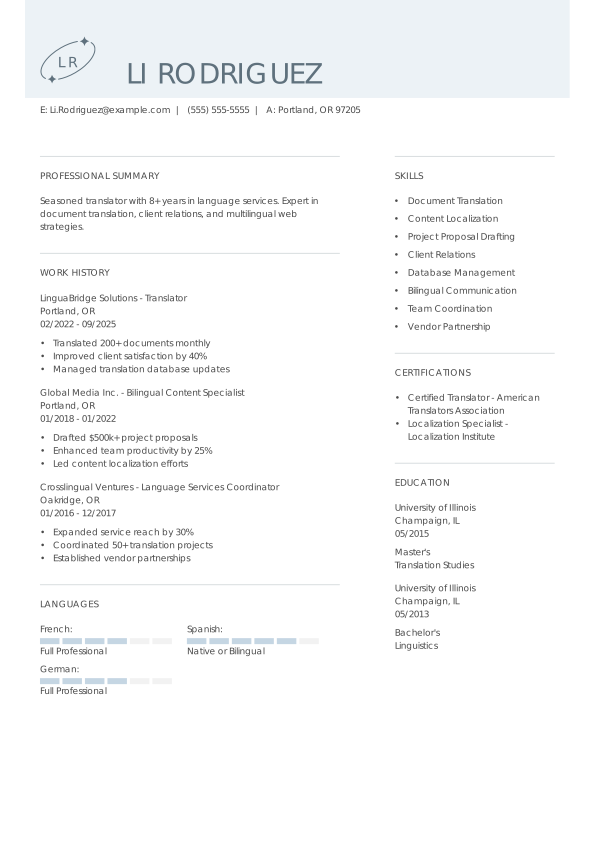
Why this resume works
- Quantifies accomplishments: The applicant’s measurable accomplishments, such as translating over 200 documents monthly and boosting client satisfaction by 40%, showcase their substantial impact.
- Showcases career progression: Progressing from coordinating translation projects to leading content localization shows a clear trajectory of growing responsibilities and career advancement in language services.
- Illustrates problem-solving ability: Improving client satisfaction by 40% reflects the applicant’s innovative problem-solving skills and strategies.
More Translator Resume Examples
See our translator resume examples to learn how to highlight your language skills, cultural knowledge, and translation experience. These language services resume samples will guide you in crafting a resume that meets industry standards and showcases your expertise effectively.
Entry-Level Translator
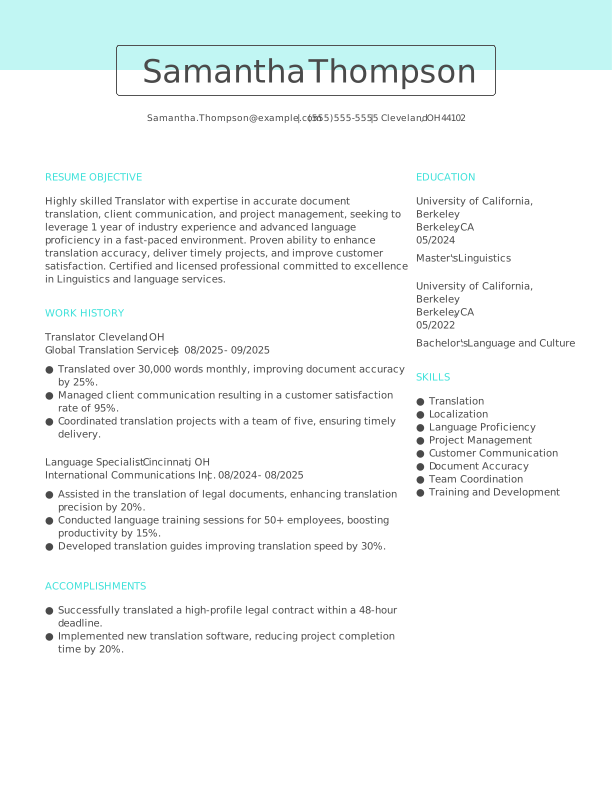
Why this resume works
- Centers on academic background: By showcasing a master’s in linguistics, the applicant emphasizes a strong academic foundation, which is important for early career stages.
- Effective use of keywords: Integrating role-specific keywords like “document accuracy” and “project management” improves the resume’s chances of passing applicant tracking systems (ATS) and standing out to hiring managers.
- Shows digital literacy: Incorporating new translation software to reduce project time highlights the applicant’s computer skills, showing readiness for tech-driven work environments.
Mid-Level Translator
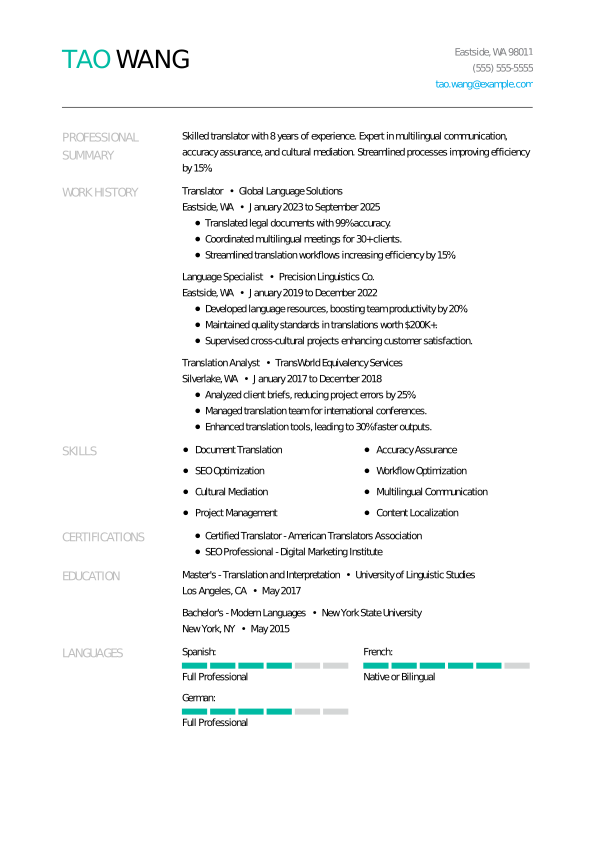
Why this resume works
- Demonstrates language abilities: With academic training in modern languages, the applicant’s language skills and cross-cultural collaboration stand out.
- Clear contact information: A well-structured resume header ensures seamless accessibility, making it easier for employers to reach out and initiate timely callbacks for interview opportunities.
- Displays technical expertise: Certifications like SEO Professional and expertise in workflow optimization emphasize the applicant’s adaptability to technical tools and processes important for efficient translation delivery in dynamic work environments.
Experienced Translator
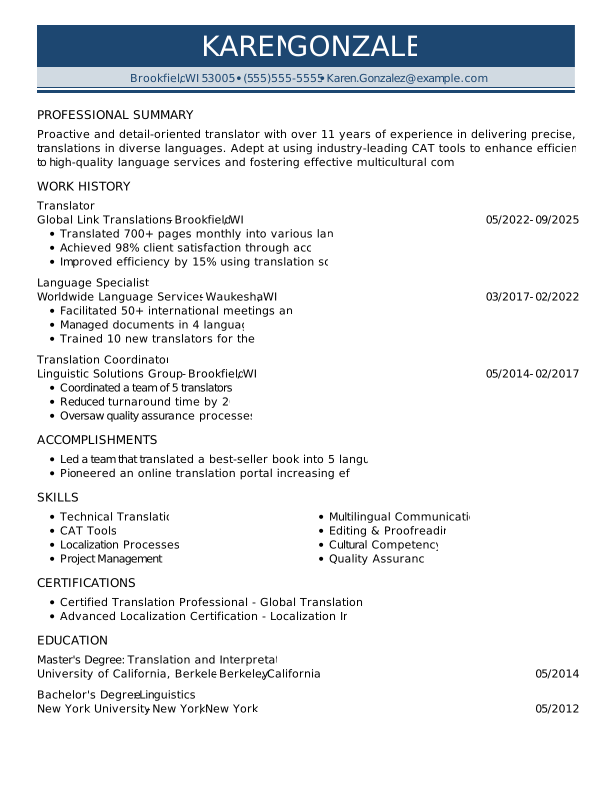
Why this resume works
- Focuses on work history: Using a chronological resume format, the applicant’s detailed work history showcases extensive experience and growth in translation roles over 11 years.
- Showcases impressive accomplishments: Exceptional achievements, like leading translations for a best-selling book into five languages, emphasize the applicant’s senior-level impact and are effectively highlighted.
- Lists relevant certifications: Listing certifications, such as Certified Translation Professional, reveals the applicant’s dedication to expertise enhancement.
Translator Resume Template (Text Version)
Start with the text below, then check out our resume templates for layouts tailored to your background.
Li Rodriguez
Portland, OR 97205
(555)555-5555
Li.Rodriguez@example.com
Professional Summary
Seasoned translator with 8+ years in language services. Expert in document translation, client relations, and multilingual web strategies.
Work History
Translator
LinguaBridge Solutions – Portland, OR
February 2022 – September 2025
- Translated 200+ documents monthly
- Improved client satisfaction by 40%
- Managed translation database updates
Bilingual Content Specialist
Global Media Inc. – Portland, OR
January 2018 – January 2022
- Drafted $500k project proposals
- Enhanced team productivity by 25%
- Led content localization efforts
Language Services Coordinator
CrossLingual Ventures – Oakridge, OR
January 2016 – December 2017
- Expanded service reach by 30%
- Coordinated 50+ translation projects
- Established vendor partnerships
Languages
- French – Beginner (A1)
- Spanish – Beginner (A1)
- German – Intermediate (B1)
Skills
- Document Translation
- Content Localization
- Project Proposal Drafting
- Client Relations
- Database Management
- Bilingual Communication
- Team Coordination
- Vendor Partnership
Certifications
- Certified Translator – American Translators Association
- Localization Specialist – Localization Institute
Education
Master’s Translation Studies
University of Illinois Champaign, IL
May 2015
Bachelor’s Linguistics
University of Illinois Champaign, IL
May 2013
Related Resume Guides
Advice for Writing Your Translator Resume
Discover unique tips and strategies to highlight your linguistic skills, cultural knowledge, and translation experience. Get ready to explore our guide on how to write a resume specifically for translator roles, ensuring you spotlight what sets you apart in this dynamic field.
Highlight your most relevant skills
When applying for the job of translator, listing your most relevant skills is key to catching the employer’s eye. A dedicated skills section helps you stand out by showing both technical and interpersonal abilities.
Technical skills might include language fluency, cultural knowledge, and technology use, like translation software. Interpersonal skills are also important; they can include communication, teamwork, and adaptability. By balancing these two types of skills in your resume, you show that you’re not just capable of translating words but also working well with others and handling different situations.
It’s smart to weave key skills into your work experience section, too. This makes your resume more powerful because it shows how you’ve used those skills in real-life situations.
For example, you could mention a project where you used your language skills to help a team meet its goals or how good communication helped resolve misunderstandings during translations. Showing these connections makes it easier for employers to see how you’ll add value to their team as a translator.
Overall, focusing on relevant skills lets employers quickly see what you bring to the table. Highlighting both hard and soft skills gives them a full picture of who you are as a translator.
A resume format highlighting language skills, cultural knowledge, and attention to detail can distinguish you as a translator and catch the attention of hiring managers.
Showcase your accomplishments
When organizing your work experience as a translator, it’s best to list jobs in reverse chronological order. Start with your most recent position and work backward. For each job entry, include your job title, the name of the employer, the location, and the dates you worked there. This helps employers see your career progression and understand your recent experiences first.
To make your resume stand out, focus on quantifying accomplishments rather than just listing duties. Instead of saying you translated documents, mention how many pages or projects you completed or any time savings achieved.
Use numbers to show impact: for example, say you reduced translation errors by a certain percentage or improved turnaround time for translations by a specific number of days. These details help hiring managers quickly grasp what you’ve achieved and how you can add value.
Use action-oriented words to describe your achievements in translation roles. Words like “improved,” “improved,” or “increased” highlight your active contributions. By turning tasks into measurable achievements, you paint a clearer picture of your capabilities and successes. Quantified accomplishments not only showcase skills but also demonstrate the tangible results you’ve delivered in previous roles.
5 translator work history bullet points
- Translated over 500 pages of technical documents from English to Spanish, improving client comprehension by 40%.
- Collaborated with a team of 10 translators to localize a software application, reducing time-to-market by 15%.
- Reviewed and edited translations for a legal firm, improving document accuracy and compliance by 25%.
- Managed translation projects for international marketing campaigns, increasing audience reach by 20%.
- Conducted language workshops for new hires, boosting their translation speed and quality by 30%.
When choosing a resume template, opt for one with clear sections and a simple design. This makes your skills and experience easy to read, helping you stand out without distractions.
Write a strong professional summary
A professional summary on a resume introduces you to hiring managers, offering a snapshot of your skills and experiences. It provides the first impression that can influence their decision to continue reading. Depending on what suits you best, you can choose between writing a summary or an objective.
A professional summary is a brief statement, typically three to four sentences, highlighting your experience, skills, and achievements. It’s ideal for experienced applicants who want to quickly convey their professional identity and value. This section serves as your personal brand statement, demonstrating why hiring managers should consider you for the job.
In contrast, resume objectives focus on your career goals and are perfect for entry-level applicants, career changers, or those with employment gaps. While summaries emphasize “what I’ve accomplished,” objectives highlight “what I aim to contribute.”
Next, we’ll explore examples of both summaries and objectives tailored to various industries and experience levels to help you craft a compelling introduction for your resume. See our full library of resume examples for additional inspiration.
Translator resume summary examples
Entry-level
Recent graduate with a Bachelor’s degree in Spanish and translation studies, equipped with foundational skills in translating documents and texts from English to Spanish. Completed an internship at a local translation agency, focusing on business and legal translations. Certified by the American Translators Association (ATA) and eager to contribute linguistic expertise to support communication across diverse populations.
Mid-career
Skilled translator with 7+ years of experience specializing in technical and medical translations for global clients. Adept at managing complex projects involving multilingual documentation, working closely with subject matter experts to ensure accuracy and cultural relevance. Holder of professional certification from the ATA, recognized for producing high-quality translations within tight deadlines.
Experienced
Seasoned translator known for leadership in large-scale localization projects and advanced skills in multiple languages, including French and German. Over 15 years of industry experience transforming intricate texts into culturally appropriate narratives that resonate with target audiences. Successfully led teams in delivering compelling translation solutions that improve international business operations.
Translator resume objective examples
Entry-level
Detail-oriented and linguistically adept recent graduate with a degree in translation studies, eager to begin a career as a translator. Aiming to use strong command over multiple languages and cultural awareness to provide accurate and culturally sensitive translations for diverse clients.
Career changer
Passionate educator transitioning into the field of translation, bringing excellent communication skills and a deep understanding of language nuances. Seeking to leverage teaching experience and multilingual abilities to facilitate effective cross-cultural communication in educational publishing.
Recent graduate
Enthusiastic language enthusiast with a bachelor’s degree in foreign languages, aspiring to start a career as a translator. Committed to delivering precise translations and interpretations by combining technical skills with an appreciation for cultural diversity.
Use our Resume Builder to create a polished resume quickly. It offers easy-to-use templates that make your translation skills stand out.
Match your resume to the job description
Tailoring resumes to job descriptions is essential for job seekers because it helps them stand out and pass through applicant tracking systems (ATS). These systems scan resumes for specific keywords and phrases from job postings. By aligning your resume content with the terms used in a job description, you increase your chances of catching an employer’s attention.
An ATS-friendly resume includes keywords and phrases that match your skills and experiences. When these align with what employers are looking for, it increases the chance that hiring managers will notice your application. This approach ensures your resume gets seen and not lost in the pile.
To find keywords from job postings, closely examine the skills, qualifications, and duties mentioned often. For example, if a translator role emphasizes “language skill,” “document translation,” or “cross-cultural communication,” make sure these phrases are part of your resume.
Incorporating these terms naturally into your content is important. Instead of just listing skills, use them in context. For instance, adjust “Translate documents accurately” to “Translated complex legal documents accurately for international clients.”
Targeted resumes bring advantages like improved ATS compatibility and better alignment with what employers seek. By focusing on relevant terms and using them effectively to customize your resume, you improve your chances of landing an interview.
You can use our ATS Score Checker to scan your resume for potential issues and receive on-the-spot feedback to improve your resume score.
Salary Insights for Translators
Understanding salary data can help you make informed decisions about your career path and negotiation strategy. Explore key insights below to guide your research.
Top 10 highest-paying states for translators
Translators earn varying salaries across the United States, with a national average of $60,383. The table below highlights the states where translators command the highest compensation.
Our salary information comes from the U.S. Bureau of Labor Statistics’ Occupational Employment and Wage Statistics survey. This official government data provides the most comprehensive and reliable salary information for translators across all 50 states and the District of Columbia. The figures presented here reflect the May 2025 dataset, which is the most recent available as of this publication.
| State | Average Salary |
|---|---|
| District of Columbia | $88,370 |
| New York | $86,810 |
| Maryland | $84,710 |
| Virginia | $80,500 |
| Vermont | $77,100 |
| California | $76,490 |
| Washington | $72,720 |
| Massachusetts | $70,100 |
| Minnesota | $68,600 |
| Hawaii | $67,410 |
FAQ
Do I need to include a cover letter with my translator resume?
Yes, including a cover letter with your translator resume can improve your application by highlighting your language skills and cultural knowledge.
A cover letter gives you the chance to express why you’re passionate about translating and how your expertise can benefit the company or project you’re applying for.
For instance, if the role involves translating technical documents or literary works, you can discuss any previous experience in those areas and how it makes you a strong applicant.
Using our Cover Letter Generator can simplify this process by helping you craft content tailored to the role while maintaining professionalism and clarity.
You might also find it useful to browse through cover letter examples for translators to get inspiration on the structure and tone that suits your career stage.
How long should a translator’s resume be?
For a translator, a one-page resume is generally sufficient to highlight your language skills, translation experience, and relevant certifications. This format works well if you’re early in your career or have a straightforward work history.
If you possess extensive experience or specialized skills such as legal or medical translation, then a two-page resume might be more appropriate. This allows room to detail significant projects and accomplishments without overwhelming the reader.
Ultimately, understanding how long a resume should be depends on effectively communicating your qualifications while keeping it concise and focused on what makes you stand out as a translator.
How do you write a translator resume with no experience?
When drafting a translator resume with no experience, emphasize your language skills and educational background to demonstrate your potential for the role. Here’s how you can create a compelling resume by showcasing relevant abilities and academic achievements:
- Highlight language skill: Begin by detailing the languages you are fluent in. Include any certifications or tests like TOEFL or IELTS that demonstrate your expertise.
- Emphasize education and courses: List relevant studies such as degrees in linguistics, translation, or foreign languages. Mention any specific courses that prepared you for translation work.
- Leverage volunteer work and projects: If you’ve volunteered for translation tasks or worked on projects requiring language skills, list these experiences. Describe what you translated and the context to show the practical application of your skills.
- Showcase technical skills: Highlight familiarity with translation software tools like SDL Trados Studio or memoQ, if applicable. These skills can make you stand out even without formal experience.
See our guide on writing a resume with no experience for more detailed advice on crafting a resume specifically tailored to entry-level translator positions.
Rate this article
Translator


Elizabeth is a Certified Professional Resume Writer (CPRW) and a member of the Professional Association of Resume Writers & Career Coaches. She is committed to helping job seekers navigate the job market and succeed in their careers.
More Articles by Elizabeth Muenzen, CPRWShare this page
 Add MyPerfectResume as a preferred source on Google
Add