Table of Contents
Get started with MyPerfectResume today!
- Build a resume on any device
- Pick an ATS-friendly template
- Tailor with AI copy suggestions
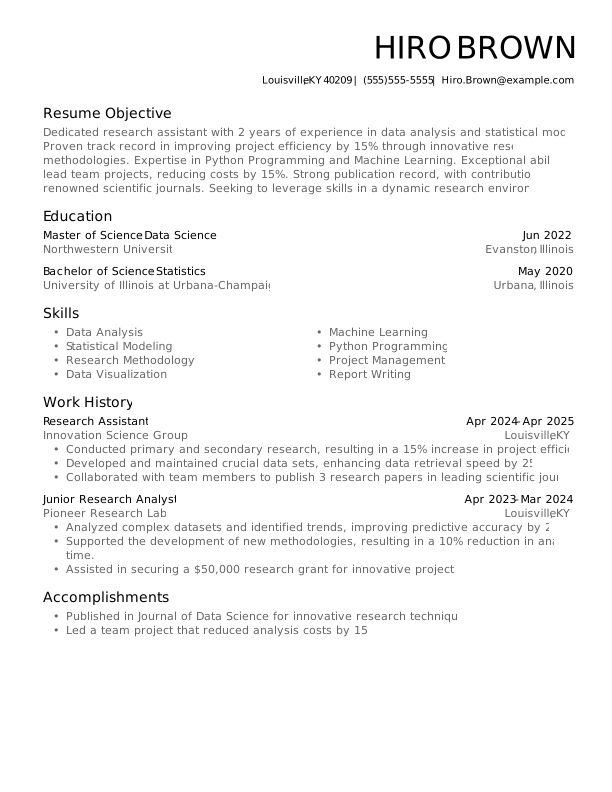
Why this resume works
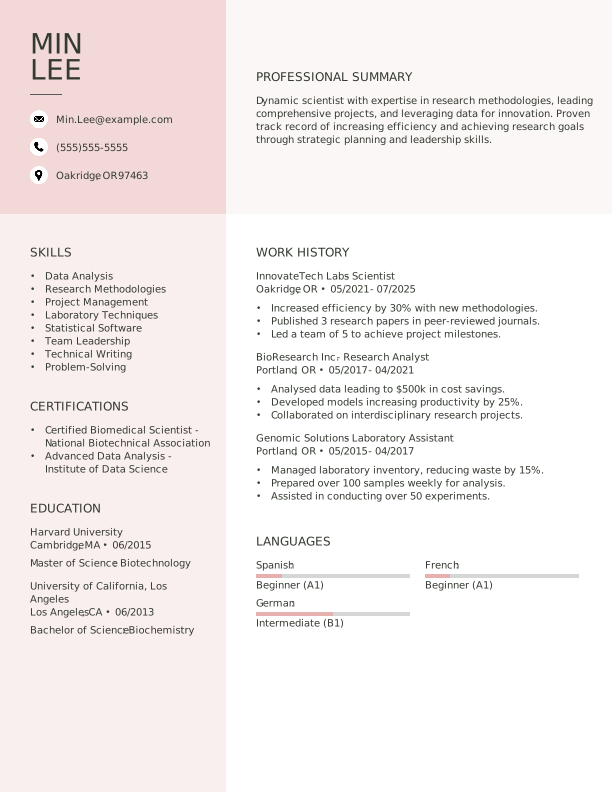
- Quantifies accomplishments: By pulling actual metrics to describe their accomplishments, like a 30% efficiency boost and $500k savings, the applicant’s tangible impact is clear and compelling.
- Uses action-oriented language: Using action verbs such as “increased,” “published,” and “led” on their resume, the applicant conveys initiative and effectiveness in tackling responsibilities.
- Illustrates problem-solving ability: The applicant’s development of new methodologies that boosted efficiency by 30% illustrates strong problem-solving skills through innovative thinking and decisive action.
More Sciences Resume Examples
Take a look at these sciences resume examples to see the best ways to highlight your analytical, research, and technical skills. Use these examples as a guide to create a resume that showcases your scientific expertise and experience effectively.
Entry-level sciences resume
Why this resume works
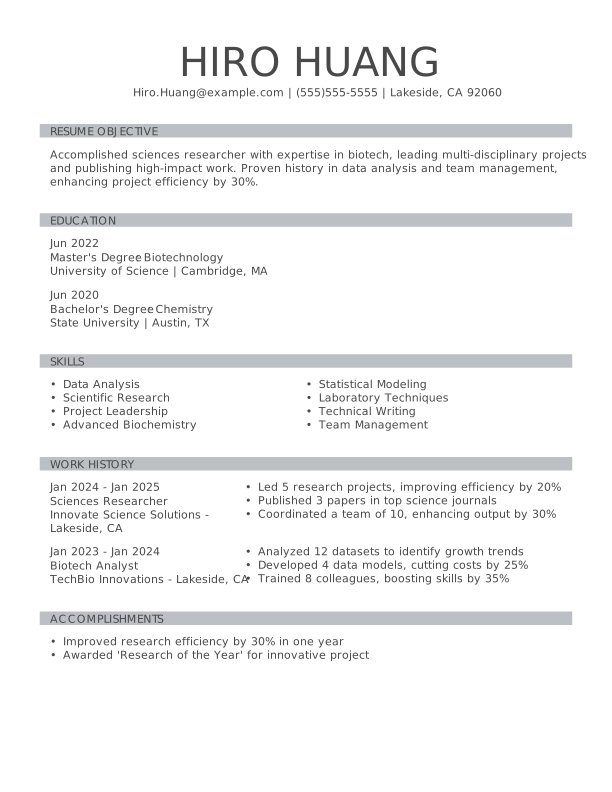
- Centers on academic background: By emphasizing academic credentials, the applicant’s education section reflects expertise and early career promise in biotechnology.
- Puts skills at the forefront: Using a skills-based resume format to place skills prominently at the beginning of the resume captures attention and benefits entry-level applicants.
- Effective use of keywords: Keywords such as “scientific research” and “data analysis” are strategically placed throughout the resume to ensure it passes ATS scans.
Mid-level sciences resume
Why this resume works
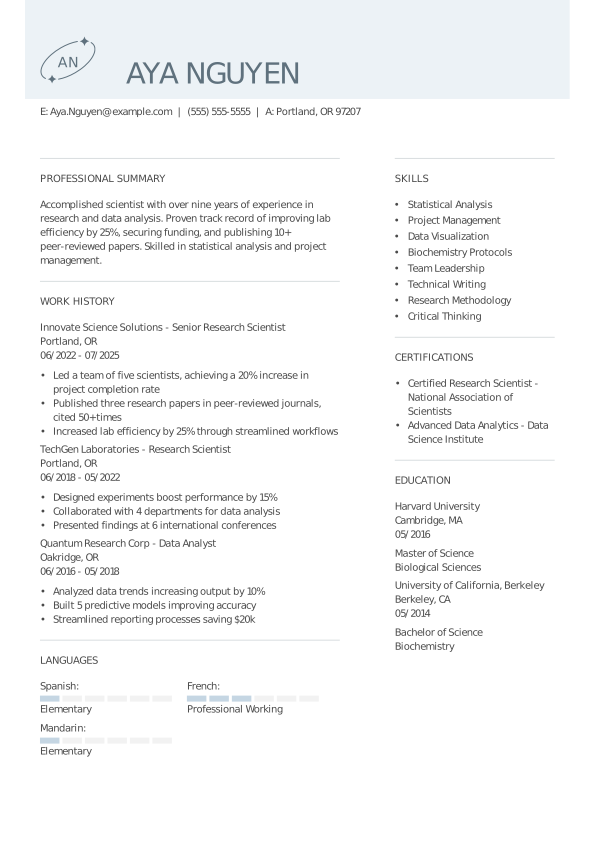
- Points to measurable outcomes: Boosting lab efficiency by 25% and saving $20k through streamlined reporting processes showcases the applicant’s knack for driving measurable outcomes.
- Includes a mix of soft and hard skills: Combining technical writing and critical thinking with interpersonal skills highlights a balanced skill set, essential for project development and collaboration.
- Demonstrates language abilities: Language skills in Spanish, French, and Mandarin improves cross-cultural communication, important for presenting findings at international conferences.
Experienced sciences resume
Why this resume works
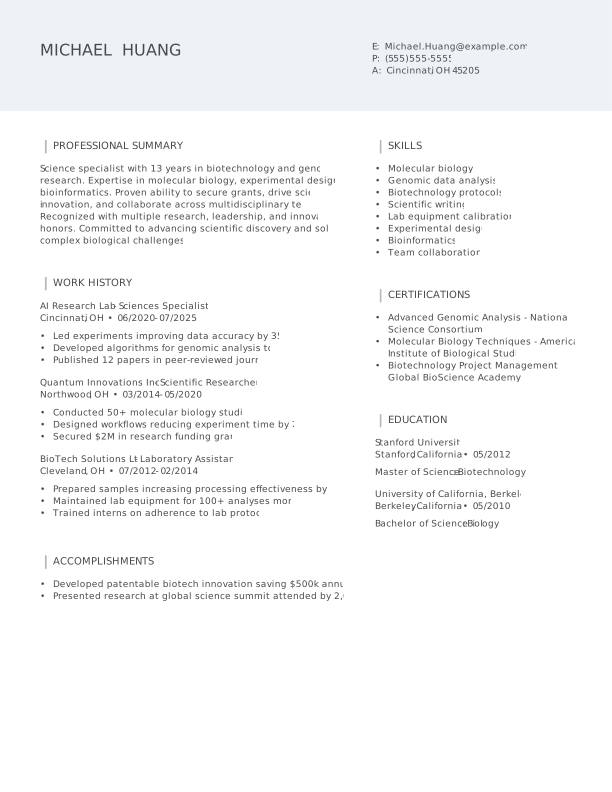
- Focuses on work history: Using a chronological resume format, the applicant’s extensive career history in biotech research is effectively laid out, showcasing progressive roles and responsibilities.
- Emphasizes leadership skills: The applicant shows how they applied their leadership capabilities to lead experiments, improving data accuracy by 35% and reflecting strong project management skills.
- Lists relevant certifications: The applicant’s multiple certifications, such as Advanced Genomic Analysis from National Science Consortium, highlight their expertise and commitment to continuous learning.
Explore Even More Sciences Resumes
Sciences Resume Template (Text Version)
Your resume should reflect you. Copy the format below, then browse our resume templates for personalized options.
Min Lee
Oakridge, OR 97463
(555)555-5555
Min.Lee@example.com
Professional Summary
Dynamic scientist with expertise in research methodologies, leading comprehensive projects, and leveraging data for innovation. Proven track record of increasing efficiency and achieving research goals through strategic planning and leadership skills.
Skills
- Data Analysis
- Research Methodologies
- Project Management
- Laboratory Techniques
- Statistical Software
- Team Leadership
- Technical Writing
- Problem-Solving
Certifications
- Certified Biomedical Scientist – National Biotechnical Association
- Advanced Data Analysis – Institute of Data Science
Education
Master of Science Biotechnology
Harvard University Cambridge, MA
June 2015
Bachelor of Science Biochemistry
University of California, Los Angeles Los Angeles, CA
June 2013
Work History
Scientist
InnovateTech Labs – Oakridge, OR
May 2021 – July 2025
- Increased efficiency by 30% with new methodologies.
- Published 3 research papers in peer-reviewed journals.
- Led a team of 5 to achieve project milestones.
Research Analyst
BioResearch Inc. – Portland, OR
May 2017 – April 2021
- Analysed data leading to 0k in cost savings.
- Developed models increasing productivity by 25%.
- Collaborated on interdisciplinary research projects.
Laboratory Assistant
Genomic Solutions – Portland, OR
May 2015 – April 2017
- Managed laboratory inventory, reducing waste by 15%.
- Prepared over 100 samples weekly for analysis.
- Assisted in conducting over 50 experiments.
Languages
- Spanish – Beginner (A1)
- French – Beginner (A1)
- German – Intermediate (B1)
Browse Resume Examples by Industry
- Aviation
- Banking
- Billing And Collections
- Biology
- Boating
- Business Operations
- Casino
- Chemistry
- Child Care
- Civil Engineering
- Compliance
- Computer Hardware
- Computer Software
- Construction
- Copywriting
- Cosmetology
- Costco
- Culinary
- Customer Service
- Dance
- Data Systems Administration
- Deloitte
- Dentistry
- Driving
- Education
- Electrical
- Electrical Engineering
- Energy
- Engineering
- Entertainment
- Entrepreneur
- Entry Level
- Environmental
- Environmental Science
- Event Planning
- Executive
- Fashion
- Film
- Finance
- Fitness & Nutrition
- Food Service
- Freelancing
- General Laborer
- Goldman Sachs
- Government
- Graphic Design
- Healthcare Support
- Hospitality
- Human Resources
- HVAC
- Industrial Engineering
- Information Technology
- Insurance
- Interior Design
- Inventory Management
- Janitorial
- Landscaping
- Language Services
- Law
- Law Enforcement
- Library
- Logistics
- Maintenance
- Marketing
- McKinsey
- Mechanical Engineering
- Mechanics
- Media And Communication
- Medical
- Mental Health
- Meta
- Metal Work
- Military
- Mining
- Museum
- Music
- Netflix
- Non Profit
- Nursing
- Pharmaceutical
- Photography
- Physical Therapy
- Plumbing
- Politics
- Production
- Program Manager
- Project Manager
- Psychology
- Purchasing
- Quality Control
- Real Estate
- Religion
- Retail
- Safety And Security
- Sales
- Shipping
- Social Services
- Special Education
- Sports
- Statistics
- Student
- Teaching
- Team Lead
- Tesla
- Training And Development
- Transportation
- Travel
- Veterinary
- Walgreens
- Walmart
- Web Development
Advice for Writing Your Sciences Resume
Learn how to write a resume for a sciences position and discover how to highlight your scientific skills, research experience, and passion for discovery.
Whether you’re an aspiring biologist, chemist, or physicist, these tailored strategies will help you present your expertise in the best light.
Highlight relevant technical skills
In the sciences job field, technical skills play a big role. They help you handle tasks effectively and prove your expertise.
To make these skills stand out, adding a technical skills section on your resume is a smart move. You can set this up as a clean list that employers can scan quickly. Alternatively, you can include these skills within descriptions of past roles to show how you’ve applied them in practical settings.
For engineering and technical positions within sciences, there are specific abilities employers often seek. These might involve familiarity with computer-aided design (CAD) software, using data analysis tools like Python or R, laboratory methods, or operating specialized equipment.
Experience with project management software and knowledge of modeling and simulation tools can also be valuable. Customize your list to fit the job description so it lines up well with what the employer is searching for.
Keep your resume straightforward and easy to follow. Highlighting targeted technical skills not only grabs hiring managers’ attention but also shows you’re prepared to tackle the demands of a sciences-based role.
Example of a technical skills section
- Data analysis (R, Python)
- Statistical software (SPSS, SAS)
- Laboratory techniques (PCR, chromatography)
- GIS mapping
- Qualitative research methods
- Spectroscopy and spectrometry
- Biochemical assays
- Scientific writing and documentation
Employers look for people who can communicate well, lead a team, and adapt to change, so be sure to include soft skills on your resume as well.
Quantify your accomplishments
Quantifying your accomplishments in a science role makes your resume stand out. Instead of just listing what you did, show how you made a difference.
In the work experience section, include your job title, employer’s name, location, and employment dates. Then turn tasks into achievements using numbers. For example, if you improved lab efficiency by 20%, mention that. This gives hiring managers a clear picture of your skills and the impact you’ve had.
Using action verbs and metrics makes your resume results-driven. Words like “increased,” “reduced,” or “developed” combined with data make each entry powerful. For instance, instead of saying “conducted experiments,” say “conducted experiments that increased accuracy by 15%.” This approach provides evidence of your contributions and skills quickly.
When hiring managers review resumes, they look for candidates who can deliver results. Quantified accomplishments let them see your potential right away. They demonstrate not only what you did but how well you did it, making it easier for employers to see why you’re a great fit for their team in the sciences field.
5 sciences work history bullet point examples
- Conducted comprehensive research on chemical compounds, resulting in a 20% increase in lab efficiency and cost savings.
- Led a team of four scientists in developing a new drug formulation, achieving FDA approval within 12 months.
- Implemented data analysis methodologies that improved accuracy of scientific predictions by 25%.
- Coordinated cross-functional teams to streamline experimental processes, reducing project timelines by 15%.
- Authored and published three peer-reviewed papers improving the understanding of quantum physics applications.
Looking for resume ideas? Check out professional resume examples to see how others make their skills shine and get inspired for your own resume.
Write a powerful professional summary
A professional summary introduces you to hiring managers, offering a snapshot of who you are and what you bring. It’s among the first things they read, so making it impactful is key. When crafting your resume, you’ll need to decide whether to use a professional summary or a resume objective.
A professional summary is usually three to four sentences long and highlights your experience, skills, and achievements. It’s best for experienced applicants who want to quickly showcase their professional identity and value. Essentially, it’s about “what I’ve accomplished” in the sciences field.
In contrast, resume objectives focus on what you aim to achieve in your career. They’re ideal for entry-level candidates, those shifting careers, or individuals with employment gaps. Unlike summaries, objectives stress “what I aim to contribute” rather than past accomplishments.
Next, let’s look at examples of both summaries and objectives tailored for different roles and experience levels.
Sciences resume summary examples
Entry-level
Recent bachelor of science graduate with a major in biology, eager to contribute to research and laboratory settings. Skilled in molecular biology techniques, data analysis, and scientific writing. Completed internships at leading research institutions and proficient in using lab equipment like PCR and spectrophotometry. Enthusiastic about advancing scientific knowledge and collaborating with seasoned researchers.
Mid-career
Experienced biochemist with over seven years in pharmaceutical research and development. Expertise in protein purification, enzyme assays, and drug metabolism studies. Published several peer-reviewed articles on biochemical pathways and drug interactions. Known for problem-solving abilities and effective teamwork in cross-functional projects aimed at developing novel therapeutics.
Experienced
Veteran environmental scientist with a specialization in climate change impact assessment. Over 15 years of experience leading large-scale environmental studies and policy development initiatives. Proficient in GIS mapping, statistical modeling, and stakeholder engagement. Successfully managed multidisciplinary teams to deliver actionable insights that drive sustainable practices across industries.
Sciences resume objective examples
Recent graduate
Aspiring environmental scientist with a Bachelor of Science in Environmental Science eager to apply academic knowledge and research skills to support sustainability initiatives. Seeking an entry-level position to contribute to data analysis and field studies aimed at promoting environmental conservation.
Career changer
Detail-oriented professional transitioning from a career in education to biological sciences, with strong analytical skills and experience in curriculum development. Looking to bring organizational and research abilities to a junior biologist role, focusing on species conservation and ecological studies.
Specialized training
Chemistry graduate with specialized training in laboratory techniques and instrumentation seeking an entry-level chemist position. Passionate about using hands-on lab experience and strong problem-solving skills to support innovative chemical research and development projects.
Pick a resume template that’s straightforward and tidy, with clear sections and readable fonts. Avoid excessive designs to help employers quickly spot your skills.
Showcase your credentials
Listing certifications, licenses, and specialized training is especially important in sciences because these credentials show your knowledge and skills in specific areas.
They help employers quickly see that you meet industry standards and are prepared for technical tasks. A dedicated certifications section can make these achievements stand out, complementing your education and work experience.
Some certifications that may be required or beneficial in the sciences include:
- Certified Clinical Research Coordinator (CCRC)
- Board Certified in Healthcare Management
- Certified Biological Safety Professional
- Registered Environmental Health Specialist/Registered Sanitarian
- Certified Genetic Counselor
Having certifications like these on your resume can make you more competitive in the sciences field, as they prove your abilities with tools, platforms, or systems often used in the industry. Make sure to list them clearly so hiring managers can easily spot them when reviewing your qualifications.
Example of a certifications section
Board Certified in Healthcare Management
Issued by: American College of Healthcare Executives (ACHE)
Certified Biological Safety Professional
Issued by: American Biological Safety Association (ABSA)
Choose a chronological resume format if you have steady work history in the sciences, but opt for a functional or combination format if you’re changing careers, have employment gaps, or want to emphasize skills over job titles.
FAQ
Do I need to include a cover letter with my sciences resume?
Yes, adding a cover letter to your sciences resume can help highlight your qualifications and interest in the role.
A cover letter lets you explain why you’re passionate about the specific field or research area and how your background aligns with the organization’s goals.
If the institution focuses on a particular scientific discipline or project, you can describe any relevant experience or skills that make you an ideal fit for their team.
Try using a tool like our Cover Letter Generator to craft a personalized letter that complements your resume by showcasing unique aspects of your professional journey.
It might also be useful to check out cover letter examples from others in scientific fields to get inspiration and ensure you’re effectively communicating your strengths.
How long should a sciences resume be?
For a science professional, a two-page resume is often appropriate. This length allows you to effectively detail your research experience, publications, technical skills, and any specialized projects or collaborations that demonstrate your expertise in the field.
If you’re early in your career or have fewer experiences to showcase, a one-page resume might be sufficient. Focus on highlighting key achievements like internships, relevant coursework, and any lab or research work that showcases your potential and foundational skills.
To better understand how long a resume should be at different stages of your career, explore our guide for tailored examples and tips.
How do you write a sciences resume with no experience?
If you lack direct experience in the sciences, focus your resume on education, skills, and relevant projects that show your potential. For guidance on crafting a resume with no experience, consider these tips to make a compelling sciences resume.
- Emphasize education: Start with your degree(s) in science-related fields. Include the name of the institution, graduation date, and any honors or relevant coursework like laboratory techniques or specific scientific methodologies.
- Showcase projects and research: If you’ve completed scientific projects or research during your studies, list these as practical experiences. Detail what you worked on, the methods used, and any outcomes or findings.
- Highlight technical skills: List lab skills such as data analysis software (like SPSS or MATLAB), laboratory equipment handling, or specific scientific techniques. These technical proficiencies can be critical for roles in the sciences.
- Include relevant extracurriculars: Mention involvement in science clubs, academic societies, or volunteer work related to science. These activities can demonstrate commitment and enthusiasm for the field.
Tailoring your resume to focus on these areas will help show prospective employers your readiness to transition into a professional role in the sciences.
Rate this article
Sciences


Toni is a Certified Professional Resume Writer (CPRW) and member of the Professional Association of Resume Writers & Career Coaches. She is committed to helping job seekers navigate the job market and succeed in their careers.
More Articles by Toni Frana, CPRWShare this page
 Add MyPerfectResume as a preferred source on Google
Add