Table of Contents
Get started with MyPerfectResume today!
- Build a resume on any device
- Pick an ATS-friendly template
- Tailor with AI copy suggestions
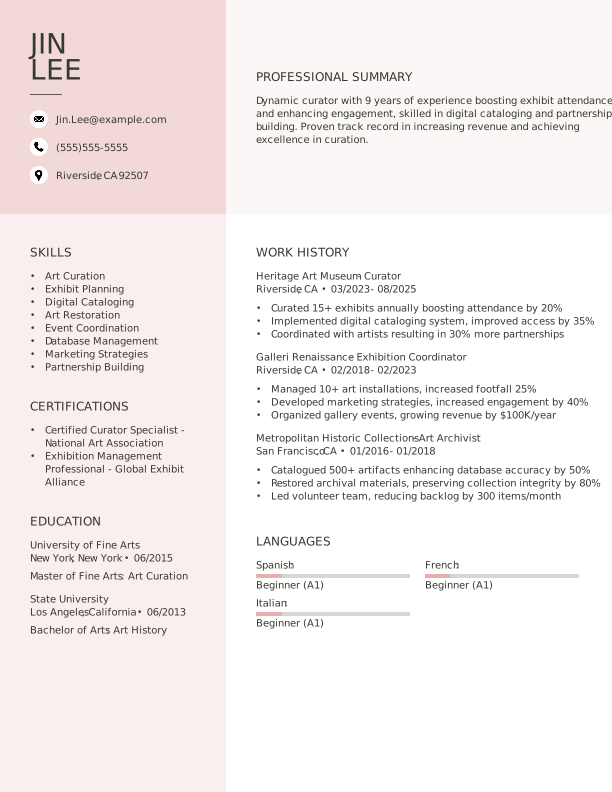
Why this resume works
- Quantifies accomplishments: Measurable accomplishments, such as curating over 15 exhibits annually and driving a 20% rise in attendance, highlight the applicant’s tangible impact and value.
- Highlights industry-specific skills: The applicant’s expertise shines through industry-specific skills like digital cataloging and art restoration, demonstrating a strong fit for roles focused on art curation and exhibit management.
- Showcases career progression: Climbing from an art archivist to a curator role, the applicant’s career path showcases increasing responsibility, highlighting growth in managing complex projects and boosting museum engagement.
More Curator Resume Examples
Take a look at our curator resume examples to learn how to highlight your organizational skills, art expertise, and exhibit experience. These museum resume samples will guide you in creating a standout resume that wins interviews.
Entry-Level Curator
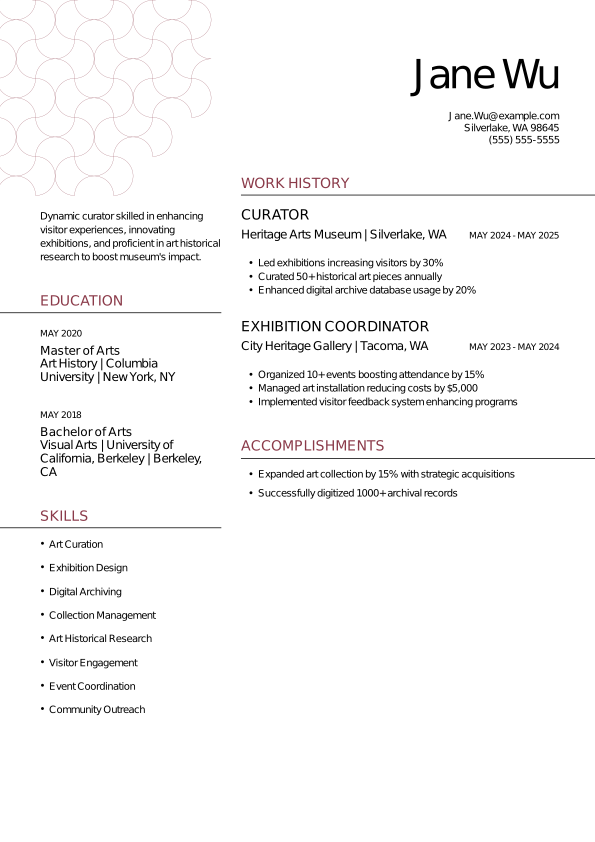
Why this resume works
- Centers on academic background: The applicant’s education section, featuring a Master of Arts in art history, paints a strong foundation for their career trajectory.
- Effective use of keywords: Strategic inclusion of role-relevant keywords like “art curation” and “exhibition design” boosts the resume’s visibility in applicant tracking systems (ATS).
- Shows digital literacy: Showcasing digital archiving skills illustrates the applicant’s readiness for tech-driven environments, aligning with essential computer skills needed today.
Mid-Level Curator
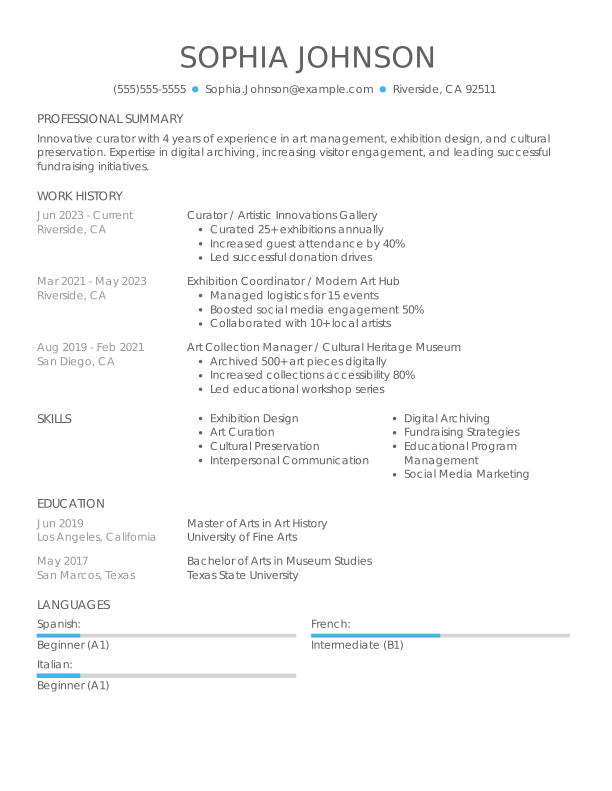
Why this resume works
- Points to measurable outcomes: Listing achievements like a 40% increase in guest attendance showcases the applicant’s ability to drive measurable outcomes and impact organizational success.
- Demonstrates language abilities: Language skills in Spanish, French, and Italian support cross-cultural communication, improving international collaborations.
- Includes a mix of soft and hard skills: The applicant’s skill set combines technical expertise like digital archiving with interpersonal skills, ensuring effective teamwork and robust project execution.
Experienced Curator
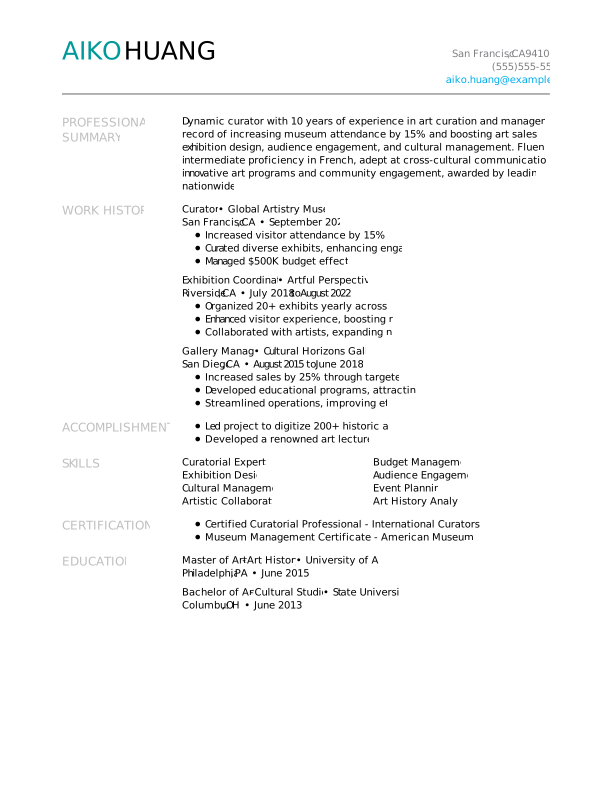
Why this resume works
- Showcases impressive accomplishments: By emphasizing quantifiable achievements like boosting museum attendance by 15% and increasing art sales by 25%, the applicant showcases senior-level accomplishments.
- Focuses on work history: Using a chronological resume format, the applicant organizes extensive career experience, spanning curator roles that highlight consistent growth in responsibilities and strong contributions over time.
- Lists relevant certifications: Listing certifications such as Certified Curatorial Professional and Museum Management Certificate reinforces expertise in curatorial practices while reflecting dedication to professional development.
Curator Resume Template (Text Version)
Interested in exploring? Copy the template below, or browse our resume templates for a wider variety.
Jin Lee
Riverside, CA 92507
(555)555-5555
Jin.Lee@example.com
Professional Summary
Dynamic curator with 9 years of experience boosting exhibit attendance and enhancing engagement, skilled in digital cataloging and partnership building. Proven track record in increasing revenue and achieving excellence in curation.
Skills
- Art Curation
- Exhibit Planning
- Digital Cataloging
- Art Restoration
- Event Coordination
- Database Management
- Marketing Strategies
- Partnership Building
Certifications
- Certified Curator Specialist – National Art Association
- Exhibition Management Professional – Global Exhibit Alliance
Education
Master of Fine Arts Art Curation
University of Fine Arts New York, New York
June 2015
Bachelor of Arts Art History
State University Los Angeles, California
June 2013
Work History
Curator
Heritage Art Museum – Riverside, CA
March 2023 – August 2025
- Curated 15+ exhibits annually boosting attendance by 20%
- Implemented digital cataloging system, improved access by 35%
- Coordinated with artists resulting in 30% more partnerships
Exhibition Coordinator
Galleri Renaissance – Riverside, CA
February 2018 – February 2023
- Managed 10+ art installations, increased footfall 25%
- Developed marketing strategies, increased engagement by 40%
- Organized gallery events, growing revenue by $100K/year
Art Archivist
Metropolitan Historic Collections – San Francisco, CA
January 2016 – January 2018
- Catalogued 500+ artifacts enhancing database accuracy by 50%
- Restored archival materials, preserving collection integrity by 80%
- Led volunteer team, reducing backlog by 300 items/month
Languages
- Spanish – Beginner (A1)
- French – Beginner (A1)
- Italian – Beginner (A1)
Related Resume Guides
Advice for Writing Your Curator Resume
Discover strategies on how to write a resume tailored for a curator role. Whether you’re passionate about art, history, or science, our guide will help you highlight your unique expertise and experience. Dive into specific tips that will make your resume stand out in the competitive world of curation.
Showcase your portfolio or projects
For a curator, showcasing your portfolio or projects on your resume is essential because it offers concrete proof of your creativity, expertise, and curatorial vision. An online portfolio—whether on Behance, a personal website, or another professional platform—allows employers and clients to explore your work.
When listing projects, structure them as you would work experience entries. Start with the project name, note the client, institution, or organization if relevant, and provide a concise description of the theme or scope. Then highlight your specific responsibilities and the impact of your work—for example, how the exhibit attracted audiences, supported artists, or received recognition.
Freelance work, academic projects, and independent initiatives are all valuable to include, as they reflect your initiative and versatility. For instance, if you curated an exhibit for a local gallery, list its title (e.g., Art Beyond Borders), describe its focus, and explain how you organized, coordinated, or promoted the event.
Presenting your projects in this way gives a well-rounded view of your skills and establishes you as a capable, detail-oriented curator. This communicates both your role and the results you helped achieve.
Example of a projects section
Modern Art Exhibition Curation
City Arts Museum
March 2021 – September 2021
- Curated a modern art exhibition featuring over 50 contemporary artists, attracting more than 10,000 visitors.
- Coordinated with artists and galleries to secure loan agreements for high-profile pieces.
- Developed educational programs and guided tours that increased visitor engagement.
Digital Archive Development
Historical Society of Western States
June 2022 – Present
- Spearheaded the development of a digital archive, digitizing over 5,000 historical documents and artifacts.
- Implemented a searchable database system, improving access for researchers and the public.
- Organized training sessions for staff on using new archival software.
Want your resume to stand out? Browse professional resume examples for ideas on how to highlight your skills and experience.
Emphasize your most relevant skills
To succeed as a curator, it’s important to highlight both technical and soft skills that make you effective in creative roles. Technical skills, like expertise in collection management software or familiarity with design tools, show your capability to handle the practical aspects of curation.
Soft skills such as communication, collaboration, and problem-solving demonstrate how well you can connect with audiences, work with teams, and adapt to challenges. Balancing these skill sets gives a complete picture of your abilities.
Include a dedicated skills section on your resume to list specific tools and talents relevant to the role. For example, mention experience with exhibit planning systems or artistic techniques that align with curatorial tasks. This makes it easy for hiring managers to see what you bring to the table at a glance without searching through your resume.
For even more impact, weave these skills into your work experience descriptions. Instead of just listing duties, describe how you used your skills to achieve results—such as organizing an exhibit using innovative display methods or coordinating cross-team efforts for successful event launches. This approach not only shows what you did but also how your abilities shaped those accomplishments effectively.
Select a resume format that emphasizes your experience in managing exhibitions and collections for curator roles.
Choose a professional resume template
When selecting a resume template for a curator role, it’s important to find one that mixes creativity with professionalism. A clean and structured format can help present your information clearly while still leaving room for personality.
Consider templates with well-defined sections and consistent spacing so everything remains easy to read. Avoid designs that are overly decorative or include distracting graphics or bright colors, as these can shift focus away from your qualifications.
Look for a template that emphasizes visual hierarchy by incorporating headers, bullet points, and effective use of white space. This approach allows hiring managers to quickly scan through your skills and experience.
Templates where fonts are both legible and modern—without being overly stylized—work best. Subtle design elements such as section dividers or accent lines provide an extra layer of visual interest without overwhelming the content.
To ensure ATS compatibility, select straightforward layouts that use standard fonts like Arial or Times New Roman while avoiding text boxes or embedded images. These formats increase the likelihood of systems accurately reading your resume during online applications.
Try using our AI Resume Builder to make your curator resume. It’s easy to add your skills and experience, plus it helps you organize everything neatly.
Format your resume properly
A proper resume format is essential for readability and professionalism. For curators, using a chronological format is recommended to highlight your career path and relevant roles in order, showcasing growth and achievements over time. Ensure the layout remains clean with distinct sections, allowing employers to easily locate key information.
5 resume formatting tips
- Use clear section headings: Organize your resume with headings like “Work Experience” and “Skills” for clarity.
- Keep font choices consistent: Select a single professional font throughout the document to ensure readability.
- Implement bullet points: List responsibilities and achievements in bullet points for easy scanning.
- Limit to one page: Aim for a one-page resume unless you have extensive experience requiring more space.
- Ensure proper spacing and alignment: Maintain consistent spacing and alignment for a clean, polished appearance.
Don’t let mistakes keep you from your dream job! Our ATS Score Checker helps find formatting issues, missing keywords, and structure problems so your resume shines when you apply.
Salary Insights for Curators
Researching salary data can help you make informed decisions about your career path and negotiation strategy. Explore key insights below to guide your research.
Top 10 highest-paying states for curators
Curators earn varying salaries across the United States, with a national average of $64,768. The table below highlights the states where curators command the highest compensation.
Our salary information comes from the U.S. Bureau of Labor Statistics’ Occupational Employment and Wage Statistics survey. This official government data provides the most comprehensive and reliable salary information for curators across all 50 states and the District of Columbia. The figures presented here reflect the May 2025 dataset, which is the most recent available as of this publication.
| State | Average Salary |
|---|---|
| District of Columbia | $96,080 |
| New York | $96,500 |
| California | $86,440 |
| Massachusetts | $80,300 |
| Connecticut | $78,770 |
| Alaska | $73,760 |
| Washington | $72,730 |
| Nevada | $72,900 |
| Rhode Island | $71,910 |
| Arizona | $69,080 |
FAQ
Do I need to include a cover letter with my curator resume?
Yes, including a cover letter with your resume is important for making a strong impression on potential employers. A cover letter lets you express your passion for art and curation, share insights about your curatorial philosophy, and highlight specific experiences.
For instance, if the institution hosts unique exhibitions or cultural programs, you can discuss how your previous projects align with their mission or improve their offerings.
Consider using our Cover Letter Generator to craft a tailored document that complements your resume effectively. It provides step-by-step assistance and personalized content suggestions.
Additionally, exploring cover letter examples can offer inspiration and ensure your writing addresses key points relevant to the curator role while maintaining a professional tone.
How long should a curator’s resume be?
For a curator, a one-page resume might be sufficient if you’re early in your career or have fewer experiences to highlight. It should capture key skills like collection management and exhibit planning concisely.
However, if you have extensive experience or significant achievements in curation, a two-page resume allows you more space to detail your accomplishments and projects.
Be sure each entry is relevant to the role of a curator, such as specific exhibitions curated or notable collaborations.
Explore our guide on how long a resume should be for tips tailored to different career stages and roles.
How do you write a curator resume with no experience?
If you’re creating a resume with no experience, focus on transferable skills, education, and any activities that align with the curator role. Here are a few tips to help you get started:
- Highlight your education: If you studied art history, museum studies, or a related field, list your degree prominently. Include relevant coursework or projects that demonstrate knowledge of curation or cultural preservation.
- Include volunteer work: If you’ve volunteered at museums, galleries, or cultural events, detail your contributions—such as assisting with exhibitions or cataloging collections—as these experiences can stand in for formal employment.
- Showcase transferable skills: Skills like organization, attention to detail, research ability, and communication are important for curators. Highlight these through academic achievements or personal projects (e.g., organizing a community art event).
- Feature independent initiatives: If you’ve curated anything informally—like online portfolios, local exhibits, or school displays—include these as examples of your passion and initiative for the field.
Crafting a resume with no experience is about framing what you’ve done so far in ways that connect to the curator’s responsibilities while emphasizing your enthusiasm for the role.
Rate this article
Curator


Jasmine is a certified career coach and recognized expert in job search strategy. She is committed to helping job seekers navigate the job market and succeed in their careers.
More Articles by Jasmine EscaleraShare this page
 Add MyPerfectResume as a preferred source on Google
Add