Table of Contents
Get started with MyPerfectResume today!
- Build a resume on any device
- Pick an ATS-friendly template
- Tailor with AI copy suggestions
Why this resume works
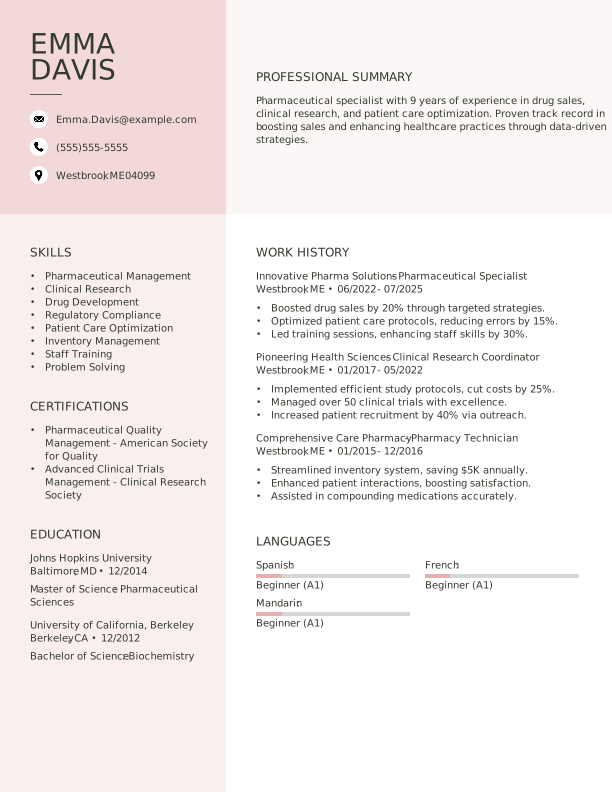
- Quantifies accomplishments: Measurable accomplishments like boosting drug sales by 20% and cutting costs by 25% reveal the applicant’s significant impact and value.
- Highlights industry-specific skills: Focusing on pharmaceutical management and clinical research, the applicant shows a strong fit for industry roles requiring specialized knowledge in drug development and patient care optimization.
- Uses action-oriented language: Using powerful action verbs like “boosted,” “optimized,” and “implemented,” the applicant conveys initiative and effectiveness.
More Pharmaceutical Resume Examples
Licensure, GMP experience, and submission history can help distinguish pharmaceutical backgrounds across practice settings. Compare how the examples below organize those qualifications.
Entry-Level Pharmaceutical Resume
Why this resume works
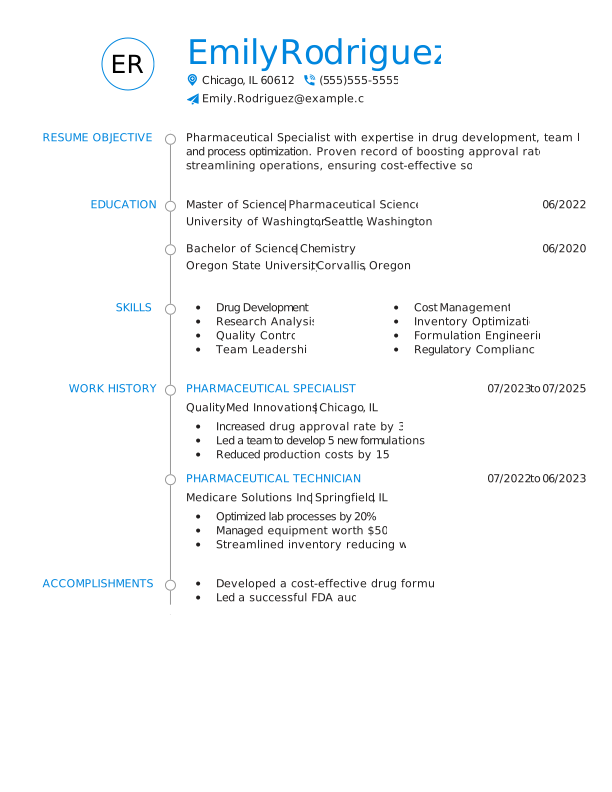
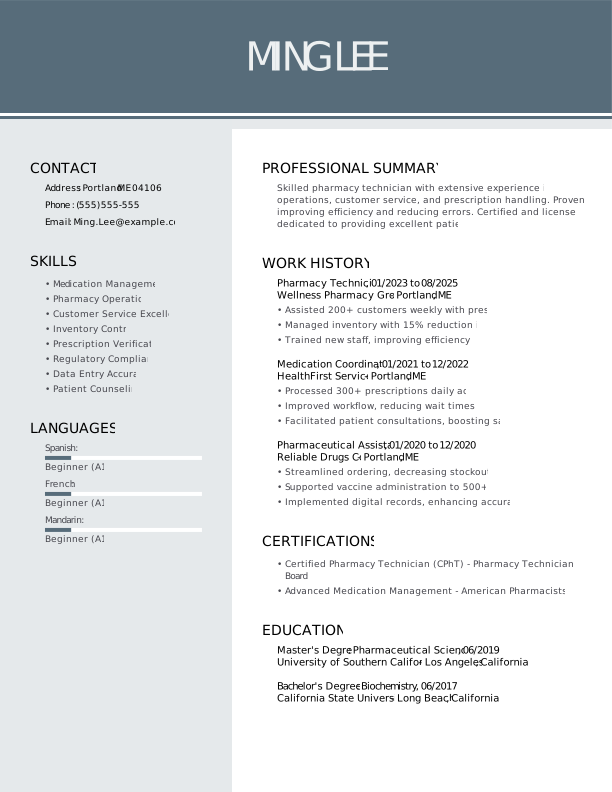
- Centers on academic background: Showcasing a master’s degree in pharmaceutical sciences highlights a solid academic foundation for early career growth.
- Effective use of keywords: The strategic use of industry-specific keywords like “drug development,” “quality control,” and “regulatory compliance” improves ATS compatibility.
- Shows digital literacy: Managing lab equipment worth $500K and optimizing processes reflects strong computer skills, important for the modern workplace digital literacy.
Mid-Level Pharmaceutical Resume
Why this resume works
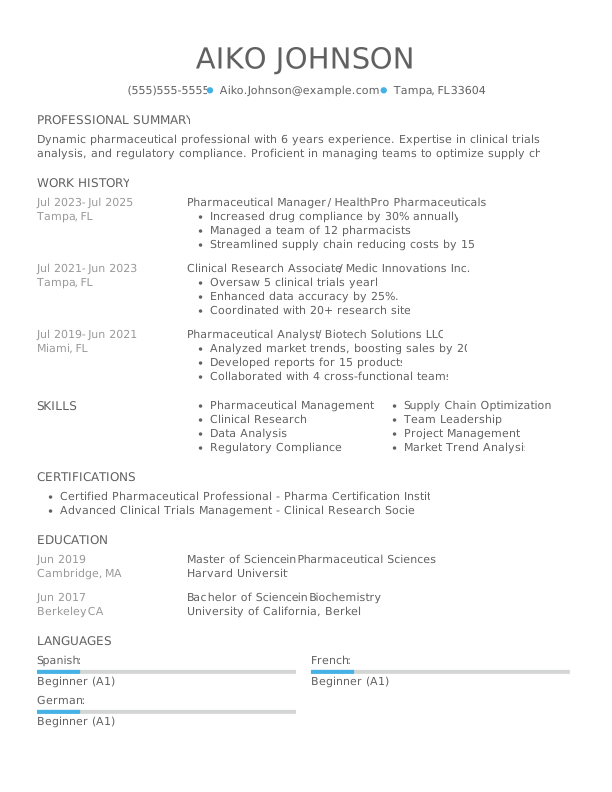
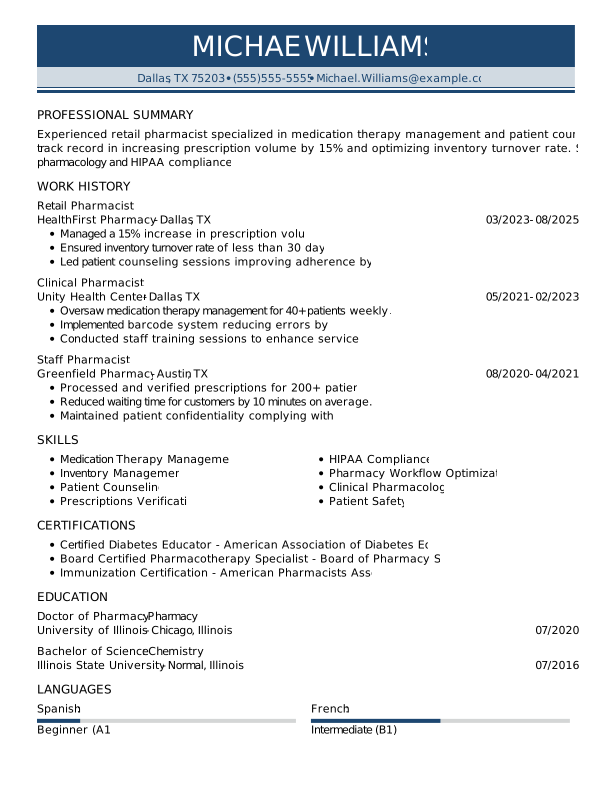
- Points to measurable outcomes: By quantifying outcomes like a 30% increase in drug compliance and a 15% cost reduction, the applicant highlights an ability to deliver impactful results consistently.
- Demonstrates language abilities: Language skills in Spanish, French, and German foster seamless collaboration across diverse teams and global projects.
- Includes a mix of soft and hard skills: Balancing technical expertise in data analysis with interpersonal skills like team leadership reveals adaptability to both analytical tasks and collaborative environments.
Experienced Pharmaceutical Resume
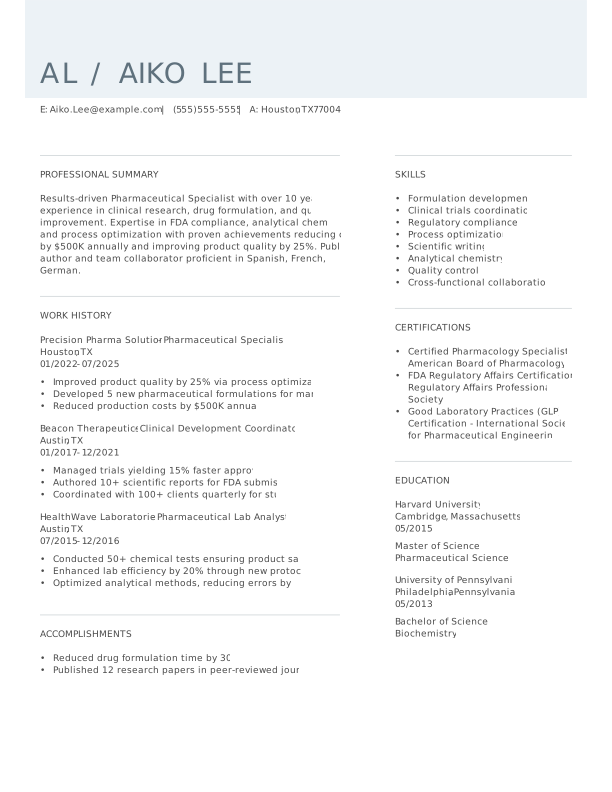
Why this resume works
- Showcases impressive accomplishments: Through achievements like boosting product quality by 25%, the applicant reflects senior-level performance.
- Emphasizes leadership skills: Leading clinical trials that achieved approvals 15% faster exemplifies the applicant’s leadership skills and initiative.
- Lists relevant certifications: Certifications like FDA Regulatory Affairs and Good Laboratory Practices show expertise and ongoing learning.
Explore Even More Pharmaceutical Resumes
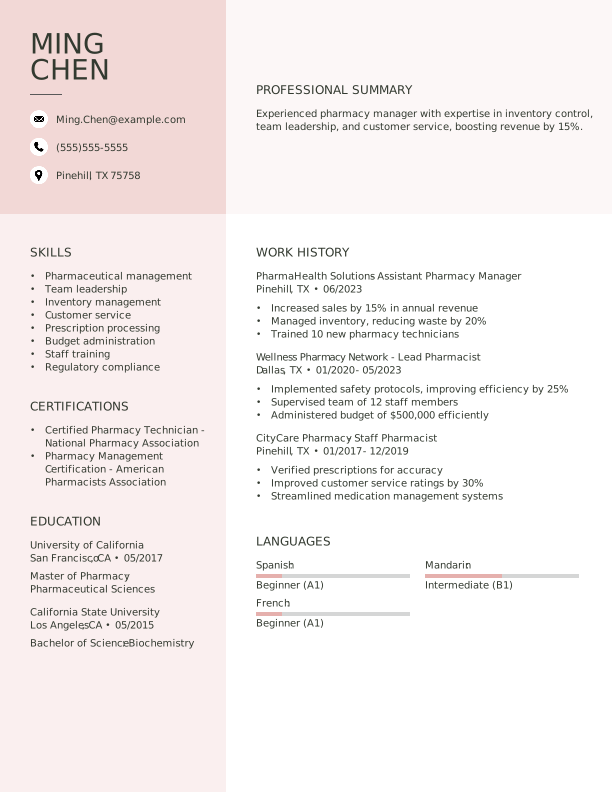
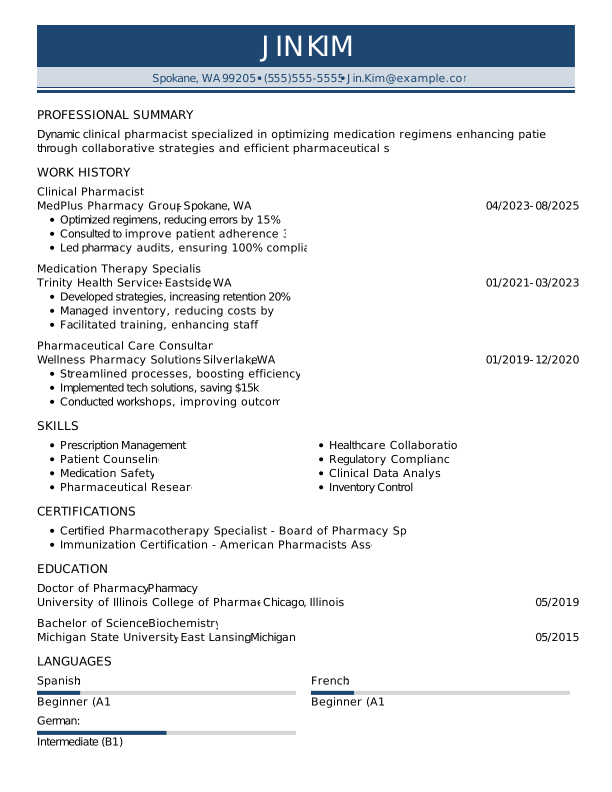
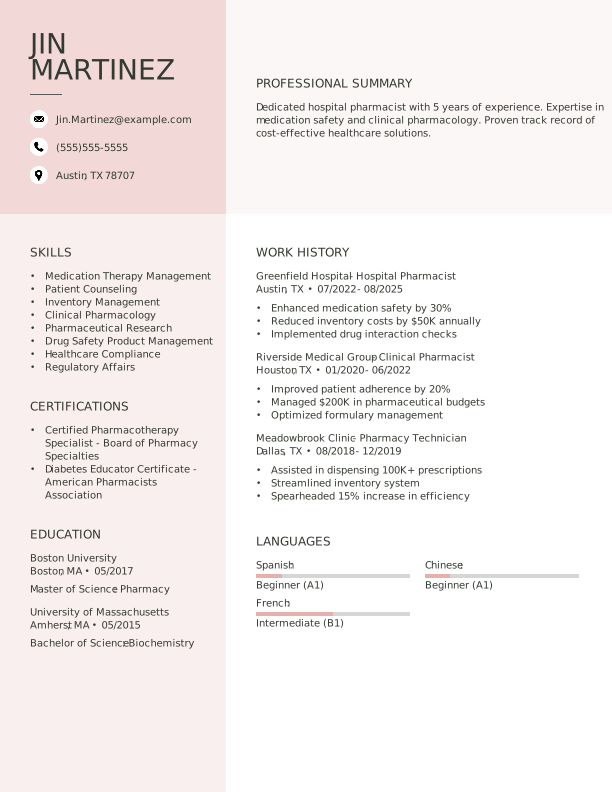
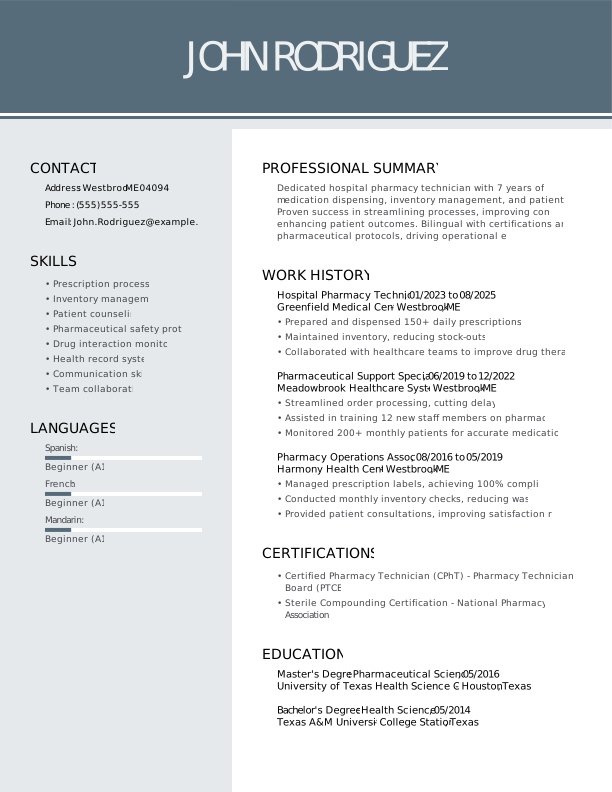
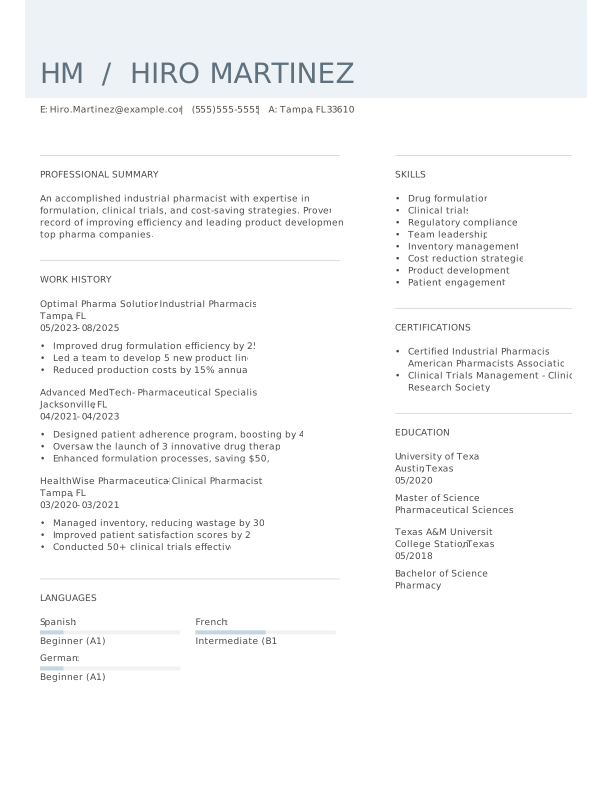
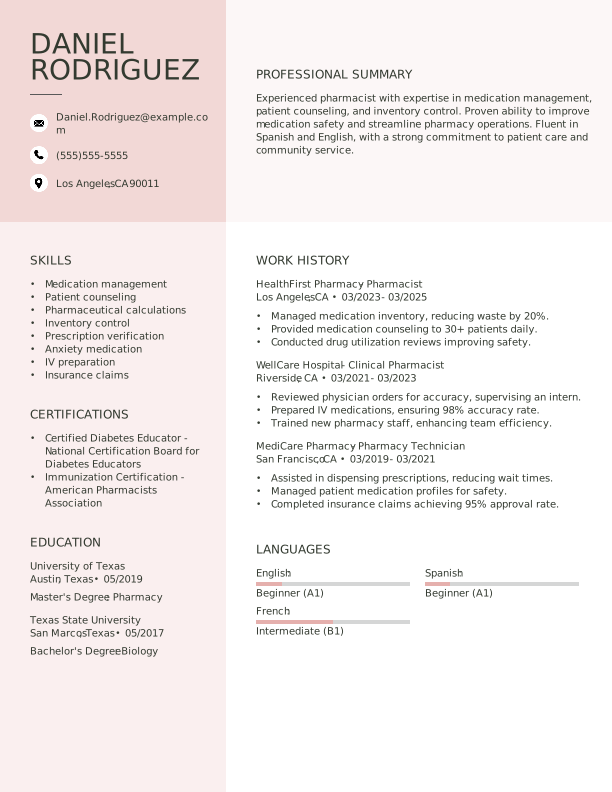
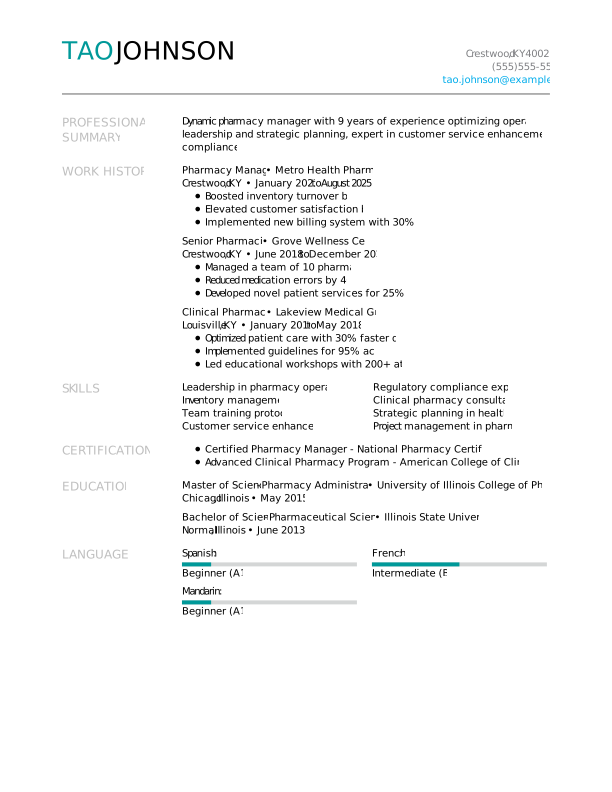
Pharmaceutical Resume Template (Text Version)
This is one of many options. Grab the template below, or visit our resume templates for a larger selection.
Emma Davis
Westbrook, ME 04099
(555)555-5555
Emma.Davis@example.com
Professional Summary
Pharmaceutical specialist with 9 years of experience in drug sales, clinical research, and patient care optimization. Proven track record in boosting sales and enhancing healthcare practices through data-driven strategies.
Skills
- Pharmaceutical Management
- Clinical Research
- Drug Development
- Regulatory Compliance
- Patient Care Optimization
- Inventory Management
- Staff Training
- Problem Solving
Certifications
- Pharmaceutical Quality Management – American Society for Quality
- Advanced Clinical Trials Management – Clinical Research Society
Education
Master of Science Pharmaceutical Sciences
Johns Hopkins University Baltimore, MD
December 2014
Bachelor of Science Biochemistry
University of California, Berkeley Berkeley, CA
December 2012
Work History
Pharmaceutical Specialist
Innovative Pharma Solutions – Westbrook, ME
June 2022 – July 2025
- Boosted drug sales by 20% through targeted strategies.
- Optimized patient care protocols, reducing errors by 15%.
- Led training sessions, enhancing staff skills by 30%.
Clinical Research Coordinator
Pioneering Health Sciences – Westbrook, ME
January 2017 – May 2022
- Implemented efficient study protocols, cut costs by 25%.
- Managed over 50 clinical trials with excellence.
- Increased patient recruitment by 40% via outreach.
Pharmacy Technician
Comprehensive Care Pharmacy – Westbrook, ME
January 2015 – December 2016
- Streamlined inventory system, saving K annually.
- Enhanced patient interactions, boosting satisfaction.
- Assisted in compounding medications accurately.
Languages
- Spanish – Beginner (A1)
- French – Beginner (A1)
- Mandarin – Beginner (A1)
Browse Resume Examples by Industry
- Aviation
- Banking
- Billing And Collections
- Biology
- Boating
- Business Operations
- Casino
- Chemistry
- Child Care
- Civil Engineering
- Compliance
- Computer Hardware
- Computer Software
- Construction
- Copywriting
- Cosmetology
- Costco
- Culinary
- Customer Service
- Dance
- Data Systems Administration
- Deloitte
- Dentistry
- Driving
- Education
- Electrical
- Electrical Engineering
- Energy
- Engineering
- Entertainment
- Entrepreneur
- Entry Level
- Environmental
- Environmental Science
- Event Planning
- Executive
- Fashion
- Film
- Finance
- Fitness & Nutrition
- Food Service
- Freelancing
- General Laborer
- Goldman Sachs
- Government
- Graphic Design
- Healthcare Support
- Hospitality
- Human Resources
- HVAC
- Industrial Engineering
- Information Technology
- Insurance
- Interior Design
- Inventory Management
- Janitorial
- Landscaping
- Language Services
- Law
- Law Enforcement
- Library
- Logistics
- Maintenance
- Marketing
- McKinsey
- Mechanical Engineering
- Mechanics
- Media And Communication
- Medical
- Mental Health
- Meta
- Metal Work
- Military
- Mining
- Museum
- Music
- Netflix
- Non Profit
- Nursing
- Photography
- Physical Therapy
- Plumbing
- Politics
- Production
- Program Manager
- Project Manager
- Psychology
- Purchasing
- Quality Control
- Real Estate
- Religion
- Retail
- Safety And Security
- Sales
- Sciences
- Shipping
- Social Services
- Special Education
- Sports
- Statistics
- Student
- Teaching
- Team Lead
- Tesla
- Training And Development
- Transportation
- Travel
- Veterinary
- Walgreens
- Walmart
- Web Development
Advice for Writing Your Pharmaceutical Resume
Pharmaceutical careers span research, manufacturing, pharmacy, sales, quality, and other work connected to medicines and patient care. See how to make a resume that presents your industry knowledge and relevant experience clearly.
Highlight Relevant Certifications and Training
Certifications and specialized training are especially valuable in the pharmaceutical field because they highlight your commitment to professional growth and staying current with industry standards.
These credentials demonstrate your knowledge of evolving research methods, regulatory requirements, and technological tools. Consider including certifications such as:
- Certified Pharmaceutical Sales Representative (CPSR)
- Pharmaceutical Development Certification
- Good Manufacturing Practice (GMP) Training
- Clinical Research Certification
- Regulatory Affairs Certification
Adding a dedicated certifications and training section to your resume—placed after education or skills—ensures these qualifications are easy to spot.
By clearly listing your certifications, you show employers that you are proactive about advancing your expertise and well-prepared to meet the demands of the pharmaceutical industry.
Example of a Certifications & Training Section
Certified Pharmaceutical GMP Professional
Issued by: American Society for Quality (ASQ)
Issued 2021
Pharmaceutical Sales Training Program
Issued by: National Association of Pharmaceutical Sales Representatives (NAPSRx)
Completed 2022
Clinical Trials Management Certificate
Issued by: University of California, San Diego Extension
Expires 2024
Regulatory Affairs Certification (RAC)
Issued by: Regulatory Affairs Professionals Society (RAPS)
Issued 2019
Biopharmaceutical Manufacturing Training
Issued by: Biotechnology Innovation Organization (BIO)
Completed 2023
Stuck on your resume? Check out our professional resume examples to get ideas and make your own stand out.
List Your Most Relevant Skills
In the pharmaceutical field, having a mix of technical and soft skills is key. Technical skills might include knowledge of drug formulation, lab techniques, and using specific software for data analysis.
Soft skills like communication and teamwork are also important because working well with others helps in research and development. It’s helpful to have a skills section on your resume where you list both software skills and any artistic abilities that might be useful in your role.
When you’re writing about your work experience, try to include some of these skills in your bullet points. For example, instead of just saying “conducted experiments,” you could say “used analytical software to conduct experiments.” By weaving your skills into your work history, you show employers not just what you know but how you’ve applied it in real-world situations.
For a pharmaceutical position, opt for a resume format that highlights your scientific expertise, clinical experience, and attention to detail.
Write a Strong Professional Summary
A professional summary on a resume serves as an introduction for hiring managers, providing a snapshot of your skills and accomplishments. You can decide whether to use a summary or a resume objective based on your experience level and career goals.
A professional summary is three to four sentences highlighting your experience, skills, and achievements. It’s best for experienced applicants who want to showcase their professional identity and what they bring to the table. This section shows what you’ve accomplished in your career.
On the other hand, resume objectives are statements about your career goals. They work well for entry-level applicants, career changers, or those with gaps in their work history. While a summary focuses on past accomplishments, an objective emphasizes what you aim to contribute in the future.
Next, we’ll provide examples of both summaries and objectives tailored for different industries and experience levels. Whether you’re in pharmaceuticals or another field, these examples will help guide you in crafting an effective resume intro.
Pharmaceutical Resume Summary Examples
Entry-level
Recent pharmacy graduate with a Bachelor of Science in Pharmaceutical Sciences and certified pharmacy technician (CPhT). Experienced in community and hospital pharmacy settings through internships, focusing on medication dispensing and patient counseling. Skilled in using pharmacy management software and eager to contribute to patient care and safety.
Mid-career
Pharmaceutical professional with 7+ years of experience in drug development and regulatory affairs. Proven track record in managing clinical trials, ensuring compliance with FDA regulations, and contributing to successful new drug applications. Known for strong analytical skills, effective teamwork, and commitment to advancing pharmaceutical innovations.
Experienced
Seasoned pharmaceutical executive specializing in strategic planning and product lifecycle management. Over 15 years of leadership experience driving growth initiatives, optimizing supply chain operations, and leading cross-functional teams. Expertise in market analysis, portfolio expansion, and fostering partnerships that improve global reach. Dedicated to impactful decision-making that supports business objectives.
Pharmaceutical Resume Objective Examples
Recent graduate
Detail-oriented and passionate recent Bachelor of Science in pharmaceutical sciences graduate seeking an entry-level role in a pharmaceutical company. Eager to apply academic knowledge and laboratory skills to support research and development initiatives while contributing to innovative healthcare solutions.
Career changer
Dedicated professional transitioning from chemical engineering to the pharmaceutical industry, with a strong background in process optimization and quality control. Looking forward to leveraging analytical skills and scientific acumen in a challenging pharmaceutical environment to improve drug development processes.
Entry-level
Ambitious individual with internship experience in pharmacology labs aiming for an entry-level position within the pharmaceutical sector. Committed to contributing strong analytical abilities and a proactive approach to support research teams in advancing therapeutic treatments.
Our Resume Builder makes it easy to create a polished pharmaceutical resume. You can quickly add your experience, skills, and education while choosing a layout that looks professional.
Showcase Your Accomplishments and Publications
Listing publications, conference presentations, and research accomplishments can significantly boost your resume in the pharmaceutical field. These aspects highlight your expertise, commitment to advancing knowledge, and impact within the scientific community.
They provide clear evidence of your ability to conduct impactful research, communicate findings effectively, and collaborate with peers through professional platforms.
Start by listing peer-reviewed articles, book chapters, and conference papers in an organized format. Include citation details such as journal name, volume, issue, and year while following APA, MLA, or Chicago style guides for consistency.
Be sure to emphasize major awards, grants, or fellowships that support your research reputation. This demonstrates recognition for your work and funding received for important projects.
Also consider adding links to online research profiles like Google Scholar, ResearchGate, or ORCID if relevant. These platforms offer quick access to your complete body of work and give employers insight into the scope of your contributions. By presenting this information clearly on your resume, you’ll leave a strong impression as a skilled and engaged pharmaceutical researcher.
Example of Publications Section
Publications
Conference Presentation: Lopez, R. (2020). “Emerging Trends in Nanomedicine for Targeted Therapy.” Presented at the American Association of Pharmaceutical Scientists (AAPS) Annual Meeting, San Diego, CA.
Smith, J., & Lopez, R. (2023). “Advances in Biologic Drug Development for Autoimmune Disorders.” Journal of Pharmaceutical Sciences, 112(5), 721–734.
Lopez, R., et al. (2022). “Clinical Trial Outcomes of Novel Antiviral Compounds in Phase II Studies.” International Journal of Clinical Pharmacology, 48(3), 210–220.
Smith, J. (2021). “Formulation Strategies for Enhanced Drug Delivery in Oncology.” Pharmaceutical Technology Today, 19(7), 56–62.
Select a polished and well-organized resume template that effectively showcases your skills and qualifications to stand out to hiring managers in your field.
FAQ
Do I need to include a cover letter with my pharmaceutical resume?
Including a cover letter with your pharmaceutical resume is a smart move, as it can help you make a more compelling case for your candidacy. A cover letter lets you highlight your specific interest in the pharmaceutical role and company, expand on relevant experiences, and showcase your expertise in areas like clinical trials or drug development.
For instance, if the company specializes in a therapeutic area you’re passionate about or have experience in, you can elaborate on this connection to demonstrate why you’re an ideal fit.
Consider using tools like our Cover Letter Generator that guide you through crafting an effective cover letter by providing templates and expert content tailored to the pharmaceutical industry. You might also want to explore cover letter examples that align with different roles within pharmaceuticals to get some inspiration for structuring your own.
How long should a pharmaceutical’s resume be?
For a pharmaceutical role, aim for a one-page resume to concisely display your most relevant skills and experiences. Focus on key areas like clinical knowledge, research experience, and familiarity with pharmaceutical regulations.
If you have extensive experience or advanced certifications, extending to a two-page resume is acceptable. Just make sure each piece of information adds value and directly relates to the job you’re applying for. Highlight recent roles and accomplishments that showcase your expertise in medication development or patient care.
Explore our guide on how long a resume should be for more examples and tips tailored to your career stage.
How do you write a pharmaceutical resume with no experience?
If you’re crafting a pharmaceutical resume but lack experience, emphasize your education, skills, and any training that highlights your potential. Here are a few tips on building a resume with no experience:
- Emphasize your educational background: Start with your degree in pharmacy or a related field, including the name of the institution, graduation date, and any honors or special achievements.
- Include internships or volunteer work: Highlight any internships or volunteer experiences that relate to pharmaceuticals. Describe specific tasks you performed that demonstrate relevant skills like research, data analysis, or working in a lab.
- Showcase relevant coursework and projects: List courses and academic projects that are directly related to pharmaceuticals. Detail what you learned and accomplished in these classes.
- Highlight transferable skills: Emphasize skills such as attention to detail, analytical thinking, teamwork, and communication. If you’ve developed these through other jobs or activities, make sure to include them.
Consider looking at example resumes for inspiration and tailor yours to fit the specific requirements of the job you’re applying for.
Rate this article
Pharmaceutical


Jasmine is a certified career coach and recognized expert in job search strategy. She is committed to helping job seekers navigate the job market and succeed in their careers.
More Articles by Jasmine EscaleraShare this page
 Add MyPerfectResume as a preferred source on Google
Add