Table of Contents
Get started with MyPerfectResume today!
- Build a resume on any device
- Pick an ATS-friendly template
- Tailor with AI copy suggestions
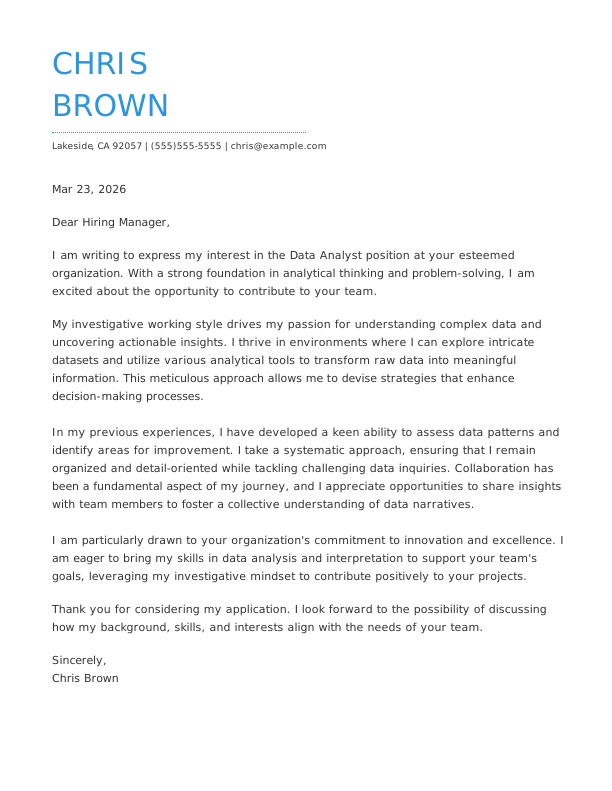
Why this cover letter works
- This cover letter highlights projects that showcase the applicant’s ability to transform complex data into actionable insights. Review what to include in a cover letter, such as any experience with large datasets.
More Data Analyst Cover Letter Examples
Eager to explore how job seekers craft their data analyst cover letters? Check out our collection of cover letter examples that range from entry-level applicants emphasizing their analytical skills to experienced professionals demonstrating their impact on business decisions.
Entry-Level Data Analyst Cover Letter

Why this cover letter works
- The cover letter header above features essential contact information such as name, phone number, and email. Its professional design should align with the resume’s style to create a cohesive and polished presentation.
Experienced Data Analyst Cover Letter

Why this cover letter works
- Using a cover letter outline helped this data analyst connect diverse analytical experiences into a compelling narrative. It illustrated how their past successes in uncovering insights could translate into strong contributions for future data-driven initiatives.
Data Analyst Cover Letter Template (Text Version)
Looking to personalize your data analyst cover letter? Access a text version for easy copying and be sure to check out our range of cover letter templates that cater specifically to data analysis roles for improved effectiveness.
Chris Brown
Lakeside, CA 92057
(555)555-5555
chris@example.com
Mar 23, 2026
Dear Hiring Manager,
I am writing to express my interest in the Data Analyst position at your esteemed organization. With a strong foundation in analytical thinking and problem-solving, I am excited about the opportunity to contribute to your team.
My investigative working style drives my passion for understanding complex data and uncovering actionable insights. I thrive in environments where I can explore intricate datasets and utilize various analytical tools to transform raw data into meaningful information. This meticulous approach allows me to devise strategies that enhance decision-making processes.
In my previous experiences, I have developed a keen ability to assess data patterns and identify areas for improvement. I take a systematic approach, ensuring that I remain organized and detail-oriented while tackling challenging data inquiries. Collaboration has been a fundamental aspect of my journey, and I appreciate opportunities to share insights with team members to foster a collective understanding of data narratives.
I am particularly drawn to your organization’s commitment to innovation and excellence. I am eager to bring my skills in data analysis and interpretation to support your team’s goals, leveraging my investigative mindset to contribute positively to your projects.
Thank you for considering my application. I look forward to the possibility of discussing how my background, skills, and interests align with the needs of your team.
Sincerely,
Chris Brown
Related Cover Letter Examples
How to Write a Data Analyst Cover Letter
Our expert advice on how to write a cover letter will guide you in highlighting your analytical skills, attention to detail, and problem-solving abilities, making your application shine.
Address your cover letter properly
Address your cover letter to a specific person whenever possible. You can find the hiring manager’s name by checking the job posting, company website, or LinkedIn. This demonstrates that you’ve done your research and adds a personal touch that generic greetings lack.
If you’re unsure how to address a cover letter due to unavailable names, avoid using “To Whom It May Concern.” Instead, consider addressing it as “Dear Hiring Manager” or something more tailored, like “Dear Data Analytics Team.” These alternatives show you understand the structure of the organization and are interested in the specific role.
Personalized greetings matter because they reflect attention to detail and genuine interest in the role. As a data analyst, showcasing these traits from the start sets you apart and demonstrates qualities like precision and analytical thinking—skills that are highly valued in this field. A thoughtful greeting can leave a strong first impression with potential employers.
Grab attention with your opening paragraph
When applying for a data analyst position, you want to grab the hiring manager’s attention right away. Since they go through many applications quickly, knowing how to start your cover letter is essential. Focus on leading with your strongest qualification or a unique reason why you’re excited about this role instead of repeating what’s on your resume.
Think about what sets you apart as a job seeker. It could be your experience in big data analysis, skill in SQL, or your knack for transforming complex data into actionable insights. Highlight these strengths and show how they align with the company’s objectives. This connection will help you stand out and demonstrate that you’re not just another applicant but someone who can make a real impact on the team.
Example of a strong opener
As a data analyst with over three years of experience in interpreting complex datasets and driving actionable insights, I am eager to contribute my skills to the analytics team at Tech Innovations. My ability to improve reporting efficiency by 30% has equipped me with a strong foundation in data visualization and statistical analysis. I look forward to using my expertise to support your goals of informed decision-making and strategic growth.
Struggling to find the right words for your data analyst cover letter? Our Cover Letter Generator crafts personalized openings that emphasize your relevant skills and experiences in seconds, helping you stand out from the competition.
Include skills from the job ad
Avoid sending a generic cover letter when applying for data analyst positions. Take the time to carefully study the job posting and align your application with the specific skills and qualifications they are looking for. This attention to detail shows that you understand their needs and significantly improves your chances of passing through automated screening systems.
In your cover letter, focus on two to three key skills mentioned in the job description. Illustrate each skill with concrete examples from your previous data analysis experiences. This targeted approach not only highlights your qualifications but also clearly demonstrates that you’re an ideal fit for this specific role within their organization.
Top skills to list on your cover letter
- Data visualization and interpretation
- Statistical analysis techniques
- SQL database management
- Predictive modeling and forecasting
- Data cleaning and preparation
- Business intelligence tools skill
- Report generation and presentation skills
- Attention to detail in data accuracy
- Problem-solving and analytical thinking
- Cross-functional team collaboration
- Effective communication of findings
- Time management and task prioritization
- Project management methodologies
- Critical thinking for decision support
- Adaptability to new technologies
- Research and trend analysis skills
Use a cover letter template from Google Docs or a Microsoft Word cover letter to save time. These templates help maintain neat formatting, allowing you to focus on customizing your content for each data analyst role.
Show your impact with numbers
In data analysis, numbers speak louder than words. Instead of stating you’re a “skilled analyst,” provide measurable outcomes that illustrate your impact. For example, highlight how you increased data processing efficiency by 30% or reduced report generation time by 25 hours per month.
These specific achievements distinguish you from job seekers who merely describe their responsibilities, showcasing your ability to turn data into actionable insights.
Quantifiable accomplishments demonstrate your potential to deliver results, which is exactly what employers seek in a data analyst. They indicate that you do not just perform tasks but excel in driving improvements and efficiencies. By emphasizing these metrics, you prove not only your analytical skills but also your commitment to contributing positively to the organization’s goals.
Bullet points to include in your cover letter
- Increased data reporting efficiency by 40% within six months through automation of manual processes
- Improved data accuracy by 30% by implementing rigorous validation checks on datasets
- Trained five junior analysts, resulting in a 100% successful project completion rate over one year
- Reduced reporting turnaround time from two weeks to three days, improving decision-making speed for stakeholders
- Delivered insights that contributed to a $500,000 revenue increase for the company over the fiscal year
When applying for data analyst positions, choosing the right cover letter format is important because different layouts can better highlight your quantifiable achievements based on your experience level in the field.
Leave a lasting impression
Your closing paragraph should reinforce your enthusiasm and prompt the hiring manager to take action. Understanding how to end a cover letter involves being direct about your interest while maintaining professionalism.
Thank them for their time, express gratitude for their consideration, and reiterate your excitement about the opportunity. Clearly state your desire to discuss how your data analysis skills can contribute positively to their team, highlighting that you’re eager to bring value to their organization through your expertise.
Example of cover letter closing
Thank you for considering my application for the data analyst position at DataVision Inc. I am thrilled about the possibility of contributing my analytical skills and experience in data-driven decision-making to your team. I believe my background in transforming complex datasets into actionable insights can support DataVision’s mission of delivering top-notch solutions. I look forward to the opportunity to discuss how I can help drive success at your organization. Thank you again, and I hope to hear from you soon.
Tailor your cover letter for specific situations
Navigating a career as a data analyst with a non-traditional background can be an exciting journey. It’s best to highlight your unique experiences directly and show how they contribute to your analytical skills.
Here are a few examples:
- If you’re changing careers, focus on transferable skills. For instance, if you previously worked in marketing, your experience analyzing consumer behavior can translate well into data interpretation for business decisions.
- For those returning to the field after a break, emphasize how you’ve maintained your skills. Mention any online courses or self-study you’ve undertaken and express your renewed passion for using data to drive insights and improvements.
- New graduates should showcase relevant projects or internships. Highlight any coursework in statistics or programming languages, along with experience in related roles, like internships or volunteer work, that demonstrate your analytical capabilities.
FAQ
How long should a data analyst’s cover letter be?
Cover letters for data analyst roles should be one page, typically containing three to four paragraphs. This structure allows you to showcase your most relevant skills and experiences in data analysis without overwhelming the hiring manager.
Understanding how long a cover letter should be is important because it helps you focus on being both concise and engaging. Recruiters spend only moments reviewing each application, so capturing attention quickly by clearly presenting your qualifications relevant to the role is critical.
What’s the difference between a cover letter and a resume?
When applying for data analyst positions, your data analyst resume provides a clear and structured overview of your skills, accomplishments, and work history.
It highlights the “what” of your experience—what you have achieved in previous roles, what technical competencies you possess, and what projects you have worked on. In contrast, your cover letter adds depth to these qualifications by telling your personal story.
The cover letter serves as the “why” and “how.” It expresses your passion for data analysis, explains why you’re a great fit for the specific role, and shares why you’re interested in that particular company.
Understanding the cover letter vs resume distinction allows you to showcase different aspects of your candidacy. This approach improves your application package by integrating factual achievements with personal motivation.
Should I include a cover letter even if it’s not required?
Absolutely! Including a cover letter, even when it’s optional, shows your willingness to go the extra mile. In the data analytics field, hiring managers look for applicants who not only have technical skills but also demonstrate strong problem-solving abilities and an analytical mindset.
A resume may highlight your qualifications, but it often falls short in showcasing your enthusiasm for transforming data into actionable insights.
Imagine this scenario: two equally qualified data analysts apply for the same role, but only one includes a tailored cover letter describing their passion for leveraging data to drive business decisions. Discussions about whether cover letters are necessary suggest that this personal touch could set one job seeker apart from the other.
When in doubt, include a cover letter—you have everything to gain by presenting your unique perspective and commitment to helping organizations thrive through data.
What does a professional cover letter look like?
A professional data analyst cover letter should be clean, organized, and easy to scan at a glance. Use a standard business letter format that includes your contact information at the top, followed by the date and employer’s details.
Choose a professional font like Arial or Times New Roman in 11-12 point size, ensuring standard margins and single spacing for an approachable look.
The layout should have a clear header, a personalized greeting (avoid generic salutations), three to four concise body paragraphs, and a formal closing with your signature. It’s best to maintain plenty of white space for readability since hiring managers often review many applications quickly.
For further guidance on what a cover letter should look like, check our resources that provide visual examples and formatting tips to help you craft an appealing application.
Can ChatGPT write a cover letter?
While you can use ChatGPT to write a cover letter, it may not provide the unique edge you’re looking for. AI tools can assist in brainstorming and overcoming writer’s block, but they often generate content that is generic and lacks a personal touch. Relying too heavily on these tools can leave your application sounding robotic and disconnected from your true experiences.
Hiring managers for data analyst positions are adept at spotting AI-generated letters since they often lack specific insights and genuine enthusiasm for the role. These letters typically miss critical details about your analytical skills or past projects that demonstrate your fit for the position. Instead of depending solely on AI, consider it a starting point to organize your ideas.
Personalize your letter with authentic examples from your work history and explain why you’re passionate about data analysis. Your genuine voice will always resonate more than any automated output.
Rate this article
Data Analyst

Natalia is a Certified Professional Resume Writer (CPRW) and member of the Professional Association of Resume Writers & Career Coaches. Her work focused on helping job seekers navigate the job market and succeed in their careers.
More Articles by Natalia Merced, CPRWShare this page
 Add MyPerfectResume as a preferred source on Google
Add