Table of Contents
Get started with MyPerfectResume today!
- Build a resume on any device
- Pick an ATS-friendly template
- Tailor with AI copy suggestions
Why this resume works
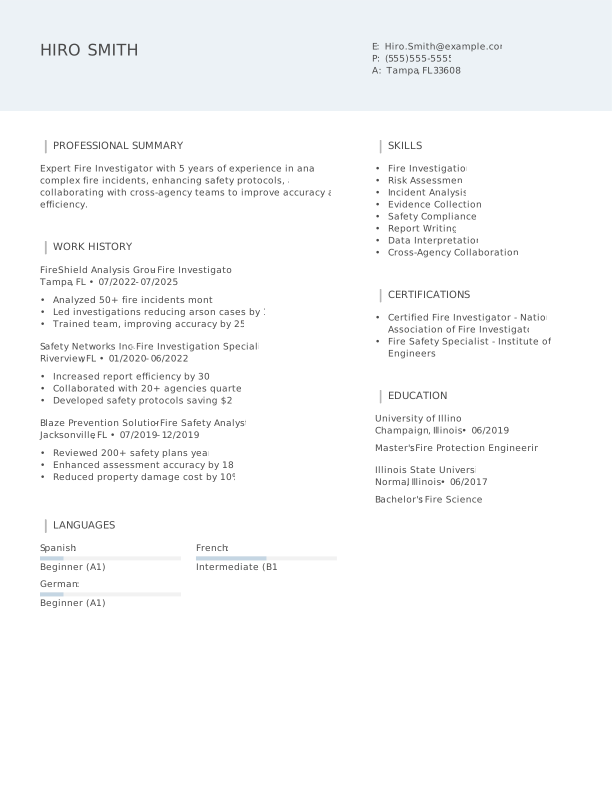
- Quantifies accomplishments: By pulling metrics like reducing arson cases by 15% and improving accuracy by 25%, the applicant’s resume accomplishments showcase tangible impact in fire investigations.
- Showcases career progression: Progressing from fire safety analyst to investigator roles, the applicant’s career trajectory reflects a commitment to increasing responsibility and expertise in fire incident analysis.
- Illustrates problem-solving ability: The applicant’s problem-solving skills shine through innovative solutions like developing protocols saving $20k and reducing false alarms.
More Fire Investigator Resume Examples
Our fire investigator resume examples offer great insights into highlighting your analytical skills, investigation techniques, and report writing. Use these finance resume samples to craft a compelling resume that showcases your expertise in fire scene analysis.
Entry-Level Fire Investigator
Why this resume works
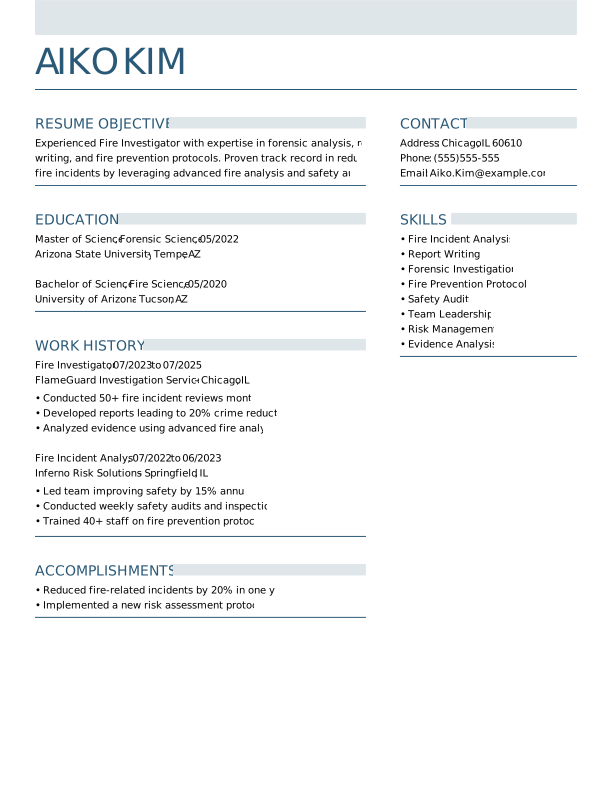
- Effective use of keywords: Strategically incorporating keywords like “fire incident analysis” and “forensic investigation” helps the applicant’s resume pass through applicant tracking systems (ATS), improving visibility for relevant roles.
- Puts skills at the forefront: Using a skills-based resume format showcases skills upfront, such as fire prevention protocols and team leadership, making the applicant’s strengths clear from the start.
- Shows digital literacy: Using advanced fire analysis software exemplifies the applicant’s computer skills critical for modern workplaces.
Mid-Level Fire Investigator
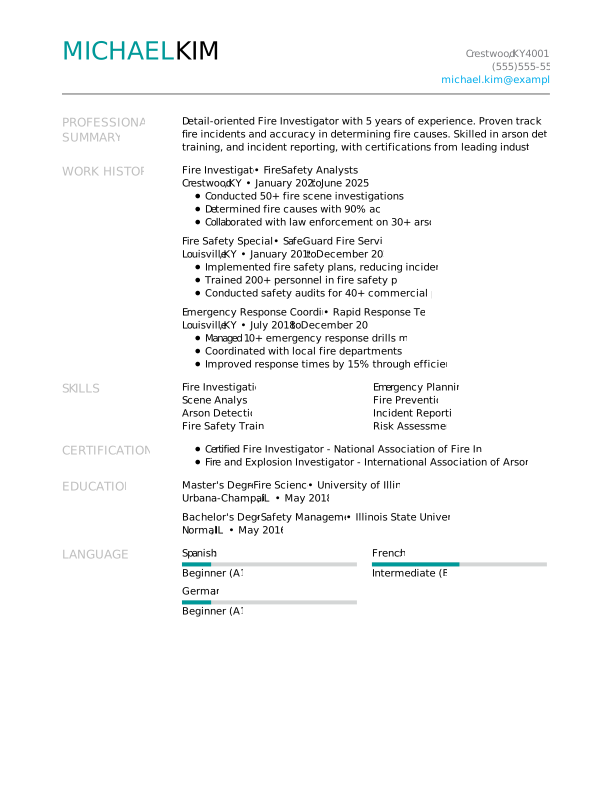
Why this resume works
- Points to measurable outcomes: By achieving a 90% accuracy rate in determining fire causes, the applicant showcases their precise investigative skills and contribution to resolving complex arson cases.
- Displays technical expertise: Holding multiple certifications like Certified Fire Investigator highlights the applicant’s specialized knowledge, ensuring investigatory expertise is backed by industry-recognized credentials.
- Demonstrates language abilities: Knowledge of Spanish, French, and German supports effective language skills for cross-cultural interactions during international investigations and collaborations.
Experienced Fire Investigator
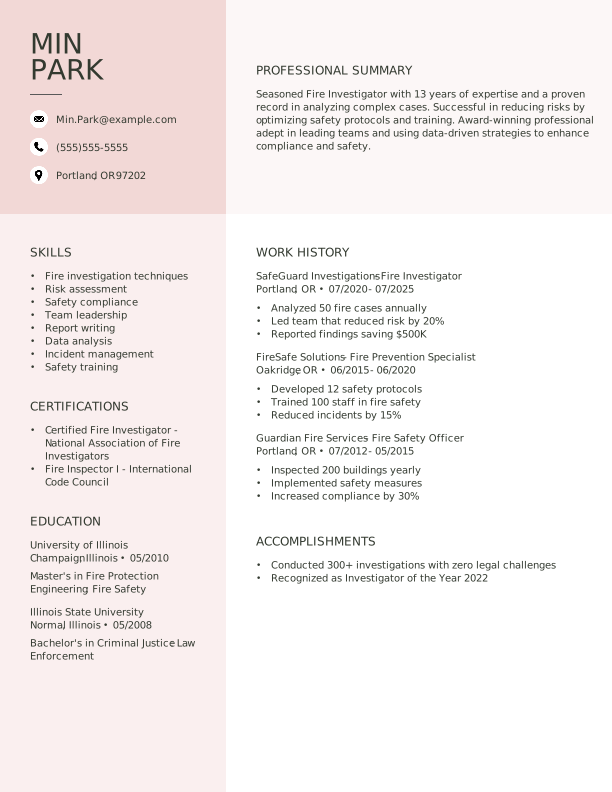
Why this resume works
- Lists relevant certifications: By listing certifications like Certified Fire Investigator, the applicant shows expertise and a commitment to learning.
- Showcases impressive accomplishments: Saving $500K through strategic findings and being named Investigator of the Year are standout accomplishments reflecting high-level performance.
- Focuses on work history: Using a chronological resume, the applicant effectively emphasizes extensive work history, moving from fire safety officer to investigator seamlessly.
Fire Investigator Resume Template (Text Version)
Hiro Smith
Tampa, FL 33608
(555)555-5555
Hiro.Smith@example.com
Professional Summary
Expert Fire Investigator with 5 years of experience in analyzing complex fire incidents, enhancing safety protocols, and collaborating with cross-agency teams to improve accuracy and efficiency.
Work History
Fire Investigator
FireShield Analysis Group – Tampa, FL
July 2022 – July 2025
- Analyzed 50+ fire incidents monthly
- Led investigations reducing arson cases by 15%
- Trained team, improving accuracy by 25%
Fire Investigation Specialist
Safety Networks Inc. – Riverview, FL
January 2020 – June 2022
- Increased report efficiency by 30%
- Collaborated with 20+ agencies quarterly
- Developed safety protocols saving k
Fire Safety Analyst
Blaze Prevention Solutions – Jacksonville, FL
July 2019 – December 2019
- Reviewed 200+ safety plans yearly
- Enhanced assessment accuracy by 18%
- Reduced property damage cost by 10%
Languages
- Spanish – Beginner (A1)
- French – Intermediate (B1)
- German – Beginner (A1)
Skills
- Fire Investigation
- Risk Assessment
- Incident Analysis
- Evidence Collection
- Safety Compliance
- Report Writing
- Data Interpretation
- Cross-Agency Collaboration
Certifications
- Certified Fire Investigator – National Association of Fire Investigators
- Fire Safety Specialist – Institute of Fire Engineers
Education
Master’s Fire Protection Engineering
University of Illinois Champaign, Illinois
June 2019
Bachelor’s Fire Science
Illinois State University Normal, Illinois
June 2017
Related Resume Guides
Advice for Writing Your Fire Investigator Resume
Dive into our guide on how to write a resume for a fire investigator role and discover ways to highlight your ability to solve cases, expertise in fire patterns, and dedication to safety.
Write a strong professional summary
A professional summary on a resume serves as an introduction to hiring managers, offering a quick snapshot of your skills and achievements. It helps you stand out by highlighting what you’ve accomplished in your career.
A professional summary is typically three to four sentences long and showcases your experience, skills, and notable achievements. It’s best for those with substantial work history, like experienced fire investigators, as it highlights your professional identity and the value you bring to the role.
Conversely, a resume objective focuses on your career goals and aspirations. This section is more suited for entry-level applicants, career changers, or those with employment gaps. While summaries emphasize “what I’ve accomplished,” objectives focus on “what I aim to contribute.”
Next, we’ll provide examples of both summaries and objectives tailored to different industries and experience levels, helping you choose the right approach for your fire investigator role.
Fire investigator resume summary examples
Entry-level
Recent graduate with a Bachelor of Science in fire science and certifications in fire investigation and hazardous materials awareness. Familiar with fire behavior analysis, evidence collection techniques, and essential safety protocols. Eager to apply foundational knowledge to investigate fire incidents and contribute to public safety efforts.
Mid-career
Experienced fire investigator with over six years in conducting comprehensive scene examinations and determining cause and origin of fires. Skilled in analyzing burn patterns, preparing detailed investigative reports, and testifying in legal proceedings. Certified Fire Investigator (CFI) with extensive knowledge of NFPA standards and a proven track record of collaborating with law enforcement agencies.
Experienced
Seasoned fire investigator specializing in complex arson cases and large-scale incident investigations. Certified Fire Investigator (CFI) with advanced training in forensic fire analysis, explosion dynamics, and courtroom testimony preparation. Known for leading multidisciplinary teams, mentoring junior investigators, and implementing strategies that have reduced investigation turnaround times by 20%. Committed to advancing community safety through education and expert analysis.
Fire investigator resume objective examples
Recent graduate
Detail-oriented recent fire science graduate seeking a role as a fire investigator to apply academic knowledge and analytical skills in identifying causes of fire incidents. Eager to contribute to public safety by supporting investigations with thorough evidence collection and analysis.
Career changer
Motivated professional transitioning from law enforcement into fire investigation, bringing strong investigative skills and experience in evidence handling. Looking forward to applying these skills in the fire investigation field, contributing to accurate incident assessments and community safety.
Specialized training
Fire science trained applicant with coursework in forensic techniques seeking an entry-level position as a fire investigator. Passionate about using specialized training in scene examination and data interpretation to assist teams in determining fire origins and preventing future occurrences.
Want to make your resume stand out? Use our AI Resume Builder to easily organize your skills and experience as a fire investigator, making it shine for employers.
Include relevant certifications and training
Certifications and specialized training show you have the knowledge and skills needed to analyze fire scenes, determine causes, and follow legal procedures. Listing your credentials helps employers see that you’re qualified for the technical and safety aspects of the job.
A dedicated certifications section makes it easier for hiring managers to find this information quickly.
- Certified Fire Investigator (CFI)
- National Fire Protection Association (NFPA) certifications
- International Association of Arson Investigators (IAAI) certifications
- Hazardous Materials Handling certification
- OSHA safety training
Having these certifications proves your ability to handle complex investigations while following industry standards and legal protocols. They also highlight your commitment to staying updated in the field. Including them can make you stand out as a strong choice for the role.
Example of a certifications section
Certified Fire Investigator (CFI)
Issued by: International Association of Arson Investigators (IAAI)
Issued 2021
Fire Inspector I Certification
Issued by: National Fire Protection Association (NFPA)
Expires 2025
Certified Evidence Collection Technician
Issued by: International Association of Arson Investigators (IAAI)
Issued 2020
Hazardous Materials Awareness and Operations Certification
Issued by: Federal Emergency Management Agency (FEMA)
Expires 2026
Advanced Fire Investigation Training Certification
Issued by: National Association of Fire Investigators (NAFI)
Issued 2019
Take a look at professional resume examples from other job seekers to get ideas on how to effectively showcase your skills and experience.
Showcase your work experience
Highlighting relevant work experience on your resume is key to standing out as a fire investigator. This part helps employers understand how your past roles make you suitable for the position. Begin by listing your work experience in reverse chronological order, starting with your latest job first.
For each job, include your job title, company name, location, and employment dates. Use action words like “developed,” “streamlined,” and “solved” to describe what you did and focus on measurable results. This demonstrates the impact you’ve made.
When detailing your experience as a fire investigator, use straightforward language to explain your tasks and successes. Highlight important skills like analyzing fire scenes, collecting evidence, interviewing witnesses, and preparing reports. Mention any successful cases or investigations where you determined the cause of a fire or helped catch someone responsible for arson.
Including core responsibilities gives employers a clear picture of what you’re capable of in this role. Show them how you’ve used attention to detail when examining evidence or communicating findings clearly in reports and court settings. The more specific you are about what you’ve done and achieved, the easier it is for hiring managers to see why you’re right for their team.
5 fire investigator work history bullet points
- Conducted over 100 thorough fire scene investigations annually, improving safety protocols and reducing re occurrence by 25%.
- Collaborated with law enforcement agencies to identify arson cases, leading to a 15% increase in successful prosecutions.
- Developed comprehensive fire investigation reports used as key evidence in more than 50 court cases, contributing to a 90% conviction rate.
- Trained and mentored junior investigators in advanced investigative techniques, improving team efficiency by 20%.
- Used cutting-edge forensic technology to analyze fire patterns and causes, decreasing investigation time by 30%.
Select a resume format that clearly highlights investigative skills, fire safety knowledge, and experience in evidence analysis.
Match your resume with the job description
Tailoring resumes to job descriptions is key because it helps job seekers stand out and ensures their applications make it through applicant tracking systems (ATS). ATS software scans resumes for specific keywords and phrases from job postings, so a generic resume might never get seen by human eyes.
It’s important to customize your resume by matching your skills with the job description to increase your chances of moving forward in the hiring process.
An ATS-friendly resume includes keywords and phrases that match the skills, qualifications, and responsibilities highlighted in the job posting. By aligning your experience with these terms, you boost your chances of being noticed by hiring managers once your resume passes through automated systems.
To identify keywords from a fire investigator job posting, focus on recurring skills or duties like “fire scene analysis,” “report preparation,” or “evidence collection.” Pay attention to certifications such as “Certified Fire Investigator” or tools mentioned repeatedly. Using exact phrases from the listing ensures relevance and boosts compatibility with ATS filters.
Weave these terms naturally into your resume content by incorporating them into achievements or responsibilities. For instance, change “Investigated incidents” to “Conducted fire scene analysis to determine causes.” Similarly, rephrase tasks like “Prepared reports” into “Drafted detailed investigative reports for legal proceedings.”
Targeted resumes improve both ATS compatibility and appeal to employers by directly showcasing how your skills align with their needs. A tailored approach puts you one step closer to landing the role.
Make your resume shine! Our ATS Score Checker reviews your resume quickly and offers tips to help you stand out to hiring managers.
FAQ
Do I need to include a cover letter with my fire investigator resume?
Yes, including a cover letter with your fire investigator resume can make a positive impact on your application.
A cover letter gives you the chance to express your genuine interest in fire investigation specifically and highlight any unique skills or experiences that make you an ideal applicant.
For instance, if you’ve worked on particular types of investigations, such as arson cases or electrical fires, this is the place to emphasize that expertise.
Consider mentioning any relevant certifications or specialized training you have received that elevate your qualifications for the role.
Additionally, using resources like Cover Letter Generator can help craft a compelling letter tailored to the job you’re applying for.
For more inspiration, check out our cover letter examples.
How long should a fire investigator’s resume be?
For a fire investigator, aim for a concise one-page resume that showcases your skills in investigative techniques, fire safety codes, and determining fire origins. This keeps your application focused and engaging.
If you have extensive experience or specialized certifications, like in forensic investigation or arson detection, consider a two-page resume. Just make sure every detail is relevant and highlights recent accomplishments and specific expertise to solve complex cases.
Check out our guide on how long a resume should be for examples and tips on finding the ideal length for your career stage.
How do you write a fire investigator resume with no experience?
When creating a fire investigator resume without direct experience, emphasize your education, relevant skills, and any related experiences that highlight your potential. Follow these tips to write a resume with no experience:
- Emphasize education: Highlight any degrees or certifications related to fire science, criminal justice, or forensic investigation. Include details like the institution name, graduation date, and any coursework relevant to fire investigation.
- Showcase transferable skills: Identify skills that are important for a fire investigator role such as analytical thinking, attention to detail, and problem-solving abilities. If you’ve done volunteer work or internships where these skills were used, be sure to mention them.
- Include related experiences: If you’ve worked in roles involving safety inspections or security services, detail these experiences by describing tasks that relate to investigation processes. Participation in training exercises or seminars focused on emergency response can also be valuable.
Rate this article
Fire Investigator


Elizabeth is a Certified Professional Resume Writer (CPRW) and a member of the Professional Association of Resume Writers & Career Coaches. She is committed to helping job seekers navigate the job market and succeed in their careers.
More Articles by Elizabeth Muenzen, CPRWShare this page
 Add MyPerfectResume as a preferred source on Google
Add