Table of Contents
Get started with MyPerfectResume today!
- Build a resume on any device
- Pick an ATS-friendly template
- Tailor with AI copy suggestions
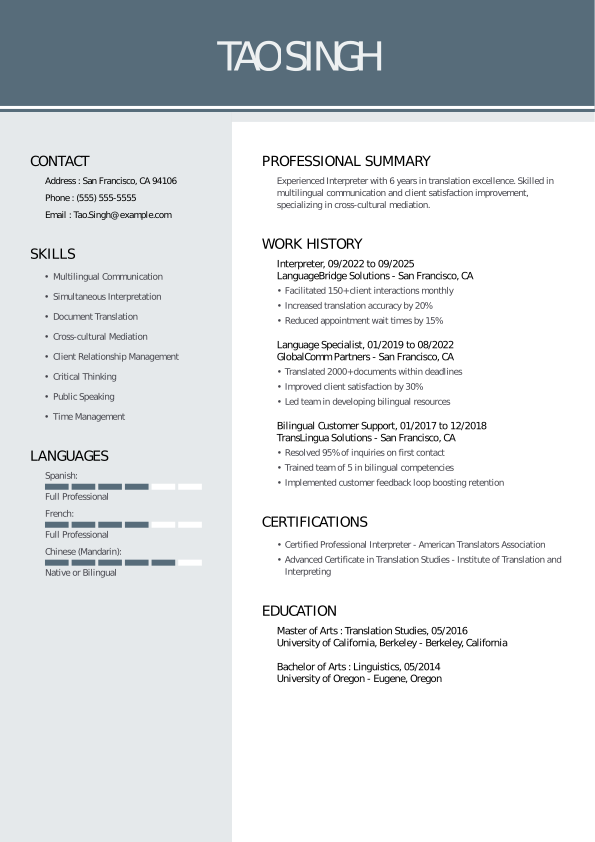
Why this resume works
- Quantifies accomplishments: The applicant’s measurable accomplishments, such as increasing translation accuracy by 20% and reducing wait times by 15%, showcase their significant impact.
- Highlights industry-specific skills: Industry-specific skills like multilingual communication and simultaneous interpretation are highlighted, reflecting the applicant’s expertise in language services across various roles.
- Showcases career progression: Progressing from bilingual customer support to interpreter demonstrates growing responsibility and expertise, with achievements like leading a team to develop bilingual resources.
More Interpreter Resume Examples
Language pairs, certifications, and interpreting mode can quickly clarify a language services background. Compare the examples below, then browse our language services resume examples collection.
Entry-Level Interpreter
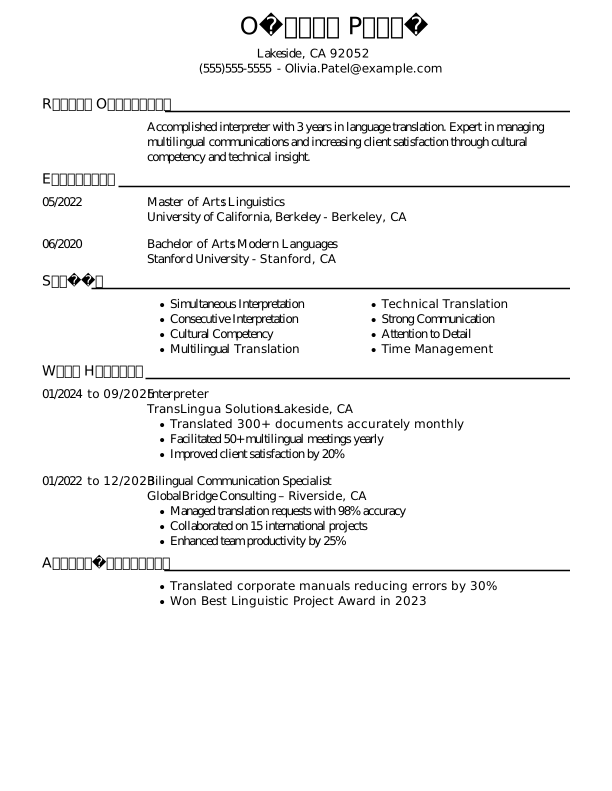
Why this resume works
- Centers on academic background: The applicant’s educational journey from Stanford to UC Berkeley builds a strong foundation in linguistics, showcasing early academic excellence and dedication to language mastery.
- Shows digital literacy: By engaging with modern translation tools, the applicant demonstrates computer skills that align with today’s digital workplace demands.
- Effective use of keywords: Strategically using role-specific keywords, the applicant ensures their resume effectively navigates through applicant tracking systems.
Mid-Level Interpreter
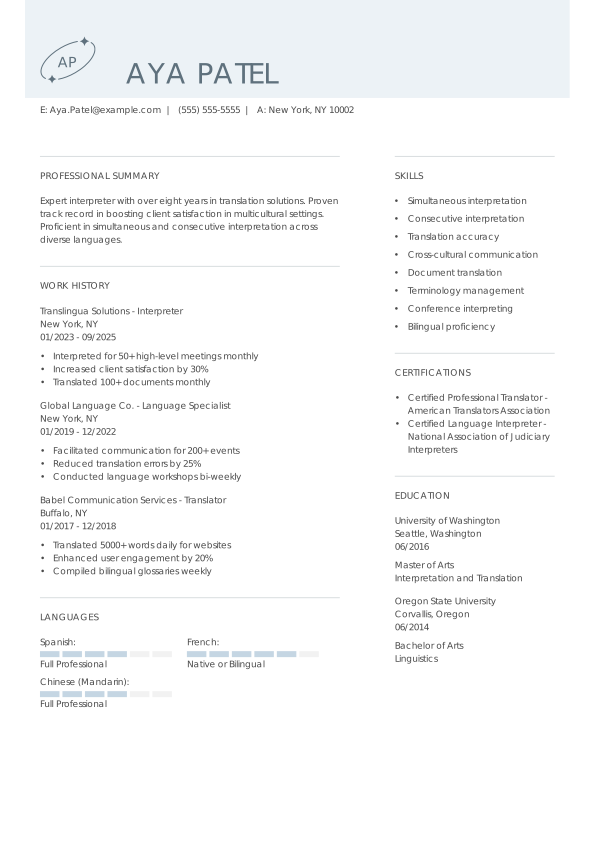
Why this resume works
- Demonstrates language abilities: By interpreting high-level meetings and translating documents in multiple languages, the applicant’s language skills facilitate seamless cross-cultural communication and international collaboration.
- Includes a mix of soft and hard skills: Combining technical translation accuracy with interpersonal skills like client satisfaction, the applicant offers a balanced skill set for effective language solutions.
- Displays technical expertise: The applicant’s certifications as a professional translator and language interpreter speak to their specialized expertise essential for delivering high-quality multilingual services.
Experienced Interpreter
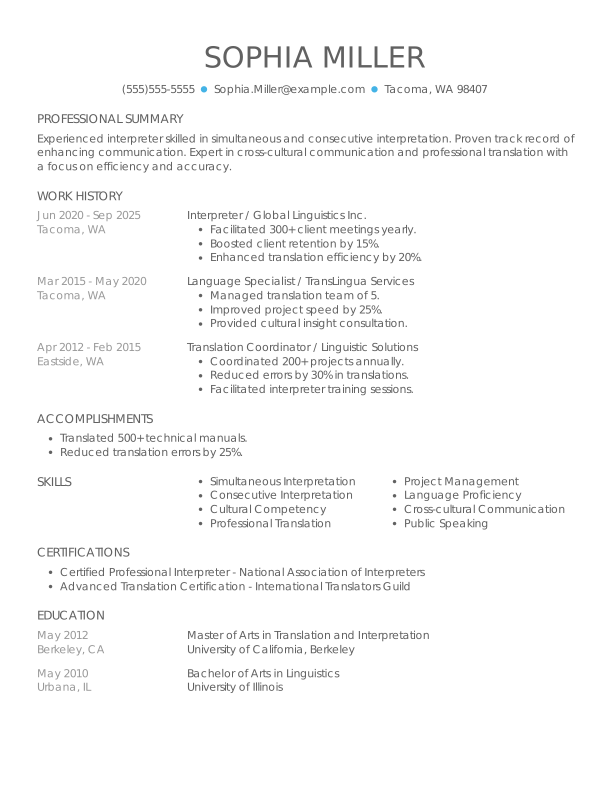
Why this resume works
- Focuses on work history: The chronological resume format paints a cohesive career journey showcasing growth and expertise through progressively complex roles.
- Showcases impressive accomplishments: The applicant’s accomplishments, such as boosting client retention by 15% highlight compelling contributions, reflect senior-level performance in maintaining key business relationships.
- Sections are well-organized: Headers and bullet points transform the resume into an easy-to-scan document, allowing hiring managers to easily pinpoint experience and achievements in each section.
Interpreter Resume Template (Text Version)
Copy the text below to get started, or choose a ready-made resume template.
Tao Singh
San Francisco, CA 94106
(555)555-5555
Tao.Singh@example.com
Skills
- Multilingual Communication
- Simultaneous Interpretation
- Document Translation
- Cross-cultural Mediation
- Client Relationship Management
- Critical Thinking
- Public Speaking
- Time Management
Languages
- Spanish – Beginner (A1)
- French – Beginner (A1)
- Mandarin – Beginner (A1)
Professional Summary
Experienced Interpreter with 6 years in translation excellence. Skilled in multilingual communication and client satisfaction improvement, specializing in cross-cultural mediation.
Work History
Interpreter
LanguageBridge Solutions – San Francisco, CA
September 2022 – September 2025
- Facilitated 150+ client interactions monthly
- Increased translation accuracy by 20%
- Reduced appointment wait times by 15%
Language Specialist
GlobalComm Partners – San Francisco, CA
January 2019 – August 2022
- Translated 2000+ documents within deadlines
- Improved client satisfaction by 30%
- Led team in developing bilingual resources
Bilingual Customer Support
TransLingua Solutions – San Francisco, CA
January 2017 – December 2018
- Resolved 95% of inquiries on first contact
- Trained team of 5 in bilingual competencies
- Implemented customer feedback loop boosting retention
Certifications
- Certified Professional Interpreter – American Translators Association
- Advanced Certificate in Translation Studies – Institute of Translation and Interpreting
Education
Master of Arts Translation Studies
University of California, Berkeley Berkeley, California
May 2016
Bachelor of Arts Linguistics
University of Oregon Eugene, Oregon
May 2014
Related Resume Guides
Advice for Writing Your Interpreter Resume
Interpretation depends on more than fluency; it also requires accurate communication across conversations, meetings, appointments, or specialized settings. Get tips on highlighting language skills on a resume while presenting your interpretation experience clearly.
Write a Strong Professional Summary
A professional summary on a resume serves as an introduction to hiring managers, providing a snapshot of your skills and accomplishments. When crafting your resume, you’ll need to decide between including this section and a resume objective.
The professional summary is ideal for experienced individuals, offering three to four sentences that showcase work history, skills, and achievements. It’s designed to highlight your professional identity and the value you bring to a potential employer.
On the other hand, resume objectives are typically used by entry-level job seekers, those changing careers, or people with employment gaps. A resume objective focuses on career goals and what you aim to contribute rather than past achievements. Think of it as “what I aim to contribute” versus “what I’ve accomplished.”
Now let’s look at examples of both summaries and objectives tailored for various industries and levels of experience. See our library of resume examples for additional inspiration.
Interpreter Resume Summary Examples
Entry-level
Recent graduate with a bachelor’s degree in linguistics and a certification in medical interpretation. Fluent in English and Spanish, with foundational skills in consecutive and simultaneous interpretation. Experienced in volunteer roles supporting community events and passionate about breaking language barriers to improve communication.
Mid-career
Professional interpreter with 6+ years of experience specializing in legal and business settings. Skilled in facilitating clear communication during depositions, contract negotiations, and client meetings. Certified by the American Translators Association (ATA) and recognized for building trust between diverse parties through cultural sensitivity and accuracy.
Experienced
Seasoned interpreter with over 15 years of expertise across healthcare, conference, and diplomatic environments. Fluent in Mandarin, French, and English, holding advanced certifications in simultaneous interpretation. Proven track record of managing high-stakes multilingual communications while mentoring junior interpreters to elevate team performance.
Interpreter Resume Objective Examples
Recent graduate
Dedicated recent graduate with formal training in interpretation and linguistic studies, eager to apply language skills and cultural knowledge to facilitate effective communication in diverse settings. Passionate about bridging language barriers and fostering understanding across communities.
Career changer
Motivated professional transitioning into the field of interpretation, bringing transferable skills in active listening, problem-solving, and cross-cultural collaboration developed through previous roles. Looking forward to contributing to teams that value clear communication and mutual respect.
Entry-level applicant
Aspiring interpreter with strong academic grounding in multilingual studies and a keen interest in supporting global outreach initiatives. Committed to honing practical interpretation skills while promoting seamless interactions between individuals from varied backgrounds.
Try our Resume Builder to create a clear and organized resume quickly. It offers easy-to-use templates that highlight your skills as an interpreter.
Include Relevant Certifications and Training
Listing certifications and training is important for an interpreter because it shows you have the skills and knowledge needed for the job. Certifications also show that you are serious about your career and have taken steps to improve your abilities. In fields like interpreting, having specialized training can make you more attractive to employers. Here are a few examples:
- Certified Medical Interpreter (CMI)
- Certified Healthcare Interpreter (CHI)
- Court Interpreter Certification
- American Sign Language (ASL) Certification
- National Association of Judiciary Interpreters and Translators (NAJIT) Certification
Creating a dedicated certifications section on your resume is a good way to highlight these important credentials. This can help set you apart from other applicants and show that you are well-prepared for the role of an interpreter.
Example of a Certifications Section
Certified Healthcare Interpreter (CHI)
Issued by: Certification Commission for Healthcare Interpreters (CCHI)
Issued 2022
Court Interpreter Certification
Issued by: National Center for State Courts (NCSC)
Expires 2025
ATA Certified Translator
Issued by: American Translators Association (ATA)
Issued 2021
Diploma in Translation
Issued by: Chartered Institute of Linguists (CIOL)
Expires 2024
Choose a polished and well-organized resume template that effectively showcases your skills and qualifications to stand out to hiring managers in your field.
Showcase Your Work Experience
Showcasing work experience on a resume is important because it helps employers see how your background fits the job you’re applying for. As an interpreter, listing your past jobs demonstrates you have the skills needed to succeed in this role.
To format professional details effectively, start with your most recent position and work backwards. Include key information such as the job title, employer name, location, and employment dates.
Use clear and action-oriented language when describing each role. For instance, instead of writing “responsible for translating documents,” say “translated legal documents from Spanish to English.” This approach makes your resume more engaging by emphasizing specific accomplishments.
Whenever possible, highlight measurable results like “improved communication efficiency by 30% through accurate translations” to show tangible contributions. Incorporate core responsibilities that align with interpreter skills, such as translating spoken language during meetings or conferences and providing language support in medical settings.
Additionally, mention assisting with written translations for business documents to give employers a better understanding of how you’ve applied these abilities before. This comprehensive overview ensures they can clearly envision your capacity to handle similar tasks in their organization.
5 Interpreter Work History Bullet Points
- Translated written and spoken communications in real-time for meetings, conferences, and legal proceedings, resulting in a 98% satisfaction rate from clients
- Provided interpretation services for over 200 medical appointments annually, improving patient understanding and outcomes by 40%
- Facilitated communication between non-English speaking clients and service providers, improving service delivery efficiency by 25%
- Trained new interpreters on industry standards and best practices, increasing team productivity by 30%
- Coordinated with multidisciplinary teams to ensure accurate information transfer, reducing miscommunication issues by 50%
For interpreters, choose a resume format that highlights your language skills, certifications, and ability to work in diverse settings.
Match Your Resume With the Job Description
Tailoring resumes to job descriptions is essential because it helps job seekers stand out to employers and pass through applicant tracking systems (ATS). ATS-friendly resumes are designed to ensure your application gets noticed by incorporating keywords and phrases directly from job postings, helping your resume rank higher in the system.
An effective way to create an ATS-friendly resume is by aligning its content with your skills and experience. By doing so, you increase the likelihood of grabbing a hiring manager’s attention as your application moves smoothly through ATS filters and reaches their desk.
To identify keywords from job postings, focus on repeated mentions of skills, responsibilities, or qualifications. For instance, an interpreter might find terms like “cultural competency,” “language translation,” or “simultaneous interpretation.”
Incorporate these terms naturally within the text. Instead of writing “Translated documents,” for example, you could phrase it as “Provided language translation services for various documents.” This not only makes your resume more tailored but also ensures it resonates with both ATS algorithms and human reviewers.
When you customize your resume for each position, you’re giving yourself an edge over other applicants. Tailoring demonstrates that you’ve taken the time to align with what employers need, increasing your chances of landing an interview.
Quickly find and fix over 30 resume issues with our ATS Score Checker. It helps you boost your resume’s score by giving smart tips on layout, keywords, and overall content.
Salary Insights for Interpreters
Understanding salary data can help you make informed decisions about your career path and negotiation strategy. Explore key insights below to guide your research.
Top 10 Highest-Paying States for Interpreters
Interpreters earn varying salaries across the United States, with a national average of $60,383. The table below highlights the states where interpreters command the highest compensation.
Our salary information comes from the U.S. Bureau of Labor Statistics’ Occupational Employment and Wage Statistics survey. This official government data provides the most comprehensive and reliable salary information for interpreters across all 50 states and the District of Columbia. The figures presented here reflect the May 2025 dataset, which is the most recent available as of this publication.
| State | Average Salary |
|---|---|
| District of Columbia | $88,370 |
| New York | $86,810 |
| Maryland | $84,710 |
| Virginia | $80,500 |
| Vermont | $77,100 |
| California | $76,490 |
| Washington | $72,720 |
| Massachusetts | $70,100 |
| Minnesota | $68,600 |
| Hawaii | $67,410 |
FAQ
Do I need to include a cover letter with my interpreter resume?
Yes, including a cover letter with your interpreter resume can improve your application and increase interview opportunities.
A cover letter gives you the chance to highlight your language skills, cultural knowledge, and specific interpreting experiences that align with the job you’re applying for.
For instance, if the organization focuses on legal or medical interpretation, you can express your interest or experience in those fields.
Consider using our Cover Letter Generator to efficiently craft a personalized cover letter or start from scratch with expert guidance tailored to interpreters.
Additionally, reviewing cover letter examples can provide inspiration and clarity on how to effectively present your qualifications for an interpreter role.
How long should an interpreter’s resume be?
For an interpreter, a one-page resume is often sufficient, especially if you’re early in your career or have limited experience. This format allows you to highlight key skills like language skills, cultural knowledge, and relevant education succinctly.
If you’ve accumulated extensive experience or possess specialized certifications and projects that set you apart, a two-page resume might be more appropriate. Just ensure each section remains focused on interpreting roles, advanced language skills, and significant achievements.
Consider exploring our guide on how long a resume should be for additional insights and examples tailored to various career stages.
How do you write an interpreter resume with no experience?
Crafting a resume with no experience can still effectively showcase your potential by emphasizing skills and education relevant to the position, focusing on how these attributes align with the job requirements. Here are a few tips to help you get started:
- Highlight your language skills: List the languages you speak fluently, and if possible, include any certifications or tests you’ve completed to demonstrate your competency.
- Focus on education: Mention your degree, relevant coursework, and any training programs related to interpretation or translation that you’ve completed.
- Include volunteer work or internships: If you’ve volunteered as an interpreter at community events or interned in a related role, detail these experiences and what you learned from them.
- Showcase transferable skills: Emphasize abilities such as communication, cultural awareness, attention to detail, and problem-solving. These are important for interpreters even if you haven’t worked professionally yet.
- Add a strong objective statement: Write a brief summary at the top of your resume explaining your passion for interpreting and how your skills make you a suitable applicant.
Consider volunteering at community events or organizations needing interpreters to gain practical experience. Explore our guide on creating a resume with no experience for more strategies tailored to beginners.
Rate this article
Interpreter


Elizabeth is a Certified Professional Resume Writer (CPRW) and a member of the Professional Association of Resume Writers & Career Coaches. She is committed to helping job seekers navigate the job market and succeed in their careers.
More Articles by Elizabeth Muenzen, CPRWShare this page
 Add MyPerfectResume as a preferred source on Google
Add