Table of Contents
Get started with MyPerfectResume today!
- Build a resume on any device
- Pick an ATS-friendly template
- Tailor with AI copy suggestions
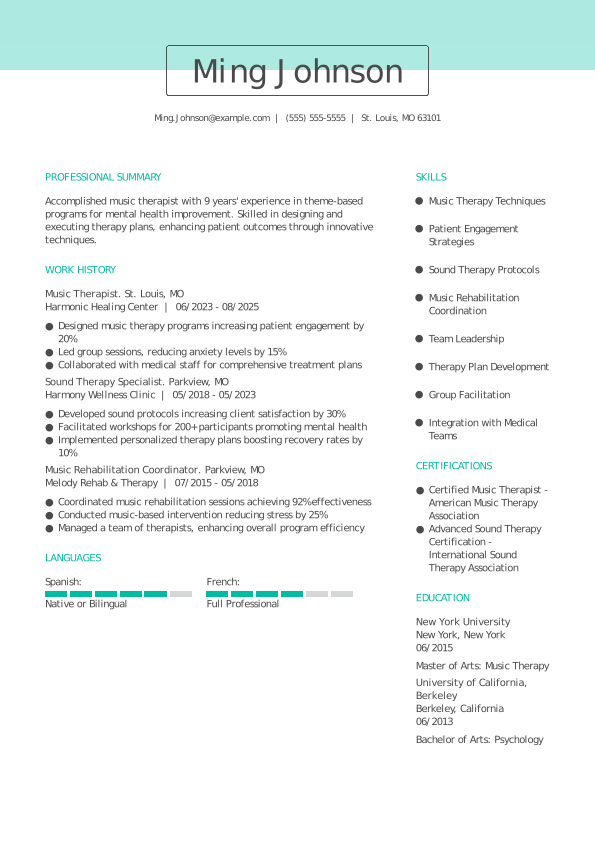
Why this resume works
- Quantifies accomplishments: By showcasing measurable accomplishments like a 20% increase in patient engagement, the applicant clearly communicates their impact and value in improving therapy outcomes.
- Uses action-oriented language: Using action verbs such as “designed” and “implemented” effectively conveys initiative and effectiveness.
- Illustrates problem-solving ability: Creating customized therapy plans that boost recovery rates by 10% illustrates problem-solving skills through innovative solutions tailored to client needs.
More Music Therapist Resume Examples
Explore our music therapist resume examples to effectively highlight your therapeutic skills and relevant experience. These mental health resume samples will guide you in crafting a compelling resume for various music therapy roles.
Entry-Level Music Therapist
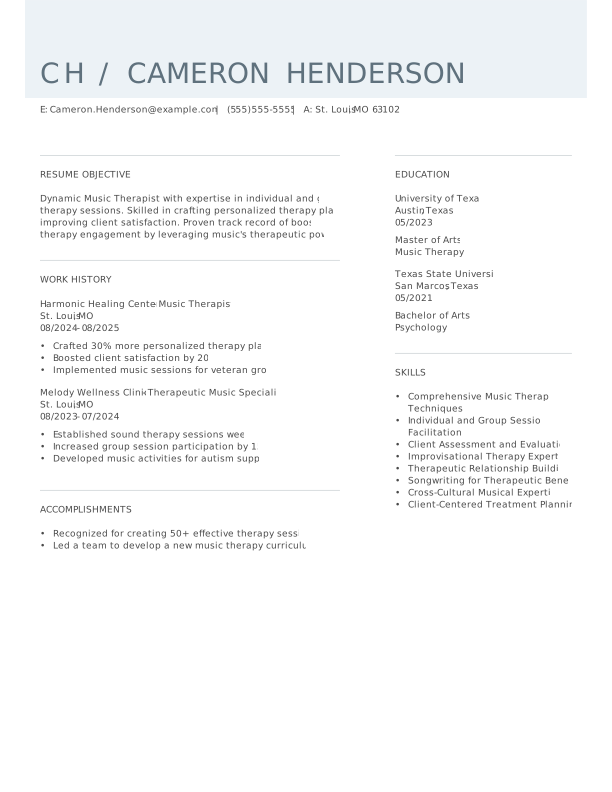
Why this resume works
- Centers on academic background: Emphasizing academic excellence through degrees in music therapy and psychology, the applicant lays a solid foundation for early-career achievements and professional growth.
- Effective use of keywords: Strategic use of role-specific keywords like “therapy plans” and “client satisfaction” optimizes the resume for applicant tracking systems (ATS).
- Puts skills at the forefront: The skills-based resume format prioritizes skills such as session facilitation and therapeutic relationship building, ideal for entry-level roles.
Mid-Level Music Therapist
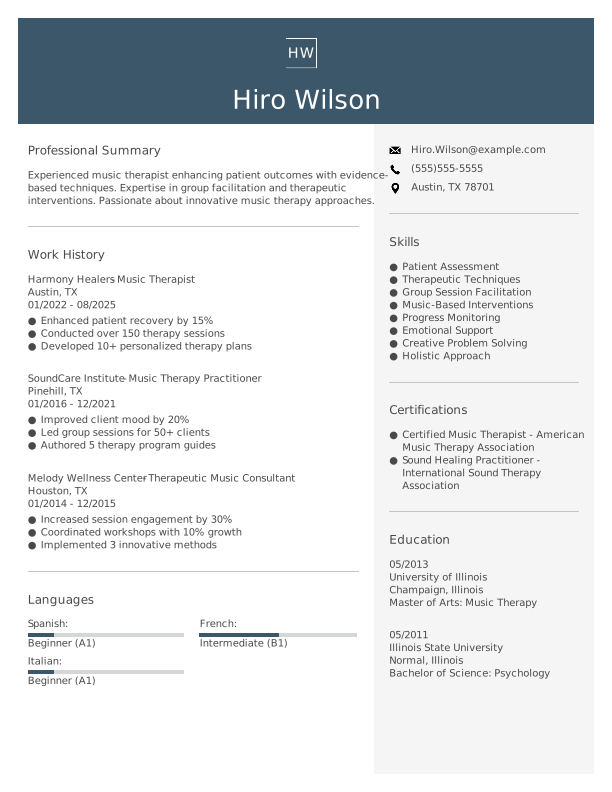
Why this resume works
- Points to measurable outcomes: With a 15% boost in patient recovery and crafting over 10 personalized therapy plans, the applicant’s impact is clearly quantifiable and indicative of their effectiveness.
- Demonstrates language abilities: Language skills in Spanish, French, and Italian enrich cross-cultural communication and facilitate diverse client interactions.
- Includes a mix of soft and hard skills: Balancing technical prowess with empathy, mixing therapeutic techniques and interpersonal skills showcases a well-rounded approach to client care.
Experienced Music Therapist
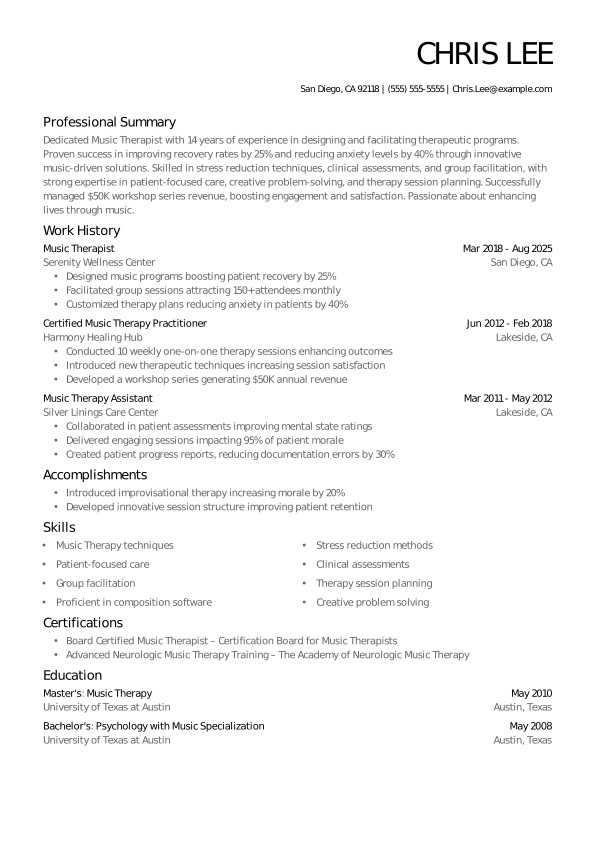
Why this resume works
- Showcases impressive accomplishments: By showcasing outcomes like a 25% recovery improvement and a $50K revenue boost, the applicant’s accomplishments reveal a clear focus on measurable impact.
- Lists relevant certifications: Listing certifications, such as Board Certified Music Therapist and Advanced Neurologic Music Therapy Training, positions the applicant as highly skilled and committed to continuous growth in their field.
- Emphasizes leadership skills: Leading initiatives like group sessions with 150+ attendees monthly reflects strong leadership skills, particularly in managing large-scale engagement and fostering community involvement.
Music Therapist Resume Template (Text Version)
Use the template below. For a larger selection, browse our resume templates.
Ming Johnson
St. Louis, MO 63101
(555)555-5555
Ming.Johnson@example.com
Professional Summary
Accomplished music therapist with 9 years’ experience in theme-based programs for mental health improvement. Skilled in designing and executing therapy plans, enhancing patient outcomes through innovative techniques.
Work History
Music Therapist
Harmonic Healing Center – St. Louis, MO
June 2023 – August 2025
- Designed music therapy programs increasing patient engagement by 20%
- Led group sessions, reducing anxiety levels by 15%
- Collaborated with medical staff for comprehensive treatment plans
Sound Therapy Specialist
Harmony Wellness Clinic – Parkview, MO
May 2018 – May 2023
- Developed sound protocols increasing client satisfaction by 30%
- Facilitated workshops for 200+ participants promoting mental health
- Implemented personalized therapy plans boosting recovery rates by 10%
Music Rehabilitation Coordinator
Melody Rehab & Therapy – Parkview, MO
July 2015 – May 2018
- Coordinated music rehabilitation sessions achieving 92% effectiveness
- Conducted music-based intervention reducing stress by 25%
- Managed a team of therapists, enhancing overall program efficiency
Skills
- Music Therapy Techniques
- Patient Engagement Strategies
- Sound Therapy Protocols
- Music Rehabilitation Coordination
- Team Leadership
- Therapy Plan Development
- Group Facilitation
- Integration with Medical Teams
Certifications
- Certified Music Therapist – American Music Therapy Association
- Advanced Sound Therapy Certification – International Sound Therapy Association
Education
Master of Arts Music Therapy
New York University New York, New York
June 2015
Bachelor of Arts Psychology
University of California, Berkeley Berkeley, California
June 2013
Languages
- Spanish – Bilingual or Proficient (C2)
- French – Intermediate (B1)
- German – Beginner (A1)
Related Resume Guides
Advice for Writing Your Music Therapist Resume
Explore our advice section on how to write a resume for a music therapist position and discover how to highlight your therapeutic skills and passion for music healing. Tailor your resume with tips that resonate with the unique aspects of this rewarding career and make your application stand out.
Write a strong professional summary
A professional summary on a resume introduces hiring managers to your professional persona, providing a quick overview of your qualifications. When writing your resume, you have the option to craft either a professional summary or an objective. Each serves its own purpose and should be selected based on your career goals and level of experience.
The typical length of a professional summary is three to four sentences, where it emphasizes your experience, skills, and achievements. This approach is particularly effective for experienced applicants who want to highlight their professional identity and the value they offer.
In contrast, a resume objective focuses more on your career aspirations. It’s particularly useful for entry-level job seekers, those changing careers, or individuals with employment gaps. Essentially, while a summary highlights “what I’ve accomplished,” an objective addresses “what I aim to contribute.”
Next, let’s explore examples of both summaries and objectives customized for various industries and experience levels. See our library of professional resume examples for additional inspiration.
Music therapist resume summary examples
Entry-level
Recent graduate with a Bachelor of Music Therapy from an AMTA-approved program, specializing in using music interventions to aid emotional and cognitive development. Board-certified music therapist with foundational skills in client assessment and treatment planning. Passionate about integrating therapeutic music experiences to improve well-being and support diverse populations.
Mid-career
Experienced music therapist with over five years of practice in clinical and educational settings. Proficient in developing individualized therapy plans, conducting group sessions, and using a variety of musical instruments to engage clients. Holds certification in Neurologic Music Therapy (NMT) and recognized for innovative approaches to improving client outcomes through creative expression.
Experienced
Accomplished music therapist with over 10 years of experience leading therapeutic programs across healthcare facilities. Expertise in trauma-informed care and advanced techniques such as guided imagery and improvisation. Certified Music Therapist-Board Certified (MT-BC) with a track record of fostering patient recovery through collaborative multidisciplinary efforts. Committed to providing leadership and mentorship within the field.
Music therapist resume objective examples
Recent graduate
Passionate and empathetic recent music therapy program graduate eager to begin a career as a music therapist. Looking to apply therapeutic musical skills and knowledge of mental health practices in promoting emotional well-being and recovery in diverse patient populations.
Career changer
Innovative educator transitioning into music therapy with experience in creating engaging learning environments using musical elements. Excited to bring creativity and strong interpersonal skills to support patients through personalized music intervention strategies that foster healing and personal growth.
Specialized training
Music therapy intern with specialized training in neurologic music therapy seeking to join an integrative care team. Committed to using evidence-based techniques for improving cognitive, sensory, and motor functions in individuals with neurological disorders through targeted musical interventions.
Make your resume shine by using our Resume Builder. Choose a template, add your details, and get a professional-looking resume quickly and easily.
Include relevant certifications and training
Listing certifications and training is key for a music therapist. It shows you have the right skills to help people through music. Certifications tell employers you know what you’re doing and can be trusted with clients’ well-being. Having specialized training also means you are up-to-date with the latest techniques in music therapy. Here are a few examples of certifications for your resume:
- Certified Music Therapist (MT-BC)
- Nordoff-Robbins Music Therapy Certification
- Neurologic Music Therapy Training
- Harmonizing Health Care Certificate
- GIM Fellow (Guided Imagery and Music)
Adding these certifications to your resume helps you stand out as a skilled music therapist. They show potential employers that you are serious about your career and ready to provide top-notch care. Make sure to list them clearly in a dedicated section so they catch the eye of anyone reading your resume.
Example of a certifications section
Board Certified Music Therapist (MT-BC)
Issued by: Certification Board for Music Therapists (CBMT)
Expires 2025
Neurologic Music Therapy Certification
Issued by: Academy of Neurologic Music Therapy
Issued 2022
Harp Therapy Practitioner Certification
Issued by: International Harp Therapy Program
Issued 2021
Choose a polished and well-organized resume template that effectively showcases your skills and qualifications to stand out to hiring managers in your field.
Showcase your work experience
Showcasing relevant work experience for a music therapist on a resume is important because it helps potential employers understand your history and expertise in the field. By listing past jobs, you demonstrate your ability to apply music therapy skills effectively in real-world settings.
This section provides insight into how you’ve used music to support clients’ emotional, cognitive, and social needs. Employers look for evidence of how you’ve impacted clients’ lives through your work, so highlighting these experiences can set you apart.
When detailing your work experience, list each job in reverse chronological order. Start with your most recent position by including your job title, the employer’s name, location, and dates of employment. Use clear and action-oriented language to describe your responsibilities and achievements.
For example, instead of saying “helped clients,” use “developed personalized music therapy programs for clients with autism.” Show measurable results where possible—like “increased client engagement by 30% over six months”—to highlight your contributions.
Include core responsibilities such as assessing clients’ needs, creating treatment plans, leading individual or group sessions, and evaluating patient progress. Mention specific skills like communication abilities or musical skills that are essential for a music therapist.
By providing detailed yet concise descriptions of your past roles, you give employers a clear picture of your capabilities and successes in the field of music therapy.
5 music therapist work history bullet points
- Developed personalized music therapy programs for 50+ patients, improving emotional well-being and leading to a 25% improvement in patient satisfaction scores.
- Facilitated weekly group sessions that integrated diverse musical activities, improving social interaction skills among participants by 40%.
- Collaborated with interdisciplinary teams to integrate music therapy into broader treatment plans, resulting in a 15% increase in holistic patient care outcomes.
- Conducted research on the impact of rhythm-based interventions for anxiety reduction, contributing to a published study and increasing therapeutic efficacy by 30%.
- Trained and mentored new music therapists, streamlining onboarding processes and reducing training time by 20%.
Focus on empathy and creativity—choose a resume format that highlights your therapeutic techniques, musical expertise, and patient care.
Match your resume with the job description
Tailoring resumes to job descriptions is key because it helps you stand out and get noticed by employers. When you customize your resume, it increases your chances of getting through the initial filter used by applicant tracking systems (ATS), which scan resumes for specific keywords from job postings.
An ATS-friendly resume includes keywords and phrases that match the skills needed for the job. By aligning these terms with your own abilities, you can ensure hiring managers see how well you fit the role. To identify important keywords for a music therapist’s resume, carefully review job postings and take note of skills, qualifications, and responsibilities that appear repeatedly.
Common examples may include patient care, therapeutic interventions, treatment planning, and collaboration with healthcare or multidisciplinary teams. Incorporate these keywords naturally throughout your resume.
For instance, if a posting mentions “Provide high-quality patient care,” you could rephrase it in your experience section as “Delivered high-quality patient care through individualized music therapy sessions to support emotional, cognitive, and social development.”
This approach ensures your resume aligns with the job description while clearly demonstrating your hands-on skills and impact as a music therapist. Targeted resumes are more likely to be compatible with ATS and catch the eye of hiring managers, giving you a better chance at landing an interview.
You can use our ATS Score Checker to scan your resume for potential issues and receive on-the-spot feedback to improve your resume score.
FAQ
Do I need to include a cover letter with my music therapist resume?
Yes, including a cover letter with your music therapist resume can be beneficial and help you make a stronger impression.
A cover letter provides an opportunity to express your passion for music therapy and highlight specific experiences that might not be fully detailed in your resume.
For instance, if you’ve worked with particular populations or have expertise in certain therapeutic approaches, you can emphasize this in your cover letter.
You can use our Cover Letter Generator to craft a personalized letter that aligns with the job description, ensuring it reflects your unique qualifications and enthusiasm for the role.
Additionally, reviewing cover letter examples can provide insight into effectively structuring your letter and showcasing relevant skills tailored to the music therapy field.
How long should a music therapist’s resume be?
For a music therapist, a one-page resume is often sufficient, especially if you’re early in your career. Focus on highlighting key skills such as therapeutic techniques, musical abilities, and relevant clinical experiences.
However, if you possess extensive experience or advanced certifications in music therapy, a two-page resume may be appropriate to fully capture your expertise. It’s important to ensure that every detail included is directly related to improving your profile as a music therapist.
This keeps potential employers engaged and highlights your most significant achievements. Explore more on how long a resume should be for insights on tailoring the ideal length for your professional journey.
How do you write a music therapist resume with no experience?
Creating a resume with no experience as a music therapist means focusing on your education, skills, and relevant coursework. Highlight the unique abilities you contribute to the field. Here are a few tips to help you get started:
- Educational background: Start with your degree in music therapy or a related field. Include your school, graduation date, and any honors or recognitions received during your studies.
- Relevant coursework and projects: Detail any courses that focused on therapy techniques, psychology, or specific musical skills. Mention projects where you applied these concepts practically.
- Skills and certifications: Highlight key attributes like empathy, communication, and musical skill. If you have any certifications, such as CPR or first aid, that relate to therapeutic settings, include them as well.
- Volunteer work and internships: Even without paid experience, volunteer roles at hospitals, schools, or community centers can demonstrate practical application of music therapy principles.
See our guide on writing a resume with no experience for more detailed advice on crafting a resume specifically tailored to entry-level music therapist positions.
Rate this article
Music Therapist


Toni is a Certified Professional Resume Writer (CPRW) and member of the Professional Association of Resume Writers & Career Coaches. She is committed to helping job seekers navigate the job market and succeed in their careers.
More Articles by Toni Frana, CPRWShare this page
 Add MyPerfectResume as a preferred source on Google
Add