Table of Contents
Get started with MyPerfectResume today!
- Build a resume on any device
- Pick an ATS-friendly template
- Tailor with AI copy suggestions
Why this resume works
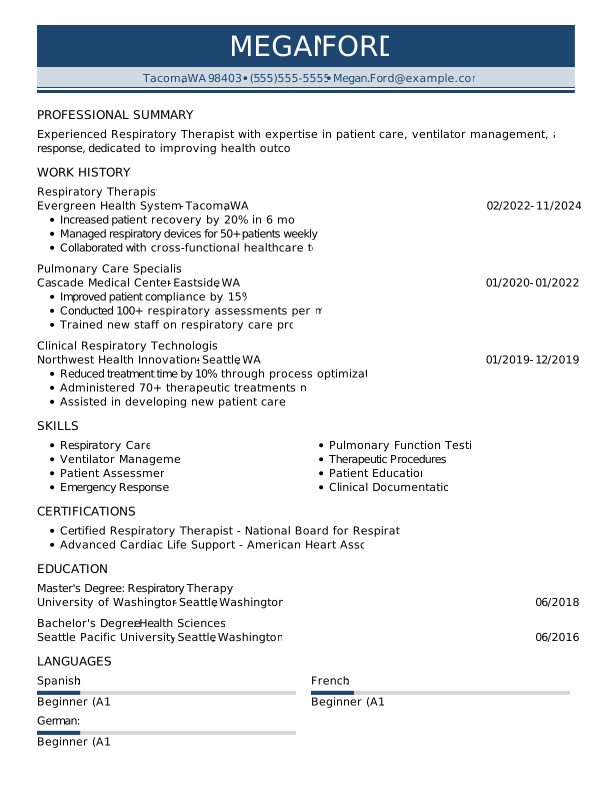
- Highlights industry-specific skills: By detailing roles like respiratory therapist and pulmonary care specialist, the applicant emphasizes targeted healthcare skills essential for effective patient treatment and recovery.
- Uses action-oriented language: Using action verbs such as “increased,” “managed,” and “collaborated” conveys a proactive stance in improving patient outcomes and operational efficiency.
- Showcases career progression: The transition from clinical respiratory technologist to respiratory therapist illustrates a clear trajectory of increased responsibility and expertise within the healthcare sector.
More Respiratory Therapist Resume Examples
Explore our respiratory therapist resume examples to effectively highlight your patient care skills, clinical experience, and expertise in respiratory therapy. These medical resume samples guide you in crafting a resume that attracts potential employers.
Entry-Level Respiratory Therapist
Why this resume works
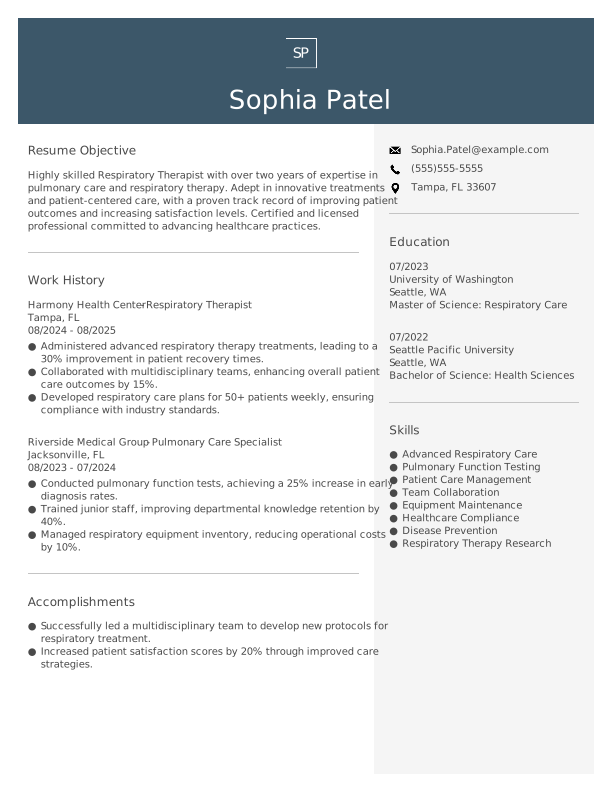
- Effective use of keywords: By weaving industry-specific keywords like “advanced respiratory care” and “healthcare compliance,” the applicant optimizes their resume for applicant tracking systems (ATS).
- Shows digital literacy: The applicant’s ability to manage respiratory equipment inventory suggests a strong grasp of digital tools, highlighting their computer skills and readiness for tech-driven workplaces.
- Centers on academic background: Including a master’s degree in respiratory care in the education section emphasizes the applicant’s impressive academic background, pivotal for early career advancement.
Mid-Level Respiratory Therapist
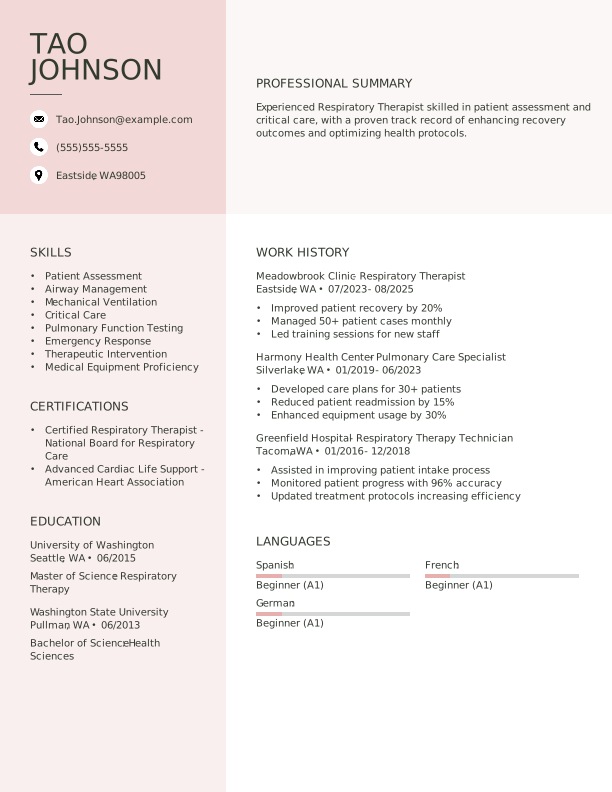
Why this resume works
- Includes a mix of soft and hard skills: By mixing technical expertise in mechanical ventilation with interpersonal skills, the applicant showcases a rich skill set that supports both patient care and team leadership.
- Demonstrates language abilities: Language skills in Spanish, French, and German improve cross-cultural communication, important for diverse healthcare settings.
- Points to measurable outcomes: Achieving a 20% improvement in patient recovery rates not only illustrates dedication but also highlights effectiveness in delivering measurable outcomes.
Experienced Respiratory Therapist
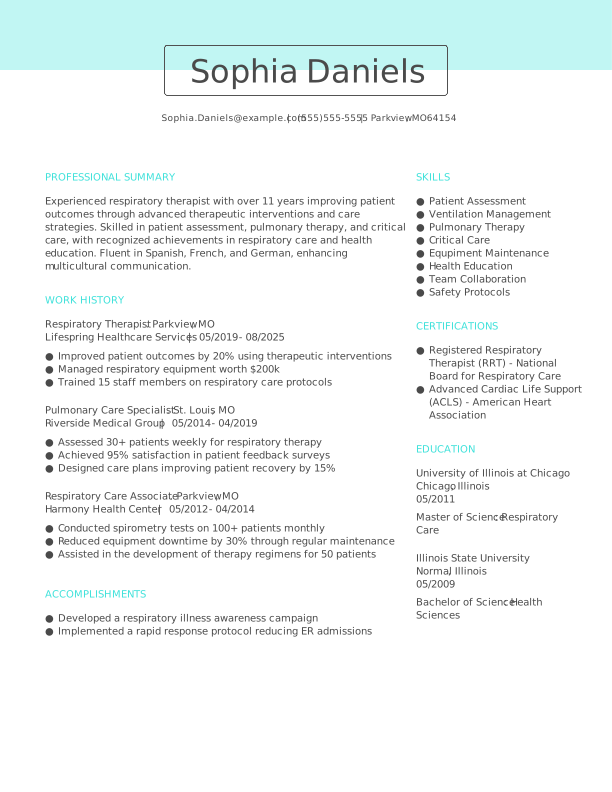
Why this resume works
- Showcases impressive accomplishments: The applicant’s accomplishments reflect advanced expertise through strong initiatives like improving patient outcomes by 20% and designing care plans with a 15% recovery boost.
- Sections are well-organized: Strategic use of bullet points and headers makes the resume easy to navigate, allowing readers to quickly grasp essential details about roles, responsibilities, and achievements.
- Lists relevant certifications: Listing certifications such as Registered Respiratory Therapist (RRT) and Advanced Cardiac Life Support (ACLS) highlights a strong commitment to professional development in respiratory care.
Respiratory Therapist Resume Template (Text Version)
Start with the text below. For more variety, check out our resume templates.
Megan Ford
Tacoma, WA 98403
(555)555-5555
Megan.Ford@example.com
Professional Summary
Experienced Respiratory Therapist with expertise in patient care, ventilator management, and emergency response, dedicated to improving health outcomes.
Work History
Respiratory Therapist
Evergreen Health Systems – Tacoma, WA
February 2022 – November 2024
- Increased patient recovery by 20% in 6 months
- Managed respiratory devices for 50+ patients weekly
- Collaborated with cross-functional healthcare team
Pulmonary Care Specialist
Cascade Medical Center – Eastside, WA
January 2020 – January 2022
- Improved patient compliance by 15%
- Conducted 100+ respiratory assessments per month
- Trained new staff on respiratory care protocols
Clinical Respiratory Technologist
Northwest Health Innovations – Seattle, WA
January 2019 – December 2019
- Reduced treatment time by 10% through process optimization
- Administered 70+ therapeutic treatments monthly
- Assisted in developing new patient care plans
Skills
- Respiratory Care
- Ventilator Management
- Patient Assessment
- Emergency Response
- Pulmonary Function Testing
- Therapeutic Procedures
- Patient Education
- Clinical Documentation
Education
Master’s Degree Respiratory Therapy
University of Washington Seattle, Washington
June 2018
Bachelor’s Degree Health Sciences
Seattle Pacific University Seattle, Washington
June 2016
Certifications
- Certified Respiratory Therapist – National Board for Respiratory Care
- Advanced Cardiac Life Support – American Heart Association
Languages
- Spanish – Beginner (A1)
- French – Beginner (A1)
- German – Beginner (A1)
Related Resume Guides
- Clinical Documentation Improvement Specialist
- Clinical Project Manager
- Clinical Research Assistant
- Clinical Trial Associate
- Coding Specialist
- Dermatologist
- Dialysis Technician
- Doctor
- Electrocardiograph Technician
- Emergency Department Technician
- Emergency Room Registration Clerk
- Equipment Technician
- Health Information Technician
- Hospital Administrator
- Hospital Volunteer
- Intake Coordinator
- Intensive Care Physician
- Medical Laboratory Technologist
- Medical Records Specialist
- Medical Representative
- Medical Research Assistant
- Midwife
- MRI Technologist
- Neurosurgeon
- Nuclear Medicine Technologist
- OB-GYN Medical Assistant
- Ophthalmologist
- Ophthalmology Assistant
- Optometrist
- Orthopedic Surgeon
- Pediatric Assistant
- Pediatrician
- Physician
- Physician Assistant
- Podiatrist
- Psychiatrist
- Radiologist
- Radiology Technician
- Resident Medical Officer
- Speech Language Pathologist
- Surgeon
- Surgery Scheduler
- Ultrasound Technician
Advice for Writing Your Respiratory Therapist Resume
Dive into our guide on how to write a resume tailored for a respiratory therapist role and discover how to highlight your expertise in respiratory care. From showcasing your patient interaction skills to detailing your experience with medical equipment, find tips that will help you stand out in the healthcare field.
Write a strong professional summary
A professional summary on a resume serves as your introduction to hiring managers, providing them with an immediate sense of who you are. You can decide whether to use a summary or a resume objective, depending on your experience and career aspirations.
Typically, the professional summary consists of three to four sentences that emphasize your experience, skills, and achievements. This approach is ideal for those with ample work history and aims to swiftly convey your professional identity and the value you offer.
Alternatively, a resume objective outlines your career goals, making it perfect for entry-level job seekers, career changers, or individuals with employment gaps. While a summary highlights “what I’ve accomplished,” an objective emphasizes “what I aim to contribute.”
We will soon provide examples of both summaries and objectives tailored for various industries and experience levels, assisting you in creating the perfect introduction for your resume. Explore our extensive library of resume examples for additional inspiration.
Respiratory therapist resume summary examples
Entry-level
Recent respiratory therapist graduate with a Bachelor of Science in Respiratory Therapy. Certified in Basic Life Support (BLS) and Advanced Cardiovascular Life Support (ACLS). Skilled in performing pulmonary function tests, administering respiratory treatments, and educating patients on breathing exercises. Eager to apply academic knowledge and clinical training to support patient care in diverse healthcare settings.
Mid-career
Respiratory therapist with over five years of experience in hospital and clinic environments. Proficient in managing ventilator care, conducting arterial blood gas analysis, and providing emergency airway management. Certified Registered Respiratory Therapist (RRT) known for strong clinical skills and effective patient education. Dedicated to improving respiratory health outcomes through personalized care plans and continuous learning.
Experienced
Seasoned respiratory therapist with 15+ years of expertise in critical care and pulmonary rehabilitation. Holds advanced certifications, including Neonatal Resuscitation Program (NRP) and Pediatric Advanced Life Support (PALS). Demonstrated leadership in mentoring junior staff, optimizing respiratory therapy protocols, and implementing innovative treatment approaches. Committed to improving patient quality of life through comprehensive respiratory management.
Respiratory therapist resume objective examples
Entry-level
Enthusiastic recent graduate with a Bachelor of Science in respiratory therapy, looking to start a career as a respiratory therapist. Committed to using strong patient care skills and theoretical knowledge to support respiratory health and well-being in a collaborative medical environment.
Career changer
Dedicated professional with experience in healthcare administration transitioning into the role of respiratory therapist. Eager to apply organizational abilities and patient interaction skills gained from previous roles to provide excellent respiratory care and improve patient outcomes in clinical settings.
Newly certified
Newly certified respiratory therapist passionate about joining a forward-thinking hospital team. Aiming to contribute by using up-to-date therapeutic techniques and a compassionate approach to improve patient breathing issues and overall healthcare experiences.
Try our AI Resume Builder to easily craft your respiratory therapist resume. With customizable templates, you can highlight your skills and experience in a professional layout.
Include relevant certifications and training
Certifications and specialized training are essential for respiratory therapists because they show expertise, compliance with industry standards, and a commitment to high-quality care. Employers rely on these credentials to ensure you have the skills needed to help patients with breathing issues.
Highlighting your certifications in a dedicated section makes your qualifications stand out and helps hiring managers quickly find what they’re looking for. Here are a few examples of certifications for your resume:
- Registered Respiratory Therapist (RRT)
- Certified Respiratory Therapist (CRT)
- Advanced Cardiac Life Support (ACLS)
- Pediatric Advanced Life Support (PALS)
- Neonatal Resuscitation Program (NRP)
These certifications prove your readiness for complex patient care situations and demonstrate that you stay current with healthcare protocols. Listing them prominently can build confidence in your abilities and increase your chances of landing interviews.
Example of a certifications section
Registered Respiratory Therapist (RRT)
Issued by: National Board for Respiratory Care (NBRC)
Expires 2025
Certified Pulmonary Function Technologist (CPFT)
Issued by: National Board for Respiratory Care (NBRC)
Issued 2022
Neonatal/Pediatric Specialist (NPS)
Issued by: National Board for Respiratory Care (NBRC)
Expires 2024
Basic Life Support (BLS) Certification
Issued by: American Heart Association
Expires 2023
Advanced Cardiovascular Life Support (ACLS) Certification
Issued by: American Heart Association
Issued 2021
Choose a polished and well-organized resume template that effectively showcases your skills and qualifications to stand out to hiring managers in your field.
Showcase your work experience
Showcasing relevant work experience on your resume is key to catching the attention of potential employers. As a respiratory therapist, it’s helpful to highlight your past roles in a way that clearly demonstrates your skills and achievements.
Start by arranging your work history in reverse chronological order, placing the most recent position at the top. This structure ensures employers see your current and most applicable experiences right away, making it easier to leave a strong impression.
When listing each job, include details like the job title, employer name, location, and employment dates. Use action-oriented language to describe what you accomplished rather than just listing tasks.
For instance, phrases such as “Implemented new breathing techniques leading to a 15% increase in patient recovery rates” are more powerful because they focus on measurable outcomes—demonstrating how your efforts made a difference. Be specific about core responsibilities related to respiratory therapy, such as conducting diagnostic tests or managing ventilators.
Providing detailed examples of these tasks helps illustrate not only what you’ve done but also how dedicated you are to improving patient care.
Additionally, educating patients about their conditions can show prospective employers that you’re committed to both technical excellence and compassionate service. Tailoring these descriptions effectively conveys your value as someone who can contribute meaningfully in future roles.
5 respiratory therapist work history bullet points
- Administered respiratory care treatments to over 50 patients daily, improving recovery rates by 20%.
- Implemented a new patient assessment protocol that reduced diagnostic errors by 15% and increased treatment accuracy.
- Trained a team of 10 junior therapists, improving their skill set and boosting department efficiency by 25%.
- Collaborated with physicians to develop individualized respiratory plans, reducing patient ICU days by an average of 3 days.
- Used advanced ventilator management techniques, decreasing the need for invasive procedures in 30% of cases.
Choose a resume format that highlights your clinical skills, certifications, and patient care experience clearly and effectively.
Match your resume with the job description
Tailoring your resume to job descriptions is essential because it helps you stand out and get noticed by employers. It also increases your chances of passing through applicant tracking systems (ATS), which scan resumes for specific keywords from job postings. Creating an ATS-friendly resume ensures that these systems can identify and rank your qualifications effectively.
An ATS-friendly resume incorporates keywords and phrases that align with the skills requested in the job description. By doing this, you improve your visibility to hiring managers searching for job seekers whose experiences match their requirements.
To pinpoint the right keywords for a respiratory therapist resume, review job postings closely and look for skills, qualifications, and responsibilities that are mentioned multiple times. Common examples may include patient care, respiratory therapy treatments, ventilator management, pulmonary function testing, and healthcare team collaboration.
Integrate these terms naturally into your resume content by refining how you describe your experience. For example, instead of writing “Provide respiratory care,” you could say “Delivered patient care by administering respiratory therapy treatments and managing ventilator support to improve pulmonary function and overall health outcomes.”
This approach mirrors the language used in job postings while clearly highlighting your clinical expertise as a respiratory therapist. When you take time to customize your resume for each application, you ensure compatibility with ATS while increasing the likelihood of advancing in the hiring process.
Our ATS Score Checker helps you find formatting issues, missing keywords, and structural problems before you send your resume.
Salary Insights for Respiratory Therapists
Researching salary data can help you make informed decisions about your career path and negotiation strategy. Explore key insights below to guide your research.
Top 10 highest-paying states for respiratory therapists
Respiratory Therapists earn varying salaries across the United States, with a national average of $80,029. The table below highlights the states where respiratory therapists command the highest compensation.
Our salary information comes from the U.S. Bureau of Labor Statistics’ Occupational Employment and Wage Statistics survey. This official government data provides the most comprehensive and reliable salary information for respiratory therapists across all 50 states and the District of Columbia. The figures presented here reflect the May 2025 dataset, which is the most recent available as of this publication.
| State | Average Salary |
|---|---|
| California | $106,790 |
| New York | $105,740 |
| District of Columbia | $102,460 |
| New Jersey | $97,110 |
| Washington | $96,050 |
| Massachusetts | $95,120 |
| Hawaii | $94,220 |
| Oregon | $94,160 |
| Alaska | $93,670 |
| Minnesota | $90,030 |
FAQ
Do I need to include a cover letter with my respiratory therapist resume?
Yes, including a well-crafted cover letter with your respiratory therapist resume can make you stand out and increase your chances of landing an interview.
A cover letter allows you to highlight your respiratory care expertise, explain your passion for patient-centered treatment, and address why you’re excited about working at that specific facility.
For example, if the hospital specializes in pulmonary rehabilitation or critical care services, you can emphasize relevant experience in those areas to demonstrate alignment with their needs.
You might consider using our Cover Letter Generator to quickly create a professional letter tailored to respiratory therapy roles while saving time and effort during the application process.
Additionally, reviewing cover letter examples designed for healthcare professionals can help inspire ideas on how best to structure and personalize your own document.
How long should a respiratory therapist’s resume be?
For a respiratory therapist, a one-page resume is often enough to highlight key skills like patient care, skill with respiratory equipment, and experience in various clinical settings.
If you have extensive experience or advanced certifications, a two-page resume might be more appropriate to capture all relevant details.
Make sure every section is focused on your specialized skills and recent roles that demonstrate your expertise in respiratory therapy. This keeps the content engaging and informative for potential employers.
Check out our guide on how long a resume should be to get more tips on choosing the right length for your professional journey.
How do you write a respiratory therapist resume with no experience?
When creating a respiratory therapist resume with no experience, focus on highlighting your education, skills, and any relevant training to demonstrate your potential in the role.
- Highlight your education: Start by listing your degree from an accredited respiratory therapy program. Include the name of the institution, graduation date, and any honors or recognitions you received.
- Include licensure details: Mention obtaining your CRT or RRT certification as soon as possible after graduating. This showcases your skill and commitment to the field.
- Leverage clinical rotations: Treat these rotations as real-world experience. Detail specific tasks performed, such as administering aerosol medications, patient assessments, or collaborating with medical teams.
- Showcase transferable skills: If you’ve worked in related fields like healthcare assistance or volunteered in medical settings, emphasize skills like patient care, teamwork, and communication.
Review our guide on writing a resume with no experience for more examples and practical advice tailored by Certified Professional Resume Writers.
Rate this article
Respiratory Therapist


Toni is a Certified Professional Resume Writer (CPRW) and member of the Professional Association of Resume Writers & Career Coaches. She is committed to helping job seekers navigate the job market and succeed in their careers.
More Articles by Toni Frana, CPRWShare this page
 Add MyPerfectResume as a preferred source on Google
Add