Table of Contents
Get started with MyPerfectResume today!
- Build a resume on any device
- Pick an ATS-friendly template
- Tailor with AI copy suggestions
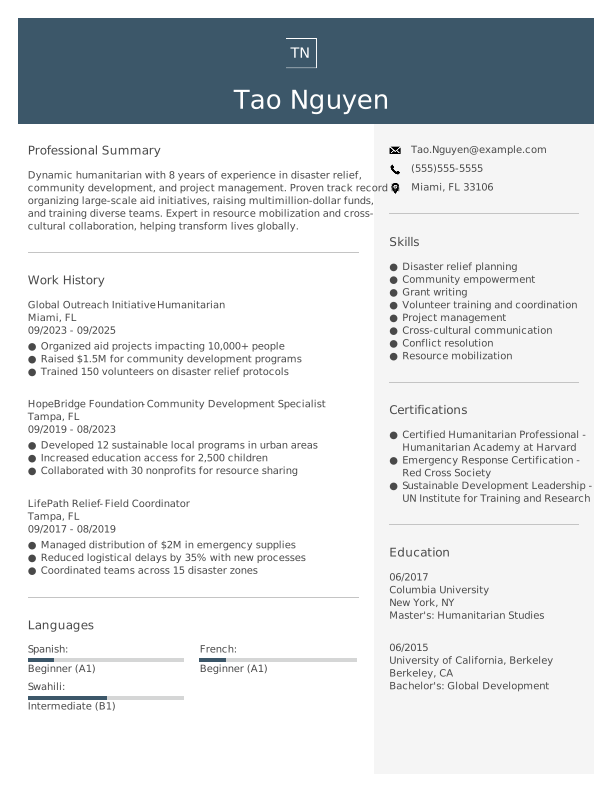
Why this resume works
- Quantifies accomplishments: Measurable accomplishments, such as organizing projects aiding 10,000+ individuals and raising $1.5M, highlight the applicant’s impact.
- Showcases career progression: Progressing from field coordinator to humanitarian showcases a clear trajectory of increasing responsibilities and leadership roles throughout the applicant’s career journey.
- Uses action-oriented language: Using action verbs like “organized,” “raised,” and “developed” demonstrates initiative and effectiveness.
More Humanitarian Resume Examples
Take a look at our humanitarian resume examples to learn how to highlight your compassion, field experience, and advocacy skills. These non-profit resume samples will guide you in crafting a compelling resume for various humanitarian roles.
Entry-Level Humanitarian
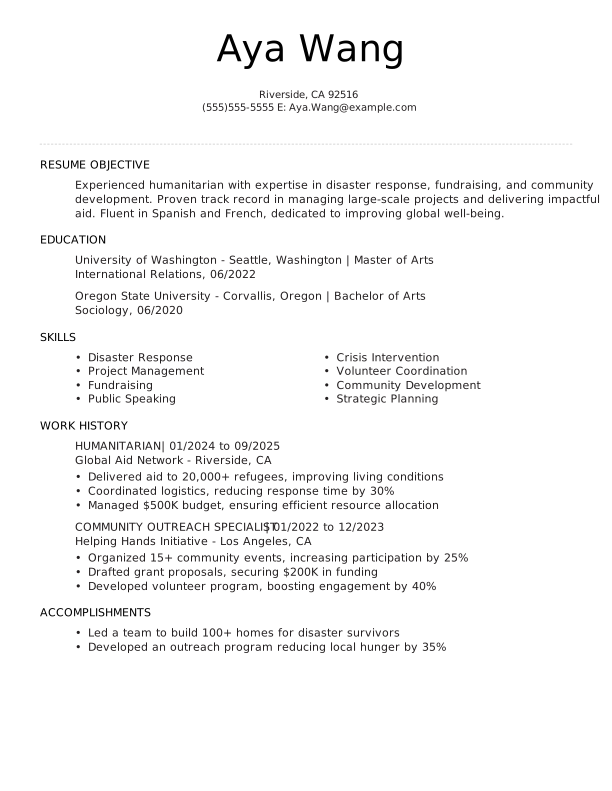
Why this resume works
- Centers on academic background: The applicant’s strong academic foundation from the University of Washington and Oregon State University establishes a solid base for their humanitarian career, improving credibility early on.
- Effective use of keywords: Skillful integration of keywords like “disaster response” and “community development” improves the resume’s chances of passing applicant tracking systems (ATS) and standing out to hiring managers.
- Shows digital literacy: By managing logistics and budgets in humanitarian roles, the applicant evidences computer skills essential for navigating complex digital environments.
Mid-Level Humanitarian
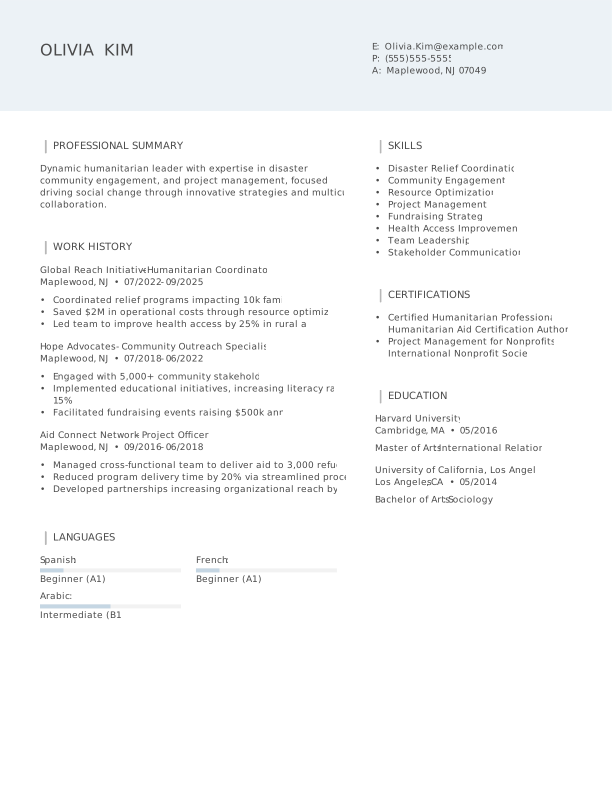
Why this resume works
- Points to measurable outcomes: The applicant’s ability to drive significant outcomes is evident through compelling initiatives like saving $2M in costs and boosting health access by 25% in rural areas.
- Demonstrates language abilities: Language skills in Spanish, French, and Arabic improve cross-cultural humanitarian operations.
- Displays technical expertise: Technical expertise shines with certifications in disaster relief coordination and nonprofit project management, key to executing complex humanitarian missions efficiently.
Experienced Humanitarian
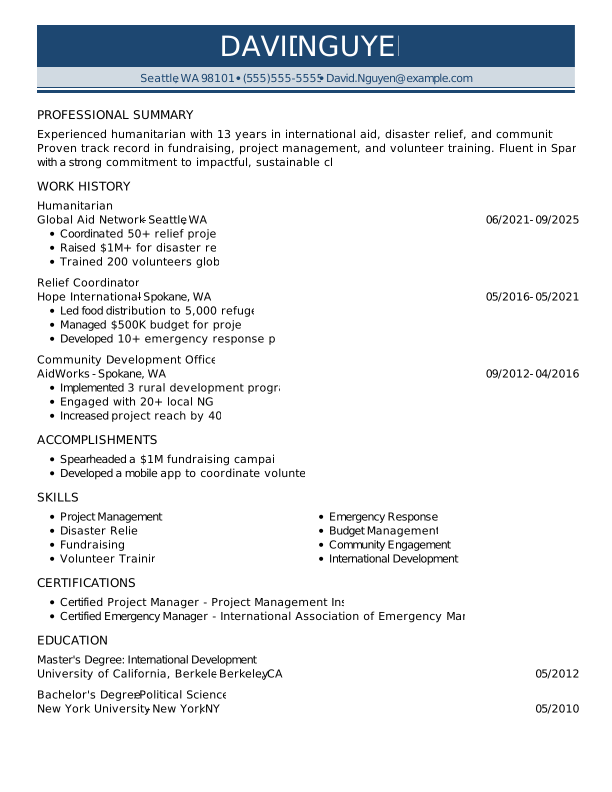
Why this resume works
- Focuses on work history: Using a chronological resume format, the applicant effectively details their extensive career experience, from coordinating relief projects to managing budgets and developing emergency plans.
- Showcases impressive accomplishments: The applicant’s measurable accomplishments, such as raising over $1M for disaster relief and leading food distribution efforts for thousands, highlight impressive impact.
- Emphasizes leadership skills: Managing teams of volunteers and leading critical projects, such as training 200 volunteers globally, shows strong leadership skills.
Humanitarian Resume Template (Text Version)
This is just one option. Copy the format below, or browse our resume templates for many more.
Tao Nguyen
Miami, FL 33106
(555)555-5555
Tao.Nguyen@example.com
Professional Summary
Dynamic humanitarian with 8 years of experience in disaster relief, community development, and project management. Proven track record in organizing large-scale aid initiatives, raising multimillion-dollar funds, and training diverse teams. Expert in resource mobilization and cross-cultural collaboration, helping transform lives globally.
Work History
Humanitarian
Global Outreach Initiative – Miami, FL
September 2023 – September 2025
- Organized aid projects impacting 10,000+ people
- Raised $1.5M for community development programs
- Trained 150 volunteers on disaster relief protocols
Community Development Specialist
HopeBridge Foundation – Tampa, FL
September 2019 – August 2023
- Developed 12 sustainable local programs in urban areas
- Increased education access for 2,500 children
- Collaborated with 30 nonprofits for resource sharing
Field Coordinator
LifePath Relief – Tampa, FL
September 2017 – August 2019
- Managed distribution of $2M in emergency supplies
- Reduced logistical delays by 35% with new processes
- Coordinated teams across 15 disaster zones
Languages
- Spanish – Beginner (A1)
- French – Beginner (A1)
- Swahili – Intermediate (B1)
Skills
- Disaster relief planning
- Community empowerment
- Grant writing
- Volunteer training and coordination
- Project management
- Cross-cultural communication
- Conflict resolution
- Resource mobilization
Certifications
- Certified Humanitarian Professional – Humanitarian Academy at Harvard
- Emergency Response Certification – Red Cross Society
- Sustainable Development Leadership – UN Institute for Training and Research
Education
Master’s Humanitarian Studies
Columbia University New York, NY
June 2017
Bachelor’s Global Development
University of California, Berkeley Berkeley, CA
June 2015
Related Resume Guides
Advice for Writing Your Humanitarian Resume
Discover our helpful tips on how to write a resume tailored for a humanitarian position and learn how to highlight your passion for social change and dedication to making a difference. Whether you’re aiming to work with nonprofits or international organizations, these strategies will help you craft a compelling narrative that speaks to your unique experiences and skills.
Write a strong professional summary
A professional summary on a resume acts as an introduction to hiring managers, allowing them to quickly grasp the applicant’s background and qualifications. Depending on their experience and career goals, readers can include either a summary or an objective.
A professional summary typically consists of three to four sentences that emphasize your experience, skills, and achievements. This format is ideal for experienced job seekers who want to showcase their professional identity and value. A strong summary for a humanitarian might mention years of fieldwork, expertise in crisis management, and successful project outcomes.
Conversely, a resume objective outlines career goals and suits entry-level applicants, career changers, or those with employment gaps. While summaries focus on “what I’ve accomplished,” objectives emphasize “what I aim to contribute.”
Next, we’ll provide examples of summaries and objectives tailored to various industries and levels of experience. These samples will assist you in selecting the option that best highlights your unique strengths as a humanitarian. Explore our professional resume examples for additional inspiration.
Humanitarian resume summary examples
Entry-level
Recent graduate with a Bachelor of Arts in international relations and a focus on humanitarian studies. Completed internships with non-profit organizations, gaining foundational skills in project coordination and community outreach. Certified in first aid and CPR, eager to contribute to humanitarian efforts by supporting program implementation and providing direct assistance.
Mid-career
Humanitarian aid worker with over six years of experience managing disaster relief projects in conflict-affected regions. Proven track record in coordinating logistics for large-scale food distribution, implementing water and sanitation programs, and conducting needs assessments. Skilled at building relationships with local communities and stakeholders to ensure effective program delivery.
Experienced
Seasoned humanitarian professional with more than 15 years of experience dedicated to leading emergency response teams across global crises. Expertise in strategic planning, resource allocation, and partnership development. Recognized for driving compelling initiatives that improve access to essential services for displaced populations, while fostering sustainable community resilience through innovative solutions.
Humanitarian resume objective examples
Entry-level
Driven and empathetic entry-level professional with a background in social sciences seeking to start a career in humanitarian aid. Passionate about supporting community development projects and using strong communication skills to foster positive change in underserved populations.
Career changer
Dedicated former teacher pivoting to the humanitarian sector, bringing exceptional organizational skills and a deep understanding of cultural diversity. Eager to contribute to international relief efforts and assist in creating sustainable solutions for communities affected by crises.
Recent graduate
Recent international relations graduate eager to apply academic knowledge and internship experience in a humanitarian role focused on conflict resolution and peacebuilding. Committed to promoting human rights and providing support to vulnerable communities through effective advocacy and collaboration.
Create your resume stress-free! Use our Resume Builder to quickly organize your volunteer work and skills, making it easy for hiring managers to see why you’re a great fit.
Include relevant certifications and training
Listing certifications and training is important for a humanitarian because it shows you have the skills needed to help others in tough situations. Certifications prove you know how to handle emergencies, work with different cultures, and manage resources. They also show that you are committed to learning and improving your abilities. Here are a few examples of relevant certifications for your resume:
- Certified Emergency Manager (CEM)
- Certified Humanitarian Logistics Professional (CHLP)
- International Diploma in Humanitarian Assistance (IDHA)
- Humanitarian Coordination Certificate
- Certificate in Humanitarian Health
Having these certifications helps you do your job better as a humanitarian. They give you the knowledge and tools to make a real difference in people’s lives. By listing them clearly on your resume, you’ll show employers you’re ready to tackle any challenge.
Example of a certifications section
Certified Humanitarian Professional
Issued by: Humanitarian Academy at Harvard
Issued 2021
Project Management for Development Professionals (PMD Pro)
Issued by: PM4NGOs
Expires 2025
Diploma in Humanitarian Assistance
Issued by: Fordham University Institute of International Humanitarian Affairs
Issued 2020
Sphere Handbook Training Certification
Issued by: Sphere Project
Issued 2023
Security Risk Management Certification
Issued by: Global Interagency Security Forum (GISF)
Expires 2026
Choose a polished and well-organized resume template that effectively showcases your skills and qualifications to stand out to hiring managers in your field.
Showcase your work experience
Showcasing relevant work experience on a resume is important, especially for a humanitarian role. It helps potential employers understand your background and how you can contribute to their organization. Start by listing your job experiences in reverse chronological order.
This means putting your most recent job first. For each position, include your job title, the employer’s name, the location, and the dates you worked there. This method makes it easy for employers to see your career progression. Use clear and action-oriented language when describing your work experience. Instead of just stating what you did, focus on what you achieved.
Use measurable results whenever possible to show the impact of your contributions. For example, rather than saying “managed a team,” say “led a team of 10 people that improved project delivery by 20%.” This not only shows what you did but also highlights the positive outcomes of your efforts.
Make sure to include core responsibilities and skills specific to humanitarian work. These could be things like coordinating relief efforts, managing resources efficiently, or working with international teams under challenging conditions. By detailing these responsibilities clearly and effectively, you’ll demonstrate how well-suited you are for another role in this field.
This approach will help paint a complete picture of your abilities and make you stand out as a strong applicant for humanitarian positions.
5 humanitarian work history bullet points
- Coordinated disaster relief efforts, distributing essential supplies to over 10,000 affected individuals within a week.
- Led a team of volunteers in constructing 50+ temporary shelters, providing safe housing for displaced families.
- Implemented a community health program that increased access to medical care for 5,000 villagers by 40%.
- Secured funding from international donors, raising $500,000 for food security initiatives benefiting 2,000 households.
- Developed training workshops for local staff, resulting in a 25% increase in program delivery efficiency.
A resume format that highlights projects led, communities impacted, and challenges overcome can help humanitarians make a strong impression.
Match your resume with the job description
Tailoring your resume to match the job description is important because it helps you stand out to employers and pass through applicant tracking systems (ATS).
These systems scan resumes for specific keywords and phrases from job postings, ensuring that only the most relevant applications reach hiring managers. Creating an ATS-friendly resume approach includes incorporating keywords and phrases that align with your skills and experience.
By doing so, you increase your chances of getting noticed by hiring managers who depend on ATS to filter applicants based on relevance.
To identify keywords in job postings, pay close attention to repeated skills, qualifications, and responsibilities highlighted in the description. Terms like “emergency response,” “community engagement,” or “program implementation” should stand out—these are often essential to include directly in your resume. Incorporate these keywords naturally by tailoring your job descriptions.
For example, if a posting asks for someone who can “coordinate humanitarian relief efforts,” you might phrase it as “coordinated humanitarian relief efforts to support displaced communities and improve access to essential resources” when describing your experience in the work history section.
When you customize your resume, you help your application navigate automated filters and make a stronger impression when viewed by hiring managers.
Ensure your resume passes through applicant tracking systems. Our ATS Score Checker finds common mistakes and gives tips to make your resume stronger.
FAQ
Do I need to include a cover letter with my humanitarian resume?
Yes, including a cover letter with your humanitarian resume is highly recommended, as it helps highlight your passion and commitment to the role.
A cover letter allows you to explain why you’re drawn to the specific organization or cause, while also emphasizing key experiences that align with their mission.
For instance, if you’ve worked on disaster relief projects or advocacy campaigns, you can use the space to provide meaningful context beyond what’s on your resume.
Consider using our Cover Letter Generator for tailored content that showcases your unique qualifications and makes crafting your application easier and more effective.
Additionally, reviewing humanitarian-focused cover letter examples can offer inspiration and practical insights into structuring a compelling narrative for this type of work.
How long should a humanitarian’s resume be?
For a humanitarian role, aim for a one-page resume if you’re early in your career or transitioning into the field. Focus on key skills like crisis management, intercultural communication, and any volunteer experience relevant to humanitarian work.
If you’ve accumulated extensive experience or specialized expertise, a two-page resume might be appropriate.
This allows you to detail significant projects, leadership roles in international organizations, and advanced training that demonstrate your capability in managing complex humanitarian efforts.
To determine how long a resume should be for your particular situation, consider exploring various guidelines and examples tailored to different career stages.
How do you write a humanitarian resume with no experience?
To craft a resume with no experience for humanitarian work, focus on highlighting your passion, education, and transferable skills that are relevant. Structure your resume to showcase these elements effectively in a way that stands out. Here are a few key tips:
- Highlight relevant education: Start with any degree related to international relations, social work, or similar fields. Include coursework or projects focusing on humanitarian issues.
- Showcase volunteer experiences: Even if unpaid, volunteering demonstrates commitment. Detail your roles in community service, fundraising events, or activism initiatives.
- Emphasize transferable skills: Skills like communication, problem-solving, empathy, and teamwork are important in humanitarian work. Highlight these in the context of class projects or other activities.
- Include language skills: If you know additional languages, it can be a significant asset in global humanitarian efforts.
For more insights on structuring a resume with no experience for the humanitarian sector, consider exploring resources tailored to entry-level applicants seeking powerful careers.
Rate this article
Humanitarian


Elizabeth is a Certified Professional Resume Writer (CPRW) and a member of the Professional Association of Resume Writers & Career Coaches. She is committed to helping job seekers navigate the job market and succeed in their careers.
More Articles by Elizabeth Muenzen, CPRWShare this page
 Add MyPerfectResume as a preferred source on Google
Add