
Table of Contents
Get started with MyPerfectResume today!
- Build a resume on any device
- Pick an ATS-friendly template
- Tailor with AI copy suggestions
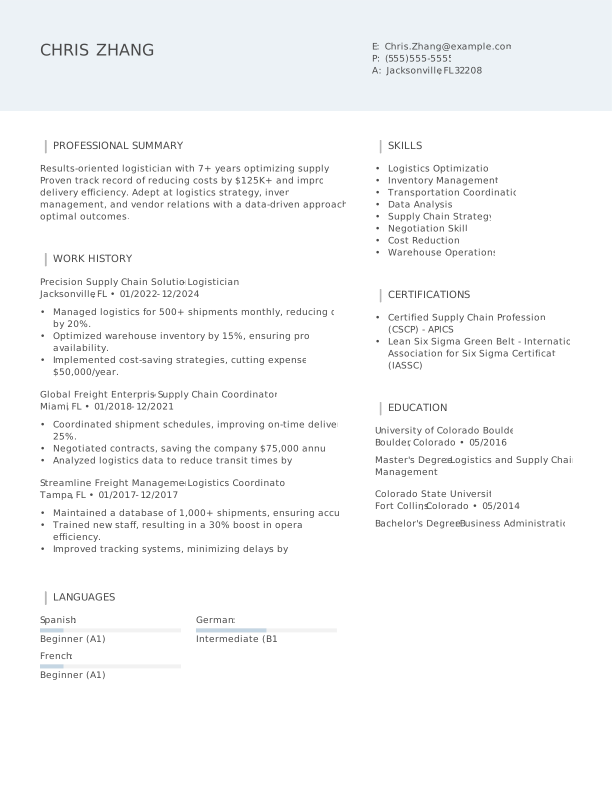
Why this resume works
- Quantifies accomplishments: By managing over 500 shipments monthly and cutting delays by 20%, this applicant’s accomplishments are clearly quantified, showing the extent of their impact on operational efficiency.
- Highlights industry-specific skills: Showcasing skills like logistics optimization and negotiation, the applicant effectively positions themselves in the supply chain field, demonstrating a solid fit for industry-specific roles.
- Uses action-oriented language: Starting their work history bullet points with words like “managed,” “optimized,” and “implemented” illustrate initiative and effectiveness, embodying the power of action verbs to convey proactive achievements.
More Logistician Resume Examples
Check out these resume examples to understand how to highlight your supply chain management skills, inventory control experience, and analytical approach. Use these samples to help you craft a resume that appeals to employers in logistics and transportation.
Supply chain manager
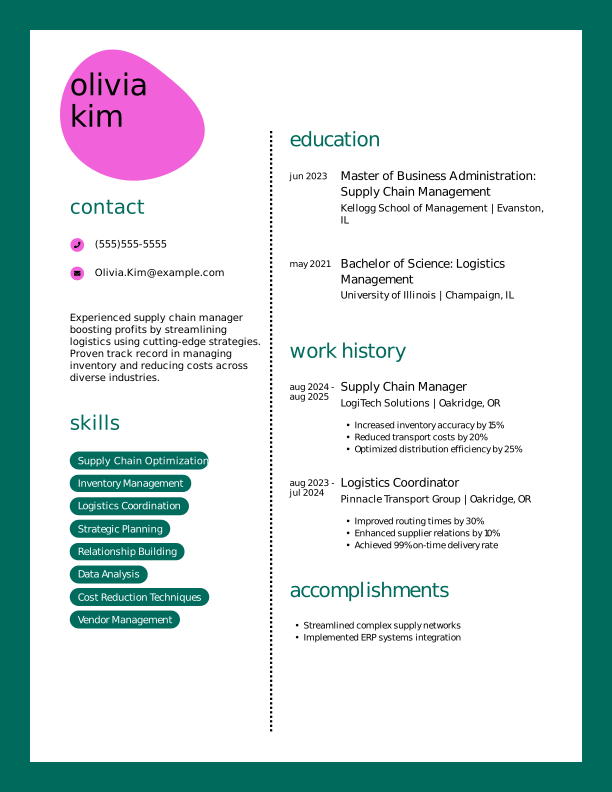
Why this resume works
- Effective use of keywords: By tactically weaving in industry-specific keywords, the applicant appears to optimize their resume for ATS, boosting chances of selection in supply chain roles.
- Shows digital literacy: Highlighting proficiency with ERP systems and data analysis showcases the applicant’s computer skills important for navigating today’s digital workspace.
- Puts skills at the forefront: The applicant leverages a skills-based resume format to place skills such as inventory management and strategic planning prominently, which is ideal for capturing attention quickly.
Operations manager

Why this resume works
- Points to measurable outcomes: Achieving outcomes like cutting costs by 22% and saving $250K annually reflects a consistent focus on measurable improvements and results-driven strategies in operations management.
- Demonstrates language abilities: The applicant shows language skills in Spanish, French, and Mandarin, essential for fostering cross-cultural collaboration and global team communication.
- Includes a mix of soft and hard skills: Mixing technical expertise in Lean principles with interpersonal skills like team leadership highlights an ability to innovate while building strong collaborative environments.
Distribution manager
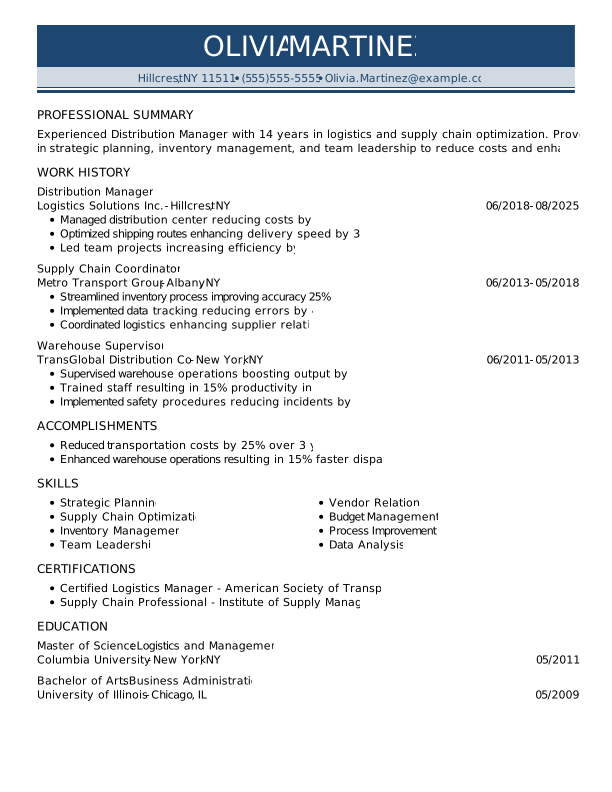
Why this resume works
- Focuses on work history: The chronological resume format effectively showcases the applicant’s impressive career progression through various roles in logistics and supply chain management.
- Lists relevant certifications: By listing certifications like Certified Logistics Manager, the applicant highlights their commitment to continuous learning and expertise.
- Emphasizes leadership skills: The applicant’s ability to lead projects and manage teams is evident, illustrating strong leadership skills through achievements such as improving delivery speed by 30%.
Logistician Resume Template (Text Version)
Chris Zhang
Jacksonville, FL 32208
(555)555-5555
Chris.Zhang@example.com
Professional Summary
Results-oriented logistician with 7+ years optimizing supply chains. Proven track record of reducing costs by $125K+ and improving delivery efficiency. Adept at logistics strategy, inventory management, and vendor relations with a data-driven approach for optimal outcomes.
Work History
Logistician
Precision Supply Chain Solutions – Jacksonville, FL
January 2022 – December 2024
- Managed logistics for 500+ shipments monthly, reducing delays by 20%.
- Optimized warehouse inventory by 15%, ensuring product availability.
- Implemented cost-saving strategies, cutting expenses by $50,000/year.
Supply Chain Coordinator
Global Freight Enterprises – Miami, FL
January 2018 – December 2021
- Coordinated shipment schedules, improving on-time delivery by 25%.
- Negotiated contracts, saving the company $75,000 annually.
- Analyzed logistics data to reduce transit times by 12%.
Logistics Coordinator
Streamline Freight Management – Tampa, FL
January 2017 – December 2017
- Maintained a database of 1,000+ shipments, ensuring accuracy.
- Trained new staff, resulting in a 30% boost in operational efficiency.
- Improved tracking systems, minimizing delays by 18%.
Languages
- Spanish – Beginner (A1)
- German – Intermediate (B1)
- French – Beginner (A1)
Skills
- Logistics Optimization
- Inventory Management
- Transportation Coordination
- Data Analysis
- Supply Chain Strategy
- Negotiation Skills
- Cost Reduction
- Warehouse Operations
Certifications
- Certified Supply Chain Professional (CSCP) – APICS
- Lean Six Sigma Green Belt – International Association for Six Sigma Certification (IASSC)
Education
Master’s Degree Logistics and Supply Chain Management
University of Colorado Boulder Boulder, Colorado
May 2016
Bachelor’s Degree Business Administration
Colorado State University Fort Collins, Colorado
May 2014
Related Resume Guides
Advice for Writing Your Logistician Resume
Learn how to write a resume for a logistician role that highlights your planning skills, attention to detail, and ability to keep things running smoothly.
Dive into tips tailored to your profession and create a resume that truly reflects your expertise in logistics.
Highlight your most relevant skills
Listing relevant skills when applying for a job as a logistician is important because it shows employers what you can do and how well you fit the role.
A dedicated skills section on your resume helps highlight both your technical skills, like supply chain management or data analysis, and interpersonal skills, such as communication or teamwork. This balance ensures that you’re seen as a well-rounded applicant who can handle the practical tasks of logistics while also working well with others.
To make an even stronger impression, try to weave these key skills into your work experience section. For example, if you’ve successfully managed a large project that required complex planning and coordination, mention those specific skills in your job description.
This approach not only lists your abilities but also provides real-life examples of how you’ve used them effectively in past roles. By integrating skills into your experience, you paint a fuller picture of your capabilities as a logistician and make it easier for employers to see how you’ll contribute to their team.
For logisticians, a resume format that highlights supply chain expertise, efficiency improvements, and cost reduction is ideal.
Showcase your accomplishments
When crafting your resume as a logistician, organize your work experience in reverse-chronological order. Start with your most recent job and move backward. For each position, include your job title, the name of the employer, the location, and the dates you worked there. This method helps hiring managers see your career progression at a glance.
Instead of just listing what you did at each job, focus on what you achieved. Use numbers to show results—like how much money you saved or how much time you cut from delivery schedules. Turn duties into achievements by showing measurable outcomes such as percentage improvements or cost reductions. Using action-oriented words like “improved,” “reduced,” and “increased” can make your accomplishments stand out.
Quantifying your achievements lets hiring managers quickly understand the impact you’ve had in previous roles. It highlights not just what you’ve done but how well you’ve done it, making your resume more compelling. By focusing on measurable results and using strong action verbs, you help potential employers see the skills and value you bring to the table as a logistician.
5 logistician work history bullet point examples
- Streamlined supply chain operations, reducing delivery times by 25% and improving customer satisfaction scores.
- Implemented a new inventory management system, decreasing stock discrepancies by 40% and optimizing warehouse space utilization.
- Coordinated logistics for international shipments, achieving a 30% increase in on-time delivery performance.
- Negotiated with suppliers to secure cost-effective contracts, resulting in a 15% reduction in procurement expenses.
- Led cross-functional teams to execute logistics projects, improving workflow efficiency and meeting project deadlines consistently.
When choosing a resume template, opt for one with clear sections and readable fonts. Avoid overly decorative designs that can make your skills and job history harder to locate.
Write a strong professional summary
A professional summary is a brief introduction at the top of your resume that gives hiring managers a quick overview of who you are, helping them decide if they want to learn more about you. When creating your resume, you’ll need to choose between writing a professional summary or a resume objective.
Typically, a professional summary includes three to four sentences that highlight your experience, skills, and achievements. It’s most suitable for individuals with extensive work experience, like logisticians with years in supply chain management. The goal is to convey your professional identity and the value you bring to the job.
In contrast, resume objectives concentrate on career goals and are ideal for entry-level applicants, those changing careers, or people with employment gaps. While summaries express “what I’ve accomplished,” objectives focus on “what I aim to contribute.”
Next, we’ll provide examples of both types: summaries and objectives tailored for different levels of experience. Whether you’re an experienced logistician or just starting out, these examples will guide you in crafting the perfect introduction on your resume.
Logistician resume summary examples
Entry-level
Recent graduate with a Bachelor of Science in Supply Chain Management and certification in logistics from CSCMP. Equipped with foundational skills in inventory analysis, vendor coordination, and basic software tools like SAP. Eager to apply academic knowledge to support logistics operations and improve supply chain efficiency.
Mid-career
Logistician with over seven years of experience managing supply chain processes for manufacturing industries. Proven track record in optimizing transportation routes, reducing costs by 15%, and implementing inventory management systems. Experienced in collaborating across departments to streamline operations and improve customer satisfaction.
Experienced
Seasoned logistician specializing in strategic planning and international logistics management with over 15 years of industry experience. Expert in leading cross-functional teams, developing robust supply chains, and leveraging data analytics for continuous improvement. Recognized for driving significant operational efficiencies and fostering partnerships that align with corporate goals.
Logistician resume objective examples
Recent graduate
Detail-oriented recent graduate with a bachelor’s degree in supply chain management seeking an entry-level logistician role to apply knowledge of inventory control, transportation planning, and data analysis. Excited to contribute to optimizing logistics processes and ensuring efficient distribution systems.
Career changer
Motivated professional transitioning into the field of logistics, bringing experience in project coordination and problem-solving from previous roles. Eager to leverage transferable skills such as team collaboration, organizational planning, and process improvement to support operational success.
Entry-level applicant with certifications
Aspiring logistician with coursework certifications in lean principles and warehouse management seeking an opportunity to assist in streamlining supply chain operations. Committed to learning industry best practices while contributing to cost-effective solutions and timely deliveries.
Easily create a standout resume as a logistician with our Resume Builder. Choose a template, add your skills and experience, and get noticed by employers fast!
Match your resume to the job description
Tailoring your resume to the job description is essential. It helps you stand out to employers and pass through applicant tracking systems (ATS). An ATS scans for specific keywords from job postings, so aligning your resume with the job description increases your chances of getting noticed.
An ATS-friendly resume includes keywords that align with your skills. By incorporating these terms, you can increase the likelihood of catching a hiring manager’s eye. This makes it important to carefully read the job posting and customize your resume accordingly.
To identify keywords from job postings, look for skills, qualifications, and duties mentioned repeatedly. For example, in a logistics role, you might see terms like “supply chain management,” “inventory control,” or “logistics coordination.” Using these exact phrases can help ensure your resume gets past the ATS filters.
Incorporate these terms naturally into your resume content. For instance, if the job description says “manage inventory levels effectively,” you could write “Managed inventory levels effectively to reduce waste and optimize supply chain operations.”
Targeted resumes improve ATS compatibility by aligning closely with what employers are looking for. This tailored approach not only helps you get past initial screenings but also shows potential employers that you have the relevant experience and skills they need.
Make sure your resume stands out by using our ATS Resume Checker; it helps catch missing keywords, formatting mistakes, and other issues before you hit send.
Salary Insights for Logisticians
Understanding salary data can help you decide on your career path or if you should move to a new place. The U.S. Bureau of Labor Statistics offers information to compare earnings and make smart choices. More details are provided below.
Top 10 highest-paying states for logisticians
Logisticians earn varying salaries across the United States, with a national average of $85,712. The table below highlights the states where logisticians command the highest compensation.
Our salary information comes from the U.S. Bureau of Labor Statistics’ Occupational Employment and Wage Statistics survey. This official government data provides the most comprehensive and reliable salary information for logisticians across all 50 states and the District of Columbia. The figures presented here reflect the May 2025 dataset, which is the most recent available as of this publication.
| State | Average Salary |
|---|---|
| District of Columbia | $120,120 |
| Washington | $109,960 |
| Maryland | $107,100 |
| Virginia | $102,580 |
| Massachusetts | $102,820 |
| Wyoming | $100,930 |
| Oregon | $99,070 |
| Hawaii | $98,310 |
| California | $97,810 |
| Delaware | $97,480 |
FAQ
Do I need to include a cover letter with my logistician resume?
Yes, including a cover letter with your logistician resume can make a significant difference in your application process.
A cover letter gives you the opportunity to highlight your expertise in logistics management, such as optimizing supply chains or implementing cost-saving strategies.
For instance, if the company you’re applying to specializes in international shipping or sustainable logistics practices, you can discuss your relevant experience or enthusiasm for these areas.
Consider using our Cover Letter Generator to streamline the creation of your cover letter and ensure it aligns perfectly with your resume and job requirements.
Additionally, reviewing cover letter examples tailored specifically for logisticians can provide valuable insights and inspiration for crafting an effective document.
How long should a logistician resume be?
For a logistician, a one-page resume is often sufficient if you’re early in your career or have limited experience. It allows you to focus on key logistics skills like inventory management and supply chain optimization. However, with extensive experience or specialized certifications, transitioning to a two-page resume can help capture those details without feeling cramped.
Remember, clarity and relevance are the goals; everything you include on your resume should demonstrate your logistical expertise effectively. For more insights tailored to your career stage, explore our guide on how long a resume should be.
How do you write a logistician resume with no experience?
To craft a resume with no experience, emphasize your education, skills related to logistics, and any projects or internships that connect to the field. Highlighting these aspects can demonstrate your potential effectively.
- Emphasize educational background: Start by detailing your degree in logistics, supply chain management, or a related field. Include the institution’s name, graduation date, and any coursework that directly relates to logistics.
- Showcase transferable skills: Highlight skills such as problem-solving, organization, and analytical abilities. If you’ve developed these through other roles or volunteer work, make sure to mention them as they are important for a logistician role.
- Include relevant academic projects: If you worked on any class projects involving supply chain simulations or inventory management systems, describe these experiences. Detail what you learned and any specific outcomes achieved.
For more advice on crafting a resume with no experience tailored to logistics careers, consider reviewing resources from industry professionals who can offer additional insights.
Rate this article
Logistician


Toni is a Certified Professional Resume Writer (CPRW) and member of the Professional Association of Resume Writers & Career Coaches. She is committed to helping job seekers navigate the job market and succeed in their careers.
More Articles by Toni Frana, CPRWShare this page
Additional Resources
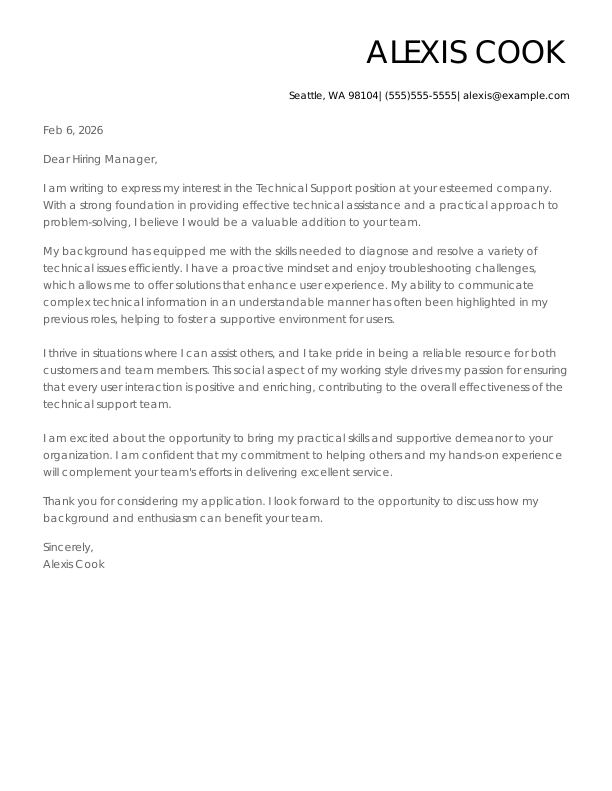
Technical Support Cover Letter Examples & Templates for 2026
Check out technical support cover letter examples to discover how to start your cover letter, prioritize your relevant skills and experiences, and finish on a strong note that leaves a
40 Customer Service Skills for Your Resume (Examples & Tips)
Customer service work is at the core of business success. From addressing customer inquiries and resolving complaints to processing orders and providing essential information, customer service professionals are pivotal in
Educational Background Interview Question (Sample Answers & Tips)
When interviewers ask, “What is your educational background?” it’s your opportunity to discuss how your schooling, degrees, and relevant training make you the perfect fit for the role. A strong answer

From Night Owls to Early Birds: Entry-Level Employees Nearly Twice as Likely to Skew Night-Oriented
For decades, corporate life has catered to the early risers. Morning meetings, nine-to-five office schedules, and leaders boasting about being the first in the office all send the same signal:
How to Write a Google Resume (Examples & Tips)
Google is known for its competitive hiring process, which involves rigorous interviews that assess technical skills, problem-solving abilities, innovation, and cultural fit. Your resume is the first opportunity to stand out
