Table of Contents
Get started with MyPerfectResume today!
- Build a resume on any device
- Pick an ATS-friendly template
- Tailor with AI copy suggestions
Why this resume works
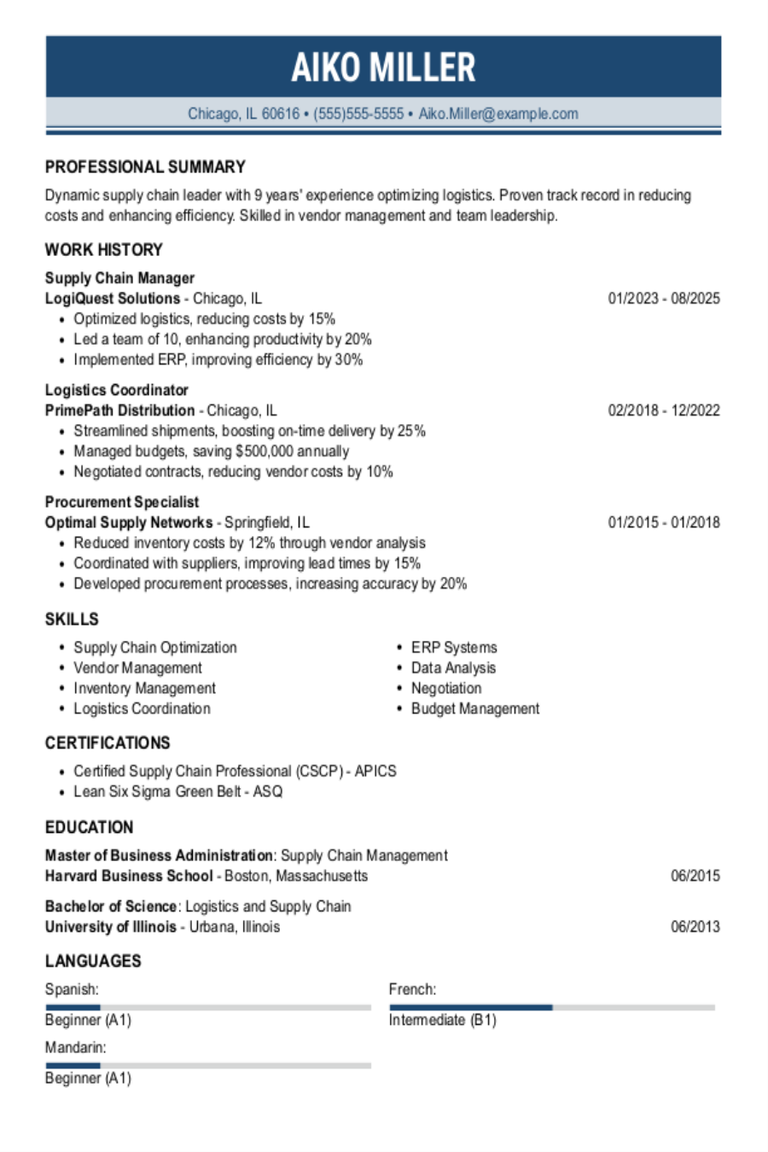
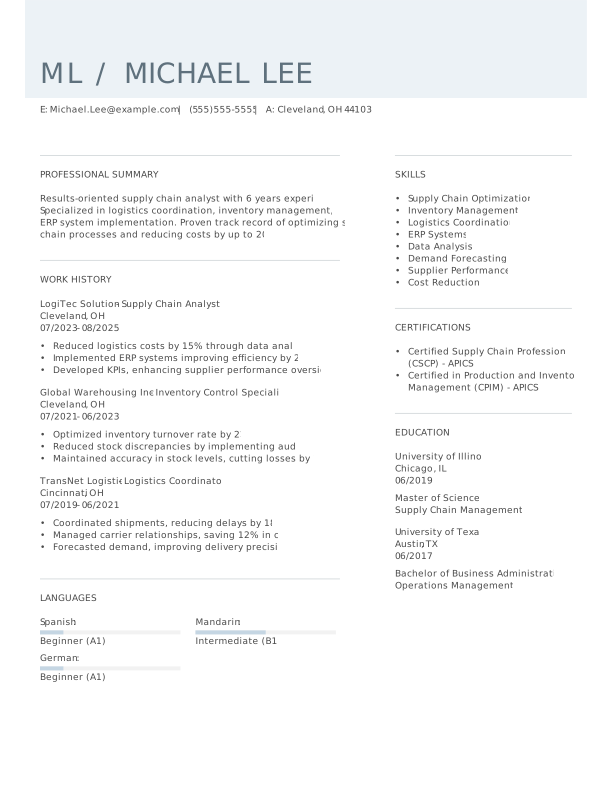
- Quantifies accomplishments: Measurable accomplishments, such as reducing logistics costs by 15% and improving efficiency by 20% with ERP systems, highlight the applicant’s significant impact and value.
- Illustrates problem-solving ability: Through innovative data analysis to cut logistics costs by 15%, the applicant displays problem-solving skills that improve operational efficiency.
- Showcases career progression: Progressing from logistics coordinator to supply chain analyst, their career path reflects a growing expertise in managing complex supply chain challenges.
More Supply Chain Analyst Resume Examples
Our supply chain analyst resume examples show how to emphasize your analytical skills, process optimization experience, and ability to drive efficiency. Use these production resume samples to create a resume that highlights your expertise in supply chain management.
Entry-Level Supply Chain Analyst
Why this resume works
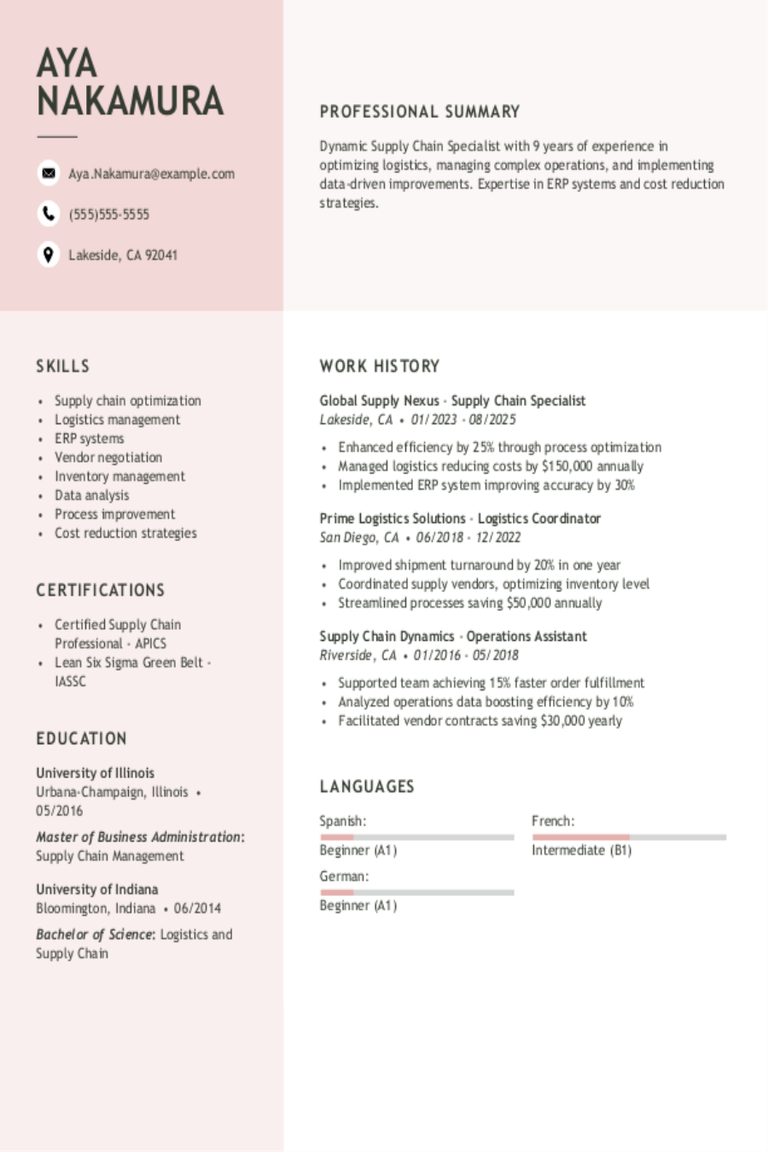
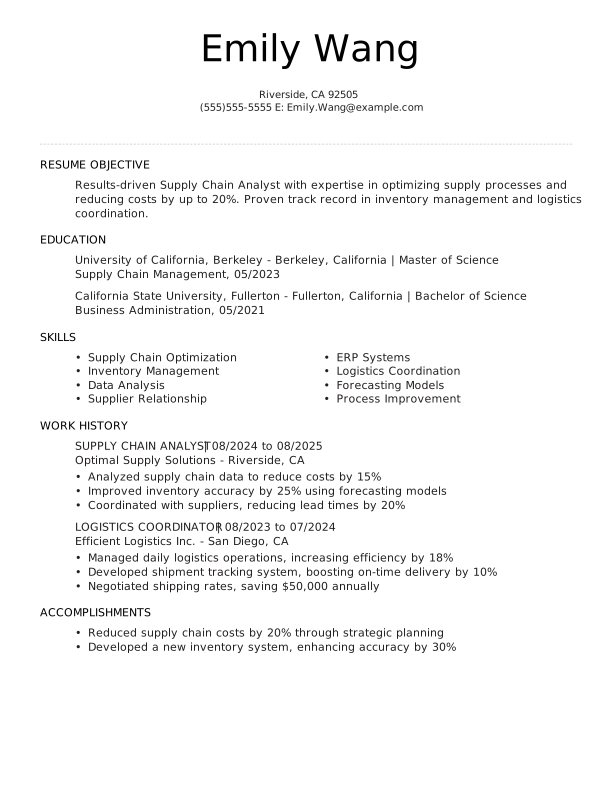
- Effective use of keywords: Strategically using role-specific keywords like “inventory management” and “forecasting models” ensures compatibility with applicant tracking systems (ATS).
- Puts skills at the forefront: The skills-based resume format places core abilities such as supply chain optimization and ERP systems prominently, helping them stand out for entry-level roles.
- Centers on academic background: Highlighting academic success, including a master’s degree in supply chain management, emphasizes early-career accomplishments and builds credibility through strong educational foundations.
Mid-Level Supply Chain Analyst
Why this resume works
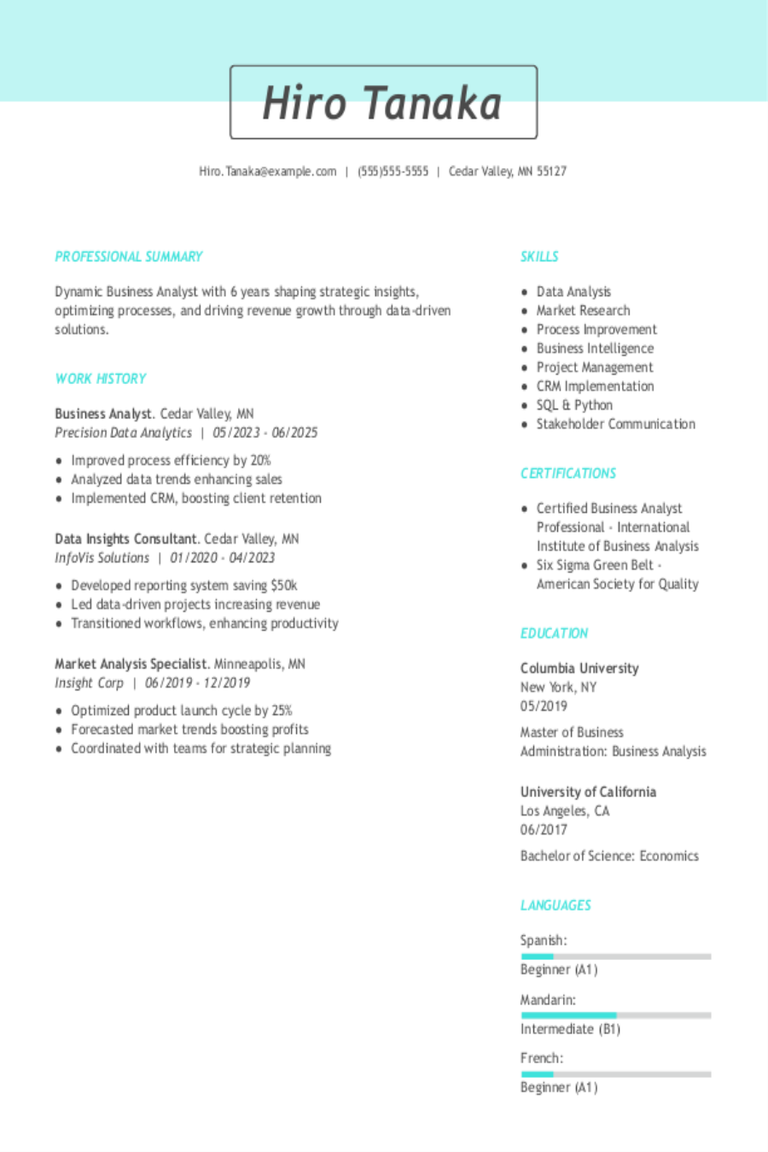
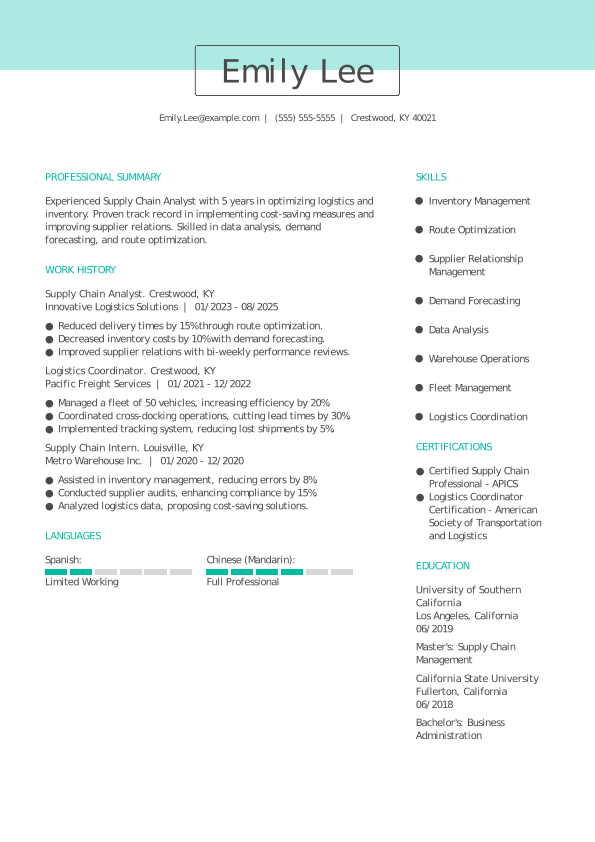
- Points to measurable outcomes: By cutting delivery times by 15% and decreasing inventory costs by 10%, the applicant clearly demonstrates their ability to drive measurable improvements in supply chain efficiency.
- Includes a mix of soft and hard skills: Combining route optimization expertise with strong interpersonal skills, the applicant adeptly balances technical prowess and effective supplier relationship management.
- Demonstrates language abilities: Language skills in Spanish and Mandarin improve the applicant’s capacity for cross-cultural communication in international logistics settings.
Experienced Supply Chain Analyst
Why this resume works
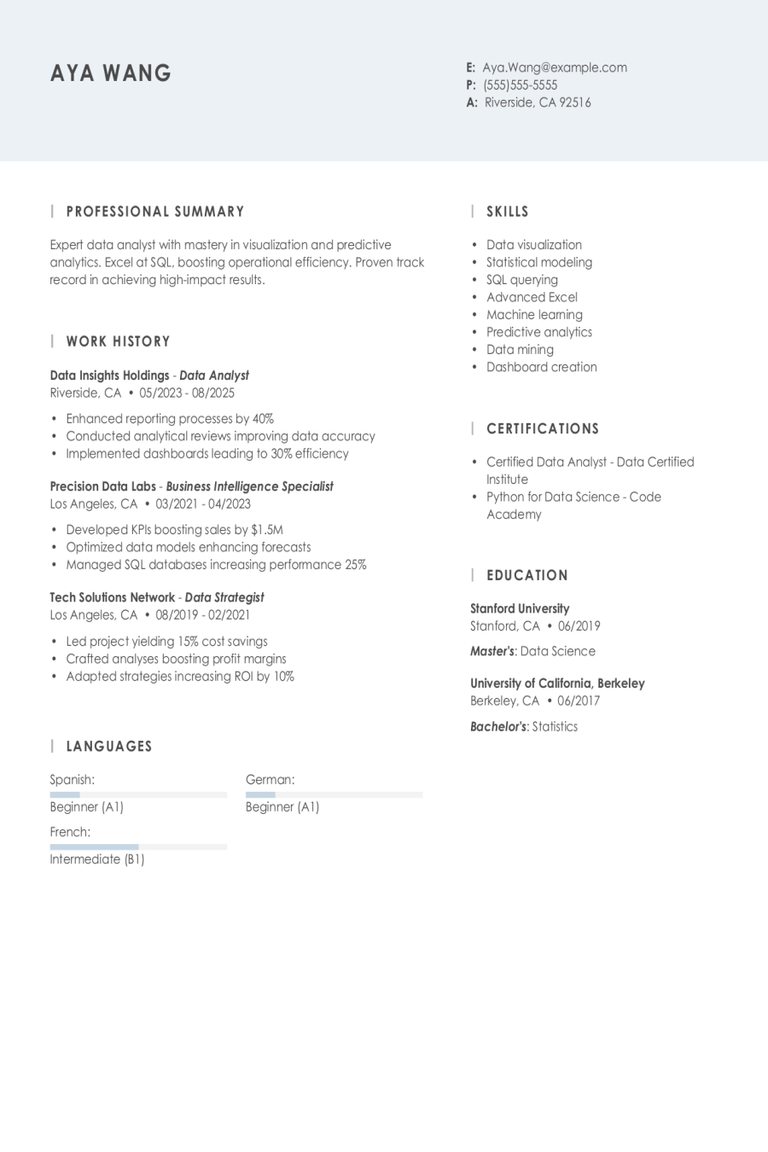
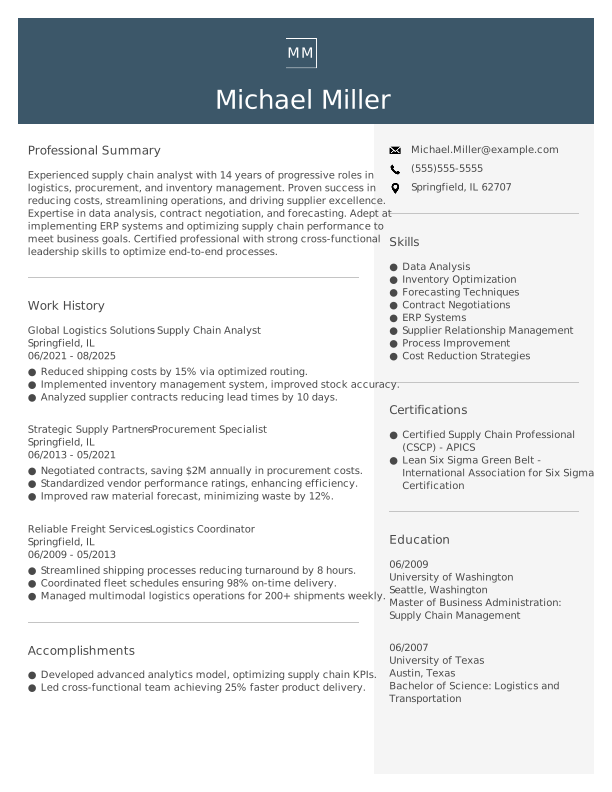
- Focuses on work history: The applicant’s use of a chronological resume format effectively prioritizes career progression through powerful roles and measurable outcomes over 14 years.
- Lists relevant certifications: Including certifications like Certified Supply Chain Professional and Lean Six Sigma Green Belt showcases dedication to mastering industry practices and advanced methodologies.
- Showcases impressive accomplishments: Achievements such as negotiating $2M annual savings highlight strategic thinking, reflecting business-driven innovation at senior levels.
Supply Chain Analyst Resume Template (Text Version)
Use the text template below to get your content organized. For polished, professional designs, visit our resume templates.
Michael Lee
Cleveland, OH 44103
(555)555-5555
Michael.Lee@example.com
Professional Summary
Results-oriented supply chain analyst with 6 years experience. Specialized in logistics coordination, inventory management, and ERP system implementation. Proven track record of optimizing supply chain processes and reducing costs by up to 20%.
Work History
Supply Chain Analyst
LogiTec Solutions – Cleveland, OH
July 2023 – August 2025
- Reduced logistics costs by 15% through data analysis.
- Implemented ERP systems improving efficiency by 20%.
- Developed KPIs, enhancing supplier performance oversight.
Inventory Control Specialist
Global Warehousing Inc. – Cleveland, OH
July 2021 – June 2023
- Optimized inventory turnover rate by 22%.
- Reduced stock discrepancies by implementing audits.
- Maintained accuracy in stock levels, cutting losses by 10%.
Logistics Coordinator
TransNet Logistics – Cincinnati, OH
July 2019 – June 2021
- Coordinated shipments, reducing delays by 18%.
- Managed carrier relationships, saving 12% in costs.
- Forecasted demand, improving delivery precision.
Languages
- Spanish – Beginner (A1)
- Mandarin – Intermediate (B1)
- German – Beginner (A1)
Skills
- Supply Chain Optimization
- Inventory Management
- Logistics Coordination
- ERP Systems
- Data Analysis
- Demand Forecasting
- Supplier Performance
- Cost Reduction
Certifications
- Certified Supply Chain Professional (CSCP) – APICS
- Certified in Production and Inventory Management (CPIM) – APICS
Education
Master of Science Supply Chain Management
University of Illinois Chicago, IL
June 2019
Bachelor of Business Administration Operations Management
University of Texas Austin, TX
June 2017
Related Resume Guides
Advice for Writing Your Supply Chain Analyst Resume
Explore our tips on how to write a resume for supply chain analyst roles and discover ways to highlight your supply chain expertise, analytical skills, and industry experience.
Highlight your most relevant skills
Listing relevant skills when applying for a job like supply chain analyst is essential because it shows employers you have the right abilities for the role. A dedicated skills section helps you stand out by clearly showing what you can do. Include technical skills like data analysis and inventory management, as well as soft skills such as communication and problem-solving.
This mix can make your resume more appealing because it shows you’re not only good with numbers but also able to work well with others. It’s also smart to weave these key skills into your work experience section. By doing this, you give real examples of how you’ve used these abilities in past jobs, making them more believable and powerful.
For instance, if you’ve improved a process using analytical skills, mention that in your job history. This approach helps potential employers see exactly how your skills will benefit their company, giving them confidence in considering you for the supply chain analyst position.
When crafting your resume, remember to be clear and straightforward about what you bring to the table. Use simple language so it’s easy for anyone reading it to understand why you’re a great fit for the job.
Highlight your skills effectively by choosing a resume format that neatly arranges analytical tools, dashboards, and data-driven insights.
Showcase your accomplishments
When organizing your work experience as a supply chain analyst, list your jobs in reverse chronological order. Start with your most recent position and work backward. Each job entry should include your job title, the name of the employer, the location, and the dates of employment. This format makes it easy for hiring managers to see your career progression at a glance.
Quantify your accomplishments to make your resume stand out. Instead of just listing responsibilities, show what you achieved by including measurable results such as percentages, time savings, cost reductions, or efficiency improvements. For example, rather than stating “managed inventory,” say “reduced inventory costs by 15% through improved forecasting methods.” This approach helps potential employers see the direct impact of your work.
Use action-oriented words that focus on core duties and measurable achievements. Words like “improved,” “reduced,” “increased,” and “streamlined” are effective when paired with specific outcomes.
Quantified accomplishments help hiring managers quickly assess your skills and the value you bring to their company. By showcasing these achievements clearly, you demonstrate how you’ve made a difference in past roles as a supply chain analyst.
5 supply chain analyst work history bullet points
- Analyzed supply chain data to identify inefficiencies, resulting in a 25% reduction in lead times across key product lines.
- Developed and implemented a new inventory management system, cutting overstock costs by 18% within the first year.
- Collaborated with cross-functional teams to streamline procurement processes, achieving a 30% faster order cycle time.
- Conducted market research and forecasting analysis that improved demand planning accuracy by 22%, reducing stockouts.
- Implemented logistics optimization strategies that lowered transportation expenses by $500K annually.
Choose a resume template that highlights your qualifications effectively. Opt for clear section breaks, simple fonts, and simple designs to showcase your experience, skills, and achievements.
Write a strong professional summary
A professional summary on a resume acts as an introduction to hiring managers. It’s important to decide whether to use a summary or an objective, depending on your career stage and goals. Both serve different purposes but aim to make a strong first impression.
A professional summary is a brief paragraph that highlights your experience, skills, and achievements. It’s best for those with some work history, like experienced supply chain analysts. Its main purpose is to showcase your professional identity and the value you bring to future employers.
On the other hand, resume objectives are statements about your career goals. They’re ideal for entry-level job seekers, career changers, or those with employment gaps. While summaries focus on “what I’ve accomplished,” objectives center on “what I aim to contribute.”
Now that we’ve covered the basics of summaries and objectives, let’s look at examples tailored for various industries and experience levels. This will help clarify how each can effectively represent a job seeker’s background and aspirations. Explore our extensive library of resume examples for additional inspiration.
Supply chain analyst resume summary examples
Entry-level
Recent supply chain management graduate with a Bachelor of Science degree from a top-ranked university. Completed an internship in logistics and inventory management, gaining foundational skills in data analysis and supply chain optimization. Certified in APICS Basics of Supply Chain Management and eager to contribute analytical skills to improve operational efficiency.
Mid-career
Results-driven supply chain analyst with over six years of experience in the manufacturing and retail sectors. Proven track record in managing supply chain projects, optimizing procurement processes, and reducing costs. Expertise in demand forecasting, SAP ERP systems, and supplier relationship management. Achieved a 15% reduction in lead times through strategic planning and process improvements.
Experienced
Accomplished supply chain analyst with 15+ years of experience leading cross-functional teams to streamline global supply chains for Fortune 500 companies. Expert in advanced analytics, Lean Six Sigma methodologies, and risk management strategies. Successfully led initiatives resulting in a $5 million annual cost savings by improving logistics operations and negotiating better vendor contracts. Passionate about driving innovation and sustainability within the supply chain industry.
Supply chain analyst resume objective examples
Recent graduate
Detail-oriented supply chain management graduate eager to launch a career as a supply chain analyst. Skilled in data analysis and logistics optimization, with internship experience that has fostered a strong understanding of inventory management and supplier relations. Committed to contributing analytical expertise to support efficient supply chain operations.
Career changer
Resourceful professional transitioning from retail management to the role of supply chain analyst, leveraging extensive experience in inventory control and vendor negotiations. Eager to apply business acumen and strategic planning skills toward optimizing logistical processes within a leading organization.
Entry-level applicant
Aspiring supply chain analyst with coursework in operations research and procurement, seeking an entry-level opportunity to develop further practical skills. Enthusiastic about using academic knowledge and problem-solving abilities to improve operational efficiency and drive cost-effective solutions in the supply chain sector.
Use our AI Resume Builder to quickly create a standout resume. It offers easy-to-use templates that show off your supply chain skills and experience.
Match your resume to the job description
Tailoring your resume to job descriptions is key to job hunting success. Employers often use applicant tracking systems (ATS) to sort through resumes, and these systems look for specific words and phrases from the job description. If your resume includes these keywords, you’re more likely to stand out and get noticed by hiring managers.
An ATS-friendly resume closely matches the job description with relevant keywords. By aligning your skills and experiences with these terms, you increase your chances of passing through the ATS filter. This makes it easier for hiring managers to see how well you fit the supply chain analyst role.
To find important keywords in a job posting, look for frequently mentioned skills and duties. For example, if a supply chain analyst job description lists “data analysis,” “inventory management,” or “logistics coordination” several times, those are important phrases to include on your resume.
Incorporate these terms naturally by rephrasing past job duties in your resume. Instead of saying “Managed inventory,” write “Conducted thorough inventory management to streamline operations.” This way, you include keywords while clearly showing what you’ve done.
Customize your resume to improve ATS compatibility by matching the language employers are looking for. This approach helps you get past the initial screening stage and increases your chances of landing an interview for that supply chain analyst position.
You can use our ATS Score Checker to scan your resume for potential issues and receive on-the-spot feedback to improve your resume score.
FAQ
Do I need to include a cover letter with my supply chain analyst resume?
Yes, including a thoughtful cover letter with your supply chain analyst resume can boost your chances of standing out to employers. A cover letter lets you highlight why you’re a great fit for the role by explaining your interest in supply chain operations and showcasing achievements like optimizing inventory or streamlining processes.
For instance, if the company specializes in global logistics or uses specific technology systems, you can share relevant experience with those aspects to strengthen your application.
You might consider using our Cover Letter Generator to craft a tailored letter quickly or refine one you’ve already written with helpful prompts and templates specific to supply chain roles.
Additionally, reviewing cover letter examples for analytical positions can inspire you and ensure your document aligns with industry expectations.
How long should a supply chain analyst’s resume be?
For a supply chain analyst, a one-page resume is often ideal if you’re early in your career or have limited experience. This format helps you highlight key skills like data analysis, logistics planning, and skills with supply chain software concisely.
However, if you’ve gained extensive experience or earned specialized certifications, using a two-page resume might work better. It allows space to showcase achievements such as efficiency improvements and successful project implementations.
To determine how long a resume should be, consider tailoring it to align with your career stage and accomplishments.
How do you write a supply chain analyst resume with no experience?
When creating a resume with no experience for a supply chain analyst role, highlight your education and skills. Emphasize any relevant projects or coursework that align with the position to showcase your potential contributions. Here are a few tips to get started:
- Emphasize education: Highlight your degree in supply chain management, business, or a related field. Include coursework that covers topics like logistics, operations management, and data analysis.
- Feature academic projects: Showcase any class projects or case studies where you analyzed supply chain processes or developed strategies to improve efficiency. Detail your role and the outcomes achieved.
- Highlight transferable skills: Mention skills such as analytical thinking, problem-solving, skill in Excel or other data analysis tools, and effective communication. These are important for a supply chain analyst position.
- Include internships or volunteer work: Even if unrelated directly to supply chain management, internships can demonstrate valuable workplace skills. Any experience with data entry, inventory tracking, or process improvement is relevant.
Consider exploring resources specifically aimed at crafting a resume with no experience to find more tips tailored to early-career professionals.
Rate this article
Supply Chain Analyst


Elizabeth is a Certified Professional Resume Writer (CPRW) and a member of the Professional Association of Resume Writers & Career Coaches. She is committed to helping job seekers navigate the job market and succeed in their careers.
More Articles by Elizabeth Muenzen, CPRWShare this page
 Add MyPerfectResume as a preferred source on Google
Add