Table of Contents
Get started with MyPerfectResume today!
- Build a resume on any device
- Pick an ATS-friendly template
- Tailor with AI copy suggestions
Why this cover letter works
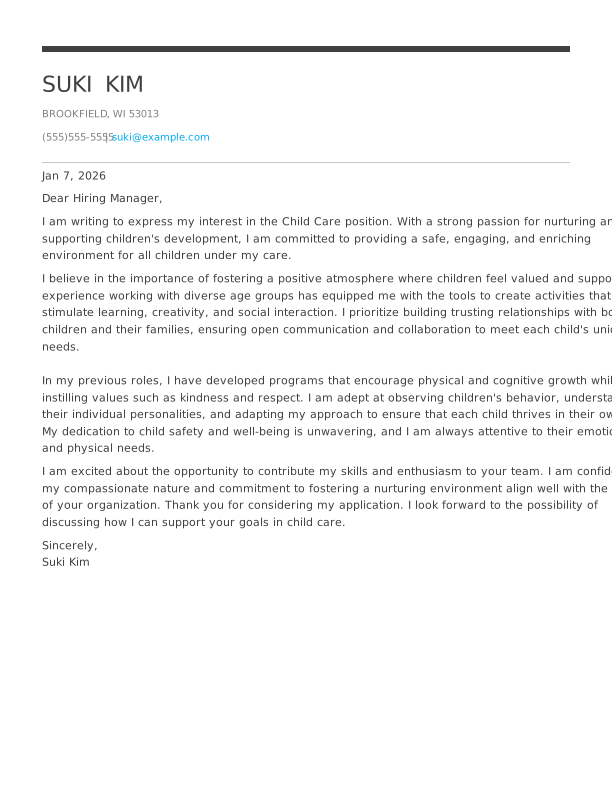
- This cover letter highlights the applicant’s experience creating engaging learning environments and their relevant certifications, such as CPR and first aid. Review what to include in a cover letter to learn what resonates with hiring managers.
More Child Care Cover Letter Examples
Check out our collection of inspiring cover letter examples tailored for various roles in the child care field, designed to help you stand out and secure interviews.
Nanny Cover Letter

Why this cover letter works
- An organized cover letter header like the one above is important because it places the applicant’s name front and center, making it easier for hiring managers to quickly remember who they are considering. In competitive job markets, this visibility helps applications stand out among many others.
Daycare Provider Cover Letter

Why this cover letter works
- This cover letter illustrates professional growth by showcasing the applicant’s transition from a junior child care assistant to a lead educator role, indicating they possess the skills and experience necessary to excel in more advanced responsibilities.
Preschool Teacher Cover Letter

Why this cover letter works
- A strong cover letter outline helped this child care specialist seamlessly integrate their varied experiences into an engaging narrative, highlighting past successes and illustrating potential for future contributions in early childhood education.
Child Care Cover Letter Template (Text Version)
Below, you’ll find a text version perfect for copying. Plus, be sure to explore our collection of cover letter templates to discover options that align with your specific experience in child care.
Suki Kim
Brookfield, WI 53013
(555)555-5555
suki@example.com
Jan 7, 2026
Dear Hiring Manager,
I am writing to express my interest in the Child Care position. With a strong passion for nurturing and supporting children’s development, I am committed to providing a safe, engaging, and enriching environment for all children under my care.
I believe in the importance of fostering a positive atmosphere where children feel valued and supported. My experience working with diverse age groups has equipped me with the tools to create activities that stimulate learning, creativity, and social interaction. I prioritize building trusting relationships with both children and their families, ensuring open communication and collaboration to meet each child’s unique needs.
In my previous roles, I have developed programs that encourage physical and cognitive growth while instilling values such as kindness and respect. I am adept at observing children’s behavior, understanding their individual personalities, and adapting my approach to ensure that each child thrives in their own way. My dedication to child safety and well-being is unwavering, and I am always attentive to their emotional and physical needs.
I am excited about the opportunity to contribute my skills and enthusiasm to your team. I am confident that my compassionate nature and commitment to fostering a nurturing environment align well with the values of your organization. Thank you for considering my application. I look forward to the possibility of discussing how I can support your goals in child care.
Sincerely,
Suki Kim
Related Cover Letter Examples
- Biology
- Business Executive
- Business Operations
- Computer Software
- Construction
- Copywriting
- Cosmetology
- Culinary
- Customer Service
- Dance
- Data Systems Administration
- Dentist
- Driving
- Education
- Electrical
- Electrical Engineering
- Engineering
- Entertainment
- Event Planning
- Film
- Finance
- Fitness Nutrition
- Food Service
- General Laborer
- Healthcare Support
- Hospitality
- Human Resources
- Hvac
- Information Technology
- Insurance
- Inventory Management
- Janitorial
- Law
- Law Enforcement
- Library
- Logistics
- Marketing
- Mechanic
- Mechanical Engineering
- Medical
- Museum
- Nursing
- Pest Control
- Pharmaceutical
- Physical Therapy
- Production
- Project Manager
- Quality Control
- Real Estate
- Retail
- Safety Security
- Sales
- Social Services
- Special-education
- Sports
- Statistics
- Student
- Supervisor
- Teaching
- Team Lead
- Training Development
- Transportation
- Veterinary
How to Write a Child Care Cover Letter
Our professional tips on how to write a cover letter will guide you in highlighting your nurturing qualities and ability to connect with children, ensuring you make a lasting impression.
Address your cover letter properly
Start your cover letter by addressing it to a specific person whenever possible. Use resources like the job posting, company website, or LinkedIn to find the hiring manager’s name. This personal touch shows that you are genuinely interested in the position and have taken the time to research the organization.
If you cannot find a specific name, consider how to address a cover letter effectively in this situation. Avoid using “To Whom It May Concern,” as it can come across as impersonal.
Instead, use greetings like “Dear Hiring Manager” or refer directly to the department with options such as “Dear Child Care Team” or “Dear Early Childhood Education Hiring Manager.” These alternatives demonstrate your understanding of where you are applying. Personalized greetings matter because they reflect key qualities valued in child care—attention to detail and genuine concern for children’s well-being.
A thoughtful approach sets a positive tone for your application and helps you connect with hiring managers seeking dedicated professionals from the very beginning.
Grab attention with your opening paragraph
It’s important to grab the hiring manager’s attention right away. They go through countless applications, so knowing how to start your cover letter effectively is key. Lead with your strongest qualification or a reason you are excited about this opportunity instead of merely repeating what’s on your resume.
Think about what makes you special in the field of child care. Maybe it’s your background in early childhood education, your ability to create engaging activities for kids, or your experience in handling diverse needs with patience and understanding.
Highlight these unique strengths and show how they align with what the employer is looking for. This approach not only demonstrates your qualifications but also shows that you understand the importance of nurturing children’s development.
Example of a strong opener
With over six years of experience in child care, I have successfully fostered a nurturing environment that promotes children’s social and emotional development. My ability to implement engaging educational activities has led to a 20% improvement in children’s readiness for school. I am eager to bring my passion for early childhood education to your team at Bright Futures Academy, where I can contribute to creating enriching experiences for every child.
Looking to make your cover letter stand out in child care applications? Our Cover Letter Generator creates personalized openings based on your relevant experience, helping you capture attention.
Include skills from the job ad
When applying for child care positions, avoid using a generic cover letter that could fit any job. Take the time to read the job posting thoroughly and identify the specific skills and qualifications they are seeking. This shows your attention to detail and helps ensure your application gets past automated screening systems that filter out less tailored submissions.
In your cover letter, be sure to highlight two to three key skills from the job description, supporting each one with concrete examples from your experience in child care. This focused approach demonstrates that you are not just qualified but also uniquely suited for this particular role. It helps potential employers see how you can make a positive impact on their team.
Top skills to list on your cover letter
- Child development knowledge
- Behavior management techniques
- Safety protocols and guidelines
- Nurturing communication skills
- Activity planning and implementation
- Health and nutrition awareness
- Parent-teacher collaboration
- Crisis intervention strategies
- First aid and emergency preparedness
- Time management in caregiving
- Empathy and emotional support
- Observation and assessment skills
- Conflict resolution abilities
- Teamwork in educational settings
- Cultural competency in care
- Learning environment organization
Save time by using a cover letter template from Google Docs or a Microsoft Word cover letter. These templates offer easy formatting, allowing you to focus on customizing your application for each child care position.
Show your impact with numbers
In child care, numbers speak louder than words. Instead of simply stating that you’re a “caring caregiver,” highlight your specific achievements.
For instance, mention how you improved children’s developmental milestones by 30% or successfully reduced behavioral incidents by 40% during your tenure at a local daycare. These concrete examples set you apart from applicants who only list responsibilities without demonstrating impact.
Measurable accomplishments showcase your ability to foster growth and support young learners effectively. Employers want to see proof of success, not just an outline of tasks performed. By sharing quantifiable results, you illustrate that you excel in creating enriching environments where children thrive, making you a standout applicant in the competitive child care field.
Bullet points to include in your cover letter
- Achieved a 95% satisfaction rating from parents over two years in child care services
- Increased enrollment by 30% through community outreach programs and engagement events
- Implemented a new curriculum that improved developmental milestones for 80% of children within one year
- Trained and supported 15 childcare assistants, resulting in a 100% pass rate on state certification exams
- Maintained a safe environment with zero safety incidents reported during my five-year tenure at the center
When selecting a cover letter format, think about how various layouts can better display your quantifiable achievements, as the right choice often depends on your experience level in child care and the specific skills you want to highlight.
Leave a lasting impression
Your closing paragraph should emphasize your enthusiasm for the role and encourage the hiring manager to take action. When thinking about how to end a cover letter, be sure to express your interest directly while maintaining a professional tone.
Thank the hiring manager for their time, reiterate your excitement about the opportunity in child care, and state that you would love to discuss how your skills can positively impact their team or organization. This clear communication can make a significant difference in securing an interview.
Example of cover letter closing
Thank you for reviewing my application for the child care role at Little Stars Nursery. I’m thrilled about the opportunity to support young minds with my nurturing skills and dedication to early childhood development. I look forward to discussing how my experience can improve your team’s impact on children’s growth and success. Hope to connect soon.
Tailor your cover letter for specific situations
Navigating a career in child care with a non-traditional background can be challenging, but it’s important to address your unique situation directly. Acknowledging your journey can help set the tone for why you are an excellent fit for this rewarding field. Here are some examples:
- If you’re switching careers, highlight transferable skills such as communication and empathy from previous roles. For instance, experience in retail may have honed your ability to manage diverse personalities, which is invaluable when working with children and their parents.
- Returning to child care after time away? Reflect on how you’ve kept current through workshops or volunteer activities. Emphasizing your renewed zeal for nurturing young minds shows commitment and readiness to contribute positively.
- As a new graduate, focus on relevant coursework, internships, or any experience working with youth. Mentioning babysitting or tutoring roles showcases your dedication and familiarity with child development principles.
FAQ
How long should a child care cover letter be?
A child care cover letter should be one page long, typically structured in three to four paragraphs. This allows you to effectively showcase your relevant experience and skills while ensuring that hiring managers can easily digest the information without feeling overwhelmed.
Understanding how long a cover letter should be is important for making a lasting impression. Being concise and focused is key since recruiters often spend limited time reviewing applications. A well-crafted cover letter captures attention quickly and clearly communicates your passion for child care, setting you apart from other job seekers.
What’s the difference between a cover letter and a resume?
In your child care resume, you will find a clear and organized presentation of your qualifications, including relevant experience, skills, and certifications.
This document serves as the “what,” outlining your accomplishments and the roles you’ve held in the field of child care. It highlights your ability to create safe and nurturing environments for children while showcasing your expertise in developmental activities.
Conversely, your cover letter represents the “why” and “how.” It expresses your passion for child care, explains how your experiences align perfectly with this specific position, and illustrates why you are drawn to this particular organization.
By understanding the cover letter vs resume distinction, you can strategically leverage both documents to effectively convey different dimensions of your candidacy—making a compelling case for why you should be chosen for the role.
Should I include a cover letter even if it’s not required?
Absolutely! Including a cover letter, even when it’s not required, shows your commitment and enthusiasm in the child care field.
Hiring managers in this sector often look for job seekers who can showcase their passion for nurturing and supporting children beyond what a resume can convey. A well-crafted cover letter allows you to highlight your communication skills and ability to create meaningful connections with children and families.
Consider this scenario: two equally qualified child care professionals apply for the same position. One submits a thoughtful cover letter detailing their dedication to child development, while the other does not.
In this case, whether cover letters are necessary could become the deciding factor for an interview opportunity. When unsure about submitting one, remember that including it presents minimal risk but significant potential rewards.
What does a professional cover letter look like?
When crafting a cover letter for child care positions, it’s essential to present a professional appearance that is clean and organized. Use a standard business letter format that includes your contact information at the top, followed by the date and the employer’s details.
Choose a readable font like Arial or Times New Roman in 11-12 point size, ensuring you maintain standard margins to create an inviting layout.
The structure of your cover letter should include a clear header, a personalized greeting (steer clear of generic salutations), three to four concise paragraphs in the body, and a courteous closing with your signature. Adequate white space improves readability for busy hiring managers who appreciate documents that are easy to scan.
For additional tips on what a cover letter should look like, explore our comprehensive guide to ensure your application stands out professionally.
Can ChatGPT write a cover letter?
While it’s possible to use ChatGPT to write a cover letter, relying solely on it isn’t the best approach. These tools can offer some useful brainstorming help and assist with organizing your thoughts, but they often create content that feels generic and impersonal.
When it comes to such a personal field as child care, where genuine connection is key, this robotic output falls flat. Hiring managers in child care positions are skilled at identifying AI-generated letters because they miss the heartfelt insights and specific experiences that make applicants truly shine.
They want to see your passion for nurturing children, along with real examples from your background in early childhood education or caregiving.
Instead of depending entirely on AI, use it as a launchpad for your ideas and then infuse your letter with authentic stories and reflections unique to your journey. Your true voice will always resonate more than anything generated by an algorithm.
Rate this article
Child Care


Toni is a Certified Professional Resume Writer (CPRW) and member of the Professional Association of Resume Writers & Career Coaches. She is committed to helping job seekers navigate the job market and succeed in their careers.
More Articles by Toni Frana, CPRWShare this page
 Add MyPerfectResume as a preferred source on Google
Add