Table of Contents
Get started with MyPerfectResume today!
- Build a resume on any device
- Pick an ATS-friendly template
- Tailor with AI copy suggestions
Why this cover letter works
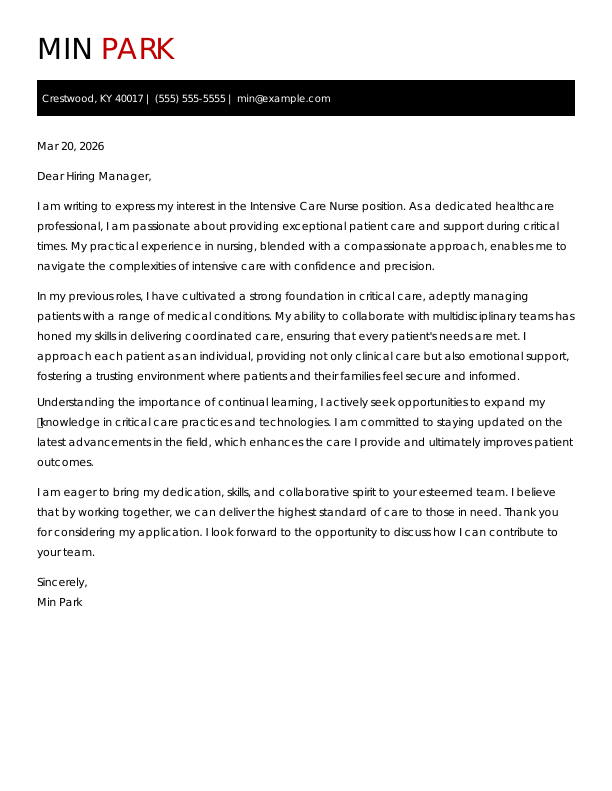
- This cover letter emphasizes the applicant’s advanced clinical skills and experience with critical patient assessments. Review what to include in a cover letter, such as any specialized certifications you hold and your passion for providing compassionate care.
More Intensive Care Nurse Cover Letter Examples
Explore a range of inspiring cover letter examples tailored for intensive care nurses. Whether you’re a recent graduate or an experienced professional, our resources will guide you in crafting the perfect cover letter to showcase your skills and dedication to patient care.
Entry-Level Intensive Care Nurse Cover Letter

Why this cover letter works
- A cover letter header like the one above is important for intensive care nurse applications because it includes essential contact information in a polished, professional format. Ensuring this header aligns with the resume design helps maintain consistency and makes it easier for employers to reach out.
Experienced Intensive Care Nurse Cover Letter

Why this cover letter works
- Using the cover letter outline, this intensive care nurse connected their varied patient care experiences into a compelling narrative, highlighting past successes while showcasing potential for future contributions in healthcare.
Explore Even More Intensive Care Nurse Cover Letters
Intensive Care Nurse Cover Letter Template (Text Version)
Looking to personalize your intensive care nurse cover letter? You’ll find a text version ready for easy copying below, and be sure to explore our selection of cover letter templates that showcase your critical care expertise and fit your unique style.
Min Park
Crestwood, KY 40017
(555)555-5555
min@example.com
Mar 20, 2026
Dear Hiring Manager,
I am writing to express my interest in the Intensive Care Nurse position. As a dedicated healthcare professional, I am passionate about providing exceptional patient care and support during critical times. My practical experience in nursing, blended with a compassionate approach, enables me to navigate the complexities of intensive care with confidence and precision.
In my previous roles, I have cultivated a strong foundation in critical care, adeptly managing patients with a range of medical conditions. My ability to collaborate with multidisciplinary teams has honed my skills in delivering coordinated care, ensuring that every patient’s needs are met. I approach each patient as an individual, providing not only clinical care but also emotional support, fostering a trusting environment where patients and their families feel secure and informed.
Understanding the importance of continual learning, I actively seek opportunities to expand my knowledge in critical care practices and technologies. I am committed to staying updated on the latest advancements in the field, which enhances the care I provide and ultimately improves patient outcomes.
I am eager to bring my dedication, skills, and collaborative spirit to your esteemed team. I believe that by working together, we can deliver the highest standard of care to those in need. Thank you for considering my application. I look forward to the opportunity to discuss how I can contribute to your team.
Sincerely, Min Park
Related Cover Letter Examples
How to Write an Intensive Care Nurse Cover Letter
Are you ready to make your mark as an intensive care nurse? Discover how to write a cover letter that highlights your critical thinking, strong communication skills, and dedication to patient safety. Our professional tips will guide you in creating a cover letter that truly stands out.
Address your cover letter properly
When applying for intensive care nurse positions, make it a priority to address your cover letter to a specific person if possible. You can find the hiring manager’s name by checking the job posting, visiting the hospital website, or searching on LinkedIn. This personal touch demonstrates your initiative and helps your application stand out.
If you’re unsure how to address a cover letter because you can’t find a specific name, avoid using “To Whom It May Concern.” Instead, consider alternatives like “Dear Hiring Manager” or use department-specific greetings such as “Dear ICU Team” or “Dear Critical Care Unit Staff.” These options show that you understand the role and have tailored your message accordingly.
Personalized greetings are significant because they reflect attention to detail and genuine interest in the position. A thoughtful salutation sets a professional tone and highlights qualities that are essential in nursing, such as compassion and commitment to patient care.
Grab attention with your opening paragraph
To grab the hiring manager’s attention quickly, you need to know how to start your cover letter with impact. Since they sift through many applications, your first few lines are important. Instead of repeating what’s in your resume, focus on your strongest qualities or achievements that relate directly to the role you’re applying for.
Think about what sets you apart as an intensive care nurse. Is it your advanced certifications in critical care? Perhaps it’s your experience with complex cases or a commitment to patient-centered care.
Identify these strengths and connect them back to what the hospital needs, like improving patient outcomes or working well under pressure. Highlighting how your unique skills align with their goals can make a strong impression.
Example of a strong opener
As an experienced intensive care nurse with over four years in high-pressure environments, I have successfully improved patient outcomes by implementing evidence-based protocols, leading to a 20% reduction in ventilator-associated pneumonia. I am eager to join the dedicated team at City Hospital, where my expertise in critical care and strong communication skills can contribute to optimizing patient recovery and improving overall care quality.
If you’re struggling to find the right words for your cover letter opening, our Cover Letter Generator creates personalized introductions based on your intensive care nursing background in minutes.
Include skills from the job ad
Do not submit a generic cover letter for an intensive care nurse position. Carefully review the job posting and tailor your letter to reflect the specific skills and qualifications requested. This shows you’re attentive to detail and understand what the employer needs, which can help your application get through automated screening systems.
In your cover letter, focus on two to three key skills mentioned in the job description. Provide concrete examples from your nursing experience that illustrate how you have effectively used these skills in high-pressure situations. This focused approach highlights not only your qualifications but also demonstrates that you’re a great fit for this particular role and healthcare environment.
Top skills to list on your cover letter
- Patient assessment and care planning
- Advanced cardiac life support (ACLS)
- Medication administration and safety
- Critical thinking and clinical judgment
- IV insertion and phlebotomy
- Wound care management
- Patient and family education
- Infection control protocols
- Emergency response readiness
- Team collaboration and communication
- Time management and prioritization
- Compassionate patient advocacy
- Cultural sensitivity awareness
- Pain assessment techniques
- Discharge planning coordination
- Quality assurance practices
Save time with a cover letter template from Google Docs or a Microsoft Word cover letter, which ensures neat formatting so you can concentrate on tailoring your content for each intensive care nurse position.
Show your impact with numbers
In intensive care nursing, numbers speak louder than words. Instead of saying you’re a “compassionate caregiver,” provide concrete examples such as successfully reducing patient infection rates by 30% or managing a caseload of 5 critically ill patients simultaneously while maintaining a high level of care.
These specific metrics distinguish you from other applicants who simply outline their responsibilities, showcasing that you go beyond the basic expectations.
Quantifiable achievements illustrate your ability to deliver tangible results, which is what healthcare employers value most. They demonstrate that you not only fulfill your duties but also excel in high-pressure situations and improve patient outcomes.
By presenting measurable accomplishments, you effectively communicate your skills and readiness to contribute positively to any healthcare team, reinforcing your potential impact within the organization.
Bullet points to include in your cover letter
- Achieved a 95% patient recovery rate within the first year in the ICU
- Implemented a new monitoring protocol that reduced response times to emergencies by 40%
- Trained and onboarded 15 nursing students, resulting in an impressive 90% passing rate on their licensing exams
- Developed a family support program that increased patient engagement scores by 25%
- Maintained a record of zero medication errors during my tenure, improving overall patient safety
When applying as an intensive care nurse, consider choosing a cover letter format that emphasizes your specific achievements. Different layouts can highlight your metrics in a way that resonates with hiring managers based on your experience level.
Leave a lasting impression
Your closing paragraph should reinforce your enthusiasm and prompt the hiring manager to take action. Understanding how to end a cover letter involves being direct about your interest while maintaining professionalism.
Thank them for considering your application, reiterate your excitement for the position, and express your desire to discuss how your nursing skills can positively impact their team. This approach not only showcases your eagerness but also encourages the hiring manager to reach out for further conversation.
Example of cover letter closing
Thank you for considering my application for the intensive care nurse position at CareWell Medical Center. I am truly excited about the opportunity to leverage my critical care skills and dedication to patient wellness within your esteemed team. I would love to discuss how my background in high-stakes environments can support your unit’s mission of delivering exceptional care. I look forward to the possibility of contributing to your team’s success and hope to hear from you soon.
Tailor your cover letter for specific situations
Navigating a career in intensive care nursing with a non-traditional background can be challenging but rewarding. It’s essential to directly address your unique journey and how it shapes your approach to patient care. Here are a few examples:
- For those making a career switch, emphasize the skills you’ve honed in previous roles. For example, if you come from a tech background, highlight your analytical skills and ability to adapt quickly to new situations, which are important in high-pressure scenarios like ICU settings.
- If you’re returning to nursing after some time away, discuss how you’ve kept your skills fresh through volunteer work or relevant courses. Share your excitement about re-entering the field with renewed passion for patient advocacy and quality care.
- New graduates should point out their clinical experiences and any internships or volunteer positions that relate to critical care. Mention your eagerness to apply what you’ve learned and make a meaningful impact in the lives of patients.
FAQ
How long should an intensive care nurse’s cover letter be?
Cover letters for intensive care nurse applications should be one page long, typically structured in three to four paragraphs. This format provides enough space to showcase your relevant experience, skills, and commitment to patient care without overwhelming the hiring manager.
Understanding how long a cover letter should be is important for standing out. Being concise and focused is essential since recruiters spend a limited amount of time reviewing each application. Highlighting key qualifications clearly will help ensure your cover letter makes a lasting impression without unnecessary details.
What’s the difference between a cover letter and a resume?
When applying for an intensive care nurse position, your intensive care nurse resume outlines your clinical experience and qualifications in a clear, structured manner.
It serves as a snapshot of the “what”—highlighting your accomplishments, skills, and previous roles in healthcare. In contrast, your cover letter provides a narrative that connects these elements, allowing you to share your journey and motivations.
The cover letter answers the “why” and “how.” It reveals your passion for nursing, explains how your background makes you an ideal fit for the role, and conveys why you’re drawn to this specific healthcare facility.
Understanding the cover letter vs resume distinction allows you to leverage each document’s strengths, creating a comprehensive picture of who you are as a job seeker while improving your overall application.
Should I include a cover letter even if it’s not required?
Absolutely! Submitting a cover letter, even when optional, shows your dedication and willingness to go the extra mile in intensive care nursing.
This field values attention to detail and exceptional communication skills, which are essential for delivering high-quality patient care. Hiring managers want to see evidence of your passion and commitment beyond what is listed on your resume.
Imagine two equally qualified intensive care nurses applying for the same position, but only one includes a compelling cover letter detailing their experiences and dedication to critical patient outcomes. In discussions about whether cover letters are necessary, it becomes clear that this thoughtful addition can set you apart.
When in doubt, include a cover letter—you have nothing to lose and everything to gain by highlighting your unique strengths and perspectives in such a challenging role.
What does a professional cover letter look like?
A professional intensive care nurse cover letter should be clean, organized, and easy to scan at a glance. Use a standard business letter format that includes your contact information at the top, followed by the date and the employer’s details.
For clarity, choose a professional font like Arial or Times New Roman in 11-12 point size, ensuring standard margins and single spacing between lines.
The layout should consist of a clear header, a personalized greeting (avoid “To Whom It May Concern”), three to four concise paragraphs in the body, and a formal closing with your signature. Since hiring managers often review numerous applications quickly, it’s best to maintain ample white space to improve readability.
For additional guidance on what a cover letter should look like and tips for formatting, refer to our resource guide that will help present your application professionally.
Can ChatGPT write a cover letter?
While you can use ChatGPT to write a cover letter, it may not provide the personal touch that makes your application stand out. AI tools can help brainstorm ideas and overcome writer’s block, but they often generate content that feels robotic and lacks individuality.
Relying solely on these tools can lead to a cover letter that doesn’t truly reflect your unique experiences as an intensive care nurse.
Hiring managers in critical care quickly identify AI-generated letters because they typically miss the specific insights and genuine passion important in this field. These letters often lack the depth of understanding and commitment to patient care that defines skilled nurses.
Instead of depending entirely on AI, use it as a tool to organize your thoughts, then infuse your letter with personal anecdotes and motivations for wanting to work at that particular hospital. Your authentic voice will always resonate more powerfully than any automated content.
Rate this article
Intensive Care Nurse


Elizabeth is a Certified Professional Resume Writer (CPRW) and a member of the Professional Association of Resume Writers & Career Coaches. She is committed to helping job seekers navigate the job market and succeed in their careers.
More Articles by Elizabeth Muenzen, CPRWShare this page
 Add MyPerfectResume as a preferred source on Google
Add