Table of Contents
Get started with MyPerfectResume today!
- Build a resume on any device
- Pick an ATS-friendly template
- Tailor with AI copy suggestions
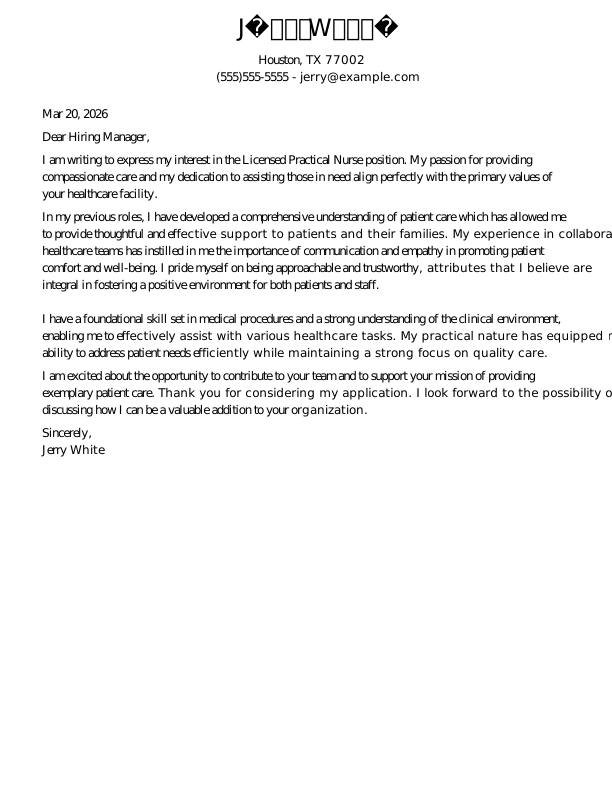
Why this cover letter works
- This cover letter emphasizes hands-on patient care experience, relevant nursing certifications, and a commitment to improving patient well-being. If you’re wondering what to include in a cover letter, it’s best to highlight specific examples of teamwork and communication skills, along with a passion for providing compassionate care that aligns with the values of the healthcare facility.
More Licensed Practical Nurse Cover Letter Examples
Looking to elevate your job applications as a licensed practical nurse? Check out our collection of cover letter examples that cater to both fresh graduates and experienced professionals. These examples provide insights needed to craft a compelling narrative for your career journey.
Entry-Level Licensed Practical Nurse Cover Letter

Why this cover letter works
- A cover letter header like this one is important for licensed practical nurse applications, as it presents contact information in a polished and professional manner. Consistency with the resume design improves the applicant’s credibility, ensuring potential employers can easily reach out and recognize the cohesive presentation.
Experienced Licensed Practical Nurse Cover Letter

Why this cover letter works
- A cover letter outline helped this job seeker organize their patient care experience, commitment to compassionate service, and desire for continuous learning. This structure highlights their qualifications and showcases their readiness to contribute positively to the healthcare team as a licensed practical nurse.
Licensed Practical Nurse Cover Letter Template (Text Version)
Eager to personalize your licensed practical nurse cover letter? You’ll find a text version here for easy copying, and be sure to check out our extensive collection of cover letter templates to find the ideal format that showcases your nursing skills.
Jerry White
Houston, TX 77002
(555)555-5555
jerry@example.com
Mar 20, 2026
Dear Hiring Manager,
I am writing to express my interest in the Licensed Practical Nurse position. My passion for providing compassionate care and my dedication to assisting those in need align perfectly with the primary values of your healthcare facility.
In my previous roles, I have developed a comprehensive understanding of patient care which has allowed me to provide thoughtful and effective support to patients and their families. My experience in collaborating with healthcare teams has instilled in me the importance of communication and empathy in promoting patient comfort and well-being. I pride myself on being approachable and trustworthy, attributes that I believe are integral in fostering a positive environment for both patients and staff.
I have a foundational skill set in medical procedures and a strong understanding of the clinical environment, enabling me to effectively assist with various healthcare tasks. My practical nature has equipped me with the ability to address patient needs efficiently while maintaining a strong focus on quality care.
I am excited about the opportunity to contribute to your team and to support your mission of providing exemplary patient care. Thank you for considering my application. I look forward to the possibility of discussing how I can be a valuable addition to your organization.
Sincerely,
Jerry White
Related Cover Letter Examples
How to Write a Licensed Practical Nurse Cover Letter
Our expert tips on how to write a cover letter will help you highlight your compassionate patient care, strong communication skills, and dedication to nursing excellence as part of the process. Let’s get started on making your application shine.
Address your cover letter properly
When applying for licensed practical nurse positions, always try to address your cover letter to a specific person. Take the time to search for the hiring manager’s name through the job posting, facility website, or LinkedIn profile. This personal touch shows you’re invested in the application process and helps you stand out.
If you’re unsure how to address a cover letter because you can’t find a name, don’t resort to “To Whom It May Concern.” Instead, use “Dear Hiring Manager” or a more targeted greeting such as “Dear Nursing Staff” or “Dear [Department Name] Team.” This approach demonstrates your knowledge of the role and organization while maintaining professionalism.
Personalized greetings are essential as they reflect your attention to detail and genuine interest in joining their team. They provide an opportunity to showcase qualities that matter in nursing, such as compassion and dedication. A thoughtful salutation can create a positive first impression and set the tone for your application.
Grab attention with your opening paragraph
To grab the hiring manager’s attention right away, you need to learn how to start your cover letter memorably. Remember that they are sifting through many applications, so it’s essential to highlight your strongest qualifications instead of repeating what’s on your resume. A strong opening sets the tone and shows you’re eager for the position.
Think about what makes you stand out as a licensed practical nurse. Perhaps you have specialized training in geriatrics, a knack for building rapport with patients, or experience in wound care management. Identify these strengths and tie them directly to what the employer is looking for. This connection not only showcases your unique skills but also demonstrates that you understand their needs well.
Example of a strong opener
As a licensed practical nurse with three years of experience in diverse healthcare settings, I am eager to contribute my patient care skills and compassion to the team at Sunnydale Health. My dedication has helped improve patient satisfaction scores by 20% in my current role. I believe my strong communication abilities and attention to detail align perfectly with your mission of providing exceptional care.
Looking to make a memorable first impression in your cover letter? Our Cover Letter Generator crafts personalized openings based on your nursing background, helping you stand out in minutes.
Include skills from the job ad
Do not submit a generic cover letter for licensed practical nurse positions. Instead, take the time to read the job posting closely and reflect on the specific skills and qualifications they are looking for. This careful attention shows you’re a diligent applicant who understands their needs and can help your application navigate automated screening systems that filter out irrelevant submissions.
In your cover letter, emphasize two to three key skills from the job description, backing each with a specific example from your nursing experience. This focused approach highlights your qualifications and demonstrates that you’re not just any applicant but the right fit for this particular role in their healthcare environment.
Top skills to list on your cover letter
- Patient assessment and care planning
- Electronic health records (EHR/EMR)
- Medication administration and safety
- Critical thinking and clinical judgment
- IV insertion and phlebotomy
- Wound care and dressing changes
- Patient and family education
- Infection control protocols
- Emergency response procedures
- Team collaboration skills
- Time management techniques
- Compassionate patient advocacy
- Cultural sensitivity training
- Pain management strategies
- Discharge planning assistance
- Quality improvement participation
Save time by using a cover letter template from Google Docs or a Microsoft Word cover letter. These templates ensure neat formatting, allowing you to focus on tailoring your content for each licensed practical nurse position.
Show your impact with numbers
In nursing, numbers speak louder than words. Instead of claiming you’re a “compassionate nurse,” provide concrete examples of your impact. For instance, mention how you reduced patient wait times by 30% through efficient triage processes or achieved a 95% satisfaction rating in patient feedback surveys.
These specific metrics distinguish you from other job seekers who only discuss duties, showcasing your ability to drive positive outcomes.
Quantifiable achievements demonstrate your capability to deliver results, which is precisely what healthcare employers seek. They indicate that you excel in your role and can replicate that success in their organization.
By highlighting measurable accomplishments, you reveal not just dedication but also a proven ability to improve patient care and operational efficiency, making you a valuable asset to any healthcare team.
Bullet points to include in your cover letter
- Delivered compassionate care to 150+ patients monthly, achieving a 95% positive feedback rate
- Streamlined patient intake processes, reducing wait times by 40% over six months
- Trained and supported 15 nursing students, with a successful pass rate of 100% on their licensing exams
- Implemented infection control measures that resulted in a 20% decrease in hospital readmissions within one year
- Collaborated with healthcare teams to improve patient education programs, increasing participation by 50% during my tenure
Choosing the appropriate cover letter format is important for licensed practical nurse job seekers. Different layouts can better highlight your measurable accomplishments, with the ideal choice often depending on your level of experience in nursing.
Leave a lasting impression
Your closing paragraph should reinforce your enthusiasm and prompt the hiring manager to take action. Learning how to end a cover letter involves being direct about your interest while maintaining professionalism. Thank them for their consideration, express excitement for the opportunity, and clearly state your desire to discuss how your nursing skills can positively impact their team.
Example of cover letter closing
Thank you for reviewing my application for the licensed practical nurse position at Harmony Care Center. I am thrilled about the opportunity to contribute my skills in patient care and health education to your team. I believe my background in providing compassionate support aligns well with your mission of improving patient well-being. I would love to discuss how my experience can help foster growth and success within your facility. I look forward to the possibility of connecting soon.
Tailor your cover letter for specific situations
Navigating your path to becoming a licensed practical nurse with a non-traditional background can be challenging, but it’s best to address your unique experiences directly. Acknowledge any changes in your career journey and focus on how these experiences enrich your qualifications.
- If you’re changing careers, highlight transferable skills. For example, if you worked in retail, your ability to communicate effectively with customers is an asset when interacting with patients.
- Returning to nursing after a break? Discuss how you’ve kept up-to-date through courses or volunteer work. Your renewed passion for patient care shows commitment and dedication.
- For new graduates, emphasize your clinical experience during rotations and relevant coursework. Any roles related to healthcare, such as volunteering or working as a nursing assistant, provide valuable insights into patient care.
By presenting your unique background confidently, you can showcase the strengths that make you an exceptional applicant for this role.
FAQ
How long should a licensed practical nurse’s cover letter be?
Cover letters for licensed practical nurse positions should be one page long, typically consisting of three to four paragraphs. This length allows you to showcase your relevant clinical experience and skills while keeping the information succinct enough not to overwhelm hiring managers.
Knowing how long a cover letter should be is key to making a positive impression. Being concise and focused is essential since recruiters spend limited time reviewing applications. Aim to present your qualifications clearly so that they stand out in those important few seconds of review.
What’s the difference between a cover letter and a resume?
When applying for a licensed practical nurse resume position, your resume highlights your clinical experience, certifications, and education in an organized manner.
It serves as the “what” of your career, detailing what you have achieved, the skills you possess, and the roles you have fulfilled. In contrast, the cover letter provides a narrative that connects those qualifications to your personal journey and motivations.
The cover letter represents the “why” and “how.” It explains your passion for nursing, details how your experiences align with the specific role you’re pursuing, and expresses why you want to join that particular healthcare organization.
By understanding the cover letter vs resume distinction, you can leverage each document to showcase different dimensions of your nursing career. This approach creates a well-rounded application that clearly communicates your suitability for the position.
Should I include a cover letter even if it’s not required?
Absolutely! Including a cover letter, even when optional, reflects your dedication and willingness to go the extra mile in the nursing field.
Hiring managers for licensed practical nurse positions value not just your qualifications but also your ability to communicate and demonstrate compassion towards patients. A resume alone may not fully convey these essential qualities.
Imagine this scenario: two equally qualified licensed practical nurses apply for the same job, but only one submits a compelling cover letter that highlights their commitment to patient care and teamwork.
In discussions about whether cover letters are necessary, it’s clear that the applicant who took the initiative may stand out more. When in doubt, include a cover letter—you have nothing to lose by showcasing your passion and personality while potentially gaining that important edge over other applicants.
What does a professional cover letter look like?
A professional licensed practical nurse cover letter should be clean, organized, and easy to scan at a glance. Use a standard business letter format that includes your contact information at the top, followed by the date and employer’s details.
Choose a readable font like Arial or Times New Roman in 11-12 point size with standard margins and single spacing between lines to ensure clarity.
The layout must have a clear header, a personalized greeting (avoid “To Whom It May Concern”), three to four concise paragraphs in the body, and a formal closing with your signature. Prioritize white space for readability since hiring managers often review many applications quickly.
For further guidance on what a cover letter should look like, refer to our resource that provides visual examples and tips on formatting your application professionally.
Can ChatGPT write a cover letter?
While you can use ChatGPT to write a cover letter, it might not be the ideal choice for crafting one that reflects your individuality. AI tools can assist in brainstorming ideas and overcoming writer’s block, but they often generate content that feels generic and lacks a personal touch.
Relying solely on these tools could result in a letter that fails to convey your unique qualifications or genuine commitment to patient care.
Hiring managers in nursing quickly spot AI-generated letters as they typically miss heartfelt insights and specific experiences important in healthcare. Such letters often lack the passion for patient advocacy and clinical knowledge that define dedicated nurses.
Instead of relying entirely on AI, use it as a starting point to organize your thoughts, then enrich your cover letter with authentic stories and motivations for joining that particular healthcare team. Your true voice will always resonate more than any automated text could ever achieve.
Rate this article
Licensed Practical Nurse


Marla is a professional resume writer. She is committed to helping job seekers navigate the job market and succeed in their careers.
More Articles by Marla FigueroaShare this page
 Add MyPerfectResume as a preferred source on Google
Add