Table of Contents
Get started with MyPerfectResume today!
- Build a resume on any device
- Pick an ATS-friendly template
- Tailor with AI copy suggestions
Why this resume works
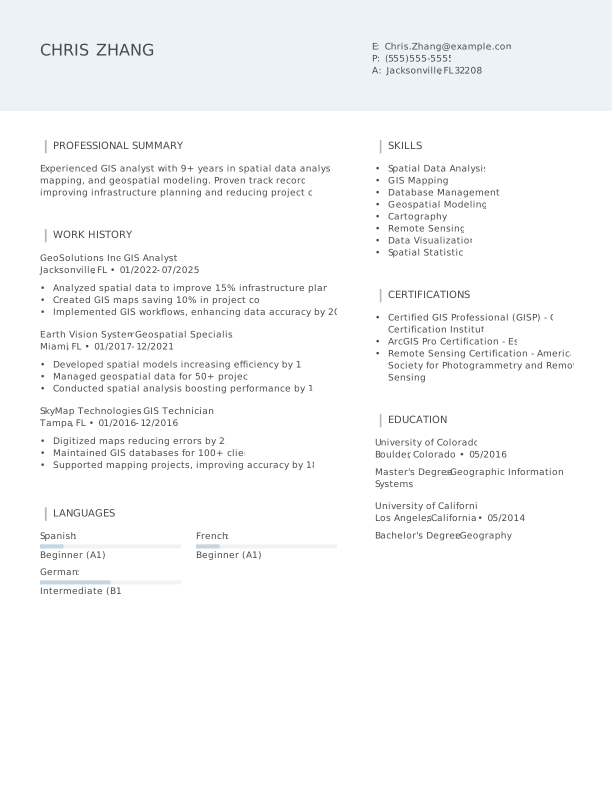
- Highlights industry-specific skills: Through roles as a GIS analyst and geospatial specialist, the applicant showcases deep knowledge in spatial data analysis and geospatial modeling, aligning perfectly with industry needs.
- Quantifies accomplishments: Using metrics to quantify their accomplishments, such as improving infrastructure planning by 15%, the applicant effectively demonstrates their impact on projects.
- Illustrates problem-solving ability: Implementing new GIS workflows to boost accuracy by 20% highlights the applicant’s ability to solve problems creatively, proving they possess strong problem-solving skills.
More GIS Analyst Resume Examples
Check out these GIS analyst resume examples to learn how to showcase your mapping skills, spatial analysis expertise, and ability to interpret geographic data. Use these samples as a guide to help you create a resume that stands out in the field.
Entry-level GIS analyst
Why this resume works
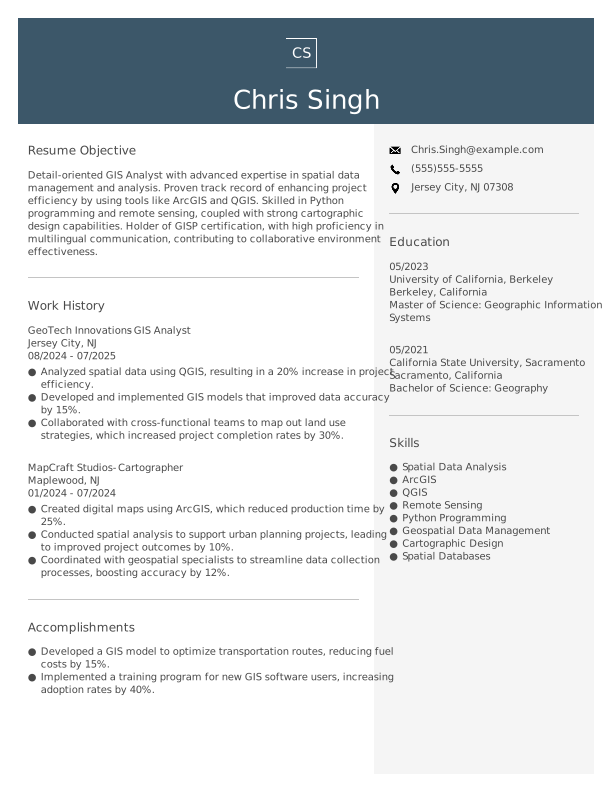
- Centers on academic background: With a solid academic foundation from University of California, Berkeley, and California State University, Sacramento, the applicant’s educational journey emphasizes specialization in GIS and cartography.
- Shows digital literacy: Through computer skills like ArcGIS and QGIS, the applicant showcases an adeptness for digital tools essential in today’s tech-driven environments.
- Effective use of keywords: Incorporating industry-specific keywords such as spatial data analysis and geospatial data management ensures the resume aligns with ATS criteria.
Mid-level GIS analyst
Why this resume works
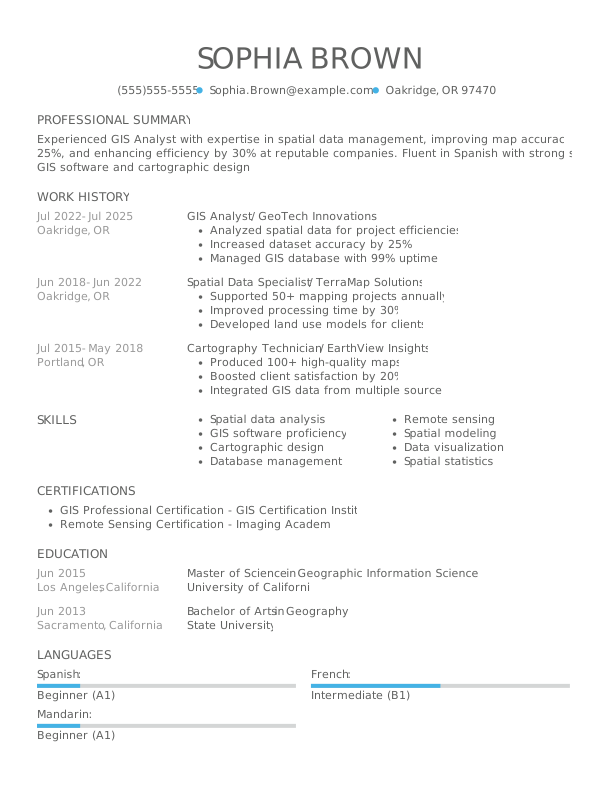
- Points to measurable outcomes: By noting a 25% increase in dataset accuracy and a 30% faster processing time, the applicant effectively communicates their ability to deliver measurable improvements in project outcomes.
- Displays technical expertise: The applicant’s technical prowess shines through with GIS professional certification and remote sensing expertise, underlining a deep understanding of essential tools and technologies for spatial data management.
- Includes a mix of soft and hard skills: Showcasing skills in cartographic design alongside interpersonal skills like client satisfaction enhancement highlights a balanced mix of technical prowess and people-focused capabilities.
Experienced GIS analyst
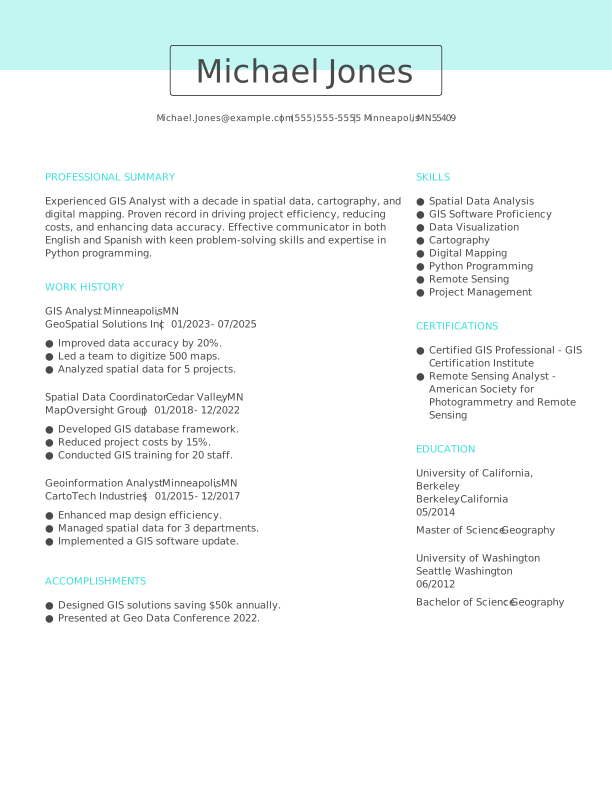
Why this resume works
- Focuses on work history: By using a chronological resume format, the applicant clearly outlines a strong progression in GIS expertise, tracing growth from geoinformation analyst to GIS analyst.
- Lists relevant certifications: Including certifications like Certified GIS Professional and Remote Sensing Analyst showcases dedication to staying current in geospatial technology and techniques.
- Emphasizes leadership skills: The applicant’s leadership skills are evident through managing teams and spearheading projects, such as leading the digitization of 500 maps for GeoSpatial Solutions Inc.
GIS Analyst Resume Template (Text Version)
Need a quick option? Grab the format below, or explore our resume templates for a fuller selection.
Chris Zhang
Jacksonville, FL 32208
(555)555-5555
Chris.Zhang@example.com
Professional Summary
Experienced GIS analyst with 9+ years in spatial data analysis, GIS mapping, and geospatial modeling. Proven track record of improving infrastructure planning and reducing project costs.
Work History
GIS Analyst
GeoSolutions Inc. – Jacksonville, FL
January 2022 – July 2025
- Analyzed spatial data to improve 15% infrastructure planning.
- Created GIS maps saving 10% in project costs.
- Implemented GIS workflows, enhancing data accuracy by 20%.
Geospatial Specialist
Earth Vision Systems – Miami, FL
January 2017 – December 2021
- Developed spatial models increasing efficiency by 15%.
- Managed geospatial data for 50+ projects.
- Conducted spatial analysis boosting performance by 10%.
GIS Technician
SkyMap Technologies – Tampa, FL
January 2016 – December 2016
- Digitized maps reducing errors by 25%.
- Maintained GIS databases for 100+ clients.
- Supported mapping projects, improving accuracy by 18%.
Languages
- Spanish – Beginner (A1)
- French – Beginner (A1)
- German – Intermediate (B1)
Skills
- Spatial Data Analysis
- GIS Mapping
- Database Management
- Geospatial Modeling
- Cartography
- Remote Sensing
- Data Visualization
- Spatial Statistics
Certifications
- Certified GIS Professional (GISP) – GIS Certification Institute
- ArcGIS Pro Certification – Esri
- Remote Sensing Certification – American Society for Photogrammetry and Remote Sensing
Education
Master’s Degree Geographic Information Systems
University of Colorado Boulder, Colorado
May 2016
Bachelor’s Degree Geography
University of California Los Angeles, California
May 2014
Related Resume Guides
Advice for Writing Your Gis Analyst Resume
Learn how to write a resume for a GIS analyst position and discover how to highlight your mapping skills, analytical expertise, and passion for geospatial technology.
Explore tailored tips that will help you stand out in the world of geographic information systems.
Highlight relevant technical skills
In the role of GIS analyst, technical skills are key to daily tasks. To stand out, include a technical skills section or integrate these abilities into your work experience when they relate directly to completed projects. Highlighting specific tools and software you’ve used helps potential employers see how prepared you are for the role.
Desirable skills in this field include:
- Working with geographic information systems like ArcGIS and QGIS
- Performing spatial data analysis
- Database management using SQL
- Knowledge of programming languages like Python or R
- Geospatial modeling
- Experience using remote sensing tools such as ERDAS Imagine or ENVI
- Familiarity with web mapping platforms like Leaflet or Mapbox
When describing your technical expertise, focus on practical applications. For example, mention how you’ve used GIS software to analyze environmental patterns or support urban planning efforts.
If integrating skills into work experience entries, connect them directly to outcomes that highlight their impact on past projects. This approach ensures your resume shows how your abilities lead to real-world results employers care about.
Example of a technical skills section
- ArcGIS software suite (ArcMap, ArcGIS pro, ArcCatalog)
- Spatial analysis and geoprocessing
- Remote sensing techniques
- QGIS and open source GIS tools
- Data visualization with Tableau and Power BI
- GPS data collection and processing
- Database management (SQL, PostgreSQL, spatial databases)
- Cartographic design principles
- Python scripting for automation in GIS tasks
- Geostatistical analysis
Employers also love seeing soft skills like adaptability, leadership, and communication on your resume because they show you can work well with others and handle change.
Quantify your accomplishments
Quantifying accomplishments on a resume makes it stand out because it shows what you’ve actually achieved, not just what you were supposed to do. For a GIS analyst, this means turning job duties into clear successes with numbers to back them up.
When listing your work experience, always include your job title, employer name, location, and dates of employment. This sets the stage for highlighting how you made a difference in each role. Instead of saying you “worked on mapping projects,” say you “improved map accuracy by 20% using new data analytics tools.” This kind of detail helps employers see the real impact of your work.
Using action verbs with measurable results creates a powerful picture of your skills and achievements. As a GIS analyst, focus on outcomes like improving efficiency or reducing costs through better spatial analysis techniques.
Explain how you saved time or money for your team by streamlining processes or leveraging technology in innovative ways. These specific examples give hiring managers concrete evidence of your abilities and help them visualize how you’d contribute to their organization.
Quantified accomplishments make it easier for employers to quickly understand your value and potential impact on their business goals.
5 GIS analyst work history bullet point examples
- Analyzed spatial data sets using GIS software, improving data accuracy by 25% and streamlining workflows.
- Developed interactive maps for urban planning projects, aiding decision-making processes for over 15 city departments.
- Automated geospatial data processing tasks, reducing project turnaround times by 40%.
- Integrated satellite imagery with geographic databases, improving land-use analysis for environmental assessments.
- Collaborated with cross-functional teams to implement GIS solutions, saving $50K annually in operational costs.
Get inspired and improve your resume by checking out professional resume examples. They show you how to highlight your skills effectively.
Write a powerful professional summary
A professional summary on a resume introduces hiring managers to your qualifications, helping them quickly understand your background. When crafting a resume, you should decide between using a summary or an objective based on your experience and career goals.
A professional summary is usually three to four sentences highlighting your experience, skills, and achievements. It’s ideal for experienced applicants who want to showcase their professional identity and the value they bring. This section helps readers grasp what you’ve accomplished in your career so far.
On the other hand, resume objectives are statements of career goals aimed at entry-level workers, career changers, or those with gaps in their employment history. While summaries focus on past accomplishments, objectives concentrate on what you aim to contribute in the future.
Next, we’ll provide examples of both professional summaries and objectives tailored to different levels of experience.
GIS analyst resume summary examples
Entry-level
Recent graduate with a Bachelor of Science in Geography and a GIS certificate, skilled in ArcGIS and QGIS. Completed an internship focusing on spatial data analysis and map creation for urban planning projects. Eager to apply foundational skills in geospatial technologies to support environmental conservation efforts.
Mid-career
GIS analyst with over six years of experience in the utilities sector, specializing in network mapping and asset management. Proficient in using Python for automating geospatial data processes and creating interactive maps that optimize resource allocation. Recognized for improving data accuracy by integrating new satellite imagery into existing databases.
Experienced
Seasoned GIS analyst with 15+ years of expertise in environmental consulting, leading teams to develop comprehensive spatial solutions for complex ecological assessments. Expert in remote sensing, LiDAR analysis, and advanced geostatistical methods. Successfully managed cross-functional projects that resulted in a 30% reduction in project completion time while improving data-driven decision-making.
GIS analyst resume objective examples
Recent graduate
Enthusiastic recent geography graduate with hands-on experience in GIS software and spatial data analysis eager to secure an entry-level GIS analyst position. Looking to apply data management skills and cartographic knowledge to support environmental projects and urban planning initiatives.
Career changer
Detail-oriented professional transitioning from a career in environmental science to gis analysis, with a solid understanding of geographical data systems and mapping techniques acquired through coursework and fieldwork. Excited to contribute analytical skills and fresh perspectives to dynamic teams working on sustainable development projects.
Specialized training
Aspiring GIS analyst with specialized training in remote sensing and geospatial modeling seeking a role in which to use technical skills for solving complex spatial challenges. Passionate about integrating innovative GIS methodologies into real-world applications that drive impactful decision-making processes across sectors.
Choose a resume template that is clear and professional, with bold headings and easy-to-read fonts. Avoid fancy designs that might distract from showcasing your skills and experience effectively.
Showcase your credentials
Listing certifications, licenses, and specialized training is especially important for technical roles like GIS analyst because it shows your expertise in tools and techniques essential for the job.
These credentials help employers see that you’re up to date with industry standards and have verified knowledge in specific areas. Creating a dedicated certifications section on your resume makes it easy for hiring managers to find this information quickly, boosting your chances of standing out.
Excellent certifications for your GIS analyst resume, include:
- GISP (Certified GIS Professional)
- Esri ArcGIS Desktop Professional Certification
- Esri ArcGIS Online Administration Specialty
- Remote Sensing Certification from ASPRS
- Python Programming for GIS Certificate
Including certifications alongside your education section strengthens your overall profile as a GIS analyst. It highlights both academic achievements and hands-on skills that are relevant to the role. This approach ensures employers recognize your qualifications right away.
Example of a certifications section
GIS Professional (GISP)
Issued by: GIS Certification Institute
Issued 2020
Esri ArcGIS Desktop Associate 19-001
Issued by: Esri
Expires 2026
Remote Sensing and Image Analysis Certificate
Issued by: American Society for Photogrammetry and Remote Sensing (ASPRS)
Issued 2019
Certified Geographic Information Systems Analyst (CGIA)
Issued by: Urban and Regional Information Systems Association (URISA)
Expires 2025
Python for Geospatial Data Science Certification
Issued by: Coursera
Issued 2021
Choose a chronological resume format if you have steady work history in your field, but opt for a functional or combination format if you’re changing careers, have employment gaps, or want to emphasize skills over job titles.
FAQ
Do I need to include a cover letter with my GIS analyst resume?
Yes, adding a cover letter to your GIS analyst resume can make a stronger impression on potential employers.
A cover letter lets you spotlight your specific interest in the company and role while showcasing your skills in spatial analysis and data management.
If the organization is known for particular GIS software or unique projects like urban planning or environmental conservation, mentioning your familiarity or experience with these can be beneficial.
You might consider using tools like our Cover Letter Generator that helps craft tailored cover letters based on your resume, offering expert suggestions to boost its impact.
Additionally, explore cover letter examples focused on analytical roles to inspire effective ways of presenting your qualifications and enthusiasm for the position.
How long should a GIS analyst’s resume be?
For a GIS analyst, aim for a concise one-page resume that highlights key skills like spatial analysis, GIS software know-how, and data interpretation experience.
If you have extensive experience or specialized projects, consider a two-page resume. Ensure every detail ties directly to your GIS expertise and showcases accomplishments such as successful project implementations or advanced technical skills.
Check out our guide on how long a resume should be to find examples and tips for different career stages.
How do you write a GIS analyst resume with no experience?
If you’re crafting a GIS analyst resume without direct experience, focus on skills, education, and relevant projects that demonstrate your potential. Learn how to structure an effective resume with no experience for entry-level roles in the field by following these tips.
- Emphasize your education: Start with your degree in geography, environmental science, or a related field. Include coursework that involved GIS tools or spatial analysis.
- Showcase academic projects: Highlight any school projects where you used GIS software like ArcGIS or QGIS. Describe the scope of the project and what you accomplished.
- Highlight technical skills: Make sure to list technical skills such as skill in GIS software, data analysis, remote sensing, and programming languages like Python or R.
- Include internships or volunteer work: If you’ve had any internships or volunteer roles involving mapping or data visualization, describe what you did and learned there.
- Add a personal project section: Mention any personal projects like creating maps for community events or conducting spatial analysis on local issues.
Consider checking out additional resources for crafting resumes without experience to get more tips tailored to entry-level job seekers.
Rate this article
GIS Analyst


Elizabeth is a Certified Professional Resume Writer (CPRW) and a member of the Professional Association of Resume Writers & Career Coaches. She is committed to helping job seekers navigate the job market and succeed in their careers.
More Articles by Elizabeth Muenzen, CPRWShare this page
 Add MyPerfectResume as a preferred source on Google
Add