Table of Contents
Get started with MyPerfectResume today!
- Build a resume on any device
- Pick an ATS-friendly template
- Tailor with AI copy suggestions
Why this resume works
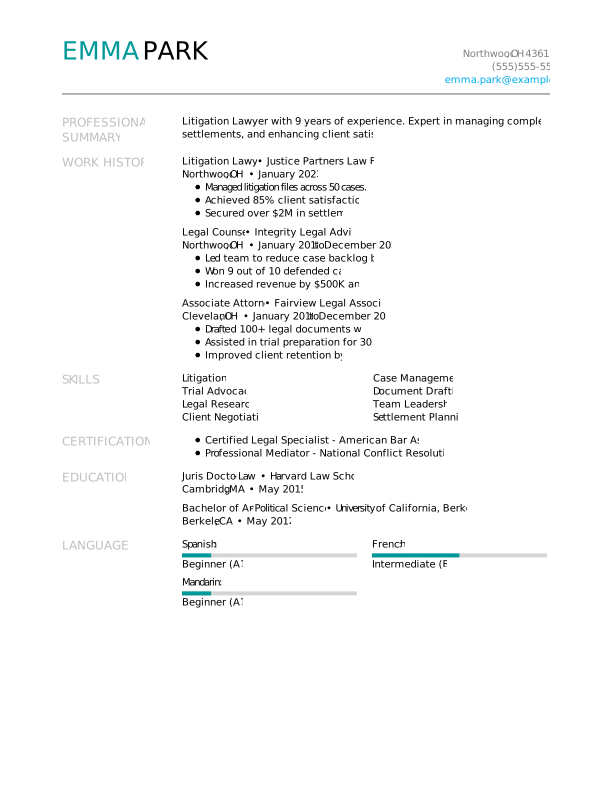
- Quantifies accomplishments: By securing over $2M in settlements and reducing case backlog by 40%, the applicant shows how accomplishments add tangible value in legal settings.
- Highlights industry-specific skills: Skills like litigation, client negotiation, and settlement planning reflect the applicant’s strong alignment with legal sector demands, showcasing a deep understanding of industry-specific requirements.
- Uses action-oriented language: Action verbs like “increased,” “won,” and “secured” showcase initiative and effectiveness in legal settings.
More Litigation Lawyer Resume Examples
Our litigation lawyer resume examples provide insights into showcasing courtroom expertise, case management, and legal research skills. Use these legal resume samples to build a strong resume that highlights your legal experience and strategic thinking.
Entry-Level Litigation Lawyer
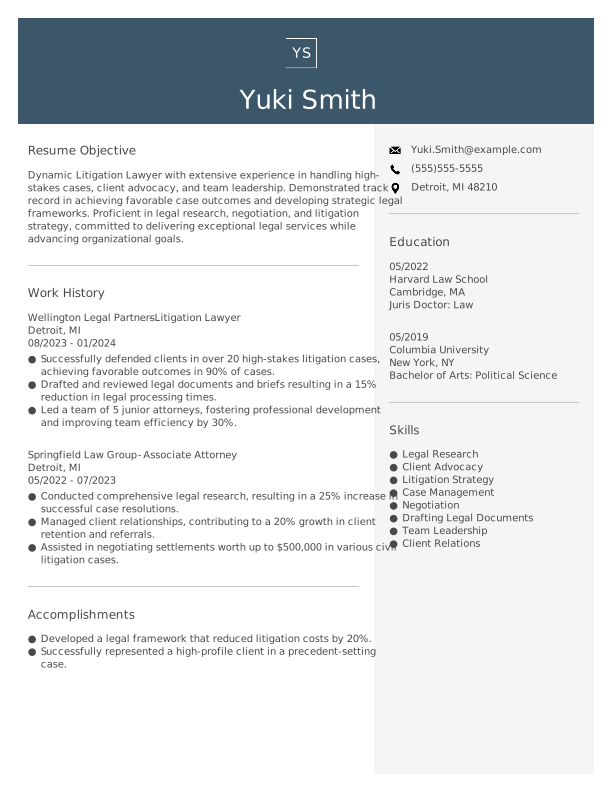
Why this resume works
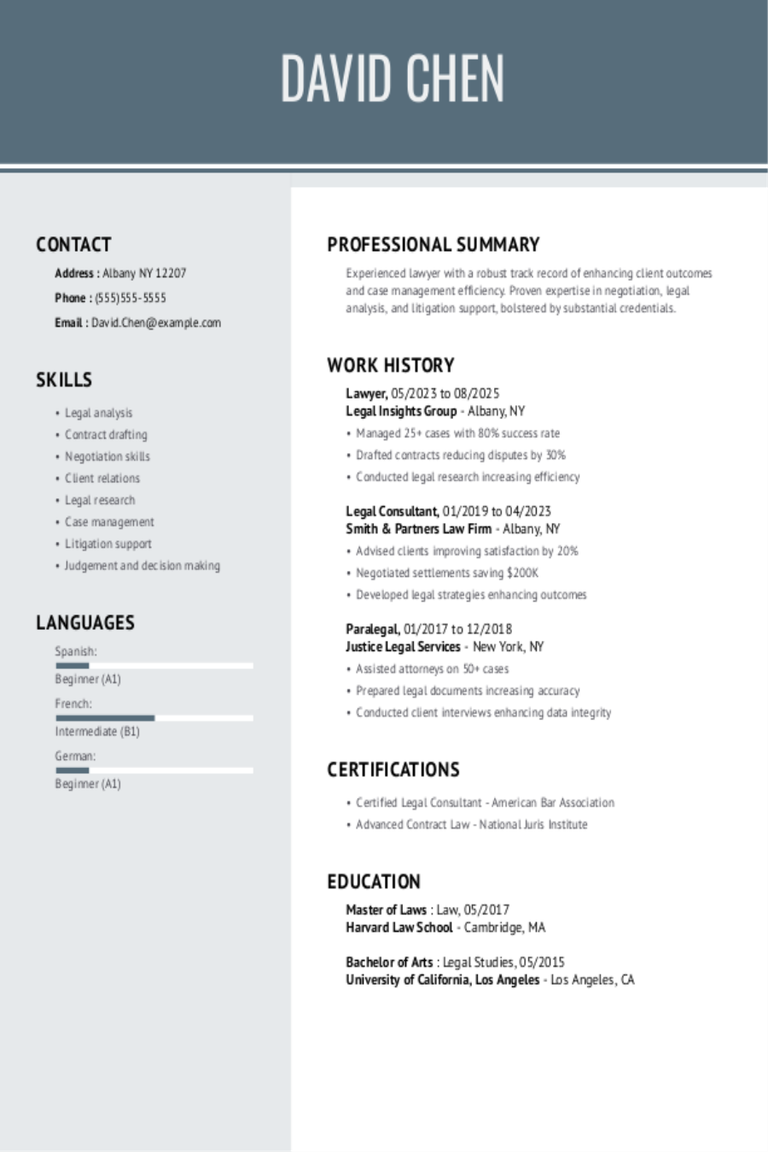
- Effective use of keywords: By integrating role-specific terms like “litigation strategy” and “case management,” the applicant ensures their resume aligns with keywords for applicant tracking systems (ATS) compatibility in legal roles.
- Shows digital literacy: Incorporating tools like online research databases and document drafting platforms showcases computer skills, aligning with modern workplace demands.
- Centers on academic background: A Juris Doctor from Harvard in the education section emphasizes a strong foundation early in their career.
Mid-Level Litigation Lawyer
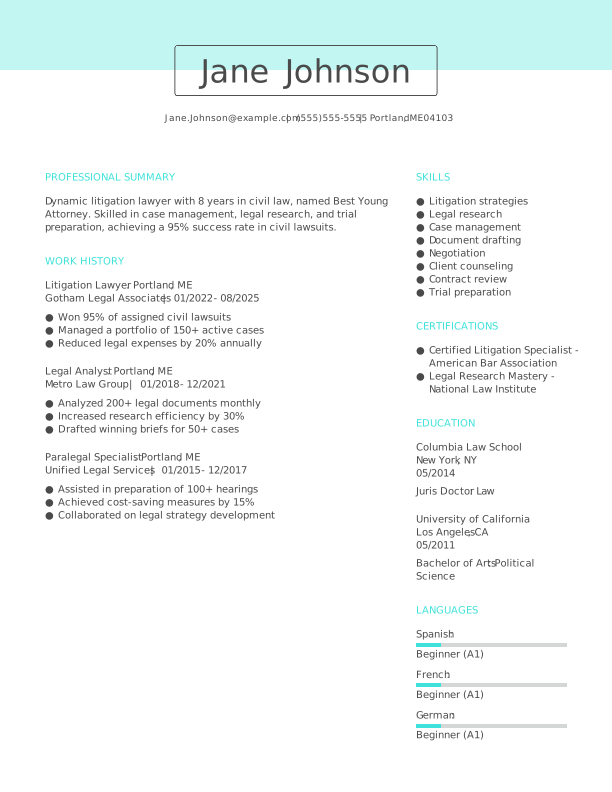
Why this resume works
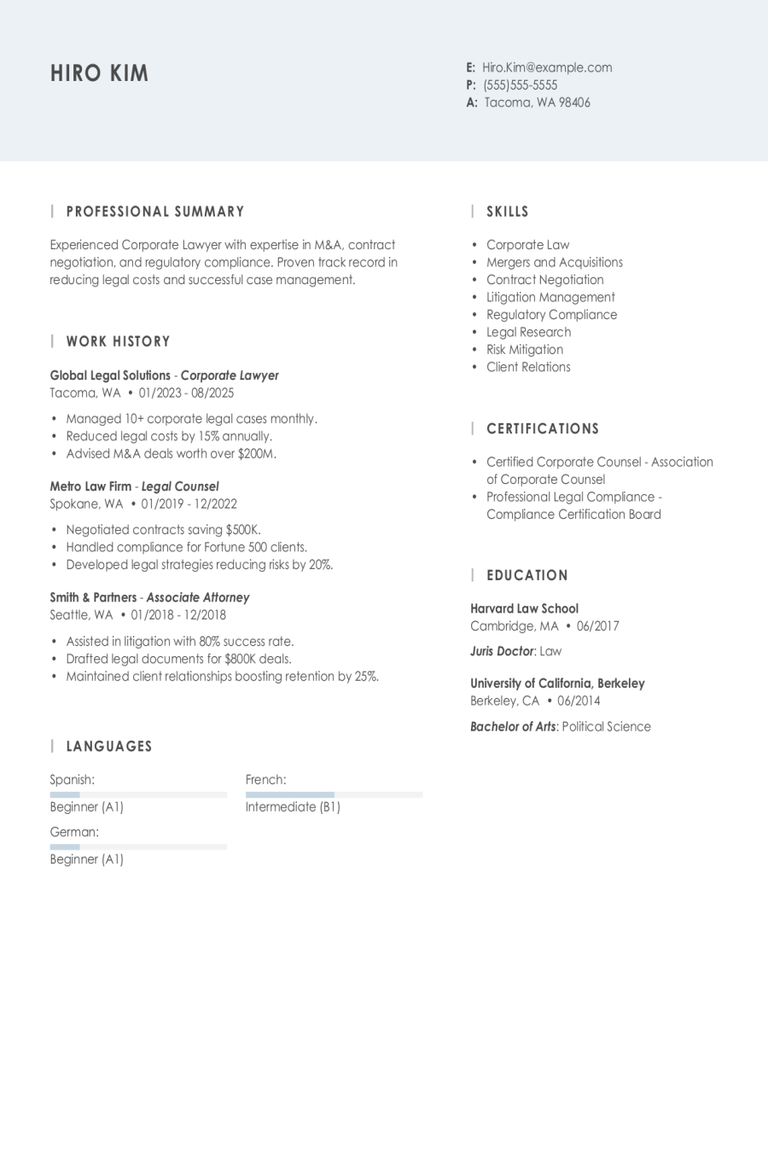
- Points to measurable outcomes: Achieving a 95% success rate in civil lawsuits and cutting expenses by 20% annually paints a vivid picture of the applicant’s powerful contributions to legal success.
- Demonstrates language abilities: Language skills in Spanish, French, and German improves cross-cultural communication skills, supporting international work experiences.
- Clear contact information: A professional resume header ensures contact details are clear and accessible, increasing the likelihood of receiving interview callbacks.
Experienced Litigation Lawyer
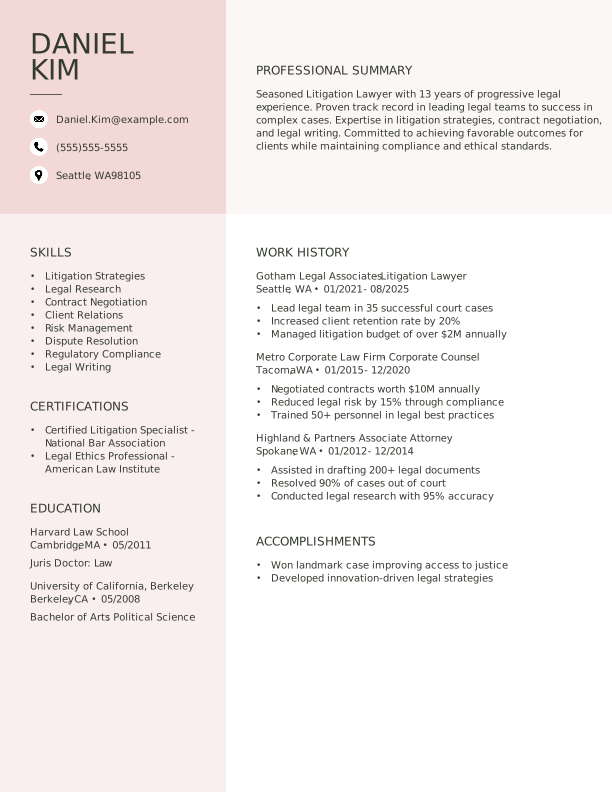
Why this resume works
- Focuses on work history: Using a chronological resume, the applicant’s career journey unfolds clearly, showcasing a strong legal trajectory from associate attorney to litigation lawyer.
- Showcases impressive accomplishments: By including standout accomplishments like winning a landmark case, the applicant reveals an impressive impact on justice and business outcomes.
- Emphasizes leadership skills: The applicant’s ability to lead teams in 35 court cases shows their leadership skills and dedication to achieving successful results.
Litigation Lawyer Resume Template (Text Version)
Copy the template below, or search for a resume template designed for your field.
Emma Park
Northwood, OH 43619
(555)555-5555
Emma.Park@example.com
Professional Summary
Litigation Lawyer with 9 years of experience. Expert in managing complex cases, securing settlements, and enhancing client satisfaction.
Work History
Litigation Lawyer
Justice Partners Law Firm – Northwood, OH
January 2022
- Managed litigation files across 50 cases.
- Achieved 85% client satisfaction rate.
- Secured over $2M in settlements.
Legal Counsel
Integrity Legal Advisors – Northwood, OH
January 2018 – December 2021
- Led team to reduce case backlog by 40%.
- Won 9 out of 10 defended cases.
- Increased revenue by $500K annually.
Associate Attorney
Fairview Legal Associates – Cleveland, OH
January 2016 – December 2017
- Drafted 100+ legal documents weekly.
- Assisted in trial preparation for 30 cases.
- Improved client retention by 25%.
Skills
- Litigation
- Trial Advocacy
- Legal Research
- Client Negotiation
- Case Management
- Document Drafting
- Team Leadership
- Settlement Planning
Education
Juris Doctor Law
Harvard Law School Cambridge, MA
May 2015
Bachelor of Arts Political Science
University of California, Berkeley Berkeley, CA
May 2012
Certifications
- Certified Legal Specialist – American Bar Association
- Professional Mediator – National Conflict Resolution Center
Languages
- Spanish – Beginner (A1)
- French – Intermediate (B1)
- Mandarin – Beginner (A1)
Related Resume Guides
Advice for Writing Your Litigation Lawyer Resume
This guide will provide you with tips on how to write a resume tailored to your legal profession, helping you stand out in the courtroom and beyond. Dive into our advice to ensure your skills and experience are presented in the best light possible.
Highlight your most relevant skills
When applying for a job as a litigation lawyer, listing your most relevant skills is important. It shows employers that you have what it takes to handle the job well. Including a dedicated skills section in your resume helps highlight these abilities clearly.
It’s good to balance technical skills like legal research and document drafting with interpersonal skills such as communication and negotiation. This combination shows you’re well-rounded and can handle both the technical side of the law and work well with clients and colleagues.
To make an even stronger impact, try to weave key skills into your work experience section. For example, when describing past jobs, mention how you used certain skills to win cases or negotiate settlements. This not only highlights your abilities but also provides real examples of how you’ve applied them successfully in the past.
By doing this, you show potential employers that you’re not just listing skills but have actually put them into practice effectively in real-world situations.
Selecting a resume format that highlights courtroom achievements, legal research skills, and negotiation expertise can distinguish litigation lawyers.
Showcase your accomplishments
As a litigation lawyer, organizing your work experience in reverse chronological order is key to showcasing your accomplishments effectively. Start each job entry with your job title, followed by the employer’s name, location, and the dates you worked there. This clear structure helps hiring managers quickly see where you’ve gained your experience.
Instead of just listing job duties, focus on quantifying your achievements. For example, instead of saying “handled numerous cases,” say “managed over 50 cases annually with a 90% success rate.” Numbers like these show the impact of your work.
Turning duties into achievements can set you apart from other applicants. Use action words and focus on what you’ve accomplished rather than just what you’ve done. Did you save the firm money? Reduce case processing times?
Highlight how you improved systems or won significant cases by giving percentages or specific figures. This approach allows potential employers to gauge your effectiveness at a glance, making it easier for them to see how you’d be an asset to their team as a litigation lawyer. Quantified achievements make your resume not only more compelling but also provide concrete evidence of your skills and contributions.
5 litigation lawyer work history bullet points
- Handled cases from initial investigation through trial, resulting in a 90% win rate.
- Drafted and filed over 200 legal documents, reducing client costs by 15%.
- Negotiated settlements totaling $10 million for high-profile clients.
- Led discovery process for complex litigation, uncovering critical evidence and improving case outcomes by 25%.
- Provided strategic counsel to clients, improving their understanding of litigation risks and reducing potential liabilities by 20%.
Choose a simple resume template featuring clear sections and easy-to-read fonts. Avoid flashy designs or bright colors to keep the focus on your work history and skills, not distracting graphics.
Write a strong professional summary
A professional summary on a resume introduces you to hiring managers, offering a snapshot of who you are and what you bring to the table.
This summary suits experienced applicants like litigation lawyers. It typically includes three to four sentences that showcase your experience, skills, and key achievements. This section highlights your professional identity and value, making it clear what sets you apart from others.
Resume objectives are career goal statements designed for entry-level job seekers, those changing careers, or individuals with gaps in their employment history. While summaries focus on “what I’ve accomplished,” objectives concentrate on “what I aim to contribute.” They help new professionals clearly express their ambitions.
Next, we’ll provide examples of both summaries and objectives tailored for different industries and levels of experience.
Litigation lawyer resume summary examples
Entry-level
Recent law school graduate with a Juris Doctor degree from a top-tier university and a strong foundation in litigation. Completed internships at reputable law firms, gaining experience in legal research, drafting pleadings, and assisting in trial preparation. Passed the bar exam and eager to contribute to complex legal cases while continuing to develop courtroom skills.
Mid-career
Litigation lawyer with over seven years of experience handling civil cases, working on both plaintiff and defense sides. Proven track record in managing pre-trial discovery, conducting depositions, and negotiating settlements. Licensed to practice in multiple states and recognized for strategic thinking and effective communication skills that have led to favorable outcomes for clients.
Experienced
Seasoned litigation lawyer specializing in corporate law with over 15 years of experience leading high-profile cases. Expertise in complex commercial disputes, arbitration, and appellate advocacy. Successfully managed large legal teams and secured significant verdicts and settlements. Known for analytical prowess, leadership abilities, and commitment to upholding justice.
Litigation lawyer resume objective examples
Recent graduate
Driven recent law school graduate with a focus on litigation seeking an opportunity to contribute legal research, analytical skills, and attention to detail in a dynamic legal team. Committed to supporting case strategies and delivering effective solutions in pursuit of justice.
Career changer
Dedicated professional transitioning into litigation law after gaining strong problem-solving and communication skills in previous roles. Eager to apply newly acquired legal knowledge and assist attorneys in preparing cases while gaining hands-on experience in courtroom procedures.
Specialized training
Law school graduate with specialized coursework in trial advocacy and dispute resolution seeking a junior litigation role. Passionate about leveraging training and research capabilities to assist in building compelling cases and ensuring thorough preparation for court proceedings.
Stand out in court and on paper! Use our AI Resume Builder to highlight your legal skills and organize your achievements quickly.
Match your resume to the job description
Tailoring resumes to job descriptions is essential because it helps job seekers stand out to employers and pass through ATS. These systems scan resumes for specific keywords and phrases from job postings. When a resume aligns well with the job description, it has a higher chance of getting noticed by hiring managers.
An ATS-friendly resume incorporates keywords and phrases that match the job posting. By doing this, applicants can ensure their resumes are more likely to be seen by hiring managers. This method highlights relevant skills and experiences, increasing the chances of an interview.
To identify keywords from job postings, look for skills, qualifications, and duties mentioned repeatedly. For example, in a litigation lawyer job posting, you might see terms like “case management,” “legal research,” or “court appearances.” Using exact phrases from the job description is important to make sure your resume gets picked up by the ATS.
Incorporate these terms naturally into your resume content. For instance, instead of saying “handled legal cases,” you could say “managed complex case management tasks.” This not only matches the keywords but also provides context about your experience.
Targeted resumes benefit ATS compatibility by ensuring your application aligns closely with what employers are seeking. To improve your chances even further, make sure to customize your resume effectively. Tailoring your resume can make all the difference in landing an interview and moving forward in the hiring process.
Don’t let ATS software get in your way! Our ATS Score Checker makes sure your resume is formatted correctly and packed with the right keywords to help you stand out.
FAQ
Do I need to include a cover letter with my litigation lawyer resume?
Including a cover letter with your litigation lawyer resume can be important for standing out in a competitive field.
A cover letter gives you the chance to emphasize your particular interest in the firm and highlight relevant experiences that make you an ideal applicant.
Consider detailing any specific cases or legal areas you specialize in, such as corporate litigation or intellectual property disputes, that align with the firm’s practice areas.
Our Cover Letter Generator can help you craft a tailored cover letter by providing expert content suggestions based on your resume details.
Additionally, reviewing our collection of cover letter examples can offer valuable insights into effective strategies for showcasing your skills and achievements within the legal industry.
How long should a litigation lawyer’s resume be?
For a litigation lawyer, how long a resume should be depends on your career stage and experience. If you’re early in your career, a one-page resume is typically sufficient to showcase your education, internships, and key legal skills without overwhelming the reader.
For experienced litigation lawyers with extensive case work, specialized certifications, or significant achievements, a two-page resume may be more appropriate. This allows you to detail your courtroom successes and complex cases while staying concise.
If you’re unsure about the ideal length for your situation, consider factors like relevance and clarity—every word should add value.
How do you write a litigation lawyer resume with no experience?
Crafting a resume with no experience as a litigation lawyer involves focusing on education, skills, and relevant coursework or internships. These elements will highlight your potential in the field. Here’s how you can structure it:
- Education and achievements: Begin with your law degree details, including the institution, graduation date, and academic honors. If you took specific courses related to litigation, mention those to show your focus.
- Internships and moot court participation: Even if unpaid, internships at law firms or participation in moot courts are valuable. Detail these experiences by highlighting tasks like drafting legal documents or conducting research.
- Legal skills: Include any skills relevant to litigation such as legal research, writing briefs, or public speaking. Mention software skill in tools like Westlaw or LexisNexis.
- Volunteer work or extracurriculars: If you’ve volunteered for legal aid societies or participated in debate clubs, list these activities to demonstrate commitment and transferable skills.
Rate this article
Litigation Lawyer


Elizabeth is a Certified Professional Resume Writer (CPRW) and a member of the Professional Association of Resume Writers & Career Coaches. She is committed to helping job seekers navigate the job market and succeed in their careers.
More Articles by Elizabeth Muenzen, CPRWShare this page
 Add MyPerfectResume as a preferred source on Google
Add