Table of Contents
Get started with MyPerfectResume today!
- Build a resume on any device
- Pick an ATS-friendly template
- Tailor with AI copy suggestions
Why this cover letter works
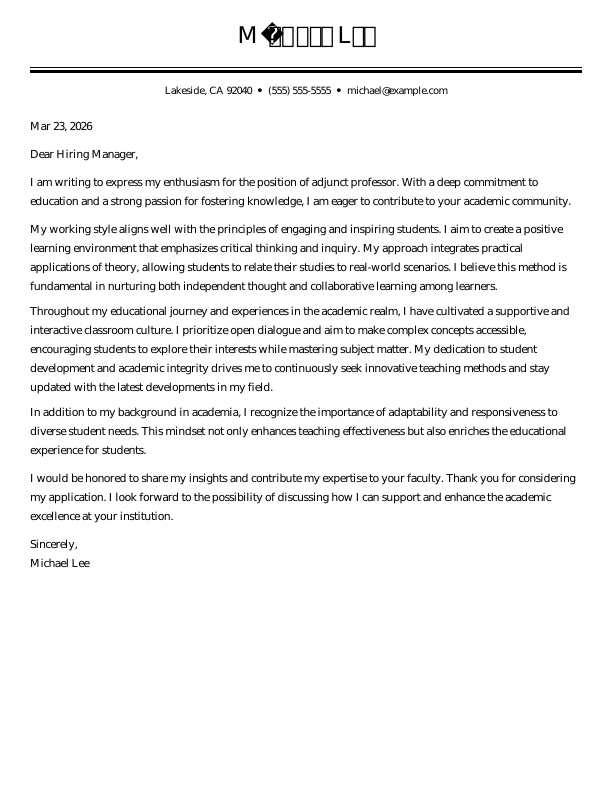
- This cover letter outlines teaching experiences, innovative course development, and relevant academic credentials. Understanding what to include in a cover letter means showcasing your commitment to education and aligning with the institution’s values.
More Adjunct Professor Cover Letter Examples
Eager to improve your application as an adjunct professor? Check out our collection of cover letter examples, featuring insights from both new educators and experienced academics, designed to inspire you and help you craft the perfect letter.
Entry-Level Adjunct Professor Cover Letter

Why this cover letter works
- Including a cover letter header like the one above is important for adjunct professor applications, as it presents essential contact information in a clear format. This professional appearance should align with the resume design to maintain consistency and improve the overall presentation.
Experienced Adjunct Professor Cover Letter

Why this cover letter works
- A cover letter outline helped organize the applicant’s educational methodologies, teaching philosophy, and curriculum development experience to showcase their qualifications for the adjunct professor role.
Adjunct Professor Cover Letter Template (Text Version)
Eager to personalize your adjunct professor cover letter? You can easily copy the text version provided below, and feel free to explore our diverse selection of cover letter templates for the ideal format that showcases your academic achievements.
Michael Lee
Lakeside, CA 92040
(555)555-5555
michael@example.com
Mar 23, 2026
Dear Hiring Manager,
I am writing to express my enthusiasm for the position of adjunct professor. With a deep commitment to education and a strong passion for fostering knowledge, I am eager to contribute to your academic community.
My working style aligns well with the principles of engaging and inspiring students. I aim to create a positive learning environment that emphasizes critical thinking and inquiry. My approach integrates practical applications of theory, allowing students to relate their studies to real-world scenarios. I believe this method is fundamental in nurturing both independent thought and collaborative learning among learners.
Throughout my educational journey and experiences in the academic realm, I have cultivated a supportive and interactive classroom culture. I prioritize open dialogue and aim to make complex concepts accessible, encouraging students to explore their interests while mastering subject matter. My dedication to student development and academic integrity drives me to continuously seek innovative teaching methods and stay updated with the latest developments in my field.
In addition to my background in academia, I recognize the importance of adaptability and responsiveness to diverse student needs. This mindset not only enhances teaching effectiveness but also enriches the educational experience for students.
I would be honored to share my insights and contribute my expertise to your faculty. Thank you for considering my application. I look forward to the possibility of discussing how I can support and enhance the academic excellence at your institution.
Sincerely,
Michael Lee
Related Cover Letter Examples
How to Write an Adjunct Professor Cover Letter
Our detailed tips on how to write a cover letter will help you highlight your teaching experience, academic achievements, and passion for student success. Make sure your unique qualities shine through to catch the attention of hiring committees.
Address your cover letter properly
When applying for adjunct professor positions, aim to address your cover letter to a specific individual whenever possible. Research the job posting, university website, or LinkedIn to find the hiring manager’s name. If you’re uncertain about the best approach, consider checking out how to address a cover letter for additional guidance. This effort adds a personal touch that generic greetings simply cannot match.
If you’re unsure how to address a cover letter because you can’t locate a specific name, avoid using “To Whom It May Concern.” Instead, consider alternatives like “Dear Hiring Manager” or specify by department with phrases such as “Dear [Department Name] Faculty.” For instance, if you’re applying to the English department, use “Dear English Department Team” to showcase your familiarity with the institution.
Personalized greetings are important as they reflect your attention to detail and genuine interest in the role. A tailored salutation conveys professionalism and commitment—qualities that academic institutions prioritize in their faculty members. Making this effort can help set you apart from other job seekers who may rely on more generic approaches.
Grab attention with your opening paragraph
When it comes to writing your cover letter, you need to grab the hiring manager’s attention right away. They sift through numerous applications daily, so it’s essential to know how to start your cover letter with impact. Focus on showcasing your strongest qualifications or a reason that excites you about this adjunct professor position, rather than repeating what’s already in your resume.
Think about what sets you apart as an educator. Perhaps you have experience in curriculum development, a passion for mentoring students, or a strong background in research. Highlight these unique strengths and connect them directly to what the institution is looking for in a job seeker. This approach will help demonstrate why you’re the perfect fit for their team.
Example of a strong opener
With over eight years of experience in higher education, I have successfully guided students to achieve academic excellence, resulting in a 20% improvement in course completion rates. I am eager to contribute my passion for teaching and mentorship to the adjunct professor role at [University Name]. My strengths in curriculum development and student engagement align well with your commitment to fostering an inclusive learning environment.
If you’re struggling to start your adjunct professor cover letter with impact, our Cover Letter Generator crafts personalized introductions that highlight your academic experience and teaching skills in just minutes.
Include skills from the job ad
Do not submit a generic cover letter when applying for adjunct professor positions. Take the time to carefully examine the job posting and align your application with the specific skills and qualifications they are looking for. This careful attention to detail shows that you’re a considerate applicant who understands their needs, which can help your application get past any automated screening systems.
In your cover letter, identify two to three key skills mentioned in the job description and provide concrete examples from your teaching experience that highlight these abilities. This focused approach not only demonstrates that you possess the necessary qualifications but also shows that you’re an ideal fit for this particular role and academic environment.
Top skills to list on your cover letter
- Curriculum design and development
- Student assessment and evaluation
- Classroom management techniques
- Effective communication skills
- Research methodology expertise
- Interdisciplinary collaboration
- Mentoring and coaching students
- Technology integration in teaching
- Critical thinking facilitation
- Cultural competency in education
- Adaptability to student needs
- Public speaking and presentation skills
- Conflict resolution strategies
- Time management for course delivery
- Instructional material creation
- Feedback provision and performance evaluation
Save time with a cover letter template from Google Docs or a Microsoft Word cover letter. These templates ensure neat formatting, so you can focus on tailoring your content for each adjunct professor position.
Show your impact with numbers
In academia, numbers speak louder than words. Rather than merely claiming to be an “engaging adjunct professor,” provide measurable achievements that illustrate your impact.
For example, mention how you increased student course evaluation scores by 25% or successfully guided 10 students to publish research papers during the semester. Such specific metrics distinguish you from applicants who only describe their responsibilities, showing that you actively improve student learning and engagement.
Measurable accomplishments are important because they demonstrate your ability to produce results, a key expectation for hiring committees. They reflect that you excel in teaching and mentoring rather than just fulfilling basic duties. By highlighting your quantifiable successes, you clearly convey your potential to contribute positively to their academic environment and support student success effectively.
Bullet points to include in your cover letter
- Developed and delivered over 40 engaging lectures per semester, resulting in a 95% student course satisfaction rate
- Increased student research publication rates by 20% through targeted mentoring and workshop facilitation
- Designed a new curriculum module that improved student exam pass rates by 15% within one academic year
- Secured $50,000 in grant funding to support innovative teaching projects over two years
- Collaborated with faculty peers to integrate technology tools that boosted class participation by 30% during remote learning periods
When applying for adjunct professor positions, choosing the right cover letter format is essential. Different layouts can highlight your quantifiable achievements, and the best choice often depends on your experience level in academia.
Leave a lasting impression
Your closing paragraph should convey your enthusiasm and encourage the hiring manager to take action. To understand how to end a cover letter, be direct about your interest while maintaining professionalism.
Express gratitude for their consideration, reiterate your excitement about the opportunity, and clearly state your desire for further discussion on how your skills can contribute positively to their team or organization.
This approach not only demonstrates your commitment but also opens the door for potential dialogue regarding your fit for the position.
Example of cover letter closing
Thank you for considering my application for the adjunct professor position at Greenfield University. I am eager about the possibility of sharing my knowledge in higher education and helping to shape future leaders in our field. I believe that my experience in curriculum development and student engagement will improve your academic team. I would love the opportunity to discuss how my background can support the university’s mission. I look forward to your response.
Tailor your cover letter for specific situations
Navigating a career as an adjunct professor with a non-traditional background can feel daunting, but directly addressing your unique circumstances can work in your favor. Highlighting your diverse experiences can show how they improve your teaching approach and enrich the academic environment.
Here are a few examples:
- If you’re transitioning from another field, emphasize transferable skills such as communication and critical thinking. For instance, if you previously worked in business, your experience with strategic planning could improve course development.
- Returning to academia? Mention any recent professional development activities, like workshops or conferences, that kept you informed about current trends. Express your renewed passion for fostering student success and engagement.
- As a new graduate, focus on relevant teaching assistant positions or tutoring roles that showcase your ability to communicate complex ideas effectively. Any involvement in educational outreach initiatives can also demonstrate commitment to the field.
FAQ
How long should an adjunct professor’s cover letter be?
Cover letters for adjunct professor positions should ideally be one page long, structured into three to four concise paragraphs. This format provides ample space to showcase your relevant teaching experience, educational background, and unique skills without overwhelming hiring managers with unnecessary details.
Knowing how long a cover letter should be is essential for making a strong impact. Keep your writing direct and focused, as recruiters often spend only a few seconds skimming through applications. By prioritizing brevity and relevance, you can ensure that your key qualifications stand out right away.
What’s the difference between a cover letter and a resume?
An adjunct professor resume organizes your professional background into a clear, structured format. It highlights the “what”—your achievements, skills, and previous roles in academia or related fields.
On the other hand, your cover letter tells the story behind those details. It explains the “why” and “how”—why you’re passionate about teaching as an adjunct professor, how your experience aligns with the specific course or department, and why you want to join that particular institution.
Understanding the cover letter vs resume distinction allows you to use both documents to present a complete picture of yourself as an applicant and make a stronger case for your application.
Should I include a cover letter even if it’s not required?
Absolutely! Even when optional, submitting a cover letter as an adjunct professor shows you’re willing to put in extra effort—something highly valued in academia where passion for teaching and research stands out.
Hiring committees want to see not just your credentials but also your enthusiasm for the subject and how you connect with students, which a resume alone might not fully convey.
Imagine two equally qualified applicants applying for the same adjunct professor role, but only one includes a personal cover letter explaining their teaching approach and commitment to student success.
When considering whether cover letters are necessary, this added insight can make all the difference in getting noticed. So if you’re unsure, it’s best to include a cover letter—you have nothing to lose and plenty of opportunity to highlight what makes you unique.
What does a professional cover letter look like?
A professional adjunct professor’s cover letter should appear clean, organized, and easy to scan. Use a standard business letter format that includes your contact information at the top, followed by the date and employer’s details.
Choose a professional font like Arial or Times New Roman in 11-12 point size, ensuring standard margins and single spacing between lines for clarity.
The layout should consist of a clear header, a personalized greeting (avoid “To Whom It May Concern”), several concise paragraphs in the body, and a formal closing with your signature. It’s best to maintain white space throughout the document for better readability since hiring managers often review numerous applications rapidly.
For additional guidance on what a cover letter should look like, be sure to check our resources that provide visual examples and formatting tips to improve your application’s presentation.
Can ChatGPT write a cover letter?
While you can use ChatGPT to write a cover letter, it may not provide the compelling edge you seek. AI tools can help with generating ideas and overcoming writer’s block, yet they often produce generic content that lacks a personal touch and authenticity.
Depending solely on these platforms might result in a letter that feels robotic and fails to highlight your unique teaching philosophy or qualifications.
Hiring managers for adjunct professor positions are skilled at spotting AI-generated letters since such letters typically lack specific insights and the genuine passion educators bring to their work. They often miss meaningful anecdotes and reflections that showcase your dedication to student success.
Rather than relying fully on AI, think of it as a tool to organize your thoughts before adding your own experiences and motivations for wanting to teach at that institution. Your authentic voice will always stand out more than any automated text.
Rate this article
Adjunct Professor

Elizabeth is a Certified Professional Resume Writer (CPRW) and a member of the Professional Association of Resume Writers & Career Coaches. She is committed to helping job seekers navigate the job market and succeed in their careers.
More Articles by Elizabeth Muenzen, CPRWShare this page
 Add MyPerfectResume as a preferred source on Google
Add