Table of Contents
Get started with MyPerfectResume today!
- Build a resume on any device
- Pick an ATS-friendly template
- Tailor with AI copy suggestions
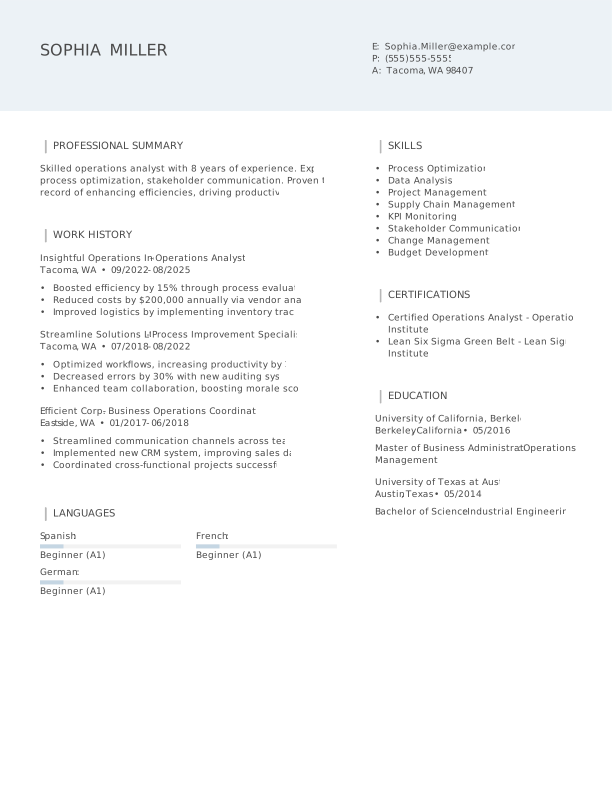
Why this resume works
- Quantifies accomplishments: By pulling metrics like a 15% efficiency boost and $200,000 cost reduction from resume accomplishments, the applicant shows compelling operational improvements.
- Uses action-oriented language: With action verbs such as “boosted,” “reduced,” and “improved” in their bullet points, the applicant skillfully conveys initiative and effectiveness.
- Showcases career progression: Advancing from business operations coordinator to operations analyst reflects significant career progression, highlighting increased responsibility and expertise over time.
More Operations Analyst Resume Examples
Take a look at our operations analyst resume examples to learn how to highlight your analytical skills, data management experience, and process improvement expertise. These business operations resume samples will help you create a compelling resume for various operations roles.
Entry-Level Operations Analyst
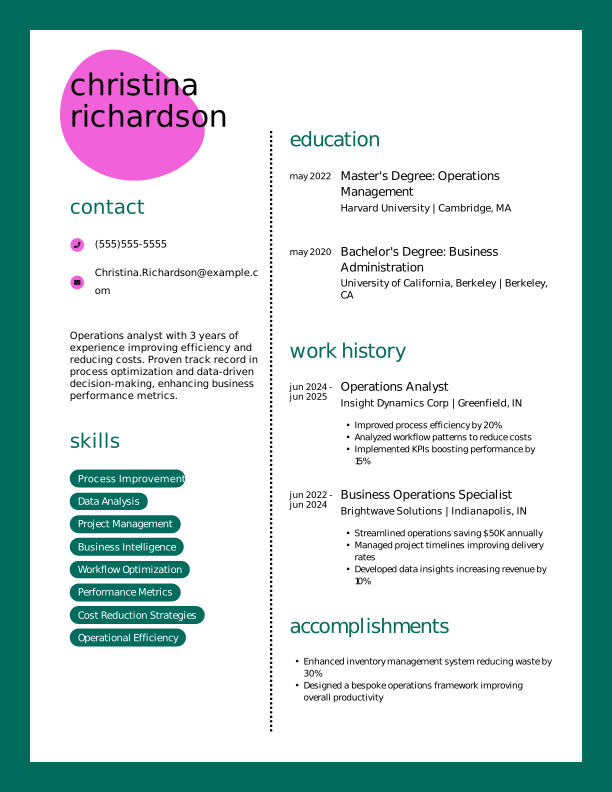
Why this resume works
- Effective use of keywords: Integrating role-specific keywords like “process improvement” and “data analysis” ensures the resume aligns with keywords strategies, boosting applicant tracking systems (ATS) compatibility.
- Centers on academic background: Highlighting a master’s degree in operations management in the education section shows the applicant’s impressive academic foundation early in their career journey.
- Shows digital literacy: Demonstrating expertise in tools for performance metrics showcases digital readiness, aligning with computer skills needed for modern roles.
Mid-Level Operations Analyst
Why this resume works
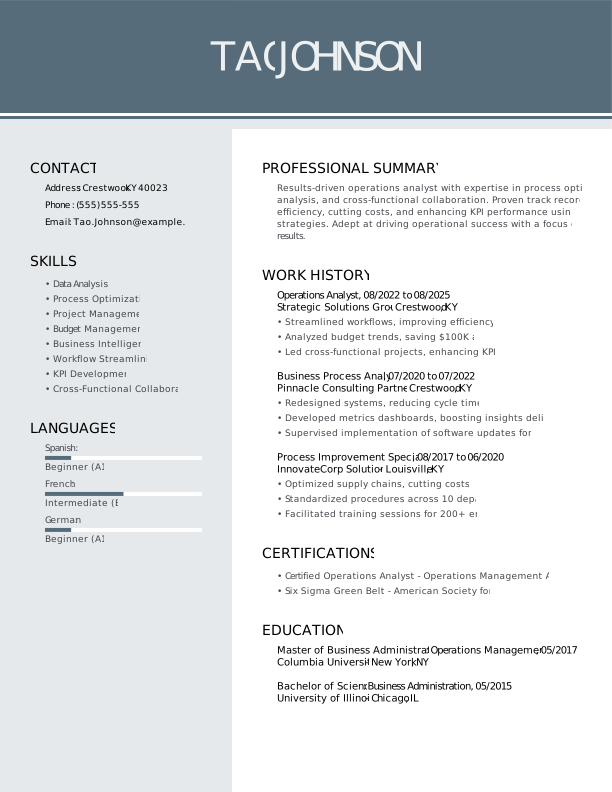
- Points to measurable outcomes: Highlighting quantifiable achievements like enhancing KPIs by 15% effectively demonstrates the applicant’s problem-solving skills and efficiency-focused approach.
- Includes a mix of soft and hard skills: Combining technical prowess in data analysis with strong interpersonal skills in cross-functional projects showcases a well-rounded skill set.
- Demonstrates language abilities: Language skills in Spanish, French, and German supports effective cross-cultural communication and broadens international work capabilities.
Experienced Operations Analyst
Why this resume works
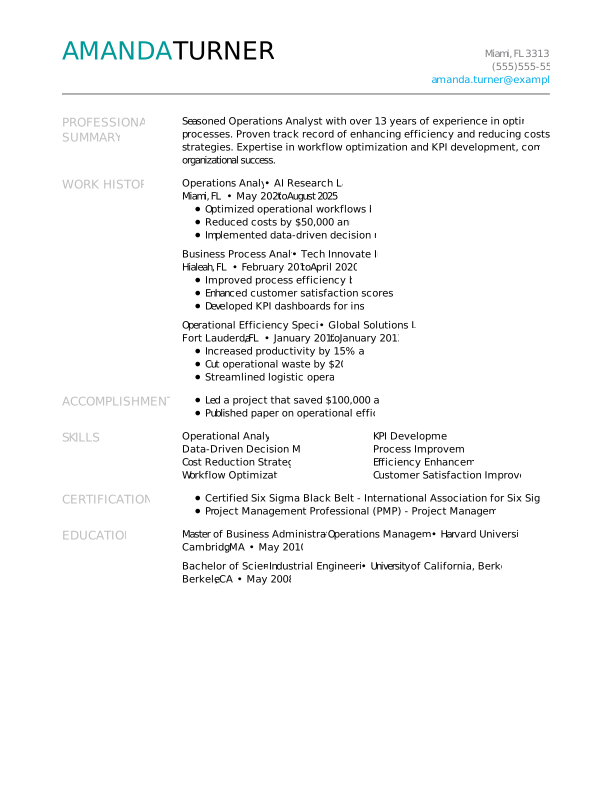
- Focuses on work history: By using a chronological resume, the applicant emphasizes their career progression and expertise through detailed roles and achievements, painting a picture of sustained success.
- Emphasizes leadership skills: The applicant’s ability to lead successful projects is evident in their consistent improvements across roles, showcasing leadership skills in optimizing workflows and driving growth.
- Showcases impressive accomplishments: Showcasing impressive accomplishments, like saving $100,000 annually, reflects the applicant’s impact on business performance and commitment to operational excellence.
Operations Analyst Resume Template (Text Version)
Keep your focus on content—this format helps, and our resume templates handle the rest.
Sophia Miller
Tacoma, WA 98407
(555)555-5555
Sophia.Miller@example.com
Professional Summary
Skilled operations analyst with 8 years of experience. Expert in process optimization, stakeholder communication. Proven track record of enhancing efficiencies, driving productivity.
Work History
Operations Analyst
Insightful Operations Inc. – Tacoma, WA
September 2022 – August 2025
- Boosted efficiency by 15% through process evaluation
- Reduced costs by $200,000 annually via vendor analysis
- Improved logistics by implementing inventory tracking
Process Improvement Specialist
Streamline Solutions Ltd. – Tacoma, WA
July 2018 – August 2022
- Optimized workflows, increasing productivity by 20%
- Decreased errors by 30% with new auditing system
- Enhanced team collaboration, boosting morale scores
Business Operations Coordinator
Efficient Corp. – Eastside, WA
January 2017 – June 2018
- Streamlined communication channels across teams
- Implemented new CRM system, improving sales data
- Coordinated cross-functional projects successfully
Languages
- Spanish – Beginner (A1)
- French – Beginner (A1)
- German – Beginner (A1)
Skills
- Process Optimization
- Data Analysis
- Project Management
- Supply Chain Management
- KPI Monitoring
- Stakeholder Communication
- Change Management
- Budget Development
Certifications
- Certified Operations Analyst – Operations Institute
- Lean Six Sigma Green Belt – Lean Sigma Institute
Education
Master of Business Administration Operations Management
University of California, Berkeley Berkeley, California
May 2016
Bachelor of Science Industrial Engineering
University of Texas at Austin Austin, Texas
May 2014
Related Resume Guides
Advice for Writing Your Operations Analyst Resume
Discover tailored tips that highlight your analytical skills and operational expertise. Whether you’re just starting or looking to refresh your approach, learning how to write a resume specifically for this role can help you stand out in a competitive field.
Highlight your most relevant skills
Listing relevant skills on your resume is key when applying for the operations analyst job. It helps employers quickly see why you’d be a great fit. A dedicated skills section makes it easy for hiring managers to find what they’re looking for.
It’s best to balance technical skills like data analysis, Excel skill, and project management with soft skills like communication, problem-solving, and teamwork. This mix shows you can handle both the analytical and interpersonal parts of the role.
Integrating key skills into your work experience section can make an even stronger impact. By doing this, you show how your skills have helped you succeed in past jobs. For example, if you’ve used data analysis to improve efficiency at a previous company, talk about that in your work history.
This approach not only highlights your abilities but also gives real-world examples of how you’ve applied them. Remember, showing how you’ve used these skills is often more powerful than just listing them out separately.
For operations analysts, select a resume format that highlights your analytical skills, problem-solving abilities, and experience with data-driven decision-making.
Showcase your accomplishments
When organizing your work experience as an operations analyst, list your jobs in reverse chronological order. For each job, include your job title, the employer’s name, location, and dates of employment. This helps employers quickly see your career progression and recent roles.
Instead of just listing tasks you did at each job, focus on what you achieved. Use numbers to show how you made a difference. Did you save money for the company?
Did you make processes faster or improve efficiency? Use percentages or other figures to highlight these achievements. For example, instead of saying “managed data reports,” say “reduced report processing time by 30% through automation.”
Use strong action words to describe what you did and what happened because of it. Words like “improved,” “increased,” or “streamlined” help show your impact more clearly.
Quantified accomplishments allow hiring managers to quickly understand the skills and value you bring to their team as an operations analyst. This approach not only makes your resume more compelling but also sets you apart from others who might only list duties without demonstrating impact.
5 operations analyst work history bullet points
- Analyzed and streamlined operational processes, resulting in a 25% reduction in costs over six months.
- Developed data-driven reports for senior management, improving decision-making speed by 15%.
- Implemented automated reporting systems, reducing manual data entry time by 40 hours per month.
- Collaborated with cross-functional teams to identify process bottlenecks, improving workflow efficiency by 20%.
- Conducted risk assessments and devised mitigation strategies that led to a 10% decrease in project delays.
Choose a resume template with simple fonts and clean sections to organize information clearly, ensuring your skills and experience stand out without flashy graphics or heavy designs.
Write a strong professional summary
A professional summary on a resume serves as an introduction to hiring managers, allowing them to quickly understand who you are and the value you bring.
The professional summary works best for experienced applicants. It’s a concise paragraph that highlights your experience, skills, and accomplishments. This section should clearly reflect your identity in the workplace and how you add value.
In comparison, resume objectives focus on career goals and are more fitting for entry-level applicants, career changers, or individuals with gaps in employment history. While summaries emphasize “what I’ve accomplished,” objectives center on “what I aim to contribute.”
Let’s take a look at examples of both professional summaries and objectives tailored across various industries and experience levels so you can craft a compelling introduction for your own resume.
Operations analyst resume summary examples
Entry-level
Recent graduate with a Bachelor of Science in business administration, specializing in operations analysis. Equipped with foundational skills in data analysis, process mapping, and strategic planning. Completed an internship at a logistics firm where responsibilities included assisting in operational audits and contributing to efficiency improvement initiatives. Eager to apply academic knowledge and analytical skills in a dynamic operations role.
Mid-career
Seasoned operations analyst with over six years of experience in the manufacturing sector. Demonstrates expertise in streamlining processes, improving supply chain efficiencies, and managing cross-functional projects. Notable achievements include reducing operational costs by 15% through process optimization and implementing a new inventory management system that improved order fulfillment accuracy. Known for strong problem-solving abilities and effective stakeholder communication.
Experienced
Accomplished operations analyst with more than 12 years of experience across diverse industries including finance and healthcare. Proven track record of leading teams to improve operational performance using advanced data analytics and process automation techniques. Recognized for driving substantial cost savings and productivity gains through innovative solutions. Committed to mentoring junior analysts while fostering inclusive team environments that support continuous improvement.
Operations analyst resume objective examples
Recent graduate
Detail-oriented recent graduate with a Bachelor of Science in business analytics seeking an entry-level operations analyst role. Aiming to leverage strong analytical skills and knowledge of data-driven decision making to contribute to efficient business operations and strategic planning.
Career changer
Dedicated professional transitioning from administrative roles into operations analysis, bringing valuable experience in process improvement and project management. Eager to apply problem-solving abilities and keen attention to detail in optimizing operational workflows and improving overall company performance.
Specialized training
Ambitious individual with specialized training in data visualization and supply chain management looking for an entry-level operations analyst position. Committed to using technical skills and industry knowledge to support data-driven strategies that improve operational efficiency and drive business success.
Using a AI Resume Builder can make creating your operations analyst resume easier. It offers templates and suggestions to help you clearly highlight your skills and experience.
Match your resume to the job description
Tailoring your resume to job descriptions is key because it helps you stand out to employers and get past ATS. These systems scan resumes for specific keywords and phrases taken from job postings. If your resume doesn’t include these terms, it might not even reach a hiring manager’s desk.
An ATS-friendly resume includes the right keywords while still showcasing your skills. By using words and phrases from the job description, you increase your chances of catching the eye of hiring managers. This approach makes sure your resume aligns with what the employer is looking for in an operations analyst.
To find the right keywords, read through job postings carefully. Look for skills, qualifications, and duties mentioned more than once. For example, if a posting mentions “data analysis,” “process optimization,” or “cross-department collaboration” repeatedly, make sure those exact terms are in your resume.
Incorporating these terms naturally into your resume can be simple. Instead of just listing tasks you’ve done, weave them into accomplishments. For instance, change “conducted data analysis” to “conducted detailed data analysis to improve process efficiency by 20%.”
By choosing to customize your resume, targeted resumes benefit you by increasing ATS compatibility and making you more appealing to employers. Aligning your experience with what’s listed in the job description makes you more likely to secure an interview.
Try our ATS Resume Checker to find over 30 common mistakes in your resume’s layout and wording. Get quick tips on boosting your resume score right away.
FAQ
Do I need to include a cover letter with my operations analyst resume?
Including a cover letter with your operations analyst resume can improve your application and increase your chances of standing out.
A cover letter allows you to express your enthusiasm for the role, highlight key achievements in data analysis, and demonstrate how you can contribute to process improvements.
If the company uses specific software or methodologies you’re experienced with, mention your expertise in those areas to show alignment with their needs.
Consider using a Cover Letter Generator to streamline the writing process; it can help tailor your content to match the job description effectively.
Additionally, reviewing cover letter examples can offer valuable insights into structuring and refining your own letter for maximum impact.
How long should a operations analyst’s resume be?
For an operations analyst, a concise one-page resume is typically recommended, especially if you’re in the early stages of your career. This format helps you focus on key skills such as data analysis, problem-solving, and process optimization.
If you have extensive experience or specialized expertise like advanced data modeling or project management roles, a two-page resume may be more appropriate. It allows room to detail your contributions to operational improvements and successful projects without overwhelming the reader.
Explore our guide on how long a resume should be for examples and tips on determining the ideal length for your career stage.
How do you write a operations analyst resume with no experience?
Writing an operations analyst resume with no experience involves highlighting your skills, education, and any relevant coursework or projects that align with the role. Here’s how you can structure it:
- Emphasize education: Start with your degree in business, economics, or a related field. Include details like graduation date and honors to show your academic strengths.
- Highlight relevant coursework: Mention classes that relate directly to operations analysis such as data analysis, supply chain management, or statistics to demonstrate your knowledge base.
- Include project work: If you’ve completed any projects during your studies that involved analyzing processes or improving operational efficiency, describe them briefly. This shows practical application of skills.
- Focus on transferable skills: Skills such as critical thinking, problem-solving, Excel skill or familiarity with databases are important for operations analysts. Highlight these prominently.
- Add volunteer or internship experiences: Any internships or volunteer roles where you were involved in process improvements or data analysis can be valuable additions.
Rate this article
Operations Analyst


Elizabeth is a Certified Professional Resume Writer (CPRW) and a member of the Professional Association of Resume Writers & Career Coaches. She is committed to helping job seekers navigate the job market and succeed in their careers.
More Articles by Elizabeth Muenzen, CPRWShare this page
 Add MyPerfectResume as a preferred source on Google
Add