Table of Contents
Get started with MyPerfectResume today!
- Build a resume on any device
- Pick an ATS-friendly template
- Tailor with AI copy suggestions
Why this resume works
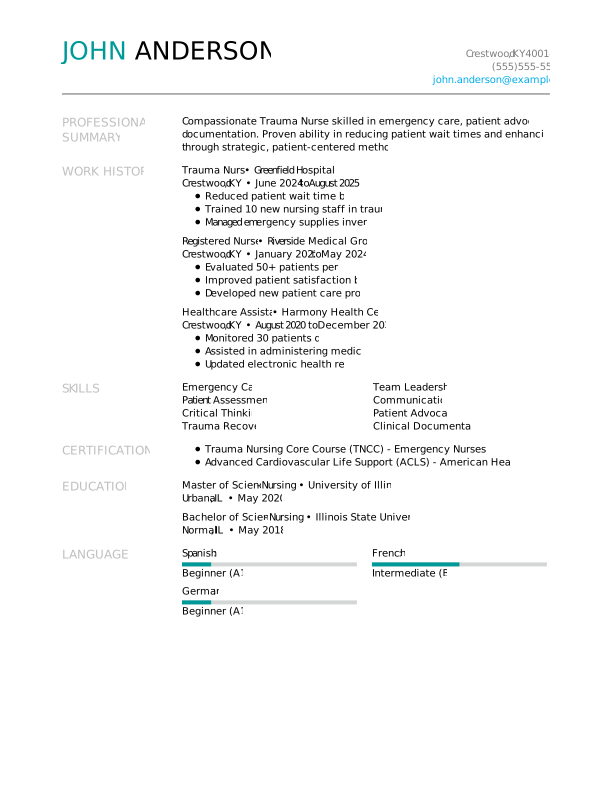
- Quantifies accomplishments: By citing accomplishments using metrics, like reducing patient wait time by 20%, the applicant showcases tangible impact and value.
- Highlights industry-specific skills: Integrating relevant nursing skills such as emergency care and trauma recovery, the applicant effectively positions themselves within the nursing field.
- Showcases career progression: Advancing from healthcare assistant to trauma nurse illustrates a clear career progression, marked by increasing responsibility and expertise in patient care.
More Trauma Nurse Resume Examples
These trauma nurse resume examples show how to showcase your emergency care expertise, quick decision-making, and teamwork skills. Use these samples to create a standout resume tailored for fast-paced healthcare environments.
Entry-level trauma nurse
Why this resume works
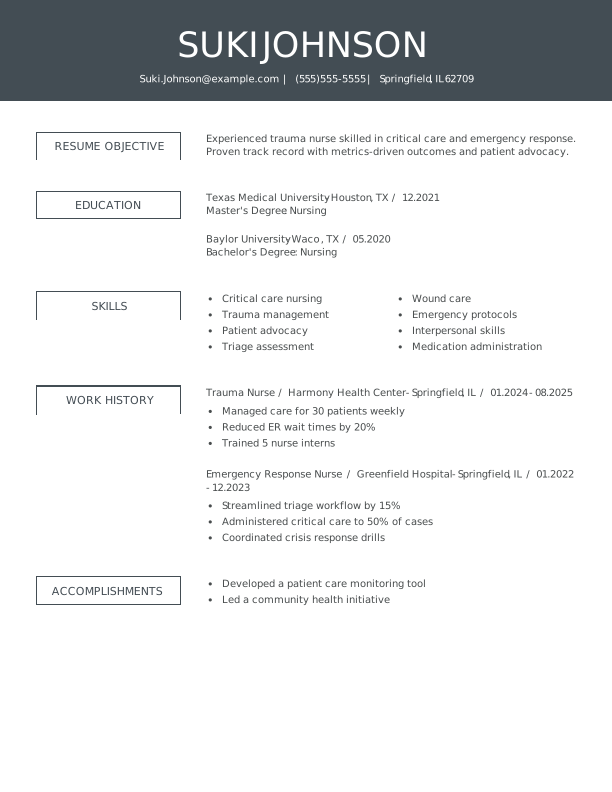
- Centers on academic background: The education section showcases the applicant’s commitment to advanced academic preparation, establishing a strong foundation for their nursing career.
- Effective use of keywords: Strategically weaving keywords like “critical care nursing” and “trauma management” aids the resume’s chances of passing ATS filters effectively.
- Shows digital literacy: By developing a patient care monitoring tool, the applicant demonstrates practical computer skills, essential for navigating modern healthcare environments.
Mid-level trauma nurse
Why this resume works
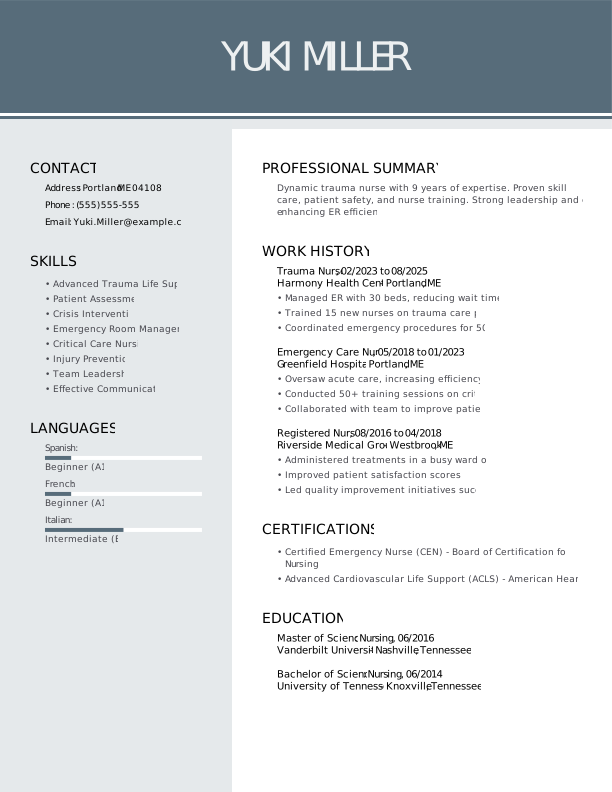
- Includes a mix of soft and hard skills: The applicant effectively mixes technical expertise like advanced trauma life support with interpersonal skills, creating a balanced skill set ideal for high-pressure ER environments.
- Demonstrates language abilities: The applicant’s diverse language skills facilitate effective cross-cultural communication, improving patient interactions and broadening their ability to work with diverse patient populations in emergency settings.
- Points to measurable outcomes: Achieving a 20% reduction in ER wait times highlights the applicant’s ability to drive strong improvements, showcasing their dedication to efficient healthcare delivery.
Experienced trauma nurse
Why this resume works
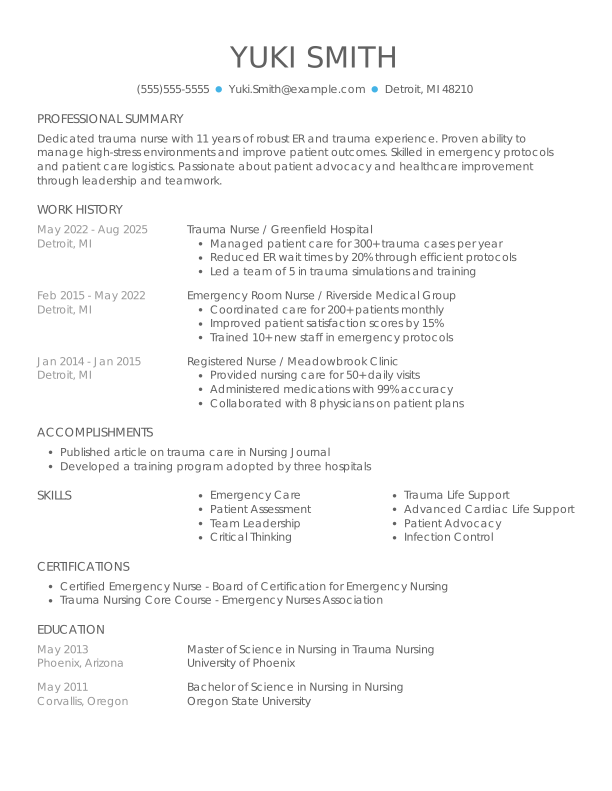
- Focuses on work history: By using a chronological resume, the applicant effectively showcases an extensive work history, highlighting progressive responsibilities in trauma and emergency care over the years.
- Lists relevant certifications: Including certifications like Certified Emergency Nurse shows dedication to maintaining expertise and staying updated in emergency nursing practices.
- Emphasizes leadership skills: Demonstrating strong leadership skills, the applicant led a team in trauma simulations, showcasing initiative and an ability to guide others in high-pressure situations.
Trauma Nurse Resume Template (Text Version)
There’s a lot more to discover. Start with the text below, or explore our resume templates for the full range.
John Anderson
Crestwood, KY 40014
(555)555-5555
John.Anderson@example.com
Professional Summary
Compassionate Trauma Nurse skilled in emergency care, patient advocacy, and clinical documentation. Proven ability in reducing patient wait times and enhancing care protocols through strategic, patient-centered methodologies.
Work History
Trauma Nurse
Greenfield Hospital – Crestwood, KY
June 2024 – August 2025
- Reduced patient wait time by 20%
- Trained 10 new nursing staff in trauma care
- Managed emergency supplies inventory
Registered Nurse
Riverside Medical Group – Crestwood, KY
January 2022 – May 2024
- Evaluated 50+ patients per week
- Improved patient satisfaction by 15%
- Developed new patient care protocols
Healthcare Assistant
Harmony Health Center – Crestwood, KY
August 2020 – December 2021
- Monitored 30 patients daily
- Assisted in administering medications
- Updated electronic health records
Skills
- Emergency Care
- Patient Assessment
- Critical Thinking
- Trauma Recovery
- Team Leadership
- Communication
- Patient Advocacy
- Clinical Documentation
Education
Master of Science Nursing
University of Illinois Urbana, IL
May 2020
Bachelor of Science Nursing
Illinois State University Normal, IL
May 2018
Certifications
- Trauma Nursing Core Course (TNCC) – Emergency Nurses Association
- Advanced Cardiovascular Life Support (ACLS) – American Heart Association
Languages
- Spanish – Beginner (A1)
- French – Intermediate (B1)
- German – Beginner (A1)
Related Resume Guides
- Geriatric Nurse Practitioner
- Hemodialysis Nurse
- Intensive Care Nurse
- Labor And Delivery Nurse
- Licensed Practical Nurse
- Neonatal Intensive Care Unit Nurse
- Neonatal Nurse
- Nurse Aide
- Nurse Care Coordinator
- Nurse Practitioner
- Nursing Assistant
- Obgyn Nurse
- Oncology Nurse
- Operating Room Nurse
- Pediatric Nurse
- Perioperative Nurse
- Pre Post Op Nurse
- Private Duty Nurse
- Registered Nurse
- School Nurse
Advice for Writing Your Trauma Nurse Resume
Learn how to write a resume that highlights your unique abilities and experiences in trauma care. Whether you’re showcasing your quick problem-solving skills or your compassionate patient interactions, we’ve got you covered with insights designed for trauma nursing professionals like you.
Write a strong professional summary
A professional summary is a short paragraph at the top of your resume that introduces you to hiring managers. It’s like a quick elevator pitch, letting them know who you are and why you’re right for the job. When writing your resume, you need to decide between including a professional summary or a resume objective.
A professional summary is best for experienced applicants, usually comprising three to four sentences that highlight your experience, skills, and achievements. This section shows your professional identity and the value you bring to the role. For example, as a trauma nurse, you’d use this space to discuss your years in fast-paced environments and how you’ve helped patients during emergencies.
Resume objectives focus on what you’re aiming to achieve in your career. They’re ideal for entry-level applicants, individuals changing careers, or those with employment gaps. While summaries emphasize “what I’ve accomplished,” objectives concentrate on “what I aim to contribute.”
Next, we’ll explore examples of both summaries and objectives tailored for various experience levels.
Trauma nurse resume summary examples
Entry-level
Recent Bachelor of Science in Nursing graduate with a focus on trauma care and critical thinking skills. Certified in Basic Life Support (BLS) and Advanced Cardiovascular Life Support (ACLS), with clinical experience in emergency departments during internships. Eager to contribute to a team by providing compassionate patient care and learning from experienced trauma nurses.
Mid-career
Skilled trauma nurse with over five years of experience in fast-paced emergency room settings, managing acute injuries and stabilizing patients. Proficient in triage assessments, wound care, and administering emergency interventions. Certified Emergency Nurse (CEN) known for quick decision-making and effective communication with multidisciplinary teams to ensure seamless patient transitions.
Experienced
Veteran trauma nurse specializing in leadership within high-stakes environments such as level I trauma centers. Over 15 years of experience guiding nursing teams through complex cases involving severe injuries and multi-system traumas. Holds certifications in Trauma Nursing Core Course (TNCC) and Pediatric Advanced Life Support (PALS). Proven track record of improving patient outcomes through strategic care initiatives and mentoring new nurses.
Trauma nurse resume objective examples
Entry-level
Recent nursing graduate with a Bachelor of Science in Nursing, seeking an entry-level trauma nurse position to use foundational clinical skills and a strong commitment to delivering urgent care in high-pressure environments. Aspires to further develop expertise in trauma response and emergency care.
Career changer
Dedicated healthcare professional transitioning from general nursing into trauma nursing, bringing extensive experience in patient care and acute medical situations. Eager to apply quick decision-making skills and compassionate support within a fast-paced trauma unit setting.
Specialized training
Registered Nurse with specialized training in advanced cardiac life support and emergency response, looking to join a hospital’s trauma team. Committed to using certifications and hands-on experience to provide critical care and improve patient outcomes during traumatic incidents.
Simplify your resume creation! Our Resume Builder helps trauma nurses highlight key skills and experiences, making your resume stand out effortlessly.
Include relevant certifications and training
In the role of a trauma nurse, having certifications and specialized training shows you have the skills needed to handle high-pressure situations. These credentials help prove your knowledge and ability to provide care in emergencies.
By listing them prominently, you can show employers that you are ready for the challenging environment of trauma care. It’s a good idea to create a dedicated certifications section on your resume alongside your education. Relevant certifications for trauma nurses include:
- Trauma Nursing Core Course (TNCC)
- Advanced Cardiovascular Life Support (ACLS)
- Pediatric Advanced Life Support (PALS)
- Basic Life Support (BLS)
- Certified Emergency Nurse (CEN)
These certifications show that you are prepared for the unique demands of trauma nursing. They highlight your readiness to act quickly and effectively in critical situations. Having these credentials can boost your job prospects and help you succeed in this fast-paced field.
Example of a certifications section
Trauma Certified Registered Nurse (TCRN)
Issued by: Board of Certification for Emergency Nursing (BCEN)
Advanced Cardiovascular Life Support (ACLS) Provider
Issued by: American Heart Association (AHA)
Basic Life Support (BLS) Provider
Issued by: American Heart Association (AHA)
Emergency Nurse Pediatric Course (ENPC) Certification
Issued by: Emergency Nurses Association (ENA)
Certified Critical Care Registered Nurse (CCRN)
Issued by: American Association of Critical-Care Nurses (AACN)
For nursing roles, choose a resume template with a simple, professional design rather than an overly decorative one. This approach ensures you present a polished image that can set you apart.
Showcase your work experience
Showcasing relevant work experience is key on a resume, especially for a trauma nurse. It helps employers see how your past roles have prepared you for the position. To make your experience stand out, list it in reverse-chronological order.
Start with your most recent job and work backward. For each role, include your job title, the name of the employer, the location, and employment dates. This shows a clear picture of where you’ve been and what you’ve done in each position.
When describing your duties as a trauma nurse, use action-oriented language to highlight what you did and achieved. Instead of saying “was responsible for patient care,” say “provided critical care to patients in emergency situations.”
Use measurable results to show your impact; for example, “reduced patient wait times by 20% through efficient triage assessments.” This type of information helps potential employers understand the tangible benefits you brought to previous roles.
Include core responsibilities that are specific to trauma nursing. These might be things like:
- Performing emergency procedures
- Monitoring vital signs
- Collaborating with healthcare teams
- Educating patients and families about care plans
By clearly detailing these aspects of your experience with strong examples and achievements, you give employers confidence in your ability to handle the demands of their trauma unit effectively.
5 trauma nurse work history bullet point examples
- Coordinated trauma resuscitation efforts for high-acuity patients, improving response time by 25%.
- Implemented a new triage protocol that reduced patient wait times by 40% during peak hours.
- Trained and mentored 10 nursing staff in advanced trauma care techniques, improving team efficiency.
- Collaborated with multidisciplinary teams to successfully manage over 300 emergency cases annually.
- Conducted regular audits of medical equipment, ensuring compliance and reducing malfunction rates by 15%.
Choose a resume format that clearly organizes your skills, experience, and certifications to highlight your strengths as a trauma nurse.
Match your resume with the job description
Tailoring your resume to the job description is essential because it helps you stand out to employers and pass through applicant tracking systems (ATS). By ensuring you have an ATS-friendly resume, you increase your chances of getting noticed as the system scans for specific keywords and phrases found in job postings.
An ATS-friendly resume includes relevant keywords and phrases that match your skills with the job requirements. Aligning these keywords with your experience boosts your chance of catching hiring managers’ attention.
To identify keywords from a trauma nurse job posting, look for skills, qualifications, and duties mentioned multiple times. Examples include “patient care,” “emergency response,” or “healthcare team collaboration.” Using exact phrases from the job description is important.
Incorporate these terms naturally into your content by rewriting sentences. For example, change “Provide high-quality patient care” to “Delivered timely and accurate high-quality patient care to improve overall health outcomes in emergency situations.” This adjustment allows you to customize your resume while maintaining its meaning.
Targeted resumes improve ATS compatibility, making it easier for your application to reach human eyes and increasing the likelihood of landing an interview.
Use our ATS Score Checker to scan your resume for over 30 common issues with structure and content. Get quick tips on how to boost your resume score.
FAQ
Do I need to include a cover letter with my trauma nurse resume?
Yes, including a well-written nursing cover letter with your resume can help you stand out from other applicants and secure more interviews.
A cover letter allows you to personalize your application by sharing your specific interest in the position and facility, elaborating on relevant experience and showcasing your trauma care skills.
For example, if the hospital has a specialized trauma center or offers unique training programs, you can elaborate on your interest or experience in that area.
You can use our Cover Letter Generator to generate a cover letter based on your resume or to create a brand-new one with step-by-step guidance and expert content suggestions.
We also recommend referencing our library of cover letter examples for additional samples tailored to various industries and career levels.
How long should a trauma nurse resume be?
For a trauma nurse, the length of your resume depends on your level of experience. If you’re just starting out, a one-page resume is typically sufficient to highlight your education, clinical experience, and key skills like quick decision-making under pressure.
However, if you have extensive experience or specialized certifications in trauma care, a two-page resume might be more appropriate to showcase your full range of expertise and accomplishments. Be sure every detail is relevant to the role, focusing on recent positions and specific contributions in high-stress environments.
Explore our guide on how long a resume should be for more tips on determining the ideal length based on your career stage.
How do you write a trauma nurse resume with no experience?
To craft a resume with no experience for a trauma nurse, emphasize your education, skills, and relevant training to make a strong impression.
- Emphasize education and certifications: Start by listing your nursing degree, the institution you attended, and your graduation date. Include any specific certifications such as TNCC or ACLS that are relevant to trauma care.
- Leverage clinical rotations: Highlight any clinical rotations related to emergency or trauma settings. Detail your responsibilities and the skills you acquired during these experiences.
- Showcase transferable skills: Focus on skills that are important for a trauma nurse, like critical thinking, quick decision-making, communication, and teamwork. If you’ve gained these through volunteer work or other roles, be sure to include them.
For more detailed assistance on crafting a resume with no experience in this field, consider exploring resources tailored for entry-level healthcare professionals.
Rate this article
Trauma Nurse


Jasmine is a certified career coach and recognized expert in job search strategy. She is committed to helping job seekers navigate the job market and succeed in their careers.
More Articles by Jasmine EscaleraShare this page
 Add MyPerfectResume as a preferred source on Google
Add