Table of Contents
Get started with MyPerfectResume today!
- Build a resume on any device
- Pick an ATS-friendly template
- Tailor with AI copy suggestions
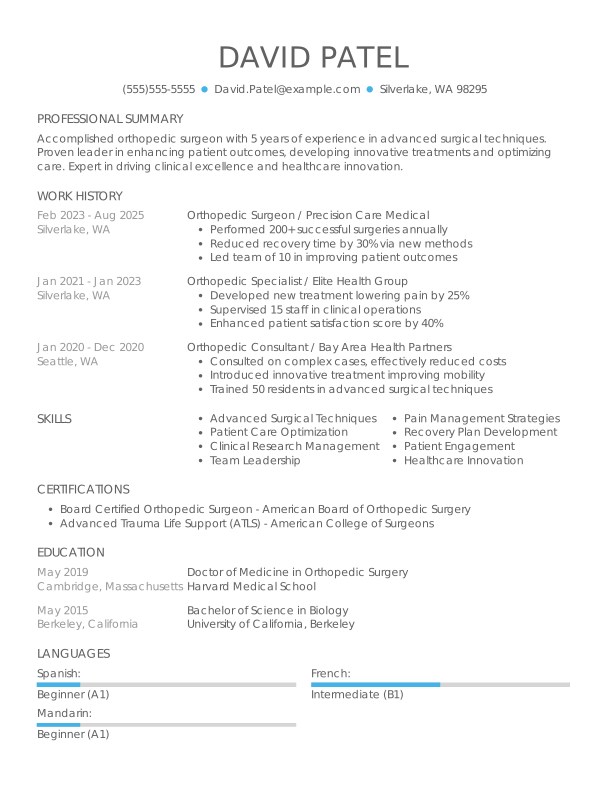
Why this resume works
- Highlights industry-specific skills: With expertise in advanced surgical techniques and patient care optimization, the applicant’s role as an orthopedic surgeon aligns with healthcare skills important for industry success.
- Quantifies accomplishments: Measurable accomplishments, such as performing over 200 surgeries annually and improving patient satisfaction by 40%, highlight the applicant’s quantifiable impact on healthcare outcomes.
- Illustrates problem-solving ability: Introducing a treatment that reduced recovery time by 30% showcases the applicant’s innovative approach to challenges, illustrating strong problem-solving skills in medical practice.
More Orthopedic Surgeon Resume Examples
Discover our orthopedic surgeon resume examples to showcase your surgical expertise, patient care experience, and teamwork skills. These medical resume samples will help you create a compelling resume for various orthopedic positions.
Entry-Level Orthopedic Surgeon
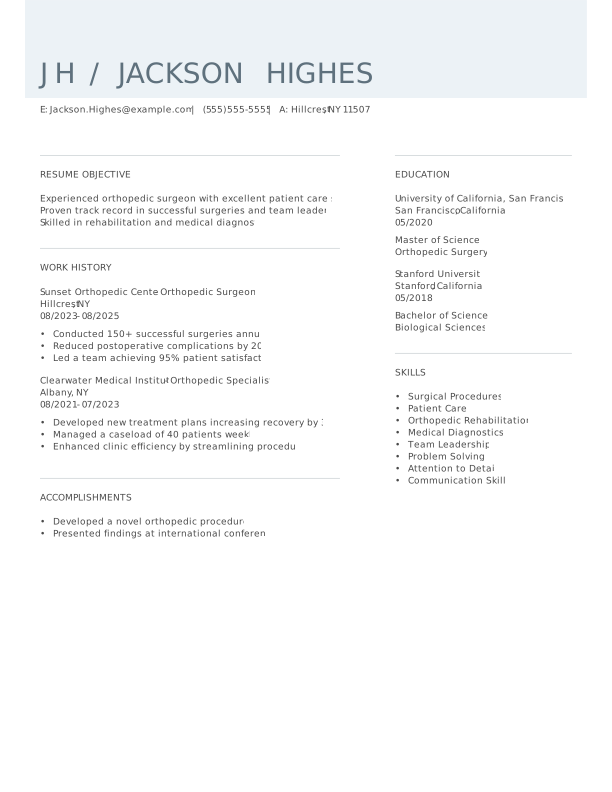
Why this resume works
- Centers on academic background: Showcasing a master’s degree in orthopedic surgery, the applicant’s solid academic foundation forms a strong pillar early in their career.
- Shows digital literacy: The applicant’s ability to streamline procedures and manage patient data reflects computer skills important for today’s tech-driven medical field.
- Effective use of keywords: Incorporating role-relevant terms like “surgical procedures” and “patient care” ensures the resume is optimized for applicant tracking systems (ATS).
Mid-Level Orthopedic Surgeon
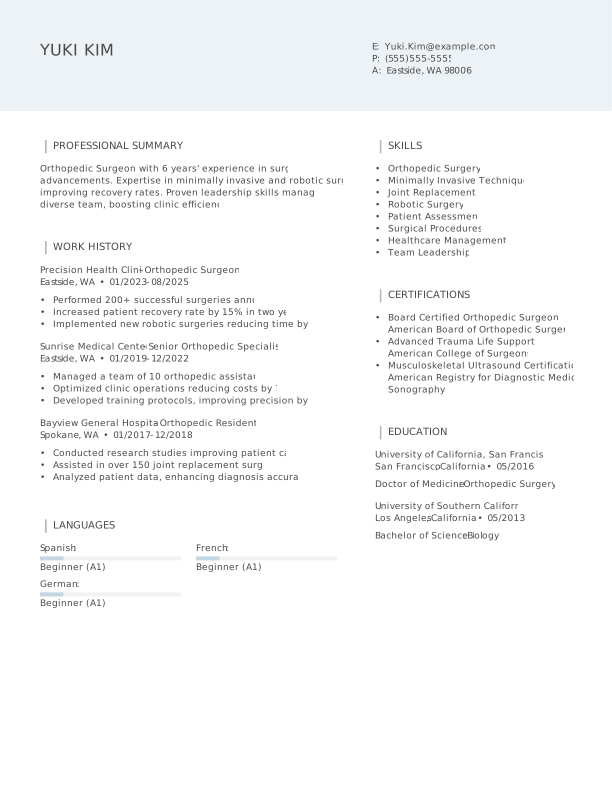
Why this resume works
- Points to measurable outcomes: Quantifiable results, such as increasing patient recovery rates by 15% and reducing surgical time by 20%, showcase the applicant’s focus on effective improvements in healthcare outcomes.
- Demonstrates language abilities: Language skills in Spanish, French, and German improve communication with diverse patients, supporting effective treatment across multicultural settings.
- Displays technical expertise: Expertise in robotic surgery and advanced trauma certifications highlights the applicant’s ability to integrate cutting-edge techniques into practice, ensuring precision and efficiency in complex medical procedures.
Experienced Orthopedic Surgeon
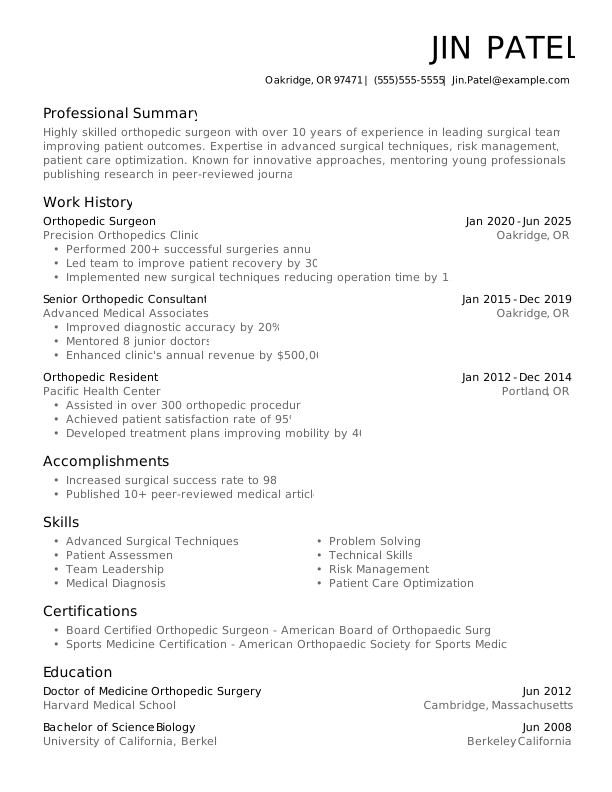
Why this resume works
- Showcases impressive accomplishments: Through significant achievements like increasing surgical success to 98%, the applicant reflects their significant impact on the medical field.
- Focuses on work history: The applicant’s use of a chronological resume format effectively showcases extensive career progression, emphasizing key roles in diverse orthopedic settings over more than a decade.
- Emphasizes leadership skills: By leading teams to improve patient recovery rates and mentoring junior doctors, the applicant clearly exhibits strong leadership skills within medical environments.
Orthopedic Surgeon Resume Template (Text Version)
Start with the text template below to get going. For more options, explore our resume templates.
David Patel
Silverlake, WA 98295
(555)555-5555
David.Patel@example.com
Professional Summary
Accomplished orthopedic surgeon with 5 years of experience in advanced surgical techniques. Proven leader in enhancing patient outcomes, developing innovative treatments and optimizing care. Expert in driving clinical excellence and healthcare innovation.
Work History
Orthopedic Surgeon
Precision Care Medical – Silverlake, WA
February 2023 – August 2025
- Performed 200+ successful surgeries annually
- Reduced recovery time by 30% via new methods
- Led team of 10 in improving patient outcomes
Orthopedic Specialist
Elite Health Group – Silverlake, WA
January 2021 – January 2023
- Developed new treatment lowering pain by 25%
- Supervised 15 staff in clinical operations
- Enhanced patient satisfaction score by 40%
Orthopedic Consultant
Bay Area Health Partners – Seattle, WA
January 2020 – December 2020
- Consulted on complex cases, effectively reduced costs
- Introduced innovative treatment improving mobility
- Trained 50 residents in advanced surgical techniques
Skills
- Advanced Surgical Techniques
- Patient Care Optimization
- Clinical Research Management
- Team Leadership
- Pain Management Strategies
- Recovery Plan Development
- Patient Engagement
- Healthcare Innovation
Education
Doctor of Medicine Orthopedic Surgery
Harvard Medical School Cambridge, Massachusetts
May 2019
Bachelor of Science Biology
University of California, Berkeley Berkeley, California
May 2015
Certifications
- Board Certified Orthopedic Surgeon – American Board of Orthopedic Surgery
- Advanced Trauma Life Support (ATLS) – American College of Surgeons
Languages
- Spanish – Beginner (A1)
- French – Intermediate (B1)
- Mandarin – Beginner (A1)
Related Resume Guides
- Clinical Documentation Improvement Specialist
- Clinical Project Manager
- Clinical Research Assistant
- Clinical Trial Associate
- Coding Specialist
- Dermatologist
- Dialysis Technician
- Doctor
- Electrocardiograph Technician
- Emergency Department Technician
- Emergency Room Registration Clerk
- Equipment Technician
- Health Information Technician
- Hospital Administrator
- Hospital Volunteer
- Intake Coordinator
- Intensive Care Physician
- Medical Laboratory Technologist
- Medical Records Specialist
- Medical Representative
- Medical Research Assistant
- Midwife
- MRI Technologist
- Neurosurgeon
- Nuclear Medicine Technologist
- OB-GYN Medical Assistant
- Ophthalmologist
- Ophthalmology Assistant
- Optometrist
- Pediatric Assistant
- Pediatrician
- Physician
- Physician Assistant
- Podiatrist
- Psychiatrist
- Radiologist
- Radiology Technician
- Resident Medical Officer
- Respiratory Therapist
- Speech Language Pathologist
- Surgeon
- Surgery Scheduler
- Ultrasound Technician
Advice for Writing Your Orthopedic Surgeon Resume
Explore our tips on how to write a resume for an orthopedic surgeon role and discover how to highlight your surgical skills, patient care experience, and medical knowledge effectively.
Tailor your resume to stand out in the competitive medical field by focusing on what makes you the ideal fit for this specialized position.
Write a strong professional summary
A professional summary is a snapshot at the top of your resume that introduces you to hiring managers, helping them quickly decide who you are and what you bring to the table. You can choose between using a summary or an objective, but each serves a different purpose in making your first impression strong.
A professional summary highlights your experience, skills, and achievements in just a few sentences, making it ideal for applicants with some work experience who want to showcase their professional identity and value to employers. The goal is to show what you’ve accomplished in your career so far.
On the other hand, resume objectives focus on career goals. They’re suited for entry-level workers, career changers, or those with gaps in employment. Instead of detailing past accomplishments, they explain what you aim to contribute moving forward.
Next, we’ll provide examples of both professional summaries and resume objectives across various industries and experience levels to guide you in crafting your own compelling introduction. Explore our full library of resume examples for additional inspiration.
Orthopedic surgeon resume summary examples
Entry-level
Recent medical school graduate with a Doctor of Medicine degree and a completed residency in orthopedic surgery. Possesses foundational skills in conducting patient assessments, assisting in surgeries, and applying basic orthopedic techniques. Certified by the American Board of Orthopaedic Surgery and eager to contribute to a surgical team while continuing professional development.
Mid-career
Orthopedic surgeon with over seven years of experience specializing in joint replacement and sports medicine. Experienced in performing complex surgical procedures, managing postoperative care, and collaborating with multidisciplinary teams for comprehensive patient care. Published author in peer-reviewed journals, recognized for advancing minimally invasive surgical techniques.
Experienced
Veteran orthopedic surgeon with more than 15 years of expertise in trauma surgery and spine disorders. Renowned for leadership roles in top-tier hospitals and successful implementation of innovative treatment protocols that improved recovery times by 30%. Holds advanced certifications in robotic-assisted surgery and actively mentors upcoming surgeons through clinical training programs.
Orthopedic surgeon resume objective examples
Recent graduate
Dedicated recent graduate with a Doctor of Medicine degree, specializing in orthopedics, seeking an entry-level orthopedic surgeon position. Eager to apply academic knowledge and surgical training to improve patient outcomes and contribute positively to a multidisciplinary team.
Career changer
Experienced registered nurse transitioning into orthopedic surgery, bringing extensive patient care experience and a deep understanding of musculoskeletal conditions. Seeking an opportunity to leverage clinical expertise and passion for surgery in a supportive orthopedic practice setting.
Specialized training
Orthopedic surgery resident with advanced training in minimally invasive techniques, aiming to join a forward-thinking medical center. Committed to using specialized skills to improve patient recovery processes while collaborating with seasoned surgeons on innovative treatment methodologies.
Use our Resume Builder to make your orthopedic surgeon resume stand out. It helps organize your skills and experiences clearly, so you can focus on what matters most.
Include relevant certifications and training
Listing certifications and training is key for an orthopedic surgeon. It shows you have the right skills and knowledge to do your job well. Certifications prove that you’ve met certain standards in your field. Having a dedicated “Certifications” section on your resume helps employers see your qualifications quickly. This can be especially helpful in technical fields like medicine, where specific skills are necessary.
- Board Certification in Orthopedic Surgery
- Fellowship in Joint Replacement Surgery
- Advanced Trauma Life Support (ATLS)
- Basic Life Support (BLS) Certification
- Certificate of Added Qualifications (CAQ) in Sports Medicine
Having these certifications can make you stand out as an orthopedic surgeon. They show you’re committed to learning and staying up-to-date with medical advancements. This helps build trust with patients and colleagues.
Example of a certifications section
Board Certification in Orthopedic Surgery
Issued by: American Board of Orthopaedic Surgery (ABOS)
Issued 2020
Advanced Trauma Life Support (ATLS)
Issued by: American College of Surgeons
Expires 2025
Fellowship in Sports Medicine
Issued by: American Orthopaedic Society for Sports Medicine (AOSSM)
Issued 2018
Basic Life Support (BLS) Certification
Issued by: American Heart Association
Expires 2024
Pediatric Advanced Life Support (PALS)
Issued by: American Heart Association
Expires 2023
Choose a polished and well-organized resume template that effectively showcases your skills and qualifications to stand out to hiring managers in your field.
Showcase your work experience
Showcasing relevant work experience on a resume is important for an orthopedic surgeon as it highlights your skills and successes in the field. Employers look for applicants who have proven they can handle the responsibilities of the job, so your experience section should clearly reflect this.
Start by listing your work history in reverse chronological order, beginning with your most recent position. Each entry should include your job title, employer name, location, and employment dates to ensure clarity.
When describing your roles, use action-oriented language that demonstrates what you achieved. Rather than simply stating duties, focus on measurable results that showcase your contributions to patient care or surgical outcomes. For example, instead of saying “performed surgeries,” you might say “conducted over 200 successful joint replacements resulting in improved mobility for patients.”
Highlight core responsibilities such as diagnosing musculoskeletal conditions, administering treatments like physical therapy or surgery, and collaborating with medical teams to improve patient care.
Including specific achievements helps paint a picture of your capabilities as an orthopedic surgeon. Whether it’s reducing recovery times through innovative techniques or improving clinic efficiency by implementing new protocols, these details set you apart from other applicants.
By presenting a clear and powerful account of your work experience, you make it easier for potential employers to see why you’re a strong fit for their team.
5 orthopedic surgeon work history bullet points
- Performed over 300 successful joint replacement surgeries annually, improving patient mobility and satisfaction rates by 40%.
- Led a multidisciplinary team in the development of a new surgical protocol that reduced operation time by 25% and postoperative complications by 15%.
- Pioneered minimally invasive techniques, resulting in a 30% decrease in patient recovery time and hospital stay duration.
- Conducted weekly training sessions for junior surgeons, increasing their surgical skill scores by 20%.
- Collaborated with research teams to publish findings on orthopedic innovations, contributing to a national award-winning study.
Highlight your expertise—select a resume format that clearly and logically presents surgical skills, patient care experience, and medical education.
Match your resume with the job description
Tailoring resumes to job descriptions is key because it helps job seekers stand out and ensures their application passes through applicant tracking systems (ATS). ATS scans for these terms, making it important to customize your resume accordingly.
An ATS-friendly resume includes keywords and phrases that align with your skills and experiences. By doing this, you increase the chance of catching the attention of hiring managers who rely on technology to sort through applications quickly.
To identify important keywords from an orthopedic surgeon job posting, pay attention to skills, qualifications, and responsibilities that appear multiple times. Common examples include surgical procedures, patient care, clinical assessments, treatment planning, and multidisciplinary team collaboration.
Once you’ve identified the right terms, integrate them naturally into your experience section. For example, instead of writing “Provide high-quality patient care,” you could say “Delivered high-quality patient care by performing complex orthopedic surgeries and collaborating with healthcare teams to improve patient outcomes.”
This not only aligns your resume with the job description but also highlights the real-world impact of your expertise. Targeted resumes are beneficial because they boost compatibility with ATS, increasing chances for interviews by highlighting relevant experience effectively.
You can use our ATS Score Checker to scan your resume for potential issues and receive on-the-spot feedback to improve your resume score.
Salary Insights for Orthopedic Surgeons
Understanding salary data can help you make informed decisions about your career path and negotiation strategy. Explore key insights below to guide your research.
Top 10 highest-paying states for orthopedic surgeons
Orthopedic Surgeons earn varying salaries across the United States, with a national average of $366,085. The table below highlights the states where orthopedic surgeons command the highest compensation.
Our salary information comes from the U.S. Bureau of Labor Statistics’ Occupational Employment and Wage Statistics survey. This official government data provides the most comprehensive and reliable salary information for orthopedic surgeons across all 50 states and the District of Columbia. The figures presented here reflect the May 2025 dataset, which is the most recent available as of this publication.
| State | Average Salary |
|---|---|
| Wisconsin | $546,740 |
| Vermont | $471,590 |
| Arizona | $468,860 |
| Michigan | $447,210 |
| South Carolina | $440,970 |
| Nebraska | $426,320 |
| Oklahoma | $419,570 |
| Florida | $397,400 |
| Virginia | $390,210 |
| Texas | $387,140 |
FAQ
Do I need to include a cover letter with my orthopedic surgeon resume?
Yes, including a cover letter with your orthopedic surgeon resume can be beneficial in differentiating yourself from other applicants.
A cover letter allows you to express your specific interest in the role and facility, highlight your specialized surgical skills, and elaborate on relevant experiences that align with the job description.
For example, if the hospital offers advanced orthopedic procedures or research opportunities, you can detail your experience or enthusiasm for such initiatives.
You might find our Cover Letter Generator useful for crafting a personalized cover letter quickly or creating one from scratch with expert guidance.
Additionally, reviewing cover letter examples can provide inspiration and ensure yours is tailored effectively to the orthopedic field and the position you’re applying for.
How long should an orthopedic surgeon’s resume be?
For an orthopedic surgeon, a two-page resume is often appropriate due to the extensive education, specialized training, and significant experience required in this field.
This length allows you to detail your medical education, residencies, fellowships, certifications, and any specialized procedures you perform.
If you’re early in your career or have minimal job history beyond training programs, a one-page resume might suffice. In that case, focus on highlighting key accomplishments and relevant skills succinctly.
Explore our guide on how long a resume should be for more examples and tips on determining the ideal length based on your career stage and achievements.
How do you write an orthopedic surgeon resume with no experience?
Creating a resume with no experience for an orthopedic surgeon involves strategically highlighting your education, skills, and any relevant training to align with the demands of this specialized field. Here are a few tips to help you get started:
- Emphasize educational background: Start with your medical degree and include details like the name of the medical school, graduation date, and honors. Don’t forget to mention your completion of surgical rotations or residencies focusing on orthopedics.
- Highlight clinical rotations and residencies: Even if you haven’t worked independently as a surgeon yet, list all relevant training experiences. Detail specific procedures you’ve assisted with or observed and any responsibilities during these rotations.
- Showcase transferable skills: Highlight skills that are critical for an orthopedic surgeon, such as attention to detail, strong hand-eye coordination, and excellent patient communication abilities. If you have research experience or published work in orthopedics, be sure to include that too.
For further guidance on crafting a resume with no experience in this field, consider reviewing templates designed for medical professionals transitioning from training to practice.
Rate this article
Orthopedic Surgeon


Elizabeth is a Certified Professional Resume Writer (CPRW) and a member of the Professional Association of Resume Writers & Career Coaches. She is committed to helping job seekers navigate the job market and succeed in their careers.
More Articles by Elizabeth Muenzen, CPRWShare this page
 Add MyPerfectResume as a preferred source on Google
Add