Table of Contents
Get started with MyPerfectResume today!
- Build a resume on any device
- Pick an ATS-friendly template
- Tailor with AI copy suggestions
Why this resume works
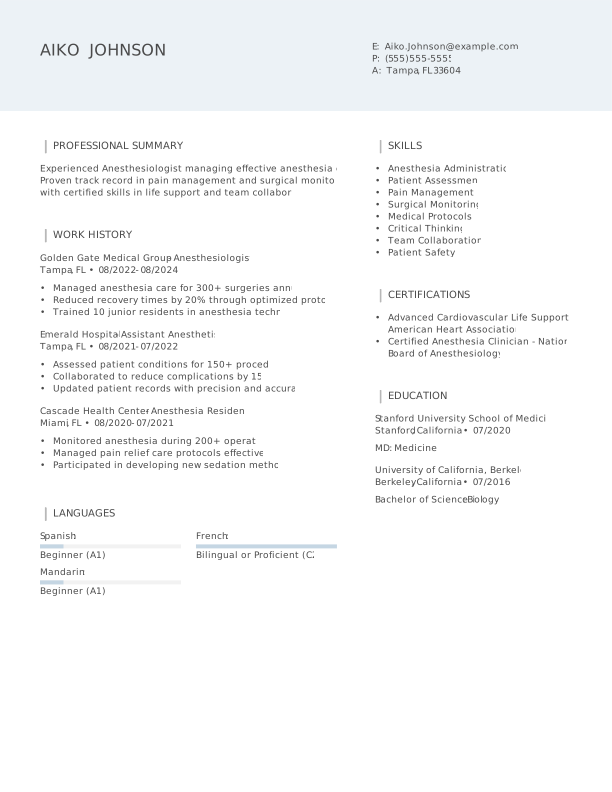
- Showcases career progression: Starting as an anesthesia resident and advancing to an anesthesiologist, the applicant’s roles reflect a steady increase in responsibilities and expertise in the medical field.
- Uses action-oriented language: With action verbs like “managed,” “reduced,” and “trained,” the applicant conveys decisive action and leadership.
- Quantifies accomplishments: Measurable accomplishments like managing anesthesia for over 300 surgeries each year and reducing recovery times by 20% are clear examples of how quantifiable metrics showcase impact.
More Anesthesiologist Resume Examples
Browse our anesthesiologist resume examples to discover how to highlight your medical expertise, patient care skills, and relevant experience. These medical resume samples will help you craft a compelling resume that attracts healthcare employers.
Entry-Level Anesthesiologist
Why this resume works
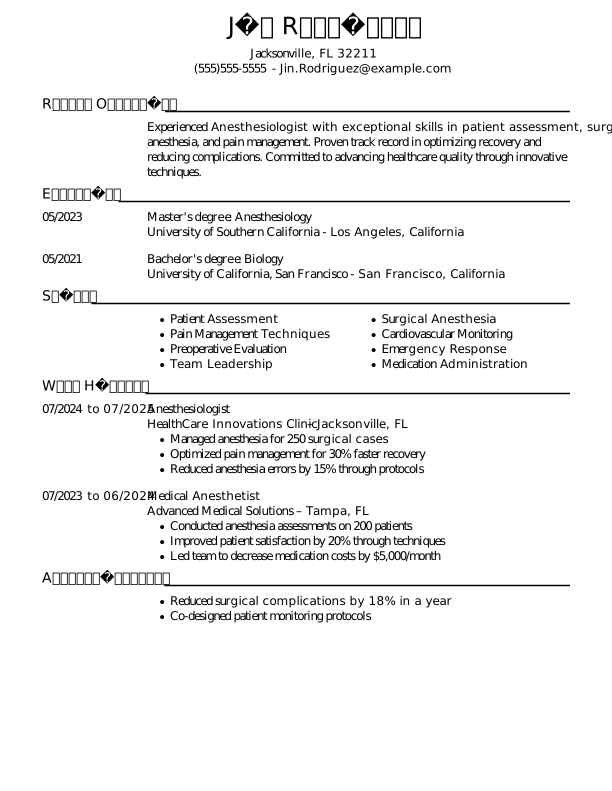
- Centers on academic background: A master’s degree in anesthesiology and a bachelor’s degree in biology set a solid academic foundation for future professional achievements.
- Effective use of keywords: Incorporating keywords like “patient assessment” and “pain management” throughout, the applicant strategically optimizes their resume for applicant tracking systems (ATS).
- Shows digital literacy: Using modern techniques to optimize pain management shows the applicant’s digital literacy, aligning with the computer skills needed in healthcare.
Mid-Level Anesthesiologist
Why this resume works
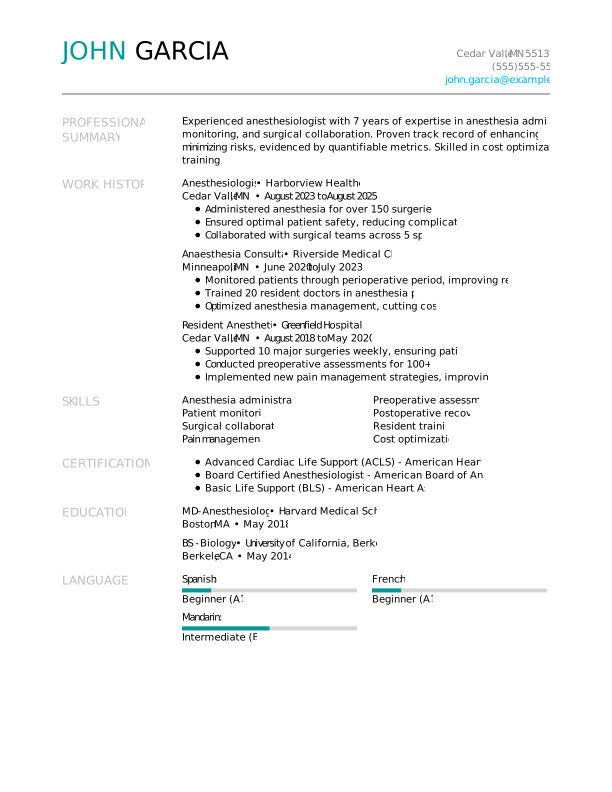
- Points to measurable outcomes: Reducing complications by 25% and cutting costs by 15% highlight the applicant’s focus on measurable outcomes and efficiency.
- Demonstrates language abilities: Language skills in Spanish, French, and Mandarin promote effective communication across diverse patient populations.
- Displays technical expertise: Holding certifications like Advanced Cardiac Life Support (ACLS) and Board Certified Anesthesiologist shows the applicant’s extensive technical expertise important for high-stakes medical environments.
Experienced Anesthesiologist
Why this resume works
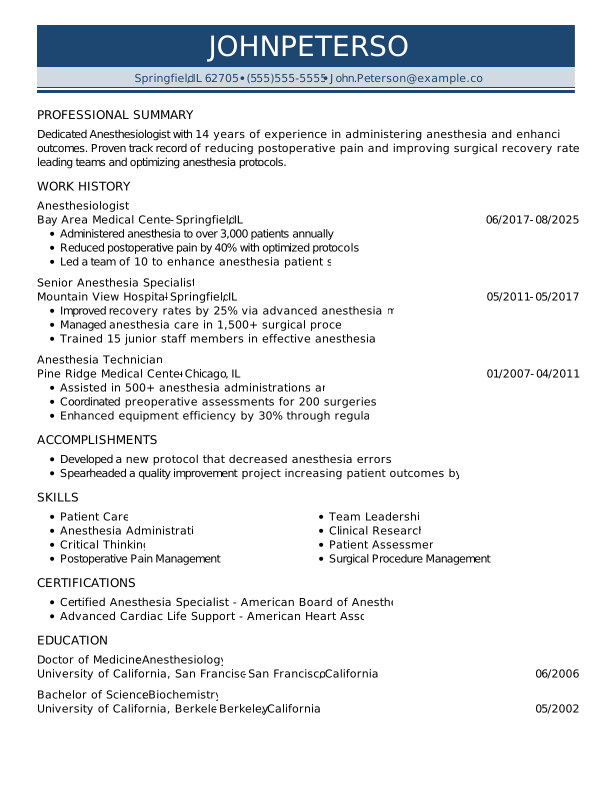
- Showcases impressive accomplishments: By cutting postoperative pain by 40% and leading safety initiatives, the applicant reflects a significant impact in anesthesia care.
- Focuses on work history: Using a chronological resume format, the applicant effectively presents over a decade of progressive experience in anesthesia roles, showcasing career growth and expertise.
- Sections are well-organized: The applicant’s use of bullet points and headers ensures sections are easy to scan, making the resume reader-friendly and well-organized.
Anesthesiologist Resume Template (Text Version)
Copy and paste the template below, or explore our free resume templates to download for more design options.
Aiko Johnson
Tampa, FL 33604
(555)555-5555
Aiko.Johnson@example.com
Professional Summary
Experienced Anesthesiologist managing effective anesthesia care. Proven track record in pain management and surgical monitoring with certified skills in life support and team collaboration.
Work History
Anesthesiologist
Golden Gate Medical Group – Tampa, FL
August 2022 – August 2024
- Managed anesthesia care for 300+ surgeries annually
- Reduced recovery times by 20% through optimized protocols
- Trained 10 junior residents in anesthesia techniques
Assistant Anesthetist
Emerald Hospital – Tampa, FL
August 2021 – July 2022
- Assessed patient conditions for 150+ procedures
- Collaborated to reduce complications by 15%
- Updated patient records with precision and accuracy
Anesthesia Resident
Cascade Health Center – Miami, FL
August 2020 – July 2021
- Monitored anesthesia during 200+ operations
- Managed pain relief care protocols effectively
- Participated in developing new sedation methods
Languages
- Spanish – Beginner (A1)
- French – Bilingual or Proficient (C2)
- Mandarin – Beginner (A1)
Skills
- Anesthesia Administration
- Patient Assessment
- Pain Management
- Surgical Monitoring
- Medical Protocols
- Critical Thinking
- Team Collaboration
- Patient Safety
Certifications
- Advanced Cardiovascular Life Support – American Heart Association
- Certified Anesthesia Clinician – National Board of Anesthesiology
Education
MD Medicine
Stanford University School of Medicine Stanford, California
July 2020
Bachelor of Science Biology
University of California, Berkeley Berkeley, California
July 2016
Related Resume Guides
- Clinical Project Manager
- Clinical Research Assistant
- Clinical Trial Associate
- Coding Specialist
- Dermatologist
- Dialysis Technician
- Doctor
- Electrocardiograph Technician
- Emergency Department Technician
- Emergency Room Registration Clerk
- Equipment Technician
- Health Information Technician
- Hospital Administrator
- Hospital Volunteer
- Intake Coordinator
- Intensive Care Physician
- Medical Laboratory Technologist
- Medical Records Specialist
- Medical Representative
- Medical Research Assistant
- Midwife
- MRI Technologist
- Neurosurgeon
- Nuclear Medicine Technologist
- OB-GYN Medical Assistant
- Ophthalmologist
- Ophthalmology Assistant
- Optometrist
- Orthopedic Surgeon
- Pediatric Assistant
- Pediatrician
- Physician
- Physician Assistant
- Podiatrist
- Psychiatrist
- Radiologist
- Radiology Technician
- Resident Medical Officer
- Respiratory Therapist
- Speech Language Pathologist
- Surgeon
- Surgery Scheduler
- Ultrasound Technician
Advice for Writing Your Anesthesiologist Resume
Discover our advice on how to write a resume for an anesthesiologist role and learn how to highlight your medical expertise and dedication to patient safety. Explore tailored tips that will help you stand out in your field and land your next great opportunity.
Write a strong professional summary
A professional summary on a resume serves as your personal introduction to hiring managers, providing a snapshot of your professional identity. This helps them quickly decide if they want to learn more about you. When writing a resume, you have the option to craft either a professional summary or an objective.
Typically consisting of three to four sentences, a professional summary showcases your experience, skills, and achievements. It’s ideal for experienced applicants with a track record to share and highlights the value you bring to potential employers.
On the other hand, a resume objective focuses on career goals and is suited for entry-level applicants, career changers, or those with employment gaps. It communicates what you aim to contribute rather than what you’ve already accomplished.
With these foundational insights into both approaches, we can explore examples of summaries and objectives tailored for various industries and levels of experience. See our full library of resume examples for additional inspiration.
Anesthesiologist resume summary examples
Entry-level
Recent graduate with a Doctor of Medicine degree and completed residency in anesthesiology, equipped with foundational skills in patient monitoring, anesthesia administration, and pain management. Certified in Advanced Cardiovascular Life Support (ACLS) and Basic Life Support (BLS). Eager to contribute to surgical teams by ensuring patient safety and comfort during procedures.
Mid-career
Anesthesiologist with over six years of experience in diverse medical settings, including hospitals and outpatient surgery centers. Skilled in regional anesthesia techniques, perioperative care, and emergency airway management. Board-certified with a proven track record of effectively collaborating with surgical teams to optimize patient outcomes. Known for excellent communication skills and an empathetic approach to patient care.
Experienced
Seasoned anesthesiologist specializing in pediatric anesthesiology and chronic pain management. Over 15 years of experience leading anesthesia departments, developing protocols, and mentoring junior staff. Expert in advanced sedation methods and postoperative recovery strategies. Committed to improving departmental efficiency while prioritizing patient safety and advancing innovative pain relief solutions.
Anesthesiologist resume objective examples
Recent graduate
Dedicated recent medical graduate with a focus on anesthesiology seeking an entry-level anesthesiologist role to apply academic knowledge and clinical skills in monitoring patients during surgical procedures. Committed to ensuring patient comfort and safety while gaining hands-on experience in anesthesia administration.
Career changer
Aspiring anesthesiologist transitioning from nursing, bringing extensive experience in patient care and familiarity with surgical environments. Eager to contribute to a team-oriented practice by applying newly acquired expertise in anesthesia techniques, combined with a strong foundation in healthcare delivery.
Specialized training
Graduate trained in advanced airway management and perioperative care, seeking a position as an entry-level anesthesiologist. Passionate about using specialized training to support surgical teams while prioritizing patient well-being and optimizing recovery outcomes.
Want your anesthesiologist resume to stand out? Use our Resume Builder for easy tips and templates that help highlight your skills and experience effectively.
Include relevant certifications and training
For an anesthesiologist, listing certifications and training is key to showing that you have the skills and knowledge needed for the job. Certifications prove you’ve met high standards in your field, which is important when dealing with patient safety.
Creating a dedicated certifications section on your resume helps employers see your qualifications quickly. This section complements your education details by highlighting additional expertise. Here are a few examples of relevant certifications for your resume:
- American Board of Anesthesiology Certification
- Advanced Cardiac Life Support (ACLS)
- Pediatric Advanced Life Support (PALS)
- Basic Life Support (BLS)
Having these certifications shows you are committed to keeping up with medical standards and can handle complex situations in healthcare. They help build trust with employers by proving you have specialized training. These credentials are essential for success as an anesthesiologist.
Example of a certifications section
Board Certification in Anesthesiology
Issued by: American Board of Anesthesiology (ABA)
Expires 2030
Advanced Cardiac Life Support (ACLS) Certification
Issued by: American Heart Association (AHA)
Expires 2025
Pediatric Advanced Life Support (PALS) Certification
Issued by: American Heart Association (AHA)
Expires 2026
Basic Life Support (BLS) Certification
Issued by: American Heart Association (AHA)
Issued 2023
National Board of Echocardiography Perioperative TEE Certification
Issued by: National Board of Echocardiography (NBE)
Issued 2022
Choose a polished and well-organized resume template that effectively showcases your skills and qualifications to stand out to hiring managers in your field.
Showcase your work experience
Showcasing relevant work experience on your resume is important to demonstrating your skills and achievements as an anesthesiologist. Employers want to see how your previous roles have prepared you for their position, so tailoring this section to the job is important.
Use reverse chronological order, starting with your most recent role. For each position, include the job title, the employer’s name, the location, and your employment dates. This format ensures clarity and allows hiring managers to quickly understand your career progression.
When describing your work experience, use clear, action-oriented language that highlights what you accomplished rather than just listing job duties. Focus on measurable results whenever possible—for example, “administered anesthesia for over 1,000 surgical procedures annually” or “reduced patient recovery times by implementing updated monitoring protocols.”
Highlight core responsibilities specific to anesthesiology, such as preoperative evaluations, managing anesthesia during surgeries, post-operative care, and collaborating with surgeons and nurses. Including these details shows how you applied your expertise in real-world situations.
Keep descriptions concise but strong by focusing on significant contributions and outcomes that set you apart from others in similar roles. Avoid generic statements; instead, provide concrete examples of how you’ve made a difference. A well-organized and tailored work experience section can help demonstrate why you’re a strong fit for an anesthesiologist role.
5 anesthesiologist work history bullet points
- Administered anesthesia to over 1,000 patients annually, ensuring a 98% satisfaction rate in post-operative surveys.
- Developed and implemented an improved pain management protocol, reducing patient recovery time by 15%.
- Collaborated with surgical teams to optimize anesthetic plans, decreasing perioperative complications by 10%.
- Trained and mentored 5 junior anesthesiologists, improving departmental efficiency and knowledge-sharing.
- Conducted regular audits on anesthesia equipment maintenance, resulting in a 25% increase in operational reliability.
Anesthesiologists should choose a resume format that highlights patient care, precision in administering anesthesia, and teamwork with surgical staff.
Match your resume with the job description
Tailoring resumes to job descriptions is key for job seekers, especially those aiming for roles like an anesthesiologist. By aligning their resume with the specific needs of an employer, job seekers can stand out and successfully navigate applicant tracking systems (ATS). Customizing your resume with keywords and phrases from job postings is essential to match these terms effectively.
An ATS-friendly resume uses keywords from the job description that align with your skills. This approach significantly increases your chances of catching the eye of hiring managers. For an anesthesiologist position, including relevant terms can make a difference in getting noticed.
To find these keywords, examine the job posting carefully. Identify skills, qualifications, and duties mentioned frequently, such as “patient care,” “clinical assessments,” or “anesthesia equipment setup.”
Incorporate these terms naturally into your resume. For example, if a job description states “Provide high-quality patient care,” you might write “Delivered high-quality patient care to improve overall health outcomes” in your experience section.
By crafting targeted resumes that align with specific roles like anesthesiologist positions, you improve your compatibility with ATS systems and increase your chances of being selected for interviews.
Want your resume to get noticed by more employers? The ATS Score Checker finds what can be improved so your resume gets through ATS systems easily.
Salary Insights for Anesthesiologists
Understanding salary data can help you make informed decisions about your career path and negotiation strategy. Explore key insights below to guide your research.
Top 10 highest-paying states for anesthesiologists
Anesthesiologists earn varying salaries across the United States, with a national average of $342,360. The table below highlights the states where anesthesiologists command the highest compensation.
Our salary information comes from the U.S. Bureau of Labor Statistics’ Occupational Employment and Wage Statistics survey. This official government data provides the most comprehensive and reliable salary information for anesthesiologists across all 50 states and the District of Columbia. The figures presented here reflect the May 2025 dataset, which is the most recent available as of this publication.
| State | Average Salary |
|---|---|
| Minnesota | $465,340 |
| Montana | $459,360 |
| Maine | $415,540 |
| Florida | $404,100 |
| New Hampshire | $402,950 |
| North Carolina | $397,850 |
| Nebraska | $389,480 |
| Ohio | $386,200 |
| Iowa | $385,010 |
| Indiana | $378,850 |
FAQ
Do I need to include a cover letter with my anesthesiologist resume?
Yes, including a tailored cover letter with your anesthesiologist resume can improve your application and make you more memorable to hiring committees.
A cover letter lets you detail why you’re specifically interested in the hospital or practice and highlight key achievements, like managing high-risk cases or improving patient outcomes.
For instance, if the facility specializes in pain management or cardiac anesthesia, you can discuss your expertise in those areas to align with their needs.
To simplify the process, try using our Cover Letter Generator for customized templates or guidance that saves time while ensuring professionalism.
You can also explore cover letter examples designed for healthcare roles to help craft a compelling and role-specific narrative that complements your resume.
How long should an anesthesiologist’s resume be?
For an anesthesiologist, a two-page resume is often appropriate given the complexity and depth of your field. This length allows you to adequately detail your education, board certifications, research contributions, and any specialized skills or procedures you’ve mastered.
However, if you’re early in your career or changing specialties, a one-page resume might suffice by focusing on core competencies and essential experiences without overwhelming potential employers with unnecessary details. Be concise yet thorough in highlighting what truly sets you apart.
Consider exploring our guide on how long a resume should be for more tailored advice on optimizing your resume length for different career stages.
How do you write an anesthesiologist resume with no experience?
When crafting a resume with no experience for an anesthesiologist role, emphasize your education, certifications, and relevant training to demonstrate your dedication to the field.
- Highlight your medical education: Start by listing your medical school degree prominently. Include the name of the institution, graduation date, and any honors or distinctions received.
- Include certifications: Make sure to mention any relevant certifications, such as ACLS (Advanced Cardiovascular Life Support) or BLS (Basic Life Support). These demonstrate your preparedness for emergencies.
- Detail clinical rotations: Even without direct anesthesiology work experience, you can list clinical rotations that provided exposure to anesthesia practices. Detail specific tasks or observations related to anesthesiology during these rotations.
- Showcase key skills: Emphasize skills critical to anesthesiology, such as attention to detail, ability to remain calm under pressure, and strong communication abilities developed through schooling or other healthcare experiences.
Consider exploring resources tailored for writing a resume with no experience to find more strategies that can help you stand out in this competitive field.
Rate this article
Anesthesiologist


Elizabeth is a Certified Professional Resume Writer (CPRW) and a member of the Professional Association of Resume Writers & Career Coaches. She is committed to helping job seekers navigate the job market and succeed in their careers.
More Articles by Elizabeth Muenzen, CPRWShare this page
 Add MyPerfectResume as a preferred source on Google
Add