Table of Contents
Get started with MyPerfectResume today!
- Build a resume on any device
- Pick an ATS-friendly template
- Tailor with AI copy suggestions
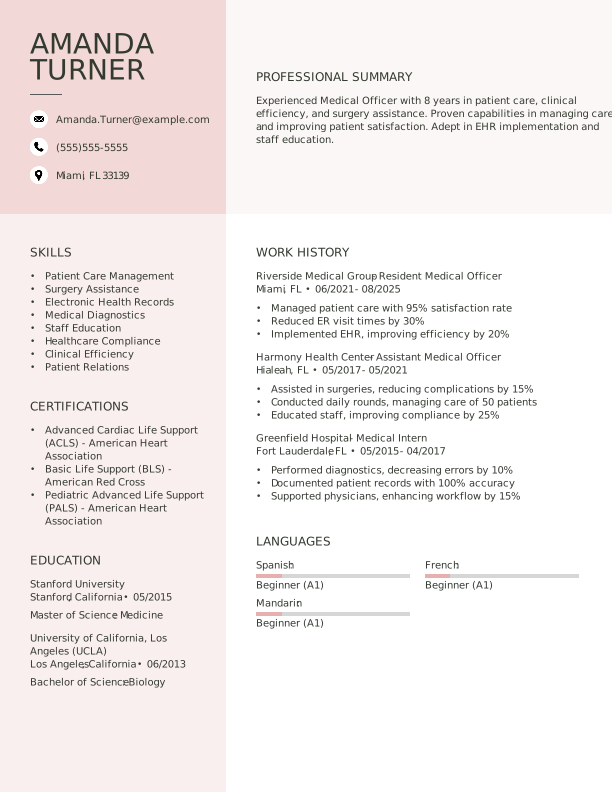
Why this resume works
- Quantifies accomplishments: Measurable accomplishments like reducing ER visit times by 30% and achieving a 95% patient satisfaction rate showcase tangible impact on healthcare efficiency.
- Showcases career progression: The transition from medical intern to resident medical officer reflects steady career progression with increasing responsibility, highlighting a path of growth through skill mastery and leadership roles.
- Uses action-oriented language: Strong action verbs such as managed, reduced, and implemented emphasize initiative and effectiveness.
More Medical Resume Examples
Browse more medical resume examples to learn how to highlight your clinical skills, healthcare experience, and ability to manage patient care. These medical resume samples will help you build a compelling resume for medical roles.
Medical Intern
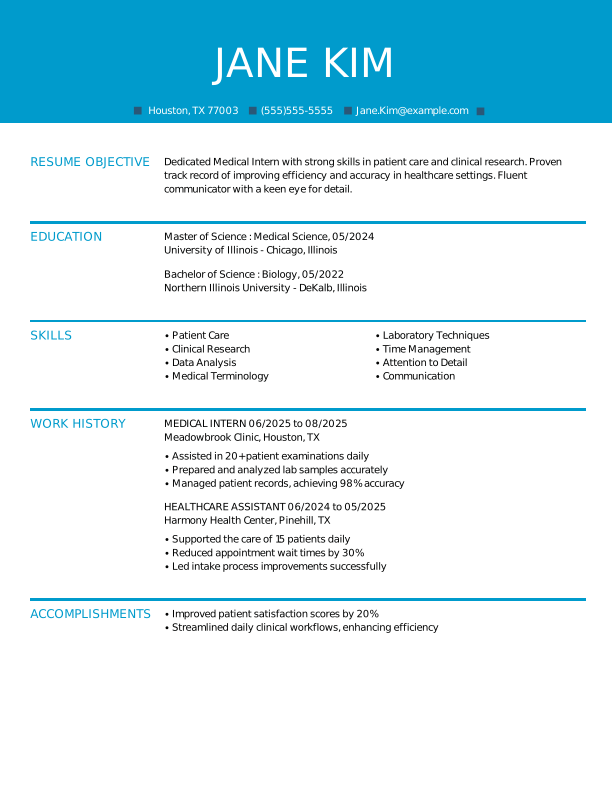
Why this resume works
- Centers on academic background: Featuring a master’s degree in medical science reflects the applicant’s strong academic foundation, ideal for early-career professionals entering healthcare.
- Effective use of keywords: Integrating terms like patient care, clinical research, and medical terminology aligns with keywords for healthcare roles.
- Puts skills at the forefront: Organizing core skills such as communication and laboratory techniques near the top mirrors the skills-based resume format, ensuring immediate relevance for entry-level positions.
Attending Physician
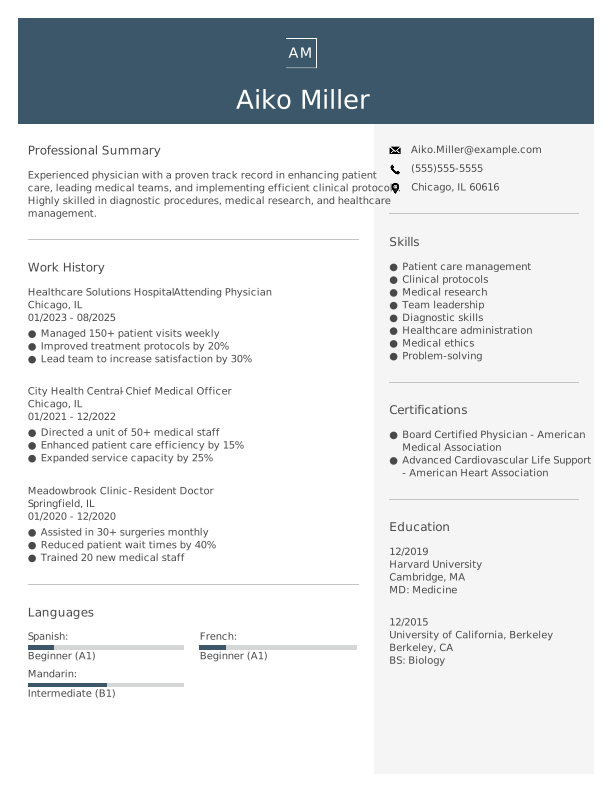
Why this resume works
- Points to measurable outcomes: Managing over 150 patient visits weekly and improving treatment protocols by 20% reflect a strong focus on measurable outcomes in healthcare settings.
- Includes a mix of soft and hard skills: The applicant’s skill set, from clinical protocols to interpersonal skills, reveals a balance of technical expertise and people-oriented strengths.
- Demonstrates language abilities: Language skills in Spanish, French, and Mandarin illustrate effective cross-cultural communication abilities.
Staff Physician
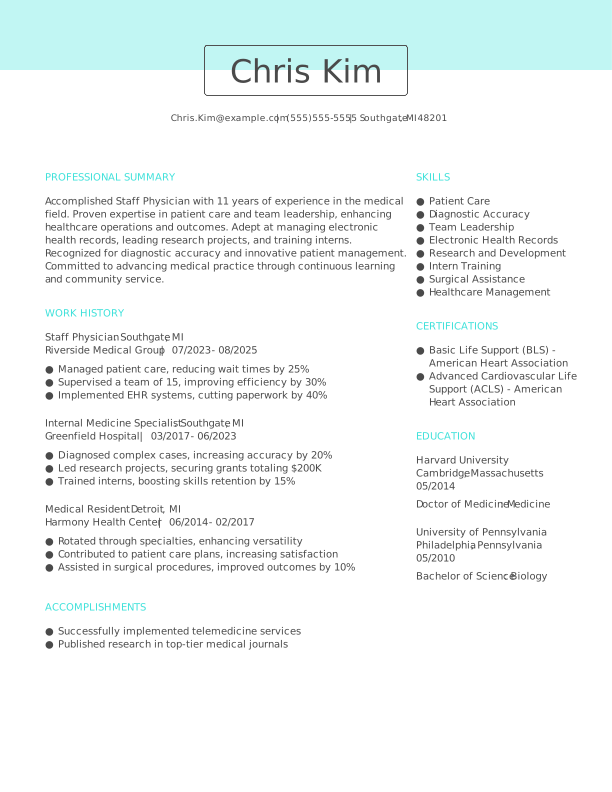
Why this resume works
- Focuses on work history: Using a chronological resume format, the applicant crafts a detailed narrative of their medical journey, showcasing a progressive career enriched by effective roles and responsibilities.
- Lists relevant certifications: By listing certifications like BLS and ACLS from the American Heart Association, the applicant shows dedication to maintaining skills important for high-quality patient care.
- Emphasizes leadership skills: The applicant’s ability to manage teams and lead significant projects like implementing EHR systems is a testament to their leadership skills in healthcare settings.
Resident Medical Officer Resume Template (Text Version)
Copy the text below for a solid start, or explore our gallery to find a resume template that works for you.
Amanda Turner
Miami, FL 33139
(555)555-5555
Amanda.Turner@example.com
Professional Summary
Experienced Medical Officer with 8 years in patient care, clinical efficiency, and surgery assistance. Proven capabilities in managing care and improving patient satisfaction. Adept in EHR implementation and staff education.
Skills
- Patient Care Management
- Surgery Assistance
- Electronic Health Records
- Medical Diagnostics
- Staff Education
- Healthcare Compliance
- Clinical Efficiency
- Patient Relations
Certifications
- Advanced Cardiac Life Support (ACLS) – American Heart Association
- Basic Life Support (BLS) – American Red Cross
- Pediatric Advanced Life Support (PALS) – American Heart Association
Education
Master of Science Medicine
Stanford University Stanford, California
May 2015
Bachelor of Science Biology
University of California, Los Angeles (UCLA) Los Angeles, California
June 2013
Work History
Resident Medical Officer
Riverside Medical Group – Miami, FL
June 2021 – August 2025
- Managed patient care with 95% satisfaction rate
- Reduced ER visit times by 30%
- Implemented EHR, improving efficiency by 20%
Assistant Medical Officer
Harmony Health Center – Hialeah, FL
May 2017 – May 2021
- Assisted in surgeries, reducing complications by 15%
- Conducted daily rounds, managing care of 50 patients
- Educated staff, improving compliance by 25%
Medical Intern
Greenfield Hospital – Fort Lauderdale, FL
May 2015 – April 2017
- Performed diagnostics, decreasing errors by 10%
- Documented patient records with 100% accuracy
- Supported physicians, enhancing workflow by 15%
Languages
- Spanish – Beginner (A1)
- French – Beginner (A1)
- Mandarin – Beginner (A1)
Related Resume Guides
- Clinical Documentation Improvement Specialist
- Clinical Project Manager
- Clinical Research Assistant
- Clinical Trial Associate
- Coding Specialist
- Dermatologist
- Dialysis Technician
- Doctor
- Electrocardiograph Technician
- Emergency Department Technician
- Emergency Room Registration Clerk
- Equipment Technician
- Health Information Technician
- Hospital Administrator
- Hospital Volunteer
- Intake Coordinator
- Intensive Care Physician
- Medical Laboratory Technologist
- Medical Records Specialist
- Medical Representative
- Medical Research Assistant
- Midwife
- MRI Technologist
- Neurosurgeon
- Nuclear Medicine Technologist
- OB-GYN Medical Assistant
- Ophthalmologist
- Ophthalmology Assistant
- Optometrist
- Orthopedic Surgeon
- Pediatric Assistant
- Pediatrician
- Physician
- Physician Assistant
- Podiatrist
- Psychiatrist
- Radiologist
- Radiology Technician
- Respiratory Therapist
- Speech Language Pathologist
- Surgeon
- Surgery Scheduler
- Ultrasound Technician
Advice for Writing Your Resident Medical Officer Resume
Explore our tips on how to write a resume for a resident medical officer position and discover how to highlight your medical skills, clinical experience, and dedication to patient care. Tailor your resume to stand out in the healthcare field and get ready to make a lasting impression.
Write a strong professional summary
A professional summary on a resume is your introduction to hiring managers, providing a snapshot of your skills and accomplishments. You can decide whether to use a summary or a resume objective based on your experience level and career goals.
Typically, a professional summary is three to four sentences long, showcasing your experience, skills, and achievements. It’s ideal for those with experience in their field because it highlights what you’ve done and your value as a resident medical officer.
On the other hand, resume objectives focus more on career goals. They’re beneficial for individuals just starting out, changing careers, or with employment gaps. A summary emphasizes what you’ve already achieved; an objective states what you hope to achieve.
Now let’s explore examples of both summaries and objectives across different industries and levels of experience. Browse our extensive library of resume examples for additional inspiration.
Resident medical officer resume summary examples
Entry-level
Recent medical school graduate with a Doctor of Medicine degree and hands-on experience through clinical rotations in internal medicine and emergency care. Holds certification in Basic Life Support (BLS) and Advanced Cardiovascular Life Support (ACLS). Eager to apply foundational knowledge in a fast-paced hospital environment, providing high-quality patient care and supporting senior physicians.
Mid-career
Resident medical officer with four years of experience in general surgery and pediatrics. Skilled in conducting patient assessments, managing acute emergencies, and collaborating with healthcare teams to develop effective treatment plans. Recognized for excellent diagnostic skills and the ability to communicate clearly with patients and families. Currently seeking opportunities to further specialize in pediatric medicine.
Experienced
Seasoned resident medical officer with over 10 years of experience across various medical specialties, including cardiology and oncology. Known for leadership abilities in managing junior staff during critical care situations and implementing quality improvement initiatives that improved patient care outcomes. Board-certified, with ongoing research contributions focused on innovative treatment methodologies for chronic diseases.
Resident medical officer resume objective examples
Recent graduate
Dedicated and empathetic medical school graduate seeking a resident medical officer position to apply academic knowledge and clinical training in patient care. Committed to supporting healthcare teams in delivering effective treatment and fostering positive patient outcomes.
Career changer
Passionate professional transitioning into a resident medical officer role, bringing transferable skills from prior healthcare experience and formal medical education. Eager to contribute to multidisciplinary teams while ensuring compassionate, evidence-based care for diverse patient populations.
Specialized training
Medical graduate with hands-on clinical exposure and certifications in advanced life support, seeking a resident medical officer position in a dynamic healthcare setting. Focused on using specialized training to provide timely interventions and improve overall patient recovery experiences.
Our Resume Builder helps you highlight your medical skills, making your application stand out.
Include relevant certifications and training
Certifications are important for a resident medical officer because they show that you have the right skills and knowledge for the job. They prove you have been trained in specific areas needed to care for patients safely and effectively. Having these certifications can make you stand out when applying for jobs, as they give employers confidence in your abilities.
A dedicated certifications section on your resume makes it easy for hiring managers to see your qualifications quickly. Here are a few examples of relevant certifications for your resume:
- Advanced Cardiovascular Life Support (ACLS)
- Pediatric Advanced Life Support (PALS)
- Basic Life Support (BLS)
- Trauma Nursing Core Course (TNCC)
- Neonatal Resuscitation Program (NRP)
Listing these certifications helps show that you are ready to handle the challenges of being a resident medical officer. They are proof that you’ve taken extra steps to learn and prepare for this role. Including them prominently on your resume can help you get noticed by employers looking for qualified healthcare professionals.
Example of a certifications section
Advanced Cardiac Life Support (ACLS)
Issued by: American Heart Association
Expires 2025
Basic Life Support (BLS)
Issued by: American Red Cross
Expires 2024
Pediatric Advanced Life Support (PALS)
Issued by: American Heart Association
Expires 2026
Trauma Nursing Core Course (TNCC)
Issued by: Emergency Nurses Association
Issued 2023
Neonatal Resuscitation Program (NRP)
Issued by: American Academy of Pediatrics
Issued 2022
Choose a polished and well-organized resume template that effectively showcases your skills and qualifications to stand out to hiring managers in the healthcare industry.
Showcase your work experience
Showcasing your work experience on a resume is essential for demonstrating your abilities and achievements as a resident medical officer. Employers want to see how you have applied your skills in real-world settings, so listing your past jobs helps them understand what you can bring to their team.
When describing your experience, use clear and action-oriented language that highlights specific responsibilities and successes. Arrange this information in reverse chronological order to ensure the most recent experiences are seen first. Include details like job title, employer name, location, and employment dates for each position.
Using measurable results will make your resume more effective. Instead of simply stating tasks, show how you made a difference with numbers or outcomes whenever possible. For example, mention how many patients you managed daily or any improvements you implemented in patient care processes.
Core responsibilities for a resident medical officer might include assessing patient health, developing treatment plans, collaborating with healthcare teams, performing medical procedures, and maintaining accurate records.
By clearly outlining these experiences and achievements, you’re showing potential employers that you’re capable of handling the demands of the role effectively. This approach not only gives them confidence in your abilities but also sets you apart from other applicants who may list duties without demonstrating their impact or effectiveness in previous roles.
5 resident medical officer work history bullet points
- Managed a daily caseload of 30 patients, improving patient satisfaction scores by 20% through personalized care and effective communication.
- Collaborated with multidisciplinary teams to develop treatment plans, resulting in a 15% increase in successful patient outcomes.
- Conducted rounds and documented medical notes for over 100 patients weekly, improving continuity of care and reducing documentation errors by 25%.
- Initiated a new protocol for emergency response scenarios, decreasing response time by 10% and increasing survival rates.
- Mentored and guided junior doctors and interns, leading to a 40% improvement in their clinical assessment skills.
For a resident medical officer, choose a resume format that highlights clinical experience, patient care skills, and teamwork abilities prominently.
Match your resume with the job description
Tailoring resumes to job descriptions is key because it helps job seekers stand out and successfully navigate applicant tracking systems (ATS). These systems scan resumes for specific keywords and phrases found in job postings, making it essential to customize your resume according to what employers seek.
An ATS-friendly resume incorporates keywords and phrases that highlight your skills and align with the job description. This approach boosts your chances of catching the attention of hiring managers who use these systems to screen applicants.
To pinpoint the right keywords for a resident medical officer resume, review job postings carefully and look for recurring skills, qualifications, and responsibilities. Common examples may include patient care, clinical assessments, case management, emergency response, and healthcare team collaboration.
Weave these terms naturally into your resume content by adjusting how you describe your experiences. For example, instead of writing “Provide high-quality patient care,” you could say “Delivered high-quality patient care through comprehensive clinical assessments and effective case management to improve health outcomes.”
This approach ensures your resume mirrors the language of the job posting while showcasing your contributions as a resident medical officer.
You can use our ATS Score Checker to scan your resume for potential issues and receive on-the-spot feedback to improve your resume score.
FAQ
Do I need to include a cover letter with my resident medical officer resume?
Yes, including a cover letter with your resident medical officer resume is important and can make a significant difference in your application.
A cover letter lets you highlight your passion for healthcare and detail specific experiences that align with the hospital’s values or specialties.
For instance, if the hospital emphasizes trauma care or pediatrics, you can discuss your related expertise or interest in these areas.
Consider using our Cover Letter Generator to craft one that complements your resume while capturing essential details and aligning with the job description.
You might also find it helpful to review various cover letter examples, which offer insights into formatting and content tailored for different roles within the medical field.
How long should a resident medical officer’s resume be?
For a resident medical officer, a one-page resume is often sufficient if you’re early in your career or have limited work experience. This format helps you highlight your medical education, internships, and relevant clinical rotations or skills efficiently.
If you have extensive experience, multiple certifications, or specialized training, opting for a two-page resume may be more suitable. It provides room to showcase your accomplishments and the depth of your expertise without overwhelming readers.
Ultimately, how long a resume should be depends on where you are in your career and the achievements you’ve accumulated. Ensure every detail adds value to strengthen your application.
How do you write a resident medical officer resume with no experience?
Writing a resume with no experience can be challenging, but focusing on your education and relevant skills will help you stand out. Start by highlighting your medical degree prominently, along with the institution name and graduation date. Here are a few tips:
- Include any rotations or internships: Even if you don’t have paid experience, clinical rotations during your studies are valuable. Detail specific responsibilities such as patient care, diagnostics, and assisting senior doctors.
- Certifications matter: List certifications like ACLS (Advanced Cardiovascular Life Support) or BLS (Basic Life Support) that improve your qualifications for a resident medical officer role.
- Emphasize transferable skills: Skills like teamwork, communication, and problem-solving are important in medicine. If you’ve demonstrated these in academic settings or volunteer work, make sure they’re highlighted.
Check out resources tailored for crafting a resume with no experience to find more strategies that align with becoming a resident medical officer.
Rate this article
Resident Medical Officer


Toni is a Certified Professional Resume Writer (CPRW) and member of the Professional Association of Resume Writers & Career Coaches. She is committed to helping job seekers navigate the job market and succeed in their careers.
More Articles by Toni Frana, CPRWShare this page
 Add MyPerfectResume as a preferred source on Google
Add