Table of Contents
Get started with MyPerfectResume today!
- Build a resume on any device
- Pick an ATS-friendly template
- Tailor with AI copy suggestions
Why this resume works
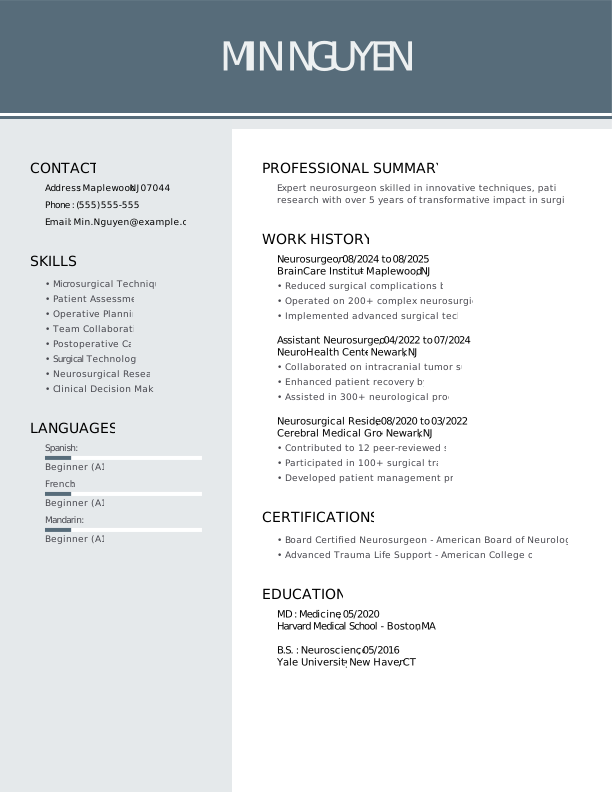
- Quantifies accomplishments: Measurable accomplishments, like reducing surgical complications by 15% and handling over 200 intricate neurosurgical cases, highlight the applicant’s significant contributions.
- Showcases career progression: Starting as a neurosurgical resident and advancing to lead complex surgeries as a neurosurgeon, the applicant’s resume reflects impressive career progression and increased responsibility.
- Illustrates problem-solving ability: Facing surgical challenges head-on, the applicant implemented advanced techniques that reduced complications, showcasing problem-solving skills through innovation and critical thinking.
More Neurosurgeon Resume Examples
See our neurosurgeon resume examples to learn how to present your surgical expertise, patient care skills, and research experience. These medical resume samples will help you build a resume that highlights your specialized medical abilities effectively.
Entry-Level Neurosurgeon
Why this resume works
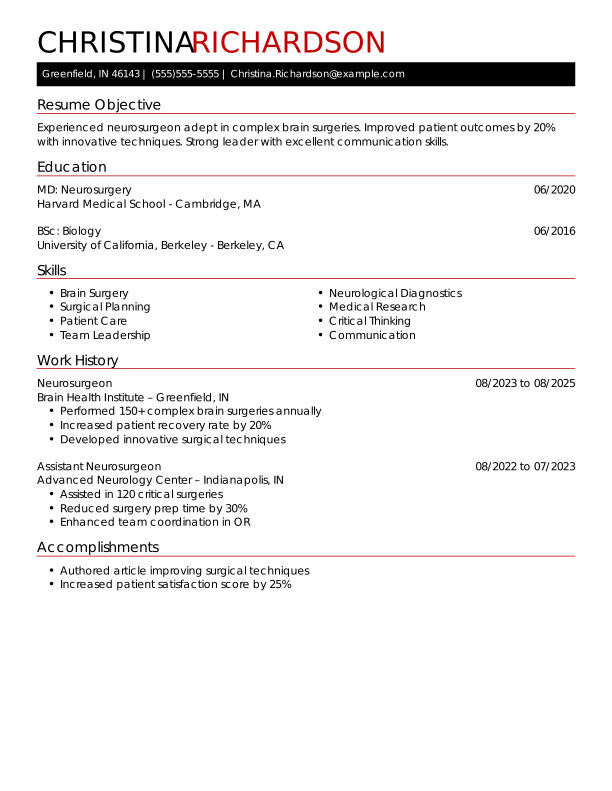
- Centers on academic background: By listing a medical degree in neurosurgery from Harvard Medical School, the applicant shows a strong foundation in their academic background.
- Puts skills at the forefront: The skills-based resume format emphasizes skills like brain surgery and team leadership at the top, ensuring expertise is immediately evident.
- Shows digital literacy: Incorporating technological skills within medical research highlights digital literacy and computer skills needed for modern healthcare environments.
Mid-Level Neurosurgeon
Why this resume works
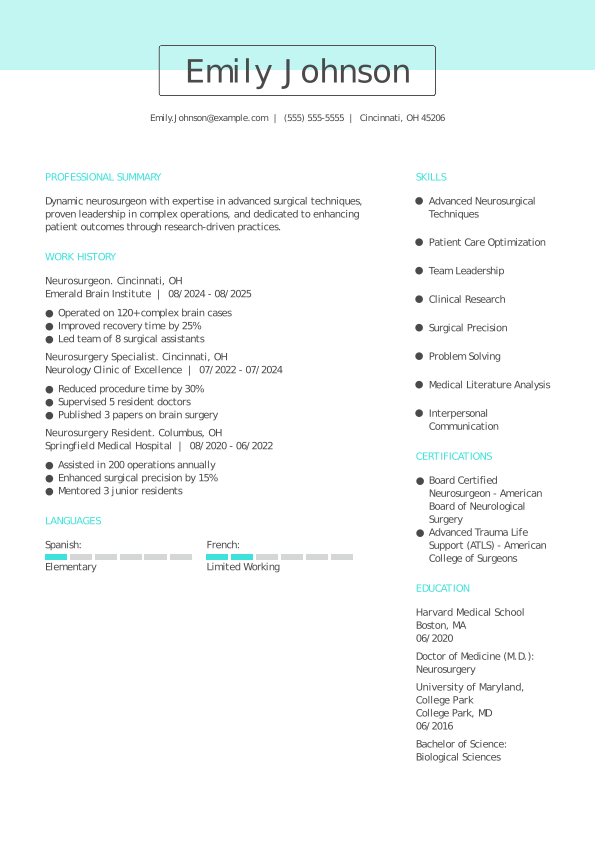
- Points to measurable outcomes: By focusing on outcomes like reducing procedure times by 30% and improving recovery rates, the applicant’s tangible impact in neurosurgery shines through.
- Displays technical expertise: Holding board certification and pioneering surgical techniques shows a mastery of advanced neurosurgical practices important for top-tier medical environments.
- Demonstrates language abilities: Language skills in Spanish and French, fostering cross-cultural communication in diverse healthcare settings.
Experienced Neurosurgeon
Why this resume works
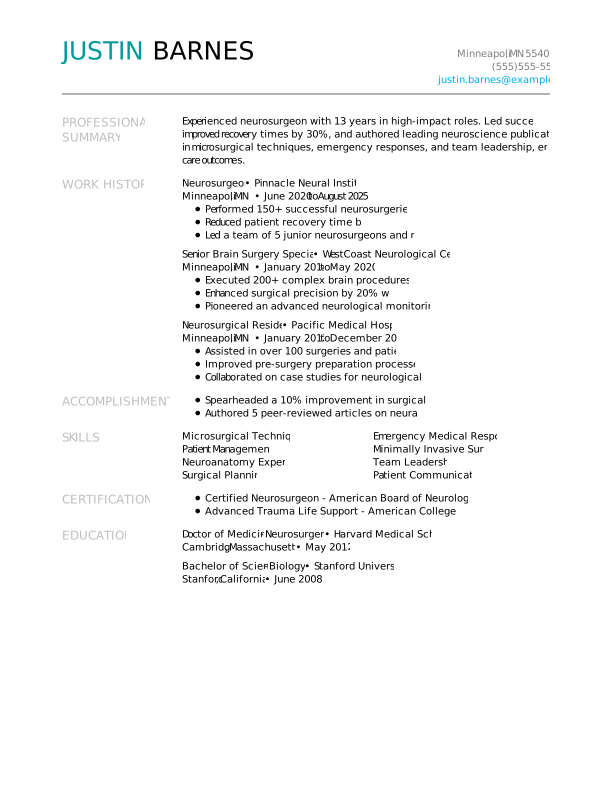
- Lists relevant certifications: By listing certifications like Certified Neurosurgeon, the applicant shows their expertise and commitment to learning.
- Showcases impressive accomplishments: The applicant’s achievements, such as a 10% improvement in surgical outcomes, reflect exceptional senior-level performance with significant impact.
- Focuses on work history: Using a chronological resume format, the applicant effectively highlights extensive career experience through progressively responsible roles.
Neurosurgeon Resume Template (Text Version)
Copy and paste the text below, or explore our free resume templates to download to discover more options.
Min Nguyen
Maplewood, NJ 07044
(555)555-5555
Min.Nguyen@example.com
Skills
- Microsurgical Techniques
- Patient Assessment
- Operative Planning
- Team Collaboration
- Postoperative Care
- Surgical Technology
- Neurosurgical Research
- Clinical Decision Making
Languages
- Spanish – Beginner (A1)
- French – Beginner (A1)
- Mandarin – Beginner (A1)
Professional Summary
Expert neurosurgeon skilled in innovative techniques, patient care, and research with over 5 years of transformative impact in surgical outcomes.
Work History
Neurosurgeon
BrainCare Institute – Maplewood, NJ
August 2024 – August 2025
- Reduced surgical complications by 15%
- Operated on 200+ complex neurosurgical cases
- Implemented advanced surgical techniques
Assistant Neurosurgeon
NeuroHealth Center – Newark, NJ
April 2022 – July 2024
- Collaborated on intracranial tumor surgeries
- Enhanced patient recovery by 10%
- Assisted in 300+ neurological procedures
Neurosurgical Resident
Cerebral Medical Group – Newark, NJ
August 2020 – March 2022
- Contributed to 12 peer-reviewed studies
- Participated in 100+ surgical trainings
- Developed patient management protocols
Certifications
- Board Certified Neurosurgeon – American Board of Neurological Surgery
- Advanced Trauma Life Support – American College of Surgeons
Education
MD Medicine
Harvard Medical School Boston, MA
May 2020
B.S. Neuroscience
Yale University New Haven, CT
May 2016
Related Resume Guides
- Clinical Documentation Improvement Specialist
- Clinical Project Manager
- Clinical Research Assistant
- Clinical Trial Associate
- Coding Specialist
- Dermatologist
- Dialysis Technician
- Doctor
- Electrocardiograph Technician
- Emergency Department Technician
- Emergency Room Registration Clerk
- Equipment Technician
- Health Information Technician
- Hospital Administrator
- Hospital Volunteer
- Intake Coordinator
- Intensive Care Physician
- Medical Laboratory Technologist
- Medical Records Specialist
- Medical Representative
- Medical Research Assistant
- Midwife
- MRI Technologist
- Nuclear Medicine Technologist
- OB-GYN Medical Assistant
- Ophthalmologist
- Ophthalmology Assistant
- Optometrist
- Orthopedic Surgeon
- Pediatric Assistant
- Pediatrician
- Physician
- Physician Assistant
- Podiatrist
- Psychiatrist
- Radiologist
- Radiology Technician
- Resident Medical Officer
- Respiratory Therapist
- Speech Language Pathologist
- Surgeon
- Surgery Scheduler
- Ultrasound Technician
Advice for Writing Your Neurosurgeon Resume
Explore our specialized advice section on how to write a resume tailored for neurosurgeons, and discover tips to effectively present your medical skills and dedication to neurological care.
Write a strong professional summary
A professional summary on a resume introduces you to hiring managers and helps create a strong first impression. It’s important to decide between writing a professional summary and an objective. A summary is ideal for those with substantial experience, while an objective may suit those new to the field.
A professional summary consists of three to four sentences highlighting your experience, skills, and achievements. It’s best for experienced applicants like neurosurgeons who want to showcase their professional identity and the value they bring to potential employers.
In contrast, resume objectives are statements of career goals and are more fitting for entry-level individuals, career changers, or those with employment gaps. They focus on what you aim to contribute rather than past accomplishments.
We’ll provide examples of both summaries and objectives tailored for different industries and levels of experience. These examples will guide you in crafting the perfect introduction that suits your background as a neurosurgeon or any other role you aspire to fill. See our library of resume examples for more ideas.
Neurosurgeon resume summary examples
Entry-level
Recent medical school graduate with a Doctor of Medicine (MD) degree and neurosurgery residency training. Possesses foundational skills in surgical procedures, patient assessment, and preoperative planning. Completed rotations in trauma and general surgery, with certifications in Advanced Cardiovascular Life Support (ACLS) and Basic Life Support (BLS). Eager to contribute to a dynamic neurosurgical team and improve patient care.
Mid-career
Board-certified neurosurgeon with over seven years of experience specializing in cranial and spinal surgeries. Recognized for expertise in minimally invasive techniques and successful outcomes in complex cases. Published research on neurovascular interventions and actively engaged in continuing education to stay abreast of industry advancements. Committed to improving surgical practices through innovation and compassionate patient care.
Experienced
Senior neurosurgeon with 15+ years of experience leading surgical teams at top-tier hospitals. Specializes in neuro-oncology, pediatric neurosurgery, and advanced spinal reconstructive procedures. Holds multiple leadership roles within professional organizations and has contributed significantly to clinical trials aimed at improving treatment protocols. Dedicated to mentoring upcoming surgeons while driving excellence in patient-centered care.
Neurosurgeon resume objective examples
Recent graduate
Driven and detail-oriented recent medical school graduate with a focus in neurosurgery seeking an entry-level position to apply foundational knowledge in neurological disorders and surgical techniques. Committed to advancing patient outcomes through dedication and continuous learning in a supportive clinical environment.
Career changer
Passionate healthcare professional transitioning into neurosurgery, leveraging experience in general surgery and patient care to contribute effectively to a multidisciplinary team. Eager to expand expertise in neurological procedures while improving patient recovery and quality of life.
Specialized training
Aspiring neurosurgeon with specialized training in minimally invasive techniques, aiming to join an innovative medical institution. Focused on using cutting-edge skills to assist in complex surgeries, dedicated to improving patient outcomes through precision and personalized care.
Highlight your skills as a neurosurgeon effectively with our AI Resume Builder that offers easy-to-use templates, making your experience and expertise stand out.
Include relevant certifications and training
Certifications demonstrate your expertise in neurosurgery and validate that you have the qualifications to perform complex procedures safely. They not only reassure employers of your technical capabilities but also build patient confidence in the quality of care you provide.
Placing certifications in a dedicated section of your resume ensures they stand out, showing your commitment to advanced training beyond formal education. Examples of valuable neurosurgery certifications include:
- American Board of Neurological Surgery (ABNS) Certification
- Advanced Trauma Life Support (ATLS)
- Fellowship in Neurosurgery
- Pediatric Neurosurgery Certification
- Endovascular Surgical Neuroradiology Certificate
These credentials strengthen your resume by emphasizing your dedication to safe, effective patient care and continuous professional growth. They highlight that you’ve met rigorous standards in your field and position you as a strong candidate for roles requiring advanced expertise and responsibility.
Example of a certifications section
Board Certification in Neurological Surgery
Issued by: American Board of Neurological Surgery (ABNS)
Issued 2021
Fellowship in Skull Base Surgery
Issued by: North American Skull Base Society (NASBS)
Expires 2025
Advanced Cardiac Life Support (ACLS)
Issued by: American Heart Association (AHA)
Expires 2024
Certificate of Added Qualification in Epilepsy Surgery
Issued by: American Board of Psychiatry and Neurology (ABPN)
Issued 2020
Fellowship in Pediatric Neurosurgery
Issued by: International Society for Pediatric Neurosurgery (ISPN)
Expires 2026
Select a polished and well-organized resume template that effectively showcases your skills and qualifications to stand out to hiring managers in your field.
Showcase your work experience
Demonstrating your work experience is essential because it allows potential employers to see your past roles and contributions. Begin this section in reverse chronological order, starting with your latest position. Clearly list your job title, employer name, location, and employment dates.
Describe what you did using strong verbs like “performed,” “developed,” or “led,” which gives a clear picture of how you contributed to each role. Quantifiable results can make your accomplishments more compelling. For instance, instead of just stating you performed surgeries, mention the number of successful procedures you’ve completed or any special techniques you’ve pioneered that improved outcomes.
This demonstrates exactly how you made an impact in previous roles. Highlight key responsibilities such as diagnosing neurological disorders, conducting complex brain surgeries, and collaborating with other medical professionals for patient care.
It’s also important to include skills specific to neurosurgery. These might encompass surgical planning, pre-operative and post-operative care management, or leading research initiatives in neuroscience. By showcasing these skills alongside tangible achievements, you present a comprehensive view of your capabilities and experiences as a neurosurgeon.
5 neurosurgeon work history bullet points
- Performed over 200 complex brain surgeries annually, achieving a 95% patient recovery rate and reducing hospital stay durations by 20%.
- Implemented innovative neurosurgical techniques, decreasing postoperative complications by 30% across all procedures.
- Conducted comprehensive pre-surgical evaluations, improving diagnostic accuracy by 40% and improving patient outcomes.
- Led a multidisciplinary team in developing new protocols for spinal surgery, resulting in a 25% decrease in operative time.
- Mentored junior surgeons, increasing their skill efficiency, which contributed to a 15% improvement in departmental surgical success rates.
For a clear and logical presentation of your expertise, choose a resume format that highlights your surgical skills, patient care, and research achievements.
Match your resume with the job description
Tailoring resumes to job descriptions is essential for job seekers, especially in specialized fields like neurosurgery. It helps job seekers stand out to employers and ensures their resumes pass through applicant tracking systems (ATS), which scan for specific keywords and phrases found in job postings.
An ATS-friendly resume includes keywords and phrases that match the skills required for the job. By aligning these terms with one’s own experience, applicants increase their chances of getting noticed by hiring managers who use ATS to filter job seekers.
For a neurosurgeon role, keywords often include terms like surgical procedures, patient care, clinical assessments, treatment planning, or multidisciplinary team collaboration. Incorporate these keywords naturally within your resume by aligning them with your professional experience.
For example, instead of writing “Performed surgeries,” you could say “Performed complex neurosurgical procedures and collaborated with multidisciplinary teams to optimize patient outcomes.” This approach keeps your resume relevant, keyword-rich, and easy for employers to read.
Targeted resumes improve ATS compatibility by strategically using relevant language from the job description. To further improve this strategy, customize your resume based on each specific application. This approach increases the likelihood of landing an interview and ultimately securing the desired position.
Want your resume to get through ATS easily? Our ATS Score Checker reviews key parts and helps you boost your score right away.
FAQ
Do I need to include a cover letter with my neurosurgeon resume?
Yes, including a well-crafted cover letter with your resume can strengthen your application and set you apart from other applicants.
A cover letter gives you the opportunity to highlight your unique qualifications, such as specialized training, research contributions, or patient care achievements in neurosurgery.
For instance, if the hospital is known for its advanced neurological programs or cutting-edge technology, you can emphasize your experience working in similar environments.
To simplify the process, consider using our Cover Letter Generator to create a professional document that aligns with your resume and showcases relevant skills effectively.
Additionally, reviewing targeted cover letter examples can inspire you and help ensure your cover letter reflects best practices for applying to high-level roles like neurosurgery.
How long should a neurosurgeon’s resume be?
For a neurosurgeon, a two-page resume is often appropriate due to the extensive education, training, and experience required in this field. This format lets you highlight your medical education, residency, fellowships, and specialized surgical techniques.
If you’re early in your career or applying for a specific fellowship or position that demands brevity, consider using a one-page resume to emphasize key achievements and skills.
Tailoring your resume based on career progression is essential. Reviewing how long a resume should be offers helpful insights for presenting qualifications effectively without overwhelming the reader.
How do you write a neurosurgeon resume with no experience?
Writing a neurosurgeon resume with no experience can seem challenging. Highlighting your education, skills, and related training is essential to show your potential for the role. Use these strategies to create a strong first impression. Here are a few tips to get started:
- Emphasize your educational background: Start by listing your medical degree prominently, including the institution’s name, graduation date, and any honors received. Highlight any specialized coursework in neurology or related subjects.
- Showcase relevant training: While you may not have direct neurosurgery experience, include details about any internships or residencies focused on neurology or surgery. Describe specific procedures or techniques you were exposed to during these experiences.
- Highlight transferable skills: Focus on skills that are important in a surgical setting, such as attention to detail, problem-solving abilities, and communication skills. Use examples from clinical rotations or lab work where applicable.
Consider exploring resources on crafting a resume with no experience for additional insights and strategies tailored to entry-level professionals in demanding fields like neurosurgery.
Rate this article
Neurosurgeon


Elizabeth is a Certified Professional Resume Writer (CPRW) and a member of the Professional Association of Resume Writers & Career Coaches. She is committed to helping job seekers navigate the job market and succeed in their careers.
More Articles by Elizabeth Muenzen, CPRWShare this page
 Add MyPerfectResume as a preferred source on Google
Add