Table of Contents
Get started with MyPerfectResume today!
- Build a resume on any device
- Pick an ATS-friendly template
- Tailor with AI copy suggestions
Why this resume works
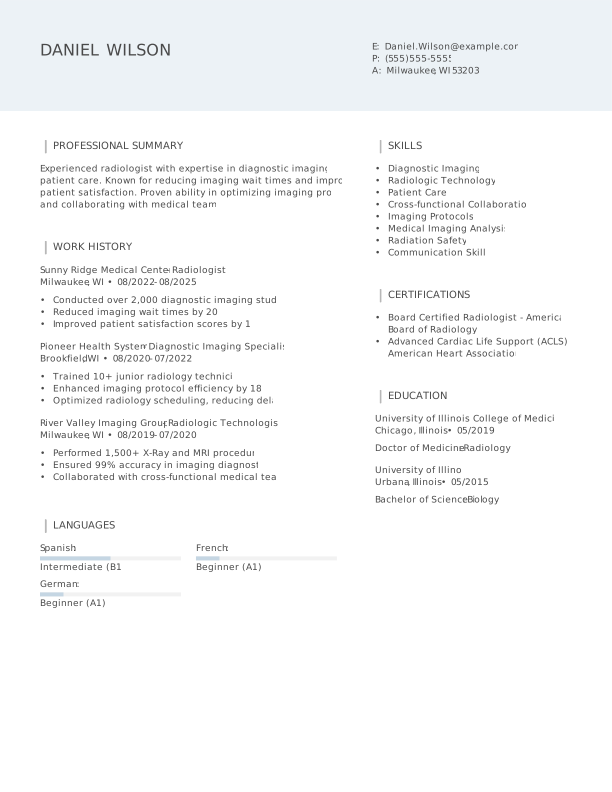
- Highlights industry-specific skills: By including roles like radiologist and diagnostic imaging specialist, the applicant aligns their healthcare skills with industry demands, showcasing a strong fit for medical imaging positions.
- Quantifies accomplishments: Highlighting measurable accomplishments, such as conducting over 2,000 diagnostic studies and improving patient satisfaction by 15% effectively quantifies the applicant’s impact.
- Uses action-oriented language: Using action verbs like conducted and optimized, the applicant conveys initiative and a results-driven approach to their work.
More Radiologist Resume Examples
Check out our radiologist resume examples to learn how to highlight your diagnostic expertise, imaging skills, and medical experience. Use these medical resume samples to craft a resume that stands out.
Entry-Level Radiologist
Why this resume works
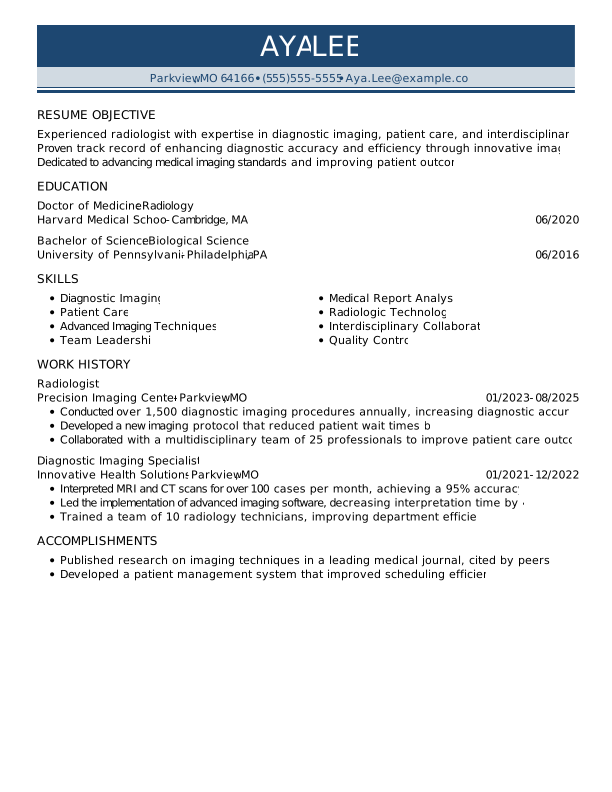
- Centers on academic background: Highlighting a Doctor of Medicine from Harvard, the applicant showcases a strong foundation in radiology essential for early career success.
- Shows digital literacy: Integrating advanced imaging software to reduce interpretation time by 40% exemplifies computer skills important for modern healthcare settings.
- Effective use of keywords: The resume strategically embeds role-specific keywords like “diagnostic imaging” and “interdisciplinary collaboration” to improve visibility in applicant tracking systems (ATS).
Mid-Level Radiologist
Why this resume works
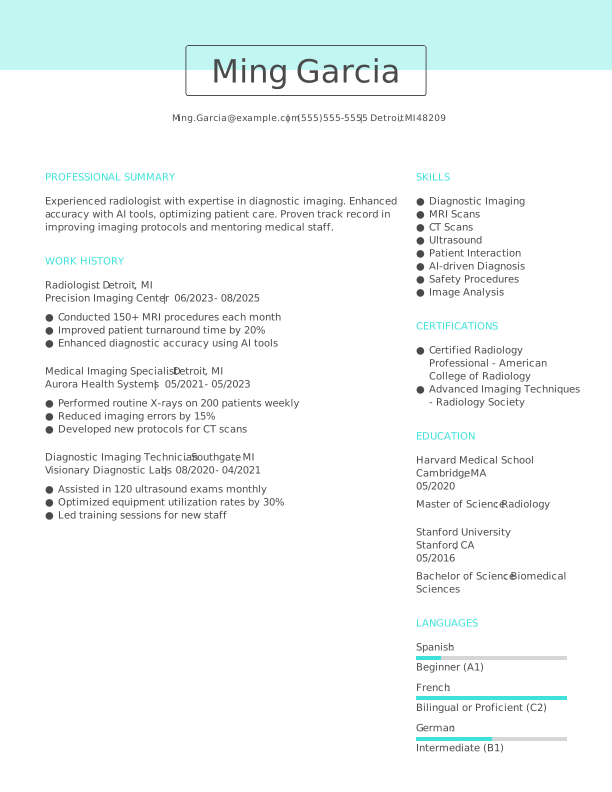
- Includes a mix of soft and hard skills: Balancing technical expertise with interpersonal skills, this applicant improves patient interactions while leveraging AI for improved diagnostic accuracy, showcasing a well-rounded skill set.
- Demonstrates language abilities: Language skills in Spanish, French, and German facilitate effective communication across diverse patient backgrounds.
- Displays technical expertise: The applicant’s mastery of diagnostic imaging and certifications in advanced techniques highlight robust technical prowess, important for excelling in specialized radiology roles.
Experienced Radiologist
Why this resume works
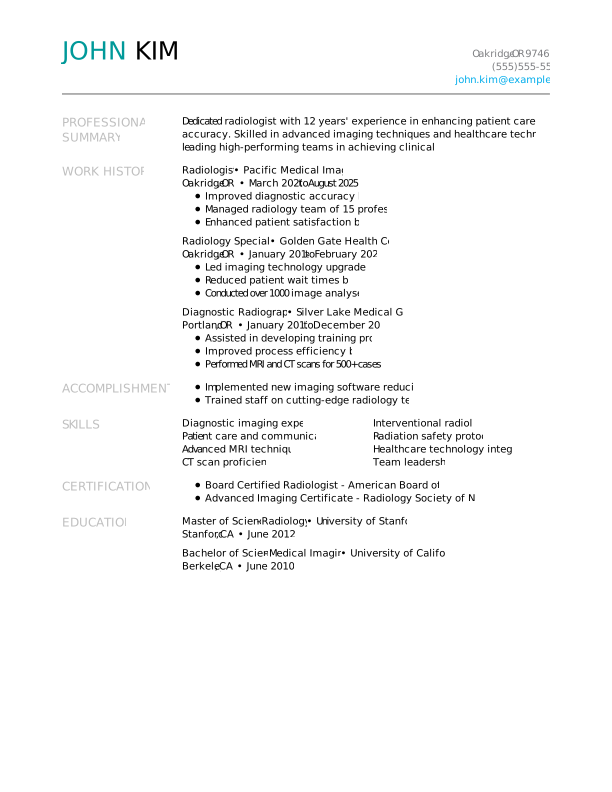
- Focuses on work history: Using a chronological resume format, the applicant presents their extensive career from diagnostic radiographer to radiologist, emphasizing growth and consistent professional development over the years.
- Showcases impressive accomplishments: Standout achievements like improving diagnostic accuracy by 20% and reducing patient wait times by 30% effectively reflect senior-level performance.
- Lists relevant certifications: Listing certifications such as Board Certified Radiologist and Advanced Imaging Certificate showcases dedication to expertise and ongoing learning in radiology.
Radiologist Resume Template (Text Version)
Copy the text below, or browse our full range to choose your ideal resume template.
Daniel Wilson
Milwaukee, WI 53203
(555)555-5555
Daniel.Wilson@example.com
Professional Summary
Experienced radiologist with expertise in diagnostic imaging and patient care. Known for reducing imaging wait times and improving patient satisfaction. Proven ability in optimizing imaging protocols and collaborating with medical teams.
Work History
Radiologist
Sunny Ridge Medical Center – Milwaukee, WI
August 2022 – August 2025
- Conducted over 2,000 diagnostic imaging studies
- Reduced imaging wait times by 20%
- Improved patient satisfaction scores by 15%
Diagnostic Imaging Specialist
Pioneer Health Systems – Brookfield, WI
August 2020 – July 2022
- Trained 10+ junior radiology technicians
- Enhanced imaging protocol efficiency by 18%
- Optimized radiology scheduling, reducing delays
Radiologic Technologist
River Valley Imaging Group – Milwaukee, WI
August 2019 – July 2020
- Performed 1,500+ X-Ray and MRI procedures
- Ensured 99% accuracy in imaging diagnostics
- Collaborated with cross-functional medical teams
Languages
- Spanish – Intermediate (B1)
- French – Beginner (A1)
- German – Beginner (A1)
Skills
- Diagnostic Imaging
- Radiologic Technology
- Patient Care
- Cross-functional Collaboration
- Imaging Protocols
- Medical Imaging Analysis
- Radiation Safety
- Communication Skills
Certifications
- Board Certified Radiologist – American Board of Radiology
- Advanced Cardiac Life Support (ACLS) – American Heart Association
Education
Doctor of Medicine Radiology
University of Illinois College of Medicine Chicago, Illinois
May 2019
Bachelor of Science Biology
University of Illinois Urbana, Illinois
May 2015
Related Resume Guides
- Clinical Documentation Improvement Specialist
- Clinical Project Manager
- Clinical Research Assistant
- Clinical Trial Associate
- Coding Specialist
- Dermatologist
- Dialysis Technician
- Doctor
- Electrocardiograph Technician
- Emergency Department Technician
- Emergency Room Registration Clerk
- Equipment Technician
- Health Information Technician
- Hospital Administrator
- Hospital Volunteer
- Intake Coordinator
- Intensive Care Physician
- Medical Laboratory Technologist
- Medical Records Specialist
- Medical Representative
- Medical Research Assistant
- Midwife
- MRI Technologist
- Neurosurgeon
- Nuclear Medicine Technologist
- OB-GYN Medical Assistant
- Ophthalmologist
- Ophthalmology Assistant
- Optometrist
- Orthopedic Surgeon
- Pediatric Assistant
- Pediatrician
- Physician
- Physician Assistant
- Podiatrist
- Psychiatrist
- Radiology Technician
- Resident Medical Officer
- Respiratory Therapist
- Speech Language Pathologist
- Surgeon
- Surgery Scheduler
- Ultrasound Technician
Advice for Writing Your Radiologist Resume
Discover advice on how to write a resume tailored for a radiologist role. Learn how to highlight your medical expertise, diagnostic skills, and commitment to patient care in a way that stands out. Dive into specific tips that will help you craft a resume that reflects your qualifications and passion for radiology.
Write a strong professional summary
A professional summary on a resume acts as an introduction to hiring managers, helping them get a quick sense of who you are. When crafting your resume, you should choose between a professional summary and a resume objective. This choice sets the tone for how you present yourself to potential employers.
A professional summary is typically three to four sentences long and highlights your experience, skills, and achievements. It’s best suited for those with substantial experience in their field, like seasoned radiologists. The purpose is to convey your professional identity and the value you bring to the table.
On the other hand, a resume objective states your career goals and is ideal for entry-level applicants, career changers, or those with employment gaps. While summaries focus on “what I’ve accomplished,” objectives emphasize “what I aim to contribute.”
Now that we’ve covered what makes each unique, let’s look at examples of both summaries and objectives tailored for different industries and levels of experience. See our library of resume examples for additional inspiration.
Radiologist resume summary examples
Entry-level
Recent medical school graduate with a Doctor of Medicine degree and board-eligible in diagnostic radiology. Completed comprehensive clinical rotations with a focus on imaging techniques, including MRI, CT, and X-ray. Strong understanding of anatomy and pathology interpretation, committed to providing accurate diagnoses to improve patient care.
Mid-career
Experienced radiologist with over eight years in hospital and private practice settings. Proficient in performing and interpreting advanced imaging studies such as PET scans and mammography. Recognized for improving diagnostic accuracy through collaborative case reviews and continuous learning. Board-certified by the American Board of Radiology.
Experienced
Highly skilled radiologist with 15+ years specializing in interventional radiology and cross-sectional imaging. Leadership experience as head of the radiology department, overseeing a team of radiologists and technologists. Successfully implemented new imaging protocols that reduced patient wait times by 30%. Passionate about mentoring young professionals and advancing medical imaging technology.
Radiologist resume objective examples
Recent graduate
Aspiring radiologist with a Bachelor of Science in radiologic technology seeking an entry-level position to apply imaging skills and diagnostic knowledge in a collaborative healthcare environment. Committed to contributing to accurate patient diagnosis and improving patient care through advanced imaging techniques.
Career changer
Dedicated professional transitioning from nursing to radiology, bringing strong patient interaction skills and medical knowledge from years of hands-on experience. Eager to join a forward-thinking radiology team where these skills can support accurate imaging diagnostics and improve patient outcomes.
Specialized training
Entry-level radiologist with specialized training in MRI and CT scan technologies seeking to join a cutting-edge medical facility. Passionate about using advanced imaging techniques and keen analytical abilities to provide high-quality diagnostic services for improved patient care.
Radiologists can use our AI Resume Builder to quickly create a standout resume. It offers easy templates to highlight your skills and experience effectively.
Include relevant certifications and training
For a radiologist, certifications and specialized training are important because they show your skills and knowledge in using medical imaging equipment safely and effectively. These credentials help you stand out to employers and give patients confidence in your abilities.
Listing them prominently on your resume can make a big difference when applying for jobs. Creating a dedicated certifications section ensures these qualifications are easily seen. Here are a few examples:
- American Board of Radiology Certification
- Advanced Cardiac Life Support (ACLS) Certification
- Pediatric Advanced Life Support (PALS) Certification
- Radiologic Technologist License
- Computed Tomography (CT) Training
These certifications prove that you have learned the necessary skills to be successful as a radiologist. They show your dedication to staying updated with the latest techniques and technologies. Including them on your resume helps highlight your expertise and readiness for the role.
Example of a certifications section
American Board of Radiology Certification
Issued by: American Board of Radiology (ABR)
Issued 2020
Advanced Cardiac Life Support (ACLS)
Issued by: American Heart Association
Expires 2025
Radiologic Technologist License
Issued by: State Medical Board
Issued 2019
Pediatric Advanced Life Support (PALS)
Issued by: American Heart Association
Expires 2024
Choose a polished and well-organized resume template that effectively showcases your skills and qualifications to stand out to hiring managers in your field.
Showcase your work experience
Showcasing relevant work experience on a resume is key to landing a job as a radiologist. Employers want to see your past roles, responsibilities, and achievements to understand your capabilities and fit for their team. To present this information effectively, format your work experience in reverse chronological order.
Start with your job title, followed by the employer’s name, location, and employment dates. Using clear and action-oriented language helps paint a vivid picture of what you accomplished in each role.
When describing your experience as a radiologist, focus on measurable results that highlight your contributions. For instance, you might mention how many diagnostic procedures you completed weekly or any improvements you made in efficiency or accuracy within the department.
Including core responsibilities like interpreting imaging results, collaborating with other healthcare professionals, and maintaining patient records can help potential employers quickly grasp your skills.
Remember to keep descriptions concise but informative. Highlight any specialized skills, such as expertise in MRI, CT scans, or ultrasound interpretation, that are relevant to the position you’re applying for. By clearly showcasing specific experiences and achievements in previous roles, hiring managers can easily see why you’re an excellent fit for their radiology team.
5 radiologist work history bullet points
- Interpreted over 1,500 diagnostic images per month, improving diagnostic accuracy by 25% through advanced imaging techniques.
- Led a team of 4 radiology technologists in the implementation of new MRI protocols, resulting in a 20% increase in patient throughput.
- Collaborated with oncologists to develop targeted treatment plans for cancer patients, improving treatment outcomes by 15%.
- Reduced patient wait times by 30% by streamlining workflow processes and introducing digital reporting systems.
- Trained and mentored junior radiologists and technologists, fostering a learning environment that increased team performance by 18%.
Clarity and precision are key—select a resume format that highlights diagnostics, imaging expertise, and patient care.
Match your resume with the job description
Tailoring resumes to job descriptions is essential because it helps job seekers stand out to employers and pass through applicant tracking systems (ATS). With an ATS-friendly resume, you can ensure that your resume incorporates specific keywords and phrases from job postings, making it important to align your resume with the language used in the description.
To identify the right keywords for a radiologist’s resume, review job postings carefully and focus on the skills, qualifications, and responsibilities that are mentioned multiple times. Common examples may include diagnostic imaging, patient care, image interpretation, clinical assessments, treatment planning, and healthcare team collaboration.
Incorporate these terms naturally to customize your resume. For example, instead of writing “Review medical images,” you could say “Interpreted diagnostic imaging studies, collaborated with healthcare teams, and contributed to accurate treatment planning to improve patient outcomes.” This approach mirrors the language used in job postings while emphasizing your expertise and impact as a radiologist.
Try our ATS Score Checker to find and fix over 30 potential issues in your resume’s layout and details. Get easy-to-follow tips to boost your resume score right away.
Salary Insights for Radiologists
Understanding salary data can help you make informed decisions about your career path and negotiation strategy. Explore key insights below to guide your research.
Top 10 highest-paying states for radiologists
Radiologists earn varying salaries across the United States, with a national average of $364,308. The table below highlights the states where radiologists command the highest compensation.
Our salary information comes from the U.S. Bureau of Labor Statistics’ Occupational Employment and Wage Statistics survey. This official government data provides the most comprehensive and reliable salary information for radiologists across all 50 states and the District of Columbia. The figures presented here reflect the May 2025 dataset, which is the most recent available as of this publication.
| State | Average Salary |
|---|---|
| Minnesota | $515,440 |
| South Dakota | $495,570 |
| Arizona | $447,530 |
| Maine | $439,890 |
| Indiana | $414,400 |
| Michigan | $414,550 |
| Oregon | $406,920 |
| New Hampshire | $404,180 |
| Florida | $380,950 |
| Pennsylvania | $376,520 |
FAQ
Do I need to include a cover letter with my radiologist resume?
Including a well-crafted cover letter with your radiologist resume can improve your application by providing context and highlighting your specific qualifications.
A cover letter allows you to express your passion for radiology while detailing any specialized skills or experiences related to the job you’re pursuing.
For example, you could elaborate on achievements such as experience with advanced imaging techniques or contributions to relevant research projects.
To make this process easier, consider using our Cover Letter Generator to craft a personalized document that showcases your strengths and aligns seamlessly with the role’s requirements.
You can also review cover letter examples to see how to structure a compelling narrative tailored to the field of radiology.
How long should a radiologist’s resume be?
As a radiologist, a two-page resume is often appropriate given the depth of expertise and experience typically required in this field. This length allows you to effectively showcase your medical education, residency training, board certifications, research experience, and any specialized radiological techniques you’ve mastered.
While some professionals might consider a one-page resume, it’s important not to sacrifice critical details about your clinical experience or advanced imaging skills. Tailor each section to highlight achievements relevant to the roles you are applying for.
If you’re unsure how long a resume should be based on your career stage, explore resources that provide guidance and examples specific to your industry. Remember, clarity and relevance are key in presenting your qualifications effectively.
How do you write a radiologist resume with no experience?
If you’re creating a resume with no experience for a radiologist position, focus on highlighting your education, certifications, and any relevant training that prepares you for the role. Here’s how to make your resume stand out:
- Emphasize your education: Include your medical degree and residency program details prominently. Mention coursework or research related to radiology, even if it was part of broader medical studies.
- Showcase certifications and licenses: Add credentials like board certification in radiology (if applicable) or any state-specific medical licensure. Also include certifications such as ACLS or BLS.
- Leverage academic projects or research: If you’ve participated in radiology-related research, case studies, or presentations during medical school or residency, list these to highlight your expertise.
- Highlight transferable skills: Skills like attention to detail, analytical thinking, and skill with imaging software are important for radiologists. Include them in a dedicated skills section.
When writing a resume with no experience specific to radiology practice, remember that showcasing your foundation through education and transferable skills can demonstrate your readiness for the field.
Rate this article
Radiologist


Elizabeth is a Certified Professional Resume Writer (CPRW) and a member of the Professional Association of Resume Writers & Career Coaches. She is committed to helping job seekers navigate the job market and succeed in their careers.
More Articles by Elizabeth Muenzen, CPRWShare this page
 Add MyPerfectResume as a preferred source on Google
Add