Table of Contents
Get started with MyPerfectResume today!
- Build a resume on any device
- Pick an ATS-friendly template
- Tailor with AI copy suggestions
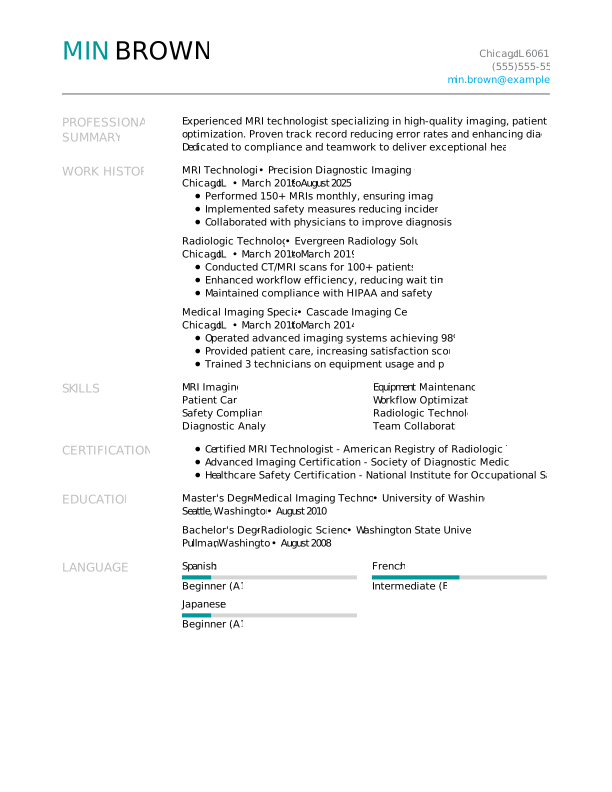
Why this resume works
- Quantifies accomplishments: Listing measurable accomplishments like performing 150+ MRIs monthly, the applicant’s resume showcases their impressive impact on imaging quality.
- Uses action-oriented language: Strong action verbs such as “implemented” and “collaborated” effectively convey the applicant’s initiative and effectiveness.
- Highlights industry-specific skills: Skills like MRI imaging and safety compliance demonstrate the applicant’s healthcare skills and alignment with medical imaging industry standards.
More MRI Technologist Resume Examples
MRI scanner platforms, certification, procedure volume, and clinical setting can give imaging experience useful context. The examples below show several ways to present those qualifications, with more in our medical resumes collection.
Entry-Level MRI Technologist
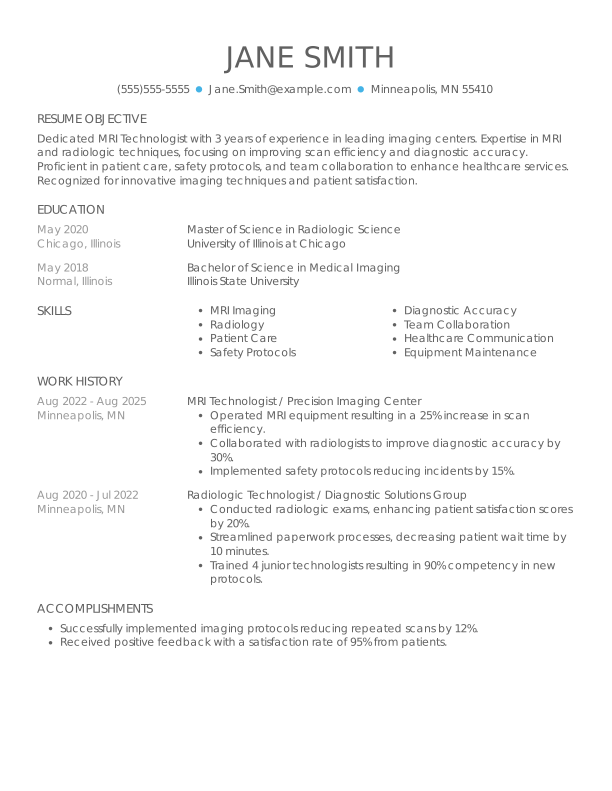
Why this resume works
- Effective use of keywords: By weaving role-specific keywords like MRI imaging and diagnostic accuracy seamlessly, the applicant optimizes their resume to pass applicant tracking systems (ATS).
- Centers on academic background: Academic achievements such as a master’s degree in radiologic science underline a strong foundation, reinforcing credibility early in the career progression.
- Puts skills at the forefront: The skills-based resume format prioritizes skills like patient care and equipment maintenance upfront, ideal for showcasing entry-level expertise.
Mid-Level MRI Technologist
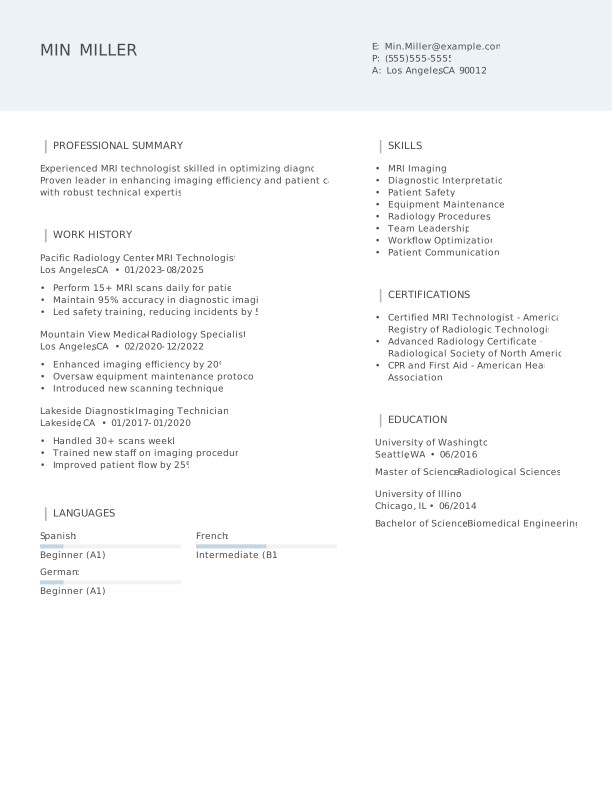
Why this resume works
- Points to measurable outcomes: Reducing imaging errors by 50% and improving patient flow by 25% reflect a focus on measurable outcomes that improve both operational efficiency and patient-centered care.
- Includes a mix of soft and hard skills: By combining advanced technical skills like MRI imaging with interpersonal skills, such as staff training and patient communication, the applicant fosters trust alongside diagnostic accuracy.
- Demonstrates language abilities: Language skills in Spanish, French, and German highlight the applicant’s ability for cross-cultural communication in diverse healthcare environments.
Experienced MRI Technologist
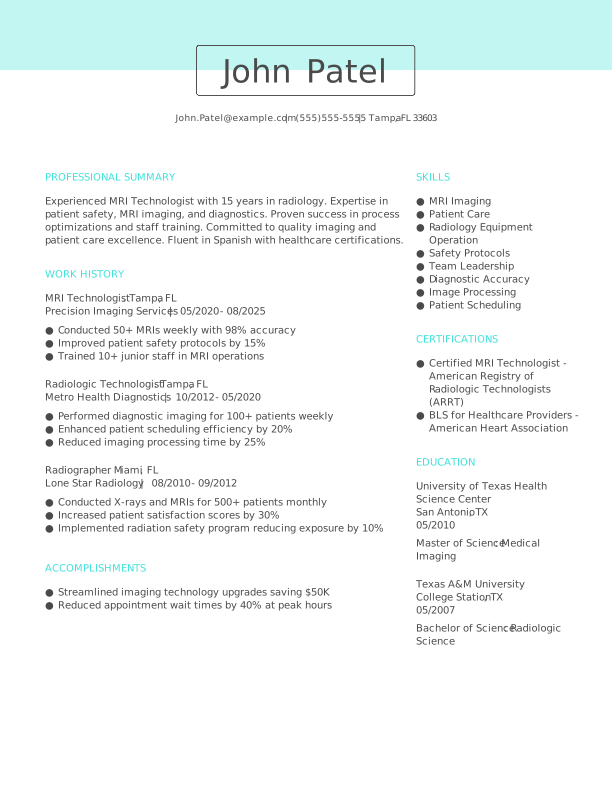
Why this resume works
- Focuses on work history: Using a chronological resume format, the applicant effectively illustrates career progression from radiographer to MRI technologist, showcasing extensive experience.
- Sections are well-organized: The organized sections with clear headers and bullet points make it easy to skim through job roles and accomplishments, ensuring reader-friendly content that emphasizes key information succinctly.
- Lists relevant certifications: Listing certifications like Certified MRI Technologist and BLS for Healthcare Providers, the resume reflects the applicant’s specialized skills and dedication to continuous learning.
MRI Technologist Resume Template (Text Version)
Use the template below, or browse our resume templates for a wider range of choices.
Min Brown
Chicago, IL 60613
(555)555-5555
Min.Brown@example.com
Professional Summary
Experienced MRI technologist specializing in high-quality imaging, patient care, and workflow optimization. Proven track record reducing error rates and enhancing diagnostic accuracy. Dedicated to compliance and teamwork to deliver exceptional healthcare results.
Work History
MRI Technologist
Precision Diagnostic Imaging Center – Chicago, IL
March 2019 – August 2025
- Performed 150+ MRIs monthly, ensuring imaging quality.
- Implemented safety measures reducing incidents by 15%.
- Collaborated with physicians to improve diagnosis outcomes.
Radiologic Technologist
Evergreen Radiology Solutions – Chicago, IL
March 2014 – March 2019
- Conducted CT/MRI scans for 100+ patients weekly.
- Enhanced workflow efficiency, reducing wait times by 20%.
- Maintained compliance with HIPAA and safety protocols.
Medical Imaging Specialist
Cascade Imaging Center – Chicago, IL
March 2010 – March 2014
- Operated advanced imaging systems achieving 98% accuracy.
- Provided patient care, increasing satisfaction scores by 25%.
- Trained 3 technicians on equipment usage and procedures.
Skills
- MRI Imaging
- Patient Care
- Safety Compliance
- Diagnostic Analysis
- Equipment Maintenance
- Workflow Optimization
- Radiologic Technology
- Team Collaboration
Education
Master’s Degree Medical Imaging Technology
University of Washington Seattle, Washington
August 2010
Bachelor’s Degree Radiologic Sciences
Washington State University Pullman, Washington
August 2008
Certifications
- Certified MRI Technologist – American Registry of Radiologic Technologists
- Advanced Imaging Certification – Society of Diagnostic Medical Sonography
- Healthcare Safety Certification – National Institute for Occupational Safety and Health
Languages
- Spanish – Beginner (A1)
- French – Intermediate (B1)
- Japanese – Beginner (A1)
Related Resume Guides
- Clinical Documentation Improvement Specialist
- Clinical Project Manager
- Clinical Research Assistant
- Clinical Trial Associate
- Coding Specialist
- Dermatologist
- Dialysis Technician
- Doctor
- Electrocardiograph Technician
- Emergency Department Technician
- Emergency Room Registration Clerk
- Equipment Technician
- Health Information Technician
- Hospital Administrator
- Hospital Volunteer
- Intake Coordinator
- Intensive Care Physician
- Medical Laboratory Technologist
- Medical Records Specialist
- Medical Representative
- Medical Research Assistant
- Midwife
- Neurosurgeon
- Nuclear Medicine Technologist
- OB-GYN Medical Assistant
- Ophthalmologist
- Ophthalmology Assistant
- Optometrist
- Orthopedic Surgeon
- Pediatric Assistant
- Pediatrician
- Physician
- Physician Assistant
- Podiatrist
- Psychiatrist
- Radiologist
- Radiology Technician
- Resident Medical Officer
- Respiratory Therapist
- Speech Language Pathologist
- Surgeon
- Surgery Scheduler
- Ultrasound Technician
Advice for Writing Your MRI Technologist Resume
MRI technologists operate imaging equipment while helping patients stay safe and comfortable during scans. Learn how to write a resume that presents your imaging skills and patient care experience clearly.
Write a Strong Professional Summary
A professional summary on a resume serves as an introduction to hiring managers, helping them quickly understand your qualifications. When crafting your resume, it’s important to determine whether you should use a summary or an objective based on your career stage and goals.
This short paragraph highlights your experience, skills, and achievements, making it ideal for experienced applicants looking to showcase their professional identity and the value they bring. Including a strong summary helps employers immediately recognize what you’ve accomplished throughout your career.
On the other hand, resume objectives are statements of career goals typically suited for entry-level applicants, individuals changing careers, or those with employment gaps. Unlike summaries that focus on “what I’ve accomplished,” objectives center around “what I aim to contribute.”
In the following sections, we’ll share examples of both summaries and objectives tailored for different industries and levels of experience. See our full library of resume examples for additional inspiration.
MRI Technologist Resume Summary Examples
Entry-level
Recent graduate with a Bachelor of Science in radiologic technology and a focus on MRI procedures. Completed clinical internships at top-tier hospitals, gaining foundational skills in patient positioning, safety protocols, and image acquisition. Holds ARRT certification in MRI and eager to contribute to a healthcare team while improving diagnostic imaging quality.
Mid-career
MRI technologist with over five years of experience working in fast-paced hospital environments. Expert in operating advanced MRI machinery, conducting complex scans, and ensuring patient comfort throughout the imaging process. Proven track record of collaborating effectively with radiologists to produce high-quality diagnostic images. Known for attention to detail and strong communication skills.
Experienced
Seasoned MRI technologist specializing in pediatric and cardiac imaging with more than a decade of industry experience. Demonstrated leadership abilities as head technologist, managing workflow optimization projects that improved efficiency by 20%. Holds advanced certifications in cardiac MRI and is dedicated to mentoring junior staff for professional growth while maintaining superior patient care standards.
Mri Technologist Resume Objective Examples
Recent graduate
Dedicated recent graduate with a degree in radiologic technology seeking to begin a career as an MRI technologist. Enthusiastic about applying learned imaging techniques and patient interaction skills to deliver exceptional care and support within a forward-thinking medical facility.
Career changer
Detail-oriented professional transitioning from healthcare administration to the field of MRI technology. Motivated to use strong organizational and communication skills, along with newly acquired imaging knowledge, to contribute effectively in a collaborative medical environment.
Specialized training
Aspiring MRI technologist who has completed specialized training in advanced imaging procedures, looking to join a leading hospital. Committed to using technical expertise and patient-focused care practices to improve diagnostic capabilities and improve patient outcomes.
Stand out as an MRI technologist! Use our Resume Builder to easily create a professional-looking resume with ready-made templates that highlight your skills and experience.
Include Relevant Certifications and Training
Certifications and specialized training show your expertise as an MRI technologist. They help employers trust that you can handle equipment safely, follow protocols, and deliver accurate results. Listing these credentials prominently helps set you apart in a technical field where precision and skill are key.
- American Registry of Radiologic Technologists (ARRT) Certification in MRI
- Basic Life Support (BLS) Certification
- Imaging Informatics Professional Certification
- MRI Safety Certification through The American Board of Magnetic Resonance Safety (ABMRS)
- Advanced MRI Training Courses or Vendor-Specific Certifications
A dedicated certifications section makes it easier for hiring managers to see your qualifications at a glance. These credentials prove you’re ready for the challenges of operating complex imaging systems while prioritizing patient care.
Example of a Certifications Section
American Registry of Radiologic Technologists (ARRT) MRI Certification
Issued by: ARRT
Issued 2022
Basic Life Support (BLS)
Issued by: American Heart Association (AHA)
Expires 2024
Certified MRI Safety Officer
Issued by: American Board of Magnetic Resonance Safety (ABMRS)
Issued 2023
Radiologic Technologist License
Issued by: State Department of Health
Expires 2025
Advanced Cardiac Life Support (ACLS)
Issued by: American Heart Association (AHA)
Expires 2026
Choose a polished and well-organized resume template that effectively showcases your skills and qualifications to stand out to hiring managers in your field.
Showcase Your Work Experience
Showcasing your work experience as an MRI technologist on a resume is important because it demonstrates to employers that you have the skills and knowledge they need. Start by listing your most recent job first and work backward. For each position, include your job title, employer name, location, and employment dates.
This approach allows hiring managers to quickly identify where you’ve worked and for how long. Use clear language when describing your responsibilities in each role. Action words like “operated,” “managed,” or “collaborated” can make your tasks sound more dynamic and engaging.
While detailing past jobs as an MRI technologist, try to focus on measurable results whenever possible. For instance, highlight the number of patients scanned daily or describe workflow improvements that boosted efficiency. Numbers can effectively showcase the impact of your contributions and help your achievements stand out.
Additionally, emphasize core duties such as operating MRI equipment safely, ensuring patient comfort during scans, troubleshooting technical issues, or collaborating with radiologists to interpret images—skills that are essential in this field.
In summary, keep your descriptions concise but detailed enough so hiring managers understand what you’ve accomplished in prior roles. Tailor each description to align with the skills required for the job you’re applying for now. This strategy makes it easier for employers to recognize why you’d be an excellent addition to their team as an MRI technologist.
5 MRI Technologist Work History Bullet Points
- Performed high-quality MRI scans, improving diagnostic accuracy by 25%.
- Trained 8 new technologists in advanced imaging techniques, improving team competency.
- Implemented a patient comfort protocol, increasing patient satisfaction scores by 40%.
- Collaborated with radiologists to refine imaging protocols, reducing scan times by 15%.
- Maintained and calibrated MRI equipment, ensuring optimal performance and minimizing downtime.
Choose a resume format that clearly shows your experience with MRI machines, patient care, and imaging techniques.
Match Your Resume With the Job Description
Tailoring your resume to specific job descriptions is essential for standing out to employers and ensuring it passes through applicant tracking systems (ATS).
An ATS-friendly resume includes relevant keywords and phrases that match the job description, which can help increase the chances of getting noticed by hiring managers.
To identify keywords from MRI technologist job postings, look for skills, qualifications, and responsibilities that appear frequently. Common examples include MRI imaging, patient positioning, safety protocols, equipment operation, or image quality assurance.
These terms are often emphasized by employers and are key phrases scanned by applicant tracking systems (ATS). Use phrases found in the job description to effectively customize your resume.
For example, if a job posting mentions “Perform high-quality MRI scans,” you could write “Performed high-quality MRI scans by accurately positioning patients and optimizing imaging protocols to ensure clear diagnostic results.” Targeted resumes offer better compatibility with ATS, significantly increasing your chances of securing an interview.
Don’t let ATS software block your resume! Our ATS Score Checker makes sure your resume is set up right and uses the best keywords.
FAQ
Do I need to include a cover letter with my MRI technologist resume?
Yes, including a cover letter with your MRI technologist resume can improve your application and increase your chances of being noticed.
A cover letter lets you show why you’re interested in working as an MRI technologist at that particular facility, emphasizing specialized skills or experiences you bring to the table.
For example, if the facility is recognized for advanced imaging technology or prioritizes patient-centered care, highlight how your background aligns with those priorities.
To craft a personalized cover letter that complements your resume, consider using our Cover Letter Generator, which provides structured guidance and expert tips throughout the process.
Explore cover letter examples designed for healthcare roles to draw inspiration and ensure your cover letter effectively communicates your strengths and enthusiasm for the position.
How long should an MRI technologist’s resume be?
For an MRI technologist, a concise one-page resume works well if you’re early in your career or focusing on core skills like imaging and patient care. Highlight expertise with MRI machines, attention to detail, and relevant certifications clearly.
If you have extensive experience or specialized qualifications, a two-page resume might be appropriate. This allows room to showcase advanced technical skills, leadership roles, or significant achievements without sacrificing clarity.
Explore our guide on how long a resume should be for examples and tips on determining the ideal length based on your career stage and experience level.
How do you write an MRI technologist resume with no experience?
When creating an MRI technologist resume with no experience, emphasize your education, relevant skills, and any training or certifications that align with the role. Here are a few examples to help you get started:
- Spotlight your education: Begin by listing your degree in radiologic technology or a related field. Include the institution’s name, graduation date, and any honors received. This establishes your foundational knowledge essential for an MRI technologist.
- Detail coursework and projects: If you’ve completed specific courses or projects related to MRI procedures or radiology during your studies, describe them briefly to demonstrate familiarity with key concepts and technologies.
- Highlight technical skills: Even without direct experience, emphasize technical skills gained through your education or hands-on labs. Skills such as operating imaging equipment, understanding safety protocols, and familiarity with medical terminology are important.
- Include certifications: If you hold certifications like Basic Life Support (BLS) or have completed any specialized training in MRI technology, make sure those stand out on your resume.
Consider looking at our resources for writing a resume with no experience for more examples and tips tailored to entry-level positions.
Rate this article
MRI Technologist


Elizabeth is a Certified Professional Resume Writer (CPRW) and a member of the Professional Association of Resume Writers & Career Coaches. She is committed to helping job seekers navigate the job market and succeed in their careers.
More Articles by Elizabeth Muenzen, CPRWShare this page
 Add MyPerfectResume as a preferred source on Google
Add