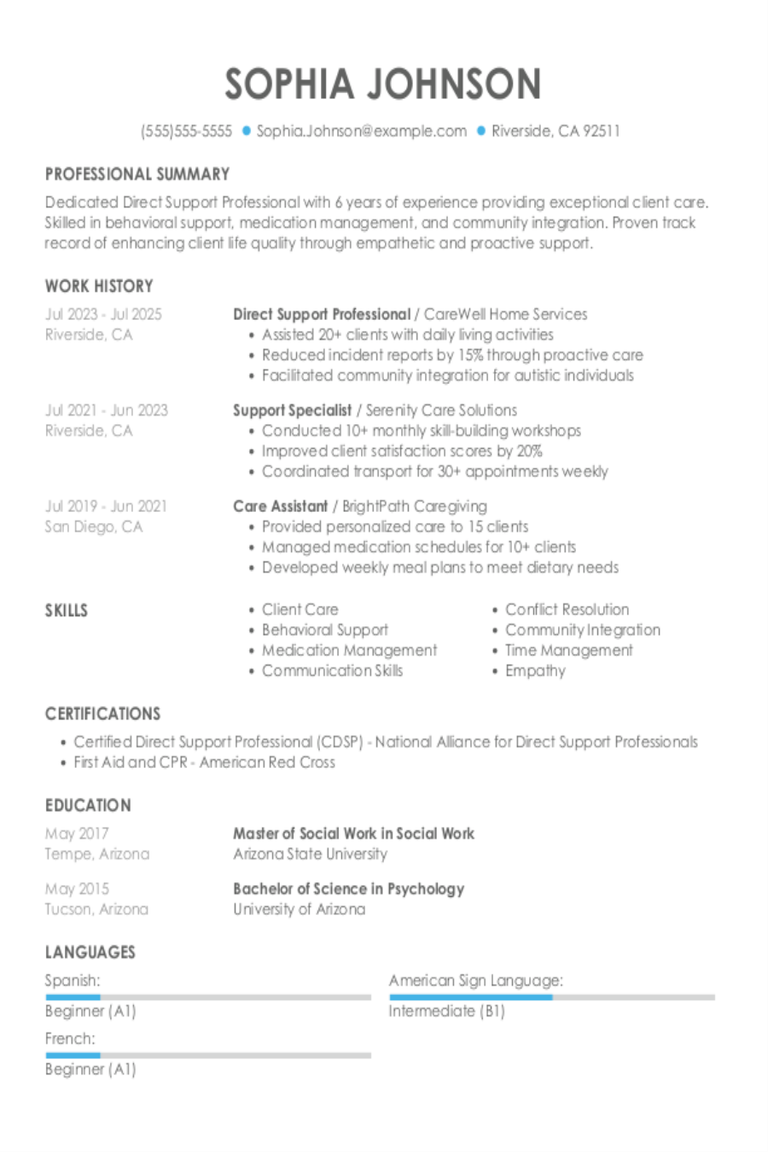
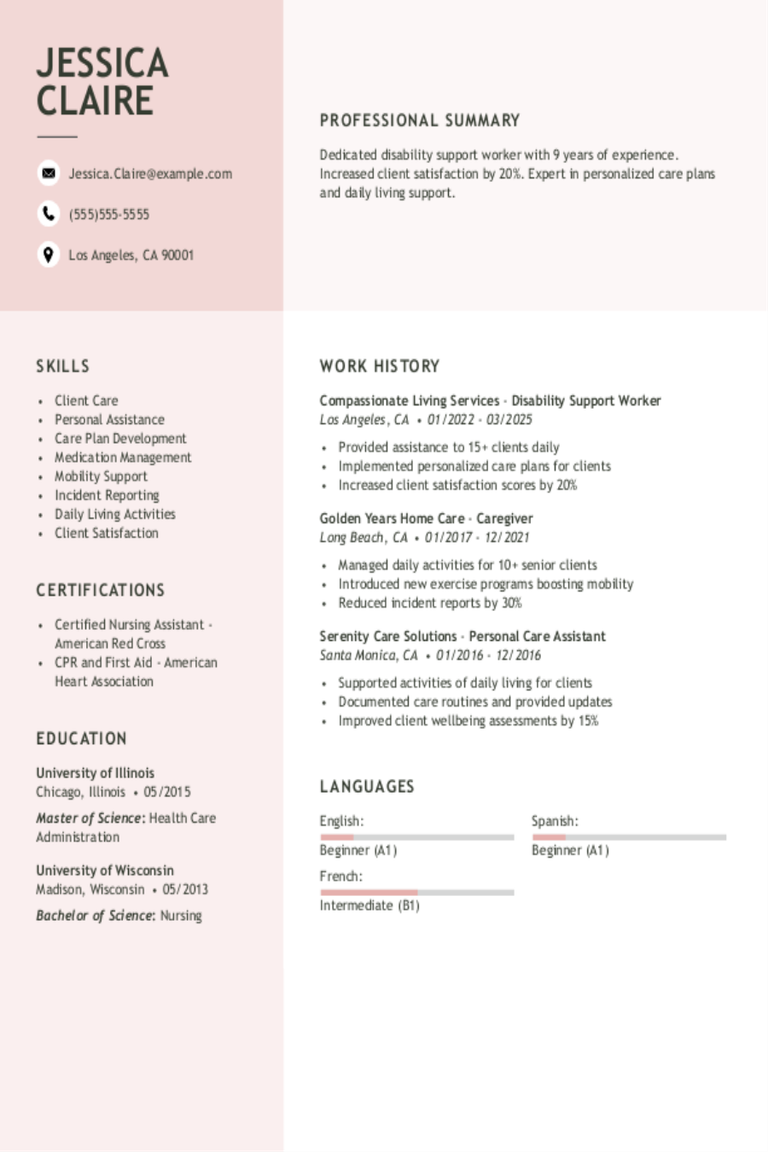
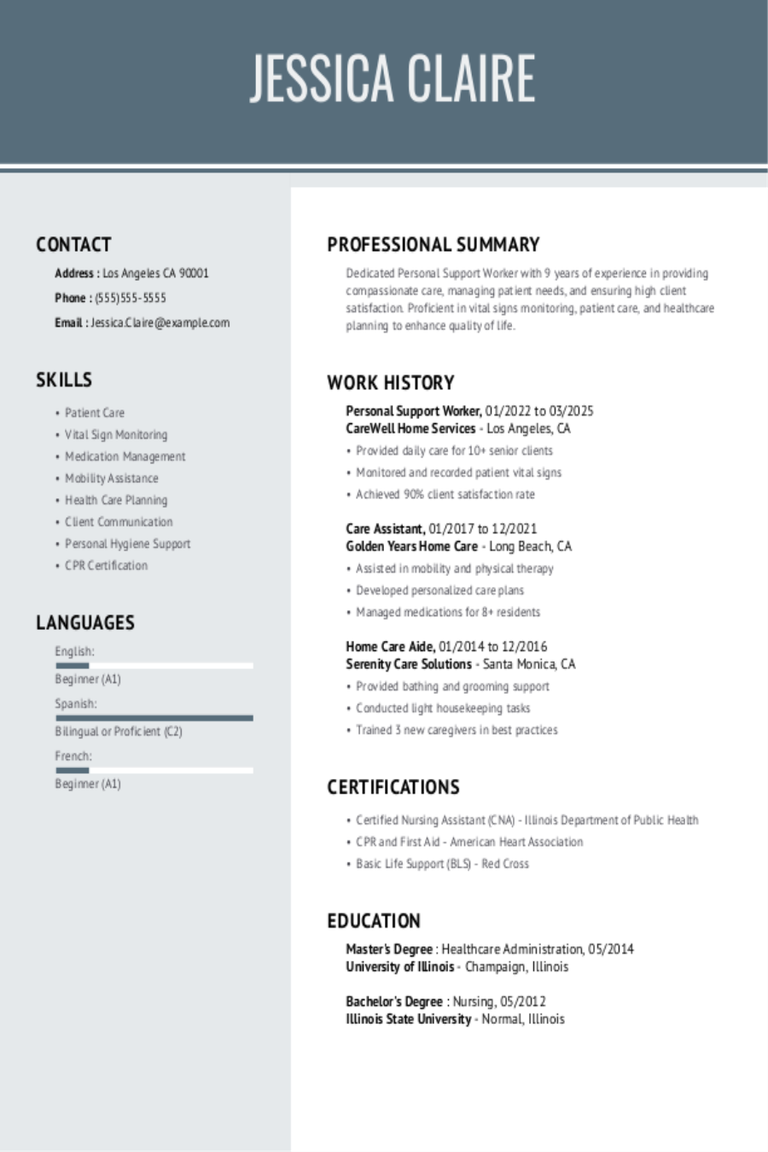
Table of Contents
Get started with MyPerfectResume today!
- Build a resume on any device
- Pick an ATS-friendly template
- Tailor with AI copy suggestions
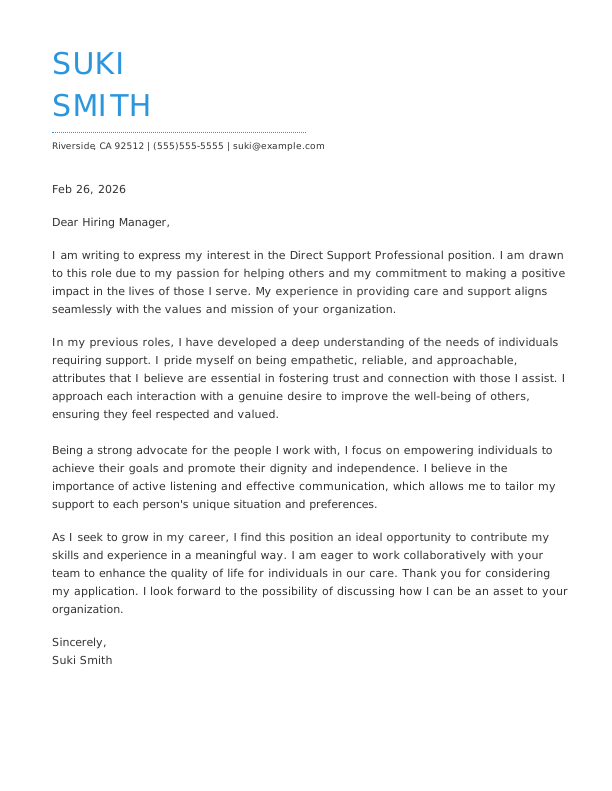
Why this cover letter works
- This job seeker emphasizes their hands-on experience in assisting individuals with disabilities and showcases specific success stories in improving clients’ daily living skills. Review what to include in a cover letter to make a strong first impression.
More Direct Support Professional Cover Letter Examples
Interested in crafting the perfect cover letter for your role as a direct support professional? Explore our diverse collection of cover letter examples tailored to various experiences, whether you’re new to the field or a seasoned professional, and find inspiration for your own application.
Entry-Level Direct Support Professional Cover Letter

Why this cover letter works
- The cover letter header above plays a key role in making the applicant’s name the most visible element. This helps hiring managers quickly identify who they are reviewing. In competitive hiring scenarios, this visibility allows applicants to stand out and prevents their applications from being overlooked among many others.
Experienced Direct Support Professional Cover Letter

Why this cover letter works
- A cover letter outline helped this direct support professional connect their diverse experiences in compassionate care. It illustrates how their commitment to understanding individual needs aligns with future opportunities for empowering others.
Direct Support Professional Cover Letter Template (Text Version)
Eager to customize your direct support professional cover letter? You’ll find a text version available for easy copying, and we encourage you to browse our selection of cover letter templates to uncover formats that showcase your skills in this rewarding field.
Suki Smith
Riverside, CA 92512
(555)555-5555
suki@example.com
Feb 26, 2026
Dear Hiring Manager,
I am writing to express my interest in the Direct Support Professional position. I am drawn to this role due to my passion for helping others and my commitment to making a positive impact in the lives of those I serve. My experience in providing care and support aligns seamlessly with the values and mission of your organization.
In my previous roles, I have developed a deep understanding of the needs of individuals requiring support. I pride myself on being empathetic, reliable, and approachable, attributes that I believe are essential in fostering trust and connection with those I assist. I approach each interaction with a genuine desire to improve the well-being of others, ensuring they feel respected and valued.
Being a strong advocate for the people I work with, I focus on empowering individuals to achieve their goals and promote their dignity and independence. I believe in the importance of active listening and effective communication, which allows me to tailor my support to each person’s unique situation and preferences.
As I seek to grow in my career, I find this position an ideal opportunity to contribute my skills and experience in a meaningful way. I am eager to work collaboratively with your team to enhance the quality of life for individuals in our care. Thank you for considering my application. I look forward to the possibility of discussing how I can be an asset to your organization.
Sincerely,
Suki Smith
Related Cover Letter Examples
How to Write a Direct Support Professional Cover Letter
Our detailed guidance on how to write a cover letter will assist you in highlighting your empathy, communication skills, and dedication to helping others. Demonstrate to potential employers why you’re the perfect fit for this rewarding position.
Address your cover letter properly
Address your cover letter to a specific person whenever possible. Look for the hiring manager’s name in the job posting, agency website, or LinkedIn profile. This personal touch shows you’ve invested time in your application and makes it stand out. If you’re unsure of how to address a cover letter, skip outdated phrases like “To Whom It May Concern” and opt for more tailored greetings.
If you’re unable to find a name, use alternatives like “Dear Hiring Manager” or include department names such as “Dear Support Services Team.” These specific options reflect your understanding of the role and organization while showing that you’ve considered details about their team structure and focus.
Personalized greetings are significant because they allow you to showcase qualities that are highly valued in this field, such as empathy and attention to detail. A thoughtful salutation can create a positive first impression and demonstrate your genuine interest in contributing to their mission of support and care.
Grab attention with your opening paragraph
When writing your cover letter, it’s essential to grab the hiring manager’s attention right away. They sift through numerous applications and only have a few moments to make a decision about yours.
So, if you’re wondering how to start your cover letter, focus on showcasing your strongest attributes instead of repeating what is on your resume. This approach will allow you to stand out from the crowd and make a memorable first impression.
To truly shine as a direct support professional, think about what sets you apart. Perhaps you have experience working with individuals with developmental disabilities or excel in creating engaging activities that promote independence.
Identify these unique strengths and tie them directly to what the employer is looking for in their team. This connection shows you understand their needs and highlights why you’re the perfect fit for the role.
Example of a strong opener
As a dedicated direct support professional with over three years of experience providing compassionate care to individuals with developmental disabilities, I am eager to contribute my skills in advocacy and personalized support to the team at Community Care Services. My strong communication abilities and commitment to fostering independence have led to a 20% improvement in client satisfaction ratings. I look forward to aligning my expertise with your mission of improving lives.
Struggling to start your cover letter? Our Cover Letter Generator quickly creates personalized introductions that highlight your unique experiences as a direct support professional, helping you stand out in minutes.
Include skills from the job ad
Avoid submitting a generic cover letter when applying for direct support professional positions. Take the time to carefully read the job posting and align your application with the specific skills and qualifications that are requested. This attention to detail demonstrates your understanding of the role and can significantly help your application get through automated screening systems.
In your cover letter, identify two to three key skills from the job description and provide concrete examples from your experience as a direct support professional that illustrate these skills in action. This targeted approach not only showcases your qualifications but also reinforces why you’re an ideal fit for this particular position and the needs of those you will be supporting.
Top skills to list on your cover letter
- Personal care assistance
- Behavioral support strategies
- Crisis intervention techniques
- Patient mobility and transfer skills
- Communication with healthcare teams
- Documentation of patient progress
- Conflict resolution and mediation
- Respect for patient confidentiality
- Advocacy for individual rights
- Community resource navigation
- Cultural competence in care delivery
- Time management in daily tasks
- Empathy and active listening skills
- Training in safety protocols
- Emergency preparedness planning
- Teamwork and collaboration practices
Save time by using a cover letter template from Google Docs or a Microsoft Word cover letter, as these templates offer neat formatting that helps you focus on tailoring your content for each direct support professional position.
Show your impact with numbers
In the role of a direct support professional, numbers speak louder than words. Instead of saying you’re a “compassionate caregiver,” illustrate your impact with concrete examples.
For instance, mention how you helped increase client satisfaction ratings by 30% or successfully reduced incidents of behavioral challenges by 25% over six months. These specific metrics distinguish you from applicants who only list responsibilities, showcasing that you actively contribute to positive outcomes.
Quantifiable achievements validate your ability to deliver results, which is exactly what employers seek in a direct support professional. They highlight that you go beyond fulfilling basic functions and excel in creating meaningful change in clients’ lives.
By presenting measurable successes, you demonstrate not just your dedication but also your effectiveness in the role, making a compelling case for why you should be considered for the position.
Bullet points to include in your cover letter
- Facilitated daily living support for 20 individuals, achieving a 95% satisfaction rating in client surveys
- Improved client mobility outcomes by 40% through personalized exercise plans over one year
- Trained and onboarded 15 new staff members, maintaining an 85% retention rate in the first six months
- Implemented a feedback system that increased communication effectiveness by 30% among team members
- Successfully managed crisis intervention for 10 clients, resulting in zero negative incident reports during my tenure
When applying as a direct support professional, consider how your cover letter format can highlight your achievements. Certain layouts are better suited for showcasing metrics based on your experience level in the field.
Leave a lasting impression
Your closing paragraph should reinforce your enthusiasm and prompt the hiring manager to take action. Learning how to end a cover letter involves being direct about your interest while maintaining professionalism.
Be sure to thank them for their consideration, reiterate your excitement about the opportunity, and clearly express your desire to discuss how your skills as a direct support professional can positively impact their team.
Example of cover letter closing
Thank you for considering my application for the direct support professional position at Caring Hands Agency. I am eager to bring my compassionate approach and experience in providing personalized support to your dedicated team. I look forward to the opportunity to discuss how my skills can improve the quality of care provided to clients and contribute to your mission of fostering independence. I hope to hear from you soon.
Tailor your cover letter for specific situations
Entering the field of direct support can feel daunting, especially if your background isn’t traditional. It’s best to address your unique journey upfront and then focus on how your experiences contribute to your capabilities in this role. Here are a few examples:
- If you’re changing careers, highlight transferable skills that relate to direct support. For example, experience in hospitality can improve your ability to provide empathetic support, or communication skills from a previous job can improve client interactions.
- For those returning to direct support after a break, mention any relevant training you engaged in during that time. You might have participated in workshops or volunteer opportunities that kept you connected to the community and reignited your passion for helping others.
- New graduates should emphasize clinical internships or relevant coursework from their studies. Even part-time jobs in customer service or volunteering at local organizations can demonstrate your commitment to supporting individuals with diverse needs.
FAQ
How long should a direct support professional’s cover letter be?
Cover letters should be one page long, typically consisting of three to four paragraphs. This length provides enough space to showcase your relevant experience and skills without overwhelming hiring managers. A well-structured cover letter allows you to make a strong case for why you’re a perfect fit for the direct support professional role.
Understanding how long a cover letter should be is important when applying for jobs. Being concise and focused is key, as recruiters spend little time reviewing each application.
Aim to communicate your qualifications clearly, ensuring that the most important details stand out right away.
What’s the difference between a cover letter and a resume?
When applying for direct support professional positions, your direct support professional resume highlights your qualifications in a clear and structured way.
It outlines the “what”—your achievements, relevant skills, and job history. In contrast, your cover letter provides context to these qualifications by telling the story behind them. It dives deeper into who you are and what drives you in this field.
Think of your cover letter as the “why” and “how.” It explains why you’re dedicated to supporting individuals with disabilities, how your experiences make you an ideal job seeker for this role, and why you’re interested in working with a specific organization.
Understanding the cover letter vs resume distinction allows you to leverage both documents to present a fuller picture of your candidacy. This approach can significantly improve your application package.
Should I include a cover letter even if it’s not required?
Absolutely! Including a cover letter, even when it’s optional, reflects your dedication and willingness to go the extra mile in becoming a direct support professional. Hiring managers in this field are looking for applicants who not only have the right skills but also demonstrate compassion and a strong commitment to supporting individuals with disabilities.
A resume alone may not capture the full extent of your passion for making a difference. Imagine two equally qualified direct support professionals applying for the same role, but only one includes a heartfelt cover letter detailing their experiences and approach to care.
In conversations about whether cover letters are necessary, it’s clear that this added touch could set one applicant apart from the other. When you’re unsure, including that cover letter is always a smart choice—you have everything to gain by showcasing your unique perspective and dedication to helping others thrive.
What does a professional cover letter look like?
A professional direct support professional cover letter should look clean, organized, and easy to scan at a glance. Use a standard business letter format that includes your contact information at the top, followed by the date and the employer’s details.
Choose a readable font like Arial or Times New Roman in 11-12 point size, with standard margins and single spacing between lines to ensure clarity.
The layout should comprise a clear header, a personalized greeting (steer clear of “To Whom It May Concern”), three to four concise body paragraphs, and a formal closing with your signature. It’s best to maintain ample white space throughout the document for improved readability, since busy hiring managers appreciate applications that are easy to digest quickly.
For more guidance on what a cover letter should look like, refer to our resource for visual examples and formatting tips that will help you create an impressive application.
Can ChatGPT write a cover letter?
While you can use ChatGPT to write a cover letter, it may not provide the best results for your application. AI tools can help brainstorm ideas and get past writer’s block, but they often generate content that feels generic and lacks a personal touch.
Relying solely on these tools can lead to letters that sound robotic and do not truly reflect your commitment and skills as a direct support professional.
Hiring managers in this field can easily identify AI-generated letters because they often lack genuine passion and specific insights about supporting individuals with disabilities. These letters frequently miss the heart of what makes direct support professionals unique: their ability to connect with clients and advocate for their needs.
Instead of depending completely on AI, use it as a starting point to organize your thoughts, then fill in your letter with authentic experiences and motivations that demonstrate why you want to work at that particular organization. Your true voice will always resonate stronger than any automated text.
Rate this article
Direct Support Professional

Elizabeth is a Certified Professional Resume Writer (CPRW) and a member of the Professional Association of Resume Writers & Career Coaches. She is committed to helping job seekers navigate the job market and succeed in their careers.
More Articles by Elizabeth Muenzen, CPRWShare this page
 Add MyPerfectResume as a preferred source on Google
Add