Table of Contents
Get started with MyPerfectResume today!
- Build a resume on any device
- Pick an ATS-friendly template
- Tailor with AI copy suggestions
Why this cover letter works
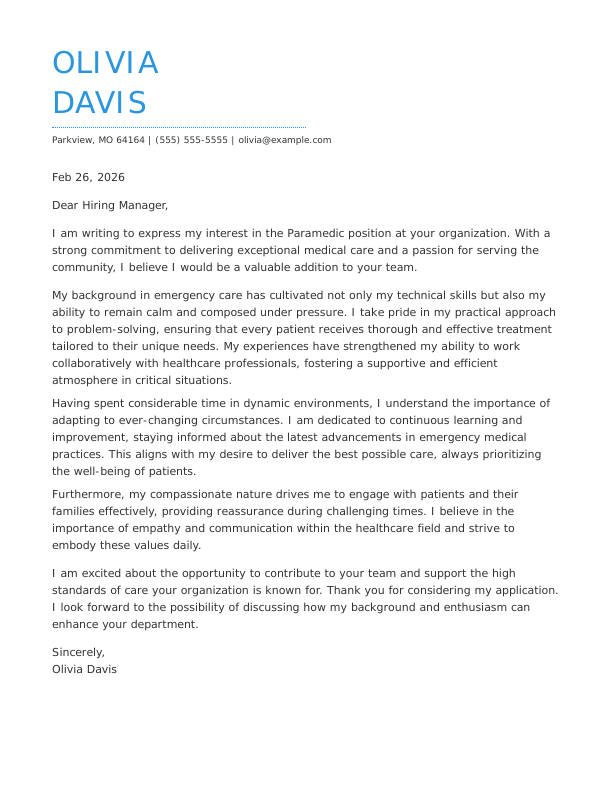
- This cover letter highlights emergency response experience and life-saving skills. When thinking about what to include in a cover letter, express your passion for helping others and commitment to high-quality patient care.
More Paramedic Cover Letter Examples
Are you looking to elevate your application for a paramedic position? Check out our diverse collection of cover letter examples, featuring insights from both new professionals and experienced EMTs, and craft a compelling narrative that stands out in the hiring process.
Entry-Level Paramedic Cover Letter
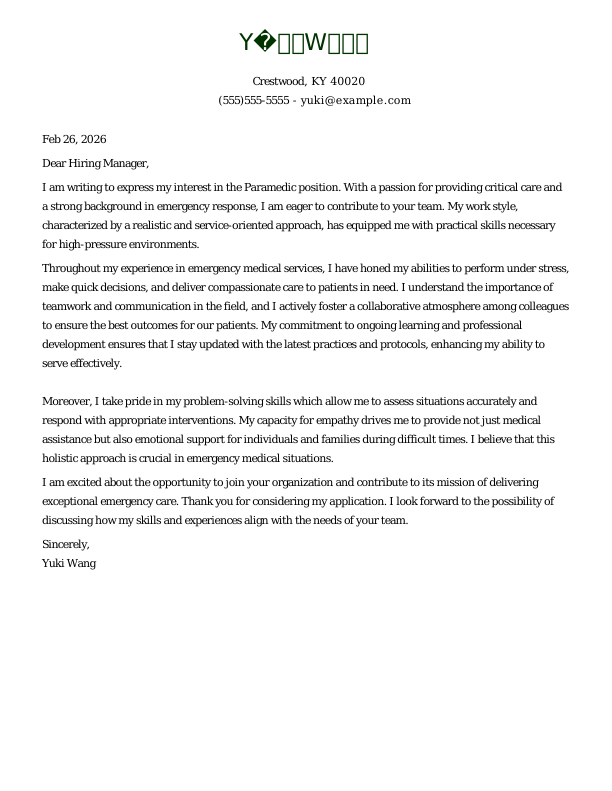
Why this cover letter works
- A cover letter header like the one above plays a key role in paramedic applications since it includes essential contact details that enable employers to easily connect with applicants. It should uphold a professional look and align with the resume design to ensure a cohesive application package.
Experienced Paramedic Cover Letter

Why this cover letter works
- A strong cover letter outline allowed this paramedic to weave their diverse emergency response experiences into a compelling narrative, highlighting past achievements and showcasing their potential for compelling contributions in future patient care roles.
Paramedic Cover Letter Template (Text Version)
Eager to personalize your paramedic cover letter? You’ll find a text version available for easy copying, and be sure to check out our collection of cover letter templates to discover formats that showcase your unique skills in emergency response.
Olivia Davis
Parkview, MO 64164
(555)555-5555
olivia@example.com
Feb 26, 2026
Dear Hiring Manager,
I am writing to express my interest in the Paramedic position at your organization. With a strong commitment to delivering exceptional medical care and a passion for serving the community, I believe I would be a valuable addition to your team.
My background in emergency care has cultivated not only my technical skills but also my ability to remain calm and composed under pressure. I take pride in my practical approach to problem-solving, ensuring that every patient receives thorough and effective treatment tailored to their unique needs. My experiences have strengthened my ability to work collaboratively with healthcare professionals, fostering a supportive and efficient atmosphere in critical situations.
Having spent considerable time in dynamic environments, I understand the importance of adapting to ever-changing circumstances. I am dedicated to continuous learning and improvement, staying informed about the latest advancements in emergency medical practices. This aligns with my desire to deliver the best possible care, always prioritizing the well-being of patients.
Furthermore, my compassionate nature drives me to engage with patients and their families effectively, providing reassurance during challenging times. I believe in the importance of empathy and communication within the healthcare field and strive to embody these values daily.
I am excited about the opportunity to contribute to your team and support the high standards of care your organization is known for. Thank you for considering my application. I look forward to the possibility of discussing how my background and enthusiasm can enhance your department.
Sincerely,
Olivia Davis
Related Cover Letter Examples
How to Write a Paramedic Cover Letter
Are you ready to write a powerful cover letter for your paramedic application? Our expert guidance on how to write a cover letter will help you highlight your emergency response skills, teamwork abilities, and dedication to patient care. Stand out from the crowd and make a strong impression with your experience.
Address your cover letter properly
When applying for paramedic positions, always strive to address your cover letter to a specific person if possible. Look for the hiring manager’s name through the job posting, agency website, or LinkedIn. This personal touch conveys your commitment and sets you apart from applicants who use generic greetings.
If you’re unsure how to address a cover letter due to missing names, steer clear of “To Whom It May Concern.” Instead, consider using “Dear Hiring Manager” or more targeted alternatives like “Dear [Department Name] Team.” For instance, if you’re applying to an ambulance service, try “Dear Emergency Services Team” to show that you understand where your skills fit.
Personalized greetings are important as they highlight your attention to detail and genuine interest in the role. A thoughtful salutation can reflect qualities such as professionalism and dedication—traits that are highly valued in emergency medical services. This initial impression can significantly impact how your application is received.
Grab attention with your opening paragraph
You need to grab the hiring manager’s attention right away. They sift through numerous applications daily, so knowing how to start your cover letter is essential. Begin with your strongest qualification or an exciting reason you’re drawn to this role instead of repeating what’s already in your resume.
Think about what sets you apart as a paramedic. Are you trained in advanced life support? Do you have experience working in high-pressure environments? Maybe you excel at communicating with patients during emergencies. Highlighting these strengths and linking them to the employer’s needs will make your application stand out and show that you’re the right fit for their team.
Example of a strong opener
As a dedicated paramedic with over six years of experience in emergency medical services, I have successfully managed high-pressure situations and improved response times by 20%. I am eager to join the dynamic team at City Hospital, where my strong skills in patient assessment and trauma care can contribute to delivering exceptional pre-hospital care. Together, we can improve patient outcomes in our community.
Looking to make your cover letter stand out? Our Cover Letter Generator creates personalized openings based on your paramedic experience, helping you craft the perfect introduction in minutes.
Include skills from the job ad
Do not submit a generic cover letter when applying for paramedic positions. Carefully study the job posting and tailor your letter to reflect the specific skills and qualifications required. This attention to detail shows that you understand what the employer needs and increases your chances of getting past automated screening systems that filter applications based on relevant keywords.
In your cover letter, identify two to three key skills mentioned in the job description. Support each skill with concrete examples from your paramedic experience, such as handling emergencies or providing patient care. This focused approach not only highlights your qualifications but also paints you as an ideal applicant for the specific role within that emergency response team.
Top skills to list on your cover letter
- Patient assessment and care planning
- Emergency medical response
- Medication administration and safety
- Advanced airway management
- Trauma assessment and intervention
- Cardiac monitoring and interpretation
- Critical thinking and clinical judgment
- Infection control protocols
- Patient transport techniques
- Team collaboration and communication
- Time management in emergencies
- Compassionate patient advocacy
- Cultural sensitivity and awareness
- Pain management techniques
- Documentation accuracy in reports
- Stress management under pressure
Save time by using a cover letter template from Google Docs or a Microsoft Word cover letter, as these templates offer neat formatting that allows you to focus on customizing your content for each paramedic position.
Show your impact with numbers
In emergency services, numbers speak louder than words. Instead of saying you’re a “skilled paramedic,” provide concrete examples of your impact, such as successfully managing to reduce response times by 30% or administering life-saving care to over 50 patients last year.
These quantifiable achievements distinguish you from job seekers who simply outline their responsibilities, showcasing that you not only perform tasks but also deliver significant results. Measurable accomplishments are essential in demonstrating your ability to achieve outcomes that employers seek. They illustrate that you excel in high-pressure situations and can make a real difference in patient care.
By presenting specific metrics, you convey your effectiveness and commitment to excellence, making it clear that you’re the job seeker who can rise above basic expectations and truly contribute to the success of their medical team.
Bullet points to include in your cover letter
- Responded to over 1,000 emergency calls in a year, achieving a response time of under 8 minutes for 90% of incidents
- Implemented new triage protocols that improved patient assessment accuracy by 30%
- Trained and supervised 15 EMTs, resulting in a 100% pass rate on their certification exams
- Developed community CPR training programs that reached over 500 residents annually
- Maintained a zero-complaint record from patients during my 2-year tenure in the field
Choosing the right cover letter format is essential for paramedic applicants since different layouts can showcase quantifiable achievements depending on your experience level in the field. A well-structured format highlights your metrics and makes your application stand out.
Leave a lasting impression
Your closing paragraph should reinforce your enthusiasm and prompt the hiring manager to take action. Learning how to end a cover letter involves being direct about your interest while maintaining professionalism. Thank them for their consideration, express excitement about the opportunity, and clearly state your desire to discuss how your paramedic skills can positively impact their team.
Example of cover letter closing
Thank you for considering my application for the paramedic position at Quick Response Ambulance Services. I am eager to bring my emergency care expertise and commitment to patient safety to your dedicated team. I would appreciate the opportunity to discuss how my skills in crisis management can help improve the effectiveness of your operations. I look forward to hearing from you soon about this exciting opportunity.
Tailor your cover letter for specific situations
As a paramedic job seeker with a non-traditional background, it’s essential to address your unique situation directly in your application. Acknowledge any changes you’ve made while emphasizing how your experiences make you an excellent fit for the role. Here are a few examples:
- If you’re transitioning from another field, highlight transferable skills that align with paramedicine. For instance, experience in crisis management can translate to handling emergency situations effectively.
- For those returning to the field, discuss how you have maintained your skills through training programs or volunteer opportunities. Emphasize your commitment to re-entering the workforce and providing top-notch patient care.
- New graduates should focus on their clinical experiences during training, relevant coursework, and any roles like volunteering as a first responder or working in healthcare settings. These experiences demonstrate readiness and passion for the paramedic profession.
Salary Insights for Paramedics
Paramedics earn varying salaries across the United States. The table below highlights the states where paramedics command the highest compensation.
Our salary information comes from the U.S. Bureau of Labor Statistics’ Occupational Employment and Wage Statistics survey. This official government data provides the most comprehensive and reliable salary information for paramedics across all 50 states and the District of Columbia. The figures presented here reflect the May 2025 dataset, which is the most recent available as of this publication.
| State | Average Salary |
|---|---|
| Washington | $98,390 |
| New Jersey | $80,980 |
| District of Columbia | $79,150 |
| California | $74,470 |
| Alaska | $74,250 |
| Minnesota | $72,230 |
| Maryland | $72,140 |
| Connecticut | $72,640 |
| Oregon | $70,560 |
| New York | $69,010 |
FAQ
How long should a paramedic cover letter be?
A paramedic cover letter should be one page long, composed of three to four paragraphs. This format allows you to showcase your emergency response skills and relevant certifications without overwhelming the hiring manager. It provides enough space to convey your dedication to lifesaving care while keeping the content concise.
If you’re wondering how long a cover letter should be, it’s best to remember that keeping it focused can help your application stand out. Recruiters often spend limited time reviewing applications, so highlight key achievements clearly to make a strong impression. Every word should contribute to demonstrating your readiness for the role.
What’s the difference between a cover letter and a resume?
When applying for a paramedic position, your paramedic resume outlines your qualifications in a clear and organized manner. This document serves to highlight the “what” of your career, showcasing your achievements, relevant skills, and previous roles.
In contrast, your cover letter provides the narrative context behind those qualifications. It allows you to connect the dots between your experiences and the specific demands of the job.
The cover letter represents the “why” and “how” of your application. It expresses your passion for emergency medical services, explains how your background aligns with the specific role, and conveys why you’re drawn to that particular organization.
Understanding the cover letter vs resume distinction empowers you to present a comprehensive view of your candidacy, using both documents to emphasize different dimensions of your professional journey.
Should I include a cover letter even if it’s not required?
Absolutely! Submitting a cover letter, even when it’s optional, shows you’re willing to go the extra mile—a quality that is highly valued in emergency medical services. Hiring managers want to see not just your technical skills but also your ability to communicate under pressure and your dedication to patient care, which a resume alone may not fully convey.
Imagine two equally qualified paramedics applying for the same position. One submits a detailed cover letter expressing their commitment to community service and teamwork, while the other does not. In ongoing discussions about whether cover letters are necessary, this situation highlights how that additional effort can make a significant difference.
When in doubt, include it—a thoughtful cover letter could be the key to standing out and securing an interview. You have everything to gain by showcasing your passion for saving lives and serving your community.
What does a professional cover letter look like?
A professional paramedic cover letter should be clean, organized, and easy to scan at a glance. Use a standard business letter format that includes your contact information at the top, followed by the date and employer’s details.
Choose a clear font such as Arial or Times New Roman in 11-12 point size with standard margins and single spacing. This approach ensures your cover letter is both polished and approachable.
The layout must consist of a clear header, a personalized greeting (avoid generic salutations), three to four concise paragraphs in the body, and a formal closing with your signature. Emphasizing white space throughout improves readability since hiring managers often review numerous applications quickly.
For more visual examples and formatting guidance, refer to our resource on what a cover letter should look like to help make your application stand out professionally.
Can ChatGPT write a cover letter?
While you can use ChatGPT to write a cover letter, it may not be the best approach. AI tools can assist with brainstorming ideas and overcoming writer’s block, but they often create content that feels robotic and generic.
Relying solely on these tools can lead to a letter that fails to convey your true passion for emergency medical services or reflect your unique experiences as a paramedic.
Hiring managers in emergency medicine quickly identify AI-generated letters because they often lack the specific insights and heartfelt dedication required for this role.
These letters generally miss the personal stories and real-life scenarios that showcase your commitment to patient care. Instead of depending entirely on AI, use it as a starting point to organize your thoughts, then personalize your cover letter with authentic anecdotes and motivations for wanting to join their team.
Rate this article
Paramedic


Marla is a professional resume writer. She is committed to helping job seekers navigate the job market and succeed in their careers.
More Articles by Marla FigueroaShare this page
 Add MyPerfectResume as a preferred source on Google
Add