Table of Contents
Get started with MyPerfectResume today!
- Build a resume on any device
- Pick an ATS-friendly template
- Tailor with AI copy suggestions
Why this resume works
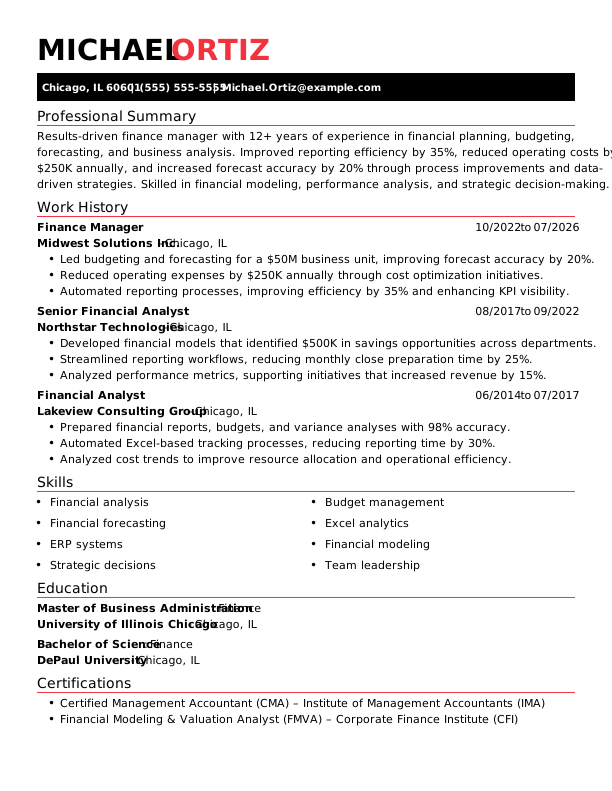
- Quantifies accomplishments: By detailing measurable accomplishments like leading budgeting and forecasting for a $50M business unit, the applicant provides tangible proof of their impact and value.
- Highlights industry-specific skills: Skills such as financial modeling and budget management are prominently featured, illustrating the applicant’s alignment with industry demands for roles in finance management and analysis.
- Uses action-oriented language: Using dynamic action verbs like “reduced,” “analyzed,” and “led” conveys a proactive approach to responsibilities.
More Finance Resume Examples
Browse more finance resume examples to learn how to highlight your analytical skills, financial knowledge, and strategic thinking to impress employers in this industry.
Financial Analyst Resume

Why this resume works
- Effective use of keywords: Incorporating role-specific keywords like financial reporting and variance analysis improves ATS compatibility and visibility in competitive applicant pools.
- Shows digital literacy: Leveraging tools such as ERP systems and advanced Excel showcases computer skills and modern workplace readiness.
- Centers on academic background: Highlighting academic distinctions like a bachelor’s degree in finance with a high GPA and relevant coursework emphasizes early-career achievements, demonstrating a strong foundation for success in finance-focused roles.
Finance Manager Resume
Why this resume works
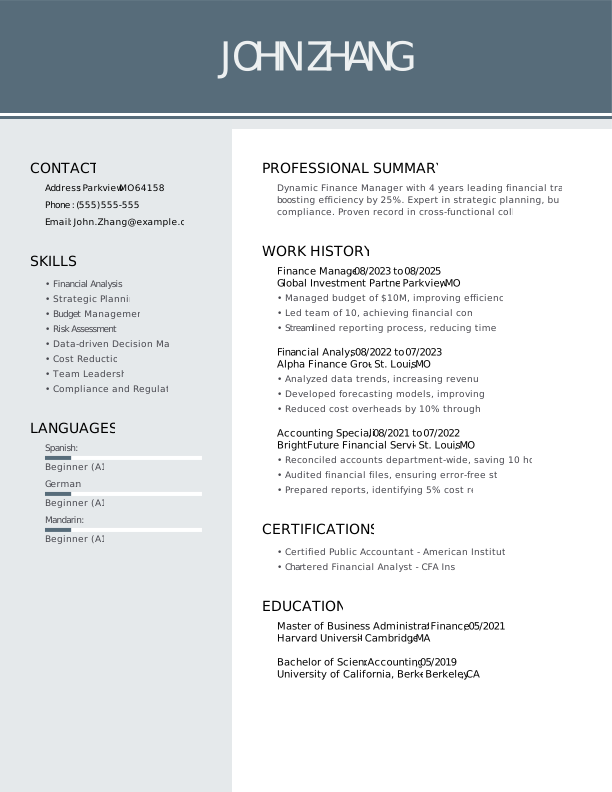
- Points to measurable outcomes: Managing a $10M budget and boosting efficiency by 15% shows the applicant’s knack for translating responsibilities into measurable economic gains.
- Demonstrates language abilities: Language skills in Spanish, German, and Mandarin improve global communication within diverse financial landscapes.
- Displays technical expertise: Certified Public Accountant and Chartered Financial Analyst credentials affirm the applicant’s solid foundation in finance, important for executing complex strategic plans.
Chief Financial Officer Resume

Why this resume works
- Focuses on work history: By using a chronological resume format, the applicant maps out their extensive career progression, showcasing steady growth from finance director to chief financial officer.
- Showcases impressive accomplishments: The applicant’s strategic achievements, like reducing operating expenses by $2.5M annually and leading a 15-person finance team, reflect high-level impact.
- Emphasizes leadership skills: Demonstrating leadership skills, the applicant led teams in revenue growth initiatives and cost-saving projects, illustrating effective team management and strategic vision.
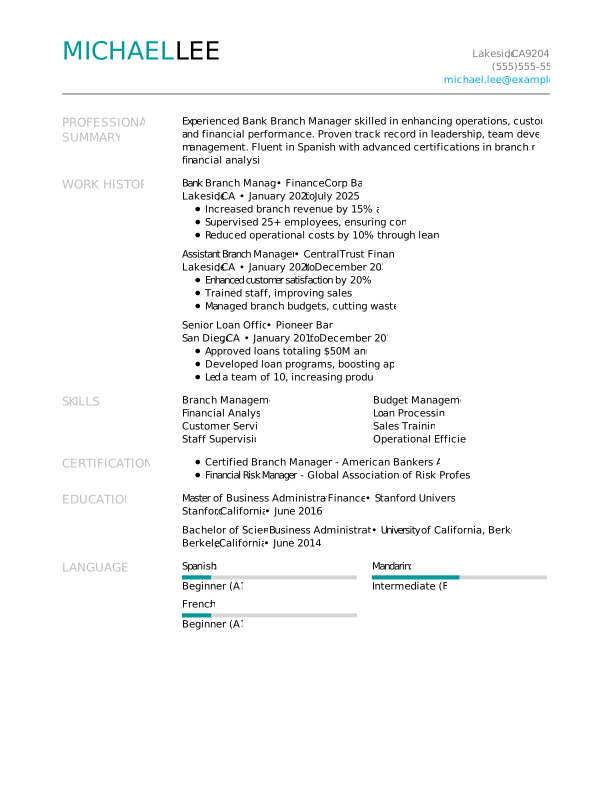
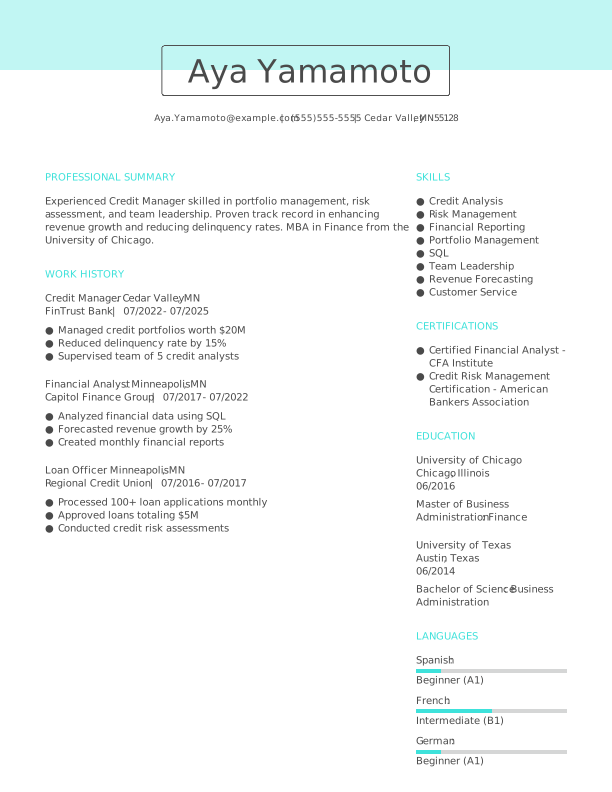
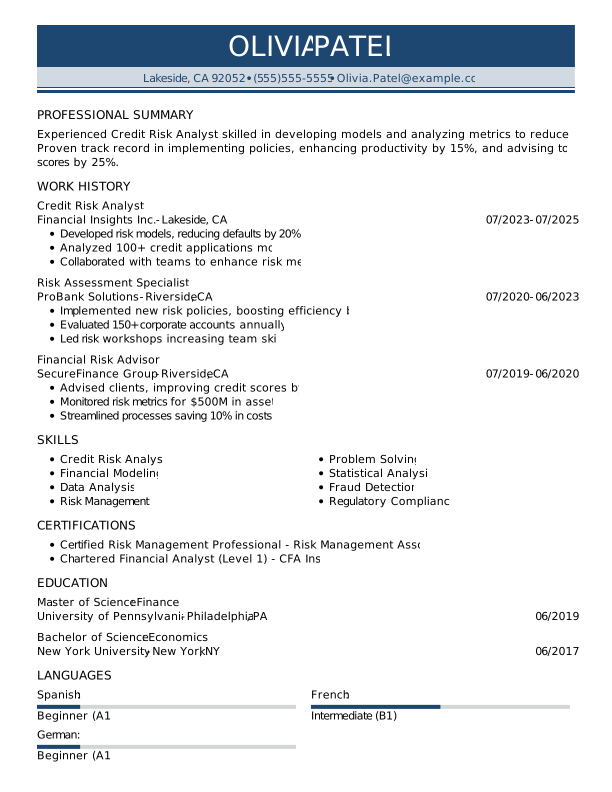
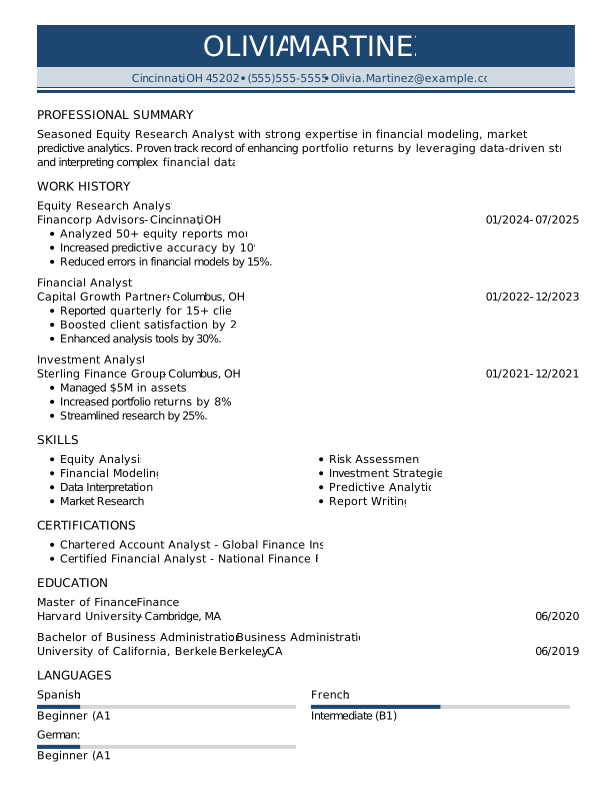
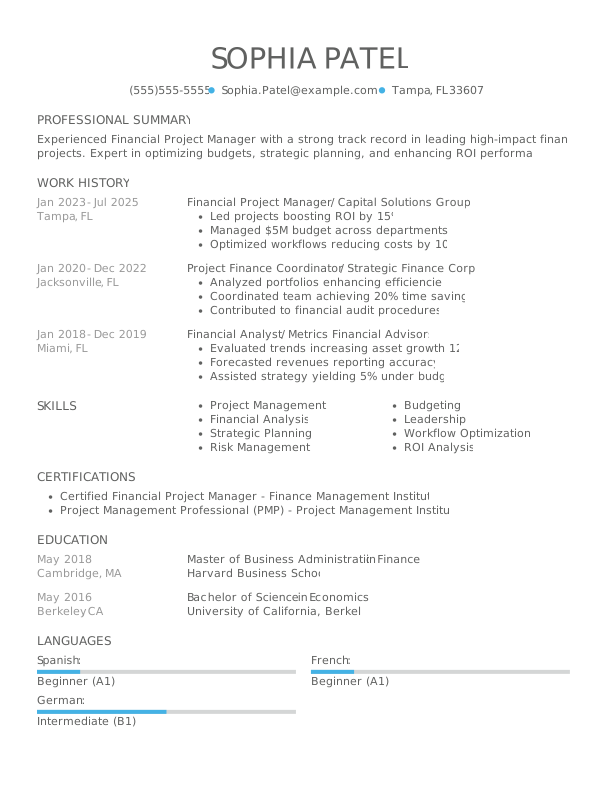
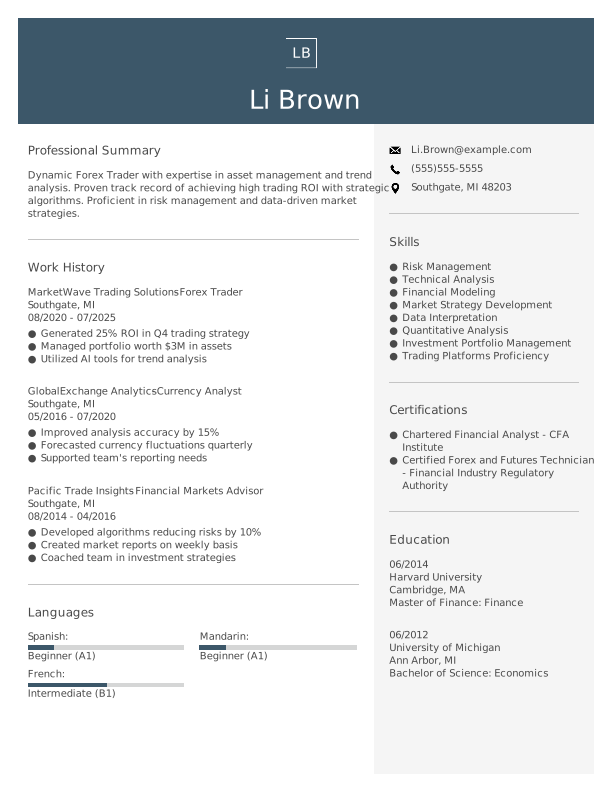
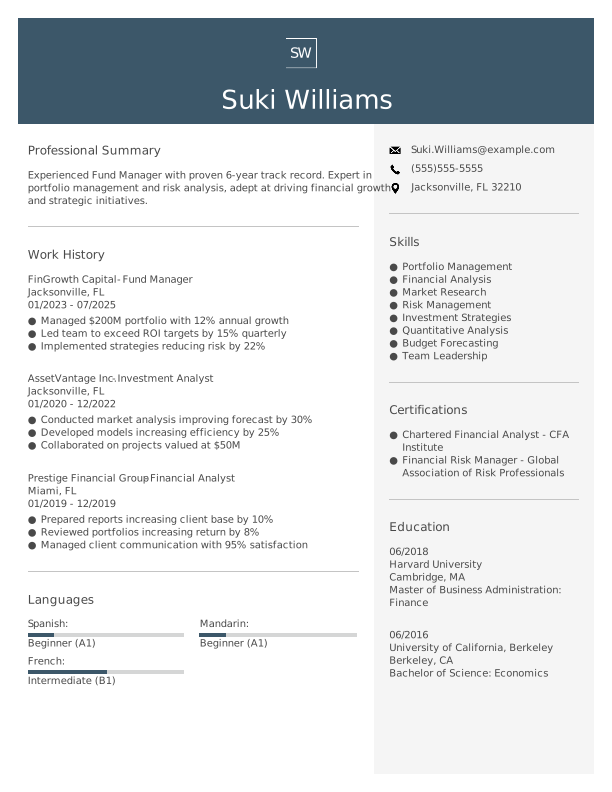
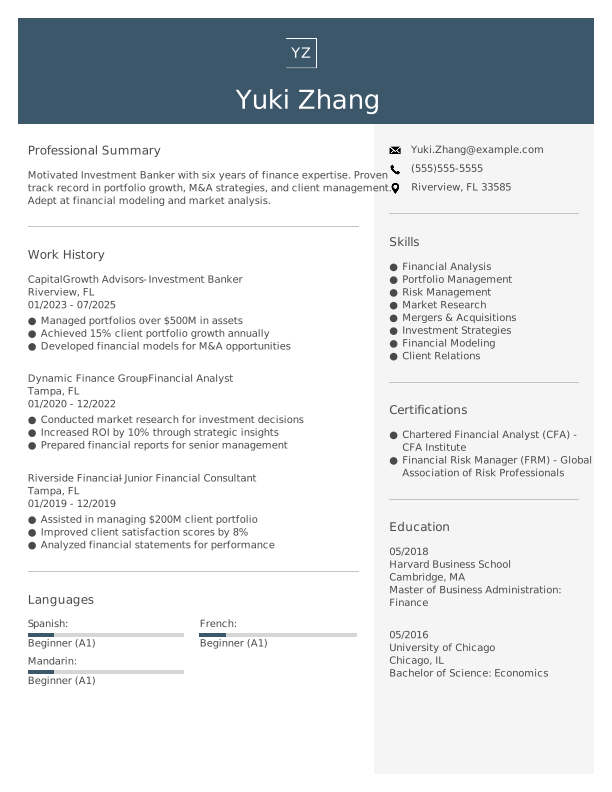
Explore Even More Finance Resumes
Finance Resume Template (Text Version)
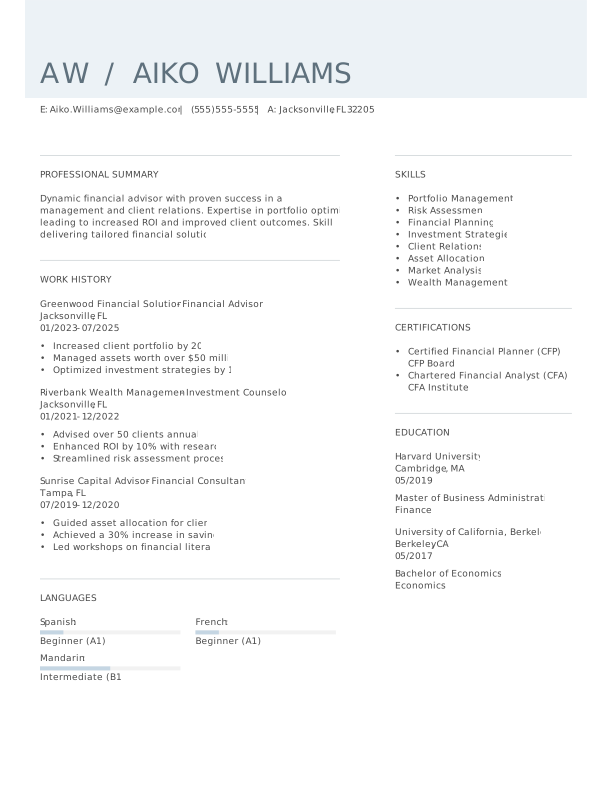
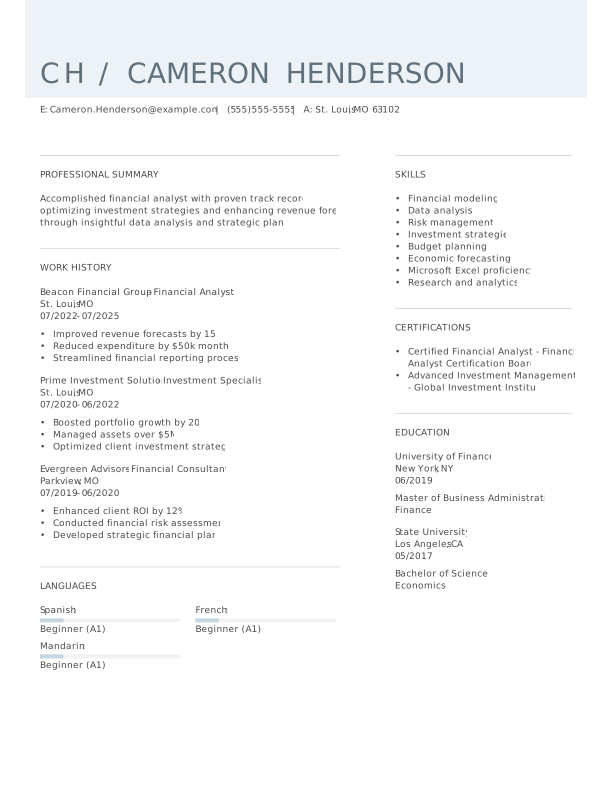
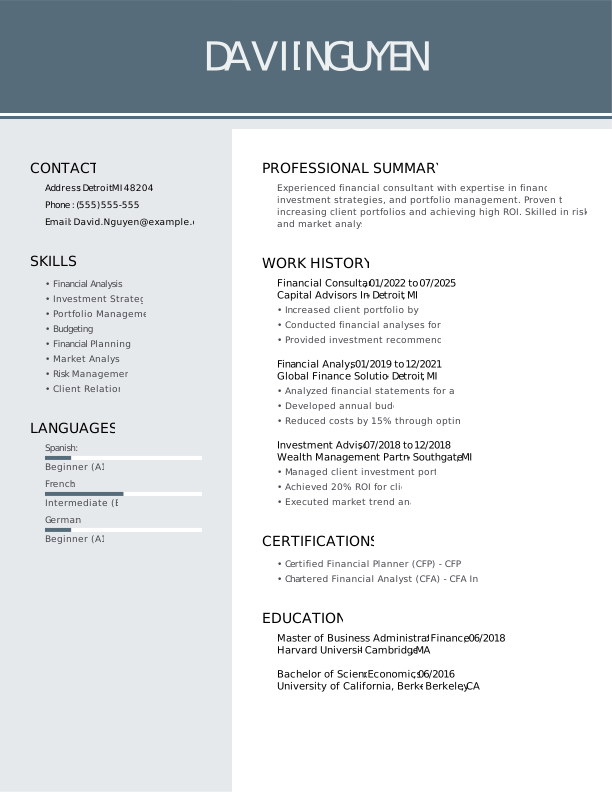
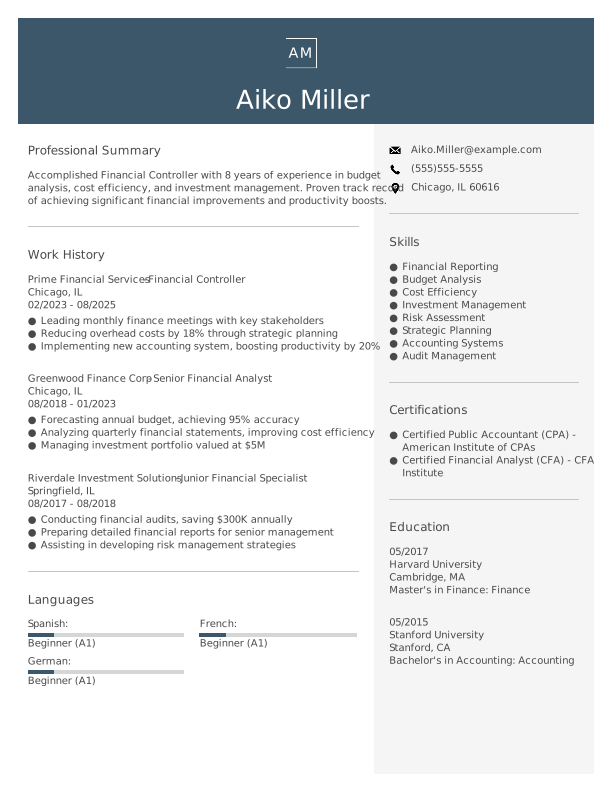
Need a first step? Copy the text template below and update it. Then, explore our resume templates for visual inspiration.
Michael Ortiz
Chicago, IL 60601
(555) 555-5555
Michael.Ortiz@example.com
Professional Summary
Results-driven finance manager with 12+ years of experience in financial planning, budgeting, forecasting, and business analysis. Improved reporting efficiency by 35%, reduced operating costs by $250K annually, and increased forecast accuracy by 20% through process improvements and data-driven strategies. Skilled in financial modeling, performance analysis, and strategic decision-making.
Work History
October 2022 – July 2026
Midwest Solutions Inc. – Chicago, IL
Finance Manager
- Led budgeting and forecasting for a $50M business unit, improving forecast accuracy by 20%.
- Reduced operating expenses by $250K annually through cost optimization initiatives.
- Automated reporting processes, improving efficiency by 35% and enhancing KPI visibility.
August 2017 – September 2022
Northstar Technologies – Chicago, IL
Senior Financial Analyst
- Developed financial models that identified $500K in savings opportunities across departments.
- Streamlined reporting workflows, reducing monthly close preparation time by 25%.
- Analyzed performance metrics, supporting initiatives that increased revenue by 15%.
June 2014 – July 2017
Lakeview Consulting Group – Chicago, IL
Financial Analyst
- Prepared financial reports, budgets, and variance analyses with 98% accuracy.
- Automated Excel-based tracking processes, reducing reporting time by 30%.
- Analyzed cost trends to improve resource allocation and operational efficiency.
Skills
- Financial analysis
- Budget management
- Financial forecasting
- Excel analytics
- ERP systems
- Financial modeling
- Strategic decisions
- Team leadership
Education
University of Illinois Chicago, Chicago, IL
Master of Business Administration in Finance
DePaul University, Chicago, IL
Bachelor of Science in Finance
Certifications
- Certified Management Accountant (CMA) – Institute of Management Accountants (IMA)
- Financial Modeling & Valuation Analyst (FMVA) – Corporate Finance Institute (CFI)
Browse Resume Examples by Industry
- Aviation
- Banking
- Billing And Collections
- Biology
- Boating
- Business Operations
- Casino
- Chemistry
- Child Care
- Civil Engineering
- Compliance
- Computer Hardware
- Computer Software
- Construction
- Copywriting
- Cosmetology
- Costco
- Culinary
- Customer Service
- Dance
- Data Systems Administration
- Deloitte
- Dentistry
- Driving
- Education
- Electrical
- Electrical Engineering
- Energy
- Engineering
- Entertainment
- Entrepreneur
- Entry Level
- Environmental
- Environmental Science
- Event Planning
- Executive
- Fashion
- Film
- Fitness & Nutrition
- Food Service
- Freelancing
- General Laborer
- Goldman Sachs
- Government
- Graphic Design
- Healthcare Support
- Hospitality
- Human Resources
- HVAC
- Industrial Engineering
- Information Technology
- Insurance
- Interior Design
- Inventory Management
- Janitorial
- Landscaping
- Language Services
- Law
- Law Enforcement
- Library
- Logistics
- Maintenance
- Marketing
- McKinsey
- Mechanical Engineering
- Mechanics
- Media And Communication
- Medical
- Mental Health
- Meta
- Metal Work
- Military
- Mining
- Museum
- Music
- Netflix
- Non Profit
- Nursing
- Pharmaceutical
- Photography
- Physical Therapy
- Plumbing
- Politics
- Production
- Program Manager
- Project Manager
- Psychology
- Purchasing
- Quality Control
- Real Estate
- Religion
- Retail
- Safety And Security
- Sales
- Sciences
- Shipping
- Social Services
- Special Education
- Sports
- Statistics
- Student
- Teaching
- Team Lead
- Tesla
- Training And Development
- Transportation
- Travel
- Veterinary
- Walgreens
- Walmart
- Web Development
Advice for Writing Your Finance Resume
If you’re aiming for a finance role, knowing how to highlight your skills and achievements is key. Check out our tips on how to write a resume tailored for finance positions, and see how you can showcase your expertise in budgeting, analysis, and financial strategy in a way that stands out.
Highlight your most relevant skills
When applying for a finance role, showcasing the right skills is essential. A dedicated skills section allows hiring managers to quickly assess your strengths and see the value you bring.
Aim for a balance of technical abilities—such as financial analysis, budgeting, or data modeling—and soft skills like communication, leadership, and problem-solving. This mix shows you’re not only strong with numbers but also effective at collaborating and driving results.
To make an even stronger impression, weave these skills into your work experience. Instead of simply listing responsibilities, highlight how you applied your abilities in practice.
For example, rather than saying “responsible for data analysis,” say “leveraged data analysis to improve forecasting accuracy by 15%.” This demonstrates both your skill set and the measurable impact of your work. By combining technical expertise with interpersonal strengths, you’ll present a well-rounded profile that stands out in the finance field.
Employers often look for experience with tools like Excel, Power BI, Tableau, Bloomberg Terminal, SAP, Oracle, or financial modeling platforms. Mentioning specific tools can help demonstrate your ability to analyze data, build reports, and support financial decisions.
Showcase your accomplishments
When you are organizing your work experience for a finance position, list your jobs starting with the most recent one. Each entry should include your job title, the name of the employer, where it was located, and how long you worked there.
This helps employers quickly see your career path and understand your growth over time. To make your resume stand out more, focus on what you accomplished in each role rather than just listing tasks. For example, instead of saying “managed budgets,” say something like “reduced department spending by 15% through improved budgeting techniques.”
Numbers like percentages or cost reductions show exactly what impact you made. Action words such as “boosted,” “streamlined,” or “implemented” can help highlight these achievements. By showing measurable results like time savings or efficiency improvements, you’re demonstrating how you’ve added value in previous roles. This makes it clear that you’ll be able to do the same for them.
5 finance work history bullet points
- Analyzed quarterly financial reports, identifying cost-saving opportunities that reduced expenses by 12%.
- Led a cross-functional team to implement a new budgeting system, improving forecast accuracy by 25%.
- Developed and presented financial models for new projects, increasing investment approval rates by 40%.
- Managed accounts payable processes, reducing invoice discrepancies by 30% through streamlined procedures.
- Negotiated vendor contracts, achieving a 15% reduction in annual procurement costs.
Go beyond financial tasks by explaining the decisions your work supported. Strong finance resumes show how analysis influenced outcomes, such as identifying cost-saving opportunities, improving forecasting, evaluating investments, or guiding strategic planning.
Write a strong professional summary
A professional summary is a brief introduction on your resume that gives hiring managers a snapshot of who you are. It’s the first impression they get, so it should make them want to learn more about you. On your resume, you can choose between writing a professional summary and an objective.
A professional summary is usually three to four sentences long and highlights your experience, skills, and achievements. It’s ideal for those with some work experience because it shows their professional identity and the value they can bring to a finance role.
In contrast, a resume objective focuses on career goals and is ideal for entry-level applicants, those changing careers, or individuals with gaps in work history. While a summary says “here’s what I’ve done,” an objective states “here’s what I aim to contribute.”
Now that we understand the difference between summaries and objectives, let’s look at examples for various industries and experience levels. Explore our library of resume examples for additional inspiration.
Finance resume summary examples
Entry-level
Recent finance graduate with a Bachelor of Science in finance and an internship experience at a regional bank. Completed coursework in financial modeling, investment analysis, and corporate accounting. Certified in Bloomberg Market Concepts (BMC) and skilled in Excel and data visualization tools like Tableau. Eager to contribute strong analytical abilities to support financial decision-making.
Mid-career
Finance professional with 7+ years of experience in corporate budgeting, forecasting, and financial reporting. Expertise in analyzing market trends, managing cross-functional teams for process improvement, and streamlining expense tracking strategies. CFA Level II applicant with a proven track record of driving cost-saving initiatives while maintaining compliance with regulatory standards.
Experienced
Senior finance manager with over 15 years of leadership experience in strategic planning, mergers and acquisitions, and risk management within Fortune 500 companies. CPA-certified expert specializing in optimizing capital structures and directing high-performing teams to achieve organizational profitability goals. Recognized for delivering measurable growth through innovative financial solutions and fostering executive-level collaboration.
Finance resume objective examples
Recent graduate
Detail-oriented recent finance graduate with a Bachelor of Science in finance, eager to begin a career as a financial analyst. Looking to leverage academic knowledge and internship experience to contribute to dynamic financial teams by supporting data-driven decision-making and improving fiscal strategies.
Career changer
Resourceful professional transitioning into finance, bringing strong analytical skills and business acumen from previous roles in marketing. Passionate about applying critical thinking and problem-solving abilities to assist in the development of effective financial models and strategic planning initiatives.
Entry-level
Ambitious entry-level applicant with a foundational understanding of investment principles and market analysis gained through coursework and personal study. Eager to contribute fresh perspectives and innovative ideas to support financial operations while expanding knowledge within the industry.
Our Resume Builder helps you highlight key skills like budgeting and analysis, making your resume shine for any finance position.
Match your resume to the job description
Tailoring your resume to job descriptions is key because it helps you stand out in a crowded field of applicants. Employers use applicant tracking systems (ATS) to scan resumes for keywords related to the job. If your resume includes these specific words, you’re more likely to pass the initial screening and catch the hiring manager’s attention.
An ATS-friendly resume includes these important keywords and phrases. By aligning your skills with what’s sought in the job posting, you increase your chances of being noticed. This means using language that matches what employers are looking for, making it easier for them to see you as a fit for the role.
To find these keywords, carefully read through job postings. Look for skills, qualifications, and responsibilities mentioned multiple times. For example, if a posting frequently mentions “financial analysis,” “budget management,” or “risk assessment,” ensure those terms appear in your resume.
Incorporate these terms naturally into your resume content. Instead of copying directly from the job description, tweak phrases to reflect your experience. For instance, change “conduct financial analysis” to “performed detailed financial analysis to support decision-making processes.”
Customize your resume by incorporating targeted terms; this increases your chances of getting through ATS filters and making a strong impression on employers, showing them you have exactly what they need for their finance team.
Want to boost your resume’s chances with ATS? Our ATS Resume Checker reviews key parts and helps you improve your score right away.
FAQ
Do I need to include a cover letter with my finance resume?
Including a cover letter with your finance resume can significantly boost your application by highlighting your unique qualifications and interest in the role.
A cover letter allows you to elaborate on specific skills like financial analysis or risk management that make you a strong applicant for the job.
If you’re applying to a company specializing in areas such as investment banking or financial consulting, mention any relevant experience or projects you’ve worked on in those fields.
To craft a personalized, professional cover letter quickly, consider using our Cover Letter Generator, which ensures all key points are addressed effectively.
Exploring cover letter examples can also inspire you to create a compelling cover letter for the finance industry.
How long should a finance resume be?
For a finance professional, the length of your resume depends on your experience and career achievements.
If you’re early in your career or transitioning into finance, a concise one-page resume effectively highlights essential skills like financial analysis, budgeting, and skills with tools such as Excel.
As you gain more experience or acquire specialized certifications relevant to finance, a two-page resume becomes appropriate. This allows you to detail complex projects you’ve handled, leadership roles, or advanced financial strategies you’ve implemented.
Always tailor the content to showcase relevant experiences and qualifications. Explore resources on how long a resume should be for detailed guidance tailored to your career stage.
How do you write a finance resume with no experience?
For a resume with no experience, emphasize your education, relevant skills, and any coursework or projects that showcase your potential in the finance field. Highlight these aspects to make a strong impression despite limited professional experience.
Here are a few tips to help you get started:
- Focus on education: List your degree first, including the name of your university, graduation date, and any honors. Mention specific finance-related courses like Financial Accounting, Corporate Finance, or Investment Analysis.
- Highlight relevant projects: Include details about academic projects where you analyzed financial statements, created budget forecasts, or managed investment portfolios. This showcases practical applications of your knowledge.
- Emphasize transferable skills: Point out skills such as analytical thinking, skill in financial software (Excel or QuickBooks), and strong attention to detail. These are important for finance roles.
- Include internships and volunteer work: If you’ve interned at a company or volunteered in roles involving budgeting or financial planning, list these experiences to show hands-on involvement.
Check out our guide on writing a resume with no experience for more tips and examples to help you stand out in the finance job market.
What keywords should be included on a finance resume?
Common finance resume keywords include financial analysis, financial modeling, forecasting, budgeting, valuation, risk management, investment analysis, variance analysis, financial reporting, and revenue analysis. Use keywords that accurately describe your experience and match the requirements listed in the job description.
Rate this article
Finance


Elizabeth is a Certified Professional Resume Writer (CPRW) and a member of the Professional Association of Resume Writers & Career Coaches. She is committed to helping job seekers navigate the job market and succeed in their careers.
More Articles by Elizabeth Muenzen, CPRWShare this page
 Add MyPerfectResume as a preferred source on Google
Add