Table of Contents
Get started with MyPerfectResume today!
- Build a resume on any device
- Pick an ATS-friendly template
- Tailor with AI copy suggestions
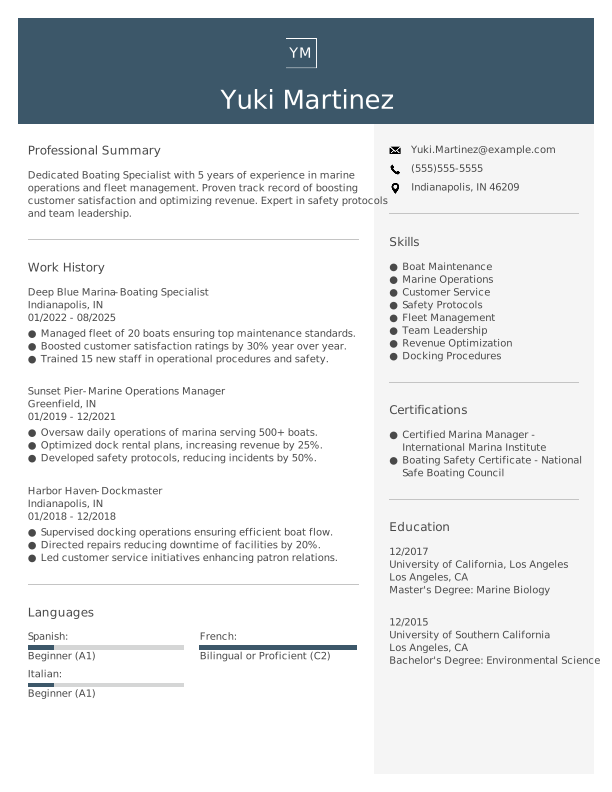
Why this resume works
- Highlights industry-specific skills: Experience managing fleets and optimizing dock rentals reveals the applicant’s mastery of industry-specific skills, showcasing their deep knowledge in marine operations and fleet management.
- Quantifies accomplishments: Measurable accomplishments like increasing revenue by 25% and cutting incidents by half highlight the applicant’s measurable impact.
- Uses action-oriented language: Using action verbs like “managed,” “optimized,” and “developed” in work experiences emphasizes initiative and effectiveness.
More Boating Resume Examples
Review our boating resume examples to see how to highlight your navigational skills, safety expertise, and maritime experience. These samples provide a solid foundation for creating a resume that showcases your boating qualifications effectively.
Marina Manager Resume
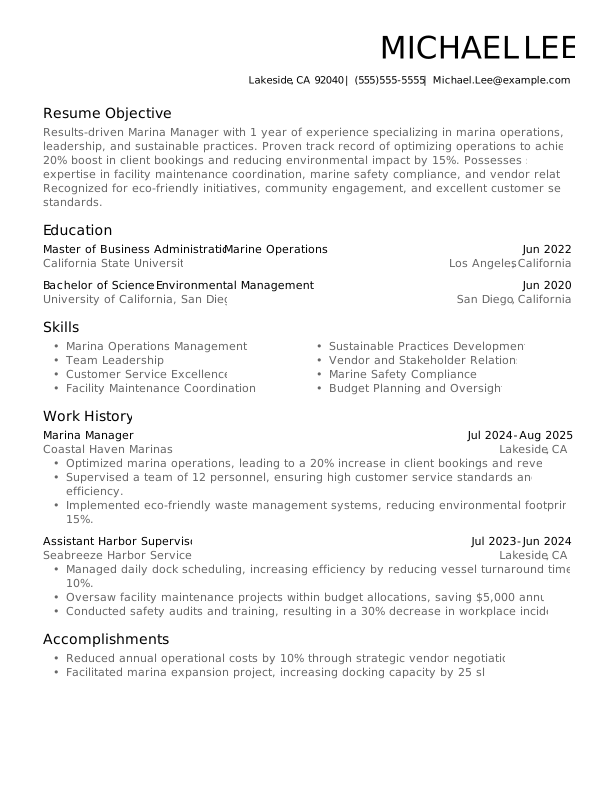
Why this resume works
- Effective use of keywords: Strategically integrating role-specific terms like marina operations, marine safety compliance, and sustainable practices aligns with keywords to optimize ATS compatibility and relevancy.
- Shows digital literacy: Leveraging tools for dock scheduling, facility oversight, and eco-friendly systems reflects computer skills and digital readiness.
- Centers on academic background: Completing an MBA program emphasizes academic excellence while reinforcing a foundation in marine operations for early-career roles.
Boat Mechanic Resume
Why this resume works
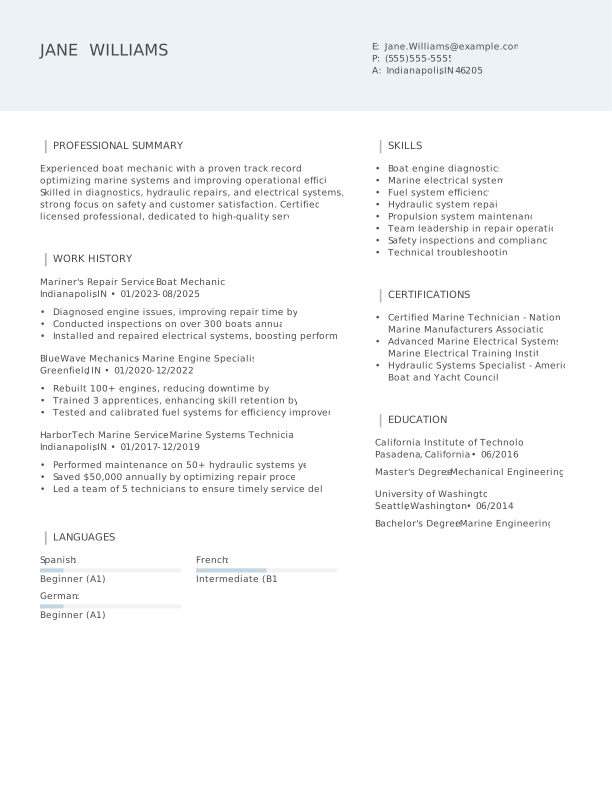
- Points to measurable outcomes: Quantifiable achievements like cutting repair time by 20% and saving $50,000 annually reflect the applicant’s efficiency-driven mindset and ability to deliver measurable improvements in marine systems.
- Demonstrates language abilities: Language skills in Spanish, French, and German improve communication across diverse teams and clients, supporting global collaboration.
- Includes a mix of soft and hard skills: Combining technical expertise with team leadership highlights a balance of hard and interpersonal skills, fostering both operational excellence and effective collaboration.
Dock Hand Resume
Why this resume works
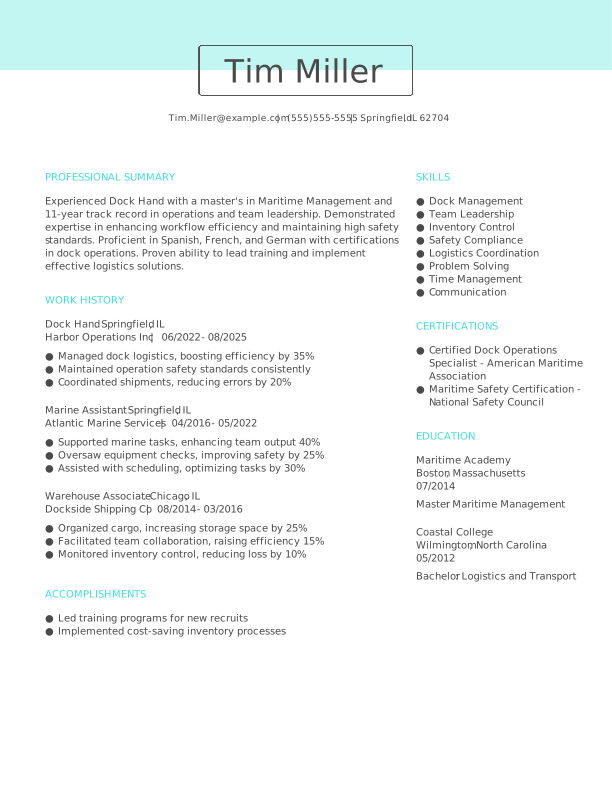
- Showcases impressive accomplishments: By including measurable results like boosting dock efficiency by 35%, the applicant reflects an ability to drive strong operational improvements.
- Focuses on work history: Using a chronological resume, the applicant organizes roles spanning over a decade, showcasing career progression and consistent contributions to maritime logistics and safety.
- Lists relevant certifications: The applicant’s certifications, such as Certified Dock Operations Specialist, are listed prominently to emphasize expertise in maritime operations and dedication to professional growth.
Boating Resume Template (Text Version)
Start with the format below for a solid foundation. For options suited to your industry, check out our resume templates.
Yuki Martinez
Indianapolis, IN 46209
(555)555-5555
Yuki.Martinez@example.com
Professional Summary
Dedicated Boating Specialist with 5 years of experience in marine operations and fleet management. Proven track record of boosting customer satisfaction and optimizing revenue. Expert in safety protocols and team leadership.
Work History
Boating Specialist
Deep Blue Marina – Indianapolis, IN
January 2022 – August 2025
- Managed fleet of 20 boats ensuring top maintenance standards.
- Boosted customer satisfaction ratings by 30% year over year.
- Trained 15 new staff in operational procedures and safety.
Marine Operations Manager
Sunset Pier – Greenfield, IN
January 2019 – December 2021
- Oversaw daily operations of marina serving 500+ boats.
- Optimized dock rental plans, increasing revenue by 25%.
- Developed safety protocols, reducing incidents by 50%.
Dockmaster
Harbor Haven – Indianapolis, IN
January 2018 – December 2018
- Supervised docking operations ensuring efficient boat flow.
- Directed repairs reducing downtime of facilities by 20%.
- Led customer service initiatives enhancing patron relations.
Languages
- Spanish – Beginner (A1)
- French – Bilingual or Proficient (C2)
- Italian – Beginner (A1)
Skills
- Boat Maintenance
- Marine Operations
- Customer Service
- Safety Protocols
- Fleet Management
- Team Leadership
- Revenue Optimization
- Docking Procedures
Certifications
- Certified Marina Manager – International Marina Institute
- Boating Safety Certificate – National Safe Boating Council
Education
Master’s Degree Marine Biology
University of California, Los Angeles Los Angeles, CA
December 2017
Bachelor’s Degree Environmental Science
University of Southern California Los Angeles, CA
December 2015
Browse Resume Examples by Industry
- Aviation
- Banking
- Billing And Collections
- Biology
- Business Operations
- Casino
- Chemistry
- Child Care
- Civil Engineering
- Compliance
- Computer Hardware
- Computer Software
- Construction
- Copywriting
- Cosmetology
- Costco
- Culinary
- Customer Service
- Dance
- Data Systems Administration
- Deloitte
- Dentistry
- Driving
- Education
- Electrical
- Electrical Engineering
- Energy
- Engineering
- Entertainment
- Entrepreneur
- Entry Level
- Environmental
- Environmental Science
- Event Planning
- Executive
- Fashion
- Film
- Finance
- Fitness & Nutrition
- Food Service
- Freelancing
- General Laborer
- Goldman Sachs
- Government
- Graphic Design
- Healthcare Support
- Hospitality
- Human Resources
- HVAC
- Industrial Engineering
- Information Technology
- Insurance
- Interior Design
- Inventory Management
- Janitorial
- Landscaping
- Language Services
- Law
- Law Enforcement
- Library
- Logistics
- Maintenance
- Marketing
- McKinsey
- Mechanical Engineering
- Mechanics
- Media And Communication
- Medical
- Mental Health
- Meta
- Metal Work
- Military
- Mining
- Museum
- Music
- Netflix
- Non Profit
- Nursing
- Pharmaceutical
- Photography
- Physical Therapy
- Plumbing
- Politics
- Production
- Program Manager
- Project Manager
- Psychology
- Purchasing
- Quality Control
- Real Estate
- Religion
- Retail
- Safety And Security
- Sales
- Sciences
- Shipping
- Social Services
- Special Education
- Sports
- Statistics
- Student
- Teaching
- Team Lead
- Tesla
- Training And Development
- Transportation
- Travel
- Veterinary
- Walgreens
- Walmart
- Web Development
Advice for Writing Your Boating Resume
Crafting a resume that highlights your maritime skills and experiences is key to landing your dream job on the water. Dive into our advice section and discover tips tailored just for boating professionals. Check out how to write a resume to make sure you stand out from other applicants.
Highlight your most relevant skills
Listing relevant skills on your resume is key when applying for a job in boating. It helps you stand out and shows employers that you have what it takes to do the job well. A dedicated skills section makes it easy for them to see your strengths quickly.
It’s important to include both technical skills, like navigation and boat maintenance, as well as interpersonal skills, such as communication and teamwork. This balance shows you’re ready for all parts of the job, from handling equipment to working with others.
Adding key skills to your work experience section can make an even stronger impact. When you describe past jobs, mention how you used these skills in real situations.
For example, talk about how your knowledge of safety protocols helped during a tricky situation at sea or how your teamwork smoothed out a busy day on deck. This approach not only tells employers what you can do but also gives them proof through examples from your past work.
For boating positions, choose a resume format that showcases your navigational skills, safety certifications, and experience on the water prominently.
Showcase your accomplishments
When you list your work experience for a boating job, start by organizing it in reverse chronological order. This means the most recent job comes first, and you work backward in time. For each job, include your job title, the name of the employer, where the job was located, and when you worked there.
Instead of just listing what you did at each job, try to show what you achieved. Quantifying accomplishments makes your resume stand out more than simply describing duties. Turn your tasks into achievements by including numbers like percentages or amounts of time saved.
For example, if you improved fuel efficiency by 20%, say so on your resume. Use action words that highlight what you did and what results came from it. Showing measurable results helps hiring managers quickly understand how you’ve made an impact in past roles.
It also shows them how you might contribute to their team if hired for a boating position. By focusing on these accomplishments, you’re not just telling them about your experience – you’re showing them how skilled and effective you are in your work.
5 boating work history bullet points
- Piloted various watercraft, ensuring 100% safety compliance across 50+ boating excursions annually.
- Managed maintenance schedules for a fleet of 10 boats, reducing downtime by 25% through proactive repairs.
- Trained and supervised a team of 8 deckhands, improving operational efficiency by 15%.
- Developed and implemented emergency response protocols, resulting in a perfect safety record over 3 years.
- Facilitated guest tours on luxury yachts, achieving a 98% customer satisfaction rate.
Opt for a structured resume template featuring bold headings and standard fonts, steering clear of cluttered visuals or intricate designs that might distract from your skills and experience.
Write a strong professional summary
A professional summary on a resume serves as a quick introduction to hiring managers by highlighting your experience and skills. Choosing between writing a summary and an objective depends on your background, as both have their respective uses.
The professional summary is typically three to four sentences long, showcasing your experience, skills, and achievements. It’s most beneficial for those who are already experienced in their field, such as a boating professional with years of navigating waters and leading crews. Its primary aim is to present your professional identity and demonstrate the value you bring to potential employers.
Conversely, resume objectives state career goals and are ideal for entry-level job seekers, career changers, or individuals with employment gaps. While summaries focus on “what I’ve accomplished,” objectives emphasize “what I aim to contribute.”
We’ll share examples of both summaries and objectives tailored for different industries and levels of experience in the boating world and beyond. See our library of resume examples for more ideas.
Boating resume summary examples
Entry-level
Recent graduate with a Bachelor of Science in marine transportation, holding a U.S. Coast Guard-approved Merchant Mariner Credential. Completed internships with hands-on training in vessel navigation, safety protocols, and crew management. Eager to apply foundational skills in seamanship and contribute to efficient operations aboard commercial vessels.
Mid-career
Experienced deckhand with over seven years of dedicated service in the commercial shipping industry. Proficient in cargo handling, navigational watch duties, and emergency response procedures. Holds certifications in advanced firefighting and survival techniques at sea. Recognized for strong teamwork skills and contributing to smooth sailing operations on international routes.
Experienced
Seasoned maritime captain with over 15 years of leadership experience commanding various types of vessels, including tankers and container ships. Master Mariner licensed with specialized certifications in ship security officer training and electronic chart display systems. Proven track record of optimizing voyage efficiency and maintaining top-tier safety standards while fostering an environment of professional development among crew members.
Boating resume objective examples
Entry-level
Enthusiastic and safety-conscious individual seeking an entry-level position in the boating industry to apply recently acquired certifications in basic navigation and boat handling. Committed to contributing to a team-focused environment while ensuring passenger safety and improving operational efficiency.
Career changer
Dedicated professional transitioning into the boating industry with a background in customer service and logistics. Eager to leverage strong communication skills and organizational abilities to support crew operations, ensure smooth voyages, and improve passenger experiences.
Recent graduate
Motivated recent maritime school graduate eager to join a reputable boating company as a deckhand. Equipped with foundational knowledge in maritime safety protocols and vessel maintenance, aspiring to contribute positively to crew operations while gaining practical experience on the water.
Build a standout resume in minutes with our easy-to-use AI Resume Builder. Choose a professional template, add your details, and make a strong impression on employers.
Match your resume to the job description
Tailoring resumes to job descriptions is important because it helps job seekers stand out and pass through applicant tracking systems (ATS). Employers use ATS to scan resumes for specific keywords and phrases from job postings. If your resume doesn’t include these, it might not even reach a human reader.
An ATS-friendly resume includes keywords that match the skills listed in the job posting. This alignment makes your resume more likely to be noticed by hiring managers. Using the right words shows you have the skills they’re looking for, making you a better fit for the role.
To find keywords, look at the job posting carefully. Pay attention to skills, qualifications, and duties mentioned often. For example, if a boating job mentions “navigation,” “safety procedures,” or “team coordination” several times, make sure those exact phrases are in your resume.
Incorporate terms naturally into your resume by rewriting your experiences. Instead of saying “Led boat tours,” you can say “Led guided boat tours, ensuring passenger safety and enjoyment.” This way, you’re showing how you meet their needs directly.
Creating targeted resumes helps with ATS compatibility and increases your chance of landing an interview. It shows employers that you’ve customized your resume specifically for them, demonstrating both interest and readiness for the role.
You can use our ATS Score Checker to scan your resume for potential issues and receive on-the-spot feedback to improve your resume score.
FAQ
Do I need to include a cover letter with my boating resume?
Including a cover letter with your boating resume can improve your application and increase your chances of getting noticed. A cover letter allows you to highlight specific experiences related to boating, such as certifications, skills in navigation, and safety protocols that might not be evident from your resume alone.
You can also use our Cover Letter Generator to craft a personalized cover letter that aligns perfectly with the boating job you’re applying for.
To get ideas on structuring and phrasing, look at various cover letter examples tailored to roles in maritime or recreational boating sectors.
This approach demonstrates your enthusiasm and commitment to the role, making your application more compelling.
How long should a boating resume be?
For a boating role, a one-page resume is often sufficient to highlight key skills such as seamanship, navigation expertise, and any relevant certifications like CPR or boating safety. This format keeps your application concise and focused on your strengths.
However, if you have extensive experience or specialized qualifications in areas like marine engineering or vessel management, a two-page resume might be more appropriate. It allows you to delve deeper into accomplishments and showcase leadership roles effectively without overwhelming the reader.
Consider exploring our guide on how long a resume should be for tailored insights that match your career stage and ensure you’re presenting yourself in the best possible light.
How do you write a boating resume with no experience?
If you need to write a resume with no experience, focus on highlighting your transferable skills, education, and any relevant certifications that demonstrate your enthusiasm and readiness for the role. Here are a few tips to help you get started:
- Emphasize your passion for boating: Mention any personal experiences or hobbies related to boating, such as recreational outings or participation in boating clubs.
- Highlight transferable skills: Include skills that are useful in a boating environment, like teamwork, problem-solving, physical fitness, and communication. These can come from other jobs or volunteer work.
- Showcase relevant certifications: If you have completed courses like CPR/First Aid or a boating safety course, make sure these are prominently featured on your resume.
- Include volunteer work: If you’ve volunteered in roles related to water activities or conservation efforts, list these experiences to demonstrate your commitment and interest.
Explore our guide on writing a resume with no experience for additional examples and actionable tips from Certified Professional Resume Writers.
Rate this article
Boating


Elizabeth is a Certified Professional Resume Writer (CPRW) and a member of the Professional Association of Resume Writers & Career Coaches. She is committed to helping job seekers navigate the job market and succeed in their careers.
More Articles by Elizabeth Muenzen, CPRWShare this page
 Add MyPerfectResume as a preferred source on Google
Add